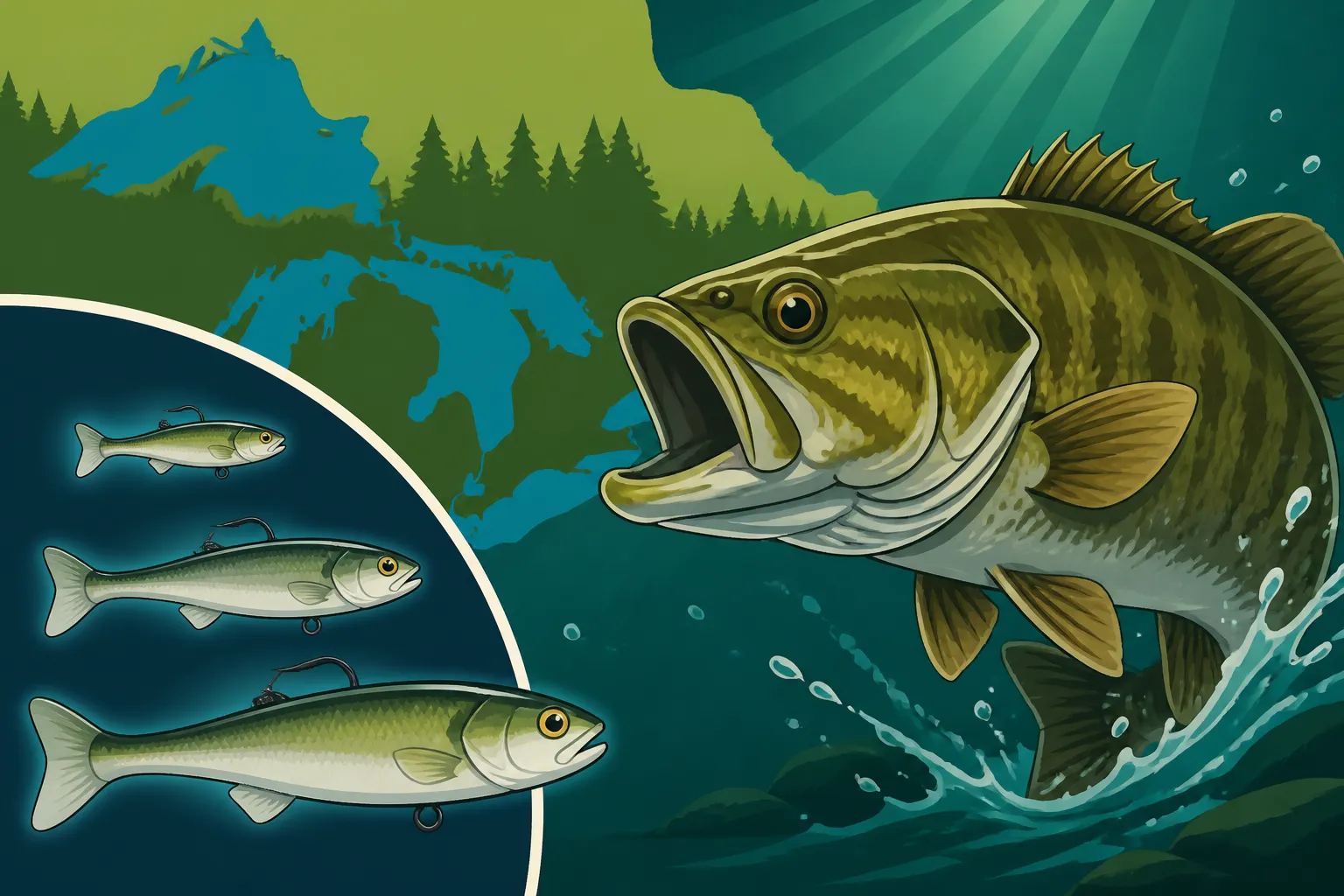
Best swimbait size for big smallmouth
It’s a common frustration for anglers in Ontario: you know smallmouth bass are aggressive, you know they hit swimbaits, but you're not consistently landing those truly big bronze beasts. The secret often lies not just in the presentation, but in selecting the right swimbait size to mimic their natural prey and appeal to their predatory instincts. This guide is dedicated to helping you decipher the optimal swimbait sizes to entice the largest smallmouth bass in our beautiful Ontario waters.
Understanding the Smallmouth Bass Diet and Swimbait Match
Smallmouth bass are opportunistic predators, but they’re not mindless eaters. Their diet largely consists of whatever forage is most abundant and easiest to catch in their specific environment. This could be anything from crayfish and gobies to emerald shiners, perch, or juvenile cisco. Understanding what they're primarily keying in on will be your first clue to choosing the right swimbait size. You want your lure to look like a hearty, easy meal.
When smallmouth are feeding actively, especially on larger baitfish, they will absolutely inhale a swimbait that mimics that prey. If the lake you’re fishing, say on the Bay of Quinte, has a strong population of larger baitfish, matching that profile with a similarly sized swimbait can be incredibly effective. Think about the local food chain. Are there schools of decent-sized minnows or juvenile panfish? Then a 4-5 inch swimbait is likely to be perceived as a legitimate food source, not just an anomaly. For many anglers, figuring out what these fish are actually eating is a puzzle, but paying attention to what you see jumping, what's in the bellies of any fish you keep, or even what local tackle shops recommend, can provide invaluable insight. Don't be afraid to experiment a little; sometimes, showing them something slightly different can trigger a strike purely out of curiosity or aggression.
The "Sweet Spot" Swimbait Sizes for Consistent Action
For many Ontario smallmouth anglers, the 3.5-inch to 4.5-inch range is the undeniable "sweet spot" for swimbaits. These sizes strike a perfect balance, being large enough to attract respectable smallmouth, but not so big that they intimidate smaller, yet still feisty, fish. This versatility makes them ideal for various conditions and for appealing to a broad range of smallmouth sizes, from solid keepers to truly impressive bronzebacks.
Imagine you're fishing a clear, rocky lake in cottage country, like some of the lakes in the Kawartha Lakes Fishing Guide or the Georgian Bay area, where smallmouth are often sight-feeding or aggressively chasing schools of shiners. A 3.8-inch paddle tail swimbait, rigged on a lighter jig head, offers a subtle yet tantalizing action that big smallmouth just can't resist. It’s small enough to appear vulnerable, but meaty enough to warrant the effort of a chase. This size is particularly effective when smallmouth are somewhat pressured or when the baitfish are not particularly large. You'll find a massive selection of these versatile baits at any reputable tackle shop or online, including popular options often found at Bass Pro Shops. When you're trying to figure out How to Catch Smallmouth Bass in Ontario, starting with a swimbait in this size range is often a very good bet.
| Swimbait Size (Inches) | Target Smallmouth Size | Primary Conditions/Applications | Notes |
|---|---|---|---|
| 2.5 – 3.5 | Average to Good keepers | Finesse, highly pressured fish, small baitfish, clear water | Good for numbers, can still entice larger fish on tough days |
| 3.5 – 4.5 | Good keepers to Trophy | All-around versatile, matching medium baitfish, varied cover | The "go-to" size for many anglers, balance of size and action |
| 4.5 – 5.5 | Trophy-sized fish | Aggressive fish, larger baitfish, stained water, deeper areas | Requires a commitment to larger fish, fewer bites but often bigger |
| 5.5 + | True Giants, Opportunistic | Low light, heavy cover, targeting specific monster fish | Dedication to a single, massive bite; often requires specialized gear |
Going Big: Upsizing Swimbaits for Trophy Smallmouth
If your goal is to consistently target truly monumental smallmouth bass—those elusive 5-pounders and up that roam Ontario's premier waters—you need to think about upsizing your swimbait. While a 3.5-inch swimbait will catch big fish, a 5-inch or even 6-inch swimbait specifically designed for larger prey can significantly increase your chances of connecting with a true trophy. These larger profiles are less likely to be bothered by smaller, more aggressive fish, meaning that when you do get a bite, it’s often from a much more substantial predator.
Consider a scenario on Lake Erie or Georgian Bay Muskie Fishing (where smallmouth also get huge), where massive schools of baitfish provide a rich food source. An experienced angler might throw a 5-inch boot-tail swimbait on a sturdy baitcasting setup, mimicking a mature perch or a substantial goby. The commitment to a larger bait often means fewer bites overall, but the quality of those bites can be exceptional. These bigger baits often necessitate a slightly heavier rod, perhaps a medium-heavy power, to effectively cast and work the lure, and to handle the fight of a truly gargantuan smallmouth. You might even find yourself reaching for a heavier Best Line Weight for Muskie Fishing if you're really pushing the limits of swimbait size for smallmouth, ensuring you have the backbone to control a powerful fish. Don't be shy about searching Amazon for a wider variety of these larger, more specialized swimbaits, as some tackle shops might not carry as many options. Remember, big baits catch big fish, but they also require confidence and patience.
When chasing these larger fish, presentation becomes even more critical. You're not just trying to get a bite; you're trying to convince a mature, wary fish that your offering is worth the effort. Slow, deliberate retrieves, pausing on key structure, or fishing around prime smallmouth spots like those described in How to Fish Rocky Points for Smallmouth can be game-changers. The slow, seductive wobble of a bigger swimbait can trigger an ambush strike from a smallmouth lurking in deeper water or heavy cover.
Environmental Factors and Seasonal Swimbait Adjustments
Choosing the best swimbait size isn't just about what the smallmouth could eat, it's also about what they will eat given the conditions. Water temperature, clarity, time of year, and the dominant forage in a particular body of water all play a crucial role. Learning to adapt your swimbait size to these variables can dramatically improve your success rate.
Water Temperature and Fish Activity
During the cooler months of spring and fall, when water temperatures are closer to the Best Water Temperature Smallmouth Bass Prefer, smallmouth might be less willing to chase down a fast-moving, smaller meal. They're often conserving energy, making a larger, slower-moving swimbait more appealing as a high-calorie reward. Think of it as them wanting a steak dinner instead of just an appetizer. Conversely, in the heat of summer, when smallmouth are incredibly active and aggressive, they might be more inclined to chase smaller, faster-moving prey, and thus a slightly smaller, more agile swimbait might perform better. This is especially true if you're considering a faster Best Lure Retrieve Speed for Smallmouth in Fall for a larger swimbait to trigger a reaction strike before the water gets too cold.
Water Clarity and Forage Mimicry
In exceptionally clear waters, such as those found in many Northern Ontario lakes, smallmouth have excellent visibility. Here, a more realistic, perhaps slightly smaller, swimbait that perfectly matches the local baitfish can be incredibly effective. The smallmouth have ample time to inspect your offering, so realism matters. However, in stained or murky water, where visibility is reduced, a larger profile can be beneficial. The increased size creates a stronger vibration and a bigger silhouette, making it easier for bass to detect the lure. They're not relying on sight as much, so a more pronounced presence can grab their attention.
Seasonal Forage Shifts
The availability of different baitfish changes throughout the year. In spring, after the ice-out, smallmouth might be feeding on smaller minnows or newly hatched fry. As summer progresses, juvenile panfish grow, and larger baitfish like shiners and perch become more prevalent. During the fall, smallmouth will often gorge on the largest available baitfish, packing on weight for the lean winter months. Your swimbait size should reflect these natural shifts. If you notice a lake is teeming with 3-inch minnows, starting with a 3.5-inch swimbait makes sense. If you're seeing schools of 5-inch perch on your sonar, don't hesitate to tie on a 5-inch swimbait. It’s all about giving them what they expect, or what they think they're missing out on. Remember to explore different options for your rod and reel, perhaps looking at Best Fishing Rods for Ontario Lakes to ensure your gear can handle these various swimbait sizes.
Ultimately, choosing the best swimbait size for big smallmouth in Ontario is a blend of understanding smallmouth behavior, matching natural forage, and adapting to the specific conditions of the day. Don't be afraid to carry a range of sizes in your tackle bag, whether you picked them up at Bass Pro Shops or ordered them online through Amazon, and let the fish tell you what they prefer.
Disclaimer
This article is for general informational purposes only and does not constitute professional advice. Laws, prices and regulations vary by location and change over time. Consult a qualified professional for guidance on your specific situation.