Best flat-bottom boat for river fishing
There’s nothing quite like the allure of fishing Ontario’s countless rivers, whether you’re seeking feisty smallmouth bass in a rocky current or elusive walleye in a meandering flow. However, if you’ve ever tried to navigate these often shallow, obstacle-laden waterways with a boat not designed for the task, you know the frustration: scraping gel coats, getting stuck on sandbars, or struggling to maintain position in the current. This guide is all about finding the perfect solution for these challenges: the flat-bottom boat, and what makes it the absolute best choice for a successful and enjoyable river fishing experience in Ontario.
Why Flat-Bottom Boats Excel for Ontario River Fishing
When it comes to tackling the diverse and often challenging conditions of Ontario's rivers, flat-bottom boats stand head and shoulders above many other options. They’re not just a preference; for many river anglers, they're an absolute necessity. Their design is inherently suited to the unique demands of river environments, where depth can change in an instant and obstacles hide just beneath the surface.
Navigating Skinny Water and Obstacles
One of the most defining characteristics and primary advantages of a flat-bottom boat is its incredibly shallow draft. What does this mean for you, the river angler? It means the boat sits very high in the water, requiring minimal depth to float. Imagine drifting down a stretch of the Grand River, known for its varying depths and rocky shoals. With a V-hull boat, you'd be constantly worrying about hitting bottom, damaging your propeller, or worse, getting completely stranded. A flat-bottom boat, on the other hand, allows you to glide over inches of water with relative ease.
This isn't just about avoiding damage; it's about access. Many of Ontario's most productive river fishing spots are in areas inaccessible to deeper-drafting vessels. Think about those serene, secluded stretches of the French River or the Credit River, where the fish often hold in quieter, shallower pockets. A flat-bottom boat opens up these hidden gems. When you do encounter a submerged log or a rocky patch, the flat hull allows you to often simply push off with a paddle or a push pole, without the worry of getting a propeller fouled or a delicate hull punctured. It’s about confidence and freedom to explore.
Stability for Anglers and Gear
Another critical benefit that often goes unmentioned until you're out on the water is the exceptional stability offered by flat-bottom boats. Their wide, flat bottom creates a much larger contact patch with the water compared to a V-hull. This translates directly into a more stable fishing platform, especially when you need to stand up to cast, sight fish, or just stretch your legs.
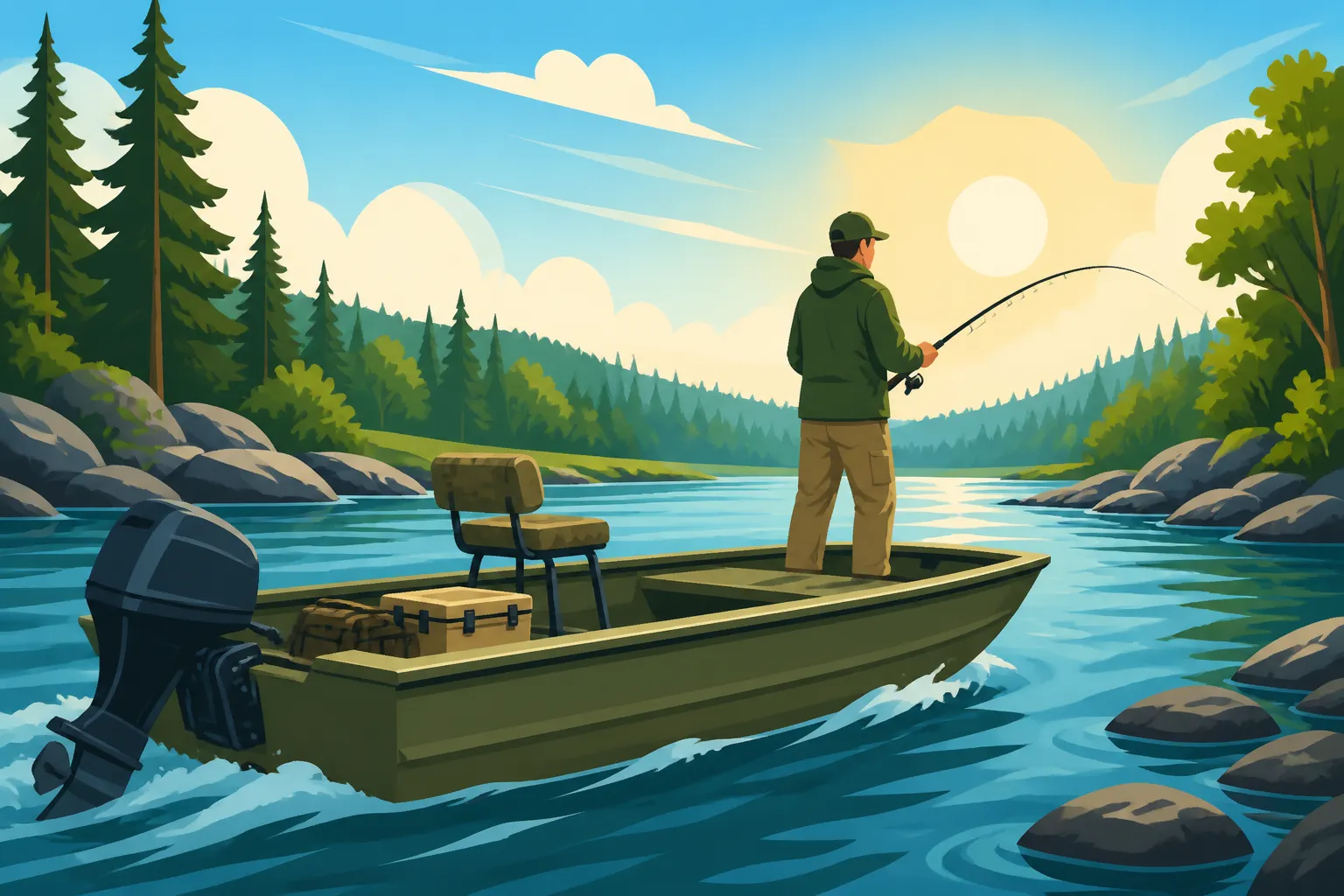
Picture yourself on the Ottawa River, trying to make a precise cast to a feeding smallmouth bass hiding near a submerged structure. If you’re in a tippy boat, every movement becomes a precarious balancing act, detracting from your focus on the fish. With a flat-bottom boat, you can stand with confidence, moving around to access your tackle box or help a buddy land a fish without feeling like you’re going to take an unexpected dip. This stability is also fantastic for managing your gear. Rods, tackle boxes, coolers – they all sit more securely, reducing the chances of things shifting around or, even worse, taking an unplanned swim. If you’re fishing with a partner or even bringing along your kids, this increased stability is invaluable for a safer, more enjoyable day on the water.
Durability and Maintenance Considerations
Ontario's rivers, while beautiful, can be unforgiving. They feature rocky bottoms, submerged timber, and the occasional shallow gravel bar. A boat designed for these conditions needs to be tough, and flat-bottom boats, especially those made from aluminum, fit the bill perfectly. Most are constructed from robust, marine-grade aluminum, which is incredibly resistant to impacts and abrasion. Instead of fretting over every bump and scrape, you can focus on the fishing.
While no boat is truly indestructible, aluminum flat-bottom boats are far more forgiving than fiberglass alternatives. Minor dents or scratches are often just cosmetic, and more significant damage can usually be repaired by a skilled welder. Cleaning is also a breeze; a quick rinse with a hose is often all it takes to get rid of river muck and sand. This ease of maintenance means less time worrying about your boat and more time planning your next trip to chase Ontario Walleye Opener Dates by Zone or target Ontario Smallmouth Bass Slot Limits. For the angler who values practicality and longevity, a durable flat-bottom boat means more years of reliable service on those challenging river systems.
Key Features to Look For in a River Fishing Flat-Bottom Boat
Choosing the right flat-bottom boat for your Ontario river adventures isn't just about picking the first one you see. There are specific features that can make a huge difference in its performance, durability, and suitability for your style of fishing. It’s about matching the boat to the river, and to you.
Material and Construction
The material your flat-bottom boat is made from is perhaps the most crucial factor for river fishing.
- Aluminum is overwhelmingly the most popular choice for good reason. It’s lightweight, incredibly durable, and highly resistant to corrosion. Within aluminum boats, you’ll find variations:
- Gauge of aluminum: Thicker gauge aluminum (e.g., .100 gauge or higher) means a tougher boat that can withstand more abuse from rocks and stumps. Thinner gauges might be lighter but are more prone to denting.
- Welded vs. Riveted hulls: Welded hulls generally offer superior strength and leak resistance as there are fewer points of failure. Riveted hulls are often lighter and less expensive but can develop leaks over time if rivets loosen due to flexing or impacts. For serious river work, many prefer a quality welded hull.
- Roto-molded polyethylene boats are another option. These are often smaller, very tough, and virtually indestructible against impacts. They tend to be heavier than aluminum for their size and can sometimes be harder to repair if severely damaged, but they're incredibly quiet on the water.
- Transom Strength: Whatever material you choose, pay close attention to the transom. This is where your outboard motor will attach. It needs to be robust enough to handle the thrust and weight of your motor, especially if you plan on using anything more than a small electric trolling motor. A weak transom can lead to serious issues down the line.
Size, Length, and Beam
The dimensions of your flat-bottom boat will dictate its maneuverability, stability, and capacity. There’s a sweet spot for river fishing:
- Length: For most Ontario rivers, a length between 12 to 16 feet is ideal. Shorter boats (10-12 ft) are fantastic for very small, tight streams or for solo fishing where easy transport is key. Longer boats (14-16 ft) offer more room for multiple anglers and gear, and often handle a bit more chop on wider river sections or when crossing small lakes that might connect river stretches. However, a boat that's too long can become cumbersome in tight turns or around obstacles in smaller rivers.
- Beam (Width): A wider beam contributes significantly to stability. This is where flat-bottom boats shine. Look for a beam of at least 48 inches (4 feet) or more. A wider boat will feel much more stable when you're standing and casting, and it provides more floor space for your fishing gear.
- Weight: Consider the boat's weight in relation to your transport method. Will you be car-topping it, putting it in the bed of a truck, or using a trailer? A lighter boat is easier to launch in remote spots where there isn't a proper boat ramp. Remember to factor in the weight of your motor and gear too!
Layout and Accessories
The internal layout and available accessories can transform a basic flat-bottom boat into a highly functional river fishing machine.
- Open Floor Plans: Most flat-bottom boats, especially jon boats, feature open floor plans. This provides maximum flexibility for arranging your gear, adding portable seats, or customizing casting platforms. Look for boats with a flat, non-slip floor.
- Casting Decks: Some models might have a small raised casting deck at the bow. This can be fantastic for sight fishing or getting a better vantage point, but ensure it doesn't compromise too much valuable open floor space or add unnecessary weight if you’re fishing very small rivers.
- Livewells and Storage: While not always standard on basic models, some larger flat-bottom boats or utility boats will include integrated livewells or storage compartments. If keeping fish alive is important, or if you bring a lot of gear, these are valuable features. Otherwise, many anglers opt for portable coolers as livewells and dry bags for storage, which you can easily find at Bass Pro Shops or Amazon.
- Rod Holders: Integrated rod holders are a nice convenience, but clamp-on or rail-mounted rod holders are widely available and can be added as needed.
- Trolling Motor Mounts: If you plan on using an electric trolling motor for precise boat control, check for reinforced mounting plates at either the bow or transom. Bow-mount trolling motors generally offer better steering control in current, while transom mounts are simpler and often used in conjunction with a small outboard.
Popular Types of Flat-Bottom Boats for Ontario Rivers
While the term "flat-bottom boat" might conjure a single image for some, there's actually a spectrum of designs that fit this description, each with its own nuances and ideal applications for Ontario's diverse rivers. Understanding these differences can help you pinpoint the perfect vessel for your fishing adventures.
Jon Boats
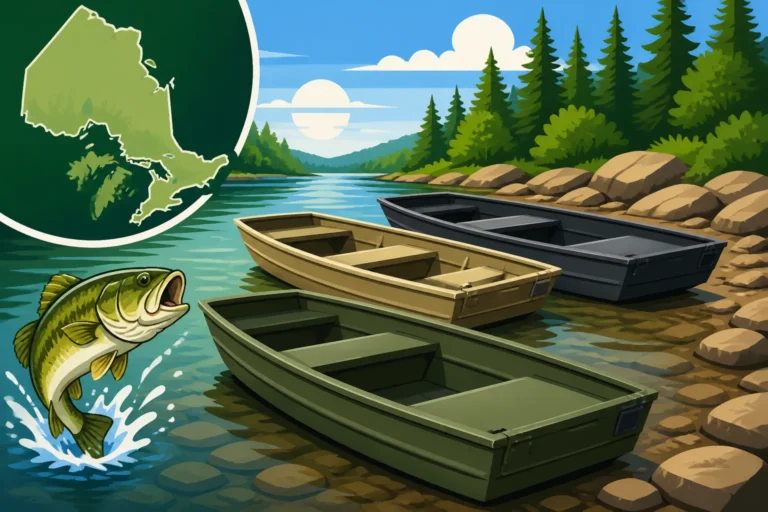
When most people think of a flat-bottom boat, they're probably picturing a jon boat. These are the quintessential, no-frills, utilitarian workhorses of the shallow water world. They're characterized by their flat bottom, squared bow, and often riveted or welded aluminum construction.
- Simplicity and Versatility: Jon boats are incredibly simple in their design, which contributes to their affordability and ease of maintenance. They're essentially a robust hull with bench seats, allowing for maximum open space. This makes them highly versatile; you can easily stand, move around, and load them up with coolers, tackle, and other gear.
- Ideal for Small Outboards and Electric Motors: Their flat hull and typically light weight make them perfectly suited for small gas outboard motors (usually under 25 horsepower) or electric trolling motors. This combination provides excellent maneuverability and quiet operation, essential for sneaking up on wary fish in clear river water.
- Modifications for Fishing: While basic, jon boats are also highly customizable. Many anglers add flooring, pedestal seats, rod holders, or even small casting decks to tailor them to their specific fishing needs. You can often find a wide selection of jon boats and accessories at large outdoor retailers like Bass Pro Shops, making it easy to build your dream river fishing setup. They excel on smaller, winding rivers where nimble handling is key, or on larger rivers where you need to cover considerable distance but still want shallow water access.
Square Stern Canoes and Punts
For those who value portability, silent propulsion, and don't necessarily need the speed of a larger outboard, square stern canoes and punts offer a fascinating alternative.
- Hybrid Power: These boats bridge the gap between a traditional canoe and a small motorboat. They have a canoe-like hull, often with a wider beam, but feature a flattened, reinforced transom (the "square stern") specifically designed to accept a small outboard motor (typically 2-5 horsepower) or an electric trolling motor.
- Lighter and More Maneuverable: Compared to wider jon boats, square stern canoes are often lighter and can be easier to portage around rapids or launch in very remote, undeveloped river access points. Their more hydrodynamic shape (compared to a purely flat jon boat) can also make them easier to paddle or row when motor power isn't needed or allowed.
- Stability Trade-off: While more stable than a traditional round-bottom canoe, they generally offer less initial stability than a wide jon boat when standing. However, for sitting and casting, they are quite comfortable. They are excellent for exploring smaller, quieter rivers where stealth is a priority, or for combining paddling with occasional motor use. For solo anglers or pairs looking for an intimate river experience, they are a fantastic choice, particularly when targeting fish in areas accessible only through careful maneuvering, perhaps even when you're focusing on Fly Fishing for Trout in Ontario.
Small Aluminum Utility Boats
Sometimes, a basic jon boat feels a bit too sparse, but a full-fledged fishing boat is overkill. This is where small aluminum utility boats come into play. These are often seen as a step up from a basic jon boat, offering a bit more refinement and robustness without sacrificing the essential flat-bottom characteristics for river work.
- Enhanced Durability and Features: These boats often feature slightly thicker gauge aluminum, more robust benches, and sometimes even a V-shaped bow that gradually flattens out towards the stern. The V-bow helps to cut through choppy water a little more smoothly than a squared-off jon boat, making them more comfortable on wider rivers or when crossing open sections of water between river stretches.
- Greater Capacity: With a slightly more substantial build, these utility boats often have higher weight capacities, allowing for more gear, more powerful (though still modest) outboards, and multiple anglers.
- Versatile River Use: They are a great choice for medium to larger Ontario rivers where you might encounter varied conditions, from calm stretches to areas with moderate current or small waves. They still maintain that crucial shallow draft towards the stern, allowing you to venture into skinny water, but offer a bit more confidence when the conditions aren't perfectly placid. Many outdoor enthusiasts turn to these boats for everything from fishing to duck hunting, valuing their all-around utility.
| Boat Type | Pros | Cons | Ideal River Conditions |
|---|---|---|---|
| Jon Boat | Excellent shallow draft, highly stable, affordable, customizable | Can be loud, squared bow may pound in chop, less comfortable ride | Small to medium rivers, very shallow water, calm conditions |
| Square Stern Canoe | Lightweight, portable, good for paddling, silent with electric motor | Less stable than jon boat for standing, lower capacity | Small, winding rivers, remote access, stealth fishing, mixed paddle/motor |
| Small Aluminum Utility Boat | More robust, slightly better ride in chop, versatile, good capacity | Heavier than jon boat/canoe, can be pricier, still limited in rough water | Medium to large rivers, varied conditions, more gear/people |
Considerations for Outfitting Your River Fishing Boat
Once you've chosen the perfect flat-bottom boat for your Ontario river fishing adventures, the next step is to outfit it correctly. The right gear and accessories not only enhance your fishing experience but also ensure your safety and compliance with Ontario Boating Laws for Anglers.
Motorization: Outboards vs. Trolling Motors
The way you power your flat-bottom boat is critical for river fishing, influencing everything from speed and range to stealth and maneuverability.
- Small Gas Outboard Motors: These are your go-to for covering longer distances quickly or battling stronger currents. For most flat-bottom river boats, a small outboard (typically 5 to 25 horsepower) is ample. They offer the power to get you upriver against a decent current and to reach remote fishing spots efficiently. When selecting an outboard, consider the boat's maximum horsepower rating and your typical load. Remember, gas motors produce noise and exhaust, which might be a concern in certain sensitive fishing areas or if stealth is paramount, such as when you're trying to sneak up on Smallmouth Bass Fishing in Ontario.
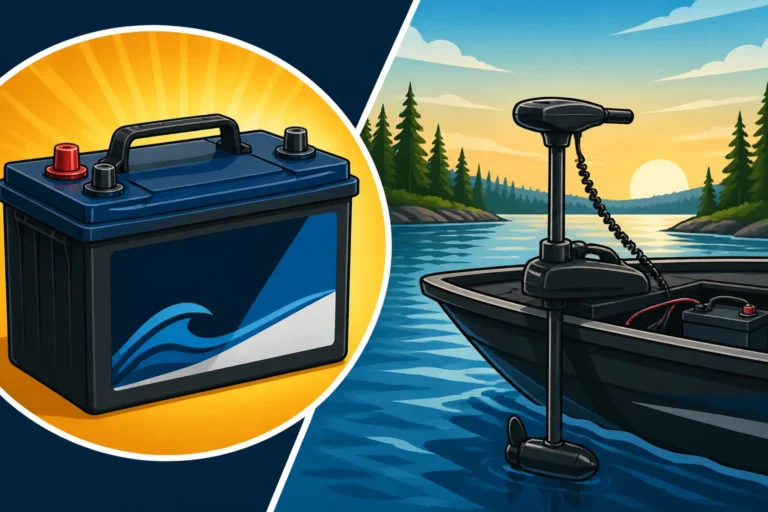
- Electric Trolling Motors: These are indispensable for precise boat control, especially when drifting, holding position over a specific structure, or navigating quietly through sensitive areas. A bow-mount electric trolling motor (mounted at the front of the boat) provides superior steering control in current, allowing you to "steer" the boat rather than just push it from the back. Transom-mount motors are simpler and more affordable, often used as a secondary motor or on smaller boats. The key advantage of an electric motor is its silent operation, which is invaluable for approaching wary fish and enjoying the tranquility of the river. You’ll also need to consider battery size and life; a deep-cycle marine battery is essential, and sometimes two are needed for a full day of heavy use. Many excellent trolling motors, suitable for various flat-bottom boats, can be found online through retailers like Amazon.
Safety Gear and River Navigation
Safety on the water is non-negotiable, especially on rivers where conditions can change rapidly.
- Life Jackets: This is the most important piece of safety equipment. Ensure you have Canadian-approved life jackets or PFDs for every person on board, and wear them! Life Jacket Requirements for Ontario Boaters are strict, and for good reason.
- Paddles/Oars: Even with a motor, always carry a paddle or a set of oars. If your motor fails, or if you run out of fuel/battery, you'll be glad to have a way to propel your boat to safety.
- Bailer and Sound-Signalling Device: A bailer (bucket or scoop) to remove water and a sound-signalling device (whistle or horn) are legally required safety items for small boats in Ontario.
- Anchor System: A reliable anchor is crucial for river fishing. It allows you to hold your position in current, whether you're jigging a specific hole or taking a break. Look for a river-specific anchor design, like a grapple or a mushroom anchor, that will bite well into varied bottom types without getting permanently stuck. Ensure you have plenty of anchor rope – at least 3-5 times the depth of the water you'll be fishing, plus extra for current. For more details on what works best, check out Best Anchor System for River Fishing.
- Knowledge of the River: Beyond physical gear, your best safety tool is knowledge. Understand the river you're fishing – its currents, rapids, hazards, and access points. Never exceed your comfort level or your boat's capabilities.
Customization and Enhancements
Making your flat-bottom boat truly your own can significantly improve your fishing experience.
- Seating: While many jon boats come with basic bench seats, adding comfortable, swivel pedestal seats can make long days on the water much more enjoyable and allow for better casting angles.
- Casting Braces/Rails: For added stability when standing, especially in current, consider adding a simple rail or brace system that you can lean against.
- Electronics: A fish finder is invaluable for locating structure, understanding depth changes, and spotting fish. Portable fish finders are perfect for smaller boats and can be easily mounted and removed. For insights on choosing the right electronics, explore guides like Best Fish Finders for Ontario Lakes.
- Rod Holders: While some boats have built-in rod holders, adding adjustable ones (clamp-on or track-mounted) allows you to position your rods perfectly for trolling, drifting, or simply keeping them secure and out of the way.
- Hull Protection: If you frequently navigate rocky or shallow areas, consider adding skid plates or a keel guard to the bottom of your hull. These can significantly extend the life of your boat by providing an extra layer of protection against abrasion.
- Transport Solutions: Ensure you have a reliable way to transport your boat. A dedicated boat trailer is best for larger flat-bottom boats. For smaller, lighter models, a truck bed extender or even a sturdy car-top carrier might suffice. Always secure your boat properly for travel.
Remember, every piece of gear, from your Best Landing Net for Muskie to your Best Fishing Rods for Ontario Lakes, should enhance your time on the water. By thoughtfully outfitting your flat-bottom boat, you'll be ready to tackle whatever Ontario's beautiful rivers throw your way, all while staying safe and comfortable.
Disclaimer
This article is for general informational purposes only and does not constitute professional advice. Laws, prices and regulations vary by location and change over time. Consult a qualified professional for guidance on your specific situation.