Best crate setup for kayak fishing storage
Ever tried to find that one specific lure mid-paddle, only to realize your tackle is a scattered mess across your kayak's deck? It’s a universal frustration for kayak anglers, and it can really cut into your precious fishing time, especially when you’re out on a beautiful Ontario lake. This guide is all about transforming that chaos into calm, focusing on creating the ultimate crate setup for organized kayak fishing storage, ensuring your gear is always at your fingertips.
The Indispensable Role of a Kayak Crate
Kayak fishing is an incredible way to experience Ontario's waters, offering a unique blend of tranquility and sport. However, the limited space on a kayak means organization isn't just a nicety—it's an absolute necessity. A well-designed crate setup is more than just a place to stash your stuff; it's a command centre for your entire fishing operation. Without it, you’re constantly battling tangled lines, lost tools, and the sheer frustration of a cluttered space.
Beyond Just a Box: Why Organization Matters
Imagine you're drifting silently on Lake Simcoe, the perfect spot for jumbo perch, and suddenly, you need a different jig. If your tackle is a jumbled mess, rattling around in a loose bag, you're not just wasting time; you're creating noise that could spook fish, taking your eyes off the water, and potentially even compromising your stability as you reach and rummage. A properly organized crate setup means everything has its place. When you need a specific lure, pliers, or even a drink, it's right there, accessible, and secure. This isn't just about tidiness; it’s about efficiency, safety, and ultimately, enjoying your time on the water more fully. It means less time fumbling and more time fishing.
Think about the quick changes in weather or fishing conditions we often face in Ontario. One minute it's calm, the next a squall rolls in. Being able to quickly access rain gear, switch lures, or even secure loose items without a moment's hesitation can make all the difference. Organization reduces stress, keeps you focused on the fishing, and helps prevent valuable gear from accidentally going overboard, a common mishap for even experienced kayak anglers. It also extends to safety, as you can keep essential items like a first-aid kit or communication device readily available. For more on maximizing your time on the water, consider exploring Kayak Fishing Techniques for Ontario Lakes.
Common Kayak Fishing Storage Challenges
Let's face it, kayaks aren't known for their expansive storage. You're working with a relatively small, often wet, and sometimes unstable platform. The biggest challenge is making the most of the limited space, especially in the stern tankwell area where most crates reside. Gear can easily shift around, get soaked, or even fall out if not properly secured. Ever had your pliers bounce overboard while paddling through some chop on Georgian Bay? It’s a frustrating and costly lesson many of us have learned the hard way.
Another common issue is access. While a crate holds a lot, if it's packed inefficiently, retrieving items can be a pain. Heavy tackle boxes buried under dry bags, or rods leaning precariously, make quick lure changes or re-tying almost impossible. Then there's the element of weather. Rain, splash, and even morning dew can wreak havoc on sensitive electronics, tackle, and personal items. Without a thoughtful storage solution, you're constantly battling the elements to keep your gear in good working order. It’s a struggle that can easily turn a relaxing fishing trip into a stressful gear management exercise.
Choosing Your Foundation: The Perfect Base Crate
Every great kayak fishing storage system starts with a solid foundation, and that's your base crate. While the humble milk crate is often the starting point, there's a whole world of options out there, each with its own advantages. Your choice will depend on your kayak's size, the type of fishing you do, and your personal preferences for durability and customization.
Material and Size Considerations
When it comes to the base crate, you generally have a few main contenders: the classic plastic milk crate, purpose-built fishing crates, and soft-sided storage options. Each has its pros and cons, which can significantly impact your on-water experience.
The standard plastic milk crate is a go-to for many beginner and budget-conscious anglers. They're cheap, readily available, and incredibly versatile for DIY modifications. You can often find them at hardware stores, or sometimes even repurposed from local businesses (with permission, of course!). Their open-grid design makes them great for drainage, but not so much for keeping things dry. They're usually a good size to fit snugly in most kayak tankwells.
Purpose-built fishing crates, on the other hand, are designed specifically for kayak anglers. These often come with integrated features like rod holders, tool slots, and even built-in tackle organizers. They're typically made from more robust, marine-grade plastics, offering better durability and a more polished look. Brands like YakAttack or Hobie offer excellent examples that often feature secure lids and attachment points. While they cost more, their specialized design can save you a lot of DIY effort and often provide better overall functionality right out of the box. You can browse a wide selection of these options at retailers like Bass Pro Shops or online through Amazon.
Soft-sided crates or bags are another option, particularly for those looking for lighter weight or easier portability when off the kayak. These often have numerous pockets, zippered compartments, and sometimes even insulated sections. They don't offer the rigid structure for mounting accessories as easily as hard crates, but they excel at protecting contents from splash and sun. However, their soft structure can sometimes make them less stable in choppy water.
Ultimately, measure your kayak's tankwell before you buy anything. You want a snug fit that prevents sliding but isn't so tight it's difficult to remove. Consider if you prefer the rugged simplicity and DIY potential of a milk crate, the refined functionality of a specialized fishing crate, or the lightweight, protective nature of a soft-sided bag.
Placement and Stability on Your Kayak
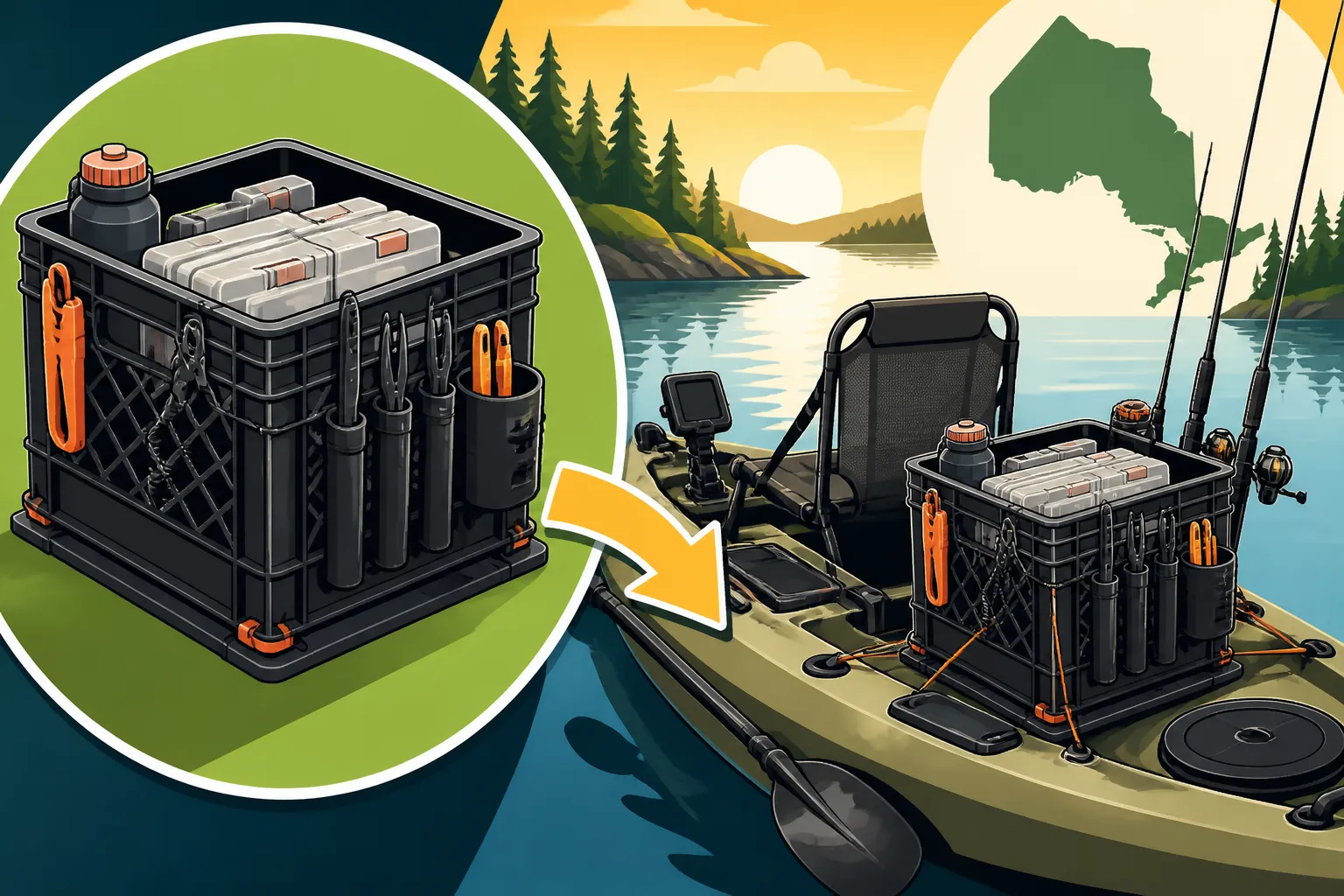
Once you’ve got your crate, where does it go, and how do you keep it from turning into a rogue wave rider? For most sit-on-top kayaks, the stern tankwell is the natural home for your crate. It’s typically the largest open storage area and keeps the weight behind you, often improving stability. However, simply placing it back there isn’t enough. Without proper securing, your crate is just waiting for the first big wave or aggressive paddle stroke to send it tumbling.
Many kayaks come with bungee cords over the tankwell area, which are a good starting point for securing your crate. Thread the bungee through the crate's handles or grid openings, pulling it taut. For added security, especially if you're venturing into rougher waters like the big waves of Lake Erie, you'll want to use additional straps or even carabiners clipped to your kayak's D-rings or padeyes. Some anglers even use short lengths of rope to lash the crate down, ensuring it’s not going anywhere. The key is to make sure it's stable and won't shift around, even when you're leaning, paddling hard, or reeling in a big one. For insights on navigating various waters, check out Best Kayaks for Ontario Fishing.
It’s also worth considering how the crate’s placement affects your access to other parts of your kayak, such as your rudder control or scupper holes. Make sure your setup doesn’t obstruct these essential functions. Experiment with the placement when you’re on the water (or even just in your driveway) to find the sweet spot that offers both security and accessibility.
Leveling Up: Essential Add-Ons and Customizations
A base crate is just the beginning. The real magic happens when you start adding accessories and customizing it to suit your specific fishing style and the species you're targeting. This is where you transform a simple box into a truly indispensable piece of fishing equipment, tailored to your adventures across Ontario's diverse waters.
Rod Holders: Keeping Your Sticks Accessible
One of the primary benefits of a crate system is the ability to securely carry multiple fishing rods. Trying to transport several rods on a kayak without proper holders is a recipe for tangled lines, broken tips, or lost gear. There are several types of rod holders you can integrate into your crate setup, each offering different advantages.
Vertical rod holders are arguably the most common and easiest to install. These are usually PVC pipe sections cut to length and attached to the sides or corners of your crate using zip ties, bolts, or hose clamps. They keep your rods upright, minimizing their footprint and making them easy to grab and return. You can typically fit 2-4 of these on a standard milk crate, allowing you to carry different setups—say, one for bass, another for walleye, and a third for panfish. Just be mindful of overhead obstructions like low-hanging branches if you're fishing smaller rivers.
Flush-mount or adjustable rod holders can also be integrated into purpose-built fishing crates. These offer a more streamlined look and often better adjustability for different rod angles, which can be useful when trolling or simply positioning a rod out of your way. Brands like Scotty or Ram Mounts offer a wide array of high-quality, adjustable rod holders that can be mounted directly to a sturdy fishing crate. These often involve drilling into the crate, so make sure you're comfortable with that step. Regardless of the type, ensure the holders are secure and position your rods so they don't interfere with your paddling stroke or other essential gear. A good rod holder setup means less time juggling rods and more time with a line in the water.
Tools and Tackle Management Systems
What good is a crate if your tackle and tools are still a jumbled mess inside it? Effective organization within the crate itself is crucial. This means having dedicated spots for your pliers, line cutters, leader material, and, of course, your tackle trays.
For tools, consider adding tool tubes or slots directly to the outside or inside rim of your crate. PVC pipe sections can be repurposed here too, providing snug homes for your fishing pliers, forceps, and a sharp knife. Magnetic strips are another clever addition for small metal items like hooks or jig heads, keeping them from rolling around. Keeping your essential tools readily accessible prevents the frustration of digging through a packed bag when you've just landed a fish and need to quickly unhook it or re-tie a broken line.
When it comes to tackle, many anglers opt for tackle trays that fit neatly inside their crate. These compartmentalized boxes keep lures, weights, and hooks organized by type or size. Look for trays that stack efficiently or are designed to fit specific crate dimensions. Some purpose-built crates even come with integrated slots for multiple standard-sized tackle trays. For larger items like spools of line or soft plastics, dedicated waterproof bags or small bins can be placed within the main crate area. This layered approach allows you to grab an entire tackle tray for specific lures without having to unpack everything else. Think about having a specific tray for Best Baits for Walleye on Lake Erie and another for panfish jigs.
Electronics and Hydration Integration
Modern kayak fishing often involves electronics, and your crate can be the perfect housing for them. Many anglers mount their fish finder display to the kayak itself, but the battery can often be stored securely within the crate. Dedicated waterproof battery boxes, often available from stores like Bass Pro Shops or online retailers, fit perfectly inside and protect your power source from the elements. You can then run the transducer cable from your fish finder neatly along the kayak to the battery in the crate. This keeps the bulky battery out of the way but still protected and easily accessible. For more on maximizing your sonar, consider Best Fish Finders for Ontario Lakes.
Staying hydrated is also paramount, especially on long summer days on the water. Integrating a hydration system into your crate setup is a smart move. This could be as simple as adding a large bottle holder to the side of your crate using zip ties or mounting clamps, or even a small soft-sided cooler that fits inside to keep drinks and snacks chilled. Some specialized crates even have built-in cup holders. Keeping water readily available prevents dehydration and means you don't have to reach into a separate bag or cooler that might be less accessible.
| Feature | Standard Milk Crate | Specialized Fishing Crate | Soft-Sided Crate/Bag |
|---|---|---|---|
| Cost | Low | Medium-High | Medium |
| Durability | Good (plastic) | Excellent (marine-grade) | Good (fabric/denier) |
| Customization (DIY) | High | Moderate (pre-built features) | Low (pockets only) |
| Water Drainage | Excellent | Good (often built-in holes) | Poor (can hold water) |
| Weight | Light | Medium | Light |
| Integrated Features | None | Often includes rod holders, tool slots | Pockets, zippers |
| Rod Holder Mounting | DIY (PVC, zip ties) | Often built-in or easy to add | Difficult |
| Tackle Tray Fit | Variable, flexible | Often designed for specific trays | Flexible pockets |
| Electronics Storage | Requires separate dry box | Often has dedicated compartments | Zippered pockets |
Advanced Customizations and DIY Tips
For those who love to tinker and personalize their gear, a kayak fishing crate offers endless possibilities. Moving beyond the basics, advanced customizations can truly make your setup unique and perfectly suited to your niche needs, whether you're fly fishing tiny streams or chasing muskie on Lake St. Clair.
Crafting Solutions for Specific Needs
Sometimes, off-the-shelf solutions just don't cut it. This is where your inner DIY enthusiast can really shine. If you carry specialized lures, like large muskie bucktails or swimbaits, you might want to create a dedicated lure hanger system within your crate. This could be a simple length of PVC pipe with slots cut into it, or a series of S-hooks mounted to the inside rim, keeping those big baits organized and preventing them from tangling. For anglers who use live bait, a small, aerated bait tube can be integrated into the crate or attached to its side, ensuring your minnows or worms stay lively throughout your trip.
Consider how you handle your catch. For catch-and-release, a measuring board can be mounted to the top or side of your crate, making it easy to quickly measure and photograph your fish before release. For those keeping fish for dinner, a small, insulated soft bag designed to fit inside the crate can serve as a makeshift livewell or cooler for your fillets. These tailored solutions elevate your fishing experience by addressing common pain points with clever, personalized approaches.
Weather Protection and Durability
While open crates are great for drainage, they don't do much to protect your gear from the elements. Adding a simple lid or cover can make a huge difference. A piece of marine plywood, cut to size and hinged, can provide a sturdy work surface and keep splash out. For a lighter, simpler option, a tarp or waterproof fabric cover with bungee cords can be stretched over the top. Many purpose-built fishing crates come with their own lids, some even featuring accessory rails or bungees on top for additional storage.
Durability is another key aspect. Kayak fishing gear takes a beating, constantly exposed to sun, water, and rough handling. Use marine-grade hardware for any modifications—stainless steel screws, bolts, and clips will resist corrosion far better than standard hardware. If you're modifying a basic milk crate, reinforce stress points with extra zip ties or even small sheets of plastic bolted on. Remember to always drill small drain holes in any enclosed compartments you create to prevent water from pooling inside, which can lead to mildew and damaged gear. Keeping your gear protected and your crate durable ensures it will last through countless fishing adventures, from the calm waters of the Rideau Lakes to the choppy expanses of Lake Huron. For securing other items, explore options like Best Dry Bag for Kayak Fishing or Best Dry Box for Phone and Keys on the Water.
Disclaimer
This article is for general informational purposes only and does not constitute professional advice. Laws, prices and regulations vary by location and change over time. Consult a qualified professional for guidance on your specific situation.