Digital vs paper fishing license in Ontario
Navigating the world of fishing licenses can sometimes feel like trying to untangle a particularly stubborn knot in your fishing line, especially with all the talk about digital versus traditional paper copies. Many anglers wonder if their smartphone is truly enough to satisfy the regulations, or if they still need to carry that easily-lost piece of paper. This comprehensive guide will clear up all the confusion, helping you understand the ins and outs of both digital and paper fishing licenses in Ontario.
The Evolution of Fishing Licenses in Ontario
For years, the paper fishing license was a rite of passage for every angler. You'd head to a ServiceOntario centre or a local tackle shop, fill out your details, and walk away with that distinct, foldable card. It was simple, familiar, and a tangible sign of your readiness to hit the water. But like many aspects of our lives, technology has found its way into our tackle boxes, bringing with it the convenience of digital options and, understandably, a few new questions.
A Nod to the Old Ways: The Paper Stalwart
There's something inherently reliable about a physical paper license. You hold it, you fold it, you stash it in your wallet or tackle box. For many veteran anglers, it's just "how it's always been done." You don't have to worry about battery life, screen glare, or cell service. When an enforcement officer asks for your license, you simply pull it out, no fuss, no fumbling with apps. This tangibility offers peace of mind, especially when you’re deep in the backwoods of Algonquin Park where Wi-Fi is a mythical beast.
However, paper licenses aren't without their drawbacks. They can get wet, tear, or even accidentally go through the wash. And let's be honest, who hasn't misplaced their fishing license at the start of a new season, frantically searching drawers and old tackle bags? It's a minor frustration, but one that can certainly dampen the excitement of an early morning fishing trip. Remember, the Replacing a lost Ontario fishing license process, while straightforward, still takes time and effort you'd rather spend fishing.
Embracing the Digital Age: The Modern Solution
The arrival of digital fishing licenses has been a game-changer for many, especially the younger generation of anglers or those who appreciate streamlined convenience. Imagine heading out for a spontaneous afternoon fish, realizing you left your wallet at home, but knowing your license is safely stored on your smartphone. It offers instant access, reduces clutter, and minimizes the risk of physical damage or loss.
This shift reflects a broader trend towards digitalization, where official documents and permits are increasingly accessible through our devices. It’s all about making fishing more accessible and less about remembering to grab that specific piece of paper. For many, the idea of having everything they need right on their phone, from their license to the Ontario Fish ON-Line Interactive Zone Map, Explained, makes the whole experience much smoother.
Understanding Your Options: Digital and Physical Licenses
When it comes to proving you're legally allowed to fish in Ontario, you actually have quite a bit of flexibility. The key is understanding what exactly counts as a valid license, whether it's displayed on a screen or printed on paper. The Ministry of Natural Resources and Forestry (MNRF) recognizes both methods, but there are important details for each.
What Constitutes a Valid Digital License?
A valid digital fishing license in Ontario means you have a clear, legible electronic copy of your license and your Outdoors Card on a portable electronic device, such as a smartphone or tablet. It's not enough to just tell an enforcement officer you have one; you need to be able to display it. This means:
- Clarity and Readability: The digital image must be bright enough and clear enough for an officer to easily read all the details, including your name, license type (e.g., Ontario Sport vs Conservation Fishing License), dates of validity, and your Outdoors Card number.
- Accessibility: You should be able to pull it up quickly. Don't make the officer wait while you scroll through a thousand photos or try to remember which app it’s in. Have it easily accessible, perhaps in a dedicated folder or even as a screenshot.
- Proof of Identity: While your license shows your name, you'll still need to carry government-issued identification (like a driver's license or passport) to verify it's actually you. This is crucial, as the digital license itself doesn't contain a photo of the angler.
Many anglers choose to simply take a screenshot of their valid license and Outdoors Card directly from the online purchase portal. This image can then be stored in their photo gallery for easy access. While convenient, always ensure you have enough battery life on your device for your entire fishing trip, or consider a portable charger you might find on Amazon, just in case.
The Enduring Value of a Physical Printout
Despite the convenience of digital, there are still solid reasons why many anglers choose to print their license. For one, technology can be unpredictable. Imagine you're out on a remote lake in Northern Ontario, far from any cell signal, and your phone dies or takes an unexpected plunge into the water. In that moment, your digital license is useless. A physical printout, especially one kept in a waterproof bag or laminated, provides a reliable backup.
Furthermore, some areas are just not conducive to electronic devices. Heavy rain, extreme cold, or even bright sunlight can make viewing a phone screen difficult or damage the device itself. A sturdy, printed copy eliminates these worries. It's also a great option if you're fishing with children who might not have their own device – you can carry a printout for them if they're older than the Ontario Youth Fishing License Exemption Under 18 age. For these reasons, even if you prefer digital, having a paper backup is always a smart move.
The Outdoors Card: Your Foundation
Regardless of whether you choose a digital or paper fishing license, the Ontario Outdoors Card is the absolute foundation of your fishing privileges. It's not a fishing license itself, but rather an identification card that authorizes you to purchase fishing licenses (and hunting licenses, if applicable). Think of it like a library card for the outdoors – you need the card to check out a book, but the card isn't the book itself.
The Outdoors Card is valid for three calendar years and needs to be renewed. When you purchase your fishing license, you'll associate it with your active Outdoors Card. So, even if you opt for a digital fishing license display on your phone, you must still have a valid Outdoors Card. If you've been fishing in Ontario for a while, you probably already have one. If not, obtaining your Ontario Outdoors Card, Explained is the first step before you can even think about buying your annual fishing license. When asked for your license by an officer, you'll generally be expected to show both your current fishing license and your Outdoors Card.
Practical Considerations for Anglers
Deciding between digital and paper isn't just a matter of personal preference; it also involves practical planning for your time on the water. How you access and carry your license can significantly impact your fishing experience, especially when unforeseen circumstances arise.
Situations Where Digital Shines
The convenience of a digital license truly stands out in several scenarios:
- Spontaneous Trips: Ever had one of those days where the weather suddenly clears, and you decide last-minute to hit a local fishing hole? With a digital license stored on your phone, you don't need to remember where you last put your paper copy. Just grab your rod and go.
- Travel and Light Packing: If you're travelling light, maybe on a backcountry canoe trip where every ounce matters, not having to carry an extra piece of paper in your wallet is a small but welcome benefit. Your phone is likely coming with you anyway for navigation or emergencies.
- Easy Access to Information: Beyond just the license itself, your phone likely holds other essential fishing information – maps, weather forecasts, even a quick check on Ontario Fishing Regulations Explained for a specific zone. Having your license there just adds to the central hub of information.
For many, the ability to instantly access their license via their smartphone means one less thing to worry about, allowing them to focus more on the angling adventure.
Preparing for Digital Challenges
While digital is convenient, it's not foolproof. Anyone who's spent time outdoors knows that technology and wilderness don't always mix perfectly. Here are some potential challenges and how to prepare:
- Battery Life: This is the big one. Cold weather drains batteries faster, and even a full charge might not last a long day of fishing, especially if you're using your phone for photos, GPS, or music. Always carry a portable power bank, which you can easily purchase from a retailer like Amazon, or a spare fully charged phone if you have one.
- Water Damage: Phones and water are natural enemies. A waterproof phone case is almost a necessity for any angler relying on a digital license. You can find excellent, inexpensive options on Amazon that offer robust protection against splashes or even accidental submersions.
- Screen Glare and Breakage: A cracked screen can make your license unreadable, and bright sunlight can render it invisible. Keep your screen protected and, if possible, have a laminated paper backup tucked away in a dry spot.
- No Service Areas: If you rely on accessing your license through an app or a website link, you’re out of luck in areas without cell service. This is why a screenshot of your license is usually the best digital approach – it doesn't require an active internet connection to display.
Taking these precautions ensures that the convenience of a digital license doesn't turn into a regulatory headache out on the water.
Purchasing and Printing Your License
Getting your Ontario fishing license, whether you plan to use it digitally or in paper form, is a straightforward process. The province has made it quite accessible.
You can purchase your fishing license and Outdoors Card online through the official Ontario government website. This is often the quickest and most convenient method. The website guides you through the steps, allowing you to select your license type (sport or conservation, resident or non-resident) and duration. After purchase, you'll typically be able to print a temporary license immediately and/or save a digital copy to your device. For more detailed steps, check out How to Buy an Ontario Fishing License Online.
If you prefer to buy in person, or if you need assistance, you can visit a participating ServiceOntario centre or a private license issuer, such as many tackle shops, sporting goods stores, or even some general stores in fishing communities. These locations can help you with your purchase and usually print a physical copy on the spot. For a comprehensive overview of in-person options, you might find Ontario ServiceOntario license purchase steps helpful.
No matter where you purchase it, once you have your license, whether as a PDF, a screenshot, or a physical printout, make sure it clearly displays all necessary information: your name, Outdoors Card number, type of license (e.g., Ontario resident sport fishing license cost 2026), and the valid dates.
Legality and Enforcement: What You Need to Know
Understanding the letter of the law when it comes to your fishing license presentation is just as important as knowing where to cast your line. Conservation Officers are out there to ensure sustainable fishing practices and that everyone is playing by the rules, including having the proper documentation.
Presenting Your License to an Enforcement Officer
If a Conservation Officer approaches you while you are fishing, they have the authority to request to see your fishing license and Outdoors Card. This is a routine check to ensure compliance with provincial regulations. How you present it matters:
- Be Cooperative: The most important thing is to be courteous and cooperative. Have your license and photo identification ready.
- Digital Presentation: If you're using a digital license, have it easily accessible on your device. Unlock your phone and present the clear, readable image of your license and Outdoors Card. The officer needs to be able to verify all the details. Be prepared for them to ask you to hold your phone so they can view it. You are not required to hand over your phone. Remember, Printing or Carrying a Digital Fishing License in Ontario clarifies that both are acceptable.
- Physical Presentation: If you have a physical license, simply present it along with your photo ID. Keep it unfolded and in good condition so all information is clearly visible.
Officers are well-versed in both digital and physical licenses, so as long as you can clearly display your valid documents and matching identification, you'll be in good shape.
Avoiding Penalties: The Importance of a Valid License
Fishing without a valid license, or being unable to present it when asked, can lead to significant penalties. This isn't just a slap on the wrist; it can involve hefty fines, and in some cases, even a ban from fishing for a period.
Consider this: regulations like the Ontario Bag and Possession Limits by Species and Ontario Fishing Season Dates by Zone are in place to protect our fisheries. The license system helps manage angler numbers and fund conservation efforts. When you neglect to carry or display a valid license, you're not only breaking the law but also undermining the system that supports the very activity you enjoy.
The fines for fishing without a license can vary, but they are substantial enough to make carrying a valid license a non-negotiable part of your fishing preparation. For a detailed breakdown of the potential consequences, it's worth reviewing Fishing Without a License in Ontario: Penalties. It’s a stark reminder that a few moments of preparation before you head out can save you a lot of grief and money later on.
To truly enjoy your time on Ontario’s beautiful waters, make sure your license is current, accessible, and ready for inspection.
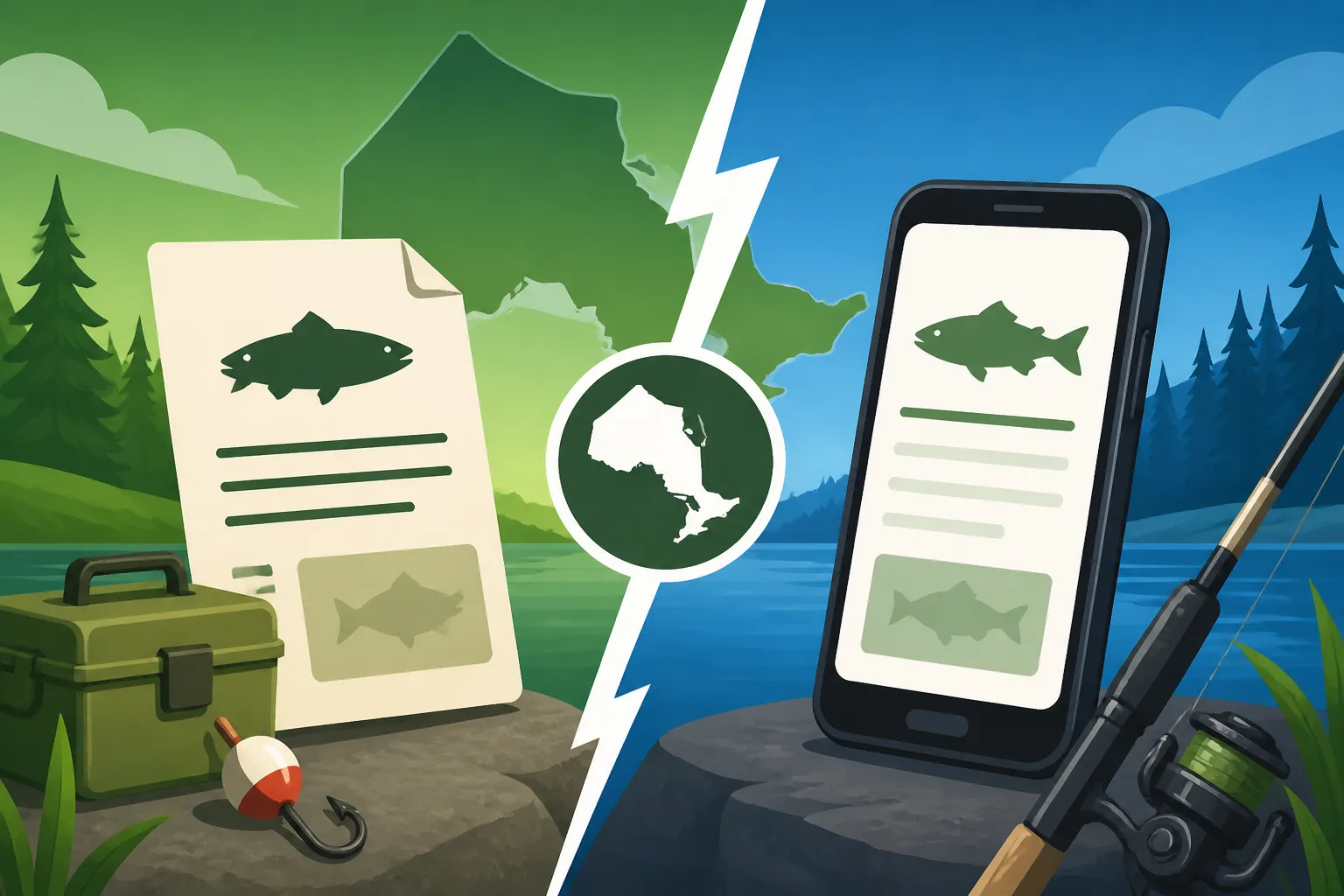
Digital vs. Paper Fishing License Comparison
To help you make an informed decision, here's a quick comparison of the pros and cons of both digital and paper fishing licenses:
| Feature/Consideration | Digital Fishing License | Paper Fishing License |
|---|---|---|
| Convenience | High (always on your phone/device) | Moderate (requires remembering to bring) |
| Risk of Loss/Damage | Low (device protected), but high if device is lost/damaged | Moderate (can get wet, torn, or misplaced) |
| Accessibility | Instant, especially with screenshot | Requires physical retrieval |
| Reliance on Technology | High (battery life, signal, device functionality) | Low (physical document) |
| Durability | Depends on device protection (case, waterproof) | Depends on care (can be laminated for extra protection) |
| Remote Areas | Riskier if device fails or no signal | Reliable |
| Environmental Impact | Lower (less paper waste) | Higher (paper use) |
| Cost to Obtain | Same as paper, but may require printing/laminating supplies for backup | Same as digital, often printed at point of purchase |
Disclaimer
The information provided in this guide is for general informational purposes only and is not intended as legal advice. Fishing regulations in Ontario can change, and it is the angler's responsibility to consult the most current official Ontario Fishing Regulations Summary for the specific zone and species they intend to fish. Always ensure you are in compliance with all applicable laws and regulations.