Ontario non-motorized boat registration exemption
It can be incredibly confusing trying to figure out all the rules and regulations when you just want to get out on the water in Ontario. Many folks wonder if they need to register their canoe, kayak, or paddleboard, adding another layer of bureaucracy to what should be a simple pleasure. This guide aims to clear up that exact frustration, explaining the specific exemption for non-motorized boats in Ontario and what you do need to focus on to stay safe and legal.
Understanding Ontario's Boat Registration Landscape
Navigating the world of boat registration can feel like trying to untangle a fishing line after a particularly enthusiastic walleye. You hear about pleasure craft licenses, vessel registration, and all sorts of official terms, and it's easy to assume every single thing that floats needs a stamp of approval from the government. This often leads to unnecessary worry, especially for those of us who prefer the quiet glide of a paddle over the roar of an engine. The key to understanding the non-motorized exemption lies in recognizing the different categories of watercraft and the specific regulations that apply to each.
Why Boat Registration Exists in the First Place
At its core, boat registration and licensing are put in place for a few very good reasons, primarily focused on safety, identification, and maintaining order on our shared waterways. For larger, powered vessels, registration provides a unique identifier, much like a license plate on a car, which is crucial for law enforcement, search and rescue operations, and tracking vessel ownership. It also helps authorities gather data on the types and numbers of boats on the water, which can inform resource management and future regulatory decisions. Think of it: if a serious accident occurs, or a boat goes missing, having a registered number can be the difference between a quick resolution and a prolonged, difficult search. For commercial vessels, the requirements are even more stringent, ensuring they meet specific safety and operational standards.
The Basic Requirements for Most Powered Vessels
Generally speaking, if your boat has a motor, it's going to fall under a different set of rules than a purely paddle-powered craft. In Ontario, as across Canada, Transport Canada is the federal body responsible for marine safety and regulations. Most pleasure craft equipped with a motor of 10 horsepower (7.5 kW) or more are required to have a Pleasure Craft License. This license displays a unique identification number that must be prominently displayed on the bow of your boat. This is not the same as full vessel registration, which is a more formal, often voluntary, process for pleasure craft (and mandatory for commercial vessels over a certain size) that provides proof of ownership and a unique name and port of registry. For the average angler with a modest fishing boat, a Pleasure Craft License is usually the main requirement if their motor meets the horsepower threshold. Understanding this distinction is crucial before you even start thinking about exemptions.
The Non-Motorized Boat Registration Exemption: What You Need to Know
Now for the good news that many of us paddlers and small boat enthusiasts have been waiting for! If your vessel is truly non-motorized, the bureaucratic hurdles become significantly smaller. The great thing about fishing in a canoe or kayak is that you don't need to worry about a lot of the formal documentation required for larger, powered vessels. This is a huge relief, saving you time, money, and paperwork, and letting you focus on the important stuff, like what bait to use or where to find the best fishing spots.
Defining 'Non-Motorized' in the Eyes of the Law
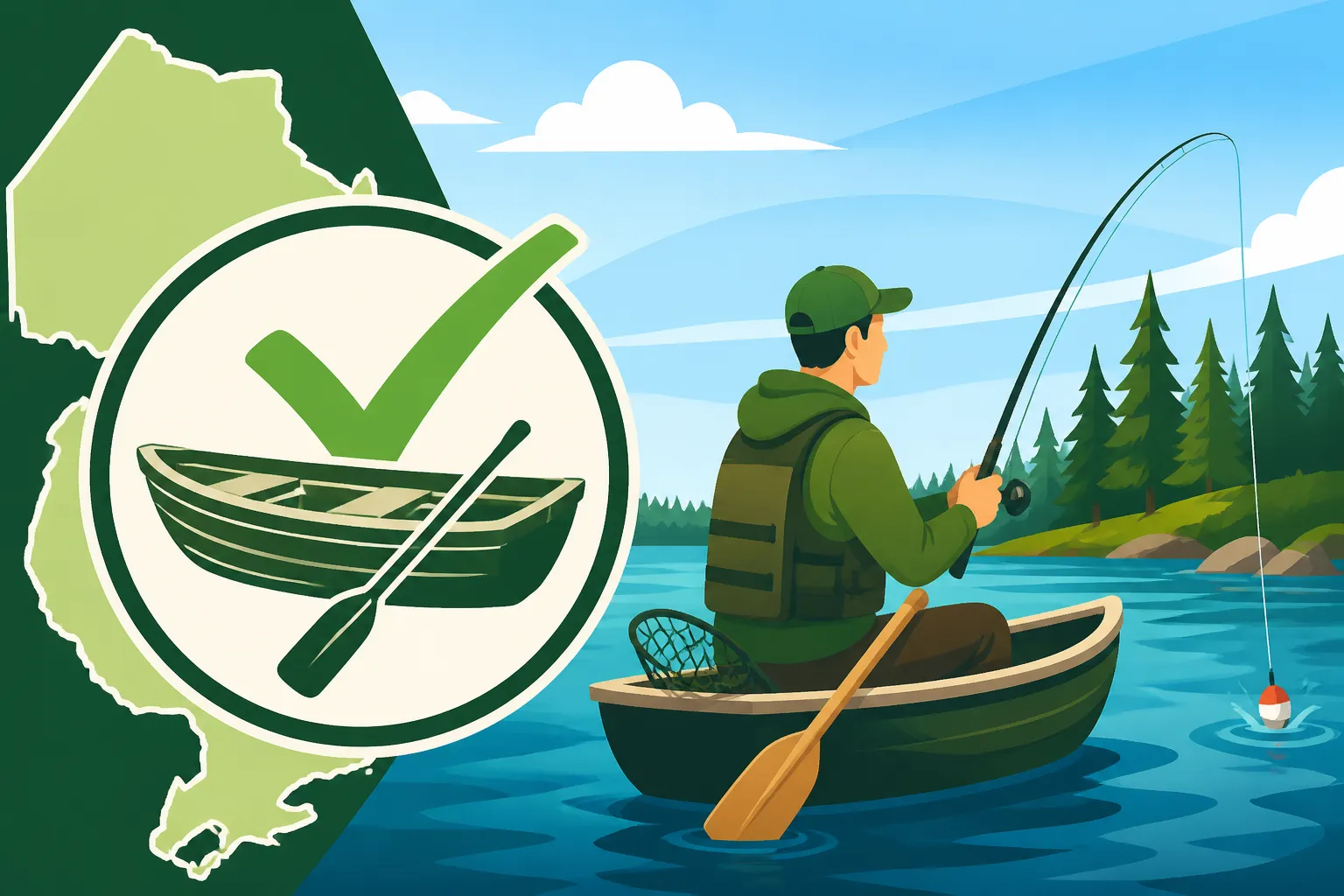
When we talk about "non-motorized" boats, we're talking about vessels propelled solely by human power or wind. This includes a wide array of popular watercraft that are perfect for quiet exploration and fishing in Ontario's beautiful lakes and rivers. Think of classic canoes, agile kayaks, trendy stand-up paddleboards (SUPs), traditional rowboats, and even small sailboats that don't have an auxiliary engine. The key here is the absence of any mechanical propulsion, whether it's gasoline, electric, or any other type of motor. If it's just you, your paddle, and the water, then you're generally in the clear regarding vessel registration. This clarity is what makes these types of boats so appealing for a spontaneous fishing trip or a serene paddle through a peaceful bay.
Specific Exemption Criteria and Conditions
The exemption is quite straightforward: non-motorized pleasure craft in Canada are generally exempt from requiring a Pleasure Craft License or formal vessel registration. This means your trusty canoe, kayak, or SUP doesn't need a registration number displayed on its bow, nor do you need to apply for any specific federal documentation for the vessel itself. However, it's vital to remember that "exempt from registration" does not mean "exempt from all rules." While you won't be filling out paperwork for your vessel, you, as the operator, are still responsible for adhering to all other boating laws and safety regulations. This includes having the appropriate safety equipment on board, understanding navigation rules, and, if you're out fishing, ensuring you have your Ontario Fishing License Guide for 2026 in order. The exemption is a fantastic perk, but it comes with the implicit understanding that responsible boating and personal safety remain paramount.
Essential Safety Equipment and Regulations for All Vessels
This is where the rubber meets the road, or rather, where the paddle meets the water. Even though your non-motorized boat might be exempt from registration, there's absolutely no exemption when it comes to safety. In fact, for smaller, more vulnerable crafts like kayaks and canoes, safety preparation is arguably even more critical. The waters of Ontario, while beautiful, can be unpredictable, and being prepared is not just a good idea – it's the law.
Mandatory Safety Gear for Non-Motorized Crafts
Regardless of whether your boat is powered by a mighty engine or simply your own two arms, certain safety equipment is mandatory under Transport Canada regulations. These requirements are in place to save lives and ensure you have the tools necessary to handle unexpected situations. You might be surprised at what's on the list, but each item serves a vital purpose.
Here's a breakdown of the essential gear you must have on board a non-motorized pleasure craft in Ontario:
- Personal Flotation Devices (PFDs) or Lifejackets: This is non-negotiable. You need one Canadian-approved PFD or lifejacket for each person on board. The PFDs must be the correct size for the intended wearer, in good working condition, and easily accessible. "Easily accessible" means not stowed away in a waterproof bag that's tied down, but rather ready to be put on quickly, or ideally, worn at all times. For instance, if you're heading out for some Kayak Fishing Techniques for Ontario Lakes, it's smart to wear your PFD from the moment you launch. You can find a fantastic selection of comfortable, Canadian-approved PFDs on platforms like Amazon, often with convenient pockets perfect for small tackle.
- Bailing Device or Manual Bilge Pump: Even a small splash can accumulate water, and capsizing is always a possibility. You need a device capable of bailing water, like a scoop, sponge, or a manual bilge pump. If your kayak has a self-bailing scupper system, that counts!
- Sound-Signalling Device: A pealess whistle is the most common and effective option. This is for attracting attention in an emergency, or signaling other vessels. Just one simple whistle can make a huge difference in low visibility or an urgent situation. You can often pick these up cheaply, and Amazon has multipacks.
- Watertight Flashlight or Flares (if operating after sunset or before sunrise): If you plan to be on the water during periods of restricted visibility or between sunset and sunrise, you’ll need either a watertight flashlight or flares. For most small non-motorized craft, a reliable watertight flashlight is the practical choice.
- Heaving Line (or buoyant throw bag): A buoyant heaving line at least 15 meters (49 feet) long is required. This is a critical piece of safety equipment for rescuing someone who has fallen overboard or to be used if your vessel capsizes.
- Paddle or Oar (if under 6 meters/19'8"): If your boat is less than 6 meters long (which most canoes, kayaks, and paddleboards are), you need one paddle or a set of oars. This is your primary means of propulsion, but it's also a crucial backup if your main paddle breaks or is lost.
- Navigation Lights (if operating between sunset and sunrise or in restricted visibility): Similar to the flashlight/flares, if you're out at night or in fog, you'll need approved navigation lights to make your vessel visible to others. For non-motorized boats, this typically means a single white light that can be shown in time to prevent a collision. Many anglers mount a small, battery-powered white light on their kayak or canoe for this purpose.
For a deeper dive into these requirements, I highly recommend checking out the guide on Life Jacket Requirements for Ontario Boaters and the broader Ontario Boating Laws for Anglers. It's far better to be overprepared than caught off guard, especially when you're far from shore.
Navigational Rules and Responsible Boating
Beyond the required gear, understanding the rules of the road – or rather, the rules of the water – is equally important. Even without a motor, you are still a vessel on shared waterways and have responsibilities to other boaters and the environment. Basic navigational rules, known as the Collision Regulations, apply to all vessels. These include keeping to the right in narrow channels, avoiding busy shipping lanes, and being aware of the "pecking order" on the water (larger, less maneuverable vessels generally have the right of way, but everyone must act to prevent a collision).
It's also about respect. Respect for other anglers, cottagers, swimmers, and wildlife. This means keeping noise to a minimum, especially in sensitive areas, and always practicing "Leave No Trace" principles. Pack out everything you pack in, and avoid disturbing fish or wildlife habitats. Being a responsible boater makes the experience better for everyone and helps preserve Ontario's incredible natural resources for future generations of anglers and paddlers.
Common Misconceptions and Clarifications
The world of boating regulations is rife with misunderstandings, and the non-motorized exemption often leads to some common questions. It’s easy to get tangled up in the details, especially when you start thinking about hybrid scenarios. Let's tackle a couple of the biggest points of confusion head-on, so you can paddle with confidence.
When a Trolling Motor Changes Everything
This is perhaps the most common area of confusion for anglers using canoes or kayaks. You have your perfectly legal, non-motorized vessel, and then you decide to add a small electric trolling motor to make fishing a little easier or cover more water. Does this change your boat's status? The short answer is yes, potentially, but it's not as simple as suddenly needing full registration.
Here's the nuance:
- Federal Vessel Registration: The formal, complex process of vessel registration (Part 1 or Part 2 of the Canada Shipping Act, 2001) is primarily for commercial vessels or larger pleasure craft that opt for it for various legal reasons. Small pleasure craft, motorized or not, are generally not required to undergo this type of registration. So, even with a small trolling motor, your kayak or canoe still won't typically need federal registration in this sense.
- Pleasure Craft License: This is where the motor horsepower comes into play. According to Transport Canada, all pleasure craft equipped with a motor of 10 horsepower (7.5 kW) or more require a Pleasure Craft License. This license issues an identification number that must be displayed. If your trolling motor is under 10 horsepower (which most electric trolling motors for canoes and kayaks are), you generally do not need a Pleasure Craft License for the boat. However, if you add a larger gasoline outboard that hits or exceeds 10 HP, then your previously non-motorized craft now requires a Pleasure Craft License.
So, for most small electric trolling motor users on canoes or kayaks, while your boat is no longer strictly "non-motorized," it usually still doesn't trigger the need for a Pleasure Craft License because these motors are typically well under the 10 HP threshold. It's a fantastic middle ground that allows for a little assist without adding significant bureaucratic overhead. Just remember, once a motor is attached, you should still carry all the required safety equipment for a motorized vessel of its size, if those requirements differ. If you're pondering adding a motor, it's always a good idea to refresh your knowledge on Ontario Boating Laws for Anglers.
Provincial Parks and Conservation Areas: Any Different Rules?
Ontario is dotted with incredible provincial parks and conservation areas, many of which offer fantastic fishing opportunities. A natural question is whether these localized jurisdictions have their own special boat registration rules that might override the general federal exemption for non-motorized vessels.
The good news is that for non-motorized boat registration, the federal exemption generally holds true within provincial parks and conservation areas. You won't typically be asked for a registration document for your canoe or kayak just because you're launching within Algonquin Park or a local Conservation Authority lake.
However, there are crucial other regulations specific to these areas that you absolutely must be aware of:
- Motor Restrictions: Many provincial parks and conservation areas, especially those designated for wilderness protection or those with sensitive ecosystems, have strict prohibitions or limitations on motor usage. Some lakes might be entirely motor-free, while others might restrict motors to electric-only or a maximum horsepower. Always check the specific park or conservation area's regulations before you go, especially if you're considering using even a small trolling motor.
- Day Use Fees/Permits: While your boat itself might not need registration, you might need to pay an entry fee or obtain a permit to access the park or conservation area, particularly for day use or camping.
- Specific Fishing Regulations: Beyond boating rules, each park might fall within a specific Fisheries Management Zone (FMZ) and have unique fishing rules, including Ontario Bag and Possession Limits by Species, Ontario Fishing Season Dates by Zone, or even special gear restrictions. You'll definitely want to review Ontario Fishing Regulations Explained for the specific zone your chosen park falls into.
The takeaway here is that while the non-motorized registration exemption remains largely consistent, always assume that localized regulations regarding motor use, access, and fishing are in effect and check them meticulously. A quick call to the park office or a visit to their website can save you a lot of hassle.
Benefits of the Non-Motorized Exemption for Anglers
For those of us who love to cast a line, the non-motorized boat registration exemption is a fantastic benefit. It truly simplifies the process of getting out on the water and connects us more directly with the fishing experience. It's not just about avoiding paperwork; it's about accessibility, cost-effectiveness, and a purer way to enjoy Ontario's natural beauty.
Ease of Access and Reduced Bureaucracy
Let's be honest, nobody enjoys paperwork. The sheer thought of filling out forms, dealing with government agencies, and waiting for approvals can be a major deterrent for many potential anglers. The non-motorized exemption sidesteps all of that for the vessel itself. You buy a kayak or canoe, grab your paddle and PFDs, and as long as you have your personal fishing license, you can be on the water. This ease of access is a game-changer. It means you can spontaneously decide to go fish a local pond or quiet bay without having to worry about an expiring boat registration or needing to display a license number on your hull.
This streamlined process encourages more people to participate in activities like Best Shore Fishing Spots in Ontario or launching a small craft from any number of convenient access points. It removes a significant barrier to entry, making fishing more approachable for beginners and those who simply want a hassle-free experience. Imagine deciding on a whim to try a new stretch of river with your kayak; the only real 'permit' you need for your boat is the knowledge that it's safe and doesn't require registration.
Cost Savings on Fees and Administration
Beyond the time and headache saved, there's a tangible financial benefit to the non-motorized exemption. Pleasure Craft Licenses themselves aren't exorbitantly expensive, but they still represent a cost, often renewed every 10 years. For more formal vessel registration, there can be additional fees and more complex administrative processes involved. By being exempt from these requirements, non-motorized boat owners avoid these direct costs entirely.
This means more money in your pocket for other essential fishing gear, like a new rod, some fresh lures, or even better quality safety equipment. Every dollar saved on administrative fees can be reinvested into enhancing your fishing experience, making that new kayak purchase feel even more justified. The freedom from fees and paperwork is a quiet but powerful incentive for choosing a paddle-powered approach to fishing, allowing you to maximize your enjoyment without unnecessary expenses.
Recommendations for Responsible Non-Motorized Boating
While the exemption from boat registration is a wonderful perk for non-motorized craft, it absolutely doesn't mean a free pass on responsibility. In fact, operating a smaller, human-powered vessel often demands an even greater degree of awareness and preparation. As anglers, we have a duty to ourselves, our fellow water users, and the environment to practice safe and respectful boating at all times.
Always Prioritize Safety
This cannot be stressed enough: your personal safety and the safety of those on board should be your absolute top priority. Before every single outing, whether it's a quick hour on a local lake or a multi-day paddle-in fishing trip, take a moment to double-check your safety gear. Is everyone's PFD easily accessible and properly fitted? Do you have your bailing device, sound-signalling device, and a heaving line? If you're going out during low light, is your flashlight working and ready? Many anglers even keep a small first-aid kit, spare paddle, and a fully charged cell phone (in a waterproof case) on board, just in case.
Conditions on the water can change rapidly in Ontario. A calm morning can turn into a windy, white-capped afternoon surprisingly quickly, especially on larger bodies of water like parts of Lake Simcoe or even some of the Best Fishing Lakes in Ontario. Always check the weather forecast before you launch, and if conditions deteriorate, don't hesitate to head for shore. It's far better to pack up early and try again another day than to push your luck and find yourself in a dangerous situation. Consider investing in a comfortable PFD that you'll actually wear the entire time you're on the water; the best PFD is the one that's on you when you need it most. Again, Amazon offers highly-rated models from brands like Salus and Mustang Survival.
Know Your Local Waters and Regulations
While federal rules cover the broad strokes, specific lakes, rivers, or even sections of waterways can have their own unique regulations. These might include speed limits, restrictions on motor types (as discussed earlier, like electric-only lakes), or even designated areas for different activities (e.g., swimming zones, fishing zones). You might encounter special regulations in specific Ontario Fisheries Management Zones, Explained that dictate season dates or catch limits, which are separate from boat registration.
Before you explore a new area, do a little research. Check the local municipality's website, look for information on provincial park or conservation area sites, or consult fishing forums for insights from experienced local anglers. Knowing these nuances not only keeps you compliant but also enhances your overall fishing experience. For instance, if you're planning a trip to a larger lake, it's wise to be aware of areas with heavy boat traffic and how to navigate them safely in your smaller, non-motorized craft. Always carry a copy of the current Ontario Fishing Regulations Summary, either digitally on your phone or a printed version, to ensure you're compliant with species-specific rules and possession limits.
By taking these proactive steps, you'll not only enjoy the freedom and simplicity that the non-motorized boat registration exemption provides, but you'll also do so safely, responsibly, and with the confidence that you're well-prepared for whatever Ontario's beautiful waters might bring.
Summary of Boat Identification and Safety Requirements
To help clarify the differences between various pleasure craft, here's a quick overview of the typical requirements in Ontario. Remember, "registration" usually refers to the formal federal vessel registration, while "license" refers to the Pleasure Craft License.
| Vessel Type | Federal Vessel Registration (Part 1/2) | Pleasure Craft License (PCL) | Key Safety Equipment Required | Common Examples |
|---|---|---|---|---|
| Non-Motorized | NO (Exempt) | NO (Exempt) | PFDs, bailing device, sound-signalling device, heaving line, paddle/oar | Canoe, Kayak, SUP, Rowboat, Small Sailboat (no engine) |
| Motorized (< 10 HP) | NO (Exempt) | NO (Exempt) | PFDs, bailing device, sound-signalling device, heaving line, paddle/oar, fire extinguisher | Small fishing boat with trolling motor, dinghy with small outboard |
| Motorized (>= 10 HP) | NO (Exempt for most pleasure craft) | YES | PFDs, bailing device, sound-signalling device, heaving line, fire extinguisher, navigation lights (if applicable) | Bass boat, runabout, larger fishing boats |
| Registered Vessel | YES (Voluntary for pleasure craft) | NO (Registration supersedes) | Full suite of required safety equipment, as per vessel size and type | Larger yachts, specific pleasure craft (often for financing/travel) |
Please note: This table summarizes general rules. Always consult the official Transport Canada Safe Boating Guide for the most precise and up-to-date information, and check local bylaws for specific water bodies.
Disclaimer
The information provided in this guide is for general informational purposes only and does not constitute legal advice. While we strive to provide accurate and up-to-date information, regulations can change. It is always the responsibility of the boater to consult official sources, such as Transport Canada and the Ontario Ministry of Natural Resources and Forestry, for the most current and specific regulations that apply to their situation. Failure to comply with regulations can result in fines or penalties.