Best salmon fishing spots near Port Credit
There’s nothing quite like the electrifying pull of a powerful salmon on the end of your line, a challenge many anglers dream of tackling. If you’re in the Greater Toronto Area, finding the perfect spot for this thrilling experience can feel overwhelming with so many options. This guide is dedicated to breaking down the best salmon fishing spots near Port Credit, offering detailed insights and actionable advice to help you land that magnificent catch.
The Allure of Salmon Fishing Near Port Credit
Port Credit, a charming lakeside community in Mississauga, holds a special place in the hearts of many Ontario anglers, and for very good reason: it’s a prime gateway to some fantastic salmon fishing opportunities. Nestled right on the shores of Lake Ontario and boasting the mouth of the Credit River, this area becomes a hotspot when the migratory salmon make their annual pilgrimage. You're not just fishing; you're participating in a natural phenomenon, chasing fish that have spent years growing large and powerful in the vast expanse of the Great Lake before returning to their natal or stocked rivers to spawn.
Why Port Credit is a Salmon Angler's Dream
The strategic location of Port Credit is what makes it truly shine for salmon enthusiasts. The Credit River flows directly into Lake Ontario here, creating a natural funnel for returning salmon. These fish stage in the deeper waters of the lake offshore, then move into the shallower nearshore areas, and eventually into the river mouth itself, offering diverse fishing opportunities. Whether you prefer the solitude of casting from shore, the excitement of trolling offshore, or the challenge of river fishing, Port Credit delivers. The area’s accessibility, combined with the sheer number of fish that pass through, ensures a vibrant and often productive fishery. It's a place where local knowledge is key, and you'll often find seasoned anglers willing to share a tip or two about the latest runs or hot baits.
Species You Can Expect to Encounter
When targeting salmon near Port Credit, you'll primarily be focused on two magnificent species: Chinook salmon and Coho salmon. Both are powerful fighters, known for their strong runs and aerial acrobatics.
- Chinook Salmon (King Salmon): These are the largest and arguably most sought-after salmon in Lake Ontario. Known for their incredible size and fighting prowess, Chinook salmon can reach impressive weights, often exceeding 20 pounds, with some true monsters pushing much heavier. They are characterized by their dark spots on both halves of the tail fin and a black mouth with black gums. For an in-depth look at these incredible fish, check out our guide on Chinook Salmon in Lake Ontario.
- Coho Salmon (Silver Salmon): While typically smaller than Chinooks, Coho salmon are no less exciting to catch. They are renowned for their aggressive strikes and spectacular acrobatic jumps. Coho usually have spots only on the upper lobe of their tail fin and a black mouth with white gums. You can learn more about these agile fighters in our Coho Salmon in the Great Lakes guide.
Occasionally, you might also encounter Atlantic salmon (less common, often stocked), Pink salmon (especially in odd-numbered years), and even Rainbow Trout (steelhead), which are also anadromous and follow similar migratory patterns up the river. Each species presents a unique challenge and reward, making every trip to Port Credit an adventure.
Prime Salmon Fishing Locations in the Port Credit Area
The beauty of salmon fishing around Port Credit is the variety of prime locations available, catering to different fishing styles and preferences. From the bustling river mouth to the expansive lake, there's a spot for every angler seeking to intercept these magnificent fish.
The Credit River Mouth and Lower Reaches
The Credit River is the undeniable heart of salmon fishing in Port Credit. As autumn approaches, mature salmon begin their migration from Lake Ontario upstream to spawn. The river mouth and its lower sections become a critical staging and migration corridor, offering excellent opportunities for shore anglers.
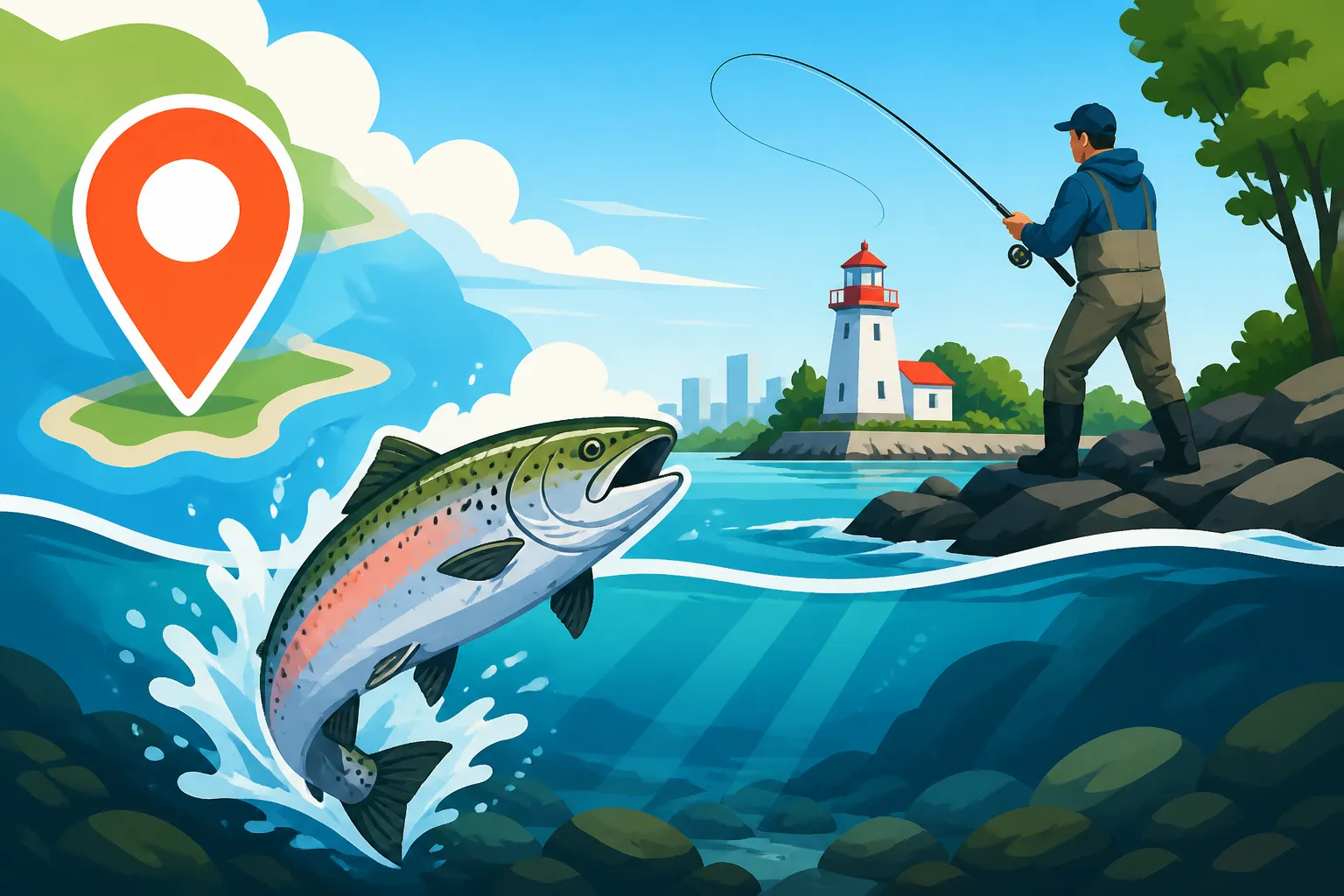
- Port Credit Harbour: The harbour area itself, particularly around the lighthouse and the breakwalls, is a fantastic place to start. Salmon stage in these deeper, calmer waters before making their push into the river. Casting spoons, heavy spinners, or drifting roe bags here can be highly effective, especially during dawn and dusk. The piers offer good access and casting platforms, but be prepared for crowds during peak migration times. The key here is patience and observing the water for any signs of jumping or rolling fish.
- Credit River Trail Access: As you move slightly upstream from the harbour, the Credit River trail provides numerous access points for wading or bank fishing. Look for deeper pools, current breaks, and log jams where salmon might rest. Popular spots include areas near the QEW bridge and further upstream towards Erindale Park, though the very lower sections remain the most productive for fresh-run salmon. Drifting natural baits like roe sacs under a float or swinging flies are popular and often successful techniques here. Remember to be mindful of private property and strictly adhere to all Ontario Fishing Regulations Explained when fishing in the river, as rules can vary for specific sections.
Lake Ontario Nearshore and Offshore Waters
Don't limit yourself to just the river; the vast waters of Lake Ontario directly off Port Credit are where these salmon spend most of their lives and where some of the biggest fish are caught.
- Shoreline and Piers: Beyond the Credit River mouth, the shoreline parks and piers along Port Credit offer opportunities for casting directly into Lake Ontario. J.C. Saddington Park, for example, provides decent shore access. During certain times of the year, particularly late summer and early fall, salmon will cruise the shallower nearshore waters before heading upriver. Casting large spoons (like Sutton, Little Cleo, or Luhr Jensen Kwikfish) or heavy stickbaits can entice these cruising fish. This is often considered one of the Best Shore Fishing Spots in Ontario for those without a boat.
- Offshore Trolling: For those with a boat, or keen to experience the thrill of a guided trip, offshore trolling is the most productive method for targeting mature salmon in Lake Ontario. Charters operating out of Port Credit and nearby harbours will venture into the deeper waters, often using downriggers to present spoons, flasher-fly combinations, or plugs at specific depths where salmon are feeding. These fish are typically chasing schools of baitfish like alewives. The waters directly off Port Credit, extending out into the lake, hold various submerged structures and temperature breaks that attract large schools of salmon. If you're planning an offshore adventure, consider checking out services like FishingBooker to find reputable local charters who know these waters intimately. Their experienced captains often use advanced sonar systems to locate bait balls and salmon.
| Salmon Species | Primary Season (Port Credit) | Typical Fishing Depth | Preferred Baits/Lures (General) | Notes |
|---|---|---|---|---|
| Chinook | Late Summer – Fall | 30-100+ feet (Lake) | Spoons, Flasher/Fly, Roe (River) | Strongest fighters, largest size |
| Coho | Late Summer – Fall | 20-60 feet (Lake) | Spoons, Plugs, Small flies (River) | Acrobatic jumpers, aggressive strikes |
| Rainbow | Fall – Spring (Steelhead) | Various | Roe, Worms, Flies, Small Spoons | Excellent fight, often caught in river |
Essential Techniques and Optimal Timing for Port Credit Salmon
Successfully targeting salmon near Port Credit requires understanding their migratory patterns and employing the right techniques for the conditions. The timing of your trip can make all the difference, as can your choice of gear and presentation.
Understanding Salmon Runs and Peak Seasons
The salmon fishery in Lake Ontario and the Credit River is highly seasonal, driven by the fish's life cycle. Knowing the Ontario Fishing Seasons by Zone and Month is crucial.
- Late Summer (August): This is when the pre-spawn staging begins offshore. Chinook and Coho salmon start to congregate in deeper waters off the river mouths. Trolling offshore is the most effective method during this time, with fish actively feeding before their spawning run.
- Early Fall (September – Early October): This is prime time for river fishing. As water temperatures cool and rain events swell the river, salmon begin their aggressive push upstream. This is when you'll find excellent opportunities for shore fishing at the Credit River mouth and lower sections. The exact timing can vary year to year based on rainfall and water conditions, but mid-September is often a hot period.
- Late Fall (Mid-October – November): While the main salmon run in the river starts to taper off as fish finish spawning, you can still find stragglers and a strong push of Rainbow Trout (steelhead) following the salmon, feasting on their eggs. Lake fishing can still be good, but the focus shifts more towards the river for these trout.
For comprehensive information on when various species are most active, refer to our guide on the Best Time of Year to Fish in Ontario.
Effective River Fishing Techniques
When salmon are pushing up the Credit River, different techniques come into play compared to lake fishing.
- Drifting Roe Bags: This is arguably the most popular and effective method for river salmon. A small mesh bag filled with salmon eggs (roe) is drifted naturally downstream under a float (bobber). The key is to match the drift speed of the current, making the bait appear natural. Use light-to-medium action spinning rods, 8-10 lb fluorocarbon leaders, and sharp, small hooks.
- Casting Spoons and Spinners: Aggressive salmon will strike at artificial lures that mimic baitfish or appear as an irritant. Brightly colored spoons (e.g., gold, silver, chartreuse, or orange) and inline spinners can be very effective, especially in faster current or deeper pools. Cast slightly upstream and retrieve with a slow, erratic action, allowing the current to impart natural movement.
- Fly Fishing: For the purists, fly fishing offers an exciting challenge. Large streamers that imitate baitfish, or egg patterns that mimic loose salmon eggs, can be incredibly productive. A 9-10 weight fly rod is generally recommended for handling these powerful fish in a river current.
Lake Ontario Trolling and Shore Casting Techniques
When you're out on the lake, whether from a boat or casting from shore, the approach changes.
- Trolling with Downriggers: This is the bread and butter of offshore salmon fishing. Downriggers allow you to present lures at precise depths in the water column. Popular setups involve spoons, often paired with dodgers or flashers to attract attention. Top producing spoons include those from manufacturers like Dreamweaver, Northern King, and Michigan Stinger in various sizes and colours (e.g., 'watermelon,' 'glow-in-the-dark,' 'blue/silver'). Speed is critical – typically between 2.0 and 3.5 mph, but experimentation is key.
- Lead Core and Dipsy Divers: These are alternative methods to get your lures down to depth without downriggers. Lead core line is braided line with a lead center, sinking at a predictable rate per color section. Dipsy divers are planer devices that pull your lure down and out to the side.
- Shore Casting: From the piers and accessible shorelines, long casts with heavy spoons (1/2 to 1 oz) or heavy stickbaits are your best bet. Look for areas where the bottom drops off quickly or where current creates natural eddies. Early morning and late evening are often the most productive times for shore anglers.
Essential Gear Considerations
Having the right equipment can make or break your salmon fishing experience.
- Rods and Reels: For river fishing, a medium-heavy spinning rod (8.5 to 10 feet) with a sturdy spinning reel spooled with 15-20 lb braided line and a fluorocarbon leader is a common setup. For offshore trolling, you'll want specialized downrigger rods paired with reliable baitcasting reels capable of handling the heavy drag. Learn more about selecting the right gear in our guide to the Best Fishing Rods for Ontario Lakes.
- Line: Braided main line is excellent for sensitivity and strength, especially when combined with a fluorocarbon leader for stealth in clear water. For trolling, specialized monofilament or lead core lines are also used.
- Lures and Baits: Stock up on a variety of spoons, stickbaits, and if river fishing, fresh salmon roe. Having a good selection of colors and sizes allows you to adapt to changing conditions and fish preferences.
- Landing Net: A large, sturdy landing net is essential for safely landing these powerful fish, especially if you plan on catch-and-release.
Navigating Regulations, Charters, and Local Insights
Beyond the techniques and timing, a successful and enjoyable salmon fishing trip to Port Credit also hinges on understanding the rules, leveraging local expertise, and prioritizing safety.
Understanding Ontario Fishing Regulations
Before you even make your first cast, it is absolutely paramount to be familiar with Ontario's fishing regulations. Not knowing the rules can lead to significant fines and disappointment.
- Fishing License: Every angler in Ontario aged 18-64 requires a valid Ontario fishing license, which must be accompanied by an Outdoors Card. You can choose between a Sport Fishing License (higher limits) or a Conservation Fishing License (lower limits, designed for greater conservation). Minors under 18 and seniors over 65 (residents) have specific exemptions. Ensure you've reviewed the Ontario Fishing License Guide for 2026 for the most current information.
- Fisheries Management Zones (FMZs): Lake Ontario and the Credit River fall under specific FMZs, typically FMZ 20. Each zone has unique regulations regarding season dates, catch limits (bag and possession), and even specific gear restrictions for certain species or times of year. Always check the official Ontario Fishing Regulations Summary for FMZ 20 before heading out.
- Catch and Release: Many anglers practice catch-and-release, especially for larger breeding fish. If you intend to release, ensure you have the proper tools (e.g., needle-nose pliers or a dehooker) and know how to handle the fish to minimize stress and maximize its survival chances.
Hiring a Salmon Charter for Lake Ontario
For many, especially those new to Great Lakes salmon fishing or visiting from out of town, hiring a professional fishing charter is the best way to experience Lake Ontario's offshore salmon fishery.
- Benefits of a Charter: A good charter captain provides all the necessary high-end gear, extensive knowledge of the local waters, and expertise in salmon tactics. They track fish movements, understand bait patterns, and know how to operate downriggers and other specialized equipment. This significantly increases your chances of a successful and educational outing. Plus, they handle all the safety equipment and ensure compliance with Ontario Boating Laws for Anglers.
- Finding a Reputable Charter: Word-of-mouth is often the best referral, but online platforms can also be incredibly helpful. Websites like FishingBooker list numerous reputable charters operating out of Port Credit and nearby harbours like Bronte or Oakville. You can read reviews, compare prices, and book directly, ensuring you find a captain whose style and boat size match your group's needs. Many charters offer half-day and full-day trips, and some even provide fish cleaning services.
Leveraging Local Bait and Tackle Shops
Don't underestimate the wealth of information available at local bait and tackle shops. These establishments are often run by passionate anglers who live and breathe fishing in the area.
- Up-to-Date Information: Staff at shops like Port Credit Bait & Tackle or other nearby tackle stores can provide real-time updates on what's biting, where fish are being caught, current water conditions (temperature, clarity, flow), and what lures or baits are currently most effective. They are a treasure trove of hyper-local knowledge that no online resource can fully replicate.
- Gear Advice: They can help you select the right lures, lines, and terminal tackle specific to the current salmon run and your chosen fishing method. Plus, supporting local businesses is always a good idea!
Safety First on the Water
Whether you're wading the river or out on Lake Ontario, safety should always be your top priority.
- River Wading: The Credit River can have slippery bottoms and strong currents, especially after heavy rains. Always wear appropriate wading boots with good traction, use a wading staff for balance, and consider a personal flotation device (PFD). Never wade alone, and always let someone know where you are going and when you expect to return.
- Lake Boating: If you're heading out on Lake Ontario in your own vessel, ensure you have all the required safety equipment on board, including PFDs for everyone, a whistle or horn, and signaling devices. Lake Ontario can become rough very quickly, so always check the marine weather forecast before departing and be prepared to head in if conditions deteriorate.
By combining your enthusiasm for salmon fishing with solid preparation, adherence to regulations, and a smart approach to local resources, your trip to Port Credit promises to be an unforgettable angling adventure.
Disclaimer
The information provided in this guide is for general informational purposes only and is subject to change. Fishing regulations in Ontario are updated annually and can vary by species, water body, and Fisheries Management Zone. Always consult the current official Ontario Fishing Regulations Summary published by the Ontario Ministry of Natural Resources and Forestry (MNRF) before heading out to fish. It is your responsibility to know and follow all applicable laws and regulations. Fishing conditions, including fish presence and activity, are highly variable based on weather, water conditions, and time of year.