Best kayak fishing technique for lake smallmouth
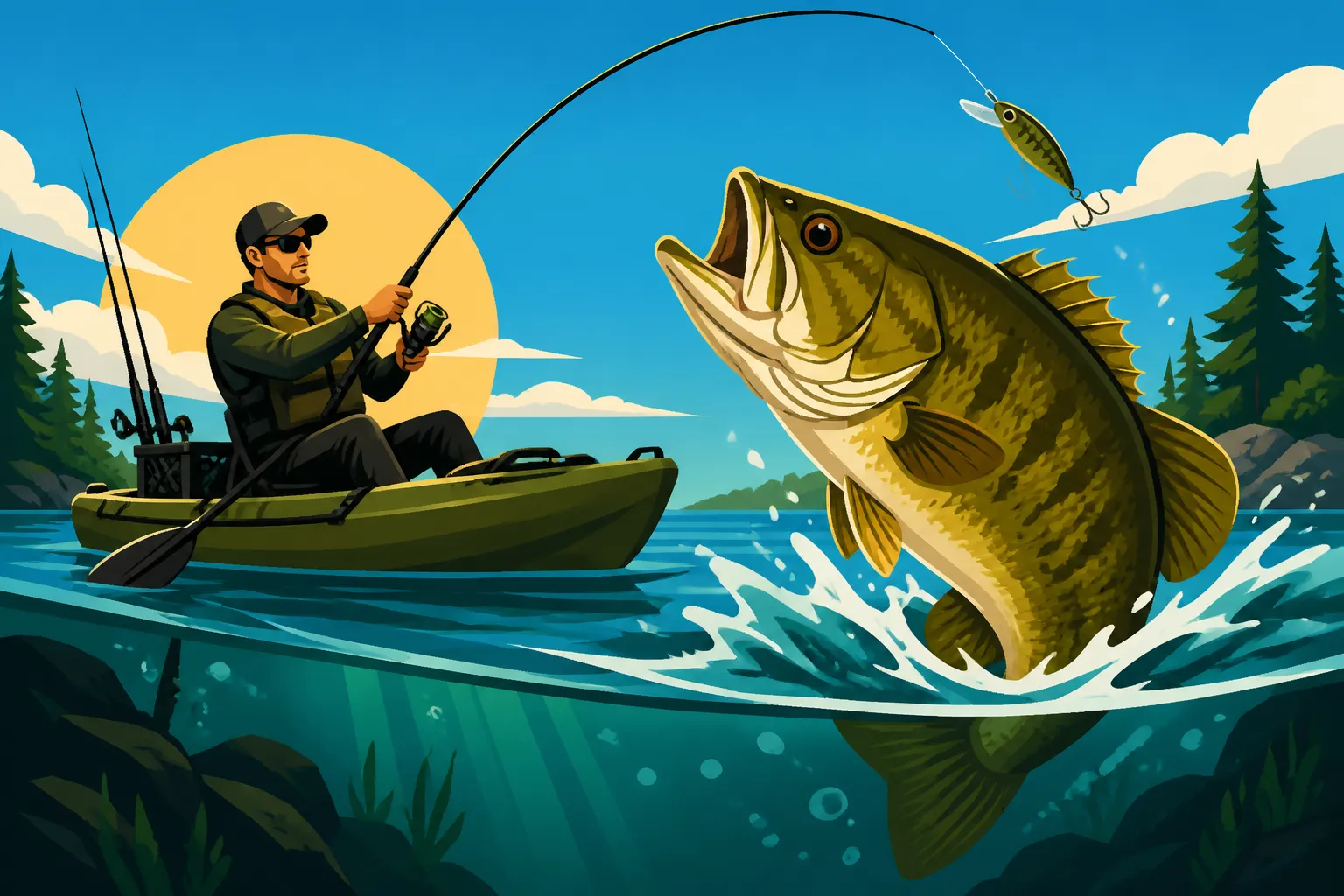
Traditional fishing boats can often feel too loud and cumbersome, scaring off those notoriously wary lake smallmouth bass before you even get a decent cast in. Many anglers struggle to reach secluded bays or navigate tight, rocky shorelines where these bronze beauties love to hide, constantly battling the limitations of larger vessels. This guide is all about transforming your smallmouth angling experience, showing you the absolute best kayak fishing techniques to quietly and effectively target lake smallmouth across Ontario’s diverse waters.
Why Kayak Fishing for Lake Smallmouth is a Game-Changer
When it comes to pursuing the feisty smallmouth bass in Ontario's vast lakes, many anglers default to larger aluminum or fiberglass boats. While these certainly have their place, they often come with limitations that can hinder your success, especially when targeting such a notoriously spooky species. Kayak fishing, on the other hand, offers a unique set of advantages that can completely revolutionize how you approach lake smallmouth.
Accessing Remote Hotspots
One of the biggest frustrations for many boat anglers is the inability to reach prime smallmouth habitat. Those shallow, rocky shoals, tight weed lines, and secluded coves that scream "smallmouth paradise" are often too shallow or too challenging for traditional motorboats to access safely. This is where the fishing kayak shines. You can silently paddle or pedal into these skinny waters, creeping up on undisturbed fish that rarely see a lure. Think about those hidden pockets along the rocky shorelines of Georgian Bay or the tucked-away bays in the Kawartha Lakes system – places where a big prop would churn up the bottom and send fish scattering. With a kayak, you're stealthy, allowing you to explore these sanctuaries effectively. This unparalleled access means you're fishing where fewer people have been, often leading to more consistent bites and larger fish.
Stealth and Presentation
Smallmouth bass are incredibly visual predators, and they are acutely aware of their surroundings. A loud outboard motor or even the slosh of a larger boat can send them diving for cover, especially in clearer waters. The inherent stealth of a kayak is a massive advantage here. You glide across the water almost silently, minimizing your disturbance and allowing you to get much closer to fish without spooking them. This silent approach means your presentations can be far more accurate and natural. Imagine slowly drifting over a rocky point on Lake Simcoe, gently placing a tube jig right on a drop-off, or meticulously working a topwater bait along a submerged log. The quiet nature of kayak fishing also allows for much easier sight fishing in clear water, where you can literally pick out individual fish and present your lure with precision, making it an incredibly effective way to fool wary smallmouth.
Enhanced Angler Experience
Beyond the practical fishing advantages, kayak fishing offers an entirely different and often more rewarding experience. It forces you to slow down, to observe your surroundings more closely, and to truly connect with the environment. There’s a certain minimalist charm to launching a kayak, packing only what you need, and powering yourself across the water. It’s a physical activity that adds an extra layer of satisfaction to every catch. You feel every surge of the paddle or push of the pedal, every subtle bump of your lure, and every head shake of a fighting smallmouth right through your seat. This intimate connection makes a successful outing feel even more earned. For those looking to truly immerse themselves in the wild beauty of Ontario’s waters, a kayak provides an unobstructed, low-profile view of nature, making the entire journey as enjoyable as the catch itself.
Essential Kayak Gear & Setup for Lake Smallmouth
Getting into kayak fishing for smallmouth in Ontario doesn't require an overwhelming amount of specialized gear, but having the right equipment and a smart setup can make all the difference in your comfort, safety, and fishing success. Thinking strategically about your kayak, safety gear, and tackle organization will set you up for productive days on the water.
Choosing Your Kayak and Propulsion
The first big decision is your kayak itself. For lake smallmouth fishing, a sit-on-top fishing kayak is generally the most popular choice due to its stability, open deck space for gear, and ease of getting on and off. These kayaks often feature wider hulls, which translate to greater stability, allowing you to stand and cast if you feel comfortable. You'll also need to decide between paddle or pedal propulsion. Pedal kayaks, like those from Hobie or Old Town, are incredibly popular for fishing because they leave your hands free for casting, fighting fish, or adjusting your gear. They are fantastic for maintaining position against wind or current, or for slowly trolling points. If you're on a budget or prefer a simpler, more physically engaging experience, a good paddle kayak can still be incredibly effective, especially for shorter trips or when navigating very shallow areas. Regardless of your choice, look for features like ample storage, rail systems for mounting accessories, and comfortable seating for long days on the water. For more insights, you might find our guide on the Best Kayaks for Ontario Fishing helpful.
Must-Have Safety and Comfort Gear
Safety should always be your top priority, especially on larger Ontario lakes where conditions can change rapidly. A properly fitting Personal Flotation Device (PFD) is absolutely non-negotiable and legally required. Look for a fishing-specific PFD with pockets and attachment points for essential tools. You can find a great selection of high-quality PFDs on Amazon, often with features tailored for anglers. Beyond the PFD, a reliable paddle (even if you have a pedal drive, it's a critical backup), a whistle, and a bailing device are also mandatory under Life Jacket Requirements for Ontario Boaters. Other crucial items include a paddle leash to prevent losing your paddle, an anchor system (a small grappling anchor or a drag chain is perfect for kayaks), a dry bag for electronics and valuables, and a first-aid kit. Dressing in layers is also key, as temperatures can fluctuate. A good quality pair of polarized sunglasses will help you spot structure and fish in clear water, and a wide-brimmed hat offers essential sun protection.
Rods, Reels, and Electronics
For lake smallmouth from a kayak, a versatile spinning setup is often ideal. I usually bring 2-3 rods ranging from medium-light to medium power, typically 6'6" to 7' in length. These lengths offer a good balance of casting distance and maneuverability in the confined space of a kayak. Pair them with reliable 2000-3000 series spinning reels spooled with 8-15 lb braided line, often with a fluorocarbon leader for stealth. While this guide focuses on kayak fishing, much of the general advice on spinning rods applies, so our article on Best Spinning Rods for Walleye can offer some good foundational knowledge on rod selection. Rod holders, either flush-mounted or track-mounted, are invaluable for secure storage while paddling or for trolling.
When it comes to electronics, a compact fish finder with GPS capabilities can significantly boost your success. Units like the Garmin Striker series or Humminbird PiranhaMax are popular choices for kayaks, offering basic sonar, water temperature, and often GPS mapping to mark waypoints. These can usually be powered by a small 12V lithium battery, which you can easily stash in a dry box. Mounting systems for fish finders have come a long way, with many options that are easy to install and remove. Remember to always check current regulations, as a Ontario Pleasure Craft Operator Card Requirement applies to most motorized vessels, including those with electric trolling motors.
Tackle Organization for Compact Spaces
Space is at a premium in a kayak, so smart tackle organization is crucial. Instead of bulky tackle boxes, consider soft-sided tackle bags or waterproof plano boxes that fit neatly into your kayak’s storage hatches or a milk crate system behind your seat. Focus on bringing a selection of lures specifically effective for smallmouth bass. This typically includes tube jigs, drop shot weights and hooks, Ned rigs, small crankbaits (both shallow and deep divers), topwater poppers and walking baits, and spinnerbaits. Keep your most-used lures easily accessible in a small tray or pocket. Many anglers purchase their smaller terminal tackle items, like hooks, swivels, and sinkers, from Amazon due to the wide variety and convenience. Keep a pair of line clippers, needle-nose pliers, and a small landing net within arm's reach. A good tip is to pre-rig some popular baits before you launch, minimizing fumbling around on the water.
Top Techniques for Targeting Lake Smallmouth from a Kayak
Kayaks excel at a variety of fishing techniques, offering distinct advantages that can help you outsmart even the wariest lake smallmouth. From aggressive power fishing to subtle finesse presentations, the quiet stability of a kayak allows for precise execution.
Covering Water with Power Fishing
Lake smallmouth can be found holding on specific structures, but often they roam expansive flats, points, and rock piles. Power fishing from a kayak allows you to efficiently cover a lot of water and locate active fish. This involves techniques like casting lipless crankbaits or medium-diving crankbaits along break lines, ripping them over submerged grass beds, or cranking rocky points. A pedal-drive kayak is particularly effective for this, as you can continuously pedal along a contour, maintaining your speed and direction while casting and retrieving. The low profile of a kayak also helps you keep a consistent casting angle, allowing your lures to track true without being pulled off course by strong wind or current. When smallmouth are aggressive and scattered, covering water quickly with reaction baits is an excellent strategy to identify productive areas.
Finesse for Finicky Fish
Sometimes, smallmouth bass get finicky. Maybe it's post-frontal conditions, heavy fishing pressure, or simply clear water where they're easily spooked. This is when finesse techniques shine, and a kayak provides the ideal platform for their precise execution. Drop-shotting is a killer technique for suspended smallmouth or fish holding tight to structure. From a kayak, you can position yourself directly over a hump or a rocky transition, using your fish finder to pinpoint fish, and then vertically present your bait with pinpoint accuracy. Ned rigs and shaky heads, fished on light line, are also deadly when smallmouth are reluctant to bite. The quiet nature of a kayak means you can hold your position without alarming fish, making those subtle bites much easier to detect. Our guide on How to Catch Smallmouth Bass in Ontario details some of these finesse approaches further. Focusing on vertical presentations and subtle movements is key when fish are pressured, and the kayak allows for that perfect, quiet approach.
Topwater Thrills
There’s nothing quite like a smallmouth blowing up on a topwater lure, and kayak fishing amplifies that excitement. Topwater baits like poppers, walking baits (e.g., a "Spook" style lure), and buzzbaits are fantastic for early mornings, evenings, or overcast days when smallmouth are feeding actively near the surface. Casting these lures from a kayak feels incredibly natural; you’re low to the water, giving you an excellent vantage point for watching the strike. Target shallow flats, rocky shorelines, and areas with submerged timber. The stealth of your kayak means you can get right into the strike zone without alarming the fish. Our post on Topwater Fishing for Smallmouth Bass in Ontario provides more specific strategies to dial in this thrilling technique. The quiet nature of your approach means the only disturbance the fish will hear is your lure splashing down, often eliciting an aggressive, uninhibited strike.
Jigging and Vertically Presenting
Jigging is a cornerstone technique for smallmouth, especially when they move deeper or relate closely to specific underwater structure like rock piles, humps, or distinct drop-offs. From a kayak, you have the advantage of precise boat control, allowing you to stay directly over the structure you're targeting. Using your fish finder, you can identify isolated boulders, submerged timber, or schools of baitfish, and then drop a tube jig, hair jig, or a grub right into the strike zone. The direct connection you have to the water from a kayak makes detecting subtle bites incredibly easy. You can also incorporate slow-rolling swimbaits or umbrella rigs along contour lines if allowed by regulations, taking advantage of the kayak's ability to maintain a slow, steady speed. When fishing a renowned smallmouth fishery like Lake Erie, understanding Smallmouth Bass Habits on Lake Erie can give you an edge in pinpointing these key structures.
| Technique | Lure Types | When to Use | Kayak Advantage |
|---|---|---|---|
| Power Fishing | Crankbaits (lipless/diving), Spinnerbaits, Swimbaits | Actively feeding fish, covering large areas, windy conditions | Efficient movement with pedal drive, consistent casting angle |
| Finesse Fishing | Drop Shots, Ned Rigs, Shaky Heads, Small Jigs | Post-frontal, clear water, pressured fish, deep structure | Precise vertical presentation, silent approach, enhanced bite detection |
| Topwater Fishing | Poppers, Walking Baits, Buzzbaits | Low light (dawn/dusk), overcast, calm water, shallow flats | Stealthy approach, low vantage point for strikes |
| Jigging | Tube Jigs, Hair Jigs, Grubs, Jigging Spoons | Fish on distinct structure (rock piles, humps), deeper water | Pinpoint positioning over structure, direct feel for bites |
Navigating and Safety on Ontario Lakes
While the intimacy of kayak fishing is a huge draw, Ontario's lakes can be vast and unpredictable. Understanding how to navigate safely and manage changing conditions is just as important as your fishing techniques. Being prepared will ensure your trips are not only productive but also enjoyable and secure.
Understanding Wind and Waves
Ontario lakes, particularly the Great Lakes or large inland bodies like Lake Nipissing, can go from calm to choppy in a matter of minutes. Wind is a kayak angler's biggest adversary. Even a moderate breeze can make paddling difficult, blow you off your fishing spot, or create uncomfortable waves. Always check the weather forecast before heading out, paying close attention to wind speed and direction. Consider your skill level and kayak stability – a wide, stable fishing kayak handles chop better than a narrow touring model. When faced with wind, try to position your kayak to use it to your advantage, perhaps drifting along a productive shoreline, or paddle into the wind on your way out so your return trip is easier. If conditions deteriorate, head for the nearest shore or protected bay immediately. Never underestimate the power of these large bodies of water.
Anchoring and Positioning
Maintaining position is critical for many smallmouth fishing techniques, especially finesse presentations or when you’ve found a hot spot. A reliable anchor system for your kayak is therefore essential. A small grappling anchor, typically 1.5 to 3 lbs, is effective in many situations. Pair it with at least 50 feet of anchor line and a quick-release system. An anchor trolley is an incredibly useful accessory, allowing you to move your anchor point from the bow to the stern (or anywhere in between) without having to unclip and re-clip the anchor line. This gives you precise control over your kayak's angle relative to the wind and current, allowing you to present your lure exactly how you want. For hands-free fishing, especially when jigging or drop-shotting, an anchor or a Best Trolling Motor for a Fishing Kayak (if your kayak supports one and regulations allow) becomes invaluable.
Boating Regulations and Awareness
Just because you’re in a kayak doesn’t mean you’re exempt from all boating regulations. It's crucial to be aware of Ontario Boating Laws for Anglers. For example, a Pleasure Craft Operator Card (PCOC) is required for operating any motorized vessel, including kayaks equipped with an electric trolling motor. You also need to carry specific safety equipment, such as a PFD for each person, a whistle, bailing device, and a buoyant heaving line. If you're out during periods of reduced visibility (like fog) or between sunset and sunrise, you are required to display navigation lights. Always be aware of larger boat traffic; you’re small and often harder to see. Consider flying a bright orange or reflective visibility flag, especially on busy lakes, to make yourself more noticeable. It’s about being a responsible and safe boater, ensuring everyone can enjoy Ontario's beautiful waters.
Disclaimer
This article is for general informational purposes only and does not constitute professional advice. Laws, prices and regulations vary by location and change over time. Consult a qualified professional for guidance on your specific situation.