Lake Trout Fishing in Ontario
Anyone who's ever dropped a line into the cold, clear depths of an Ontario lake knows the thrill – and sometimes the sheer frustration – of chasing after the elusive lake trout. These powerful, ancient fish are a true testament to the rugged beauty of our province's waters, but they don't give up their secrets easily. This guide is here to unravel the mysteries of "laker" fishing, providing you with the insights and strategies needed to connect with these magnificent deepwater dwellers, whether you're a seasoned angler or just starting your adventure.
Understanding Ontario's Lake Trout: The Deepwater Denizen
Lake trout are iconic fish in Ontario, representing the pristine, deep, cold-water habitats that are so abundant here. They are not like your typical bass or pike that might lurk in weed beds or around shallow structures. Lakers are creatures of habit, driven by water temperature and the availability of their preferred forage, which often sends them to incredible depths. Understanding their biology and behavior is the first step in successfully targeting them. You can't just stumble upon these fish; you need to understand their world.
Identifying Lake Trout: Key Characteristics
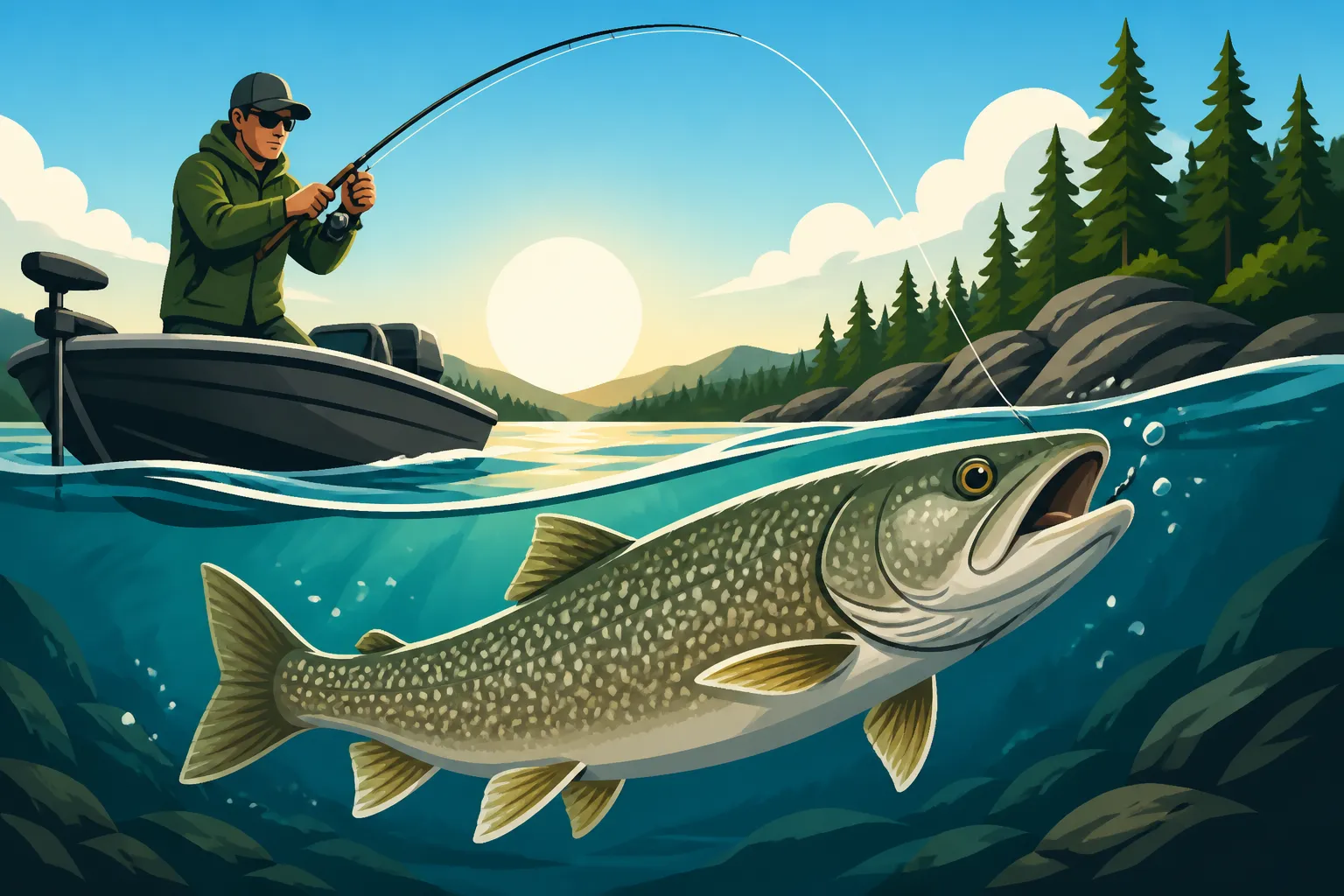
Lake trout (Salvelinus namaycush) are truly magnificent fish, often confused with other trout species, but they have distinct features that set them apart. Their body shape is typically long and sleek, built for cruising through open water and powerful bursts of speed. Their colouration can vary quite a bit depending on the lake they inhabit and their diet, but generally, they'll have a dark green, grey, or even brownish back that fades into lighter sides and a pale, often white, belly. What really gives them away are the distinctive light spots, almost worm-like markings, scattered across their body, head, and fins. These spots are usually lighter than their background colour, contrasting nicely.
Their tail fin is another key identifier; it’s deeply forked, much more so than a brook trout or rainbow trout, giving them that classic powerful swimming profile. They also have an adipose fin, a small, fleshy fin between their dorsal and tail fins, which is characteristic of all salmonids. Their mouth is large, often extending back past the eye, and is filled with sharp, conical teeth – a clear sign they are apex predators in their underwater world. If you've ever battled a large laker, you'll know that powerful tail and those sharp teeth are put to good use!
Lake Trout Habitats: Where They Roam
Lake trout are cold-water specialists, meaning they thrive in deep, oxygen-rich lakes where water temperatures remain consistently cool, ideally below 13°C (55°F). This physiological requirement dictates where you'll find them throughout the year. In Ontario, this means vast, oligotrophic lakes – those that are deep, clear, and relatively low in nutrients. Think of the massive, ancient bodies of water carved by glaciers, like Lake Superior, Lake Huron, or many of the remote lakes in Northern Ontario.
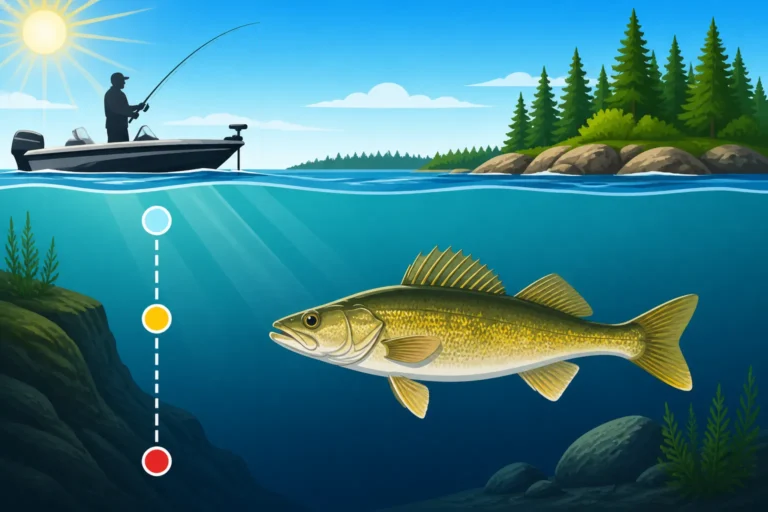
During the warmer months, as the surface waters heat up, lake trout retreat to the deeper thermocline layer, where the cooler water and higher oxygen levels are to their liking. This can be anywhere from 30 to over 100 feet deep, depending on the lake's size and structure. They'll often relate to underwater structure such as humps, ledges, deep reefs, sunken islands, and steep drop-offs that provide cover and ambush points for their prey. In the spring and fall, when the entire water column is cool, they can be found shallower, sometimes even right near the surface. They are constantly on the move, following baitfish schools, making them a challenging, but rewarding, target.
Spawning Habits and Conservation
Lake trout have a fascinating and somewhat vulnerable spawning process. Unlike salmon or some other trout that run up rivers to spawn, lake trout typically spawn in the fall, usually between late September and November, often right within the lakes they inhabit. They seek out very specific areas for this crucial event: shallow, rocky shoals or reefs with clean, gravelly bottoms, often in exposed areas where currents help keep the eggs oxygenated and free of silt. The female will deposit her eggs among the rocks, and the male will fertilize them, with no nest building involved. The eggs then settle into the crevices, protected from predators and currents until they hatch the following spring.
This specific spawning habitat makes them particularly susceptible to habitat degradation and disturbance. Because they are slow-growing and late-maturing, they can be easily overfished. This is why conservation efforts are paramount for lake trout populations across Ontario. Strict regulations on catch limits, size restrictions, and sometimes even seasonal closures on specific lakes or zones are in place to ensure these magnificent fish continue to thrive for future generations. Understanding these rules, which you can find detailed in the Ontario Fishing Regulations Explained guide, is not just about avoiding fines; it's about being a responsible angler and contributing to the health of the fishery.
Prime Lake Trout Waters in Ontario
Ontario is a true paradise for lake trout enthusiasts, boasting countless lakes that hold healthy populations of these deepwater gems. From the easily accessible to the truly remote, there's a lake trout adventure waiting for every angler. The challenge often isn't finding a lake with lake trout, but narrowing down the options and picking the right one for your style of fishing.
Notable Southern Ontario Lake Trout Lakes
While often associated with the wilderness of Northern Ontario, several excellent lake trout fisheries exist in the southern and central regions of the province. These lakes often see more angling pressure but can still yield impressive results if you know where and when to look. Lake Simcoe, for instance, despite being heavily fished and experiencing warm summers, boasts a robust lake trout population that offers fantastic ice fishing opportunities. Anglers often target its deeper basins and humps throughout the winter.
The Kawartha Lakes region, while generally shallower, has a few deeper lakes like Lake Catchacoma and some of the more remote lakes in Algonquin Provincial Park that are known for their lakers. Even some of the larger, deeper sections of the Great Lakes, such as Georgian Bay on Lake Huron and certain areas of Lake Ontario, hold impressive lake trout. These areas demand specialized gear and techniques, often involving substantial boats and downriggers, but the rewards can be truly monumental, with trophy-sized fish regularly caught. For a broader overview of great fishing spots, check out Best Fishing Lakes in Ontario.
Northern Ontario's Pristine Lake Trout Havens
Northern Ontario is where the lake trout truly shines, with an almost endless supply of deep, cold, oligotrophic lakes. This vast wilderness offers everything from drive-to destinations to remote fly-in experiences that will take your breath away. Massive bodies of water like Lake Superior and Lake Huron, particularly their northern reaches, are legendary for their giant lake trout. Anglers frequently recount tales of epic battles with these deepwater beasts in the Canadian Shield's vast interior.
Beyond the Great Lakes, countless inland lakes, often accessible only by boat, ATV, or float plane, hold untouched or lightly pressured lake trout populations. Destinations like Lake Nipigon are not just famous for their gargantuan brook trout, but also for their equally impressive lake trout, offering some of the best freshwater trophy opportunities anywhere. The sheer size and depth of these lakes provide ideal conditions for lakers to grow to immense proportions. Exploring these northern waters is an experience in itself, offering solitude and incredible fishing. You can dive deeper into a specific northern lake with our Lake Nipigon Fishing Guide.
Remote Fly-in Lakes and Wilderness Opportunities
For the truly adventurous angler, Ontario's remote fly-in lakes represent the pinnacle of lake trout fishing. These are destinations far beyond any road access, reachable only by floatplane, and they offer a wilderness experience like no other. Imagine flying over endless forests and countless lakes, knowing that only a handful of people have ever cast a line into some of these pristine waters.
These lakes often feature incredible clarity, with lake trout visible cruising along rocky ledges or deep drop-offs. Because of the limited pressure, the fish can be less wary and often larger, providing a unique challenge and an unforgettable trip. Many remote lodges cater specifically to fly-in fishing, providing cabins, boats, and guides, taking the logistical headache out of the equation. This kind of trip, while an investment, offers unparalleled opportunities to connect with nature and experience lake trout fishing at its purest. It's truly a bucket-list experience for many anglers, allowing them to escape the crowds and find true solitude with some of the province's most magnificent fish.
Essential Gear for Ontario Lake Trout Fishing
Chasing lake trout is a serious endeavour, and having the right gear can make all the difference between a frustrating day and a memorable catch. These are strong, deep-dwelling fish, and your tackle needs to be up to the task. It's not just about what you use, but how well it's suited to the specific techniques you'll employ.
Rods, Reels, and Line: Building Your Setup
For lake trout, you generally want a setup that offers both power and sensitivity. A medium-heavy to heavy action spinning or baitcasting rod, typically 6'6" to 7'6" in length, is a good starting point. The stiffer backbone allows you to set the hook effectively in deep water and handle the powerful runs of a large laker, while a somewhat sensitive tip helps detect subtle bites. If you're trolling with downriggers, a specialized downrigger rod with a softer, more parabolic action might be preferred, as it acts as a shock absorber. For an overview of general rod selection, check out Best Fishing Rods for Ontario Lakes.
Pair your rod with a robust spinning reel (size 3000-5000) or a sturdy baitcasting reel that can hold plenty of line. Line capacity is crucial when targeting deep-dwelling fish. Speaking of line, braided line is a popular choice for its no-stretch properties, which provide excellent sensitivity and direct hook sets in deep water. A 20-30 lb test braided line is a good all-around choice. You'll want to add a fluorocarbon leader, usually 10-20 lb test, at least 6-10 feet long. Fluorocarbon is nearly invisible underwater, which can be critical in clear lake trout waters, and it offers excellent abrasion resistance against rocky bottoms or sharp teeth. You can find many great options for braided line and fluorocarbon leaders on platforms like Amazon, offering a wide range of choices to suit your specific needs and budget.
Lures and Baits: What Works Deep Down
Lake trout are primarily piscivores, meaning they feed on other fish. Therefore, lures that imitate their natural prey are often the most effective. Spoon baits are arguably the most iconic and successful lake trout lures. Large, heavy spoons in silver, copper, or iridescent finishes, mimicking cisco, smelt, or other baitfish, are deadly when trolled or jigged. Brands like Williams Wabler, Little Cleo, and Daredevil have been catching lakers for decades for good reason.
Jigs, especially heavier ones (1/2 oz to 2 oz or more), tipped with a plastic grub, minnow imitation, or even a piece of bait, are incredibly effective for vertical jigging over structure. Tube jigs are also popular, particularly for ice fishing. Stickbaits and minnow-imitating crankbaits, especially deep-diving models, can be very productive when trolling shallower in spring or fall, or suspended at depth. For a more natural presentation, live bait like minnows or smelt, fished on a dropper rig or under a slip bobber in deeper water, can be irresistible to a finicky laker. Consider carrying a variety of these lure types, as lake trout can be particular about their meal on any given day.
Electronics and Accessories: Finding the Fish
When you're fishing for fish that might be 50 to 150 feet down, you can't rely on sight. This is where modern electronics become absolutely indispensable. A good quality fish finder is your best friend when chasing lake trout. It allows you to locate deepwater structure like humps, drop-offs, and sunken islands, and crucially, it helps you identify baitfish schools and the lake trout themselves. Side imaging and down imaging technologies can give you an even clearer picture of the underwater world, helping you pinpoint exactly where the fish are holding. Many reliable fish finders, from basic models to advanced units, are readily available on Amazon, making it easy to research and purchase the right one for your boat or kayak. To learn more about selecting the right unit, check out Best Fish Finders for Ontario Lakes.
Beyond the fish finder, a quality GPS unit (often integrated into your fish finder) is vital for marking productive spots and navigating safely, especially on large, unfamiliar lakes. Downriggers are often a necessity for precise depth control when trolling heavy lures or baits for deep-dwelling lake trout. These allow you to present your offering exactly where the fish are holding, far below the surface. A large, rubberized landing net is also crucial for safely landing these big, powerful fish, especially if you plan on catch and release, as it protects their slime coat. And don't forget good quality polarized sunglasses to cut the glare and spot any shallower fish or structure on those rare occasions when they come up.
Mastering Lake Trout Fishing Techniques
Lake trout are found across a wide range of depths and conditions throughout the year, so having a diverse set of techniques in your arsenal is key to consistent success. Adaptability is crucial, as what works one day might not the next, and what works in spring definitely won't work in the dead of summer.
Trolling for Lake Trout: The Search for Depth
Trolling is perhaps the most popular and effective method for covering large expanses of water and finding actively feeding lake trout, especially when they are suspended in the water column or spread out along deep structures. The goal is to present your lure at the exact depth where the fish are feeding. In spring and fall, when lakers are shallower, you might get away with simply flat-lining or using planer boards. However, during the summer, when fish are often 50-150 feet down, downriggers become almost essential.
Downriggers allow you to precisely control the depth of your lure, dropping it right into the thermocline or just above known structure. Various lures work well for trolling, including large spoons, deep-diving crankbaits, and even whole baitfish rigged on dodgers or flashers. Experiment with different trolling speeds, typically between 1.5 to 3.0 mph, until you find what triggers bites. Pay close attention to your fish finder; if you mark fish at a certain depth, adjust your downrigger to present your lure at or just above that depth. Slight S-turns with your boat can make your lure dart and dive, often provoking a strike. For more detailed insights, our guide on Trolling Techniques for Ontario Lake Trout offers excellent advice.
Jigging and Vertical Presentations
When lake trout are concentrated over specific pieces of structure, like a deep hump, a submerged point, or a rock pile, vertical jigging can be incredibly effective. This method involves positioning your boat directly over the fish, as identified by your fish finder, and dropping a heavy jig or spoon straight down to them. The key here is precise boat control, often requiring a good electric trolling motor with a spot-lock feature, to stay put over the target.
Heavy jigs, bucktail jigs, or even large flutter spoons are excellent choices for jigging. The retrieve can vary wildly; some days, a sharp rip followed by a long pause is the ticket, while other times a subtle quiver or slow lift-and-drop works best. Watch your fish finder constantly; you'll often see the fish rise to investigate your lure before committing. If they follow but don't bite, try changing your jigging cadence, lure colour, or even just letting it sit perfectly still for a moment. This active style of fishing is engaging and highly rewarding when you crack the code.
Still Fishing and Live Bait Strategies
While less active than trolling or jigging, still fishing with live bait can be a highly effective, and often surprisingly relaxing, way to catch lake trout, especially when they are less aggressive or holding tight to structure. This technique is particularly popular during ice fishing season but can also be adapted for open water. The principle is simple: present a natural bait, typically a lively minnow or smelt, near where lake trout are known to reside.
For open water, a three-way swivel rig or a slip-sinker rig can be used to present a live minnow just off the bottom or suspended at a specific depth. The key is to use enough weight to get your bait down quickly and keep it in the strike zone, but not so much that it completely impedes the bait's natural movement. For ice fishing, a dead stick with a lively minnow suspended a few feet off the bottom is a classic setup. The natural movement and scent of live bait can entice even the most wary lake trout. Just be sure to check the regulations for your specific zone, as rules regarding live bait can vary. Remember that sometimes the simplest presentation is all it takes to get that big laker to bite.
Seasonal Strategies for Lake Trout Success
Lake trout behavior changes dramatically with the seasons, primarily driven by water temperature and their spawning cycle. What works in April certainly won't work in August. Understanding these seasonal shifts is fundamental to being consistently successful when chasing Ontario's deepwater giants.
Spring: Post-Ice Out Opportunities
Spring, immediately after ice-out, is often considered one of the best times to target lake trout. The entire water column is still cold, meaning lakers can be found much shallower than during the summer months, sometimes even right in the top 10-20 feet of water. They're often hungry after a long winter under the ice and will aggressively pursue baitfish in these shallower zones.
This is a prime time for casting spoons, crankbaits, or even large minnow imitations from shore or a boat, especially around rocky points, shallow reefs, and river mouths where baitfish congregate. Trolling at shallower depths, perhaps 10-40 feet, can also be very effective, covering water and intercepting cruising fish. As the season progresses and surface temperatures begin to rise, you'll notice the fish slowly retreating to deeper water, following the colder temperatures. This transitional period requires constant adjustment to your depth and presentation.
Summer: Deepwater Pursuits
Summer lake trout fishing is synonymous with going deep. As the surface waters warm significantly, lake trout will descend to the cooler, oxygenated waters of the thermocline. This often means fishing depths of 50 to 150 feet, sometimes even deeper in very large lakes. This is when downriggers truly earn their keep, allowing anglers to precisely control lure depth.
Trolling with large spoons, dodgers, and flies, or deep-diving crankbaits, becomes the dominant strategy. Look for fish relating to deep structure – underwater humps, drop-offs, and channel edges – where baitfish will also concentrate. Vertical jigging directly over these structures with heavy jigs or flutter spoons can also be very productive. The key to summer success is finding that magic depth where the baitfish and lake trout are congregating and presenting your lure right in their face. It can be a challenge, but the reward of a powerful lake trout fight from the depths is well worth the effort. Consider a trip to Lake of the Woods Fishing Guide for some great summer laker action.
Fall: Pre-Spawn Aggression
As the water temperatures begin to cool in late summer and early fall, lake trout start to become more active and aggressive, moving shallower once again in preparation for their autumn spawn. This pre-spawn period is another fantastic time to target them, as they feed heavily to build up energy reserves. You'll find them returning to rocky shoals and reefs in shallower waters, often the same areas they will use for spawning.
Casting and trolling spoons, stickbaits, and large crankbaits can be very effective in depths ranging from 20 to 60 feet. The fish are often more willing to chase a lure during this time. As the water cools further and the spawning period approaches, they will become even more concentrated on those specific rocky spawning grounds. While they might be catchable, remember the importance of respecting their spawning process and practicing careful catch and release during this vulnerable time. Our guide on Lake Trout Spawning Season in Ontario provides more detailed information on this critical period.
Winter: Ice Fishing for Lakers
Ice fishing for lake trout is a cherished tradition for many Ontario anglers, offering a unique challenge and the chance to land a true trophy through the ice. Once the lakes are safely frozen, lakers can be found in a variety of depths, from relatively shallow rocky points and humps (especially early and late ice) to the deep basins throughout mid-winter.
Heavy jigging spoons, tube jigs, and large minnow baits are popular choices. Aggressive jigging can attract fish from a distance, followed by more subtle movements to trigger a strike. It's often a game of patience and perseverance, but when a laker hits your bait under the ice, the fight is unforgettable. Portable ice huts and advanced electronics (like flasher units or live sonar) have revolutionized ice fishing, allowing anglers to stay mobile and locate fish more efficiently. Always prioritize safety on the ice, checking conditions carefully. For more specific tactics, you can refer to Best Techniques for Ice Fishing Lake Trout.
Navigating Regulations and Conservation for Lake Trout
Responsible angling is not just about catching fish; it's about ensuring healthy populations for the future. Lake trout are a vital part of Ontario's aquatic ecosystems, and understanding and adhering to the fishing regulations is crucial for their long-term sustainability. The rules are in place for a reason – to protect these magnificent fish.
Understanding Ontario's Fisheries Management Zones
Ontario is divided into 20 different Fisheries Management Zones (FMZs), each with its own specific set of regulations regarding species, open seasons, catch limits, and size restrictions. This zonal approach allows the Ministry of Natural Resources and Forestry (MNRF) to manage fisheries based on local ecological conditions and fish populations, ensuring more targeted and effective conservation efforts. What's legal in one zone might be different in another, even for the same species.
Before you head out on any lake trout fishing trip, it is absolutely essential to consult the current Ontario Fishing Regulations Summary, specifically for the FMZ you plan to fish. This summary, available online and at many license vendors, is your go-to source for all the rules. Ignorance of the regulations is not an excuse, and penalties for non-compliance can be significant. Our comprehensive guide, Ontario Fisheries Management Zones, Explained, can help you navigate this system.
Catch Limits and Size Restrictions
Lake trout, being a slow-growing and long-lived species, are particularly vulnerable to overfishing. This is why strict catch limits and size restrictions are often implemented. Catch limits specify the maximum number of fish you can keep (daily catch limit) and have in your possession (possession limit) at any given time. These limits can vary not only by FMZ but also by the type of fishing license you hold (Sport vs. Conservation).
Size restrictions, often in the form of slot limits or minimum/maximum sizes, are designed to protect certain age classes of fish, typically the spawning adults or juveniles. For example, a slot limit might require you to release fish within a certain size range, while allowing you to keep smaller or larger ones outside that range. Always carry a measuring tape and be prepared to accurately measure your catch. Our detailed post on Ontario Lake Trout Limit and Possession Rules provides all the specifics you'll need. These rules are in place to help ensure there are enough breeding fish to sustain the population and to allow young fish to grow to maturity.
| License Type | Daily Catch Limit (Typical) | Possession Limit (Typical) | Size Restrictions (Example, often varies by FMZ) |
|---|---|---|---|
| Sport Fishing | 2 | 2 | Often 1 fish under a certain length (e.g., 22 inches) |
| Conservation Fishing | 1 | 1 | Often 1 fish under a certain length (e.g., 22 inches) |
Note: The above table provides typical examples. Always consult the current Ontario Fishing Regulations Summary for the specific FMZ you are fishing, as limits and sizes change frequently. This table is for illustrative purposes only.
Practicing Responsible Catch and Release
Given the conservation needs of lake trout, practicing proper catch and release is not just encouraged; it's often a legal requirement or best practice, especially for larger fish or during sensitive times like spawning. When you catch a lake trout, especially if it's not a legal keeper or if you simply wish to release it, minimizing stress and injury is paramount to its survival.
Here are some key tips for responsible catch and release:
- Handle with care: Minimize the time the fish is out of the water. If possible, keep it in the water while unhooking.
- Wet hands: Always wet your hands before touching the fish to protect its delicate slime coat, which acts as a barrier against disease.
- Use appropriate tools: A long-nosed pliers or forceps can help remove hooks quickly and safely, especially if the hook is deep. A large, rubberized net can also aid in control.
- Barbless hooks: Consider using barbless hooks or pinching down barbs. They make unhooking much easier and less damaging.
- Support the fish: If you must lift a large laker for a photo, support its body horizontally with two hands – one under the belly and one near the tail – never hold it vertically by the jaw alone, as this can damage its internal organs.
- Revive gently: If the fish seems sluggish, hold it gently in the water, facing into a mild current if possible, and allow water to flow over its gills until it regains strength and can swim away on its own.
By following these practices, you help ensure that the magnificent lake trout you catch today can live to fight another day, contributing to the health and vitality of Ontario's incredible fisheries.
Disclaimer
This article is for general informational purposes only and does not constitute professional advice. Laws, prices and regulations vary by location and change over time. Consult a qualified professional for guidance on your specific situation.