Chinook Salmon in Lake Ontario
There's nothing quite like the thrill of chasing a true trophy, and for many anglers, the Chinook salmon of Lake Ontario represent the pinnacle of that pursuit. But let's be honest, the sheer size of Lake Ontario and the elusive nature of these powerful fish can make the whole endeavour feel incredibly daunting, especially if you're new to the game. This guide is here to unravel the mysteries of targeting Chinook salmon in Lake Ontario, offering practical insights and detailed strategies to help you connect with these incredible fighters.
Understanding Chinook Salmon in Lake Ontario
When we talk about Chinook salmon in Lake Ontario, we're discussing one of the most revered sportfish in the Great Lakes. These aren't just any fish; they are powerful, aggressive, and grow to impressive sizes, making them a top target for many anglers. Understanding their biology and behaviour in this vast freshwater sea is the first step toward successful angling.
Life Cycle and Habits of Chinook Salmon
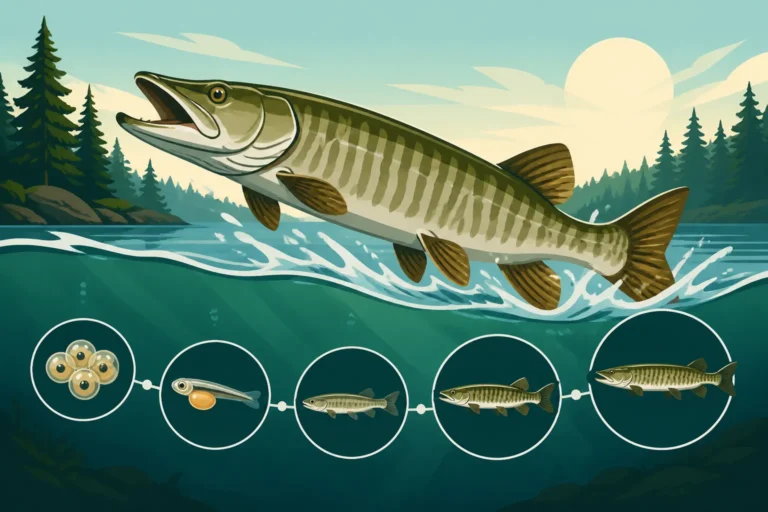
Chinook salmon, often affectionately called "Kings" by those who pursue them, have a fascinating life cycle in Lake Ontario. They are not native to the Great Lakes; they were introduced decades ago to control alewife populations and create a sport fishery. These fish typically spend 3-5 years growing large in the cold, deep waters of the lake before they embark on their final, epic spawning run up various tributaries. During their years in the lake, they are voracious predators, feeding primarily on baitfish like alewives, rainbow smelt, and sculpin. This abundant food source is what allows them to achieve their massive size.
Their habits change throughout the seasons. In spring, they might be found shallower, chasing baitfish that are moving up from the deeper waters. As summer progresses, they typically retreat to deeper, cooler water, often suspending over significant depths, following thermal breaks and schools of bait. Then, as fall approaches, a primal urge draws them towards the river mouths, preparing for their spawning journey. This transition period, particularly in late summer and early fall, is when they are most aggressively feeding and putting on weight before their final push upstream, making them a prime target for anglers.
Identifying Chinook vs. Coho Salmon
It's not uncommon to catch various salmon and trout species while fishing on Lake Ontario, and sometimes it can be tricky to tell them apart, especially Chinook and Coho salmon. While both are prized catches, they have distinct characteristics that seasoned anglers learn to spot. The biggest clue for a Chinook is usually its size; they grow significantly larger than Coho. However, for smaller fish, you need to look closer.
Chinook salmon typically have a gum line that is entirely black, extending around both the upper and lower jaw. Their tails are usually heavily spotted on both lobes, and their bodies are often darker, with a more streamlined, torpedo-like shape. Coho salmon, on the other hand, usually have a white gum line on their lower jaw, though the upper gum line can be dark. Their tail spots are typically confined to the upper lobe, and their overall body colour tends to be more silver with a blunter snout. Learning these subtle differences can help you correctly identify your catch and ensure you're adhering to species-specific regulations. You can learn more about Chinook Salmon in Lake Ontario and Coho Salmon in the Great Lakes by exploring specific guides.
Best Times and Seasons for Chinook Salmon
Timing is everything when it comes to fishing for Chinook salmon on Lake Ontario. The lake is huge, and these fish are constantly on the move, dictated by water temperature, baitfish presence, and their own biological clock. Knowing when and where to focus your efforts can drastically improve your success rate.
Spring and Early Summer Fishing
As the ice retreats and Lake Ontario slowly awakens, so do the Chinook salmon. Spring can be a fantastic time to target these fish, especially from April through June. During this period, the warmer surface waters, often found near river mouths, bays, and protected shorelines, attract schools of baitfish, and the Chinook are right there with them. Anglers often find success in shallower depths, sometimes as shallow as 30-60 feet of water, as the salmon are actively feeding and cruising.
The key to spring fishing is often finding that warmer, food-rich water. Look for thermal breaks where warmer water meets cooler water, as these can be highways for bait and predators. Many anglers start their season along the south shore, around areas like Port Credit, Pickering, and the Niagara region, where the water warms up a bit faster. Light tackle can sometimes be effective closer to shore, but as you move further out, the same trolling setups used in summer become necessary. This season offers exciting action, as the fish are often aggressive and less pressured than during the peak summer months.
Peak Summer and Pre-Spawn Runs
The summer months, typically July and August, represent the peak of the Chinook salmon season on Lake Ontario. This is when the fish have put on significant weight and are at their most powerful. As the lake stratification sets in, Chinook often hold in the cooler thermocline layers, suspending over vast depths, sometimes hundreds of feet down, but often in 50-150 feet of water. They follow the alewife schools relentlessly, and anglers with good sonar and knowledge of baitfish behaviour can have banner days.
Late August and early September usher in the highly anticipated "pre-spawn" run. This is arguably the most exciting time for many anglers. The biggest, most mature Chinook begin staging near the mouths of their natal rivers, preparing for their upstream journey. They are still actively feeding, but with an urgency that makes them incredibly aggressive. They're trying to pack on as much energy as possible for the arduous spawn ahead. This period sees massive fish caught, often close to shore or in shallower depths near river mouth structures. Areas like the Credit River, Humber River, and the various streams flowing into the lake from both the Canadian and American sides become hotspots. Targeting these staging fish requires specialized techniques and a keen understanding of their movements, but the rewards can be truly legendary.
| Season | Typical Months | General Depth Range (Approx.) | Key Behaviors | Common Locations (Examples) |
|---|---|---|---|---|
| Spring | April – June | 30-80 feet | Chasing bait in warming surface waters | River mouths, bays (Port Credit, Pickering) |
| Early Summer | June – July | 50-120 feet | Following thermocline, actively feeding | Mid-lake humps, drop-offs |
| Peak Summer | July – Mid-August | 70-150 feet (suspended) | Deep, cool water; voracious feeding on alewives | Offshore structure, bait schools |
| Pre-Spawn Run | Late August – Sept. | 30-80 feet (staging) | Staging near river mouths, aggressive feeding | River mouth areas (Credit, Humber) |
Key Locations for Chinook Salmon Fishing
Lake Ontario is enormous, stretching for hundreds of kilometres with diverse underwater topography. Knowing where to focus your efforts is paramount. While Chinook can be found anywhere there's bait and favourable water conditions, some areas consistently produce better results due to currents, structure, and proximity to spawning rivers.
Popular Fishing Ports and Access Points
Throughout Lake Ontario's Canadian shoreline, several fishing ports serve as excellent bases for Chinook salmon anglers. These locations typically offer public boat launches, marinas, and sometimes even bait and tackle shops. For instance, the ports around Toronto, such as Port Credit and Frenchman's Bay (Pickering), are very popular, offering access to deep water quickly. Further east, Port Hope and Cobourg are renowned for their fall salmon runs, attracting anglers from all over. The Niagara region, particularly around Port Dalhousie and St. Catharines, provides access to the western basin of the lake, which can hold incredible numbers of fish.
When choosing an access point, consider the prevailing wind conditions, your boat's capabilities, and the proximity to known fishing grounds. Many of these ports also have charter services available, which can be an excellent way for newcomers to experience Chinook fishing without the initial investment in specialized gear. Looking up marinas and public launches beforehand can save you a lot of hassle on the day of your trip. Don't forget to check out Best Fishing Lakes in Ontario for other fantastic opportunities across the province.
Offshore Structure and Baitfish Concentrations
Chinook salmon are pelagic fish for much of their lives in Lake Ontario, meaning they often roam the open water rather than sticking to specific bottom structures. However, they are always following their food source: baitfish. And baitfish, in turn, often congregate around underwater features, current breaks, or specific temperature bands. Understanding this dynamic is crucial. Anglers often look for offshore humps, ledges, or deep-water points where currents might concentrate bait. These subtle changes in the lakebed can act as magnets for schooling baitfish like alewives, and where the bait is, the Kings will follow.
Sonar plays an indispensable role here. Modern fish finders allow you to not only locate individual fish but, more importantly, identify schools of baitfish and the precise depth at which they are holding. Pay attention to temperature graphs as well, as the thermocline (the layer where water temperature changes rapidly) is often where Chinook will suspend, finding their preferred cool water and readily available food. Successful anglers spend time "reading" their sonar to find these prime offshore conditions, rather than just blindly trolling. Investing in a good fish finder and learning to use it effectively is non-negotiable for serious Lake Ontario salmon anglers. You can find many options on Amazon for powerful fish finders and chartplotters.
Essential Gear and Tackle for Chinook
Chasing Chinook salmon on Lake Ontario isn't a casual affair; it demands specialized gear that can handle powerful runs and deep-water presentations. Skimping on tackle here can lead to heartbreak. Let's break down what you'll need to be successful.
Rod and Reel Setups for Trolling
Trolling is the most effective and popular method for catching Chinook salmon on Lake Ontario. This means you'll need a robust rod and reel setup built for the task. Typically, anglers use stout 8.5 to 10.5-foot trolling rods, often with a medium-heavy to heavy action, designed to handle the drag of dodgers, flashers, and diving devices. These rods need enough backbone to fight a powerful salmon but also enough give to absorb shocks and prevent hooks from pulling out. The length helps spread out lines from the boat and provides leverage during the fight.
For reels, a levelwind baitcasting reel with a robust drag system and a good line capacity is essential. Many anglers prefer reels with line counters, which allow for precise depth and distance control when deploying multiple lines. These reels need to be spooled with strong monofilament or braided line, often in the 20-30 lb test range. The power and speed of a Chinook on the run demand a reel that can withstand intense pressure and smoothly disburse line. Brands known for their durability and performance are popular choices among Lake Ontario charter captains and experienced anglers alike. You can find a wide selection of these specialized rods and reels on Amazon, perfect for your next outing. You might also want to look at Best Fishing Rods for Ontario Lakes for broader recommendations.
Downriggers, Dipsy Divers, and Lead Core
Since Chinook often suspend at various depths, getting your lures down to where the fish are is critical. This is where specialized depth control equipment comes into play.
- Downriggers: These are perhaps the most common and effective tools. A downrigger uses a heavy ball (cannonball) attached to a cable, which is lowered into the water, typically from the stern of the boat. Your fishing line, with a lure attached, is then clipped into a release mechanism on the downrigger cable. This allows your lure to run at a precise depth without heavy weights on your main fishing line. When a fish strikes, the line pops free from the release, and you fight the fish directly on your rod and reel, without the heavy downrigger ball. Most serious salmon boats run multiple downriggers.
- Dipsy Divers (or Planer Boards): These devices are used to spread lines out to the sides of the boat, covering a wider swath of water, and can also achieve depth. Dipsy divers use a diving disc to pull the line down and out to the side. They come in various sizes and settings to control their dive angle and depth. Planer boards, on the other hand, tow lines far out to the side of the boat, but typically rely on inline weights or lead core to get lures to depth. They are excellent for targeting fish that are spooked by the boat's shadow or propeller wash.
- Lead Core Line: This is a special fishing line with a lead core wrapped in a braided sheath. Each colour change on the line usually signifies 10 yards, and each "colour" (or section) generally sinks a certain depth at a given trolling speed. By letting out a specific number of colours, you can reach a desired depth. Lead core is often used in conjunction with long trolling rods and can be a very effective way to present lures, especially in shallower waters or for covering mid-range depths. Understanding how to use these tools in combination is a skill that comes with practice and experience on the big lake.
Lures and Baits
Chinook salmon are primarily predators of baitfish, so your lures should mimic their natural prey. The most popular lures for Lake Ontario Chinook include:
- Spoons: Metal spoons, often with a wobbling action, are incredibly effective. Popular sizes range from 3 to 5 inches, and common patterns imitate alewives, smelt, and other forage. Colours like silver, green, blue, black, and various glow patterns (especially in low light or deep water) are go-tos. Brands like Northern King, Dreamweaver, and Michigan Stinger are staples in many tackle boxes.
- Flashers and Dodgers: These aren't lures themselves but attraction devices. Flashers and dodgers create significant flash, vibration, and erratic movement in the water, mimicking a confused or injured baitfish school. Your actual lure (often a fly or a small spoon) is then trailed behind the flasher or dodger, typically on a 12-24 inch leader. The flash and action draw fish in, and they then strike the trailing lure.
- Artificial Flies (Meat Rigs): Sometimes called "meat rigs" when paired with real or artificial bait, these are often squid or minnow imitations pulled behind a flasher or dodger. They provide a very natural, fluttering action that Chinook find irresistible.
- Plugs: Occasionally, diving plugs or stickbaits can be effective, particularly in spring or during the pre-spawn staging when fish might be more aggressive and closer to shore.
The key to success with lures is often variety and experimentation. Chinook can be finicky, and what works one day might not work the next. Having a diverse selection of colours, sizes, and actions is important. Anglers often swap lures until they find what the fish are keying in on for that specific day and water conditions. Always ensure your hooks are razor-sharp!
Effective Techniques for Catching Chinook Salmon
Trolling for Chinook salmon on Lake Ontario is a science and an art form combined. It involves precision, patience, and a deep understanding of fish behaviour and boat control. Mastering these techniques will significantly increase your chances of success.
Trolling Strategies and Speeds
Trolling is the undisputed king of Chinook salmon fishing on Lake Ontario. The goal is to cover large expanses of water and present your lures at the exact depth and speed where salmon are feeding. Typically, trolling speeds range from 2.0 to 3.5 miles per hour, but the "sweet spot" can vary daily based on water temperature, lure type, and fish activity. The action of your lure is paramount; watch your rod tips for the tell-tale wobble. Too fast, and your lures might spin unnaturally; too slow, and they might not have enough action.
Boat control is crucial. Maintaining a consistent speed and course, even in choppy conditions, is vital for proper lure presentation. Using a GPS-enabled chartplotter or autopilot system can be immensely helpful. When you locate a concentration of bait or a fish strike, it's often productive to make large "S" turns. These turns cause your lures on the inside of the turn to slow down and sink, while those on the outside speed up and rise, often triggering strikes from following fish. Varying your depths and trying different colour patterns on your lures throughout the day is also a sound strategy. Check out our guide on Trolling Techniques for Ontario Lake Trout for more insights into big lake trolling, as many principles apply.
Reading Your Electronics (Sonar and GPS)
Modern marine electronics are your eyes and ears on Lake Ontario. A good fish finder (sonar) allows you to "see" what's beneath your boat. Look for:
- Baitfish schools: These appear as clouds or dense clusters on your screen. Where there's bait, there are usually predators.
- Individual fish arches: Larger, distinct arches often indicate salmon. Pay attention to the depth at which they are holding.
- The thermocline: This often appears as a distinct band on your sonar where the water temperature changes rapidly. Chinook frequently suspend right on top, within, or just below this layer.
- Bottom structure: While Chinook are pelagic, baitfish can relate to humps, drop-offs, and other underwater features.
Your GPS is equally important. It allows you to mark waypoints for productive areas, track your trolling passes, and return to areas where you've had strikes. When you get a bite, immediately mark the spot on your GPS and note the depth, lure, and speed. This information is gold and helps you establish patterns for the day. Learning to interpret your sonar and use your GPS effectively is a continuous learning process, but it's one of the biggest factors in consistent salmon fishing success. You can find robust Best Fish Finders for Ontario Lakes from various brands, readily available on Amazon.
Fighting and Landing Chinook Salmon
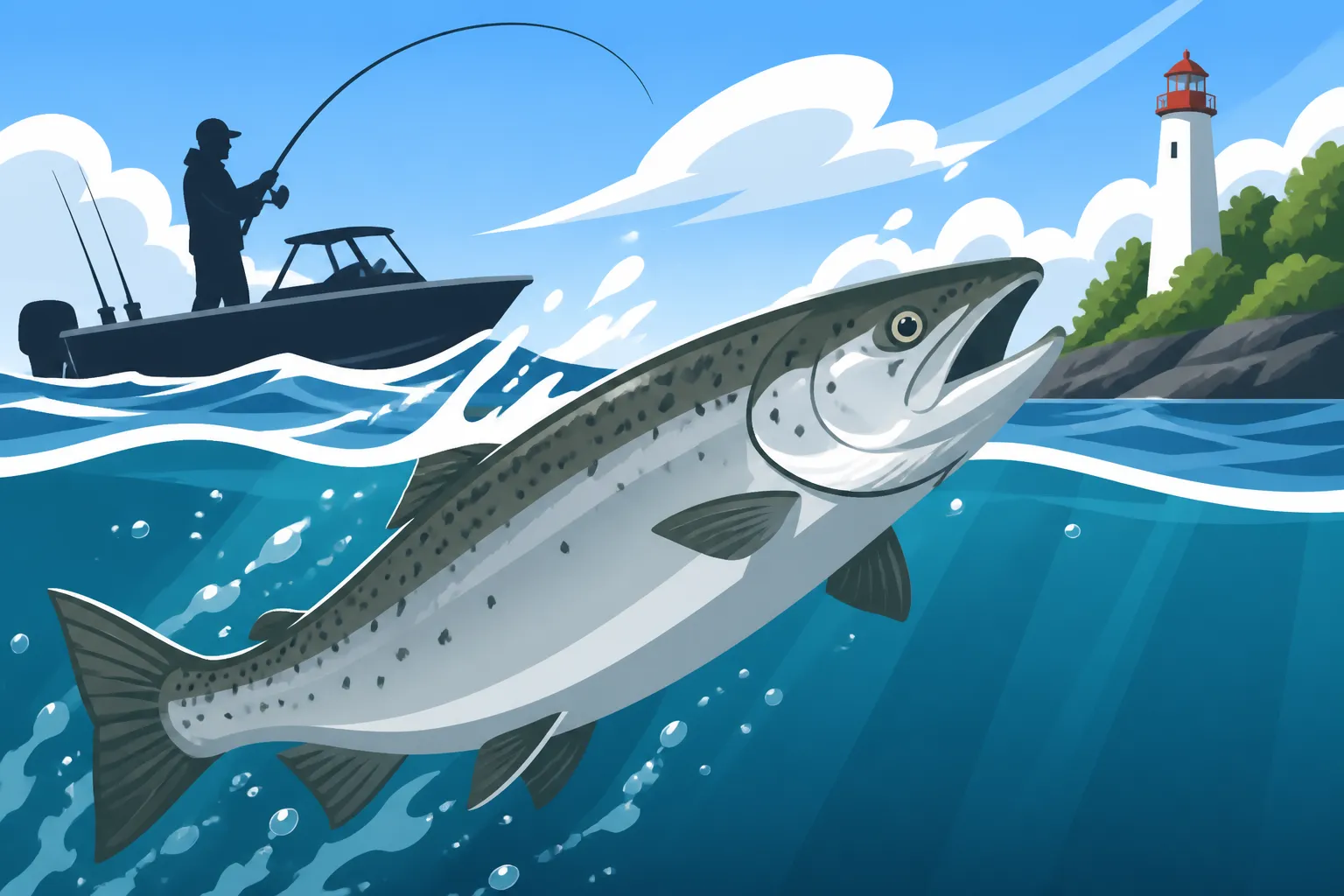
Fighting a Lake Ontario Chinook salmon is an experience unlike any other. These fish are incredibly powerful and will test your gear and your angling skills. When a fish hits, especially on a downrigger, the line will pop out of the release, and your rod will bend dramatically.
The first run of a big Chinook is legendary – long, fast, and powerful. Let the fish run, keeping steady pressure. Do not try to horse it in. Your drag setting is crucial here; it needs to be tight enough to tire the fish but loose enough to prevent line breakage during those explosive runs. Keep the rod tip up, maintaining a good bend, and pump the rod rhythmically, reeling down to take up line. Be prepared for multiple runs, especially as the fish gets closer to the boat. They'll often make a final, desperate dash under the boat, requiring quick reflexes and good teamwork if you're with others.
When the fish is boatside, a large, deep-hooped landing net is essential. Have someone ready with the net, but don't try to net the fish until it's tired and on its side. Trying to net a green (still fighting) fish often results in a lost fish. Once in the net, handle it carefully, especially if you plan to release it. Remove hooks quickly with pliers, take a quick photo if desired, and then release it gently, supporting its body until it swims away strongly. For fish you intend to keep, dispatch it quickly and get it into a cooler with ice to preserve its quality. Having a large Best Cooler for a Fishing Boat is vital for this.
Conservation and Regulations for Chinook Salmon
As responsible anglers, it's our duty to understand and abide by the regulations governing Chinook salmon fishing in Lake Ontario. These rules are in place to ensure the sustainability of this incredible fishery for future generations. Ignoring them not only harms the resource but can also lead to significant penalties.
Understanding Bag and Size Limits
Like all game fish in Ontario, Chinook salmon are subject to specific bag and possession limits, as well as size restrictions. These limits can change, so always consult the most current version of the Ontario Fishing Regulations Summary before you head out. Typically, there will be a daily catch limit (the number of fish you can keep in one day) and a possession limit (the total number of fish you can have in your possession, including those at home). There might also be minimum or maximum size limits, often referred to as "slot limits," designed to protect specific age classes of fish.
For Chinook salmon, these regulations are carefully managed to balance angling opportunities with population health, especially given their non-native status and importance to the lake's ecosystem. For example, there might be different limits for anglers fishing with a Sport fishing license versus a Conservation fishing license. Always measure your fish carefully and accurately before deciding to keep it. Ignorance of the rules is never an excuse in the eyes of the law. Make sure you're up-to-date on Ontario Bag and Possession Limits by Species.
Catch and Release Best Practices
While many Chinook salmon are harvested for their delicious table fare, catch and release is also a common practice, especially for smaller fish or during certain times of the year when anglers have met their limits. Practicing proper catch and release techniques is crucial for the survival of the fish.
- Minimize Fight Time: Use appropriate tackle to reduce the fight duration, especially in warmer water where fish are more stressed.
- Handle With Care: Keep the fish in the water as much as possible. If you must lift it for a photo, support its body horizontally, especially around the belly and tail, and do so quickly. Avoid handling by the gills or eyes.
- De-hook Safely: Use needle-nose pliers or a de-hooking tool to remove hooks quickly and gently. If the fish is deeply hooked, cut the line as close to the hook as possible rather than trying to rip it out.
- Revive Thoughtfully: Hold the fish gently in the water, facing into the current (if any), until it regains its strength and can swim away on its own. Watch for strong tail kicks.
By following these practices, you significantly increase the chances of a released Chinook salmon surviving to spawn or be caught another day. This helps maintain the health and vitality of the Lake Ontario fishery. For detailed information on general fishing regulations, consult Ontario Fishing Regulations Explained.
Preparing and Storing Your Catch
Catching a magnificent Chinook salmon from Lake Ontario is a rewarding experience, and enjoying its delicious flesh is a significant part of that reward. However, proper care from the moment it comes into the boat is crucial to ensure the best possible flavour and quality.
From Boat to Plate: Keeping Salmon Fresh
The quality of your salmon begins the moment it's landed. As soon as you decide to keep a fish, it should be dispatched quickly and humanely. A swift blow to the head or severing the gills are common methods. The goal is to minimize stress, which can release undesirable enzymes into the flesh. Once dispatched, the fish should be immediately placed in an ice-filled cooler. Don't just throw it on a bare boat deck; warmth and direct sunlight degrade fish quality rapidly. A good practice is to have a slushy mix of ice and water in your cooler, which chills the fish quickly and efficiently.
Once you're off the water, it's time for filleting. Clean your fish as soon as possible, ideally within a few hours of catching it. Remove the guts and rinse the cavity thoroughly. Then, proceed with filleting. A sharp, flexible fillet knife is essential for this task. Many anglers also remove the skin and the dark red bloodline found along the lateral line of the fillet, as these can contribute to a stronger, more "fishy" flavour. Proper handling on the boat and efficient cleaning ashore will ensure your Chinook salmon tastes as fantastic as it fought.
Freezing and Preserving Salmon
If you've had a successful day and have more salmon than you can eat fresh, freezing is an excellent way to preserve your catch. However, simply tossing a fillet into a freezer bag can lead to freezer burn and a loss of quality. The key to successful freezing is minimizing exposure to air.
One of the best methods is vacuum sealing. A good quality vacuum sealer removes all air from around the fillet, preventing freezer burn and greatly extending its shelf life. If you don't have a vacuum sealer, wrap individual fillets tightly in plastic wrap, pressing out as much air as possible, then wrap them again in freezer paper or place them in a heavy-duty freezer bag, again trying to remove air. Some anglers also opt to freeze fillets in water. Place a fillet in a container, cover it with water, and then freeze. This creates a protective ice glaze around the fish. Label all packages with the date to keep track of freshness. Properly frozen Chinook salmon can maintain excellent quality for several months, allowing you to enjoy your harvest long after the fishing trip is over.
Disclaimer
This article is for general informational purposes only and does not constitute professional advice. Laws, prices and regulations vary by location and change over time. Consult a qualified professional for guidance on your specific situation.