What sea lamprey wounds look like on Great Lakes fish
It can be quite unsettling to reel in a beautiful fish from the Great Lakes only to discover strange, circular wounds etched into its skin. Many anglers immediately wonder what caused such an injury, fearing disease or an unknown predator. This guide will walk you through precisely what sea lamprey wounds look like on Great Lakes fish, helping you identify these distinctive marks and understand their impact on our cherished fisheries.
Understanding the Sea Lamprey: An Uninvited Guest
Before we dive into the specific appearance of the wounds, it’s helpful to understand the creature behind them. Sea lampreys are truly fascinating, albeit unwelcome, residents of the Great Lakes. They're not "fish" in the traditional sense; they're actually jawless, eel-like vertebrates that have been around for millions of years. Their unique biology is what makes their feeding habits, and thus their wounds, so distinct.
A Brief History of Invasion
The story of the sea lamprey in the Great Lakes is a classic tale of an invasive species altering an ecosystem. Originally native to the Atlantic Ocean, sea lampreys gained access to the Great Lakes system through shipping canals like the Welland Canal, which bypasses Niagara Falls. Once they found their way into Lake Erie, and subsequently the other Great Lakes, they encountered an environment with abundant prey and no natural predators to keep their numbers in check. The results were devastating. Imagine fishing for Lake Trout Fishing in Ontario or even Walleye Fishing in Ontario in the mid-20th century, only to find a significant portion of the catch scarred, weakened, or outright killed by these parasitic invaders. This was a very real frustration for anglers and a serious threat to the native fish populations, altering the ecological balance of the entire region. The problem was so severe that it triggered extensive and ongoing efforts to control their populations, something we’ll touch on later.
The Anatomy of a Menace
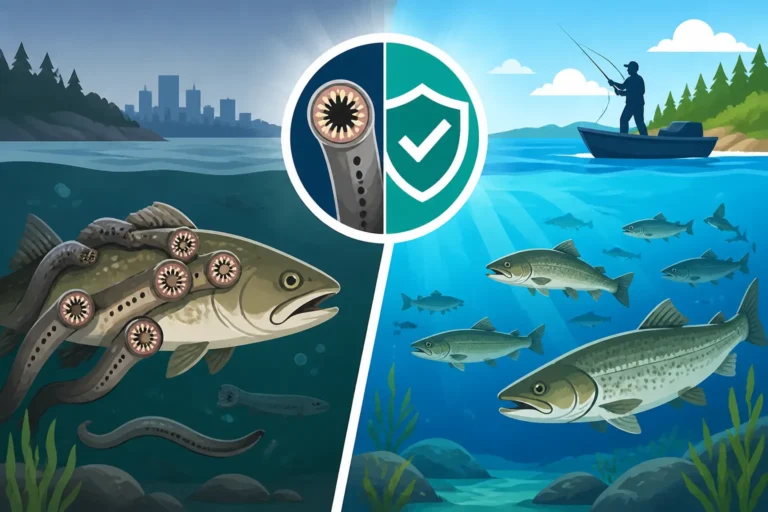
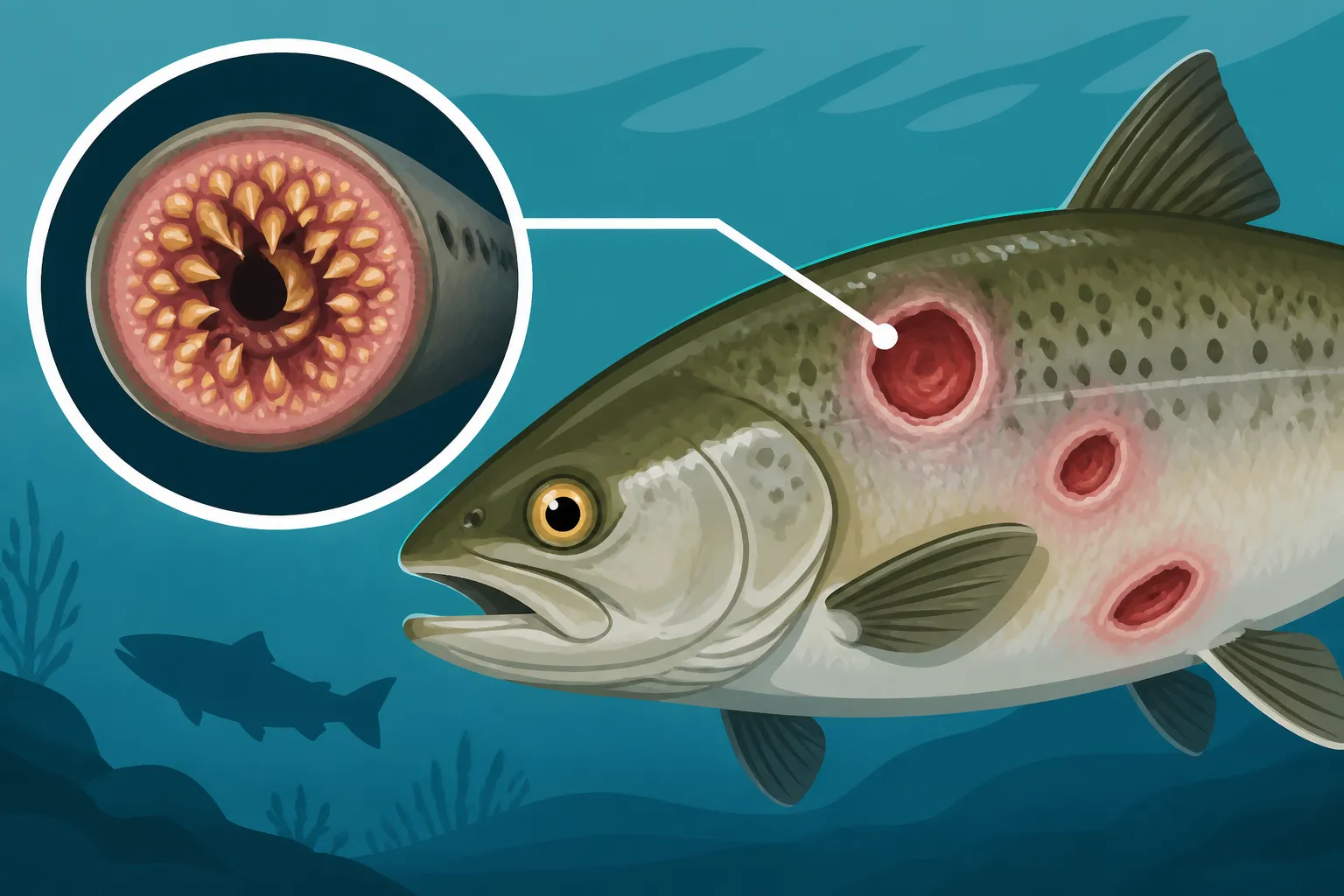
What makes a sea lamprey so effective at inflicting these wounds? It all comes down to their mouth. Unlike most fish with hinged jaws, the sea lamprey has a large, round, sucker-like mouth filled with rows of sharp, horny teeth and a rasping tongue. Think of it like a biological suction cup combined with a dental drill. Once they attach themselves to a host fish, they use their teeth and tongue to abrade the fish's skin, creating an open wound. They then secrete an anticoagulant to keep the blood flowing and feed on the fish's blood and other bodily fluids. It’s a gruesome, highly efficient feeding method that leaves a very particular signature. Their eel-like bodies allow them to maintain a strong grip, even on larger, struggling fish like salmon or Northern Pike Fishing in Ontario, for extended periods while they feed.
Identifying Sea Lamprey Wounds: What to Look For
The distinctive nature of a sea lamprey’s mouth and feeding technique means that their wounds are usually quite recognizable, even to an untrained eye. Once you know what you’re looking for, it becomes much easier to differentiate them from other types of injuries a fish might sustain.
The Classic "Suction Cup" Mark
When a sea lamprey first detaches or is removed from a fish, the most common and identifiable mark you'll see is a distinct, circular wound. This isn't just a surface scratch; it's typically a depression or a hole in the fish's flesh, reflecting the shape and feeding action of the lamprey's mouth. The size of this circle can vary depending on the size of the lamprey and how long it was attached, but it's usually between the size of a dime and a quarter, sometimes larger. Around the central wound, you might notice a reddish or discolored ring, indicating inflammation and tissue damage where the lamprey's suction and rasping action took place. The flesh inside this ring will often be raw, bloody, or even appear to have tissue missing. It’s a very clear, almost surgical-looking mark, distinct from the ragged tears or punctures that other predators might leave. Many anglers fishing in Lake Erie Fishing Guide or Lake Ontario Salmon Fishing for Chinook or Coho salmon often encounter these fresh wounds.
Stages of Healing and Scarring
Not all sea lamprey wounds look fresh and bloody. Fish that survive an attack will begin to heal, and these healing stages also have recognizable characteristics. A fresh wound can quickly become an open sore, which makes the fish vulnerable to secondary infections from bacteria or fungi in the water. Over time, if the fish manages to fight off infection, the wound will begin to close and form scar tissue.
Early healing wounds might appear as a cloudy, whitish, or greyish patch over the circular depression, indicating new tissue growth. As the healing progresses, this patch will become firmer, potentially losing some of its scales, and the circular shape of the attack will still be evident, albeit less pronounced. Fully healed scars often appear as a lighter-colored, smooth, and sometimes sunken patch of skin, distinctly different from the surrounding scales and healthy tissue. You might see a faint, white ring where the lamprey's mouth was, or just a general area of distorted scales. These scars can persist for a long time, often for the remainder of the fish's life, serving as a permanent record of its harrowing encounter. It's not uncommon to catch large, older Lake Trout Fishing in Ontario or salmon with several healed lamprey scars, a testament to their resilience.
Location, Location, Location
Sea lampreys aren't particularly picky about where they attach, but there are certain areas on a fish's body where you'll find their wounds more frequently. They generally prefer the broad, flat surfaces of a fish, such as the flanks (sides), the top of the head, or along the back. These areas provide the best leverage for the lamprey to maintain its suction cup grip without being easily dislodged. You're less likely to find wounds on fins or tails, though it's not impossible. The location often speaks to the lamprey's strategy of finding a stable point of attachment for prolonged feeding. A fish swimming through specific Ontario Fisheries Management Zones, Explained can encounter lampreys, and the injuries might be seen across various species and sizes.
Differentiating from Other Injuries and Parasites
When you see a mark on a fish, it's natural to wonder about its origin. While sea lamprey wounds are quite distinctive, other injuries and parasites exist. Knowing the differences can save you from unnecessary alarm and help you accurately assess the health of the fish you're catching.
Natural Predator Marks vs. Lamprey Wounds
Sometimes, what looks like a rough attack could be from another fish. Bites from natural predators, like a large Northern Pike Fishing in Ontario or a muskie, typically look very different from a lamprey wound. A pike's attack, for instance, might leave sharp, linear tooth marks or deep, ragged gashes on the fish's body, often near the tail or along the side where it ambushed its prey. Muskie, with their larger teeth, can inflict even more severe tears and punctures, designed to kill rather than to feed parasitically on fluids. These types of wounds usually don't have the clean, circular, suction-cup appearance of a sea lamprey mark. They're about tearing flesh, not about a prolonged, steady drain of blood.
Boat Propeller and Handling Injuries
Human interaction, unfortunately, can also lead to fish injuries that might be confused with natural causes. Boat propeller strikes are usually quite obvious: clean, deep, and often parallel cuts or gashes across the fish's body, reflecting the blades of the propeller. These are typically much more severe and linear than a lamprey wound. Similarly, injuries from improper handling, such as scale loss from being grabbed too tightly, fin damage from mishandling, or abrasions from being dragged on rough surfaces, will look like generalized scrapes, bruises, or missing scales, not the specific circular depression of a lamprey attachment. For instance, a fish dropped on the bottom of a boat might have scrapes and bruises, but these won't be uniform circles.
Other Parasitic Attachments
The Great Lakes are home to various parasites, but few leave marks as dramatic and distinctive as the sea lamprey. Leeches can attach to fish, but they are typically much smaller, leave a small pinprick wound, and are usually still present when you catch the fish. Copepods, another group of tiny crustaceans that can parasitize fish, leave even smaller, almost invisible marks, often looking like small bumps or irritations on the skin rather than deep tissue damage. These other parasites typically don't cause the same extensive tissue loss or the perfectly circular signature that sea lampreys do. The key difference is the scale and nature of the damage – the lamprey is uniquely designed for a sustained, invasive feeding attack.
Here's a quick comparison table to help you distinguish between common fish injuries:
| Injury Type | Appearance | Key Characteristics | Common Location |
|---|---|---|---|
| Sea Lamprey Wound | Circular depression, often red/raw, with distinct ring. | Sucker-shaped, tissue loss, potential bleeding, later a white scar. | Flanks, head, back |
| Predator Bite | Linear gashes, deep punctures, ragged tears. | Sharp edges, often multiple marks, significant flesh removal. | Anywhere, often near tail or mid-body |
| Propeller Strike | Clean, parallel, deep cuts or chop marks. | Straight lines, often symmetrical, can be fatal. | Anywhere, severe trauma |
| Handling Abrasion | Patches of missing scales, general scrapes, bruising. | Irregular shape, surface-level, no deep tissue removal. | Sides, belly |
| Other Parasites | Small pinpricks, tiny bumps, localized irritation. | Often very small, parasite might still be attached. | Fins, gills, skin |
Why You're Seeing These Wounds and What It Means
Encountering a fish with a sea lamprey wound isn't just a curiosity; it's a visible sign of an ongoing challenge in the Great Lakes ecosystem. These marks are more than just cosmetic blemishes; they represent a significant drain on fish populations and a constant reminder of the fight to maintain ecological balance.
Impact on Fish Health and Survival
A sea lamprey attachment is a serious ordeal for a fish. The direct feeding itself causes blood loss and tissue damage, which can weaken the fish significantly. Imagine enduring a persistent blood-sucking attack for days or even weeks! This stress makes the fish more vulnerable to other threats. The open wound created by the lamprey is a direct entryway for bacteria, fungi, and other pathogens, leading to secondary infections that can be just as deadly, if not more so, than the initial attack. Infected wounds can impede the fish's ability to swim, feed, and reproduce effectively.
For smaller fish, a single lamprey attack can be fatal. Larger fish, like many of the salmon and trout found in Lake Ontario Salmon Fishing or the deeper sections of the Great Lakes, might survive multiple attacks but will be left weaker, slower, and less robust. This reduced fitness impacts their growth rates, their ability to escape other predators, and their overall reproductive success. In essence, sea lampreys act as a constant stressor on the fish populations, reducing their overall health and contributing to mortality rates, even if the fish isn't killed directly by the lamprey itself. It’s a subtle but relentless pressure on the fishery.
The Ongoing Control Efforts
The widespread presence of sea lamprey wounds is a stark reminder of why extensive control programs are in place. The Great Lakes Fishery Commission (GLFC), in cooperation with both Canadian and U.S. agencies, has been leading the charge for decades to manage sea lamprey populations. Their efforts are primarily focused on reducing larval lamprey populations in the tributary streams where they spawn and spend their early lives. This is mainly achieved through the careful application of lampricides, specific chemicals that are highly effective at killing larval lampreys but pose minimal risk to other aquatic life.
Other control methods include building barriers to prevent adult lampreys from reaching spawning grounds and trapping programs. These persistent efforts have dramatically reduced sea lamprey populations from their peak levels in the mid-20th century. While we still see lamprey wounds on fish, imagine how much worse it would be without these interventions! The goal isn't necessarily to eradicate sea lampreys, which is likely impossible, but to control their numbers to a level where native and stocked fish populations can thrive. Understanding How sea lamprey control affects Great Lakes fisheries gives us a greater appreciation for the long-term commitment required to protect our waters. You can learn more about Why the Great Lakes have a sea lamprey control program and its history. These programs are a critical component of maintaining healthy fish populations, from Rainbow Trout Stocking in Ontario efforts to the self-sustaining populations of Chinook Salmon in Lake Ontario and Coho Salmon in the Great Lakes that anglers cherish in some of the Best Fishing Lakes in Ontario.
Disclaimer
This article is for general informational purposes only and does not constitute professional advice. Laws, prices and regulations vary by location and change over time. Consult a qualified professional for guidance on your specific situation.