Best Ice Auger for Ontario Lakes
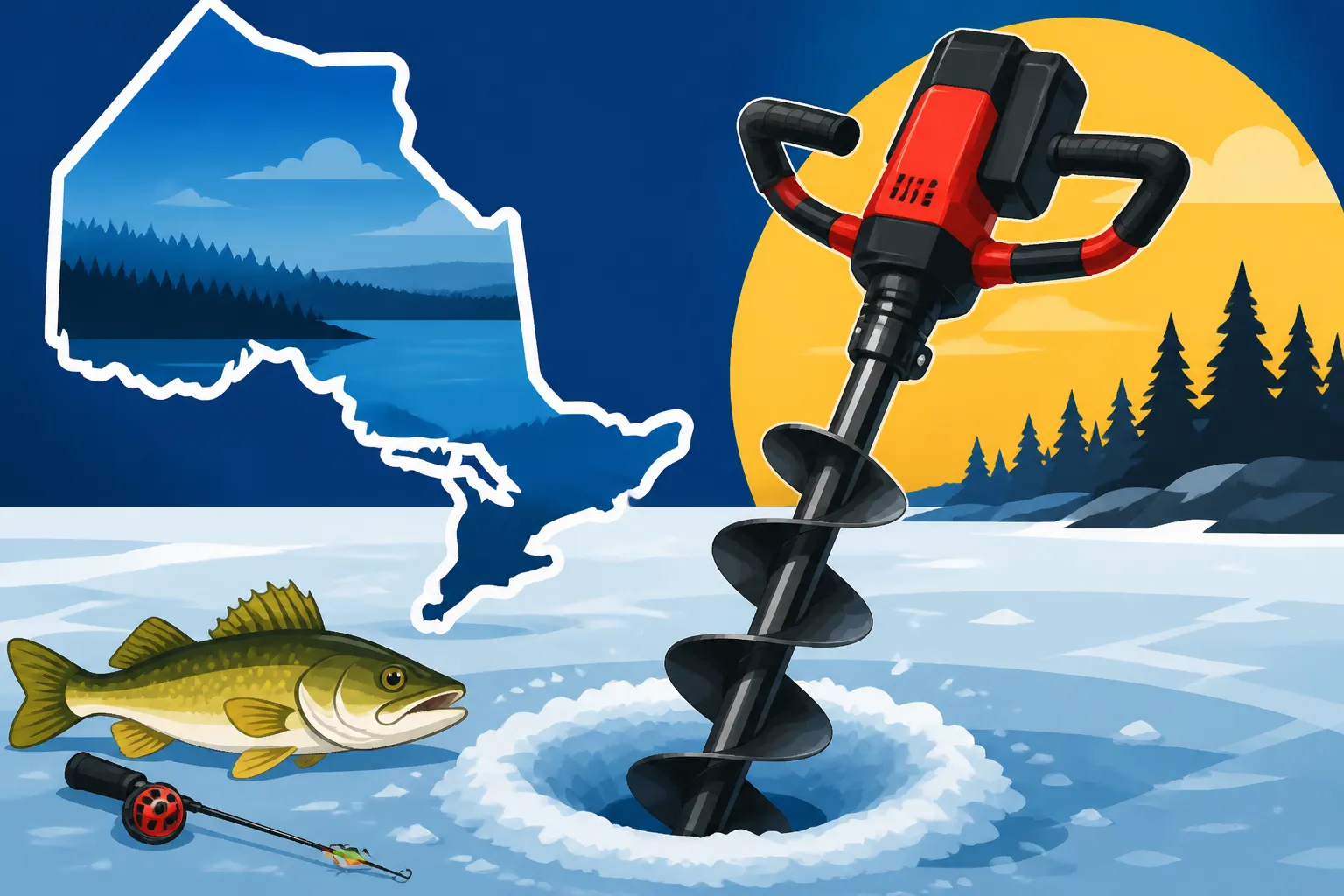
There’s nothing quite like the crisp air, the vast expanse of white, and the thrill of dropping a line through the ice on a serene Ontario lake. But if you’ve ever found yourself struggling to punch a hole through two feet of solid ice with a dull, heavy auger, you know the frustration is real. Choosing the right ice auger is absolutely critical for an enjoyable and successful ice fishing season in our province, and this guide is here to help you navigate the options so you can spend less time struggling and more time fishing.
Understanding Ontario's Ice Fishing Landscape and Your Auger Needs
Ontario's ice fishing scene is as varied as its vast geography. From the relatively mild, thinner ice of early season southern lakes to the rock-solid, multi-foot layers found deep in Northern Ontario winters, your auger needs can change dramatically. It’s not a one-size-fits-all situation, and understanding these nuances will steer you toward the perfect tool for your adventures.
The Variability of Ontario Ice Conditions
Imagine this: one weekend you're out on a smaller lake near Barrie, maybe in early December, and the ice is a manageable 6-8 inches thick. A simple hand auger might be all you need to punch a few holes for crappie or perch. Fast forward to February, and you're tackling Lake Nipissing, where the ice can easily be two, three, or even four feet thick, often with layers of slush, snow, and refrozen water mixed in. Trying to cut through that with a hand auger is not just a workout; it's a monumental test of will that can quickly zap your energy and enthusiasm.
Then there’s the issue of different ice compositions. Sometimes you hit clear, solid black ice that cuts like butter. Other times, it's riddled with air pockets, or you're dealing with a thick layer of slush on top that just makes everything messy and hard to clear. Our large lakes, like Lake Simcoe or Lake Erie, can also experience varying ice depths across different areas, often influenced by currents or pressure ridges. You need an auger that can handle these surprises without leaving you stranded or exhausted before you even drop a line. Knowing these conditions beforehand, or at least being prepared for them, is key to a comfortable day on the hard water.
Matching Auger Type to Your Fishing Style
Your personal fishing style is arguably the biggest factor in choosing an auger. Are you a solo angler who loves to "hole hop" all day, constantly moving to find the fish? If so, weight and portability are going to be paramount. You won't want to lug a heavy, gas-powered beast around with you across miles of ice. A lightweight electric or even a robust hand auger might be your best friend. Maybe you’re fishing with your family, setting up a cozy ice hut for the day. In that scenario, you might only need to drill a few holes and then stay put, so the initial effort of a heavier auger is less of a concern than its ability to punch those holes quickly and efficiently without making too much noise.
Perhaps you're targeting trophy lake trout or monster muskie during their respective ice seasons. For these bigger fish, you’re often going to need larger diameter holes (think 8 or 10 inches), which requires significantly more power to drill. A smaller, underpowered auger will simply bog down and frustrate you. Conversely, if you're chasing panfish like perch or crappie, a 6-inch hole is usually perfectly adequate, and a smaller, lighter auger will do the job perfectly well. Think about your typical day on the ice: how many holes do you drill? How often do you move? What species are you usually after? Answering these questions honestly will guide you to an auger that complements, rather than hinders, your fishing experience. For more on getting set up, check out Ice Fishing in Ontario.
Types of Ice Augers for Ontario Lakes
When you start looking at ice augers, you’ll quickly realize there’s a whole spectrum of options, each with its own quirks and benefits. Understanding these different types is the first step to figuring out which one will be your reliable companion on those chilly mornings.
Hand Augers: The Traditional and Economical Choice
Ah, the trusty hand auger! This is where many of us started, and for good reason. Hand augers are essentially a giant drill bit with handles, powered entirely by your own muscles. They are by far the most economical option on the market, making them a fantastic entry point for beginners or those who only hit the ice a few times a season. They’re incredibly lightweight and portable, which is a huge plus if you’re a walk-in angler who has to trek a long way to your spot, or if you prefer to Jigging for Perch Through the Ice and need to move frequently.
However, the "manual" aspect comes with its own set of challenges. Cutting through more than a foot of ice can be a significant workout, and anything beyond two feet will test your endurance to its limits. Slushy ice or dirty ice can make the blades bind, turning a chore into a Herculean effort. They’re best suited for thinner ice conditions, smaller holes (typically 6 inches), and anglers who prioritize stealth and a minimal footprint. If you’re fishing small ponds or early/late season ice where thickness isn’t extreme, a quality hand auger with sharp blades can be surprisingly efficient.
Propane Augers: Power and Convenience
Propane augers represent a fantastic middle ground for many Ontario anglers. They offer significantly more power than a hand auger, allowing you to cut through thicker ice with relative ease, but without the mess and fumes often associated with traditional gasoline engines. The fuel source is a small, easy-to-carry propane cylinder, similar to what you might use for a portable grill or lantern. These cylinders are readily available at most gas stations, hardware stores, and even many convenience stores across Ontario. This means no mixing gas and oil, and generally, a much cleaner burn with less exhaust smell, which is a huge plus inside an ice hut.
The main drawbacks usually involve their weight, which is more substantial than a hand auger, and the potential for the engine to be a bit finicky in extremely cold temperatures if not properly maintained or stored. Starting them can sometimes be a bit of a dance, especially on those brutally cold -20°C mornings, but once they get going, they often run smoothly and quietly. For someone who wants reliable power, ease of fueling, and a cleaner operation than gas, a propane auger is a very compelling option for fishing many of Best Ice Fishing Lakes in Ontario.
Electric (Battery-Powered) Augers: The Modern Angler's Go-To
Electric augers have truly revolutionized ice fishing, especially in Ontario. These battery-powered units are a game-changer for several reasons: they’re incredibly quiet, produce no fumes (making them perfect for use inside a Best Ice Hut for Ontario Lakes), start instantly with the push of a button, and are generally lighter than gas or propane models. The immediate torque and consistent power mean you can drill numerous holes quickly and effortlessly, even through thick ice. Many models come with interchangeable batteries, so you can carry a spare for extended trips or for those days when you're punching a lot of holes.
The main consideration with electric augers is battery life, which can be affected by extreme cold and the thickness of the ice you're cutting. Investing in an extra battery is often a smart move, especially for a full day of hole hopping or targeting larger species that require bigger holes. Charging infrastructure can also be a consideration if you're staying at a remote cabin without consistent power. However, for sheer convenience, ease of use, and environmental friendliness, electric augers are quickly becoming the preferred choice for a vast number of Ontario ice anglers. Brands like Rapala and Ion have become very popular in this space, often found at places like Bass Pro Shops or online retailers.
Gas-Powered Augers: Raw Power for Serious Anglers
When it comes to raw, unadulterated power, gas-powered augers still reign supreme. These are the workhorses of the ice fishing world, designed to chew through feet of ice, day after day, regardless of the conditions. If you're running guided trips, consistently fishing remote Northern Ontario lakes with extremely thick ice, or just demand the absolute fastest hole-drilling experience, a gas auger delivers. They can easily handle 8-inch and 10-inch auger bits, which are essential when you’re chasing Ontario Muskellunge Season Dates and Limits or trophy lake trout.
The downsides are fairly obvious: they are the heaviest and noisiest of the bunch, they require mixing gasoline with oil (which can be messy), and they produce exhaust fumes that aren't ideal in an enclosed space. Starting them can sometimes be a pull-cord battle, especially in bitter cold. Maintenance also tends to be more involved than with other types. However, for those who need unwavering power and reliability in the most demanding conditions, a well-maintained gas auger is still an invaluable tool. They've been a staple on Ontario's hard water for generations, proving their worth year after year.
| Auger Type | Power Source | Weight (Relative) | Noise Level | Fumes | Starting Ease | Best Use Case |
|---|---|---|---|---|---|---|
| Hand | Manual | Very Light | Silent | None | Instant | Light use, thin ice, budget-friendly, stealthy |
| Propane | Propane Fuel | Medium | Moderate | Low | Good | Mid-range power, clean burn, reliable |
| Electric | Battery | Light-Medium | Quiet | None | Instant | Convenience, clean, hole-hopping, hut fishing |
| Gas | Gasoline/Oil Mix | Heavy | Loud | High | Moderate | Max power, thick ice, large holes, heavy use |
Key Features to Consider When Choosing an Ice Auger
Beyond the type of power, there are several crucial features that will directly impact your auger's performance and your overall experience on the ice. These details can make the difference between a joy and a struggle.
Auger Diameter: Matching Hole Size to Your Target Species
The diameter of your auger is one of the most fundamental choices you’ll make. This dictates the size of the hole you’ll be fishing through, and it needs to match the fish you're after. For panfish like perch, crappie, or sunfish, a 6-inch auger is usually more than enough. It’s quicker to drill, lighter to carry, and conserves battery life or energy. You can easily land a nice mess of Ontario Yellow Perch Limit on Lake Erie and Simcoe through a 6-inch hole. In fact, many dedicated panfish anglers prefer a 4 or 5-inch hole for maximum efficiency and minimal effort.
If you’re targeting walleye or medium-sized pike, an 8-inch auger is a solid all-around choice. It gives you enough room to fight and land decent-sized fish without being overly difficult to drill. This is arguably the most popular diameter for general ice fishing in Ontario. However, if you're dreaming of a trophy Muskellunge Fishing in Ontario or a giant lake trout, you'll want to seriously consider a 10-inch auger. These bigger fish simply won't fit through smaller holes, and an unlanded fish due to a too-small hole is a heartbreaking experience. The trade-off, of course, is that a 10-inch hole requires significantly more power and effort to drill, regardless of the auger type. Always consider your target species and your fishing goals before settling on a diameter.
Weight and Portability: Hauling Gear Across the Ice
Let's be realistic: ice fishing often involves hauling a fair bit of gear across a frozen lake. Your auger is a significant part of that payload. If you're someone who loves to walk out onto the ice, perhaps pulling a simple toboggan with your tackle and heater, then every pound matters. A lighter auger means less fatigue, easier maneuvering, and the ability to cover more ground. Electric augers often shine here, offering a good balance of power and reduced weight compared to their gas counterparts. Even a hand auger, while requiring more physical effort to drill, might be the preferred choice for ultra-light anglers or those tackling remote, hike-in spots where a few extra pounds are simply not an option.
Conversely, if you're driving a snowmobile or ATV right to your spot, or if you're setting up a permanent ice hut and only drilling a few holes, the weight becomes less of a critical factor. You might opt for a heavier, more powerful gas auger because the ease of transport isn't a concern. Consider your primary mode of transportation on the ice and how far you typically travel from your vehicle or hut. This will help you weigh the importance of portability against raw power.
Blade Type and Durability: Cutting Through Tough Ontario Ice
The blades are the business end of your auger, and their quality and condition are paramount. Most augers come with either chipper blades or shaver blades. Chipper blades are generally more robust and can handle dirty ice, frozen slush, and re-drilling old holes more effectively, though they tend to be a bit slower. Shaver blades, on the other hand, offer a smoother, faster cut through clean ice, but they are more susceptible to damage from hitting sand, rocks, or even old fishing line. Given Ontario’s varied conditions, from pristine wilderness lakes to more trafficked areas, a balance is often desired.
Regardless of the type, blade sharpness is critical. Dull blades don’t cut; they grind, making your auger inefficient and draining battery power or your own energy. Many anglers carry a spare set of blades, especially on extended trips, or at the very least, a blade guard to protect them during transport. Investing in quality, replaceable blades from reputable manufacturers like Eskimo or StrikeMaster is a smart move. You can often find replacement blades and even blade sharpening services at local Bass Pro Shops or specialty fishing stores, ensuring your auger is always performing at its peak.
Battery Life and Cold Weather Performance (Electric Augers)
For electric augers, the battery is the heart of the system. You’ll want to pay close attention to the amp-hour (Ah) rating, as this directly relates to how many holes you can drill on a single charge. Higher Ah ratings mean more holes. However, it’s not just about the number on the battery. Cold weather significantly impacts battery performance, reducing its effective capacity. A battery that might drill 50 holes at 0°C could only manage 30 at -20°C.
Therefore, several considerations become crucial. Always store your batteries indoors at room temperature until you're ready to head out. Keep them insulated in a soft case or even a small cooler when you’re on the ice, especially if you’re not actively using the auger. Carrying a spare battery is highly recommended for any serious electric auger user in Ontario, offering peace of mind and extending your time on the ice. While a single battery might be sufficient for a quick couple of hours, a full day of "run and gun" fishing for Northern Pike Fishing in Ontario on a large lake will almost certainly require backup power.
Maintenance and Safety Tips for Your Ice Auger
An ice auger is a significant investment, and like any tool, it needs proper care to perform reliably and safely. Neglecting it can lead to frustrating breakdowns on the ice or, worse, dangerous situations.
Proper Storage and Blade Care
After a long day of cutting holes, the last thing you want to do is throw your auger in the back of the truck and forget about it. It’s crucial to wipe down the blades and shaft to remove any ice, water, or slush. This prevents rust, which can quickly dull your blades and compromise their integrity. Many anglers use a light spray of silicone lubricant or WD-40 on the blades and drive shaft before storage, especially for gas or propane augers, to protect against corrosion.
Always use a blade cover. Not only does this protect the razor-sharp edges from getting nicked or dull against other gear, but it also protects you from accidental cuts when handling the auger. Store your auger in a clean, dry place, preferably in a way that the blades aren't resting on anything that could bend or dull them. For hand augers, a quick dry and blade cover are usually sufficient. For more complex machines, consult your owner's manual for specific long-term storage recommendations, especially for the off-season.
Fuel and Battery Management
For gas and propane augers, fuel management is key. If you’re running a gas auger, always use fresh, high-quality fuel mixed to the manufacturer's specifications. Ethanol in gasoline can cause significant problems for small engines, so consider using an ethanol-free fuel or a fuel stabilizer, especially if the auger will sit for any period. For propane augers, simply ensure you have enough fresh cylinders for your trip. It's never a bad idea to carry an extra, just in case.
For electric augers, proper battery care is paramount. Always charge your batteries indoors at room temperature, and avoid letting them sit fully depleted for extended periods. Most modern lithium-ion batteries prefer to be stored with a partial charge (around 50-60%) if they won't be used for a while. Avoid exposing batteries to extreme heat or leaving them out in sub-zero temperatures for prolonged periods, as this can permanently damage their capacity. Good charging habits will extend the life of your battery and ensure it’s ready when you are.
Safe Operation on the Ice
Safety should always be your top priority on the ice, and that extends to your auger. First, always wear appropriate safety gear, including sturdy boots and gloves. When starting a gas or propane auger, ensure you're in a well-ventilated area to avoid carbon monoxide buildup, especially if you're near an ice hut or vehicle. Always have a firm grip on the auger, and never operate it without the blade guard removed and a clear area around you. Pay attention to your surroundings – other anglers, children, or pets – to avoid accidents.
When drilling, ensure the auger is stable and cutting straight down. Be mindful of potential obstacles under the ice, like submerged logs or rocks, especially in unfamiliar waters. If the auger binds, turn it off immediately before attempting to clear it. After drilling a hole, always clear the ice chips and slush away from the opening to prevent tripping hazards and ensure your line doesn't get tangled. Finally, be aware of How thick ice needs to be to fish safely in Ontario before you even step foot on the hard water. Always exercise caution and never take unnecessary risks.
Auger Recommendations and Where to Find Them
Choosing the "best" ice auger isn't about finding a single perfect model; it's about finding the perfect model for your specific needs and the unique challenges of Ontario's ice fishing scene. Let's break down some scenarios and where you might start looking.
Top Picks for Specific Ontario Scenarios
-
For the "Run & Gun" Angler on Smaller Lakes: If you're constantly on the move, fishing for panfish or smaller walleye, and prioritizing portability, a lightweight electric auger with a 6 or 8-inch bit is your hero. Brands like the Ion G2 or the Rapala StrikeMaster Lithium 24v are fantastic choices, offering quiet operation and plenty of holes on a single charge. If you’re really budget-conscious or enjoy the exercise, a good quality hand auger like a Mora or a StrikeMaster Lazer can get you by, especially on thinner ice. You can easily find these at stores like Bass Pro Shops, which often carries a wide selection of both electric and hand augers, perfect for Best Ice Auger for Panfish Holes.
-
For the Ice Hut Enthusiast or Family Angler: Setting up a comfortable Best Ice Hut for Ontario Lakes means you value quiet operation and lack of fumes. Here, an electric auger truly shines, allowing you to drill holes inside your shelter without choking everyone out. An 8-inch model is a good all-around choice for a mix of species. For families or those who only drill a few holes and then stay put, a reliable propane auger is also a great option due to its cleaner burn compared to gas.
-
For the Northern Ontario Hardcore Angler or Trophy Hunter: If you're consistently battling thick ice, targeting big lake trout or muskies that require 10-inch holes, or putting in long hours on vast lakes, then a gas-powered auger is often the way to go. Its raw power is unmatched for these demanding conditions. Brands like Eskimo or StrikeMaster are known for their robust gas models. However, modern, high-voltage electric augers (like a 40v or 60v system) are closing the gap rapidly and might be a worthwhile consideration if noise and fumes are a concern. Think about your trips to Lake Nipissing Fishing Guide or the deep lakes of the Canadian Shield.
-
For the Angler on a Budget: A quality hand auger is undoubtedly the most cost-effective entry point into ice fishing. If you're just starting out or primarily fish smaller waters with thinner ice, a hand auger is all you need. You can always upgrade later if your fishing style or target species change. Even a good used hand auger can be a great starting point, though always check the blades for damage.
Shopping for Your Next Ice Auger
When you’re ready to buy, it’s worth doing a little research and hands-on comparison if possible. Visit a large outdoor retailer like Bass Pro Shops or Cabela’s, where you can often physically hold different models, feel their weight, and get a sense of their ergonomics. Talk to the staff; many of them are avid ice anglers themselves and can offer valuable insights specific to Ontario conditions.
Online retailers like Amazon also offer a huge selection, often with competitive pricing and the convenience of home delivery. However, you miss the chance to physically examine the auger. If buying online, be sure to read reviews from other anglers, paying close attention to comments about battery life in cold weather, ease of starting, and overall durability. Look for packages that include extra batteries or a carrying case if you're buying electric. And remember, the best auger for you is the one that fits your fishing style, handles the conditions you face, and gets you drilling holes efficiently so you can focus on what truly matters: catching fish.
Disclaimer
This article is for general informational purposes only and does not constitute professional advice. Laws, prices and regulations vary by location and change over time. Consult a qualified professional for guidance on your specific situation.