Best ned rig setup for finesse fishing
Oh, the Ned Rig. If you've ever found yourself on an Ontario lake, watching bigger, flashier baits get ignored by seemingly nonexistent fish, you know the frustration. It’s that moment when you’re sure there are fish down there, but they just aren't interested in anything you're throwing. That's precisely when a well-rigged Ned Rig comes to the rescue, offering a subtle presentation that can turn the most finicky bite into a day-making catch. This guide will walk you through everything you need to know to assemble and effectively fish a Ned Rig setup for those tough Ontario conditions.
What Exactly Is a Ned Rig and Why Does it Work So Well?
Let's be honest, sometimes fishing feels like trying to convince a teenager to clean their room – nothing seems to work! That's where the Ned Rig steps in, often dubbed the "finesse fishing secret weapon." It's not flashy, it doesn't make a lot of noise, and it certainly won't win any awards for aggressive action. But what it does do is catch fish, especially when everything else fails. It's a testament to the idea that sometimes, less is indeed more.
The Philosophy Behind Finesse Fishing in Ontario
Finesse fishing is all about subtlety, patience, and mimicking natural forage without drawing too much attention. In Ontario, particularly on heavily pressured lakes or after a nasty cold front rolls through, fish can become incredibly wary. They've seen every big crankbait, every flashy spinnerbait, and every loud topwater lure under the sun. They get wise to the commotion. Finesse fishing, with the Ned Rig leading the charge, offers them something different – a small, unassuming meal that looks easy to gobble up without expending much energy.
Think about it: after a major weather change or on a crystal-clear lake like much of Georgian Bay, fish often become lethargic and easily spooked. They're not actively chasing down big meals. Instead, they're looking for an easy snack that practically falls into their mouths. That's the essence of the Ned Rig. It's designed to stay in the strike zone longer, move with incredibly subtle action, and generally appear as harmless and natural as possible. It preys on their instinct to eat something small and effortless. If you want to dive deeper into how various conditions affect the bite, you might find some useful insights in How barometric pressure affects Ontario walleye fishing.
Anatomy of a Ned Rig: Jighead Meets Soft Plastic
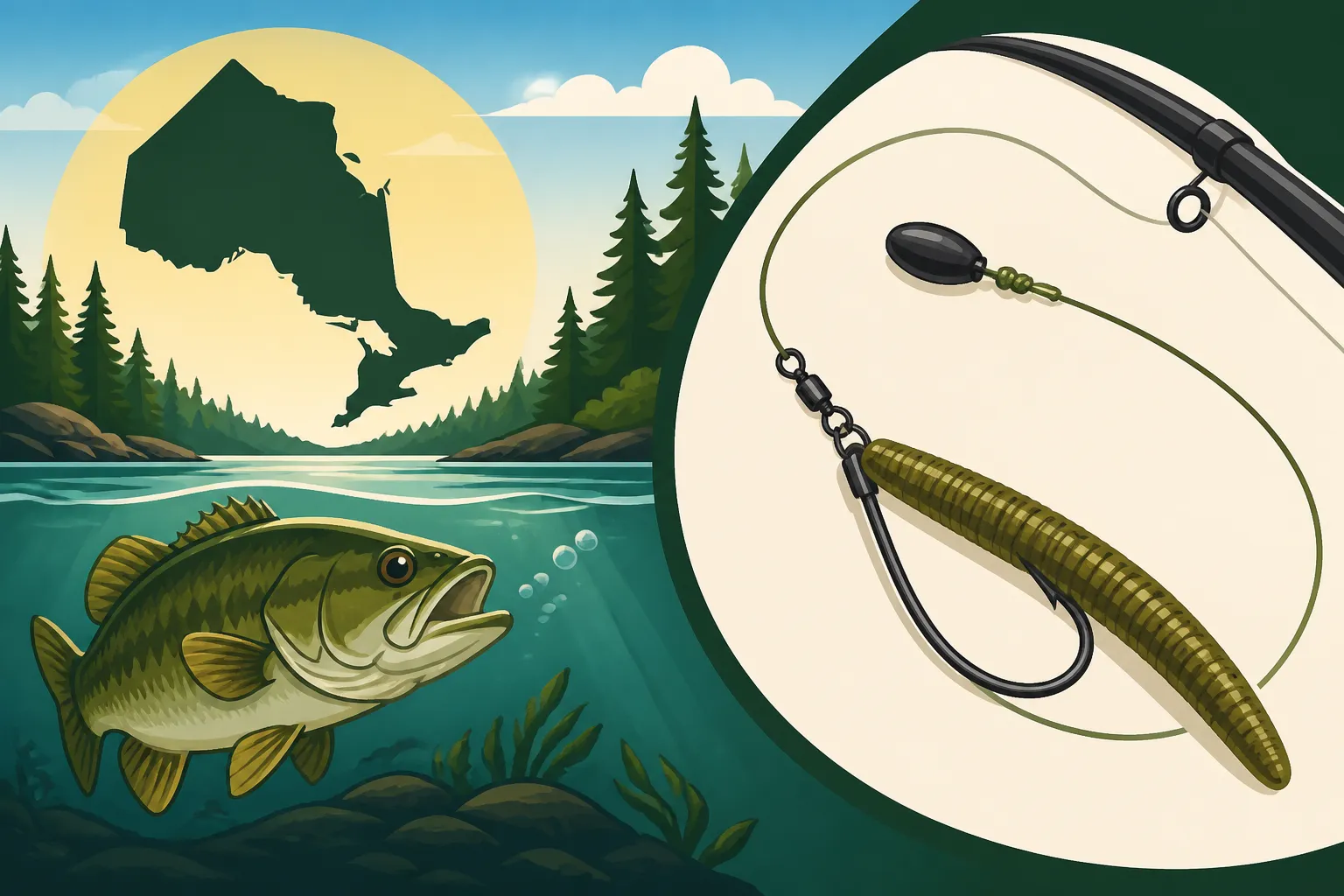
At its heart, a Ned Rig is deceptively simple: a mushroom-shaped jighead paired with a small, buoyant soft plastic bait. But don't let its simplicity fool you; there's a genius in its design.
The jighead is typically a mushroom shape, designed to stand upright on the bottom. This is crucial because it makes the bait appear like a small creature foraging on the lakebed, or a dying baitfish struggling to get away. The hook usually sits exposed, ready for a bite. You'll find variations, of course, including weedless options with wire guards for fishing around cover, which can be a lifesaver when you’re trying to pick apart a brush pile on a back lake.
The soft plastic bait is equally important. The classic Ned Rig plastic is a straight-tailed stickbait, often only 2.5 to 3 inches long, with a high salt content or buoyant material. This buoyancy is the magic ingredient. When paused, the jighead settles on the bottom, but the buoyant plastic stands straight up, quivering gently. This vertical presentation is incredibly enticing to fish that are not in an aggressive mood. It looks like a little creature trying to escape, or a small fry nibbling at the bottom, just begging to be eaten. Many anglers swear by the original Z-Man TRD baits, but plenty of other companies offer fantastic alternatives that perfectly fit the bill.
Essential Components for Your Ontario Ned Rig Setup
Building the ideal Ned Rig setup isn't about throwing the most expensive gear at the problem. It's about balance, sensitivity, and choosing components that work in harmony to deliver that subtle presentation. For Ontario waters, where conditions can vary from crystal clear to murky, and fish can be anything from aggressive to completely shut down, having the right tools makes all the difference. You can often find a wide selection of these components, from rods to soft plastics, browsing through offerings at Bass Pro Shops or online through Amazon.
The Right Rod: Sensitivity is King
For Ned Rig fishing, your rod is your direct link to the fish, so sensitivity is paramount. You need to feel every subtle tap, every scrape against a rock, and every minute change in bottom composition.
- Length: A rod between 6'6" and 7'2" is generally ideal. This length provides good casting distance for light baits while maintaining control and accuracy for precise presentations around structure. A longer rod, say 7 feet, offers a bit more leverage for longer casts and taking up line quickly, which can be helpful in open water.
- Action: A fast or extra-fast action rod is preferred. This means the rod bends primarily in the top third, allowing for quick, responsive hook sets and excellent feel. The sensitive tip will telegraph those subtle bites, while the stronger backbone helps you drive the hook home effectively.
- Power: A light (L) or medium-light (ML) power rod is the sweet spot. Anything heavier will overpower the small jigheads and plastics, making it harder to cast them accurately and feel the subtle nuances of the bait. A light power rod ensures the rod loads properly on the cast and flexes enough to protect lighter lines when fighting a fish. For more on selecting an appropriate rod, check out Best Spinning Rods for Walleye, as many of the principles for sensitivity apply here too.
Reel Choice: Smoothness and Line Management
Spinning reels are the unequivocal choice for Ned Rig fishing. They handle light lines and small baits far better than baitcasting reels.
- Size: A 1000 to 2500 series spinning reel is perfect. A 2000 or 2500 size offers a good balance of line capacity, comfortable retrieve speed, and drag smoothness, without being overly heavy.
- Gear Ratio: A moderate gear ratio, around 5.0:1 to 6.2:1, is excellent. This allows for a slower, more controlled retrieve which is often key for Ned Rig fishing, where you're dragging and pausing rather than burning the bait back. A slower retrieve also helps maintain contact with the bottom, crucial for the Ned Rig’s effectiveness.
- Drag System: A smooth, reliable drag system is vital. When fishing light lines, a jerky drag can lead to break-offs, especially when a surprisingly large smallmouth or walleye decides to commit to your tiny offering. You want a drag that gives line out fluidly under pressure. For those just starting out, a balanced rod and reel combo can be a great starting point, like those discussed in Best Rod and Reel Combo for Beginners.
Line Selection: Balancing Sensitivity and Strength
Your choice of fishing line is critical for Ned Rig success. It needs to be thin for sensitivity and casting distance, yet strong enough to handle fish and resist abrasion.
- Main Line (Braided): Many experienced Ned Rig anglers opt for 6-10 lb braided line as their main line. Braid has virtually no stretch, which provides incredible sensitivity and helps you feel the lightest bites. It also casts exceptionally well, especially with light baits. Its thin diameter also cuts through the water, reducing bow in the line, which is great for staying in touch with your bait.
- Leader (Fluorocarbon): Because braid is visible in clear water and lacks abrasion resistance against rocks and zebra mussels (a common feature in many Ontario lakes), a fluorocarbon leader is essential. A 6-8 lb fluorocarbon leader, 6 to 10 feet long, is a solid choice. Fluorocarbon is nearly invisible underwater, extremely abrasion resistant, and sinks, helping your bait get down and stay down. For detailed guidance on choosing the right leader, check out Best Fluorocarbon Line for Clear Lake Water. The length of the leader can be adjusted based on water clarity and how spooky the fish are – longer for clearer water, shorter for more stained conditions.
Ned Rig Jigheads: Size, Weight, and Hook
The jighead is the anchor of your Ned Rig, literally and figuratively.
- Mushroom Head: The distinct mushroom shape is key to the Ned Rig's upright presentation. It provides a stable base, allowing your soft plastic to stand off the bottom enticingly.
- Weight: Common weights range from 1/16 oz to 1/8 oz.
- 1/16 oz: Ideal for shallow water, calm conditions, or when you need a super slow fall. Think calm coves or shallow flats.
- 1/8 oz: A versatile, go-to weight for most situations. It offers a good balance of castability, sink rate, and bottom contact for depths up to 15-20 feet, or in light current.
- 1/5 oz, 3/16 oz, 1/4 oz: These heavier options are useful for deeper water, stronger winds, or fishing in noticeable current, like when How to catch smallmouth in an Ontario river current. They help maintain bottom contact.
- Hook Size and Style: Most Ned Rig jigheads feature a strong, sharp, light-wire hook, usually in sizes #1 or #2. This ensures good penetration with light line and complements the small profile of the soft plastic. Some jigheads also come with weed guards (wire or brush) for fishing around snags, a crucial feature when probing rocky bottoms or thick weeds in Ontario lakes.
Soft Plastics: The Bread and Butter
This is where the magic really happens. The right soft plastic gives your Ned Rig its irresistible action.
- Classic Stickbaits: The most popular style is a small, straight-tailed stickbait, typically 2.5 to 3 inches long. These are often buoyant, allowing them to stand upright off the bottom when paused. The subtle quiver of the tail in the water is often all it takes to trigger a bite from lethargic fish.
- Other Shapes: Don't limit yourself to stickbaits! Small worms, crawfish imitations, and even tiny creature baits can be deadly on a Ned Rig. The key is to keep them small and, ideally, buoyant. Experimentation is always good.
- Colors for Ontario Waters:
- Natural Colors: Green pumpkin, black and blue, brown, and watermelon variations are staples. These mimic crayfish, gobies, and other natural forage common in Ontario. They are particularly effective in clear water.
- Bright Colors: Occasionally, a brighter color like chartreuse or white can trigger a reaction strike, especially in stained water or on overcast days. Don't be afraid to try something a little bolder if the natural colors aren't producing. Many anglers will find their favourite colours and shapes available through Amazon.
Putting It All Together: Building Your Ned Rig System
Now that we've covered the individual components, let's talk about how they connect to form a cohesive, fish-catching system. It's not just about having the right gear, but about how that gear works as one unit to present your bait in the most appealing way possible.
Tying the Knot: Braid to Fluorocarbon Leader
Connecting your braided main line to your fluorocarbon leader is perhaps the most critical knot in your entire setup. It needs to be strong, smooth, and reliable. A bad knot here means lost fish and lost confidence.
- The FG Knot: This is widely considered one of the strongest and most streamlined knots for joining braid to fluorocarbon. It's a bit tricky to learn at first, but once mastered, it creates a very small, strong connection that slides through rod guides with minimal friction. It offers excellent knot strength, often approaching 90-100% of the line's breaking strength.
- The Double Uni Knot: A more straightforward alternative, the Double Uni is easier to tie on the water. While not quite as strong or streamlined as the FG knot, it's still a very reliable choice for many anglers, especially if you're not comfortable with the FG. Practice these knots at home before you hit the water; you don't want to be fumbling with unfamiliar knots when the fish are biting!
Balancing the Setup: Rod, Reel, and Line Harmony
The magic of the Ned Rig isn't in any single component, but in how they all work together. A perfectly balanced setup feels like an extension of your arm, allowing you to detect the most subtle bites and control your presentation with precision.
- Rod and Reel Balance: When you hold your rod with the reel attached, it should feel balanced, neither tip-heavy nor butt-heavy. This reduces fatigue during long days of fishing and enhances sensitivity. A well-balanced setup makes it easier to hold the rod tip up, which is crucial for watching your line and feeling light bites.
- Line Compatibility: Ensure your line weights are appropriate for your rod's power and action. Using too heavy a main line or leader on a light rod will stifle its performance and sensitivity. Conversely, too light a line on a stiff rod might lead to break-offs. The 6-8 lb braid to 6-8 lb fluorocarbon leader on a medium-light spinning rod is a fantastic general-purpose combination for Ned Rig fishing in Ontario.
Practical Applications for Ontario Waters
The Ned Rig shines in specific situations that are very common across Ontario's vast fishing landscape. Knowing when and where to deploy it will drastically increase your success rate.
- Clear Lakes and Pressured Water: On clear-water lakes like those found in Algonquin Park or parts of Lake Huron, fish are often wary. The small, natural presentation of a Ned Rig is less intrusive and more likely to elicit a strike. Similarly, on heavily fished waters close to urban centers, where fish have seen every trick in the book, the Ned Rig offers a subtle alternative.
- Post-Front Conditions: A cold front can be a real bite killer. Fish often become lethargic and unwilling to chase. This is prime time for the Ned Rig. Its slow, subtle action allows you to keep the bait in their face longer, often triggering a "reaction" bite even when they're not actively feeding. For more on this, consider reading Best time to fish after a cold front.
- Smallmouth Bass Havens: Ontario is renowned for its incredible smallmouth bass fishing, and the Ned Rig is a legitimate smallmouth magnet. From rocky shoals on Lake Simcoe to river systems like the Grand, smallmouth absolutely devour Ned Rigs. It perfectly mimics their natural forage of crayfish and gobies. If you're targeting these bronzebacks, you'll want to review How to Catch Smallmouth Bass in Ontario for broader tactics.
- Targeting Finicky Walleye: While walleye are often associated with aggressive presentations, a Ned Rig can be incredibly effective when they are being picky, especially in clear water or during slow periods. Dragging it along structure or subtle depth changes can coax bites when traditional jigging or trolling fails. Walleye Fishing in Ontario offers more overall strategies for this popular species.
- Kayak Fishing: The Ned Rig is a fantastic choice for kayak anglers. Its light weight makes it easy to cast from a seated position, and its subtle presentation works well in situations where stealth is key, such as when targeting fish in calm coves or along shorelines from a kayak. Best Kayak for River Fishing in Ontario could be a good read if you’re into kayak fishing.
Fishing Techniques and Common Mistakes to Avoid
The beauty of the Ned Rig is its simplicity, but that doesn't mean you can just cast it out and expect magic. There are subtle nuances in technique that will make a world of difference. Remember, the goal is often to do less with a Ned Rig.
Subtle Presentations for Finicky Fish
The key to Ned Rig success is maintaining contact with the bottom and working the bait slowly and subtly. Resist the urge to aggressively twitch or snap your rod.
- The "Do Nothing" Retrieve: This is perhaps the most famous and effective Ned Rig technique. Cast out, let the jig hit the bottom, and then simply let it sit. Count to five, ten, even twenty seconds. The buoyant plastic will stand upright, quivering, and often, a fish will pick it up during this "dead stick" period. After the pause, simply drag the jig a few inches with your rod tip, reel in the slack, and pause again. Repeat.
- Drag and Pause: Similar to the above, but with a bit more movement. Cast, let it sink, then slowly drag your rod tip from 9 o'clock to 11 o'clock, taking up slack as you return the rod to 9 o'clock. The drag creates a small puff of sediment, mimicking a foraging baitfish or craw. Pause, let it stand, and wait for the bite.
- Short Hops and Scoots: For slightly more active fish, or when covering a bit more ground, you can incorporate very small hops. Lift your rod tip just enough to make the jig hop an inch or two off the bottom, then let it fall and stand again. This can imitate a fleeing crayfish or a struggling baitfish. Remember, these are short hops, not big jumps! This subtle approach is what makes it one of the Best technique for finesse fishing clear water bass.
Reading the Bite and Setting the Hook
Because the Ned Rig is so subtle, the bites are often equally subtle. You're rarely going to feel a rod-jerking strike.
- Subtle Taps and Weight: Most bites will feel like a slight "tick," a sudden heaviness, or simply your line going slack or moving sideways. The lack of stretch in your braided main line will help you detect these faint signals. Watch your line like a hawk; sometimes, the only indication of a bite is a slight twitch or jump in the line where it enters the water.
- The Sweep Set: Forget the big, sweeping hooksets you might use with other baits. With light line and small hooks, a gentle but firm "sweep set" is usually all that's needed. When you feel a bite, don't jerk hard. Instead, quickly but smoothly sweep your rod to the side, taking up slack and driving the hook home. This prevents ripping the small hook out of the fish's mouth and reduces the chance of breaking your line.
Maximizing Your Success with Ned Rigs
Even with the right setup and technique, there's always room for refinement. The conditions on Ontario's diverse waters are constantly changing, so adaptability is key.
- Experiment with Jighead Weights: Don't get stuck on just one weight. If the wind picks up, or you move to deeper water, go heavier. If the fish are super finicky in shallow, calm conditions, go lighter. Maintaining bottom contact and a natural fall rate is paramount.
- Vary Your Retrieve: While subtlety is key, fish have different moods. Try a longer pause, then a shorter drag. Try more hops, then fewer. Let the fish tell you what they prefer on any given day.
- Match the Forage (or don't!): Often, matching the color and profile of local forage (like gobies, perch fry, or crayfish) will produce results. Green pumpkin, brown, and watermelon are excellent starting points. However, sometimes a completely unnatural color like white or hot pink can trigger a curious strike. Don't be afraid to experiment, especially when nothing else is working.
- Target Key Structure: Ned Rigs are excellent for picking apart specific pieces of structure like rock piles, weed lines, docks, and subtle depth changes. Focus on these areas, making precise casts and working the bait slowly through the strike zone. You can learn more about specific structures in Best deep water structure spots on Lake Nipissing even if it's not strictly Ned Rig specific, the principles of finding fish hold true.
Here's a quick reference table for setting up your Ned Rig for Ontario:
| Component | Recommendation (Ontario Angler Focus) | Why it Matters |
|---|---|---|
| Rod | 6'6" – 7'2" Spinning, Medium-Light (ML) power, Fast/Extra-Fast action | Sensitivity to detect light bites, proper loading for light baits, quick hooksets. |
| Reel | 1000 – 2500 Series Spinning, Moderate gear ratio (5.0:1 – 6.2:1) | Handles light line, smooth drag, controlled retrieve for finesse presentation. |
| Main Line | 6-10 lb Braided Line (e.g., green, yellow, or high-vis for line watching) | No stretch for maximum sensitivity and casting distance. |
| Leader | 6-8 lb Fluorocarbon (6-10 ft length) | Near invisibility, abrasion resistance, and helps bait sink. |
| Jighead | Mushroom-shaped, 1/16 oz – 1/8 oz (or up to 1/4 oz for deeper/current) | Stands bait upright, maintains bottom contact, allows subtle action. |
| Soft Plastic | 2.5" – 3" Buoyant Stickbait, Worm, or Crawfish imitation | Stands vertical on bottom, subtle quiver, mimics small forage. |
| Colors | Green Pumpkin, Watermelon, Black/Blue (Natural) & Chartreuse (Reaction) | Mimics local forage; bright colors for stained water or reaction bites. |
The Ned Rig is more than just a technique; it's a mindset. It forces you to slow down, pay attention, and appreciate the subtle art of coaxing a bite from a truly reluctant fish. Next time you're on your favourite Ontario water, and the fish are giving you the cold shoulder, tie on a Ned Rig. You might just be surprised at the results.
Disclaimer
This article is for general informational purposes only and does not constitute professional advice. Laws, prices and regulations vary by location and change over time. Consult a qualified professional for guidance on your specific situation.