Best deep water structure spots on Lake Nipissing
Ah, the mighty Lake Nipissing. It's a vast, beautiful body of water, and if you've ever tried to fish it without a plan, you know it can feel like trying to find a needle in a haystack. Anglers often struggle to locate consistent fishing, especially when the fish aren't holding shallow. This guide is all about cutting through that frustration, focusing on finding those elusive deep water structure spots where the big fish often congregate, giving you a real edge on your next Nipissing adventure.
The Allure of Lake Nipissing's Deep Water Structure
Lake Nipissing is undeniably massive, and its reputation for incredible walleye and muskie fishing precedes it. But its sheer size, combined with a relatively shallow average depth, often leads anglers to focus on weed beds and shorelines. However, overlooking the deeper water structure is a huge mistake. These submerged features are vital highways and hideouts for many of the lake's trophy fish, especially as water temperatures change throughout the season.
During the warmer months, as the shallows heat up, many larger fish—particularly walleye and big muskie—retreat to the cooler, more stable temperatures found in deeper parts of the lake. They don't just suspend in open water; they gravitate towards structure that offers ambush points, current breaks, and access to forage. Think of these deep spots as underwater cities: they have everything a fish needs to thrive. Without understanding and targeting these areas, you're missing out on some of the most consistent fishing the lake offers. This is particularly true on days when surface activity is minimal, or during periods of high boat traffic when fish are pushed offshore.
Why Deep Structure is a Year-Round Magnet
It's easy to think of deep water structure as purely a summer or fall pattern, but its importance spans the entire fishing calendar. In spring, after the ice-out, these deep transition zones, especially where old river channels or sharp breaks meet shallower flats, become staging areas for pre-spawn walleye moving towards spawning grounds. As you might know from guides like our piece on Ontario Walleye Opener Dates by Zone, timing is everything, and finding these staging areas can lead to fantastic early season success.
Come summer, as mentioned, the thermocline (if one develops strongly enough in deeper basins) or simply cooler, more oxygenated water on bottom makes deep humps and drop-offs prime real estate. Fish like walleye will sit right on the bottom of these structures, waiting to ambush baitfish. In the fall, as fish fatten up for winter, they'll often stack up on deep structure, feeding aggressively before ice formation. Even during ice fishing, deep water humps and points that top out but are surrounded by significant depth can be fantastic for targeting walleye and even deep-water pike, if you understand Best Techniques for Northern Pike Ice Fishing. It's a fundamental truth in fishing that fish relate to structure, and deep structure on Lake Nipissing is no exception.
Key Species to Target on Deep Water Structures
While many species use deep structure, a few truly thrive there and should be your primary targets when exploring these areas on Lake Nipissing.
- Walleye: These are the kings of deep structure on Nipissing. They are masters of using subtle depth changes, rock piles, and submerged humps to their advantage. They'll often sit right on the bottom, hugging contours, making them challenging but incredibly rewarding to catch. They use these areas for feeding, resting, and escaping pressure. Understanding Walleye Fishing in Ontario is crucial here.
- Muskellunge: Don't let their reputation as shallow water predators fool you. Big muskie will absolutely patrol deep structure, especially adjacent to deep weed lines or where baitfish are abundant. They use the deeper water for comfort and the structure for ambush points. Targeting them in these areas can yield some truly massive fish. Our guide to Muskellunge Fishing in Ontario offers more insights into their habits.
- Northern Pike: While often associated with weeds, larger pike will also utilize deep rock piles and channel edges, particularly if there's good forage nearby. They are opportunistic predators and will take advantage of any concentration of baitfish or unsuspecting walleye that stray too close.
- Whitefish: Though not typically pursued by sport anglers in the same way, whitefish are a schooling species that often inhabit these deep structures, especially the transition zones and main lake basins. If you're looking for a different challenge or some fantastic eating, they're often found suspended just above or relating directly to deep humps.
Identifying Key Deep Water Structure Types on Lake Nipissing
Successfully fishing deep water structure starts with understanding what you're looking for. Lake Nipissing's bottom is diverse, offering a variety of features that hold fish. It's not just about finding the deepest hole; it's about finding contours, transitions, and elements that break up the uniformity of the bottom.
Submerged Humps and Reefs
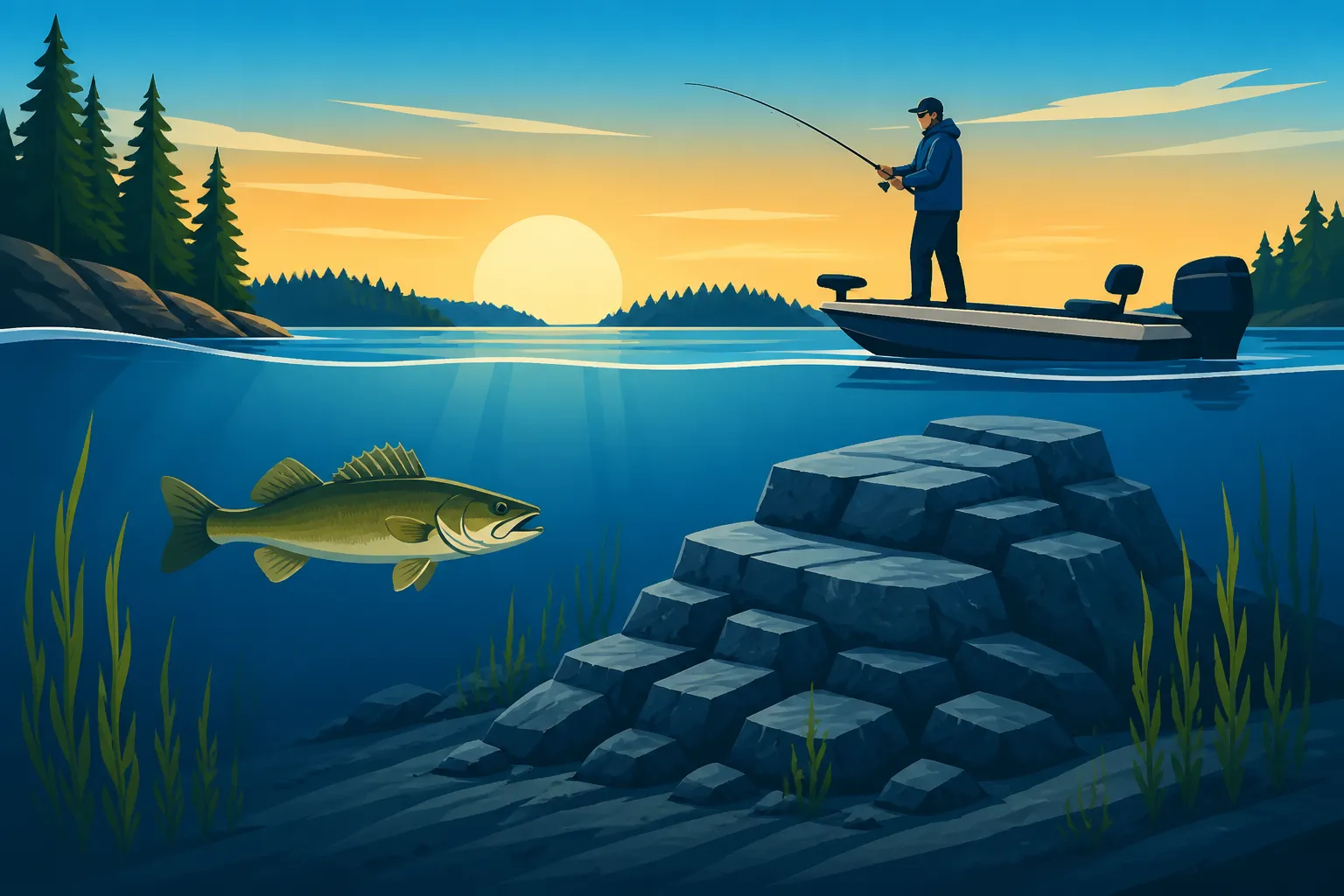
These are perhaps the most classic and productive deep water structures. A submerged hump is essentially an underwater hill or mountain, rising from the surrounding deep bottom but not quite reaching the surface. Reefs are similar but often broader, flatter, and rockier. On Lake Nipissing, these can vary from subtle rises of a few feet to dramatic peaks that come up from 50 feet to 15-20 feet below the surface.
Fish love humps and reefs for several reasons. They offer vertical relief, allowing fish to change depths quickly without expending much energy. The top of the hump might be a feeding zone, while the sides or base offer deeper refuge. Current often interacts with these structures, concentrating baitfish. Look for humps with irregular tops, rock piles, or even a few scattered boulders. Walleye will often sit right on the peak or along the "lip" where the top meets the side, particularly on the wind-blown side where baitfish are pushed. This is where your Best Fish Finders for Ontario Lakes really earn their keep, allowing you to mark bait, fish, and the exact contours.
Drop-offs and Breaklines
A drop-off is any area where the bottom depth changes dramatically. A breakline is a distinct change in the bottom contour, often a sharp edge where a flat transitions into a deeper drop. Lake Nipissing has numerous subtle and dramatic breaklines, especially along the edges of its various bays and the main basin.
These are critical fish holding areas because they provide a direct route to deeper water for safety or comfort, while still offering easy access to shallower feeding grounds. For instance, a long, gradual tapering point that suddenly drops into 30+ feet of water is a prime spot. Walleye will often patrol these breaklines, moving up and down the face of the drop, especially during low light conditions or when hunting. Muskie will often position themselves slightly off the break, using the depth change as a concealed ambush point. Pay close attention to these areas, particularly where a hard bottom transitions to soft, or where rock fields meet mud.
Old River Channels and Submerged Points
Lake Nipissing was carved by ancient waterways, and remnants of these old river channels can be found snaking across the bottom. These channels offer distinct troughs or depressions in the lakebed, often with slightly different bottom compositions (e.g., harder clay or gravel within the channel, softer silt on the banks).
Fish use these channels as travel corridors and holding areas. Walleye will often relate to the edges of these channels, especially where they intersect with other structure like humps or flats. Submerged points, which extend far out from the shoreline into deeper water, are also incredibly productive. These are natural funnels for baitfish and offer multiple breaklines and depth changes for predatory fish to utilize. A long, submerged point on Lake Nipissing, especially one that has a distinct "nose" or "cup" feature, is almost guaranteed to hold fish at some point in the day. Using the Fish ON-Line interactive zone map can sometimes help identify these subtle historical features.
Top Deep Water Structure Hotspots on Lake Nipissing
While pinpointing every hotspot on a lake as vast as Nipissing is impossible, there are general areas known for holding excellent deep water structure. Always remember that fish move, and conditions change, but these locations offer a great starting point for your exploration.
The Main Basin and Callander Bay Mouth
The main basin of Lake Nipissing, particularly the vast expanse off the shores of North Bay and the entrance to Callander Bay, offers some of the deepest water and most significant structures. Here, you'll find submerged humps and sprawling flats that give way to deeper troughs.
Callander Bay Mouth: This area is legendary. As you move from the shallower, often weedy waters of Callander Bay out into the main lake, you encounter a complex series of deep water humps, rock piles, and significant drop-offs. Walleye often congregate here, especially in summer, as they stage on the deeper structure. Look for depths ranging from 20 to 50 feet. It's an excellent area to troll large crankbaits for walleye or jig vertically with minnow-imitating lures. Many experienced local anglers or guides found through services like FishingBooker know this area well, and for good reason—it consistently produces.
Main Lake Deep Flats: South of North Bay and generally west of Callander, the main lake basin has extensive deep flats that hold very subtle structure. While it might look featureless on a basic map, detailed contour maps or a quality fish finder will reveal slight rises, rock patches, and transition lines where softer bottom meets harder bottom. These areas, particularly in 30-50 feet of water, are often overlooked but can hold massive schools of walleye or pods of whitefish. Trolling specific patterns for Lake Nipissing Walleye Fishing across these deep flats is a common and effective tactic.
South Bay and West Arm Deep Channels
Both South Bay and the West Arm of Lake Nipissing are large, distinct sections of the lake with their own unique characteristics and productive deep water structures.
South Bay Deep Water: South Bay offers a fantastic mix of structure. While shallower on average than the main basin, it features prominent deep channels and isolated humps that can reach depths of 40-50 feet. The areas closer to the main lake connection, and further south towards the islands, tend to have the most pronounced deep structure. Focus on the main channel edges and any isolated rock piles that rise from the depths. This bay is a consistent producer for both walleye and larger northern pike. When booking a trip, many guides available on FishingBooker specialize in these specific bay dynamics.
West Arm Structure: The West Arm, leading towards Sturgeon Falls, also presents excellent deep water opportunities. Look for the deeper sections of the river channel that wind through this arm, as well as submerged humps and points that jut out from the numerous islands and shorelines. These areas offer excellent ambush points for muskie, which are abundant in the West Arm, as well as walleye. Depths here can range significantly, but focusing on 20-40 foot breaks and humps is a solid strategy. Our detailed Lake Nipissing Muskie Fishing guide would have more insights on how to tackle these formidable predators in such varied terrain.
Near the Manitou Islands and Garden Island
These island chains are not just beautiful; they are geological features that create significant underwater structure.
Manitou Islands: The cluster of islands known as the Manitou Islands (e.g., Little Manitou, Great Manitou) in the central part of the lake, are surrounded by some of the lake's deeper water. The areas between and around these islands are riddled with deep rock piles, underwater shoals, and sharp drop-offs into the main basin. These are classic walleye and muskie haunts. The irregular bottom contours provide excellent current breaks and feeding zones. Pay particular attention to the deep water edges of any visible islands, and use your sonar to locate submerged extensions.
Garden Island: Located in the main basin, Garden Island also acts as a magnet for fish due to its surrounding deep water structure. Similar to the Manitou Islands, the underwater extensions, rock piles, and deep breaks off Garden Island are prime locations for various species. Anglers often find success working these areas with jigs and soft plastics for walleye, or casting large muskie baits along the deeper breaks.
Essential Gear and Techniques for Deep Water Fishing on Nipissing
Successfully tackling Lake Nipissing's deep water structure requires specific gear and honed techniques. You can't just cast a worm out there and expect results (though sometimes beginner's luck strikes!). Precision, patience, and the right tools are your best friends.
Sonar and Mapping: Your Deep Water Eyes
This cannot be stressed enough: a high-quality fish finder with detailed mapping is absolutely non-negotiable for deep water fishing on Lake Nipissing. You need to be able to accurately read bottom contours, identify humps, channels, and drop-offs, and distinguish between rock, sand, or mud bottom.
- High-Definition Side-Imaging/Down-Imaging: Brands like Humminbird, Lowrance, and Garmin offer units with excellent side-imaging and down-imaging capabilities. These technologies allow you to "see" underwater structures off to the sides of your boat or directly below with incredible detail. This is crucial for locating isolated rock piles or subtle breaklines that a traditional 2D sonar might miss.
- Detailed Lake Maps: Invest in a Navionics or Lakemaster chip for your unit. These provide highly detailed contour lines, which are your roadmap to finding deep structure. Study these maps before you even launch your boat, marking potential hotspots.
- GPS and Waypoints: Once you find a productive deep water structure, immediately mark it as a waypoint on your GPS. This allows you to return to the exact spot again and again. Drifting over a subtle hump, marking fish, and then being able to set up a precise troll or drift over that same spot is how you maximize your time. Learn How to use the Fish ON-Line interactive zone map to get a general idea, but then rely on your dedicated marine electronics.
Techniques for Deep Water Success
Once you've identified your structure, how do you fish it effectively? There are a few go-to methods that consistently produce.
Trolling Deep Diving Crankbaits
Trolling is incredibly effective for covering large areas of deep water structure, especially along breaklines or across large humps. The key is using lures that can reach the desired depth and maintain it.
- Lure Selection: Choose deep-diving crankbaits from brands like Rapala (Deep Husky Jerks, DownDeep Rattlin' Fat Raps) or Berkley (Dredger series). The packaging will tell you their diving depth. Match lure colours to the prevailing baitfish or water clarity. Natural patterns for clear water, brighter colours for stained or darker days.
- Line Choice and Lead: Using thinner diameter braided line (e.g., 10-20 lb test) with a fluorocarbon leader (e.g., 10-15 lb test) will help your lures dive deeper. You'll need to experiment with lead lengths and boat speed. Longer leads (50-150 feet behind the boat) typically allow lures to run deeper. Our guide on Best Crankbaits for Ontario Walleye has more tips.
- Speed and Direction: Troll at speeds typically ranging from 1.5 to 3.0 mph. Experiment with speed changes, as these can often trigger strikes. Don't troll in a straight line; make S-turns and figure-eights to vary the lure's action and depth presentation, covering different parts of the structure. Use your sonar to stay on the edge of the structure or over the most promising contours.
Vertical Jigging and Drop Shotting
When fish are tightly schooled on a specific piece of deep structure, or when they're less active, vertical presentations are often deadly.
- Vertical Jigging: This involves positioning your boat directly over the fish or structure you've marked on your sonar and dropping a jig straight down. Use jigs in the 3/8 to 3/4 oz range, depending on depth and current, tipped with a soft plastic swimbait, grub, or live minnow/worm. Work the jig with short, sharp lifts and pauses right on the bottom or slightly above the fish you're marking. This is especially effective for walleye on deep humps.
- Drop Shotting: A drop shot rig keeps your bait suspended above a weight, allowing for a more subtle, natural presentation. This is fantastic for finicky fish that might not commit to a jig, or when fishing extremely clear water. Use smaller hooks and finesse baits (e.g., small worms, minnow imitations). You can hover over a spot and gently shake your rod tip to impart action to the bait without moving the weight. This setup also provides excellent bottom feel.
- Rods and Reels: For jigging and drop shotting, a sensitive medium-light to medium power spinning rod (6'6" to 7'6") with a fast action tip is ideal. Pair it with a 2500 or 3000 size spinning reel spooled with braided line and a fluorocarbon leader. A good setup ensures you can feel the subtle bites in deep water. You might find more details in articles like Best Spinning Rods for Walleye.
Bottom Bouncing and Live Bait Rigs
Sometimes, the simplest approach is the best, especially when walleye are lethargic or preferring natural offerings.
- Bottom Bouncers: These wire weights are designed to be trolled or drifted slowly while keeping your bait just off the bottom. Attach a crawler harness (with a worm) or a plain hook with a minnow. The heavy weight keeps the bait in the strike zone, and the wire arm helps prevent snags. This is a phenomenal way to cover deep flats and gradual slopes. Our guide on How to fish a crawler harness for walleye can provide excellent tips.
- Slip Bobber Rigs: While often associated with shallower water, slip bobbers can be adapted for deep water fishing, especially if you're targeting a specific, tight school of fish marked on your sonar. Set your bobber stop to the exact depth you want, allowing your live bait (minnow or leech) to be suspended perfectly in the strike zone. This passive technique is great for multiple rods or for resting between active presentations.
- Finding Bait: Remember, the deep water structure only holds fish if there's food. Pay attention to your sonar for schools of baitfish. Where there's bait, there are usually predators. If you find a massive school of shiners or smelt near a deep hump, you can bet walleye or muskie are not far behind.
| Technique | Ideal Structure Type | Target Species | Best Conditions | Key Gear |
|---|---|---|---|---|
| Trolling Crankbaits | Long breaklines, deep flats, large humps | Walleye, Muskie | Covering water, active fish | Deep-diving crankbaits, trolling rods, line counters |
| Vertical Jigging | Isolated humps, specific rock piles, tight schools | Walleye, Pike | Marked fish, less active | Jigs (soft plastics/live bait), sensitive rod |
| Drop Shotting | Clear water, finicky fish, tight to structure | Walleye, Perch | Subtle presentation | Finesse baits, light line, sensitive rod |
| Bottom Bouncing/Rigs | Deep flats, channel edges, gradual slopes | Walleye, Pike | Live bait preference | Bottom bouncers, crawler harnesses, live bait |
Lake Nipissing's deep water structure can seem intimidating, but with the right approach and a bit of persistence, it can unlock some truly incredible fishing experiences. Don't be afraid to experiment, trust your electronics, and when in doubt, consider leveraging local expertise, perhaps by looking for a fishing charter on FishingBooker that specializes in these deeper patterns. You'll be glad you did when that rod bends hard on a deep-water Nipissing monster!
Disclaimer
Fishing regulations, license requirements, and safety guidelines can change. Always consult the most current Ontario fishing regulations summary and practice safe boating. The information provided here is for general guidance and entertainment purposes only.