Best umbrella rig for winter walleye
Trying to coax sluggish walleye into biting during the frigid Ontario winter can be one of the most frustrating challenges for even seasoned anglers. When the water temperature plummets, these usually aggressive predators become lethargic, hugging structure and conserving energy, making traditional tactics less effective. This guide is going to dive deep into an often-overlooked, yet incredibly potent, tool for winter walleye: the umbrella rig. We'll explore why this multi-lure setup can be a game-changer when everything else fails, and how to choose and deploy the best one for success in cold water.
Understanding Umbrella Rigs for Winter Walleye
When you think of an umbrella rig, your mind might immediately jump to bass fishing in warmer climates, seeing pros on TV slinging massive setups. But let me tell you, these rigs, often called A-rigs, are far from a single-species, fair-weather tool. They can be incredibly effective for walleye, especially when the water is cold, and those fish are glued to the bottom or suspended in tight schools. The magic of an umbrella rig in winter walleye fishing lies in its ability to mimic a small school of baitfish, creating a "bigger target" that's hard for even the most finicky walleye to ignore.
In the dead of winter, walleye often school up tightly around deep structures, current breaks, or subtle humps. They're not chasing down individual baitfish with gusto; they're looking for an easy meal, something that presents itself as a substantial caloric reward without expending too much energy. A single jig or minnow might not grab their attention in a vast, cold lake. But an umbrella rig, with its multiple arms and lures, creates a significant visual and vibratory disturbance. It looks like a whole meal, a tempting cluster of baitfish that's much more appealing to a lethargic walleye. It's about presentation and persuasion when the fish are in a funk.
What Makes an Umbrella Rig Effective in Cold Water?
The core principle behind an umbrella rig's effectiveness in cold water is its ability to tap into the walleye's primal schooling instinct. When baitfish huddle together for warmth and protection in winter, they form dense schools. An umbrella rig perfectly imitates this behavior, making it look like an easy target for a predator. Think about it: a single shad swimming by might get ignored, but a cluster of five or six struggling minnows? That's a different story.
Moreover, the multiple arms of the rig create a unique pulsating action as it's retrieved. Even at slow speeds, which are crucial for cold water presentations, the individual swimbaits or grubs attached to the rig will subtly quiver and flash. This low-frequency vibration can be picked up by the walleye's lateral line, even if their vision isn't great in murky or low-light winter conditions. It's a distress signal, a beacon that says "easy meal" in the otherwise quiet, cold underwater world. The sheer size and profile also makes it easier for a walleye to track and commit to, reducing the chance of them simply nosing it and moving on. It’s all about triggering that instinctual predatory response without demanding too much effort from the fish.
Components of a Walleye Umbrella Rig
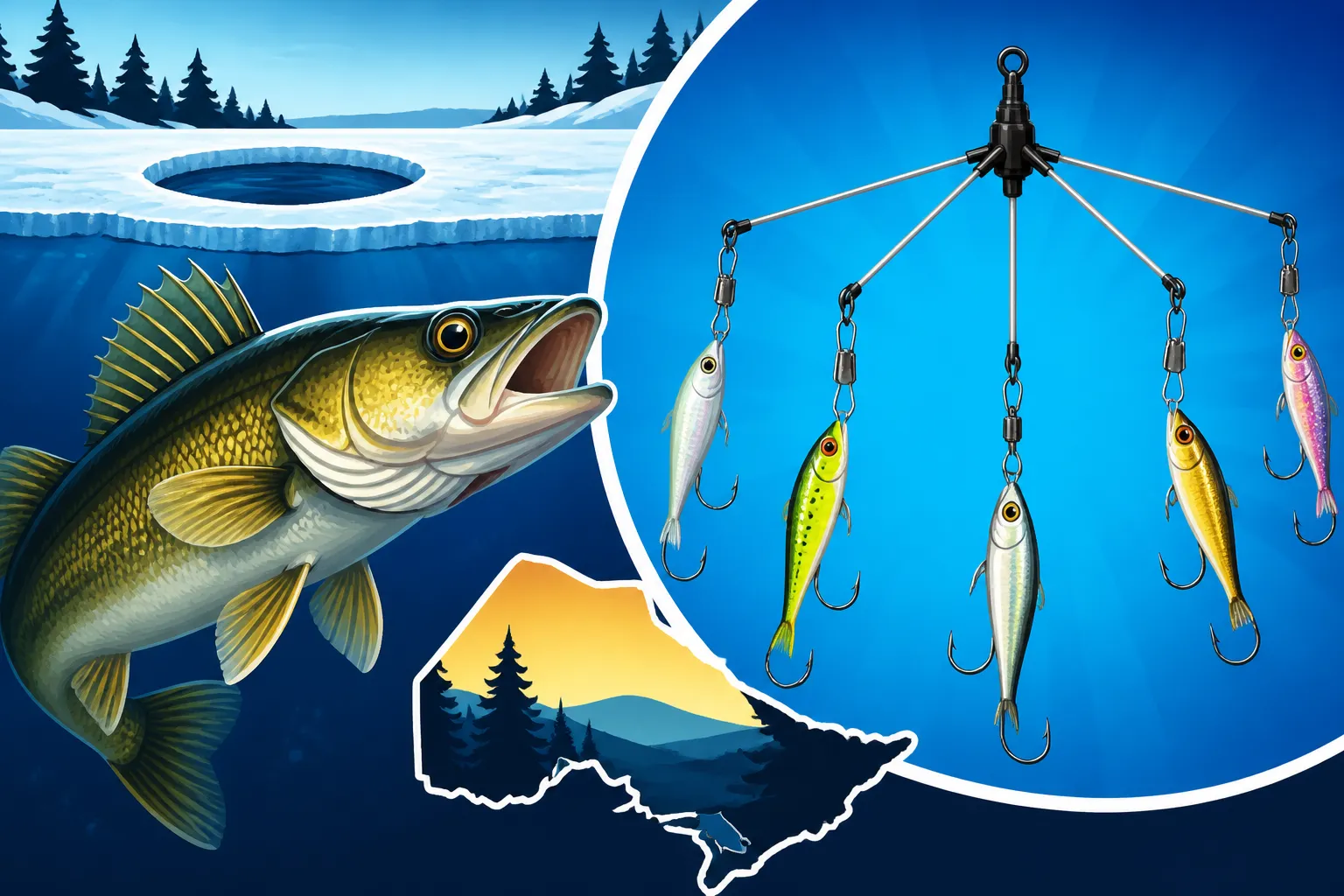
A typical umbrella rig consists of a central head or hub, from which multiple wire arms extend. These arms are usually equipped with swivels and snaps at their ends, allowing you to attach your chosen jig heads and soft plastic swimbaits or grubs. The number of arms can vary, but for walleye, a rig with three to five arms is generally a good starting point. Some rigs might even have a larger, heavier central jig head in addition to the ones on the arms.
The quality of the wire arms is important; you want something sturdy enough to withstand strikes from aggressive fish but flexible enough to impart a natural swimming motion to your baits. Similarly, strong swivels and snaps are non-negotiable, especially when dealing with the potential for multiple hook-ups. Many popular umbrella rigs are designed to be fished with jig heads ranging from 1/8 oz to 1/2 oz, depending on the depth and current. The choice of jig head style and plastic bait is critical, and we'll dive deeper into that shortly. Remember, the goal is to create a realistic school of baitfish, so matching the size and profile of your local forage is key. You might find a good selection of these foundational components, including various wire rigs and quality jig heads, at larger retailers like Bass Pro Shops or even through online vendors like Amazon.
Key Considerations When Choosing a Winter Walleye Umbrella Rig
Selecting the right umbrella rig for winter walleye isn't a one-size-fits-all situation. Several factors come into play, from the depth of water you're fishing to the specific mood of the walleye that day. You need to think about how much weight you need to get down to the fish, how many "baitfish" you want to present, and what kind of action your lures will have. Overdoing it can make the rig cumbersome and unnatural, while underdoing it might not grab the walleye's attention. It's a delicate balance that comes with experience and understanding the nuances of your chosen fishing spot in Ontario.
For instance, if you're targeting walleye hugging the bottom in 30-40 feet of water on a large lake like Lake Erie, you'll need a heavier total weight than if you're casting into 15 feet of water on a smaller, shallower inland lake. The size and species of baitfish in the area should also influence your choice of trailer baits, ensuring your presentation looks as natural as possible. Don't be afraid to experiment a bit, but always start with a solid understanding of the conditions you're facing.
Rig Weight and Arm Configuration
The overall weight of your umbrella rig is crucial for reaching those deep, cold-water walleye. This weight comes from the combined total of the rig itself (the central hub and arms) and the jig heads you attach to it. In deeper water, or when dealing with strong currents, a heavier rig overall will help you maintain contact with the bottom and keep your presentation in the strike zone. Many anglers will opt for 1/4 oz to 3/8 oz jig heads on each arm, which quickly adds up. For shallower presentations, or when fish are suspended higher in the water column, lighter jig heads (e.g., 1/8 oz to 1/4 oz) might be more appropriate.
The number of arms also impacts the rig's profile and appeal. A 3-arm rig offers a more compact, tighter school profile, while a 5-arm rig creates a larger, more dispersed appearance. For lethargic winter walleye, sometimes a slightly less intimidating, tighter school is more appealing, so a 3-arm or 4-arm rig often performs exceptionally well. However, if the fish are active (for winter standards!) and feeding on larger bait balls, a 5-arm rig can provide that "feast" presentation they can't resist. Consider the legal hook limits in your specific Ontario fisheries management zone; typically, you're allowed a maximum of four lines in the water, and each umbrella rig can count as multiple lines if it has more than one hook. Always refer to the Ontario Fishing Regulations Explained before heading out.
Jig Head and Swimbait Selection
This is where you can truly fine-tune your umbrella rig for winter walleye success. The jig heads determine not only the depth and fall rate but also the action of your swimbaits. Round ball heads are versatile, while stand-up jig heads can be effective if you're trying to keep your baits slightly off the bottom. Consider jig heads with quality hooks, as you might be dealing with hard-mouthed walleye in cold water, and you certainly don't want to lose a good fish due to a bent hook.
For soft plastic trailers, smaller profiles generally work best for winter walleye. Think 2.5 to 4-inch paddle tail swimbaits or grub-style baits that mimic local baitfish like emerald shiners, smelt, or cisco. Natural colors like pearl white, silver, grey, smoke, or even chartreuse are often deadly. Sometimes a subtle glitter or a tail dipped in bright orange or chartreuse can provide just enough flash to trigger a strike. Don't be afraid to mix and match colors on your rig – a slightly different colored swimbait on the central arm can sometimes act as a "target bait" that draws the walleye's eye. Experimentation is key, and you'll find a massive selection of soft plastic baits that pair perfectly with umbrella rigs through retailers such as Amazon or at any Bass Pro Shops location.
| Rig Component | Winter Walleye Considerations | Common Options |
|---|---|---|
| Arm Count | 3-5 arms for realistic school | 3-Arm, 4-Arm, 5-Arm |
| Rig Weight | Match depth & current for bottom contact | Light (1/4oz), Medium (1/2oz), Heavy (1oz+) |
| Jig Head Size | 1/8 oz – 3/8 oz per arm for slow fall | 1/8oz, 1/4oz, 3/8oz |
| Jig Head Style | Round, stand-up, or bullet for varied action | Ball, Minnow, Flat Bottom |
| Swimbait Length | Mimic local forage, smaller for lethargic fish | 2.5" – 4" |
| Swimbait Colors | Natural, subtle, with some flash | Pearl, Silver, Smoke, Chartreuse |
| Hook Quality | Sharp, strong for solid hooksets | Gamakatsu, VMC, Owner |
Rigging and Presenting Your Umbrella Rig for Winter Walleye
Once you've chosen your umbrella rig and jig/swimbait combination, the next step is to rig it correctly and present it in a way that maximizes your chances of success. It's not just about throwing it out there; precision, patience, and understanding the walleye's behavior in cold water are paramount. Your line choice, leader material, and retrieval technique all play a significant role in getting those finicky fish to commit.
Remember, winter walleye are often hugging structure, so accuracy in casting and boat control is critical. Whether you're drift fishing over a deep flat or slowly retrieving along a breakline, paying attention to your electronics to locate fish and bait is a massive advantage. Internal links like Best Fish Finders for Ontario Lakes can help you understand how to utilize technology to your benefit.
Optimal Rigging for Success
When setting up your umbrella rig, start with a stout rod and reel. A medium-heavy or heavy power baitcasting rod with a fast action, coupled with a sturdy baitcasting reel, is ideal for casting the often heavy rig and handling multiple fish if they strike simultaneously. For line, 15-20 lb fluorocarbon or braided line with a fluorocarbon leader is a great choice. Fluorocarbon is less visible in clear winter water and offers excellent abrasion resistance against potential snags. A leader of 12-17 lb test is usually sufficient. Remember that some umbrella rigs don't require all arms to be fishing hooks; you can use dummy baits on some arms to just add to the schooling effect while adhering to local hook limits.
Attach your chosen jig heads and swimbaits to the snaps on each arm. Ensure they are straight and swim true in the water. A crooked swimbait will spin and look unnatural, deterring strikes. Some anglers like to put a slightly larger or different colored swimbait on the central arm to make it stand out as the "target" fish in the school. Before your first cast, make a short retrieve beside the boat to ensure all your baits are swimming correctly and the rig has a natural-looking presentation. This small step can save you a lot of wasted casts and frustration.
Retrieval Techniques for Cold Water
The golden rule for winter walleye fishing is slow down. This applies tenfold to umbrella rigs. A slow, steady retrieve is usually the most effective. Think of a school of baitfish gently cruising or struggling through the water. You're not trying to elicit a chase; you're offering an easy meal.
- Steady Retrieve: Cast your rig out, let it sink to the desired depth (often just above or on the bottom), and begin a slow, consistent retrieve. Maintain just enough speed to keep the swimbaits swimming and the rig from dragging excessively.
- Stop-and-Go: Incorporate pauses into your retrieve. Let the rig sink for a few seconds, then reel slowly for a few turns, then pause again. Many strikes occur on the pause as the rig flutters and settles.
- Bottom Bouncing: If walleye are tight to the bottom, slowly drag or "hop" the rig along the lakebed. The jig heads will kick up puffs of sediment, mimicking feeding baitfish or distressed prey. This technique can be deadly, but be prepared for snags.
- Vertical Jigging (from a boat): If you've marked a school of walleye directly below your boat, you can also use an umbrella rig as a vertical presentation. Drop it down to their level and slowly lift and drop, letting the baits pulsate. This is particularly effective when Ice Fishing in Ontario if using an appropriate rig for that scenario.
No matter the technique, pay close attention to your rod tip for any subtle taps or changes in pressure. Walleye bites in cold water can be incredibly light. A soft tap, a sudden weight, or even just your line going slack can indicate a strike. Set the hook firmly, and be ready for a potential double or triple header!
Legality and Best Practices for Umbrella Rigs
Before you even tie on an umbrella rig, it's absolutely crucial to understand the regulations in your specific fishing zone in Ontario. Fishing regulations are designed to protect fish populations and ensure fair chase, and an umbrella rig, with its multiple hooks, can sometimes tread into grey areas if not understood correctly. Don't let ignorance lead to a fine or, worse, harm the fishery. The Ministry of Natural Resources and Forestry (MNRF) publishes an annual fishing regulations summary, which is your go-to resource. A quick read of Ontario Fishing Regulations Explained or Reading the Ontario Fishing Regulations Summary will save you a lot of headache.
Beyond the regulations, practicing ethical angling, especially in winter, is paramount. Walleye are already under stress from cold water and lower metabolism. Minimizing stress during catch and release is vital, and using a multi-hook rig requires extra care.
Navigating Ontario's Hook and Line Regulations
The biggest question surrounding umbrella rigs in Ontario is almost always about hook limits. In most of Ontario, the general rule is that you are allowed to fish with only one line at a time, and that line can have a maximum of four hooks attached to it. An umbrella rig can easily exceed this limit if you attach a jig head with a hook to every single arm, especially on a 5-arm rig.
Therefore, for a 5-arm umbrella rig to be legal in most of Ontario, you would need to outfit it with a maximum of four hooks. This means one of the arms, or perhaps the central "target" lure, would need to be rigged without a hook. Many anglers will attach a full complement of swimbaits, but only rig the legal number of them with hooks, while the others are "dummy baits" purely for visual appeal. Some specific waters might have even stricter limits, so always double-check the regulations for your chosen body of water. Fishing with more hooks than permitted is a serious offense and can result in significant fines. Don't ruin a good day of fishing by being uninformed.
Ethical Angling with Multi-Hook Rigs
When using an umbrella rig, especially for winter walleye, ethical angling practices are incredibly important. Walleye caught in cold water are often more susceptible to stress and injury. The multiple hooks on an umbrella rig increase the chances of "foul hooking" a fish (hooking it outside the mouth) or deeply hooking it, making safe release more challenging.
Here are some best practices:
- Minimize Fight Time: Use appropriate gear to land fish quickly, reducing their exhaustion.
- Handle With Care: If you plan to release fish, handle them gently. Keep them in the water as much as possible. Wet your hands before touching them to protect their slime coat.
- De-hooking Tools: Carry long-nosed pliers or specialized de-hooking tools. These are essential for safely removing hooks, especially if a fish is hooked in multiple spots. You can find excellent options at stores like Bass Pro Shops.
- Know When to Keep: If a fish is deeply hooked or severely injured, and it's within the legal slot size and possession limit, it's often more humane to keep it rather than risk a slow death after release.
- Barbless Hooks: Consider using barbless hooks, or crimping down the barbs on your jig heads. This makes hook removal much easier and quicker, reducing stress and injury to the fish, particularly if you are practicing catch and release. This is especially important for fish like walleye, which you often want to keep for their delicious fillets, but also for when you encounter other species or undersized fish.
By understanding and adhering to both the written regulations and the unwritten rules of ethical angling, you can enjoy the surprising effectiveness of umbrella rigs for winter walleye while also contributing to the health and sustainability of Ontario's incredible fisheries.
Disclaimer
This article is for general informational purposes only and does not constitute professional advice. Laws, prices and regulations vary by location and change over time. Consult a qualified professional for guidance on your specific situation.