Best pickerel points on Lake of the Woods
Fishing on Lake of the Woods can feel like searching for a needle in a haystack—it's an immense body of water with endless islands, bays, and structure, making it incredibly challenging to consistently find those elusive pickerel, especially for visitors. Many anglers, even seasoned ones, find themselves overwhelmed by the sheer scale. This comprehensive guide is designed to cut through that complexity, pinpointing the very best "pickerel points" on Lake of the Woods and equipping you with the knowledge and tactics to make your next walleye trip a resounding success.
Understanding Lake of the Woods for Walleye Anglers
Navigating a body of water as vast and intricate as Lake of the Woods requires more than just a boat and a rod; it demands a fundamental understanding of its unique characteristics and how they influence the fish you're targeting. This isn't just another lake; it's a world unto itself.
The Sheer Scale and Complexity
Lake of the Woods is not merely a lake; it's an inland sea, straddling the borders of Ontario, Manitoba, and Minnesota. With over 14,500 islands and a staggering 65,000 miles of shoreline, it’s a geographical labyrinth. This isn't your average cottage country lake where you can quickly learn all the hot spots and get a feel for the terrain in a day. The sheer scale means that fishing specific areas, let alone finding them consistently, requires meticulous planning, reliable navigation tools, and often, a deep understanding of how walleye relate to structure on such a massive system. Many anglers, especially those new to the lake, feel overwhelmed, often spending more time searching than actually fishing, which can be incredibly frustrating after a long journey to get there.
Adding to the challenge is the lake's incredible diversity, which is both a blessing and a curse. You'll encounter everything from shallow, stained, fertile bays that warm up quickly in spring to deep, clear, rock-laden basins that hold cooler water year-round. Each distinct area can hold significant numbers of walleye, but they will behave differently based on the specific water conditions, the availability of local baitfish, and the prevailing seasonal patterns. This means a "pickerel point" that's red-hot in one section of the lake might be completely barren in another, even if it appears structurally similar on a detailed hydrographic map. Safely and effectively navigating this vastness, particularly when exploring new points, often calls for up-to-date electronic charts, reliable GPS, and sometimes, the invaluable assistance of a local guide. Many experienced guides on Lake of the Woods can be found through platforms like FishingBooker, where you can connect with captains who specialize in specific regions of the lake and know its nuances intimately.
Walleye as "Pickerel" in Ontario's Northwest
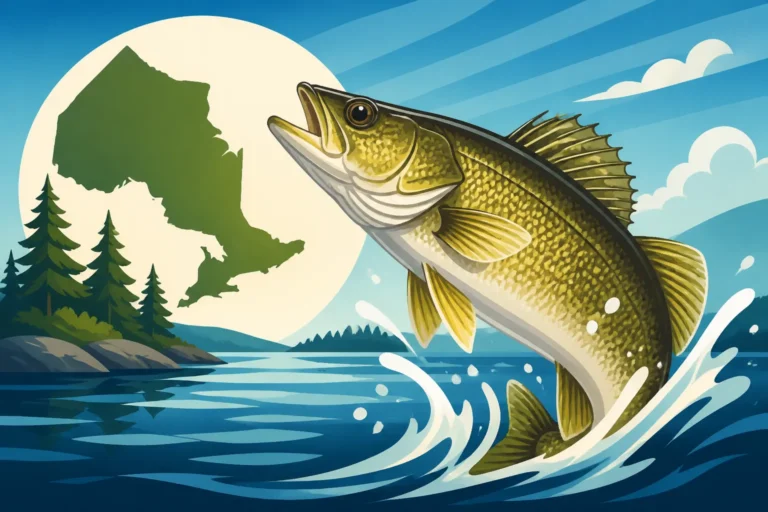
Just a quick note on local terminology that can often confuse visitors: in Northwestern Ontario, especially around Lake of the Woods, what most of North America universally calls "walleye" are almost always referred to as "pickerel." Don't be confused by the name; it's the exact same species, Sander vitreus. This local distinction is incredibly important when you're talking to residents, guides, or perusing local fishing reports. If someone tells you they "slayed the pickerel" on a certain point, they are indeed talking about the same delicious, marble-eyed fish that Ontario anglers adore and travel far and wide to catch.
These "pickerel" are highly sought after for both their spirited fight on the line and their exceptional table fare. Understanding their general habits, such as their well-documented preference for specific depths and structures throughout the day and across different seasons, is absolutely fundamental to achieving consistent success. They're not always easy to find; these fish are known to be quite nomadic, often moving from shallow feeding flats during low-light periods to deeper holding areas when the sun is high. Their movements are dictated by factors like light penetration, changes in weather, and perhaps most importantly, the presence of their preferred baitfish, which on Lake of the Woods can include ciscoes, smelt, various shiner species, and juvenile perch. Keeping an eye on what baitfish are active can give you a significant advantage.
What Makes a "Pickerel Point" Prime on Lake of the Woods?
Not all points are created equal when it comes to attracting and holding walleye. On a lake with thousands of points, knowing what characteristics to prioritize can drastically reduce your search time and increase your catch rate. It's about finding structure that actively benefits the fish.
Transition Zones and Depth Changes
The most consistently productive pickerel points on Lake of the Woods are rarely just random bits of land or rock jutting into the water. Instead, they are typically natural transition zones where fish can easily move between different habitats to feed, rest, or escape predators. Look specifically for points that drop off sharply into deeper water, creating a distinct and often dramatic breakline. Walleye absolutely love these edges because such topography allows them to efficiently ambush schools of baitfish moving along the shallower sections. It also provides a quick escape route to the safety and comfort of deeper, cooler water when light conditions are bright, or when boat traffic increases. A point that extends a significant distance out into the main lake, with varying depths on either side and a clear "tip" or "nose," is often a prime candidate for holding a school of fish.
Think about points where a rugged, rocky shoreline suddenly gives way to a soft sand flat, or where a dense weed bed abruptly ends and a hard, gravelly bottom begins. These types of habitat interfaces are classic walleye magnets. The key is to find points that offer a "smorgasbord" of options for the fish – places where they can find food, shelter, and thermal comfort quickly and efficiently. The specific depth at which walleye will be holding on these transition zones can vary greatly with the season, time of day, and even subtle minute-to-minute weather changes like cloud cover or wind direction. Your fish finder's contour mapping and side-imaging capabilities will be invaluable for identifying these subtle yet critical transitions.
Current, Structure, and Baitfish Presence
Current is another colossal factor in determining the productivity of a pickerel point. Points that are regularly exposed to even subtle current flows, such as those situated near narrows, constricted channels, or river mouths, often become natural funnels that concentrate baitfish. This concentration of food, in turn, acts like a beacon, attracting hungry walleye from surrounding areas. The moving water brings in nutrients, disorients smaller baitfish, and makes them easier targets for lurking predators. On Lake of the Woods, with its incredibly complex network of bays, channels, and river systems, many points will experience some form of current, even if it's just a subtle drift.
Beyond just depth and current, the presence of specific, attractive structure is vital. Submerged rock piles, isolated humps, ancient fallen trees (often called "laydowns"), or even isolated weed patches that grow on or very near a point provide crucial cover for both walleye and their prey. These structures break up the current, offer prime ambush points from which walleye can dart out, and can hold significant schools of baitfish. When scouting new areas, always pay meticulous attention to your fish finder for these submerged features. If you can identify areas on a detailed lake map that are known for holding pelagic baitfish activity, such as deep basins where schools of ciscoes might suspend, then look for points nearby that extend into or directly adjacent to these areas. These are high-percentage spots.
Finally, the abundance of baitfish is the absolute foundation of any productive walleye fishery. If there's no food, the walleye simply won't be there for long. Points that consistently hold visible schools of minnows, shiners, young perch, or even suckers are prime real estate. Observing birds diving repeatedly, or seeing baitfish "flicker" on the surface, are often tell-tale signs of a thriving forage base. Remember, walleye are opportunistic feeders, so understanding what they are feeding on at any given time – whether it's small minnows in spring or larger ciscoes in fall – can make all the difference in selecting the right lure and presentation. Additionally, always make sure to check the Ontario Fishing Regulations Explained for any specific rules regarding bait harvesting and use in Lake of the Woods, as these can vary.
Top Pickerel Point Hotspots on Lake of the Woods
Lake of the Woods is immense, and what constitutes the "best" point can certainly be subjective, changing with conditions, seasons, and even hourly. However, consistently productive areas across the lake share common features and are frequently targeted by local anglers and guides. Here are some general regions and types of points to focus on, based on local knowledge and historical angler success.
The Northern Waters: Kenora and Minaki Areas
The northern reaches of Lake of the Woods, particularly the intricate waterways around the city of Kenora and extending northward towards the remote community of Minaki, are characterized by a classic Canadian Shield landscape. This means abundant granite islands, pristine deep, clear water, and countless formations of rugged rock structure. Points in these areas often feature dramatic sharp drop-offs, plunging quickly from shallow rock shelves into depths of 30-60 feet or more. The walleye here tend to relate very tightly to these points, especially during low light conditions at dawn and dusk, or after dark when they push shallower to feed.
Good examples include points around the Winnipeg River outflow near Minaki. This river system creates significant current breaks and funnels massive amounts of baitfish, making nearby points extremely attractive to walleye. Also, the myriad of islands north of Kenora, such as those found in the extensive Long Bay and Black Sturgeon Bay areas, offer countless prime points. These specific regions are well-known for consistently producing good numbers of walleye, and often some of the larger, trophy-sized fish as well. Anglers here frequently target the "nose" or extreme tip of these points, or the adjacent breaklines, especially where they intersect with deeper basins or channels. For those seeking specific guidance on these complex waters, local fishing charters often operate out of Kenora, providing an excellent way to learn from experienced captains who have spent a lifetime on the lake. You might even find specific guided trips focusing on these northern zones through a booking service like FishingBooker. Remember to check the Ontario Walleye Opener Dates by Zone for FMZ 5 before planning your trip.
The Central Basin: Big Narrows and Crow Lake Inlet
Moving south into the vast central part of Lake of the Woods, the Big Narrows area is a universally renowned walleye factory. This natural constriction in the lake creates strong and consistent currents, particularly during periods of water level fluctuations or high winds, which naturally funnel baitfish and concentrate walleye. Look for points that extend into, or lie immediately adjacent to, these prominent current seams. The predominant structure here is primarily rocky, but with a greater variation in depth and bottom composition compared to the far north. Walleye will often sit just out of the main current, waiting for an easy meal to drift by.
Another exceptionally productive central area is the inlet to Crow Lake (which is also known as Kakagi Lake). While Crow Lake itself is a separate body of water, its vital connection to Lake of the Woods via a river system creates highly dynamic points and current breaks that are absolutely irresistible to walleye. These points are often less exposed to the open lake than those in the northern or southern basins, offering a bit more shelter for both the fish and for anglers trying to maintain boat control. The unique mix of riverine influence and larger lake structure makes these specific points consistently productive throughout the open water season. Exploring the nuances of this region can be a lifelong pursuit, as detailed in our broader Lake of the Woods Fishing Guide.
The Southern Expanses: Rainy River Mouth and Big Traverse Bay
The expansive southern portion of Lake of the Woods, particularly where it meets the mighty Rainy River, offers a distinctly different walleye dynamic. The river continuously brings in stained, fertile water and, critically, supports massive runs of walleye during their important spawning migration. Points near the river mouth and extending into the vast Big Traverse Bay can be absolutely phenomenal, especially in the spring immediately after the spawn and again in the late fall. These points are often shallower overall and may feature more soft bottom transitions or extensive submerged weed lines mixed in with the rock structure. The water here is generally more turbid than in the northern parts of the lake.
The key to success in this region is understanding the immense influence of the Rainy River. The walleye in this southern sector are often more nomadic, actively following vast schools of baitfish that move in and out of the river system. Points that act as crucial staging areas or intercept these major migratory routes are particularly productive during key periods. Because of the stained water, these walleye might be more aggressive and less wary of bright sunlight, making midday fishing more viable than in the clearer northern waters. Exploring resources like our Rainy Lake Fishing Guide can also give you valuable insights into the upstream portion of this rich system, as many fish move between the two bodies of water. For those interested in a guided experience during the peak seasons, many charter operations specifically target these southern areas and can be conveniently booked via reputable resources like FishingBooker, connecting you with local experts.
| Point Type (on Lake of the Woods) | Description | Ideal Season (General) | Target Depth (Approx.) | Key Feature to Look For |
|---|---|---|---|---|
| Canadian Shield Rock Points | Characteristic of the northern lake (Kenora, Minaki). These points feature steep, often granite, drop-offs into deep, clear water. Walleye hold tight to the breakline, especially at the point's "nose" or where structure creates eddies. | Spring (post-spawn), Summer (deep), Fall (active) | 15-40 feet (edge) | Sharp contours, large boulders, current breaks, adjacency to deep basins |
| Current Funnel Points | Found near narrows or river mouths (e.g., Big Narrows, Winnipeg River). These points experience consistent water flow, concentrating baitfish and disorienting them. Walleye stage just out of the main current, ambushing prey. | Spring, Fall (peak migrations), Summer (consistent current) | 10-30 feet | Distinct current seams, eddies, confluence of channels |
| Shallow Transition Points | More common in the southern, stained waters (Rainy River, Big Traverse). These points often feature a mix of soft bottom (sand/mud) and submerged weeds transitioning to rock. Walleye use these for feeding and cover, particularly in lower light. | Spring (warming water), Summer (early/late day), Fall (feeding frenzies) | 5-20 feet | Mixed bottom composition, sparse to dense weed lines, submerged timber |
| Mid-Lake Reefs/Humps | While not shoreline "points," these submerged structures act as underwater islands, often with similar walleye-attracting characteristics. They provide isolated cover and feeding opportunities, especially in expansive open water basins. | Summer (fish suspend off tops), Fall (baitfish school around them) | Top: 10-25 feet | Isolated structure in open water, significant baitfish presence on sonar, hard bottom spots |
Effective Techniques for Fishing Lake of the Woods Pickerel Points
Finding the right point is truly only half the battle; presenting your lure effectively is what ultimately puts fish in the boat. Walleye on Lake of the Woods can be notoriously finicky and challenging, but a few tried-and-true techniques consistently produce results, especially when matched to the specific conditions of the point and the season.
Jigging the Breaklines
Jigging is arguably the most popular, versatile, and consistently effective technique for targeting walleye on points, especially given the rugged, rocky structure so prevalent on Lake of the Woods. It allows for incredibly precise depth control and targeted presentation in areas with sharp breaks, complex contours, and numerous submerged obstacles. A good quality Best Fishing Rods for Ontario Lakes with a sensitive tip, or even a specialized walleye jigging rod, is absolutely crucial for feeling those subtle bites. When jigging, you're essentially mimicking a wounded or dying baitfish, or perhaps a crawfish scuttling along the bottom. The key is to keep your bait near the bottom, constantly feeling for every rock, crevice, and the often very light "thump" or spongy feel of a walleye bite.
Typical jigging setups involve a 1/4 to 3/8 ounce jig head (sometimes heavier in current or deep water) tipped with a lively live minnow, a scented Gulp! minnow imitation, or a soft plastic paddletail or curly-tail grub. Position your boat just off the breakline of the point and either slowly drift with the wind or use your electric trolling motor to meticulously work your way along the contour. Pay very close attention to your fish finder to identify sudden depth changes, isolated rock piles, or crucial schools of baitfish holding tight to the structure. When you find a productive stretch of the point, mark it precisely on your GPS and try to repeat the exact drift or trolling pass. Sometimes, a subtle lift-drop motion of only a few inches is all it takes to trigger a strike; other times, a more aggressive snap-jigging approach, where you rip the jig off the bottom a foot or two, is better, especially when fish are actively feeding. Consider checking out our guide on How to Catch Walleye in Ontario for more in-depth jigging strategies that can be applied here.
Trolling Crankbaits and Crawler Harnesses
When walleye are more spread out along longer, flatter points or actively feeding over the expansive flats adjacent to points, trolling can be an incredibly effective method for covering a lot of water and locating active fish quickly. Crankbaits are excellent for imitating baitfish and can be trolled at various depths depending on the lure's specific design, lip size, and the amount of line let out. Productive colours on Lake of the Woods frequently include natural patterns like perch, shad, and smelt, as well as more aggressive colours like firetiger, chrome/blue, and chartreuse, especially in stained water. Experimentation is key to matching the hatch and the fish's mood.
Crawler harnesses, often combined with bottom bouncers or inline weights, are another killer presentation, particularly when walleye are feeding close to the bottom or in slightly stained water. These setups present a live nightcrawler, or a realistic plastic imitation, in a tantalizing, undulating way that walleye find irresistible. The weight of the bottom bouncer helps keep your bait precisely in the strike zone, allowing it to bounce along the bottom contours of the point without snagging excessively. Troll slowly, generally between 0.8 and 1.5 mph, and use your sonar to meticulously stay on top of the desired breakline or depth contour. Understanding the nuances of Best Crankbaits for Ontario Walleye and how to effectively rig crawler harnesses can significantly boost your success rate, especially when fishing larger, more gradual points.
Casting and Pitching for Aggressive Fish
For those exciting times when walleye are actively feeding on the shallower portions of points, particularly during low light conditions such as dawn, dusk, or on heavily overcast days, casting and pitching lures can be a very engaging and productive approach. Stickbaits (both floating and suspending), shallow-diving crankbaits, lipless crankbaits, or even weighted swimbaits can be effectively cast towards the shallowest part of the point and retrieved over the shallower sections before allowing them to drop off into deeper water. This method is often most effective when fish are aggressively chasing schools of baitfish or when they are actively roaming the point's top.
Another highly effective casting technique is to precisely pitch jigs or soft plastics into specific pockets, eddies, or subtle breaks on the point, especially around visible or sonar-identified structure like fallen trees, large isolated boulders, or the edge of a weed line. This allows for a much stealthier approach than traditional trolling, which can be particularly beneficial in the lake's clearer sections or during periods of high boat traffic when fish might be spooked. Experiment with different retrieve speeds and, crucially, incorporate pauses to trigger those reactionary strikes. A truly great day on Lake of the Woods fishing these pickerel points can often involve a dynamic mix of all three techniques, adapting constantly to what the fish are telling you they prefer. Always keep in mind the current Ontario Bag and Possession Limits by Species for walleye to ensure you're fishing responsibly.
Seasonal Considerations for Pickerel Points
Walleye behaviour on points across Lake of the Woods changes dramatically with the progression of the seasons, requiring anglers to adapt their strategies.
In spring, immediately after the ice recedes and following their spawning period, walleye often linger on shallower points adjacent to known spawning areas or move to points that offer easy access to warming waters and newly abundant baitfish. The Ontario Walleye Opener Dates by Zone are highly anticipated for this reason, as fish can be found quite shallow, especially in the stained southern portions of the lake.
During summer, as overall water temperatures rise, walleye will typically retreat to deeper sections of points during the day, seeking cooler, more comfortable water and holding tightly to the sharp breaklines. They'll often push shallower to actively feed during dawn, dusk, or on cloudy, windy days. Look for points with immediate access to deep water and, if present, the thermocline layer.
In the fall, as water temperatures begin their gradual decline, walleye become incredibly active, feeding aggressively in preparation for the upcoming winter. They can often be found on a wider range of points, from shallow feeding flats to deeper staging areas, frequently chasing large schools of baitfish that are themselves moving towards their wintering grounds. This period can be one of the most productive times to target trophy-sized walleye on Lake of the Woods. Adapting your depth, retrieve speed, and lure presentation to these distinct seasonal patterns is absolutely critical for consistent success throughout the year.
Disclaimer
Fishing is an activity that carries inherent risks. Always prioritize safety on the water, wear appropriate personal flotation devices, and be acutely aware of changing weather conditions. Familiarize yourself thoroughly with all local and provincial fishing regulations, including specific zone rules and limits, before heading out onto Lake of the Woods. The information provided in this guide is for general informational purposes only and does not constitute professional advice or guarantee fishing success.