Best Techniques for Largemouth Bass in Ontario Ponds
There's nothing quite like the charm of an Ontario pond, yet many anglers feel a mix of excitement and frustration when targeting largemouth bass in these smaller, often overlooked waters. You might have found yourself staring at a lily pad field, wondering where to even begin, or cast countless lures without a single bite, leaving you to question if there are even bass in there! This comprehensive guide is here to unravel the mysteries of pond fishing for largemouth, providing you with practical techniques, gear insights, and seasonal strategies to help you consistently land those elusive greenbacks right in your backyard.
Understanding Ontario Ponds and Largemouth Bass Behavior
Fishing a pond is a distinctly different experience from tackling a sprawling lake or river. These intimate environments, while often teeming with life, require a nuanced approach. Largemouth bass in ponds tend to exhibit behavior patterns that are uniquely adapted to their confined, often shallower, and frequently heavily vegetated homes.
The Unique Ecosystem of an Ontario Pond
Ontario is dotted with countless ponds, ranging from small, private farm ponds to larger, publicly accessible conservation areas, and even some urban retention ponds. Each has its own distinct personality, but they share some common characteristics that influence bass behavior. Typically, ponds are shallower than most lakes, leading to more dramatic temperature fluctuations throughout the day and seasons. They often feature abundant aquatic vegetation – think lily pads, cattails, hydrilla, and milfoil – which provides crucial cover and ambush points for largemouth. This vegetation also hosts a vibrant invertebrate population, forming the base of the food chain for the pond's forage fish like minnows, sunfish, and small panfish. The limited space means bass are often in closer proximity to potential prey and predators, making them excellent ambush hunters. Understanding these subtle differences is the first step to unlocking consistent success.
Typical Largemouth Bass Habits in Ponds
Largemouth bass are opportunistic predators, and in a pond environment, their habits are largely dictated by the availability of cover, food, and water temperature. They are masters of camouflage, lurking in the shadows of submerged timber, under the canopy of lily pads, or along deep weed lines, waiting for an unsuspecting meal to swim by. Unlike their counterparts in larger lakes, pond bass often don't have expansive deepwater structures to retreat to, which means they are more consistently tied to shallow cover and the edges of drop-offs within the pond.
Their daily movements are often predictable. During low-light conditions (dawn, dusk, or overcast days), they might move into shallower water to feed actively. As the sun climbs high, they'll typically seek deeper, cooler water or dense overhead cover to escape the heat and bright light. In the spring, their focus shifts to spawning, and they'll gravitate towards hard-bottomed flats or protected coves. Come fall, it's all about feeding heavily in preparation for winter. Recognizing these fundamental patterns will significantly improve your chances, helping you predict where these fish are likely to be at any given time. For a deeper dive into their overall behavior, you might find our guide on Largemouth Bass Fishing in Ontario quite useful.
Essential Gear and Tackle for Pond Bass
You don't need a boatload of specialized equipment to fish for largemouth in Ontario ponds, but having the right tools for the job can make a world of difference. Given the often dense cover and the feisty nature of these fish, choosing suitable rods, reels, lines, and lures is paramount.
Rods, Reels, and Line Choices
When it comes to pond fishing for largemouth, versatility is key, but so is power. You're often dealing with heavy cover – think thick lily pads, submerged logs, or dense weed mats – and you need gear that can not only cast accurately into these tight spots but also haul a big bass out of them.
- Rods: A good starting point is a medium-heavy power rod, typically between 6'6" and 7'6" in length, with a fast action tip. This combination gives you the backbone to fight a strong fish and the sensitivity to detect subtle bites. For those tight, brushy spots, a shorter rod around 6'6" might be easier to maneuver, while a longer 7'3" or 7'6" rod offers better casting distance and leverage for open water or pitching presentations. Consider both spinning and baitcasting setups. A good baitcasting rod is often preferred for heavier lures and denser cover, offering more control and power, while spinning gear is excellent for lighter baits and situations where finesse is required. If you're looking to explore options, you can often find a wide range of suitable rods and reels on platforms like Amazon, offering competitive pricing and detailed reviews to help you choose. Our broader guide on Best Fishing Rods for Ontario Lakes can also offer insights that apply to pond fishing.
- Reels: For a baitcasting setup, a reel with a gear ratio between 6.4:1 and 7.3:1 offers a good balance for various techniques. A faster retrieve (higher gear ratio) is excellent for quickly taking up slack after a cast or for moving fish away from cover. For spinning gear, a 2500 or 3000 series reel is generally a good match for the medium-heavy rod, providing enough line capacity and smooth drag.
- Line: This is where many pond anglers make mistakes. Forget light line if you're fishing heavy cover. Braided line, in the 30-50 lb test range, is often the top choice. Its incredible strength, zero stretch, and abrasion resistance are invaluable for cutting through weeds and pulling bass from snags. If the water is particularly clear, you might opt for a fluorocarbon leader (12-20 lb test) tied to your braid, as fluorocarbon is nearly invisible underwater. For open water presentations or where absolute invisibility is paramount, 10-15 lb test fluorocarbon or monofilament can be used, but always be mindful of snags.
Must-Have Lures and Baits
Pond bass aren't usually picky eaters, but presenting the right lure in the right place at the right time is crucial. Your tackle box for pond bass should reflect the diverse environments and seasonal behaviors you'll encounter.
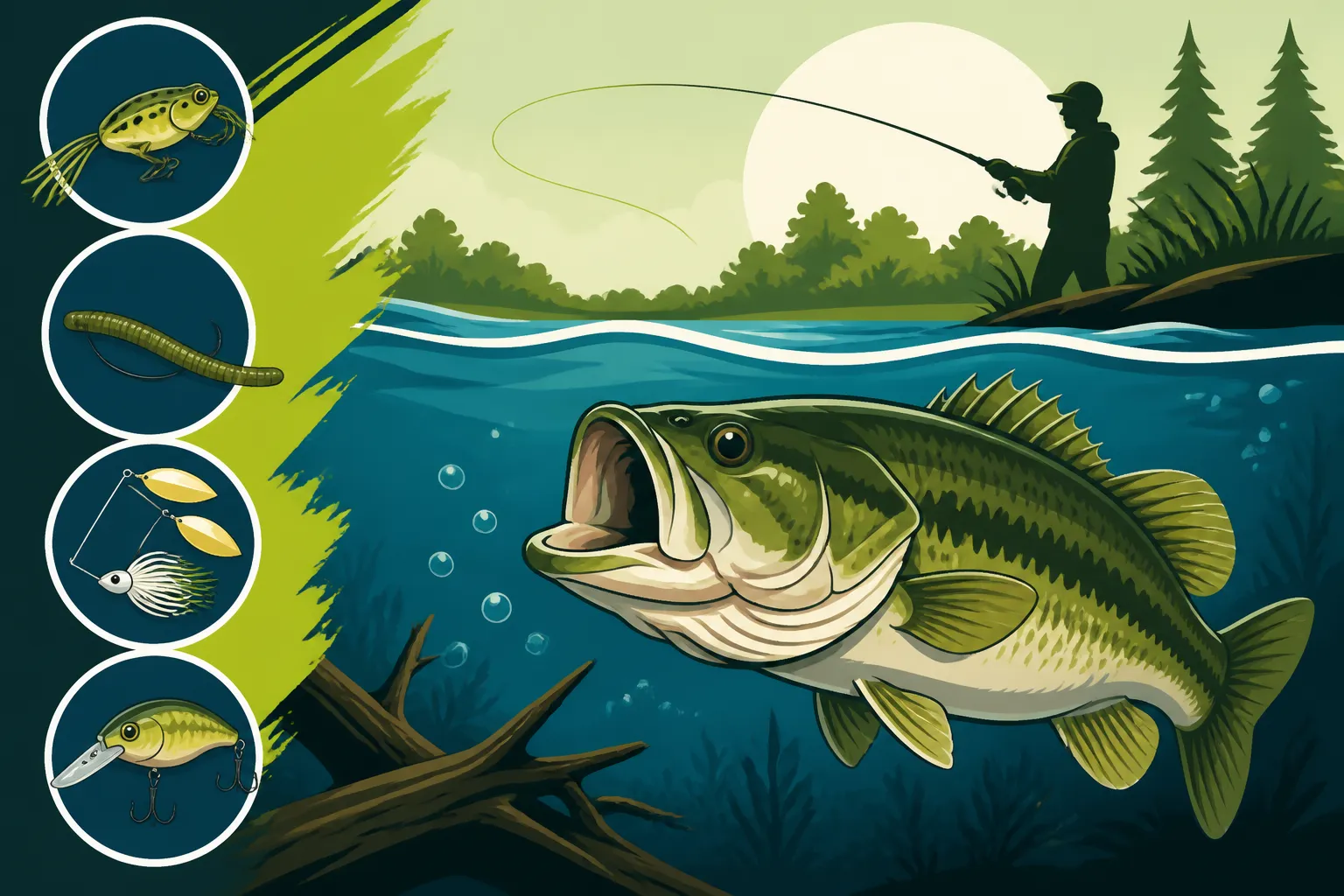
- Soft Plastics: These are arguably the most versatile and effective lures for pond largemouth. Think Texas-rigged worms (like a 7-inch PowerWorm or a Berkley Gulp! Scented Worm), creature baits (Zoom Brush Hog or a Strike King Rage Bug), and stick baits (Gary Yamamoto Senko). The Texas rig, with its bullet-shaped weight and weedless hook, allows you to confidently fish through dense weeds and wood without snagging. Wacky rigs are also fantastic for a slow, seductive fall around docks or open pockets in vegetation. When fishing soft plastics, remember to vary your retrieve – slow drags, subtle twitches, and long pauses can all be deadly.
- Topwater Lures: There's nothing quite like the explosive strike of a largemouth on a topwater lure. Frogs (e.g., Livetarget Hollow Body Frog), poppers, and walking baits (like a Heddon Super Spook Jr.) are essential, especially during low-light conditions or when bass are active in shallow, vegetated areas. Cast them near lily pads, submerged grass, or along shorelines, and work them with pauses and erratic twitches. For more specific advice, our article on Best Topwater Lure for Dawn Bass Fishing offers great tips.
- Jigs: Flipping and pitching jigs (like a 3/8 to 1/2 ounce jig with a weed guard, often paired with a chunk-style trailer) are fantastic for targeting bass buried deep in heavy cover. These lures imitate crawfish or baitfish, and their compact profile allows them to penetrate dense vegetation. Skirted jigs are another solid choice, offering a bulky profile that appeals to larger bass.
- Spinnerbaits and Bladed Jigs (Chatterbaits): These moving baits are excellent for covering water quickly and drawing reaction strikes. A 3/8 to 1/2 ounce spinnerbait with a combination of willow leaf and Colorado blades can be incredibly effective when slowly rolled along weed edges or through sparse cover. Bladed jigs, often called Chatterbaits (like a Z-Man Chatterbait), create a unique vibration and flash that can tempt bass even in muddy water.
- Crankbaits: While not always ideal for super heavy cover, shallow-diving and squarebill crankbaits can be deadly when retrieved parallel to weed lines, riprap, or wood structure. These lures are designed to deflect off cover, triggering aggressive strikes. Medium-diving crankbaits can also be effective in deeper ponds or when fishing along deeper drop-offs.
A well-organized Best Tackle Box Setup for Ontario Anglers will ensure you have these pond essentials readily available.
| Lure Type | Best Use Case | Preferred Retrieve |
|---|---|---|
| Soft Plastics | Heavy cover, slow presentations, finesse fishing | Slow drag, hop, twitch, long pauses |
| Topwater Frogs | Dense lily pads, weed mats, low light | Walk-the-dog, pop, pause over cover |
| Jigs | Flipping & pitching into heavy cover, deeper spots | Lift and drop, drag, subtle shakes |
| Spinnerbaits | Covering water, weed edges, reaction strikes | Steady retrieve, slow roll, stop-and-go |
| Squarebill Crankbaits | Shallow cover, rocky banks, wood, deflecting off obstacles | Erratic retrieve, bumping off cover, stop-and-go |
Top Techniques for Spring and Early Summer Bass
The spring and early summer periods are prime time for largemouth bass in Ontario ponds. As water temperatures rise, bass become increasingly active, moving from their winter haunts to shallower areas for feeding and spawning. Understanding these transitional phases is key to consistent success.
Pre-Spawn and Spawning Bed Tactics
As ice leaves the ponds and water temperatures slowly creep into the 50s Fahrenheit (10-15°C), largemouth bass begin their pre-spawn ritual. They'll stage in slightly deeper areas adjacent to eventual spawning flats or protected coves. Look for points, submerged humps, or the deeper edges of weed lines where they can easily access both deeper water and shallower feeding grounds.
During this pre-spawn phase, bass are hungry and aggressive, trying to pack on weight before the rigors of spawning. This is an excellent time for reaction baits. Slowly retrieved spinnerbaits or bladed jigs are fantastic for covering water and triggering strikes from staging fish. Try a 3/8 or 1/2 ounce spinnerbait with tandem blades (often a willow leaf and a Colorado blade combination) in white or chartreuse patterns. Cast it parallel to weed edges or across points, allowing it to "thump" its way through the water column. Jerkbaits are also incredibly effective. Suspending jerkbaits worked with a twitch-twitch-pause retrieve can elicit vicious strikes from cold-water bass that are reluctant to chase fast-moving baits.
Once water temperatures consistently hit the high 50s to low 60s Fahrenheit (15-20°C), bass will move onto their spawning beds. These are typically shallow, hard-bottomed areas in protected coves or along northern shorelines that receive more sunlight. You'll often be able to spot the circular, cleared-out depressions on the bottom. During this time, male bass guard the nest aggressively, and sight fishing can be incredibly effective. Small, dark-colored jigs (1/4 oz black and blue is a classic) or soft plastic creature baits (like a green pumpkin tube or lizard) pitched onto or near the bed will often provoke a strike from a protective male. Remember to respect the fish during this vulnerable period; quickly release any fish caught from a bed to allow it to return and protect its offspring. Many anglers opt to avoid actively fishing beds to promote healthy populations.
Post-Spawn Power Fishing
After the spawn, which can last a few weeks depending on water temperatures, female bass move off the beds to recover, often retreating to slightly deeper cover nearby. Males will stay on the beds for a short period to guard the fry. Once both sexes have recuperated, usually when water temperatures are firmly in the mid-60s to low 70s Fahrenheit (18-23°C), they enter an aggressive feeding period to regain lost energy. This post-spawn phase is an exciting time for "power fishing" techniques.
This is when topwater action can really heat up. Frogs, poppers, and walking baits thrown over and around dense vegetation, like lily pads and thick matted grass, can trigger explosive strikes. Cast your frog right onto a lily pad and "walk" it across, pausing it in open pockets. The key is to be patient; wait for the bass to fully engulf the lure before setting the hook. Spinnerbaits and bladed jigs are still highly effective, especially when worked along the edges of burgeoning weed lines or through scattered cover. Look for isolated clumps of weeds, fallen trees, or transition areas where hard bottom meets soft bottom – these are all classic ambush points for post-spawn bass. As the season progresses into true early summer, you'll find bass settling into more consistent patterns around the pond's permanent cover. To understand the broader seasonal shifts, our guide on Best Time of Year to Fish in Ontario can provide additional context.
Tactics for Summer and Fall Largemouth Bass
As summer progresses and then gives way to fall, the behavior of largemouth bass in Ontario ponds shifts again, demanding different approaches to keep those lines tight. High heat and dropping temperatures each present their unique challenges and opportunities.
Deep Water and Shade Fishing in Summer
Ontario summers can get hot, and pond water temperatures can climb rapidly, especially in shallower bodies of water. When the sun is high and bright, largemouth bass will typically seek refuge in cooler, deeper water or dense, shady cover. This often means they'll be found in the deepest parts of the pond, around submerged structures like old creek channels, brush piles, or along steep drop-offs. If your pond doesn't have significant depth, they'll often bury themselves in the thickest overhead cover available – dense lily pad fields, matted hydrilla, or the shade provided by overhanging trees and docks.
For bass holding in deeper water, consider using weighted soft plastics like a Texas-rigged creature bait or a football jig fished slowly along the bottom. You'll want to present your lure subtly, as bass can be lethargic in the heat. Let your bait sink, then slowly drag it, feeling for any subtle "thump" or added weight on your line. Scented baits can also be beneficial in these situations, as bass might be relying more on their sense of smell. Drop shot rigs, using small worms or minnow imitations, can also be highly effective for suspending baits directly in the bass's strike zone if they're holding at a specific depth.
For bass hiding in dense cover, weedless presentations are non-negotiable. Hollow-body frogs are still a prime choice for fishing over matted vegetation. Flipping and pitching heavy jigs (3/4 oz or 1 oz) with crawfish trailers or Texas-rigged soft plastics (like a beaver-style bait) into small openings in the thick stuff is another deadly tactic. The key is to make a precise, quiet entry and let the bait fall naturally. The strike can often be just a slight "tick" or simply your line moving sideways. This requires stout gear; a heavy-power baitcasting rod with 50-65 lb braided line is essential to get these fish out of the jungle. Remember, early mornings and late evenings, or heavily overcast days, are often the most productive times during the summer, as bass might move shallower to feed under lower light.
Fall Feeding Frenzy Strategies
As the crisp air of fall sweeps across Ontario, pond water temperatures begin to drop, signaling a crucial period for largemouth bass: the fall feeding frenzy. Bass know winter is coming, and they become incredibly active, aggressively feeding to build up fat reserves. This can be one of the most exciting times to fish, as bass are often less finicky and more willing to chase.
During early fall, bass will often be found in transition areas, moving between shallow and deeper water as they follow baitfish. Look for baitfish schools schooling up along weed edges, main lake points, or deeper flats. Mid-to-late fall, as water temperatures continue to drop, bass will often consolidate into deeper pockets of the pond, especially those with some form of cover like submerged timber or rock piles.
This is an excellent time to use a variety of moving baits to cover water and locate active fish. Crankbaits, both squarebills and medium-diving models, can be incredibly effective when retrieved along break lines or through open water where baitfish are congregating. Consider brighter, more erratic colours that mimic stressed baitfish. Spinnerbaits and bladed jigs also remain strong contenders, especially in stained water or when bass are feeding aggressively in scattered cover.
Don't overlook jerkbaits and lipless crankbaits in the fall. Lipless crankbaits, like a Strike King Red Eye Shad or a Bill Lewis Rat-L-Trap, can be ripped through dying vegetation or yo-yoed off deeper ledges, creating a loud, enticing vibration. Jerkbaits, particularly those with a suspending action, can be worked with longer pauses as the water cools, allowing the bait to hang tantalizingly in the strike zone, mimicking a dying baitfish. As winter approaches, the bite will slow, and bass will become more lethargic, retreating to the deepest, most stable parts of the pond.
Reading the Water: Finding Bass in Different Pond Structures
Successfully fishing for largemouth bass in Ontario ponds is less about endless casting and more about understanding where the fish live and why. By "reading the water" and recognizing key structures and environmental factors, you can dramatically increase your chances of finding and catching bass.
Identifying Key Structures and Cover
Ponds, despite their smaller size, often boast a variety of structures and cover that largemouth bass simply can't resist. These are their homes, their hunting grounds, and their safe havens. Your job is to systematically identify and dissect these areas.
- Lily Pads and Aquatic Vegetation: These are the quintessential pond bass havens. Lily pads, cattails, submerged grass beds (like milfoil or hydrilla), and even floating mats of algae provide shade, cover from predators, and ambush points for bass. Look for openings or "pockets" within dense mats, the edges where vegetation meets open water, or areas where the vegetation is slightly thicker or healthier. These are prime targets for weedless frogs, soft plastics, or flipping jigs.
- Fallen Trees and Brush Piles: Any woody debris in the water is a magnet for largemouth. Logs, stumps, submerged branches, and purposely sunk brush piles offer excellent cover and structure. Bass will often position themselves on the shady side or near the thickest parts of these features. Pitching or flipping jigs and Texas-rigged creature baits are excellent choices here, allowing you to get your bait right into the heart of the cover.
- Docks, Piers, and Human-Made Structures: If the pond has docks, boat houses, or even old tires and concrete blocks, bass will utilize them. The shade provided by docks, especially on sunny days, is a huge draw. Bass will hold under and around the pilings, often facing outwards, ready to ambush prey. Skipping jigs or weightless worms under docks can be incredibly effective.
- Changes in Depth and Bottom Composition: Even in a small pond, subtle changes in depth or bottom composition can concentrate bass. Look for areas where a shallow flat drops off into deeper water (a "breakline"), or where a soft, muddy bottom transitions to a harder, rockier bottom. These transition zones often hold baitfish, which in turn attract bass. Sinking worms, jigs, or even slow-rolling spinnerbaits can be good choices for working these subtle contours. An interactive map, such as the Ontario Fish ON-Line Interactive Zone Map, can sometimes reveal surprising depth changes even in smaller bodies of water.
Understanding Water Clarity and Temperature
Beyond visible structure, water clarity and temperature are two of the most critical environmental factors dictating largemouth bass behavior and your best fishing approach.
- Water Clarity:
- Clear Water: In clear ponds, bass rely heavily on sight to hunt. This means they can also see you and your line more easily. Stealth becomes paramount. Use longer fluorocarbon leaders (e.g., 10-15 lb test) and more natural, subtle lure colors (green pumpkin, watermelon, natural baitfish patterns). Finesse techniques like drop shotting, shaky head jigs, or wacky-rigged worms often excel. Focus on fishing early or late in the day when bass are less likely to be spooked by sunlight.
- Stained or Murky Water: In ponds with a brownish or greenish tint, or those muddied by recent rain, bass rely more on vibration, scent, and silhouette. Brighter lure colors (chartreuse, white, firetiger) and lures that displace a lot of water or create strong vibrations (spinnerbaits with large Colorado blades, bladed jigs, loud topwaters) are excellent. Consider adding scent to your soft plastics. Retrieve speeds might need to be slower, giving bass more time to locate your lure.
- Water Temperature:
- Cold Water (Early Spring/Late Fall): Below 50°F (10°C), bass are lethargic. Slow, deliberate presentations are key. Jigs, slow-rolled spinnerbaits, and suspending jerkbaits with long pauses are often the most productive. Focus on deeper areas where water temperatures are more stable.
- Moderate Water (Spring/Early Summer/Early Fall): Between 50-75°F (10-24°C), bass are active and aggressive. This is prime time for a wide range of techniques, from topwaters to crankbaits, jigs, and soft plastics. Vary your retrieve and explore different parts of the pond.
- Warm Water (Mid-Summer): Above 75°F (24°C), bass will seek cooler water or dense shade. They can become less active during the heat of the day. Early morning, late evening, or night fishing can be highly effective. Focus on deep water presentations, punching heavy cover, or throwing frogs over thick mats.
Always pay attention to the conditions; a change in weather, a recent downpour, or even just the time of day can drastically alter water clarity and temperature, requiring you to adapt your approach.
Year-Round Considerations and Conservation
Fishing in Ontario ponds, while often accessible and productive, also carries a responsibility. These smaller ecosystems can be more fragile than larger lakes, and practicing good conservation habits is essential for ensuring their continued health and our enjoyment for years to come.
Handling and Release Best Practices
The thrill of catching a largemouth bass is undeniable, but it's crucial to prioritize the fish's well-being, especially if you intend to release it. Proper handling significantly increases a fish's survival chances.
- Minimize Fight Time: While a long battle is exciting, it exhausts the fish, making it more vulnerable after release. Use appropriately sized gear that allows you to land the fish efficiently.
- Wet Hands: Always wet your hands before touching a fish. Dry hands can remove the protective slime coat, which defends against disease and infection.
- Support the Fish: When holding a largemouth, support its body horizontally with one hand under its belly and the other gently gripping its lower jaw (bass thumb). Never hold a large bass vertically by its lower jaw only, as this can damage its spine and internal organs.
- Remove Hooks Quickly: Use needle-nose pliers or a hook remover tool to quickly and carefully extract the hook. If a fish is deeply hooked, it's sometimes best to cut the line as close to the hook as possible, as attempts to remove it can cause more harm. Consider using barbless hooks, or pinch down the barbs on your trebles with pliers; they make removal much easier and cause less damage.
- Revive If Necessary: If a fish seems sluggish before release, gently hold it upright in the water, facing into any current, and slowly move it back and forth to force water over its gills until it swims away under its own power.
- Consider Water Temperature: In extremely warm summer water, fish can be under significant stress. If you're catching a lot of fish, consider taking a break or targeting other species to reduce stress on the bass population.
By following these simple steps, you're not just ensuring the survival of individual fish but also contributing to the overall health of the pond's ecosystem.
Seasonal Adjustments and Conservation Ethic
Ponds are dynamic, constantly changing with the seasons. A technique that worked wonders in spring might be completely ineffective in the heat of summer. Understanding these seasonal shifts isn't just about catching more fish; it's also about being a responsible angler.
- Winter: Most Ontario ponds freeze solid in winter, making traditional open-water bass fishing impossible. If safe ice forms, anglers might target panfish or pike through the ice, but largemouth bass typically go dormant and are not actively pursued. Always ensure ice is safe before venturing out; our guide on How thick ice needs to be to fish safely in Ontario provides critical safety information.
- Spring: Focus on the pre-spawn and spawning behavior as detailed earlier. Be mindful of fishing pressure on spawning beds.
- Summer: Adapt to heat by fishing early/late, targeting shade or deeper water, and using weedless presentations for dense cover.
- Fall: Capitalize on the feeding frenzy but remember that as water cools further, bass will become less active. Adjust your retrieve speeds accordingly.
A true conservation ethic means more than just releasing fish. It means leaving no trace, packing out all your trash, and being respectful of the environment and other users. Consider joining local conservation groups or participating in clean-up efforts. Ponds are often fragile environments, and our collective actions can have a significant impact on their future. By being thoughtful and adapting your techniques to the season and the fish's well-being, you can continue to enjoy the fantastic largemouth bass fishing that Ontario's ponds have to offer for many years to come.
Disclaimer
Fishing regulations can change frequently. Always consult the most current Ontario Fishing Regulations Summary before heading out. This guide is for informational purposes only and does not supersede official government regulations. Ensure you have the proper Ontario Fishing License Guide for 2026 and understand all local rules and zone-specific regulations for the area you are fishing.