Best technique for fishing a riffle for trout
There’s nothing quite like the sound of a bubbling, rushing riffle on an Ontario stream, is there? That lively gurgle often signals not just beautiful scenery, but also some prime real estate for trout. Yet, many anglers, myself included at times, find themselves intimidated by these fast-moving sections, often bypassing them for the calmer pools. This guide is all about helping you understand why riffles are trout magnets and, more importantly, how to confidently and effectively fish them, turning those confusing currents into a productive part of your fishing day.
Understanding What Makes a Riffle a Trout Haven
Riffles are those shallower, faster-moving sections of a river or stream where the water tumbles over rocks and gravel. They create a symphony of sounds and a visual feast of aerated water. But for trout, they're much more than just pretty scenery – they’re a supermarket, a hiding spot, and a fitness centre all rolled into one. If you’ve ever walked past a riffle thinking there couldn't possibly be a fish holding in that chaos, you’re missing out on some incredible opportunities.
The Anatomy of a Riffle: Food, Oxygen, and Shelter
Think about what a trout needs to survive and thrive: food, oxygen, and protection from predators. Riffles provide all three in spades. The tumbling water is constantly churning, introducing vital oxygen into the stream, which is especially crucial in warmer months when oxygen levels in slower pools can drop. This aeration creates a vibrant, healthy environment that trout absolutely adore. It’s like a fresh breeze on a stuffy day for us.
Beyond oxygen, the rough, broken surface of a riffle acts like a natural camouflage. From above, the choppy water makes it incredibly difficult for predatory birds or even us anglers to spot a fish. They can hold in plain sight, yet remain virtually invisible. Below the surface, the rocks and gravel create endless nooks, crannies, and current breaks where trout can rest, ambush prey, and escape danger. These micro-habitats are vital, offering sanctuary from strong currents without requiring the fish to expend too much energy. It’s a perfect blend of safety and opportunity.
Why Trout Hold in Riffles: A Buffet Line and Protection
Imagine a conveyor belt of delicious food passing by your doorstep all day long. That's essentially what a riffle is for a trout. The turbulent water dislodges countless aquatic insects – nymphs, larvae, and even terrestrial insects that fall into the water upstream. These become easy pickings as they drift by, often stunned or disoriented by the current. Trout don't have to chase their meals; they just have to position themselves in a strategic feeding lane, slightly out of the main current, and wait for the buffet to come to them.
This constant flow of food means trout in riffles are often actively feeding and less spooky than their counterparts in slower, clearer pools. The broken surface not only hides them from above but also helps muffle sounds, meaning you can often get a little closer without sending them scattering. You might notice that when you're wading through a riffle, the current naturally cleans the gravel, keeping it free of silt and providing excellent spawning habitat for some species too. It's a truly dynamic and productive environment where trout can pack on the pounds and feel relatively secure.
Essential Gear for Targeting Riffle Trout
Getting your gear dialed in for riffle fishing is less about having super specialized equipment and more about choosing items that enhance control and presentation in current. You don't need a whole new setup, but a few thoughtful choices can make a world of difference.
Rod, Reel, and Line Considerations for Moving Water
When it comes to fishing riffles, a slightly shorter rod can often be your best friend. For spin fishing, a 6 to 7-foot ultra-light or light action rod gives you the control and accuracy needed to make precise casts into those tight pockets and seams within the riffle. The lighter action helps protect delicate lines and provides excellent feel for subtle takes. Pair this with a small spinning reel spooled with 4-6 lb monofilament or fluorocarbon line. Monofilament offers a bit of stretch, which can be forgiving with quick strikes, while fluorocarbon is nearly invisible underwater and has less stretch for better sensitivity.
For fly anglers, a 7.5 to 9-foot rod in a 3 to 5-weight range is typically ideal. A shorter rod, like a 7.5-foot 3-weight, offers exceptional control for short, accurate casts often required in brushy riffles, while a 9-foot 5-weight provides more versatility for slightly larger water or windier conditions. Matching your fly line to the rod is crucial, and a weight-forward floating line is standard. Your leader should be tapered, usually 7.5 to 9 feet long, ending in a tippet section of 4x to 6x. The longer leader helps with a natural drift, keeping the heavier fly line away from the fish. You can find excellent options for Best Fly Rods for Ontario Trout Streams on platforms like Amazon, often with helpful customer reviews to guide your choice.
Lures and Baits: Matching the Hatch (or the Meal)
The key to success in riffles is presenting something that looks natural and appetizing to a trout that's used to seeing a constant stream of food. For spin anglers, small inline spinners (think size #0 or #1), tiny spoons, or even small jigs tipped with a grub or a piece of worm can be incredibly effective. The flash and vibration of spinners and spoons can often trigger an aggressive strike, especially in the turbulent water. Soft plastics that imitate worms, minnows, or even aquatic insects can also work wonders when fished on a light jig head, allowing them to tumble naturally with the current.
Fly anglers will primarily focus on nymphs when fishing riffles, as the majority of a trout's diet consists of subsurface insects. Patterns like Hare's Ears, Pheasant Tails, Prince Nymphs, and Caddis Larva imitations in sizes 12-18 are staples. Wet flies, fished just under the surface, can also be deadly, mimicking insects emerging from the water. If you happen to catch a hatch of small caddis or mayflies, tiny dry flies can provide explosive action, but typically the subsurface game is more consistent. I always have a small fly box packed with these essentials, and you can often replenish your stock of Best Fly Patterns for Ontario Trout Streams easily online.
Wading Gear and Safety: Staying Stealthy and Secure
Wading is almost synonymous with stream fishing, especially in riffles. Good wading gear isn't just about staying dry; it's about safety and stealth. A comfortable pair of breathable chest waders is essential, especially in Ontario's often chilly waters. Pair these with high-quality wading boots that offer excellent grip on slippery rocks. Felt soles were once popular for their grip, but many anglers now opt for rubber soles with studs or interchangeable soles for better traction on various surfaces, and to prevent the spread of invasive species. Checking out the Best Wading Boots for Rocky Streams can help you make an informed decision.
Beyond waders and boots, a reliable wading staff is a non-negotiable safety item. It provides an extra point of contact and helps you maintain balance in strong currents, preventing falls and allowing you to probe the depth and stability of the stream bed before you commit your weight. I've had many close calls saved by my trusty staff! It also helps you move quietly and deliberately, which is crucial for not spooking fish. A good Best Wading Staff for Fast Current will make you feel much more confident navigating those tricky sections. Finally, always consider wearing a wading belt tightened snuggly to prevent your waders from filling with water should you take an unexpected dip.
Mastering the Techniques for Fishing Riffles
Fishing riffles effectively is all about understanding how trout position themselves and how the current moves your lure or fly. It’s less about brute force and more about finesse and reading the water.
Upstream Presentation: The Classic Drift
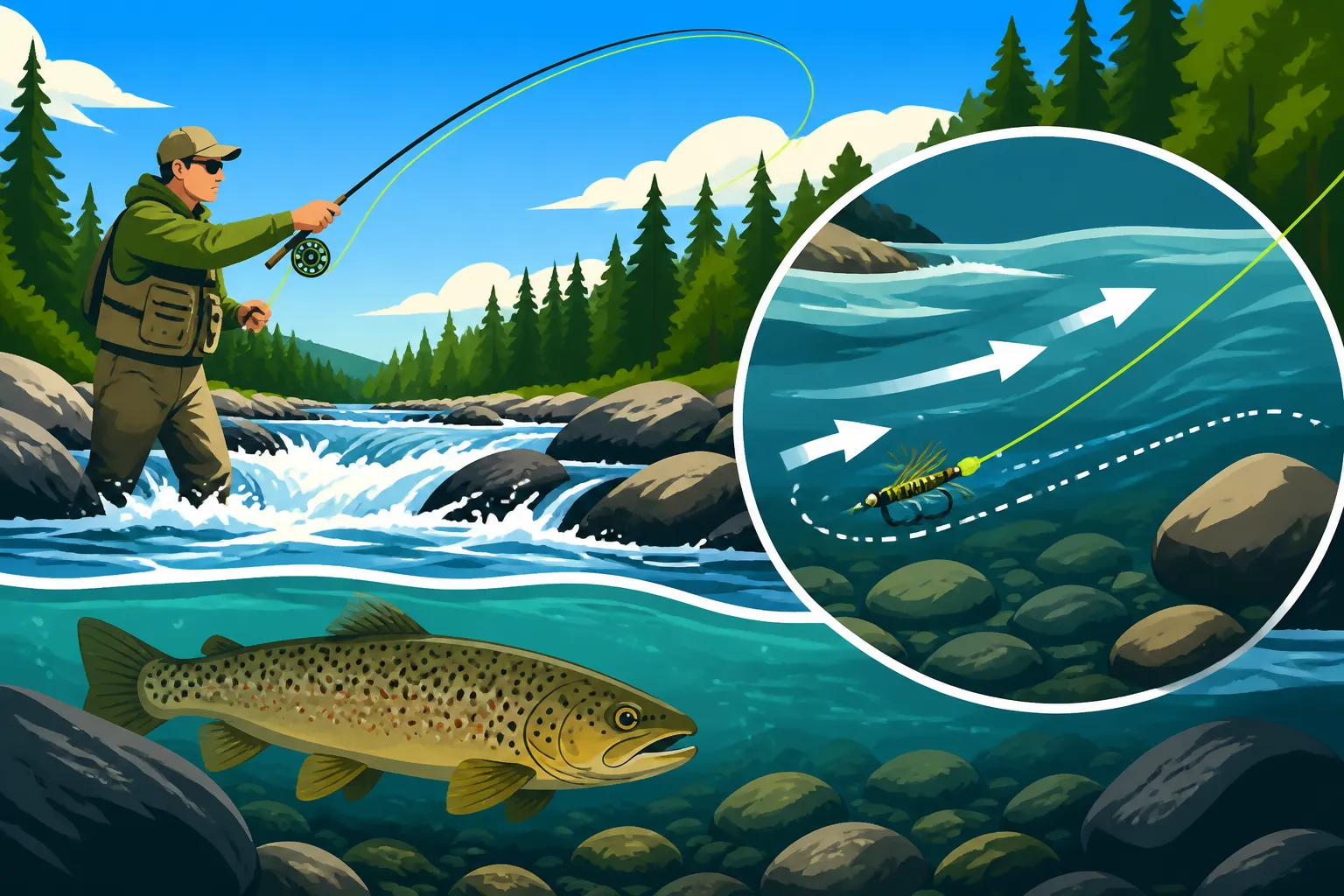
The upstream presentation is often the most effective technique for fishing riffles, particularly with flies and light jigs. The idea is to cast your lure or fly upstream and slightly across the current, then allow it to drift naturally downstream, mimicking a free-floating insect or baitfish. The trout in a riffle are typically facing upstream, waiting for food to come to them, so presenting your offering from behind them gives a realistic, non-threatening approach.
The key to a successful upstream drift is line control. For spin anglers, cast upstream and reel in just enough slack to maintain contact with your lure without pulling it unnaturally. You want the lure to tumble and bounce along the bottom, just like a dislodged nymph or minnow. For fly anglers, this means executing a mend or a series of mends to keep your fly line from dragging your leader and fly unnaturally. The goal is a "dead drift" – a presentation where your fly moves at the exact speed of the current. Watch your line or a strike indicator intently for any hesitation, twitch, or sudden movement, as this often signals a take. It takes practice, but once you master it, you'll be amazed at the results.
Cross-Stream Swings and Retrieves
While the upstream dead drift is king, don't overlook cross-stream tactics, especially with certain lures and flies. This technique involves casting directly across the current or slightly downstream, then allowing the current to sweep your lure or fly in an arc. As it swings, it will often "tighten up" and move against the current, mimicking an emerging insect or a fleeing baitfish.
For spin anglers, this is a fantastic way to fish small spinners and spoons. Cast across and slightly downstream, then retrieve slowly, allowing the lure's action to work as it fights the current. The retrieve should be just fast enough to keep the spinner blade turning or the spoon wobbling. For fly anglers, this is the classic wet fly swing. Cast your wet fly or streamer across and let the current do the work. As the fly swings, it becomes active and enticing. Pay close attention to the end of the swing; trout often strike just as the fly straightens out in the current, believing it's about to escape. It's a highly visual and exciting way to fish.
Downstream Tactics: When and How to Use Them
Fishing downstream in a riffle is generally less common, as it often means presenting your offering to the trout from the direction they're facing, which can be less stealthy. However, there are specific situations where a downstream approach is necessary or advantageous. For instance, if you're trying to reach a tight pocket under an overhanging bank or around a submerged log that's difficult to cast to from upstream, a downstream cast might be your only option.
When using a downstream approach, stealth becomes even more critical. Keep a low profile, make your cast soft and accurate, and allow your lure or fly to drift naturally down into the target area. With spin gear, a light cast that allows your lure to sink quickly before retrieving can be effective. For fly fishing, this might involve a short cast directly downstream with heavy nymphs to get them down quickly into a specific seam or pocket, followed by an immediate mend to manage the slack. The key is to minimize drag and make your presentation as natural as possible, despite the less-than-ideal angle. Sometimes, slowly walking downstream and dropping your offering into prime lies, especially with a bait like a worm, can be surprisingly effective without disturbing the water too much.
Reading the Water and Approaching Riffles Like a Pro
Understanding why trout hold in riffles and how to fish them is great, but knowing where to cast and how to approach without spooking fish ties it all together. This is where experience, observation, and a bit of patience come into play.
Identifying Key Holding Lies within the Riffle
Not all parts of a riffle are created equal. Trout are energy conservationists, so they'll position themselves in spots where they can easily access food without fighting the main current constantly. These are often called "holding lies" or "feeding lanes." Look for areas where the faster water meets slower water – these are called "seams." A particularly juicy seam will have a constant flow of food drifting past, allowing the trout to hold in the slower water just beside it, darting out to snatch prey.
Submerged rocks, boulders, or logs are also prime locations. These structures create current breaks and eddies, offering trout a place to rest out of the main flow. The slower water directly behind a large rock, or the cushion of water just in front of it, can be fantastic spots. Deeper pockets or trenches within the riffle, especially those with slightly slower currents, are also excellent holding lies. Even small depressions in the gravel bed can provide enough cover and current relief for a trout. Scan the riffle carefully for these subtle changes in depth and current speed before you cast. Learning How to use the Fish ON-Line interactive zone map can also help you identify structural features that create these holding lies.
Stealth and Presentation: Minimizing Disturbance
Trout, especially in clear Ontario streams, are incredibly wary creatures. Your approach to a riffle can make or break your success. The number one rule is stealth. Always approach a riffle from downstream, wading slowly and deliberately, disturbing the water as little as possible. Fish almost always face upstream, so approaching from below ensures you're less likely to be seen. Keep a low profile, especially if the banks are high or the water is particularly clear.
Once you’ve identified your target lies, make your first cast count. False casting (for fly anglers) should be minimized, and spin casts should be smooth and accurate. Aim to land your lure or fly gently, just upstream of your intended target, allowing it to drift naturally into the strike zone. Avoid casting directly over a fish or directly into a prime lie, as the splash and line movement can easily spook them. Think about making "quartering upstream" casts, meaning you're casting at an angle, roughly 45 degrees upstream, to allow for a good drift and minimal disturbance. Remember, good Wading Techniques for Ontario Trout Streams are paramount to not sending every fish fleeing!
For a successful day on the water, having the right setup from top to bottom is key. From reliable tackle to protective gear, you can find a lot of your Best Gear for Ontario Trout Fishing easily online, even on platforms like Amazon, ensuring you're ready for whatever the stream throws at you. Don't forget a Best Landing Net for Trout with rubberized mesh for ethical catch-and-release, which is often crucial when targeting these beautiful stream dwellers.
| Technique | Best Use Case | Spin Fishing Application | Fly Fishing Application | Key Consideration |
|---|---|---|---|---|
| Upstream Dead Drift | Actively feeding fish in main current seams | Small jig with grub, worm, or soft plastic on light jig head | Nymphs (Pheasant Tail, Hare's Ear), Wet Flies | Precise line control, mending, watching indicator/line |
| Cross-Stream Swing | Covering broader areas, triggering reaction strikes | Small inline spinners, tiny spoons | Wet Flies, Streamers, Soft Hackles | Consistent retrieve speed, anticipation of end-of-swing strike |
| Downstream Presentation | Hard-to-reach pockets, minimal disturbance from above | Small worm, minnow, or soft plastic lightly weighted | Heavy nymphs for deep pockets | Stealth, accurate short casts, minimal drag |
Ultimately, fishing riffles for trout is a rewarding experience that sharpens your streamcraft skills. It teaches you to truly read the water, understand fish behaviour, and refine your casting and presentation. Don't be shy about exploring these vibrant sections of your favourite trout stream. With a little practice and the right approach, you'll soon be enjoying the thrill of connecting with some of Ontario's most beautiful fish in their natural, wild habitat.
Disclaimer
This article is for general informational purposes only and does not constitute professional advice. Laws, prices and regulations vary by location and change over time. Consult a qualified professional for guidance on your specific situation.