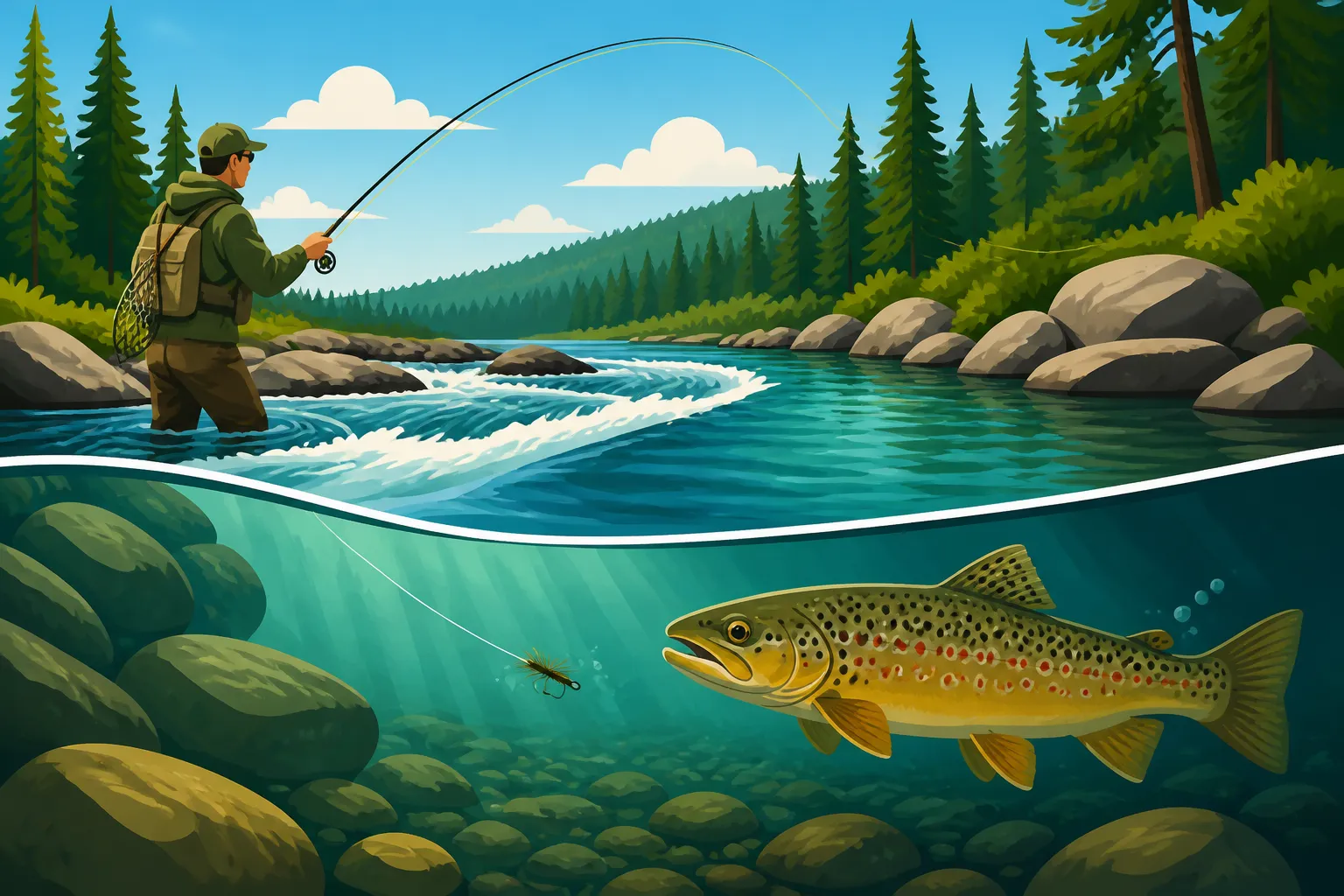
How to fish a run and pool trout stream
There’s nothing quite like the allure of a pristine trout stream in Ontario, its clear waters gurgling over rocks and winding through forests. But for many anglers, especially those used to the predictability of lake fishing, tackling a flowing river can feel incredibly daunting. You might stare at all that moving water and wonder, "Where do I even start?" This guide is all about demystifying the run-and-pool trout stream, breaking down its secrets so you can approach it with confidence and, hopefully, a bent rod.
Understanding the Anatomy of a Run-and-Pool Stream
Before you even think about casting, it's crucial to understand the fundamental building blocks of a healthy trout stream: the runs and the pools. These aren't just random stretches of water; they are distinct habitats that trout use for different purposes, and knowing how to identify them is your first step to success. Think of it like reading a map – you need to know what the symbols mean before you can navigate the territory.
What is a Run?
A run is typically a stretch of relatively shallow, faster-moving water, often characterized by a consistent current and a somewhat uniform bottom. Imagine a section of the river where the water is flowing smoothly, perhaps over a gravel bottom or through a slightly narrowed channel. These are the conveyor belts of the trout stream, delivering food downstream. Trout often hold in runs to actively feed, especially if there's structure to break the current, allowing them to conserve energy.
You’ll notice that runs usually have a defined "head" where the water speeds up, often transitioning from a calmer section above, and a "tail" where the water slows down as it approaches a deeper pool. The current in a run, while swift, isn't usually turbulent. It's more of a smooth, directed flow. These areas are prime spots for drift fishing, whether you're fly fishing with nymphs or spin fishing with small inline spinners or bait. The key is to present your offering naturally with the flow, mimicking an insect or baitfish caught in the current.
What is a Pool?
A pool, in contrast to a run, is a deeper, slower-moving section of the stream. It's often found below a run, where the water has scoured out a depression in the stream bed. Pools are the trout's living rooms and bedrooms – places for resting, seeking refuge from predators, escaping harsh weather, and finding deeper, cooler water in the summer. They are also ambush points where larger trout might lie in wait for an unsuspecting meal to drift by from the faster water above.
When you look at a pool, you’ll likely see a calmer surface, possibly with swirling eddies along the edges. The depth can vary significantly, from a few feet to ten feet or more in larger rivers. The "head" of the pool, where the run feeds into it, is a critical zone, as is the "tail-out" where the water begins to shallow and speed up again. Trout will often position themselves in these transition zones, using the current to bring food while having easy access to the security of the deeper water. Don't forget to explore the banks of these deeper areas, as undercut banks or submerged logs can provide excellent cover.
The Dynamics of Run-and-Pool Systems
These two features, runs and pools, are not isolated; they are interconnected and form a continuous system. The energy of the fast-moving water in a run deposits sediment at its tail end, creating the head of a pool. Conversely, the deeper, slower water of a pool might accelerate as it hits a shallow section, forming the head of the next run. This constant interaction shapes the stream bed and provides a variety of micro-habitats that trout exploit.
Understanding this flow and how it impacts trout behavior is paramount. Trout are incredibly efficient creatures; they want to expend the least amount of energy for the most reward. This means they will often hold in "holding lies" – spots where they can comfortably rest out of the main current – while waiting for food to be delivered to them by the "feeding lanes" within the faster water. It's like finding a comfortable recliner right next to a buffet line. Recognizing these patterns across different types of streams, from the smallest brook trout waters to larger rivers like the Grand River, is a skill that will serve you well.
Reading the Water: Where Trout Hide in Runs and Pools
The true art of stream fishing lies in "reading the water." This isn't just about looking at the surface; it's about interpreting the subtle clues the current, structure, and depth give you to pinpoint where trout are likely holding. It’s an ongoing puzzle that keeps every trip exciting.
Identifying Prime Holding Lies in Runs
In runs, trout will position themselves where they can get easy access to food without fighting the full force of the current. Think about it: a trout isn't going to spend all day battling the fastest part of the flow when it could simply sit a foot to the side and wait for the same food to drift by.
- Current Seams: These are perhaps the most important features. A current seam is where fast water meets slow water. This could be where the main current brushes against a calmer eddy, or where the flow splits around a rock or log. The slower side of the seam is a prime holding lie, while the faster side is the feeding lane. Your goal is often to drift your offering down the feeding lane, just kissing the slower water where the trout is likely to be waiting.
- Obstructions (Rocks, Logs, Boulders): Any object that breaks the current creates a cushion of slower water directly in front of it and a larger, calmer "eddy" or "pocket" directly behind it. The pocket behind a large boulder in a fast run is a classic trout ambush point. Trout will tuck into these pockets, facing upstream, darting out to snatch food and retreating to safety. Don't be shy about casting directly upstream of these features and letting your bait or fly drift right into that pocket.
- Riffles and Aerated Water: Sometimes, the fastest water over a gravel bed, called a riffle, can also hold actively feeding fish, especially smaller trout. The broken surface here provides camouflage from overhead predators, and the aerated water can hold more oxygen, which is appealing in warmer months. While often too shallow for larger fish, these spots are worth exploring with a quick, short cast.
Pinpointing Productive Spots in Pools
Pools, with their deeper and calmer waters, require a slightly different approach to reading the water. Trout here are less concerned with fighting current and more focused on depth, cover, and ambush opportunities.
- The Head of the Pool: As mentioned earlier, this is a transition zone where the faster water of the run spills into the deeper, slower water of the pool. This is often a conveyor belt for food, making it a hotspot for actively feeding trout. Fish will often hold in the upper third of the pool, just out of the main current, waiting for morsels to drift in. This is a great place to start, perhaps with some longer drifts.
- The Deepest Part of the Pool: In the middle or lower sections of a large pool, the deepest areas offer security and cooler temperatures. Larger, more cautious trout often reside here. Fishing these deep zones effectively might require heavier flies, split shot, or weighted lures to get your offering down to their level. Look for changes in water color or subtle dips in the surface that indicate deeper water.
- Undercut Banks and Submerged Structure: These are goldmines. Undercut banks provide excellent overhead cover and a dark, secure hiding spot. Submerged logs, rootwads, and large rocks offer similar protection and create current breaks. Trout will hold tight to these features. Casting close to these structures, perhaps letting your lure or fly sink directly beside them, can trigger strikes from wary fish. Just be prepared for snags! You might even find success searching for Best Shore Fishing Spots in Ontario along these types of features.
- The Tail-out of the Pool: This is another crucial transition zone where the water shallows and speeds up again, forming the head of the next run. Trout, especially those looking to feed before moving into a new section, will often stage here. The tail-out can be shallower and easier to wade, offering good sight-fishing opportunities on clear days. A dry fly or a subtle jig can work wonders here.
| Stream Feature | Description | Trout Behavior/Location | Recommended Approach |
|---|---|---|---|
| Head of a Run | Where water speeds up, often from a pool. | Active feeding, ambush points for smaller fish. | Short, precise casts into seams; drift presentations. |
| Mid-Run | Fast, consistent flow over gravel/rocky bottom. | Feeding lanes, current breaks behind obstructions. | Long drifts, high-stick nymphing, small spinners. |
| Tail of a Run | Water slows as it enters a pool. | Transition zone, active feeding before dropping into depth. | Target seams at the drop-off, slow retrieve lures. |
| Head of a Pool | Where run water flows in, often deeper. | Primary feeding zone, staging area for larger fish. | Longer drifts, slightly weighted flies/lures, slow retrieve. |
| Mid-Pool (Deepest) | Slow, deep water, often with cover. | Resting, refuge, large wary trout. | Heavily weighted presentations, vertical jigging, slow-rolled flies. |
| Tail-out of a Pool | Water shallows and speeds up before next run. | Active feeding, ambush, easy access to deeper water. | Dry flies, small jigs, upstream casts with controlled drift. |
| Undercut Banks | Overhangs created by current erosion. | Excellent cover, prime holding lies for wary fish. | Precise casts, gentle drops, allowing natural sink. |
| Large Boulders/Logs | Obstructions creating current breaks. | Pockets of calm water, ambush points. | Target areas directly behind or in front of obstructions. |
Choosing Your Gear and Approach for Effective Fishing
Having the right tools and knowing how to use them makes all the difference when fishing a run-and-pool stream. Whether you're a fly fishing purist or prefer spinning gear, there are effective strategies for both.
Fly Fishing: Matching the Hatch and the Structure
Fly fishing is incredibly popular on trout streams, and for good reason – it allows for delicate presentations that mimic natural insect life. When fishing run-and-pool systems, your approach will vary depending on the specific water you're targeting. For a deeper dive into the specifics, check out our guide on Fly Fishing for Trout in Ontario.
- Rods and Reels: For most Ontario trout streams, a 3-weight to 5-weight fly rod, 7.5 to 9 feet long, is ideal. A lighter rod (3 or 4 wt) is perfect for smaller streams and delicate dry fly presentations, while a 5-weight offers a bit more versatility for larger flies, nymphing, and even streamer fishing. Your reel should simply balance your rod and hold your line comfortably. You can find excellent options for Best Fly Rods for Ontario Trout Streams and related gear, often with great reviews, on platforms like Amazon.
- Line and Leader: A weight-forward floating line is standard. Your leader should be tapered, typically 7.5 to 9 feet long, ending in a tippet that matches the size of your fly and the clarity of the water. For spooky trout in clear water, a longer, lighter tippet (5x or 6x) is often necessary. Consider fluorocarbon tippet for nymphing, as it sinks faster and is less visible underwater.
- Fly Selection:
- Nymphs: These are indispensable for run-and-pool fishing, as trout feed underwater 80-90% of the time. Patterns like Hare's Ear, Pheasant Tail, Prince Nymph, and Caddis Larva imitations are staples. Vary sizes and weights to match the depth and current. For a more aggressive approach in fast runs, Euro Nymphing Ontario Trout Streams can be incredibly effective.
- Dry Flies: When trout are actively rising to insects on the surface (a "hatch"), dry flies are thrilling. Caddis, Mayfly, Stonefly, and Terrestrial patterns (like ants or grasshoppers) are common. Presenting a dry fly accurately and with a natural drift is key. For more tips on this, check out Dry Fly Fishing Ontario Rivers.
- Streamers: For targeting larger, predatory trout, especially in deeper pools or along undercut banks, streamers that imitate baitfish can be deadly. Woolly Buggers, Sculpins, and Clouser Minnows are popular choices. A stripping retrieve that makes the streamer dart and pause often triggers aggressive strikes.
Spin Fishing: Versatility and Accessibility
Spin fishing offers a highly effective and often more accessible way to fish run-and-pool streams. It’s fantastic for covering water and can be very productive, especially when trout aren't rising to flies.
- Rods and Reels: A lightweight spinning rod, 6 to 7 feet long, with a fast or moderate-fast action, paired with a small spinning reel (1000-2500 size), is ideal. This setup allows for accurate casting of light lures and provides enough sensitivity to feel subtle strikes. Many anglers find great deals on these combos on Amazon.
- Line: 4-6 lb test monofilament or fluorocarbon line is usually sufficient. Braid can also be used, especially with a fluorocarbon leader, for increased sensitivity and casting distance with lighter lures.
- Lure Selection:
- Inline Spinners: These are classic trout lures for a reason. Mepps, Rooster Tail, and Panther Martin are popular brands. Sizes 0-2 work well. Cast them upstream or up-and-across and retrieve just fast enough to get the blade spinning, letting the current help with the action.
- Small Spoons: Tiny casting spoons like Little Cleos or Kastmasters, especially in silver or gold, can be effective in both runs and pools. Their erratic wobble imitates a wounded baitfish.
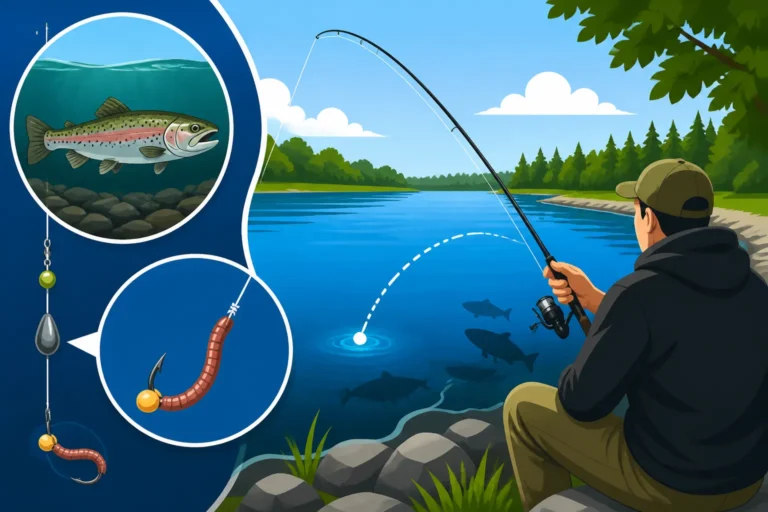
- Soft Plastics/Jigs: Small grub-style baits on light jig heads (1/32 to 1/8 oz) can be incredibly versatile. Fish them with a slow, bouncing retrieve along the bottom or under a float. Soft plastic worms or powerbait nuggets can also be fished on a small hook with a bit of split shot.
- Crankbaits/Minnow Imitations: Micro crankbaits or suspending minnow imitations (like Rapalas or Berkley Flicker Shads) can be excellent for targeting larger trout in deeper pools or slow runs.
Wading and Stealth
Regardless of your chosen method, how you approach the stream is as important as your gear. Trout are incredibly wary.
- Wade Smart: Always wear appropriate wading gear. Good quality waders and wading boots (check out Best Waders for Ontario Trout Streams) are essential, especially on slippery, rocky bottoms. Use a Best Wading Staff for Fast Current for stability. Avoid disturbing the water excessively, as this will spook fish.
- Move Slowly and Low: Approach from downstream whenever possible, moving slowly upstream. Trout face into the current, so approaching from behind is less likely to alert them. Keep a low profile, avoiding sudden movements or casting shadows over the water.
- Observe Before You Cast: Take a moment to watch the water before casting. Look for rises (for dry fly fishing), subtle movements, or likely holding lies. Sometimes, waiting a minute or two can reveal where the fish are.
Putting It All Together: A Step-by-Step Approach to Fishing a Section
You've learned the anatomy, how to read the water, and chosen your gear. Now, let's talk about how to effectively fish a typical run-and-pool section of an Ontario trout stream. This methodical approach will maximize your chances of success.
Step 1: Approach and Assessment
First things first, practice stealth. Approach the section you intend to fish from downstream, staying low and moving slowly. Before making your first cast, take a few moments to observe the water. Identify the runs, pools, and any obvious current breaks, rocks, or submerged logs. Consider the light conditions – if the sun is high, your shadow might be a giveaway. Look for signs of feeding fish, like rising trout or subtle flashes below the surface. Understanding Ontario Fishing Seasons by Zone and Month will help you anticipate fish behavior.
Mentally break down the section into smaller, manageable targets. For example, focus on the tail-out of the pool you're currently in, then the head of the next run, and so on. Don't try to fish the entire stream at once. This initial assessment helps you plan your casts and drifts, making your efforts more efficient. Remember that trout, especially brook trout in Ontario's Crown land lakes, can be quite spooky, so a stealthy approach is paramount.
Step 2: Fishing the Tail-out of the Pool
Begin by targeting the tail-out of the pool you are below. This is often shallower water where trout might be actively feeding before retreating to the deeper parts of the pool. Cast small dry flies if you see rises, or use light nymphs or small spinners that drift naturally with the slowing current. Make short, accurate casts upstream and slightly across, allowing your offering to drift down and through the zone where the current picks up.
The key here is a natural drift and careful line management. If using a fly, aim for a "drag-free" drift, meaning your fly line isn't pulling your fly unnaturally. For spin fishing, let your lure tumble naturally with the current, only reeling enough to maintain slight tension and feel for strikes. This area can be very productive as fish often gather here, transitioning from resting to feeding behaviors.
Step 3: Working the Run Above
Once you've thoroughly fished the tail-out, move upstream to the run. This is where most of your active feeding will happen. Your strategy here is all about covering the water systematically and targeting current seams and obstructions.
- Upstream and Up-and-Across Casting: Cast your fly or lure upstream or quartering upstream and across the current. The goal is to allow your offering to drift naturally downstream into the suspected holding lies.
- Target Current Seams: Pay close attention to where faster water meets slower water. Cast your lure or fly so it drifts along these seams. For nymphs, this often means high-sticking (keeping your rod tip high) to minimize drag and ensure a natural drift. For spinners, retrieve just fast enough to get the blade turning, letting the current impart much of the action.
- Fish Obstructions: Don't forget those rocks and logs. Cast upstream of them and let your offering drift right into the "pocket" of calmer water behind them. Be ready for an immediate strike as your bait or fly hits the sweet spot. A great general guide for the province's specific rules is the Ontario Fishing Regulations Summary, which can help you understand nuances for various zones.
- Systematic Coverage: Work your way across the run, making casts to the near bank, then the middle, then the far bank, before moving a few steps upstream and repeating. Don't just cast to the same spot repeatedly. Change your angle slightly, or try a different presentation depth.
Step 4: Exploring the Head and Deeper Parts of the Pool
After dissecting the run, move on to the next pool. Start by focusing on the head of the pool where the run spills in. This is another prime feeding area. You might need to use slightly heavier nymphs or lures to get down into the deeper water where trout are holding. For fly anglers, swinging streamers through this area can be very effective for larger fish. For spin anglers, deeper diving crankbaits or heavier jigs can reach these depths.
As you move further into the main body of the pool, you'll encounter the deepest, slowest sections. This is where larger, more cautious trout often reside. Don't be afraid to slow down your presentation here. For fly fishing, weighted nymphs fished slowly or streamers retrieved with a stop-and-go action can entice strikes. Spin anglers can use soft plastics bounced along the bottom or try slow-retrieved spoons. Be patient; these fish can be particular. Always respect other anglers' space and remember that these deeper areas might require some advanced techniques to reach successfully.
Step 5: Repetition and Adaptation
Trout fishing is rarely about one magic lure or one perfect cast. It's about repetition and adaptation. If one spot isn't producing, move on. If one type of fly or lure isn't working, try another. Change your retrieve speed, your depth, or your casting angle. Observe what's happening around you – are there insects hatching? Is the water clearer or muddier than expected? Each piece of information helps you adjust your strategy. For example, if you notice many small fish, consider downsizing your lure. You might want to consider checking out what Best Baits for Walleye on Lake Erie are, as some of those techniques, like jigging, can cross over to trout if you adjust for size.
By systematically working through the runs and pools, paying attention to the details of the water, and being willing to adapt, you'll gain a deeper understanding of trout behavior and significantly increase your success on Ontario's beautiful trout streams. Don't get discouraged if you don't catch a fish every time. The joy is often in the process, the learning, and the incredible experience of being out in nature.
Disclaimer
This article is for general informational purposes only and does not constitute professional advice. Laws, prices and regulations vary by location and change over time. Consult a qualified professional for guidance on your specific situation.