Best trolling speed for muskie
Trying to dial in that perfect trolling speed for muskie in Ontario can feel like you're trying to hit a moving target while blindfolded. It's not just about putting your boat in gear and dragging a lure; muskie are notoriously finicky, and the difference between a follow and a strike often comes down to presenting your bait at precisely the right pace. This guide is here to unravel the mystery of muskie trolling speeds, helping you understand the nuances that lead to more successful days on the water.
Understanding Muskie Behavior and How Speed Affects Them
Muskie are apex predators, but they're also incredibly efficient. They won't expend more energy than necessary, and they react strongly to changes in their environment. Understanding their natural instincts is key to presenting your lure in a way that triggers a strike, rather than just a curious follow.
Why Speed Matters for Muskie
Muskie are ambush predators, meaning they often lurk in cover, waiting for an opportune moment to strike. The speed at which your lure passes by can be the make-or-break factor. If you troll too fast, a muskie might perceive your lure as frantic and unnatural, or simply too quick to catch without a sustained, high-energy chase. They might follow for a while, just watching, but if it's not "easy" enough, they'll often just turn away. Conversely, if you troll too slowly, your lure's action might be completely dampened, making it look lifeless and unappealing. Think of it like a cat watching a toy mouse: a little erratic movement, a short burst of speed, and then a slight pause can be irresistible, while a steady, predictable crawl might get ignored. The right speed ensures your lure has its intended action – whether it's a wobbling crankbait or a thumping bucktail – and presents a believable, vulnerable target.
Reading the Conditions: Water Temperature and Clarity
Muskie are cold-blooded, and their metabolism is directly influenced by water temperature. In colder water, their activity levels drop significantly. They become sluggish, less willing to chase, and prefer a slower, more deliberate presentation. You'll want to slow down your trolling speed considerably to give them ample time to react and commit. Conversely, when the water warms up, particularly in mid-summer, muskie become much more active and aggressive. They're more likely to chase down a fast-moving bait, and a brisk troll can actually trigger a reaction strike from an otherwise hesitant fish. Water clarity also plays a huge role. In stained or murky water, muskie rely more on their lateral line to detect vibrations. A slightly faster speed can increase the lure's vibration, making it easier for them to locate. In crystal clear waters, however, they have excellent visibility, and a bait moving too fast might look unnatural or give them too much time to inspect and reject it. When Ontario trout streams get too warm to fish is an example of how temperature affects different species, but the principle applies universally to muskie.
General Trolling Speed Guidelines for Muskie in Ontario
While there's no single "magic number" for muskie trolling speed, there are some generally accepted ranges and techniques that consistently produce results across Ontario's diverse muskie waters, from Georgian Bay to Lake St. Clair. It really depends on what you're trying to achieve with your lure and what the muskie are telling you.
The "Sweet Spot" Speeds
Most experienced muskie anglers will tell you that the sweet spot for trolling falls somewhere between 3.5 and 6 miles per hour (mph). This range provides enough speed to activate most muskie-specific crankbaits and large bucktails, giving them that enticing wobble, flash, and vibration that triggers strikes. However, this is just a starting point. If you're using larger, deeper-diving crankbaits designed for high speeds, you might push towards the upper end, even up to 7 or 8 mph. These lures are often designed to "hunt" or wander from side to side at higher speeds, creating an irresistible erratic action. For slower presentations, maybe with a weighted soft plastic or a smaller crankbait in colder water, you might drop down to 2.5 or 3 mph. The key is to experiment within this general range until you find what the fish respond to on any given day. Remember, what worked yesterday might not work today.
Varying Your Speed: The Art of the S-Turn and Pause
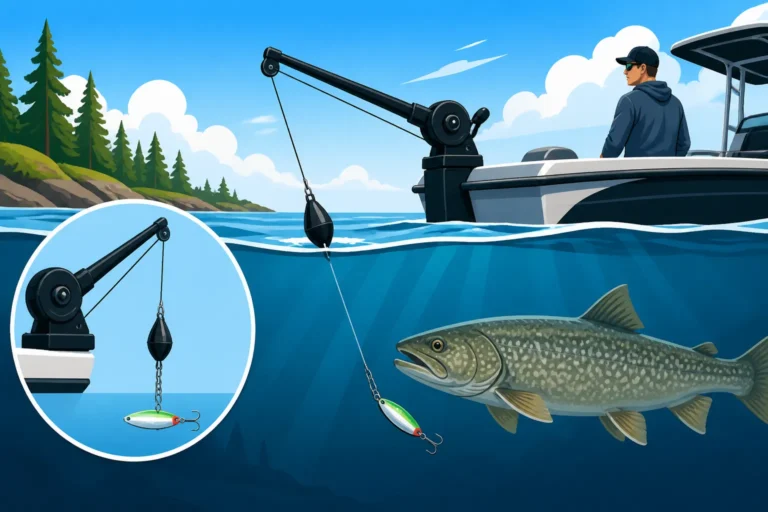
Simply holding a straight line at a consistent speed isn't always the most effective strategy. Muskie are highly visual predators, and erratic movement can often be the trigger that pushes them to strike. This is where the "S-turn" comes into play. By gently turning your boat, the lures on the inside of the turn will slow down and drop slightly, while the lures on the outside will speed up and rise. This momentary change in speed and depth can be incredibly effective at drawing strikes, especially from following fish. A subtle variation, often called a "pause," involves briefly disengaging your main engine or electric trolling motor for a second or two, allowing your lures to stall, rise, or sink slightly, then re-engaging. This sudden stop-and-go can mimic a wounded baitfish or a struggling prey, often triggering an aggressive reaction. These variations disrupt the rhythm and present something unexpected, which is often exactly what a muskie needs to commit. For more on specific techniques, you might check out How to Catch Muskie in Ontario.
Factors Influencing Your Optimal Trolling Speed
It's tempting to think there's a universal ideal speed, but the truth is, many variables come into play. A savvy muskie angler constantly adjusts their speed based on a combination of factors, almost like a chef tasting and adjusting seasoning during cooking. Ignoring these elements means you're leaving strikes on the table.
Lure Type and Action
The lure you choose dramatically dictates your optimal trolling speed. Different lures are designed to perform best at specific speeds. Big, wide-wobbling crankbaits, like those from Bagley or large Rapalas, often need a decent amount of speed (4-6 mph) to get their full side-to-side action. If trolled too slowly, they might just swim in a dead straight line without much appeal. Bucktails, on the other hand, often benefit from a slightly faster presentation, maybe 5-7 mph, to make their blades spin rapidly and create a strong vibration and flash. Glide baits or heavier soft plastics might require a slower, more deliberate pull (2.5-4 mph) to give them that enticing, natural swimming motion. Some lures, particularly custom-made ones, have very specific sweet spots. Always pay attention to how your lure is performing in the water right beside the boat before letting out line. Is it wobbling? Is it tracking true? Is it diving to its intended depth? You can often find a good selection of specialized muskie lures on platforms like Amazon.
Boat Control and Presentation
Maintaining consistent boat speed is paramount, especially in windy or choppy conditions. This is where a good electric trolling motor and GPS speed control become invaluable. A quality trolling motor, often available on Amazon, can hold your speed much more steadily than trying to feather a gas motor, especially at slower speeds. When you're dealing with current, like on the French River or Ottawa River, your ground speed (measured by GPS) is what truly matters, not your speed through the water (measured by a boat's paddle wheel). You might need to increase your engine RPMs to maintain your desired ground speed when trolling against the current, or reduce them when going with it. Precision boat control also allows you to follow depth contours accurately, which is often where muskie are holding. Ontario Boating Laws for Anglers covers some of the broader rules, but mastering boat control for fishing specific species is a different skill altogether.
The Time of Year and Muskie Aggression
Muskie exhibit different levels of aggression throughout the fishing season, and this directly impacts the ideal trolling speed.
- Spring/Early Summer (Post-Spawn): After spawning, muskie are recovering and might be less aggressive. They're often in shallower water. A slightly slower retrieve (3-4.5 mph) can be more effective, giving them an easier meal.
- Mid-Summer (Warm Water): This is when muskie are most active and metabolism is high. They're often found on deeper structure or along weed edges. Faster trolling speeds (4.5-6.5 mph, sometimes higher for big water) are often highly productive, triggering those aggressive reaction strikes.
- Fall (Cooling Water): As water temperatures drop, muskie enter a "feeding frenzy" to bulk up for winter. While they are aggressive, they might not chase a lure as far as in summer. A varied speed, incorporating S-turns and pauses, often works wonders, sometimes slightly slower than peak summer speeds, but still with bursts of acceleration. This is often the time for trophy muskie, so understanding their seasonal habits is crucial. Knowing Ontario Muskellunge Season Dates and Limits is essential for planning your trips.
Gear Considerations for Effective Speed Control
Having the right gear isn't just about catching the fish; it's about being able to execute the techniques effectively, especially when it comes to maintaining precise trolling speeds and handling the powerful strikes of a muskie.
Trolling Motors and GPS Units
For truly precise speed control, especially at those critical slower speeds (under 4 mph) or when fighting wind and waves, a good electric trolling motor is a game-changer. Models with GPS-enabled spot-lock and cruise control features allow you to set a desired speed, and the motor will automatically adjust thrust to maintain it, regardless of current or wind. This frees you up to focus on lure presentation, watching your rods, and scanning your electronics for fish. Many of these advanced motors are readily available from marine retailers or online marketplaces like Amazon. A reliable GPS unit, either integrated into your fish finder or a standalone device, is also absolutely essential. It gives you an accurate "ground speed," which is the true measure of how fast your lures are moving relative to the bottom and the fish. Without GPS, your boat's speedometer only tells you speed through the water, which can be wildly inaccurate in current or wind.
Rods, Reels, and Line for High-Speed Trolling
Muskie trolling demands heavy-duty gear built to withstand abuse.
- Rods: Look for long (8-10 feet), heavy-power, moderate-fast action trolling rods. The length helps spread out multiple lines and absorbs shock from strikes. The heavy power provides the backbone needed to control large muskie and handle the drag of big lures.
- Reels: High-quality baitcasting reels with strong drag systems and high line capacity are a must. They need to handle the immense pressure of a big muskie and the continuous stress of trolling heavy lures. Many anglers prefer models with a low gear ratio for powerful cranking, but a higher ratio can be useful for quickly checking lines.
- Line: Braided line is the standard for muskie trolling, typically in the 80-150 pound test range. Its near-zero stretch provides excellent sensitivity to feel lure action and light bites, and its strength is crucial for muskie. A heavy fluorocarbon or wire leader (100-200lb test) is always used to prevent bite-offs. Understanding Best Line Weight for Muskie Fishing can further help you select the right setup. Make sure your line and leader are in top shape, as a trophy muskie will quickly expose any weaknesses.
Here’s a quick overview of how different factors might influence your ideal trolling speed:
| Factor | Conditions | Suggested Speed Adjustment | Common Speed Range (mph) |
|---|---|---|---|
| Water Temp | Cold (Spring/Fall) | Slower | 2.5 – 4.0 |
| Warm (Summer) | Faster | 4.5 – 6.5+ | |
| Water Clarity | Murky/Stained | Slightly Faster (vibration) | 4.0 – 6.0 |
| Clear | Slower/Varied (natural look) | 3.0 – 5.0 | |
| Lure Type | Large Crankbaits (e.g., Depth Raiders) | Moderate to Fast | 4.0 – 7.0 |
| Bucktails (e.g., Cowgirls) | Moderate to Fast | 4.5 – 6.5 | |
| Glide Baits / Soft Plastics | Slower | 2.5 – 4.0 | |
| Fish Aggression | Low (Post-spawn, cold front) | Slower/Varied | 2.5 – 4.5 |
| High (Mid-summer, fall feeding frenzy) | Faster/Varied | 4.5 – 7.0+ | |
| Presentation | Straight Line | Consistent | 3.5 – 6.0 |
| S-Turns / Pauses | Varied, adds surges/stalls | 3.0 – 7.0 |
Ultimately, finding the best trolling speed for muskie is an ongoing process of observation, experimentation, and adjustment. Pay attention to your lures, your electronics, and most importantly, what the muskie are telling you through their follows and strikes. Every day on the water is a new lesson, but by understanding these core principles, you'll be well on your way to more memorable muskie encounters in Ontario.
Disclaimer
This article is for general informational purposes only and does not constitute professional advice. Laws, prices and regulations vary by location and change over time. Consult a qualified professional for guidance on your specific situation.