How to catch pike through thick weeds
We've all been there: staring at a promising patch of lily pads or a sprawling submerged weed bed, knowing full well that a monster northern pike is lurking within, but feeling utterly defeated by the thought of getting a lure through that mess without snagging every single cast. It’s frustrating to see the potential and feel powerless to access it. This guide is here to unravel the mystery of those dense weed beds and equip you with the knowledge, gear, and techniques to consistently pull big pike out of their weedy strongholds in Ontario.
Understanding Why Pike Love Thick Weeds
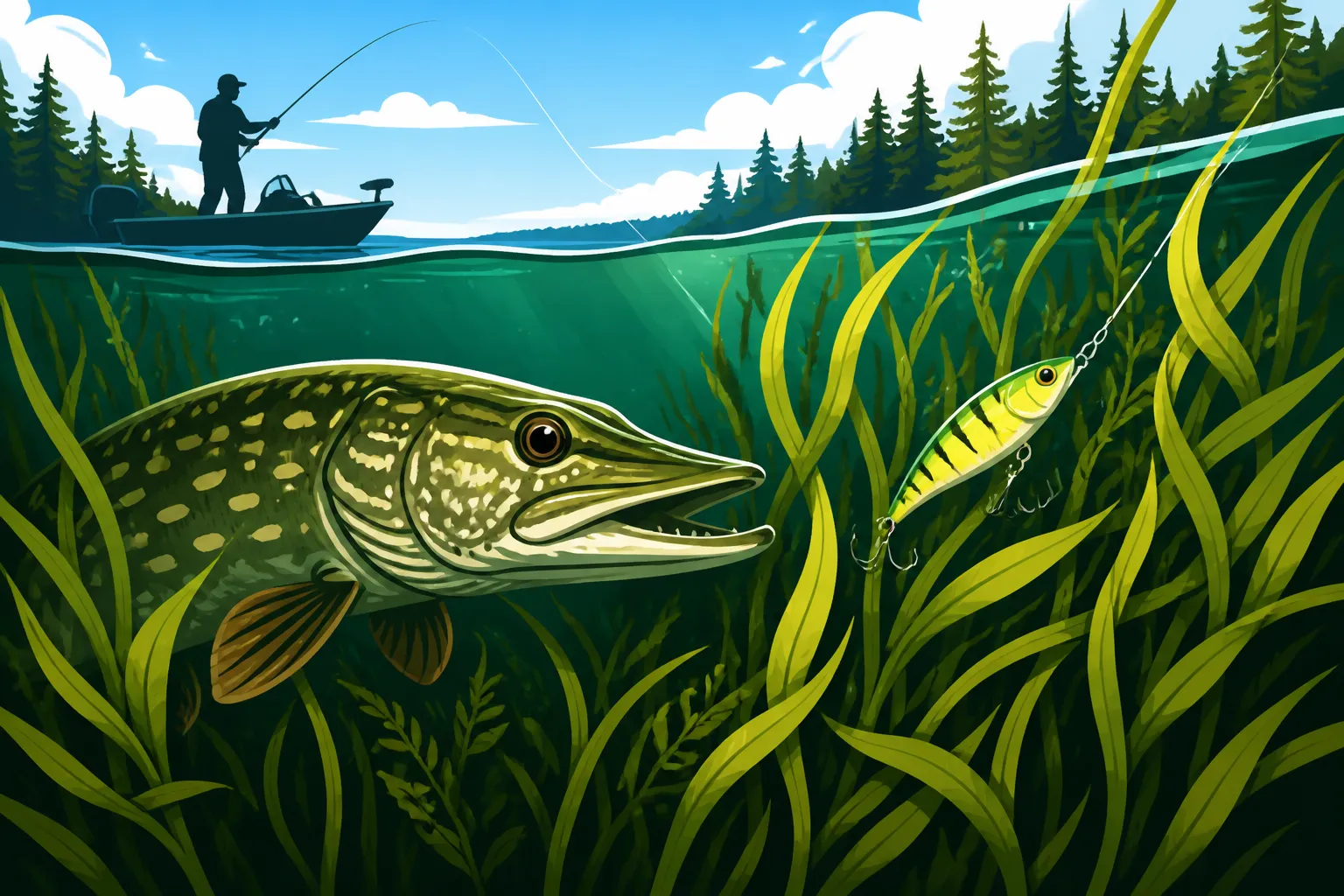
Northern pike are ambush predators, and thick vegetation offers the perfect hideout. They don't just hang out in weeds; they live in them, using them for cover, hunting, and even as comfort zones. Understanding this fundamental behavior is the first step to successfully targeting them in these challenging environments.
The Perfect Ambush Point
Imagine being a pike. You're a long, slender predator with razor-sharp teeth, and your entire existence revolves around one thing: eating. Thick weeds, whether it's dense coontail, tall cabbage weed, or a sprawling field of lily pads, provide unparalleled camouflage. A pike can sit perfectly still, almost invisible, and wait for an unsuspecting baitfish, frog, or even a duckling to swim by. This cover allows them to conserve energy and strike with explosive force when the moment is right. It’s not just about hiding from predators themselves, though adult pike have few; it’s primarily about being an unseen predator. This makes them extremely difficult to spot with sonar, too, as they often blend right in with the dense aquatic growth.
Oxygen and Baitfish Haven
Beyond camouflage, weed beds are vibrant underwater ecosystems. During the warmer months, especially, dense vegetation produces oxygen through photosynthesis, creating oxygen-rich pockets of water that are highly attractive to baitfish. Shiner minnows, perch, sunfish, and small bass all seek refuge and food within these green sanctuaries. And where the baitfish go, the pike follow. These areas become veritable supermarkets for pike, offering a consistent and abundant food supply. Early in the season, after the ice has melted, these spots warm up faster too, drawing in not only pike but also the forage they depend on. You'll often find that the lushest, thickest weed beds hold the biggest pike simply because they provide everything a large predator needs to thrive.
Identifying Key Weed Types and Their Pike Potential
Not all weeds are created equal when it comes to holding pike. Some are merely obstacles, while others are prime real estate. Learning to differentiate them can drastically improve your success.
| Weed Type | Typical Growth Pattern | Pike Preference | Fishing Strategy |
|---|---|---|---|
| Cabbage Weeds (Pondweed) | Tall, broad leaves, distinct stalks | High: Excellent ambush cover, vertical structure | Cast into pockets, edges; weedless spoons, spinnerbaits |
| Coontail | Dense, feathery, often matted | Moderate: Good for smaller pike, baitfish | Punching jigs, heavy weedless soft plastics; focus on edges |
| Lily Pads | Floating pads, submerged stalks | High: Shade, overhead cover, vertical structure | Topwater frogs, weedless spoons over pads, pitch into openings |
| Milfoil | Fine, dense, can form large mats | Moderate: Can be too dense, but good edges | Buzzbaits over mats, weedless jigs on edges |
| Reeds/Cattails | Emergent, along shorelines | High: Shallow water cover, spawning areas | Cast parallel to edges, topwater, spinnerbaits |
Cabbage weeds (broadleaf pondweed) are often considered the gold standard. Their broad leaves and vertical stalks create perfect lanes and pockets for pike to hide. Lily pads offer excellent overhead cover, creating shade and a complex root system below where pike love to lurk. Coontail, while dense, can sometimes be too thick, but its edges are always worth exploring. Reeds and cattails, often found in shallower margins, are excellent early-season spots as they warm up quickly and offer protection for spawning and growing pike. Remember that pike are often found on the edges of these dense mats or in clear pockets within them. It's rare they'll be buried in the absolute thickest, impenetrable part, as they still need room to maneuver and strike. Understanding this allows you to pick apart the puzzle more effectively.
Essential Gear for Conquering Weedy Pike
Tackling pike in thick weeds isn't a job for finesse gear. You need robust equipment that can handle powerful fish, heavy lures, and the constant battle against tangled vegetation. Trying to use light tackle here is a recipe for frustration and lost fish.
Heavy-Duty Rods and Reels
When you hook a big pike in a dense weed bed, it's going to immediately try to bury itself deeper into that cover. You need a rod with enough backbone to turn its head and pull it out. A medium-heavy to heavy power baitcasting rod, typically 7 to 8 feet long, is ideal. The longer rod provides leverage for long casts and helps horse fish out of the weeds. Look for a fast action tip to accurately cast into small pockets but with plenty of power in the blank. For reels, a baitcaster with a high gear ratio (7.1:1 or higher) is a huge advantage. This allows you to quickly reel in slack line, keep pressure on a lunging fish, and rapidly retrieve your lure for another cast after you've pulled it clear of the weeds. Companies like Daiwa and Shimano offer excellent options that stand up to the abuse of weed fishing. This isn't the time for a light spinning setup; you need a serious winch! For more on selecting appropriate rods, check out Best rod power for muskie fishing, as the principles for heavy cover apply directly to pike.
Braided Line is Your Non-Negotiable Ally
If there's one piece of advice to take to heart for fishing thick weeds, it's this: use braided line. Monofilament stretches and will get absolutely shredded by weeds, let alone a pike's teeth. Fluorocarbon is tougher than mono but still not ideal for cutting through dense vegetation. Braided line, with its zero stretch and incredibly thin diameter for its strength, is a game-changer. It slices through weeds, allowing your lure to run cleaner and making it easier to retrieve snagged lures. It also provides unparalleled sensitivity, letting you feel every subtle tap, even through heavy cover.
I recommend 50-80 pound test braid for most weed applications. You might think that sounds excessive, but it's not about the fish breaking the line, it's about the weeds. The heavier test also stands up better to the abrasive nature of vegetation. Always use a leader, typically a heavy fluorocarbon or a wire leader, to prevent toothy pike from cutting your main line. For detailed advice on this, our guide on Best leader for pike and muskie fishing is invaluable. You can find quality braided lines and fluorocarbon leader material on platforms like Amazon, making it easy to stock up before your next trip. Strong line is non-negotiable here; it's the connection between you and that potential trophy lurking in the green stuff.
Essential Weedless Lure Selection
The right lure is one that can navigate through the jungle without constantly fouling up. You need options that are inherently weedless or can be made so.
- Weedless Spoons: These are classics for a reason. Spoons like the Johnson Silver Minnow, with its single upturned hook and weed guard, are designed to glide over and through vegetation. They offer flash and wobble that pike can't resist. Cast them out, let them sink to the desired depth (or just below the surface for matted weeds), and retrieve them steadily. Vary your speed to entice strikes.
- Soft Plastic Frogs and Toads: When fishing over heavy, matted vegetation or lily pads, topwater frogs are incredibly effective. They mimic a struggling amphibian and can be worked right over the thickest stuff without snagging. The strikes are often explosive and visually thrilling. You can twitch them, walk them, or simply retrieve them steadily, letting their legs kick. A robust, sharp hook is essential here, as pike can be tough to hook on topwater baits.
- Punching Jigs/Creature Baits: For extremely dense mats that even a weedless spoon can't penetrate, "punching" rigs come into play. This involves a heavy tungsten weight (1 oz or more) pegged above a stout, weedless hook rigged with a creature bait or a soft plastic beaver-style lure. You literally punch this rig through openings or weak spots in the mat, letting it fall into the dark water below. Pike lurking beneath are often quick to react to this intrusion.
- Spinnerbaits: While not entirely weedless, spinnerbaits with a single upturned hook and a stout wire frame can be surprisingly effective through medium-dense weeds, especially sparse cabbage or along weed edges. The wire arm helps deflect weeds, and the flash and vibration are irresistible to pike. Opt for larger blades (Colorado or Willow Leaf) for maximum throb and visibility. You can often find a great selection of these specialized lures from reputable brands on Amazon. Our guide Best Bait for Pike in Weed Beds offers even more specific lure suggestions.
Remember, the goal is to present an enticing target without constantly retrieving a lure coated in salad. Experiment with different weedless options until you find what works best for the particular weed density and pike activity on your chosen Northern Pike Waters in Ontario.
Proven Techniques for Extracting Pike from the Jungle
Having the right gear is only half the battle; knowing how to use it effectively in dense cover is where the real skill comes in. These techniques are designed to maximize your chances of connecting with and landing those elusive weed-dwelling pike.
Precision Casting into Pockets and Edges
Pike in thick weeds are often tucked away in specific locations: clear pockets, channels, or along the distinct edges where the weeds meet open water. Blindly casting into the thickest part of a mat will often lead to snags and frustration. Instead, focus on making accurate casts into these prime ambush points.
Practice your pitch casts or roll casts to quietly drop your lure into small openings without splashing too much. Remember, pike are sensitive to commotion, and a heavy lure crashing down can spook them. When fishing weed edges, cast parallel to the edge, working your lure along that invisible line where the weeds begin or end. This keeps your lure in the strike zone for longer. If you have access to a boat or kayak, use a trolling motor to quietly position yourself to pick apart a weed line with repeated, accurate casts. The more precise you are, the less time you'll spend clearing weeds from your lure, and the more time your bait will be in front of a hungry pike.
Working Lures Over, Through, and Under Weeds
Different weed densities and types require varied approaches to lure presentation.
- Over the Mats: For thick, floating mats of weeds or lily pads, topwater lures like frogs, buzzbaits, or even weedless spoons can be incredibly effective. Retrieve them slowly enough to allow the pike to track them, but fast enough to create enticing commotion. When a pike strikes, resist the urge to set the hook immediately. Let the fish fully engulf the bait and turn before delivering a powerful hookset.
- Through the Sparse Stuff: In less dense areas, like scattered cabbage or milfoil, spinnerbaits and weedless spoons excel. Keep your rod tip high to help your lure "climb" over lighter weed strands. If you feel resistance, often a quick rip of the rod will free the lure and often trigger a reaction strike from a nearby pike. Vary your retrieve speed; sometimes a slow roll is best, other times a faster retrieve to trigger a chase.
- Under the Canopy: When pike are holding deep beneath a weed canopy, techniques like "punching" with heavy jigs or Texas-rigged creature baits become essential. Let the heavy weight carry your bait through the mat and into the dark water below. Once it breaks through, let it flutter down. Most strikes will occur on the fall or just after it hits the bottom. Lift and drop your rod tip to impart action, mimicking a struggling creature. For deeper weed lines, you might even find success with vertical jigging heavy spoons or lipless crankbaits, though this is less common for through thick weeds.
The Importance of Speed and Aggression
Pike are known for their aggressive nature, and fishing in weeds often requires capitalizing on this. Unlike some species that might prefer a subtle presentation, pike in weeds are often looking for a meal that's either easy or escaping quickly. Don't be afraid to impart a fast, erratic retrieve. Jerks, pauses, and sudden bursts of speed can trigger a reaction strike from a pike that might otherwise ignore a slower presentation. A quick-retrieve reel, as mentioned earlier, is vital here to keep your lure moving and to gain line quickly.
When a pike strikes, it's often a violent thud or a sudden surge of weight. Your goal then is to keep constant, heavy pressure on the fish to prevent it from burrowing back into the weeds. Don't let up! This is where that heavy braid and powerful rod really earn their keep. Get that fish headed towards open water as quickly as possible. Sometimes, a hard, direct retrieve is the only way to prevent the fish from wrapping itself in an impenetrable weed mass.
Navigating the Challenges: Snags, Missed Strikes, and Follow-ups
Fishing thick weeds isn't without its challenges. Snags are inevitable, and pike, despite their aggression, can be notorious for short strikes and frustrating follow-ups that don't result in a hook-up. Being prepared for these scenarios will save you headaches and increase your landing ratio.
Extracting Snagged Lures from the Green Stuff
It's going to happen. You'll make a perfect cast, get a few cranks in, and suddenly your lure feels like it's glued to the bottom. Don't panic. The first thing to do is keep your line tight but slacken it slightly to allow the lure to potentially float free. Sometimes, simply letting the lure sit for a moment, then giving a gentle twitch, will free it.
If that doesn't work, try to approach the snag from a different angle if you're in a boat or kayak. Often, pulling the lure from the opposite direction it went in can dislodge it. A dedicated lure retriever can be a lifesaver, especially if you're using expensive baits. Many anglers use a heavy chain or weighted device that slides down your line to the snag and can either knock the lure free or hook onto it for retrieval. Investing in one of these is far cheaper than constantly replacing lost lures. If all else fails, a forceful snap of the rod (while pointing it directly at the snag, not letting it bend) can sometimes slice the braid through the offending weed, but this should be a last resort. Remember, your heavy braided line is much more resistant to cutting than mono or fluoro, so use that to your advantage.
The Art of the Follow-Up and the Figure-Eight
Pike are curious predators, and it's not uncommon for them to follow a lure right to the boat without committing to a strike. This can be infuriating! However, this is where the "figure-eight" maneuver comes into play, a technique often associated with muskie fishing, but equally effective for tempting a hesitant pike. Our guide, How to figure eight a muskie boatside, offers an in-depth look, but here's the gist for pike.
As your lure approaches the boat, if you see a pike following, don't stop retrieving. Instead, quickly plunge your rod tip into the water and begin moving your lure in a large "figure-eight" pattern right beside the boat. Keep the lure moving, making wide turns. This sudden change in direction and presentation can often trigger a strike from a pike that was just "window shopping." Many trophy pike have been caught boat-side using this technique. Have your net ready, because if they hit, it's usually with gusto!
If a pike doesn't commit to the figure-eight, or if you had a short strike, quickly cast back to the exact spot where you saw or felt the fish. Sometimes, a second, slightly different presentation (maybe a slower retrieve, or a different twitch) will seal the deal. You can also try casting a different lure altogether, like a follow-up bait that might be smaller or have a different action. Don't give up on a pike just because it didn't hit on the first pass; they can often be coaxed into striking. It's all part of the thrilling challenge of How to Catch Northern Pike in Ontario.
Disclaimer
This article is for general informational purposes only and does not constitute professional advice. Laws, prices and regulations vary by location and change over time. Consult a qualified professional for guidance on your specific situation.