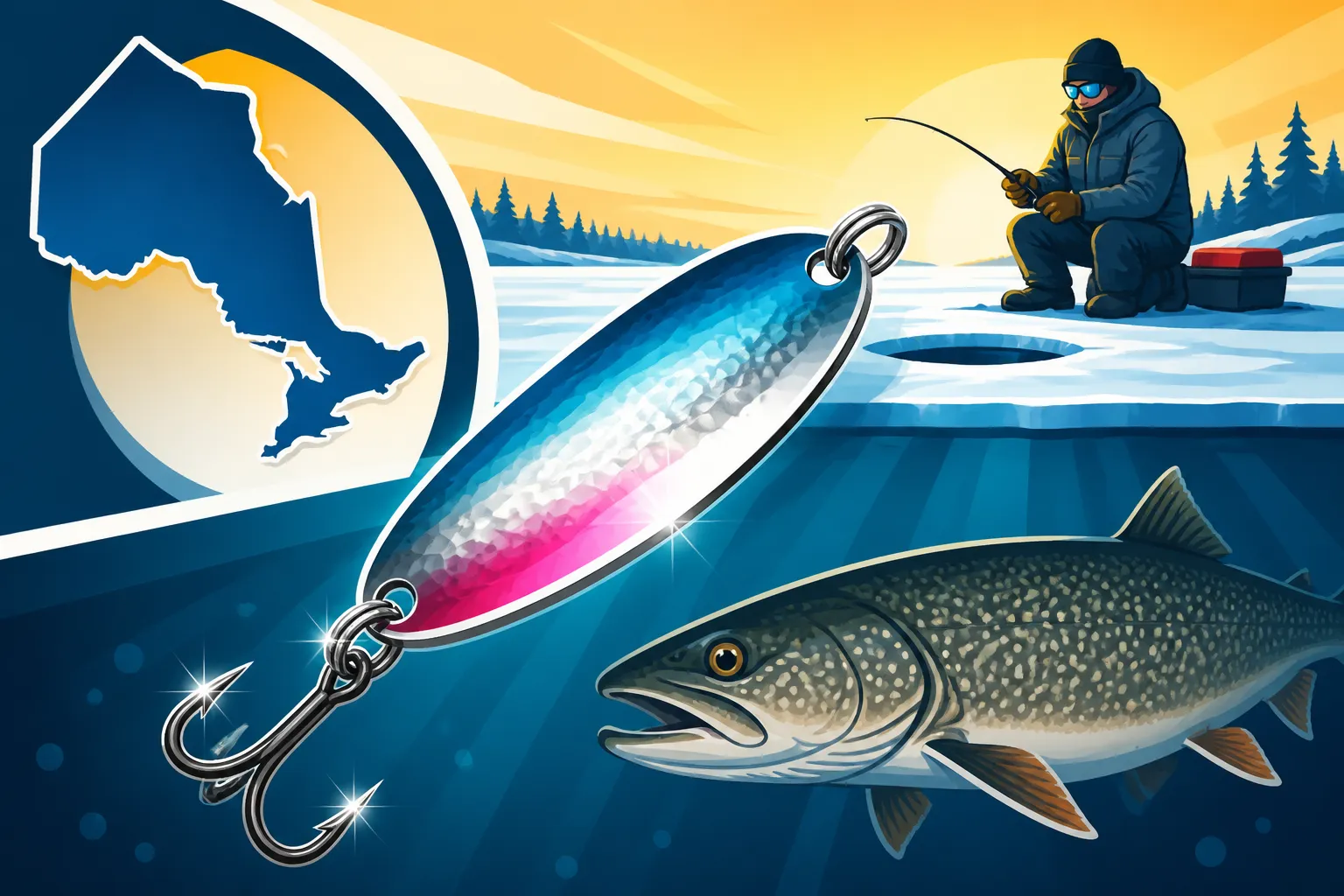
Best jigging spoon for winter lake trout
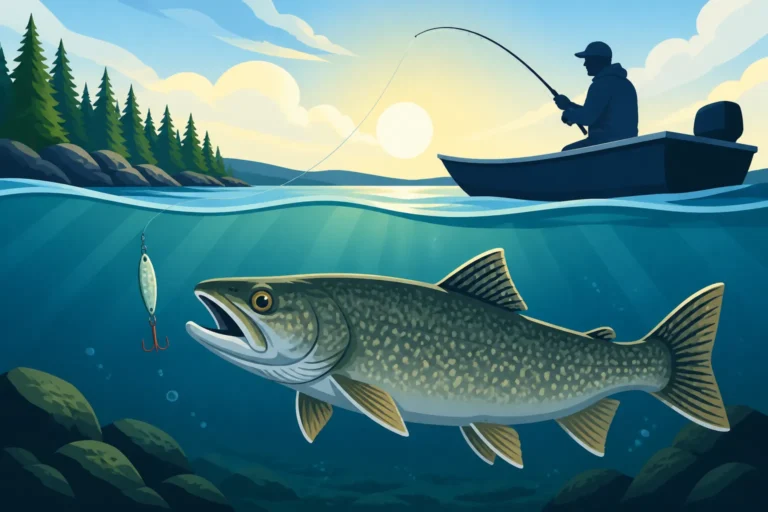
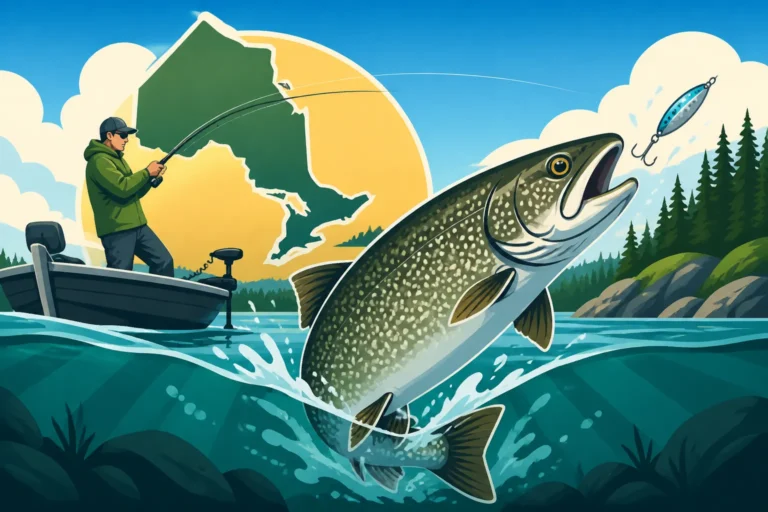
Winter on Ontario's expansive lakes means bundling up, braving the elements, and sometimes feeling like you're fishing in a completely different world. Lake trout, masters of the deep, can be incredibly elusive under the ice, often making anglers wonder if their lures are even reaching them, let alone enticing a bite. If you've ever drilled countless holes, stared at your fish finder in frustration, and felt like your spoon just wasn't doing the trick, you're not alone. This guide is here to shed some light on why certain jigging spoons excel for winter lake trout and how to choose and present them effectively to turn those frustrating outings into successful ones.
Understanding Winter Lake Trout Behavior
Lake trout are magnificent, powerful fish, and their behaviour changes significantly when the mercury drops and the ice covers their domain. Understanding these shifts is absolutely crucial for choosing the right jigging spoon and presenting it correctly. It's not just about finding them; it's about understanding their mood.
Why Lake Trout Go Deep in Winter
When winter settles over Ontario, the water column equalizes in temperature, or at least becomes much colder uniformly. However, lake trout, especially the larger, more mature ones, often gravitate towards deeper water for several compelling reasons. One significant factor is the consistent water temperature found in the depths. While the surface might fluctuate with air temperature, deep water remains more stable. More importantly, their primary food sources, like ciscoes, smelt, and other baitfish, also seek refuge in deeper, more stable environments, or suspend over significant depths. Lake trout are also incredibly light-sensitive. Under clear ice, sunlight can penetrate deep, and the depths offer a welcome sanctuary from the brightness, especially during clear, sunny winter days. They don't want to be exposed, and neither do their meals.
The "Finicky" Factor: Slow Metabolism and Subtle Bites
Winter's chill affects everything, and lake trout are no exception. Their metabolism slows down considerably, meaning they don't need to feed as aggressively or as often as they do during the warmer months. This metabolic slowdown translates into a much more finicky bite. You might mark fish on your sonar, watch them approach your lure, and then… nothing. They're often inspecting, not necessarily attacking. This is where the subtleties of your jigging spoon's action and presentation become paramount. A slow, tantalizing fall, a subtle shimmer, or an extended pause can often trigger a strike from a hesitant laker that would ignore a more aggressive presentation. It's about coaxing, not provoking, them into biting. You'll definitely want to check out our comprehensive guide on How to Catch Lake Trout in Ontario to delve deeper into their seasonal patterns.
What Makes a Jigging Spoon Effective for Lake Trout?
Not all spoons are created equal, especially when targeting lake trout through the ice. The nuances of design, weight, and finish can make a world of difference between a day of frustrated staring at a screen and a day of reeling in majestic lakers.
Action and Profile: Mimicking Dying Baitfish
The most effective jigging spoons for winter lake trout excel at mimicking a distressed or dying baitfish. Think about it: a struggling baitfish is an easy meal, and lake trout are opportunistic predators. This mimicry comes down to the spoon's action and profile. A good spoon will have an erratic, fluttering, or darting action on the drop, resembling a baitfish trying to escape or disoriented. When you lift and drop your rod tip, the spoon should "swim" in a captivating way, often kicking out to the side before fluttering back down. The profile itself should be streamlined enough to cut through the water efficiently but have enough surface area to create that desirable flutter. Some spoons are designed to fall almost horizontally, spinning and wobbling, while others dart sharply. The key is that it looks natural and vulnerable to a sluggish lake trout.
Weight and Depth: Getting Down and Staying There
Lake trout often hold in significant depths, sometimes 50, 80, or even over 100 feet of water. This means your jigging spoon needs to have enough weight to reach those depths quickly and efficiently. You don't want to spend precious minutes waiting for a lightweight spoon to slowly descend while your sonar screen shows fish moving through. Moreover, a heavier spoon allows you to maintain better contact with your lure in deeper water, helping you detect those subtle winter bites. It also provides more control when jigging, allowing for crisp, precise movements. However, it's a balancing act: too heavy, and it might fall too fast without enough flutter; too light, and it takes forever to get to the strike zone. Finding that sweet spot in weight is crucial for both efficiency and effective presentation. Our article on Best Techniques for Ice Fishing Lake Trout delves further into this balance.
Color and Finish: Natural, Glow, Flashy, and UV
The visual appeal of your spoon is incredibly important, especially in the low light conditions under the ice or in deep water.
- Natural Colors: In clear waters, or when lake trout are exceptionally finicky, natural baitfish patterns (silver, gold, white, subtle blues, greens) can be highly effective. These replicate the actual forage they're accustomed to.
- Glow-in-the-Dark: This is a game-changer for deep water or overcast days. A glow-in-the-dark finish provides an undeniable beacon that draws attention from afar. Many anglers "charge" their glow spoons with a headlamp or flashlight before dropping them down.
- Flashy Finishes: Chrome, nickel, and highly reflective paint schemes create bright flashes of light that can attract lake trout from a distance, mimicking the flash of a baitfish's scales. These are particularly useful on brighter days or when actively searching for fish.
- UV Reactive: UV finishes absorb ultraviolet light (which penetrates water better than visible light) and re-emit it as visible light, giving the lure an enhanced brightness and visibility, even in dimly lit depths. Many modern spoons incorporate UV elements without being overtly "bright" to the human eye. Experimentation with these different finishes, depending on water clarity and available light, is key to figuring out what the lake trout prefer on any given day.
Top Jigging Spoon Features for Ontario Lake Trout
When you're sifting through the tackle shop or browsing online, knowing what specific features to look for can narrow down your choices and put you on the right track for winter lake trout success.
Blade vs. Slab Spoons
These are the two main categories you'll generally encounter, and each has its distinct advantages:
-
Blade Spoons (e.g., Williams Wabler, Little Cleo style): These spoons are often thinner, wider, and have a more pronounced curve, designed to create a significant fluttering or wobbling action on the fall. Their erratic, horizontal movement can be incredibly enticing to lake trout. They typically don't sink as fast as slab spoons due to their greater surface area, which can be a pro or a con depending on depth and current. They excel when lake trout are actively chasing or when you want a slower, more deliberate presentation that stays in the strike zone longer. When retrieving, they often "hunt" side-to-side, which can cover more area under the ice. You can find excellent options like these on Amazon if your local shop is out of stock.
-
Slab Spoons (e.g., Do-Jigger, Swedish Pimple style): These are generally thicker, heavier, and more compact. They are designed for a faster drop and a more vertical, darting action. When jigged, they tend to move up and down with sharp, quick darts, sometimes kicking out slightly to the side but quickly returning to a vertical orientation. Their weight allows them to plumb deep waters rapidly, making them ideal when lake trout are holding very deep or when current is an issue. They're excellent for pinpoint targeting of fish marked directly under your hole. While they might not have the same "hang time" as blade spoons, their aggressive darting action can trigger reaction strikes from even sluggish lake trout.
Hooks and Attachment Points
The business end of your spoon needs to be up to the task of hooking and holding a powerful lake trout.
- Treble Hooks: Most jigging spoons come standard with a treble hook. For lake trout, ensure the trebles are sharp and strong enough to withstand their powerful runs and head shakes. Many anglers prefer to upgrade their stock trebles to a higher quality, stronger hook. Some even replace them with a single, larger assist hook for better penetration and easier de-hooking, especially if practicing catch and release.
- Split Rings and Swivels: Check the quality of the split rings. Weak split rings can bend or open under the stress of a large lake trout. Adding a high-quality barrel swivel or a ball bearing swivel to the top of your spoon, between the spoon and your main line or leader, is often a good idea. This prevents line twist, which is common with fluttering spoons, and can also improve the lure's action. Many spoons even come with a snap swivel already attached for this very reason.
Sizing Up Your Spoon
Matching the hatch, as they say, is crucial. The size of your spoon should generally correspond to the size of the baitfish lake trout are feeding on in that particular body of water.
- Smaller Spoons (1/4 to 1/2 ounce): Excellent for pan-sized lake trout, or when the fish are very finicky and feeding on smaller forage. Also good in highly pressured lakes where a subtle presentation is needed.
- Medium Spoons (1/2 to 1 ounce): This is often the sweet spot for many Ontario lake trout applications. It covers a wide range of baitfish sizes and allows for good depth penetration while still maintaining a desirable action. This is a great starting point for most lakes.
- Larger Spoons (1 ounce and up): When targeting trophy lake trout, or in waters known for large forage like mature ciscoes, going with larger spoons can pay off. They also have a more dominant profile and often sink faster, which can be advantageous in very deep water. However, be mindful that a very large spoon might deter smaller, though still respectable, lake trout.
My Top Spoon Styles for Ontario Lake Trout
While I can't name specific brands or models, I can describe the types of jigging spoons that consistently produce for me and other anglers targeting winter lake trout in Ontario. When you're outfitting your tackle box for Ice Fishing in Ontario, consider these profiles.
The Darting Minnow Imitator
This category of spoon is characterized by a somewhat slender, elongated body, often with a slight curve or bend. When jigged, it doesn't just fall straight down; it darts aggressively from side to side, mimicking a panicked baitfish trying to escape a predator. This erratic, horizontal movement is a huge trigger for lake trout, especially when they're actively hunting.
- Ideal Conditions: Best for when lake trout are relatively active, or when you're trying to cover a wider horizontal area from a single ice hole. It's also fantastic when you see fish on your sonar that are suspended off the bottom and might be following a baitfish.
- Retrieve Style: A common retrieve involves lifting the rod tip sharply by 1-3 feet, then letting the spoon fall on a semi-slack line. The key is to watch your line or fish finder closely during the fall, as many strikes occur as the spoon is fluttering down. Experiment with the height and speed of your lifts; sometimes a hard snap is needed, other times a gentler sweep.
The Fluttering Temptress
These spoons tend to be wider and flatter, often with a more pronounced dished or curved shape. Their primary appeal is a slow, seductive flutter or wobble on the drop, resembling a wounded or dying baitfish. This slower fall keeps the lure in the strike zone longer and gives finicky lake trout more time to commit.
- Ideal Conditions: This spoon shines when lake trout are sluggish, holding tight to the bottom, or when the bite is extremely subtle. It's also a great choice in shallower lake trout haunts (20-40 feet) where a fast drop isn't as critical. If you're marking fish that aren't responding to aggressive presentations, switch to a fluttering temptress.
- Retrieve Style: A gentler lift-and-drop is often best here. Lift the rod tip smoothly, just enough to get the spoon to rise, then allow it to flutter back down on a controlled slack line. Often, a "dead stick" retrieve, where you simply let the spoon hang motionless for several seconds after a flutter, can be incredibly effective. Sometimes, a tiny quiver of the rod tip is all it takes to trigger a strike.
The Glow-in-the-Dark Deep Diver
While not a shape unto itself, glow features are so critical for deep-water lake trout that they warrant their own mention. These spoons can come in either darting or fluttering styles but are heavily coated with phosphorescent paint, often in chartreuse, orange, or white. The glow is an absolute magnet in the dark depths where lake trout lurk.
- Ideal Conditions: Essential for very deep water (60+ feet), low light conditions (dawn, dusk, overcast days), or stained/darker waters. Even on sunny days, the extreme depths can be dim, and the glow provides an irresistible beacon.
- Retrieve Style: Before dropping, "charge" your glow spoon with a bright flashlight or a dedicated UV light for 10-20 seconds. Repeat this every 5-10 minutes, or whenever you check your bait. The retrieve can be adapted from either the darting or fluttering styles, but the glow is the primary attractant. Watch for a subtle "tick" on the line or a sudden weight when a fish inhales the spoon in the dark. A good fish finder is essential for this kind of deep fishing, as discussed in Best Fish Finders for Ontario Lakes.
Mastering the Presentation: Techniques for Jigging Spoons
Having the right jigging spoon is only half the battle. Knowing how to present it to a winter lake trout is where true angling skill comes into play. It's a delicate dance of observation and subtle manipulation.
Reading Your Electronics
Your fish finder is arguably the most important piece of gear when jigging for winter lake trout. These fish are constantly on the move, and they often suspend at various depths.
- Identifying Fish and Bait: Use your sonar to identify not just the lake trout themselves, but also the baitfish they're feeding on. If you see a dense school of baitfish, position your spoon just above them, or try to mimic a stray baitfish below the school. Lake trout will often cruise just below baitfish schools.
- Interpreting Reactions: Watch how fish react to your spoon on the screen. Do they approach quickly? Slowly? Do they shy away? This tells you whether your presentation is too aggressive, too subtle, or just right. If they rise quickly to meet your spoon, you might be able to jig more aggressively. If they approach slowly and hover, a more subtle, fluttering presentation with longer pauses might be needed. Sometimes, a lake trout will actually "turn off" your spoon by swimming away; that's your cue to change something. This is a skill developed over many hours on the ice, but it's invaluable.
The Art of the Jig: Cadence, Pauses, and Deadsticking
Jigging is an art form, especially for winter lake trout. There's no single "best" retrieve; it's about constant experimentation.
- Cadence: Start with a varied retrieve. Try a series of quick lifts, followed by a long pause. Then try slower, sweeping lifts. Some days, lake trout respond to aggressive, hard snaps that make the spoon dart wildly. Other days, a gentle jig that barely moves the spoon is all it takes. Vary your cadence until you get a response.
- Pauses: Pauses are often more important than the jigging action itself. Many times, a lake trout will follow your spoon up or down but will only strike when it's completely motionless, resembling a stunned or dead baitfish. Experiment with pause lengths – from a few seconds to 15-20 seconds. This is especially true after a hard jig, letting the spoon settle and enticing a strike.
- Subtle Twitches and Deadsticking: Sometimes, a full jig is too much. Try just barely quivering the rod tip, making the spoon shimmer in place. This "deadsticking" technique, where the spoon is held almost completely still with very minor movements, can be deadly for extremely finicky fish. Many anglers will run a second line (where legal) with a completely still minnow or spoon, to act as a deadstick. The more you explore Lake Trout Fishing in Ontario, the more you'll appreciate these nuances.
Pairing with Live Bait or Scent
Sometimes, lake trout need that little extra incentive, especially if they're not committing fully to the spoon's action.
- Tipping with Live Bait: A small piece of live bait, such as a minnow head, a whole minnow (where legal and appropriate for the species), or even a small piece of worm, added to one of the treble hooks can significantly enhance your spoon's appeal. The natural scent and subtle movements of the bait can be just enough to turn a hesitant follower into a committed striker. Make sure the bait doesn't impede the spoon's action too much.
- Applying Scent: Various liquid or gel fishing scents are available that can be applied directly to your jigging spoon. These scents, often fish-attractant formulas, release a plume of odor that can draw in curious lake trout or encourage them to hold onto the spoon longer once they bite. This can be especially useful in stained water where visual cues are diminished. Always check local regulations regarding the use of live bait and artificial scents. For more on this, check out Best Bait for Lake Trout in Deep Water.
Spoon Comparison for Winter Lake Trout
Here's a quick look at how different spoon types stack up for winter lake trout fishing.
| Spoon Type | Key Characteristics | Action on Drop | Best Use Case | Pros | Cons |
|---|---|---|---|---|---|
| Darting Spoons | Slender, often weighted, slight curve | Erratic, side-to-side, quick darts | Active fish, covering water, deep water | Gets attention, fast descent, covers area laterally | Can be too aggressive for finicky fish, potential line twist |
| Fluttering Spoons | Wider, thinner, pronounced curve/dish | Slow, seductive wobble/flutter | Finicky fish, shallower depths, enticing reluctant bites | Stays in strike zone longer, natural, subtle movement | Slower descent, less effective for quick searches |
| Glow Spoons | Any shape, but coated with phosphorescent paint | Varies by shape, but highly visible | Deep water, low light, dark water | High visibility, draws fish from afar, unique attractant | Requires regular "charging," glow fades over time |
| Heavy Slab Spoons | Thick, compact, often lead or tungsten | Fast, vertical fall, subtle kick | Very deep water, strong currents, pinpoint targeting | Rapid depth penetration, strong vibration | Less natural flutter, can be ignored by subtle feeders |
Final Thoughts on Jigging Spoons for Winter Lake Trout
Ultimately, finding the "best" jigging spoon for winter lake trout in Ontario is a journey of discovery. What works wonders on Lake Simcoe might be ignored on Lake Nipissing, and what's hot one day might be cold the next. The key is to have a diverse selection of spoon styles, weights, and colours in your tackle box – perhaps a few different options sourced from a reliable place like Amazon or your local tackle shop – and to be willing to experiment.
Pay close attention to what your fish finder is telling you, adapt your jigging cadence, and don't be afraid to add that extra little temptation of live bait or scent. Lake trout are magnificent creatures, and unlocking their winter patterns with the right jigging spoon can lead to some truly memorable days on the ice. Remember, patience and persistence are just as important as the lure itself. So bundle up, stay safe, and get out there to enjoy the incredible winter fishing Ontario has to offer. And remember, understanding the nuances of your tackle, like Best Ice Fishing Gear for Ontario, can really make a difference.
Disclaimer
This article is for general informational purposes only and does not constitute professional advice. Laws, prices and regulations vary by location and change over time. Consult a qualified professional for guidance on your specific situation.