Trout Species Identification Guide for Ontario
Ever found yourself on the water in Ontario, rod in hand, staring at a fish and wondering, "Is that a brook trout or a splake? A rainbow or a brown?" It's a common dilemma, and one that can lead to confusion, or even worse, accidentally breaking a regulation. This comprehensive guide is here to unravel the mysteries of Ontario's diverse trout populations, helping you confidently identify your catch and understand why it truly matters.
Common Frustrations and Why Identification Matters
Let's be real, fishing in Ontario is an incredible experience, but identifying fish can sometimes feel like a pop quiz you didn't study for. The subtle differences between species, the varying coloration based on habitat, and the sheer excitement of a catch can make accurate identification tricky. But beyond just knowing what you caught, there are real, practical reasons why getting it right is so important.
The Blurry Lines: Why It's So Hard
Ontario waters are teeming with different fish, and trout species, in particular, can be quite similar at first glance. Factors like diet, water clarity, and even the fish's age can significantly alter its appearance. A brook trout from a dark, tannic lake might look completely different from one in a clear, spring-fed stream. The vibrant colours you see in a textbook don't always translate directly to the fish wriggling in your net. It's not just about spots and colours; sometimes it's about subtle anatomical features that are hard to discern when the fish is thrashing, or when you're just not quite sure what you're looking for. This confusion is amplified when you're in an area that might host multiple species or even hybrids, making a quick identification feel like a guessing game.
Beyond Bragging Rights: The Real Stakes
While a correct identification definitely adds to the bragging rights when you share your catch photos, the stakes are actually much higher. Ontario has specific regulations for different trout species, including varying size limits, possession limits, and even season dates. Catching a brook trout when you thought it was a rainbow, and inadvertently keeping it over the legal limit for brookies, could land you in hot water with a conservation officer. Moreover, understanding the species helps you practice responsible catch-and-release, especially for vulnerable or protected populations. Knowing what fish you're targeting also refines your fishing techniques and bait selection, making you a more effective and successful angler. It’s all part of becoming a more knowledgeable steward of our precious waterways.
Native vs. Stocked Trout: The Key Differences
Ontario's trout fisheries are a mix of wild, naturally reproducing populations and those supplemented or entirely created by stocking programs. Understanding whether a fish is native or stocked isn't just an interesting fact; it can offer clues about where you're fishing and what regulations might apply.
Understanding "Wild" vs. "Hatchery"
When we talk about "native" trout, we're referring to species like the brook trout and lake trout that have always called Ontario's waters home, evolving over millennia to thrive in these specific ecosystems. They reproduce naturally, their populations sustained by the health of their habitat. "Stocked" trout, on the other hand, are raised in hatcheries and then released into lakes and rivers by the province or conservation groups. These can be native species, non-native species like rainbow trout and brown trout, or even hybrids like splake. The purpose of stocking can range from creating put-and-take fisheries for recreational anglers to rehabilitating declining native populations. It’s a huge undertaking, and it significantly impacts the fishing opportunities we all enjoy across the province. You might find resources on Rainbow Trout Stocking in Ontario to understand how these programs work.
Visual Cues and Behavioral Differences
Distinguishing between a wild and a stocked fish can sometimes be done with a keen eye. Stocked fish, particularly rainbow and brown trout, often show signs of their hatchery upbringing. Look for worn or deformed fins, especially the dorsal or pectoral fins, which can be damaged in crowded hatchery raceways. Sometimes, you might even see a clipped fin, a common practice in some stocking programs for identification purposes. Their coloration might also be less vibrant or more uniform compared to their wild counterparts, which often exhibit richer, more varied hues adapting to their specific environment.
Behaviorally, stocked fish might be less wary initially, having been fed by humans, making them easier to catch shortly after release. Wild fish, having survived and reproduced in a natural environment, tend to be much more elusive and harder to fool. They are truly masters of their domain. A great deal of what constitutes a What a holdover trout is comes from stocked fish surviving long enough in the wild to take on more natural characteristics.
Identifying Ontario's Main Trout Species
Ontario is home to several incredible trout species, each with unique characteristics. Getting to know these distinct features is your best bet for accurate identification. Let's dive into the details of the most commonly encountered trout in our province.
Brook Trout: Ontario's Official Beauty
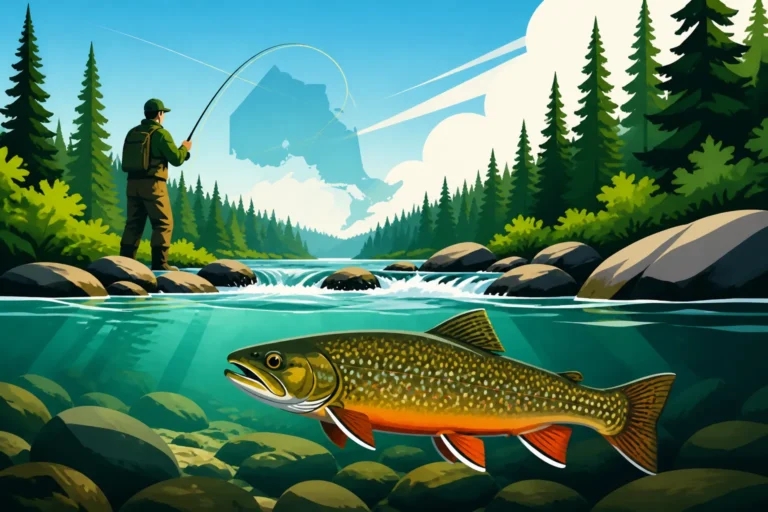
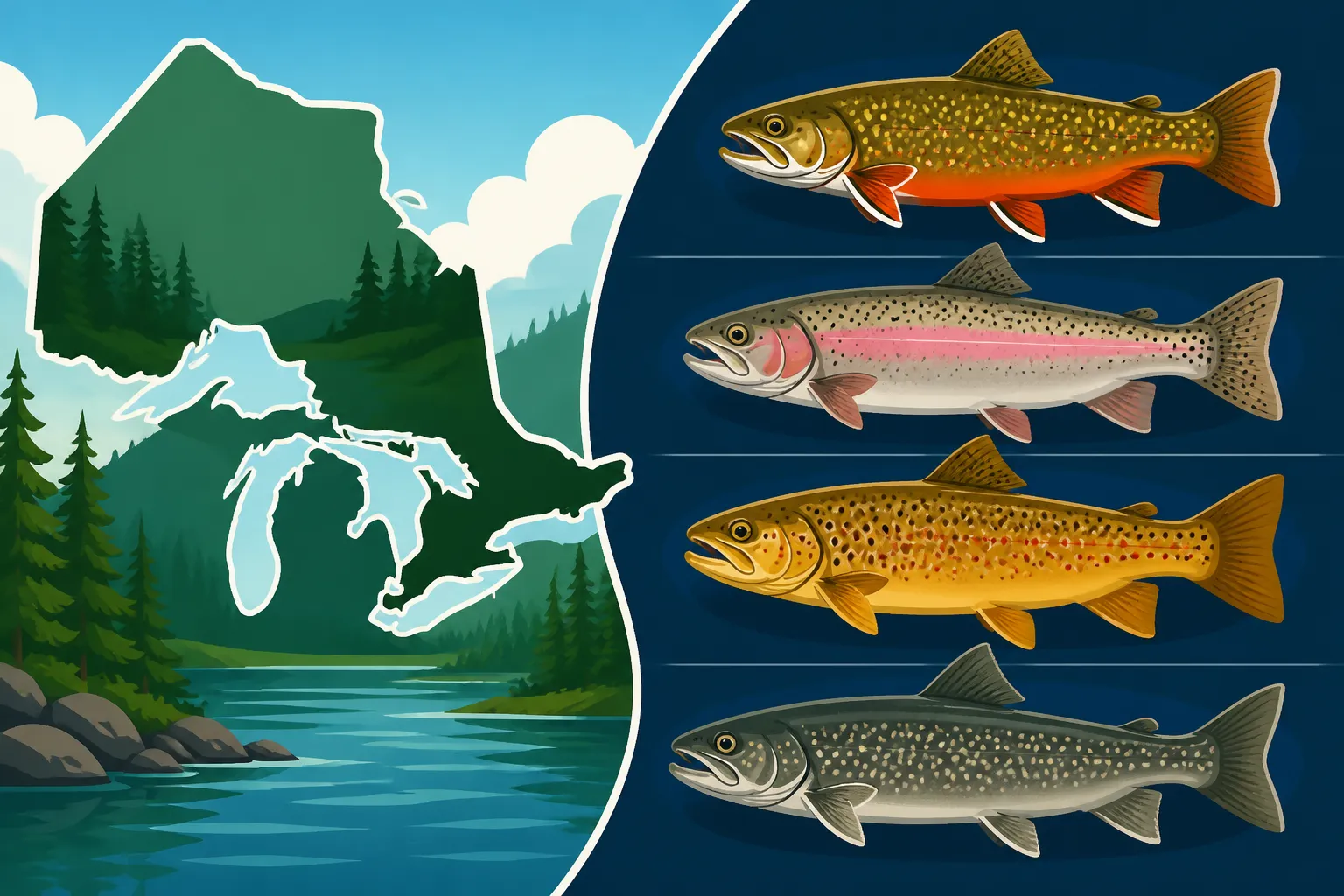
The brook trout, often affectionately called a "brookie," is Ontario's official provincial fish, and for good reason. They are absolutely stunning. Look for their distinctive worm-like markings, called vermiculations, across their back and dorsal fin, typically olive green or brown. Their sides usually feature light spots and vibrant red spots surrounded by blue halos, especially prominent on mature males during spawning season. Their lower fins (pectoral, pelvic, and anal) often have a white leading edge, followed by a black stripe, and then orange or reddish coloration. The tail fin is typically square or slightly forked. They generally prefer cold, clear, well-oxygenated water, often found in smaller streams, rivers, and remote Brook Trout Native Range in Ontario.
Brook trout are usually smaller than lake trout or rainbows, though wild, native brookies can be absolute trophies in pristine, remote waters. They are often quite willing to rise to a dry fly or chase a small spinner, making them a favourite target for many anglers. If you're lucky enough to find a truly wild population, you'll see some of the most vibrant fish imaginable, a true testament to the health of their environment. Their delicate nature means careful handling is essential for catch and release.
Lake Trout: The Deepwater Giant
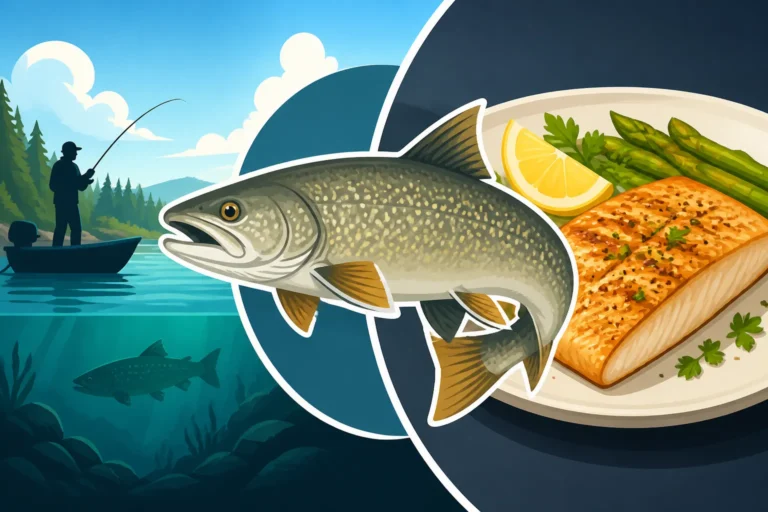
Lake trout are Ontario's largest native trout species, often inhabiting the deep, cold waters of our larger lakes. These fish are true apex predators of the deep. Their coloration can vary widely, from silvery grey in open water to darker, mottled browns and greens in shallower, rockier areas. They are covered in light spots, which are typically smaller and less distinct than those on other trout, often appearing as pale white or yellowish marks against their darker body. One of their most distinguishing features is their deeply forked tail, a stark contrast to the brook trout's square tail.
Lake trout also have a distinctive head shape, often appearing more pointed than other trout. They can live for many years and grow to impressive sizes, making them a prized catch for anglers targeting big fish. Lake Trout Spawning Season in Ontario sees them move to shallower rocky shoals, but for much of the year, they are found in the colder depths, often requiring specialized techniques like downrigging or deep jigging. Keeping within Ontario Lake Trout Limit and Possession Rules is crucial, especially for these slow-growing fish.
Rainbow Trout: The Acrobatic Import
Rainbow trout are not native to Ontario but have been extensively stocked across the province, creating fantastic recreational fisheries. They are known for their vibrant iridescent colours and their acrobatic fights when hooked, often leaping clear of the water. Their most obvious feature is the prominent pinkish-red stripe running horizontally along their sides, which gives them their "rainbow" name. This stripe can be very bright, especially in males during spawning. Their body is generally silvery, fading to white on the belly, and covered in small black spots, particularly on the back, dorsal fin, and tail fin.
Unlike brook trout, their tail fin is typically slightly forked or square, but crucially, it does not have the worm-like markings of a brook trout. They are highly adaptable and can be found in a variety of habitats, from large lakes like Lake Ontario (where they are often called "steelhead" when they run up rivers) to smaller ponds and rivers. Their popularity is undeniable, offering exciting angling opportunities throughout the year, including during winter if you're out ice fishing.
Brown Trout: The Wily European
Another non-native species, brown trout were introduced from Europe and have established self-sustaining populations in some of Ontario's rivers and lakes, particularly in the southern and central regions. They are renowned for their wariness and challenging nature, making them a favourite of fly anglers. Brown trout have a distinct look characterized by numerous dark spots, often surrounded by pale halos, scattered across their sides, back, and dorsal fin. They may also have a few red or orange spots, particularly along their lateral line. Their coloration can range from olive-brown to golden-brown, often with a creamy or yellowish belly.
A key identifier is their square or slightly forked tail, which, like the rainbow, does not have vermiculations. Their jaw extends past the eye, a characteristic often used to differentiate them from other species. They prefer cooler, often slightly more turbid water than brook trout, and are often found lurking under cover like undercut banks or submerged logs, making them a challenge to spot and tempt. For fly fishers, understanding their habits is key to success on Best Fly Fishing Rivers in Ontario.
Splake: The Clever Hybrid
Splake are a fascinating hybrid, a cross between a male brook trout and a female lake trout, created in hatcheries. They were developed to combine the fast growth rate of the lake trout with the earlier maturity and catchability of the brook trout. Identifying a splake can be tricky because they often exhibit a mix of characteristics from both parent species. Look for a tail fin that is somewhat forked, but not as deeply forked as a pure lake trout. They typically have the worm-like vermiculations on their back and dorsal fin, similar to a brook trout, but their body may be more elongated and silvery, akin to a lake trout.
Their spots might be a mix – some light spots like a lake trout, and perhaps some red spots with blue halos like a brook trout, though often less pronounced. Splake are primarily found in stocked lakes and ponds, where they provide excellent fishing opportunities. Knowing Splake Stocking in Ontario Lakes locations can help you target them specifically. They can grow to respectable sizes and offer a good fight.
Aurora Trout: The Rare Gem
The Aurora Trout is truly unique to Ontario and one of the rarest trout species in the world. It's actually a genetically distinct population of brook trout, found only in a handful of small, isolated lakes north of Lake Temagami. These lakes are managed under very strict rotational closures to protect this precious fish. The Aurora Trout is visually similar to a brook trout but generally lacks the vibrant red spots and blue halos. Instead, they typically have a silvery or metallic sheen on their sides, with a darker back that still displays subtle vermiculations.
Their fins also have the characteristic white leading edge, but the subsequent colours are often less pronounced. Because of their extreme rarity and protected status, catching an Aurora Trout is a rare privilege, and strict Ontario Aurora Trout Rotational Lake Closures are in place to ensure their survival. Anglers must check the regulations carefully before fishing in any of the lakes known to hold Aurora Trout. It is almost always a catch-and-release only fishery for this incredibly special fish.
Spotting Hybrids and Less Common Catches
While the main trout species cover most catches, Ontario’s diverse waters can occasionally throw a curveball. Understanding how to approach hybrids and being aware of other possibilities ensures you’re always prepared.
When Two Worlds Collide: Trout Hybrids
Beyond the splake, which is a deliberate hybrid, nature can sometimes produce its own accidental crossbreeds. While less common, wild hybrids can sometimes occur if conditions allow for the spawning of different trout species in close proximity. These can be even harder to identify, as they might display an even more confusing mix of features. For instance, a rainbow trout might cross with a brown trout, creating an "tiger trout" (though these are often hatchery-reared). These fish can look quite striking but are very rare in the wild.
The key with these rare hybrids is often to rely on the general "trout" characteristics (adipose fin, general body shape) and then note any unusual combination of markings that don't quite fit a single species. If you catch something truly perplexing, a quick photo before release and consulting a local expert or the provincial fishing guide is always a good idea. Remember, the goal is always to comply with regulations, and if you're unsure, releasing the fish unharmed is often the safest bet.
Distinguishing from True Species
When faced with a potential hybrid or an unusually marked fish, take a moment to really look at the definitive traits we've discussed for each core species. Does it have a truly deeply forked tail? Are the vermiculations clear and distinct? Is the lateral line stripe definitely pink? Compare these key features. For example, if it has some faint vermiculations but a very deeply forked tail, it leans more towards a splake than a pure brook trout. If it has some rainbow-like spots but no distinct pink stripe, perhaps it’s a brown trout with unusual coloration.
Don't jump to conclusions based on a single characteristic. Instead, look at the whole package: fins, spots, overall body shape, and coloration. Many excellent fishing guides are available on platforms like Amazon that contain detailed illustrations to help with this, or even a waterproof camera to capture details for later review.
Tips for Accurate Field Identification
Identifying trout quickly and accurately in the field takes practice, but with a few key points in mind, you can become much more confident. Remember, quick identification also means less stress on the fish during catch-and-release.
Coloration and Spot Patterns
This is often the first thing anglers notice, and for good reason, as it provides strong clues. But remember that coloration can be variable. Instead, focus on patterns.
- Brook Trout: Think "worms on back," "red spots with blue halos," "white-black-orange/red fins."
- Lake Trout: Look for "light spots on dark body," "deeply forked tail."
- Rainbow Trout: The "pink stripe" and "numerous black spots."
- Brown Trout: "Dark spots with pale halos," possibly some red spots, but no blue halos.
Always check the entire fish, not just one part. A fish's mood, diet, and even the clarity of the water it lives in can affect how vibrant its colours appear. For instance, brook trout in very clear, cold water often display incredibly vivid patterns, while those in murky water might be duller.
Fin Shape and Mouth Structure
These anatomical features are often more consistent than coloration and are incredibly reliable for identification.
- Tail Fin: This is a major differentiator. Is it deeply forked (Lake Trout), slightly forked (Rainbow, Brown, Splake), or square (Brook)? Splake tails are a good middle ground, often appearing less deeply forked than a pure laker, but not as square as a brookie.
- Adipose Fin: All true trout and salmon have this small, fleshy fin between the dorsal and tail fins. If it's absent, it's not a trout!
- Mouth/Jaw: For instance, the brown trout's jaw typically extends beyond the eye, while a brook trout's usually does not. This might seem like a minor detail, but it can be a crucial one when you're trying to distinguish between similar-looking species.
Having a good, clear landing net with soft, knotless mesh is also important to safely examine a fish without causing harm. A net specifically designed for Best Landing Net for Trout or Best Landing Net for Muskie will help you safely handle your catch.
Habitat and Behavior Clues
Where you catch a fish and how it behaves can also offer strong hints to its identity.
- Habitat: Are you in a cold, clear, rocky Northern Ontario lake? More likely to be Lake Trout. Are you in a small, shaded stream with gravel bottom? Likely Brook Trout. A large, open body of water like Lake Erie or Lake Ontario could mean Rainbows (steelhead) or Browns. Knowing the Ontario Fisheries Management Zones, Explained can give you an idea of what species are commonly found in that area.
- Depth: Catching a fish off the bottom in 80 feet of water points strongly to a Lake Trout. Catching one near surface structure in a shallow river points to a Brook or Brown.
- Fight: Rainbows are famous for their aerial acrobatics, while Lake Trout often make deep, powerful runs. Brookies are spirited fighters for their size, and Browns are often described as exceptionally strong for their length, using current and structure to their advantage.
Combining these observations – where you caught it, how it looked, and how it fought – gives you the most complete picture for identification.
Why Accurate Identification is Crucial for Conservation
Beyond just satisfying your curiosity or adhering to regulations, understanding what fish you’re catching plays a vital role in the broader picture of conservation and sustainable fishing practices in Ontario. Every angler has a part to play.
Adhering to Regulations
Ontario has a robust set of fishing regulations designed to protect fish populations and ensure healthy fisheries for generations to come. These regulations are species-specific for a reason. Ontario Fishing Regulations Explained shows that a particular lake might have a different season or limit for brook trout than it does for rainbow trout. Keeping a fish that's out of season or over the limit because you misidentified it is not only illegal but can also negatively impact local fish stocks.
By knowing exactly what you've caught, you can quickly determine if it's a legal catch, if it needs to be immediately released, or if it contributes to your possession limit. This knowledge is especially important in waters where multiple species coexist or where special regulations apply to certain rare or vulnerable populations. Always consult the most current Ontario Fishing Regulations Summary before heading out, and carry a copy with you – either a physical one or digitally on your phone.
Supporting Conservation Efforts
Accurate identification contributes directly to data collection efforts by fisheries biologists. When anglers accurately report their catches (for example, through citizen science programs or creel surveys), this information helps assess population health, track species distribution, and understand the impact of environmental changes. Knowing that a certain lake holds a healthy population of native brook trout, or that a specific river has a strong run of wild brown trout, helps conservationists prioritize habitat protection and restoration projects.
Furthermore, being able to distinguish between wild and stocked fish helps us appreciate the success of natural reproduction in our pristine waters. It encourages respectful angling practices, especially for our truly Native trout species found in Ontario, ensuring that these invaluable resources are preserved. Every angler, through their knowledge and responsible actions, becomes an active participant in safeguarding Ontario's fishing future.
| Species | Typical Markings | Tail Shape | Average Size (Ontario) | Preferred Habitat |
|---|---|---|---|---|
| Brook Trout | Worm-like vermiculations on back; red spots with blue halos; white-black-red/orange fin edges | Square or slightly forked | 8-16 inches (can be larger in wild areas) | Cold, clear, oxygenated streams, rivers, small lakes |
| Lake Trout | Light spots on a darker body (silvery, grey, or mottled brown/green); no red spots | Deeply Forked | 18-36 inches (trophies much larger) | Deep, cold, oxygenated lakes |
| Rainbow Trout | Prominent pink/red stripe along lateral line; numerous small black spots; silvery body | Slightly Forked or Square | 12-24 inches (steelhead larger) | Highly adaptable; streams, rivers, various lakes, Great Lakes tributaries |
| Brown Trout | Dark spots (often with pale halos); some red/orange spots; olive-brown/golden body | Square or slightly forked | 12-25 inches (trophies larger) | Cooler rivers, larger streams, some lakes; often near cover |
| Splake | Mix of both parents; vermiculations on back; somewhat forked tail; often silvery | Somewhat Forked | 12-20 inches (can grow larger) | Stocked lakes and ponds |
Disclaimer
This article is for general informational purposes only and does not constitute professional advice. Laws, prices and regulations vary by location and change over time. Consult a qualified professional for guidance on your specific situation.