What water temperature lake trout prefer
It's a common frustration among anglers, isn't it? You head out onto a vast Ontario lake, dreaming of a prized lake trout, only to spend hours fruitlessly casting without a single bite. You know they're in there, but finding them can feel like searching for a needle in a haystack, especially when the weather changes. A huge part of this puzzle, and often the most overlooked, is water temperature. Lake trout are finicky creatures when it comes to their comfort zone, and knowing their preferred temperatures is the absolute key to unlocking consistent success. This comprehensive guide will break down exactly what water temperatures lake trout prefer, how these preferences change throughout the year, and the essential tools and techniques you can use to locate these elusive fish in their thermal sweet spots.
Understanding Lake Trout Thermal Preferences
Lake trout are members of the char family, and like their cold-water cousins, they thrive in specific, cool environments. They're not like bass that will happily bask in warm, shallow bays. Their physiology is simply not built for it. This inherent need for cold water dictates almost every aspect of their behaviour, from where they feed to where they spawn. If you can understand this fundamental principle, you're already halfway to figuring them out.
The Ideal Temperature Range: The Sweet Spot
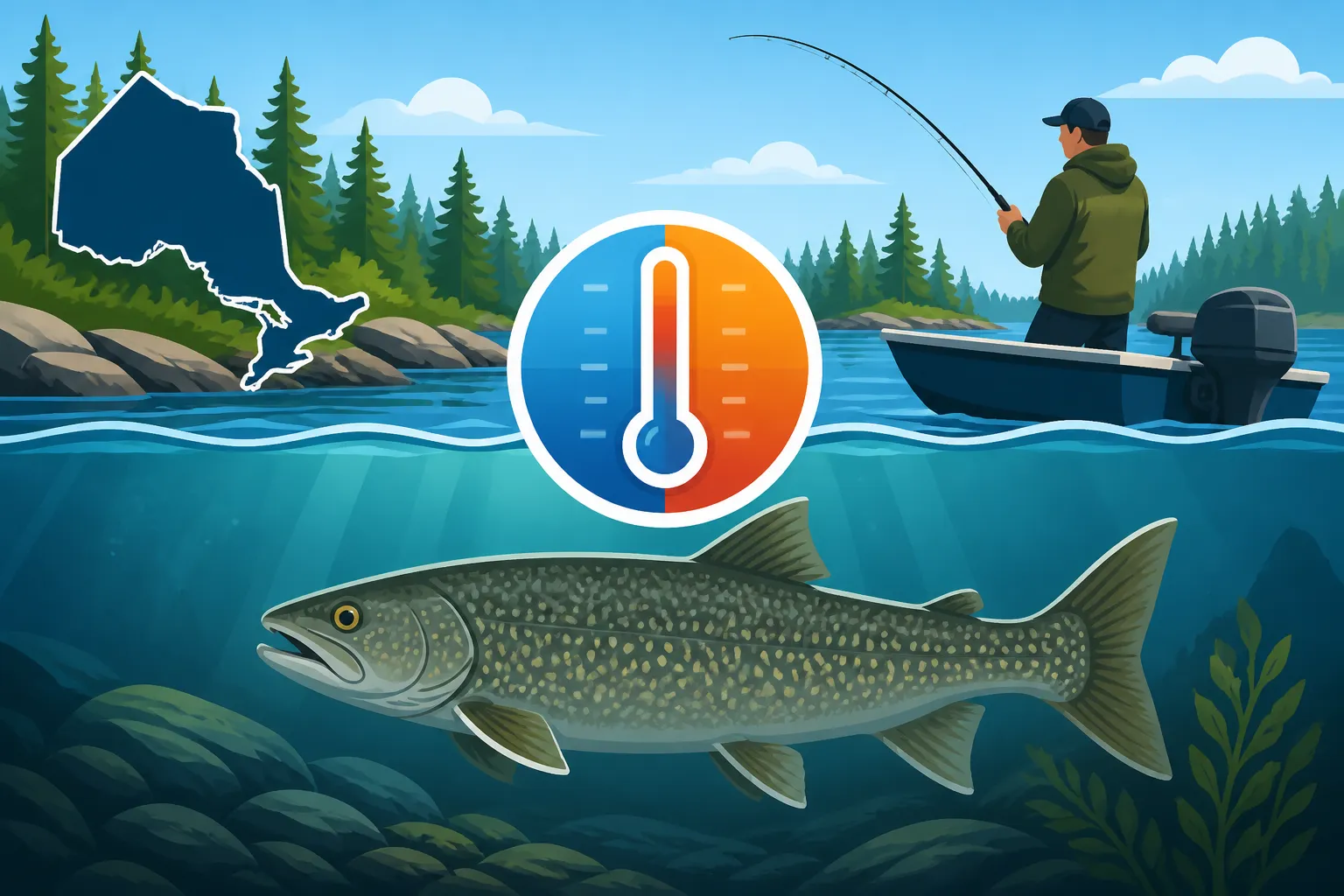
When we talk about the ideal water temperature for lake trout, we're really looking for their "thermal refuge" – that zone where they can comfortably carry out their daily activities without expending too much energy. Generally speaking, lake trout prefer water temperatures ranging from 7 to 13 degrees Celsius (approximately 45 to 55 degrees Fahrenheit). This is their absolute sweet spot.
Why this range, specifically? It boils down to their metabolism and oxygen requirements. In water that's too warm, their metabolism speeds up, demanding more oxygen, which is less abundant in warmer water. This creates a stressful situation. Imagine trying to run a marathon in a sauna; it's just not efficient! Conversely, water that's too cold can slow them down, making them sluggish, although this is less common in Ontario lakes than the opposite problem. Within this optimal temperature band, lake trout are active, efficient predators. They can digest their food properly, chase down baitfish, and generally feel secure. Venture outside this zone, and you'll find fewer fish, or those you do encounter might be stressed and unwilling to bite.
Why Temperature Dictates Location
This preference for cool, oxygen-rich water directly influences where you'll find lake trout throughout the year. Most deep Ontario lakes exhibit a phenomenon called thermal stratification during the warmer months. What does this mean? Basically, the lake separates into distinct layers of water with different temperatures, much like a layer cake.
At the very top, you have the epilimnion, which is the warmest, sun-heated surface layer. Below that is the thermocline, a critical transition zone where the temperature drops rapidly. And beneath the thermocline lies the hypolimnion, the deepest, coldest, and often darkest water. Lake trout are masters at using this stratification to their advantage. During summer, they will almost invariably be found in or just below the thermocline, or deeper in the hypolimnion, where the water is consistently within their preferred temperature range and rich with oxygen. They'll venture into shallower, warmer waters only for very brief feeding forays, typically at dawn or dusk, or after a significant cold front has cooled the surface. If you're out on a deep lake in the middle of a hot July day, you wouldn't start by casting into the sunny, shallow bays. Instead, you'd be looking for those cooler, deeper layers, often where structures like deep humps or underwater points intersect with the thermocline. Understanding How deep lake trout go in summer is crucial for these summer pursuits.
Seasonal Shifts and Lake Trout Movement
The beauty and challenge of fishing for lake trout in Ontario lies in their dynamic movements throughout the year, all driven by that ever-important water temperature. Their location can shift dramatically from spring thaw to winter freeze, and if you're not adapting your approach, you're simply not going to find them.
Spring: Shallow Water Opportunities
Ah, spring! The ice has finally melted, the air is crisp, and the lake is alive again. This is a magical time for lake trout anglers because, for a brief window, these typically deep-dwelling fish can be found much shallower than any other time of year. As the ice recedes, the entire water column is relatively cool and well-oxygenated. The surface water might be a brisk 4-6 degrees Celsius, but it's often still within an acceptable range for lake trout.
During this period, lake trout will often cruise near shorelines, rocky points, and shallow reefs, hunting for baitfish that are also becoming more active. They've spent the winter conserving energy, and now they're ready to feed aggressively. This is your chance to target them with spoons, crankbaits, or even flies in water as shallow as 10-20 feet. But don't delay! As soon as the sun starts to heat up the surface water consistently, those lake trout will begin their migration to deeper, cooler sanctuaries. This early spring window is often short-lived, so seize the opportunity when the water temperatures are still uniformly cool throughout the lake.
Summer: The Deep Water Retreat
As summer progresses and the sun beats down, surface water temperatures in many Ontario lakes can easily climb into the low 20s Celsius (70s Fahrenheit). This is far too warm for lake trout. This is when the thermal stratification we discussed earlier truly takes hold, and the lake trout retreat to the cool, dark embrace of the thermocline and hypolimnion.
Finding them now requires a completely different approach. They'll be tightly congregated in specific depth bands where the temperature is ideal, often relating to deep structure like submerged islands, rock piles, or steep drop-offs. Imagine scanning your sonar and seeing a distinct band of fish at 60 feet, over a bottom that drops to 120 feet. That's likely where the cold water current is, holding schools of their preferred forage. This is where specialized gear becomes your best friend. Downriggers, heavy jigs, and even specialized deep-diving crankbaits are essential for getting your lure down to the fish. I've often found myself checking out what's available on Amazon for the latest deep-diving crankbaits or even a reliable depth temperature gauge to make sure I'm putting my presentation right in their face. It’s tough fishing, no doubt, but incredibly rewarding when you finally connect with a laker from the depths.
Fall: Return to Shallower Depths for Spawning
When the crisp autumn air arrives and the leaves begin to turn, the lake begins its "turnover." The surface waters cool down, eventually reaching a similar temperature to the deeper layers. This breakdown of the thermocline allows lake trout to once again roam more freely throughout the water column. This period is driven by two main factors: cooling water temperatures and the impending spawning season.
Lake trout, like many other trout species, move into shallower rocky areas to spawn. They typically seek out clean, gravelly or rocky bottoms in relatively shallow water (often 10-30 feet, but sometimes deeper) where their eggs can settle and be aerated by currents. This means you can find them in similar locations to spring, but with a different mindset. While they're not necessarily as aggressive feeders as in spring, they can still be caught. It's vital to be aware of Lake Trout Spawning Season in Ontario and specific regulations for the zone you're fishing, as some areas may have closures to protect spawning fish. Respecting these regulations helps ensure the future of this incredible fishery.
Winter: Under the Ice
When Ontario lakes finally freeze over, the water temperature stabilizes significantly. Under the blanket of ice and snow, the water column often hovers around 4 degrees Celsius (39 degrees Fahrenheit) throughout, or at least has a much more subtle temperature gradient than in summer. Lake trout, while still preferring their cooler temperatures, have the freedom to move more widely than in the dog days of summer.
During winter, you can find lake trout at various depths, from relatively shallow (20-30 feet) to very deep (100+ feet), often relating directly to structure. They’ll still be looking for points, humps, and drop-offs where baitfish might congregate. Ice fishing for lake trout is a popular and exhilarating pursuit across the province, but it requires patience and the right gear. Don't be afraid to drill multiple holes and use your fish finder to locate both the fish and bait schools. Ice Fishing in Ontario offers a unique challenge and a chance to experience the solitude of a frozen lake.
| Season | Typical Depth | Temperature Range (C) | Key Behavior | Fishing Tip |
|---|---|---|---|---|
| Spring | Shallow to Mid | 4-10 C | Active feeding after ice-out | Target rocky points, bays |
| Summer | Deep | 7-13 C (in thermocline/hypolimnion) | Retreat to cool, oxygenated water | Use downriggers, vertical jigs |
| Fall | Mid to Shallow | 6-12 C | Spawning migrations, turnover | Focus on rocky spawning areas |
| Winter | Variable (structure-related) | 4-7 C (under ice) | Active, but slower metabolism | Drill multiple holes, jig deep |
Tools and Techniques for Finding the Right Temperature
Knowing that lake trout prefer a specific temperature range is one thing, but actually locating that range in a vast body of water is another. Thankfully, modern fishing technology and a bit of old-school intuition can make all the difference. You don't have to guess anymore; you can precisely pinpoint their thermal comfort zone.
Sonar and Fish Finders: Your Underwater Eyes
Modern fish finders are incredibly sophisticated tools that do far more than just show you fish arches. They are your essential guides to understanding the underwater world, and that includes thermal layers. High-quality units can often display the thermocline as a distinct line on the screen, sometimes even showing different colour bands representing temperature changes. This visual representation is invaluable.
By interpreting your sonar, you can identify the depth at which the water temperature starts to drop significantly – that all-important thermocline. You can then target your lures precisely at or just below this layer. Features like Down Imaging and Side Imaging, found on brands like Humminbird or Lowrance, will also help you identify deep structure such as submerged humps, rock piles, or old riverbeds where lake trout will often hold once they've found their preferred temperature. Knowing how to read these contours and depths in relation to the thermocline is a game-changer for Lake Trout Fishing in Ontario. If you're looking to upgrade your electronics, checking out models on Amazon can give you a good idea of the range of features and price points available.
Temperature Gauges and Probes
While your fish finder can give you a good indication of the thermocline, nothing beats a dedicated temperature probe for absolute precision. Simple surface temperature gauges are useful for spring and fall, giving you a quick read of the top layer. However, for summer deep-water fishing, a probe that can measure temperature at various depths is essential.
These devices, often consisting of a weighted probe on a marked line, allow you to slowly lower it into the water and read the temperature at different intervals. You literally map out the temperature gradient of the lake. I remember one sweltering August day on Lake Superior, struggling to find fish. I dropped my probe, and at 70 feet, the temperature suddenly dropped from 18°C to 10°C. That was my cue! I adjusted my downriggers and within minutes, we were into fish. It's a bit more manual than a fish finder, but the data is undeniable. Carrying one of these, or even a simple digital thermometer on a retrieving line, is a small investment for huge returns when lake trout are proving elusive. You can often find a good selection of these on Amazon if your local tackle shop doesn't have what you need.
Understanding Lake Topography and Structure
Lake trout don't just hang out in open water at a certain temperature; they relate that preferred temperature to underwater structure. Think of it as their ideal home: a comfortable temperature, with a great view and easy access to the dinner table. Deep humps, sharp drop-offs, underwater points, and even deep weed lines (though less common for lakers) can all provide the habitat they seek within their thermal comfort zone.
These structures act as thermal refuges or ambush points. A deep underwater point that extends into the hypolimnion, for example, offers cooler water for the trout and a pathway for baitfish to travel. They can sit on the edge of a drop-off, looking up into slightly warmer water where baitfish might be, and then quickly dart into cooler depths if they feel threatened or need to digest. Learning to combine your temperature readings with your knowledge of a lake's contours is the ultimate strategy. This might involve studying Ontario Fish ON-Line Interactive Zone Map, Explained before you even launch your boat, looking for those deep contours and then using your electronics to find the thermocline as you fish.
Practical Tips for Targeting Temperature-Sensitive Lake Trout
Once you've identified the optimal temperature range and located potential holding areas using your tools, it's time to put your lure in front of the fish. Lake trout fishing, especially for the bigger ones, often requires patience and precise presentation.
Trolling for Deep Water Lake Trout
Trolling is undeniably one of the most effective methods for catching lake trout, particularly when they've retreated to the depths during summer. This technique allows you to cover a lot of water at specific depths, searching for active fish. Getting your lure down to the correct depth is paramount.
This is where gear like downriggers, Dipsy Divers, or lead core line really shines. Downriggers use a heavy ball to hold your lure at a precise depth, which you can adjust based on your temperature probe readings or sonar observations of the thermocline. Dipsy Divers and lead core line achieve depth through their design and the speed of your boat, allowing you to reach various ranges. When trolling, experiment with different speeds and lure types. Spoons like Northern King or Apex, plugs that mimic baitfish, or even large bucktail spinners can all be effective. The key is to match your presentation to the depth and temperature where the fish are holding. For a more detailed look, check out Trolling Techniques for Ontario Lake Trout.
Jigging and Live Bait Strategies
While trolling covers water, vertical jigging is an excellent strategy when you've pinpointed a specific piece of deep structure holding fish, or when you're ice fishing. The idea is to drop a heavy jig directly down to the fish you see on your sonar and entice a strike.
Jigging spoons, tube jigs, or heavy bucktail jigs are popular choices. The motion of your rod creates action in the lure, mimicking a wounded baitfish. Sometimes, a more subtle approach is needed. If allowed by regulations in your specific fishing zone, live bait, such as a large minnow or even a smelt, can be incredibly effective when fished on a weighted hook or a three-way swivel rig. This presentation can be particularly enticing to finicky lake trout that might ignore artificial lures. I always recommend checking the regulations for your specific lake and zone, as live bait rules can vary. For more on what to put on your hook, consider exploring Best bait for lake trout in deep water.
Respecting the Fish: Catch and Release
Catching a magnificent lake trout, especially a big one from deep water, is an incredible experience. However, it's vital to practice responsible catch and release to ensure the health of these sensitive fish. Lake trout brought up from significant depths can suffer from barotrauma, a condition caused by the rapid change in pressure, which can damage their internal organs.
If you plan to release a deep-water lake trout, handle it with extreme care. Minimize its time out of the water, and use a descending device to help it return to its preferred depth quickly. These devices recompress the fish's swim bladder, giving it a much better chance of survival. Always have a large, knotless rubber net ready, and if you must take a photo, do so quickly and keep the fish as close to the water as possible. In shallower, cooler waters of spring or fall, they are generally hardier, but good handling practices are always crucial. Being mindful of the fish's well-being is just as important as knowing How to Catch Lake Trout in Ontario in the first place.
Disclaimer
This article is for general informational purposes only and does not constitute professional advice. Laws, prices and regulations vary by location and change over time. Consult a qualified professional for guidance on your specific situation.