What Chinook salmon runs look like on Lake Ontario tributaries
There's nothing quite like the raw, untamed energy of a Chinook salmon pushing its way upstream, battling currents, and leaping obstacles with incredible determination. For anglers in Ontario, witnessing and participating in the annual Chinook salmon run on the Lake Ontario tributaries is a truly iconic experience, but it comes with its own set of challenges and awe-inspiring sights. This comprehensive guide will walk you through what these incredible runs truly look like, from the visual spectacle to the subtle nuances of fish behaviour, helping you understand this magnificent natural phenomenon.
Understanding the Chinook Salmon Run Phenomenon
The annual Chinook salmon run isn't just a fishing event; it's a testament to nature's relentless cycle. These magnificent fish, also known as King Salmon, spend most of their lives growing large and powerful in the vast, cold waters of Lake Ontario. But as their life cycle dictates, a powerful, instinctual urge calls them back to the very streams and rivers where they were born, or where they were stocked by conservation efforts, to spawn.
The Life Cycle That Drives the Journey
Chinook salmon typically live for 3-5 years in Lake Ontario, feeding on abundant baitfish like alewives and growing to impressive sizes. They are anadromous, meaning they live in saltwater (or in the case of Lake Ontario, a large freshwater lake acting as a pseudo-ocean) and migrate to freshwater to spawn. This journey is their final act, a massive expenditure of energy that culminates in the perpetuation of their species. The fish undergo significant physiological changes as they prepare for this upstream battle, including a darkening of their skin, changes in their jaw structure, and a cessation of feeding. Their focus becomes singular: reach the spawning grounds.
This biological imperative is incredibly strong. You'll see fish literally throwing themselves against obstacles, jumping waterfalls, and pushing through shallow riffles with a vigour that seems impossible for a creature that hasn't eaten in weeks. It's a race against time, as their bodies slowly deteriorate throughout the arduous upstream migration. Understanding this life cycle helps you appreciate the spectacle and the sheer power these fish possess as they make their way towards their ultimate destiny. The entire process is a fragile balance, and a true wonder of the natural world.
Why Lake Ontario Tributaries?
Lake Ontario's unique position at the bottom of the Great Lakes system, combined with numerous tributary rivers and streams that flow into it, makes it a prime location for these salmon runs. Many of these rivers, like the Credit River, Ganaraska River, and Duffins Creek, have had extensive work done over the years to improve fish passage and create suitable spawning habitat. While some salmon are wild-spawned, many are the result of stocking programs by the Ontario Ministry of Natural Resources and Forestry (MNRF) which help to sustain these incredible fisheries.
These stocking efforts have established strong populations of Chinook salmon, along with Coho salmon and other trout species, ensuring that anglers have an opportunity to experience these powerful fish. The consistent return of these salmon year after year has solidified the reputation of these tributaries as world-class fishing destinations during the run. The accessibility of many of these rivers, even for urban anglers, is part of what makes the Lake Ontario salmon run so popular and anticipated each fall.
Key Characteristics of a Lake Ontario Tributary Chinook Run
When you're standing on the bank of an Ontario river during the peak of the Chinook run, it's an experience that overwhelms the senses. The sight of massive fish, the sound of splashing, and the palpable energy in the air are unmistakable. It's truly a unique spectacle that every angler should witness at least once.
The Visual Spectacle of Mass Migration
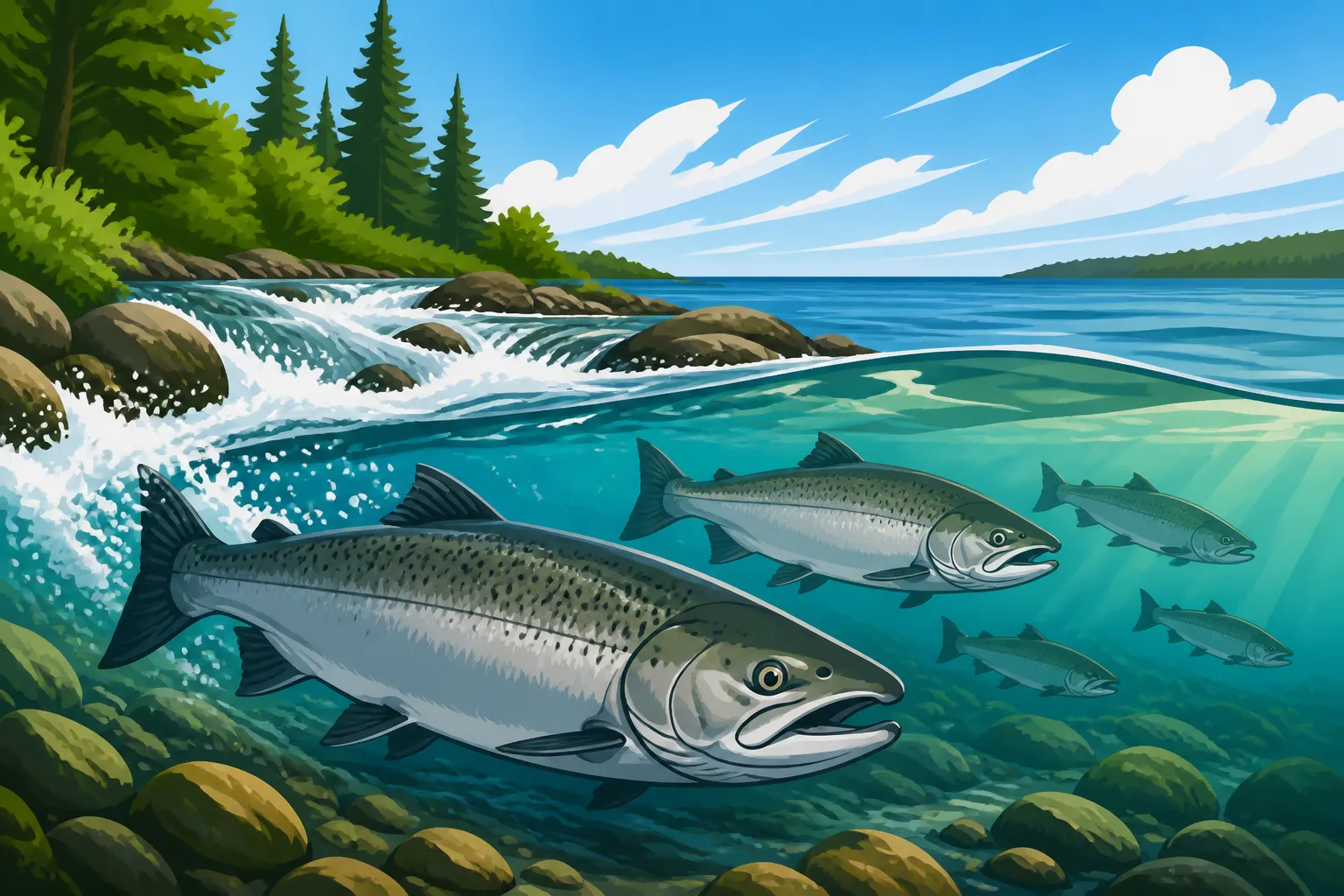
Picture this: dozens, sometimes hundreds, of large, dark-bodied fish congregating in river pools, pushing through rapids, and leaping out of the water. Their once silver flanks, accustomed to the deep blue of Lake Ontario, now take on a darker, almost bronze or olive hue, often with reddish tints, especially on the males. These colour changes are part of their spawning transformation, making them distinctly different from their lake-dwelling counterparts. You'll see their backs breaking the surface as they fight the current, their fins flaring, and their powerful tails propelling them forward. It's not uncommon to see multiple fish vying for the same resting spot or pushing against each other in their relentless drive upstream.
The sheer density of fish in certain pools or at the base of waterfalls can be astounding. It might look like the river is boiling with fish activity, especially during optimal conditions. Some fish, having already completed much of their journey, will show signs of wear and tear, with torn fins or faded colours, a testament to the brutal fight they've endured. For those curious about the bigger picture, reading up on Chinook Salmon in Lake Ontario can give you more context on these powerful fish.
Spawning Behaviour and Aggression
Once the salmon reach their preferred spawning grounds, usually gravelly riffles and shallow areas, their behaviour shifts. Females will begin to "cut redds"—shallow depressions in the gravel where they deposit their eggs. They'll use their powerful tails to fan away silt and carve out these nests. Males, often larger and more aggressive with their hooked jaws (known as kypes) more pronounced, will fiercely guard these redds and compete for the chance to fertilize the eggs.
This territoriality and aggression can be witnessed firsthand. Males will chase off rivals, often bumping and nipping at each other. They become highly agitated by anything perceived as a threat to their spawning efforts, including lures or flies. This aggressive response is a key factor in why they can be caught by anglers, even though they are no longer actively feeding. It’s important to remember that these fish are focused purely on reproduction, and handling them with care and respect, especially those on the redds, is paramount for the health of the fishery. Understanding their behaviour is crucial for responsible angling, as outlined in Ontario Fishing Regulations Explained.
The Effects of Water Conditions
The timing and success of a Chinook salmon run are heavily dependent on water conditions in the tributaries. Lower water levels can make the upstream journey incredibly difficult, concentrating fish in deeper pools and making them more vulnerable to predation or stress. Conversely, high water, especially after heavy rains, can trigger a surge of fish from the lake, as the increased flow provides better passage over obstacles and into new areas of the river.
Water temperature is also a critical factor. Chinook prefer cooler water, typically in the 10-15°C range, for their spawning migration. If the water is too warm, the run might be delayed, or fish could become stressed. If the water drops too cold too quickly, it can also affect the run. Anglers often pay close attention to weather forecasts and river flow gauges to predict the best times to hit the water, recognizing that conditions can change rapidly and impact the run dynamics significantly. For more details on species-specific regulations, check out Chinook salmon limit on the Great Lakes.
Where and When to Witness the Spectacle
Knowing where and when to find the Chinook salmon is key to experiencing this incredible natural event. Ontario is blessed with numerous tributaries that host these runs, each with its own character and timing.
Prime Lake Ontario Tributaries
Several rivers flowing into Lake Ontario are renowned for their annual Chinook salmon runs. Each offers a slightly different experience, but all provide excellent opportunities to see these powerful fish.
- Credit River: Located west of Toronto, the Credit River is one of the most popular and well-known salmon rivers. Its lower sections near Port Credit often see the first push of fish, which then work their way upstream through communities like Streetsville and ultimately towards the headwaters. Accessibility is generally good, with numerous public access points and conservation areas.
- Ganaraska River (The "Ganny"): East of Toronto, near Port Hope, the Ganaraska River is perhaps the most famous salmon river in Ontario. It's known for its incredibly strong runs and the sheer number of fish it attracts. Anglers come from all over to fish its waters, especially around the fish ladder in Port Hope.
- Humber River: Flowing through Toronto itself, the Humber River provides an urban salmon fishing experience. While perhaps not as wild as some other rivers, it still sees strong runs of Chinook, offering a unique opportunity for city dwellers to connect with nature.
- Bronte Creek: Another popular western GTA tributary, Bronte Creek offers good access within Bronte Creek Provincial Park and other municipal parks.
- Duffins Creek, Wilmot Creek, and Rouge River: These smaller tributaries also get good runs, offering more intimate experiences for those looking to avoid some of the larger crowds found on the "Ganny" or Credit.
Each of these rivers has designated fishing zones and specific regulations, so it's vital to check the local rules before heading out. Understanding Lake Ontario Salmon Fishing can give you an edge in targeting these areas effectively.
Timing the Run: The Peak Seasons
The Chinook salmon run typically begins in late summer and continues through the fall. While the exact timing can vary slightly each year due to environmental factors, there's a general window you can count on:
- Late August to Early September: The very first, often smaller, pushes of salmon start to enter the lower sections of the rivers. These are usually the vanguard, testing the waters. Fishing can be hit-or-miss but can offer opportunities for fresh, bright fish.
- Mid-September to Mid-October: This is generally the peak of the run. Most rivers will see their heaviest concentrations of fish during this period. The activity will be intense, with fish moving, jumping, and actively spawning. This is the prime time for both viewing and fishing.
- Late October to November: As the season progresses, the run starts to wind down. Many fish will have already spawned and died, a natural part of their life cycle. You'll still find fish in the rivers, but their numbers will decrease, and their condition will be more deteriorated.
Keep in mind that factors like heavy rainfall, which can raise river levels and temperatures, can trigger pushes of fish, effectively "resetting" parts of the run. It’s always a good idea to monitor local fishing reports and river conditions. For a broader overview of seasonal fishing opportunities, consider exploring When Chinook salmon run in Ontario and Ontario Fishing Seasons by Zone and Month.
| Season | Typical Timing | Salmon Activity | What to Expect |
|---|---|---|---|
| Early | Late August – Early Sept | First pushes, exploring lower river sections | Smaller numbers, fresh fish, scouting activity |
| Peak | Mid-September – Mid-October | Heaviest concentrations, active spawning | Intense activity, jumping, aggression, crowds |
| Late | Late October – November | Run winds down, post-spawn die-off | Fewer fish, deteriorating condition, quieter banks |
Preparing for the Run: Gear, Techniques, and Safety
Tackling the Chinook run requires more than just knowing where to go; it demands the right gear, appropriate techniques, and a strong emphasis on safety. These fish are incredibly powerful, and the river environments can be challenging.
Essential Gear for Chinook Salmon Fishing
You'll quickly learn that these are not your average panfish. Chinook salmon are big, strong, and will test your tackle to its limits.
- Rods and Reels: A medium-heavy to heavy-action spinning or casting rod, typically 9-11 feet long, is ideal. This length helps with casting heavier lures, managing line in current, and absorbing the shock of a powerful run. Pair it with a robust reel spooled with 15-20 lb monofilament or fluorocarbon, or 30-50 lb braided line with a fluorocarbon leader. You'll want to ensure your gear is up to snuff, and finding robust rods, reels, and strong lines is easy whether you visit your local tackle shop or browse extensive options on Amazon. More details can be found in Best Fishing Rods for Ontario Lakes.
- Lures and Baits: While salmon don't actively feed during the run, they strike out of aggression or instinct. Popular choices include:
- Spoons: Heavy, flashy spoons in vibrant colours like chartreuse, orange, silver, or blue/silver.
- Spinners: Large inline spinners with bright blades.
- Jigs: Heavy jigs tipped with plastic worms or roe bags.
- Drift Rigs: Often used with roe bags (spawn sacs), these are drifted along the bottom.
- Flies: For fly anglers, large streamers, egg patterns, and glo-bugs are effective.
- Landing Net: A large, strong landing net with a long handle is absolutely crucial. These fish can be tough to control boatside or streamside. A net designed for large fish, similar to what you might use for muskie, will be invaluable here, and you can find various sizes and styles available on Amazon. For example, consider checking out Best Landing Net for Muskie.
- Waders and Boots: Waders are essential for getting into prime positions and navigating the river. Chest waders are highly recommended, paired with wading boots that offer excellent grip on slippery rocks. The rivers can be cold, especially in the fall, so good insulation is a plus.
- Other Essentials: Don't forget essentials like a good pair of polarized sunglasses to cut through glare and spot fish, perhaps picked up during a recent sale on Amazon. Pliers, line clippers, a measuring tape, and a camera are also key. Investing in quality rain gear is a must for those crisp, often wet, fall days. There are many reliable brands, and you can often compare features and reviews on Amazon.
Respectful and Effective Fishing Techniques
Fishing for salmon during the run is often about presentation and understanding their aggressive tendencies rather than trying to entice a feeding bite.
- Drifting: This is one of the most common and effective techniques. Using a float (bobber) or simply letting a weight-and-roe-bag/jig rig drift naturally along the bottom. The goal is to present your offering right into the salmon's strike zone as it sits in a pool or moves upstream.
- Casting and Retrieving: Spoons and spinners are cast across or slightly upstream and retrieved with a steady, wobbling action. The flash and vibration can trigger an aggressive strike.
- Fly Fishing: Fly anglers often use heavy nymphing rigs or swing large streamers. Proper fly placement and achieving a natural drift are critical.
- Catch and Release Best Practices: Many anglers practice catch and release, especially for these spawning fish. Use barbless hooks to minimize harm, handle fish gently with wet hands, keep them in the water as much as possible, and revive them fully before release. Large fish like Chinook tire quickly, so a swift and careful release is vital for their survival.
Always check local regulations for specific gear restrictions, bait allowances, and catch limits for the river you plan to fish.
Safety First on the River Banks
The excitement of the run can make people forget about safety, but these rivers can be dangerous, especially in the fall.
- Slippery Terrain: River banks and submerged rocks are often covered in slippery algae. Wear appropriate footwear with good traction. A wading staff can provide extra stability.
- Fast Currents: Even seemingly calm areas can have deceptively strong currents. Be aware of your footing and don't wade into water that's too deep or fast for your comfort level.
- Cold Water: Falling into cold water can lead to hypothermia very quickly. Always fish with a buddy and dress in layers. A good quality PFD (personal flotation device) is a smart choice if wading deep or fishing from a small boat or kayak.
- Crowds: Popular spots, especially on the Ganaraska or Credit, can get very crowded. Be respectful of other anglers, maintain appropriate distance, and be mindful of casting lines.
- Wildlife: While beautiful, respect all wildlife. You might encounter other animals also drawn to the salmon, such as gulls, eagles, or even bears in more remote areas. Always practice situational awareness.
By understanding what Chinook salmon runs look like, where they happen, and how to safely and effectively fish for them, you're set for an unforgettable experience on Ontario's incredible Lake Ontario tributaries.
Disclaimer
This article is for general informational purposes only and does not constitute professional advice. Laws, prices and regulations vary by location and change over time. Consult a qualified professional for guidance on your specific situation.