Best Ice Fishing Gear for Ontario
Oh, the crisp, silent beauty of an Ontario winter morning on the ice! It's an experience unlike any other, truly. But let's be real, that serene picture can quickly turn into a miserable ordeal if you're not properly equipped. Many of us have been there—shivering uncontrollably, fumbling with frozen lines, or struggling with an inadequate auger when the fish are biting. It takes the joy right out of it. This comprehensive guide is here to ensure your next ice fishing adventure in Ontario is not only productive but genuinely comfortable and safe, covering everything from staying warm to landing that trophy fish.
The Essentials: Shelter and Warmth for Ontario's Ice
When you’re out on a frozen lake in Ontario, comfort often starts with shelter and warmth. The elements can be brutal, and being exposed to wind, snow, and sub-zero temperatures for hours on end is simply not fun, nor is it safe. Having the right setup means the difference between a quick trip to the truck to thaw out and a full, enjoyable day of fishing.
Ice Huts and Shelters: Portable, Hub, or Permanent
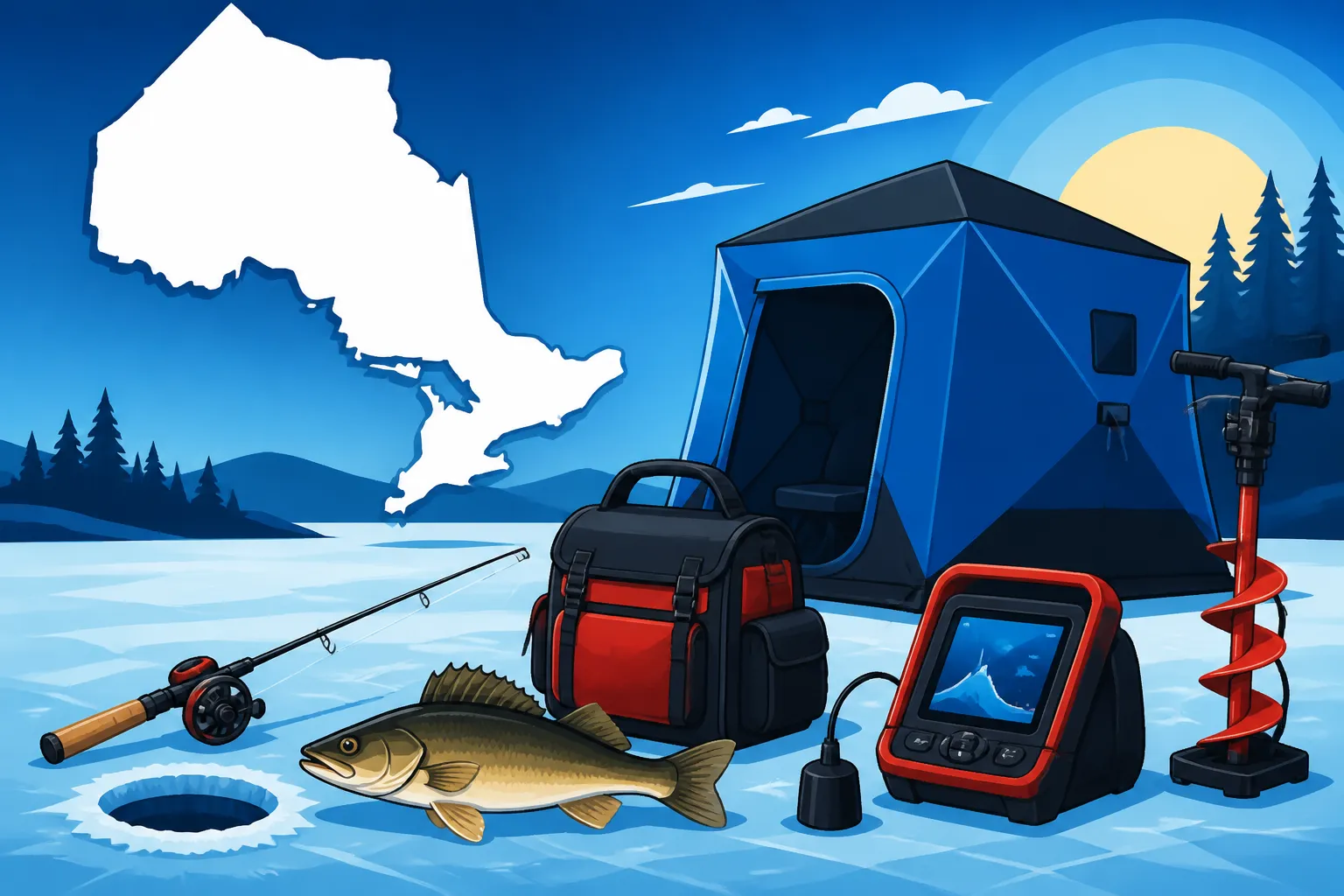
Choosing the right ice fishing shelter really depends on your style of fishing and how often you plan to hit the ice. For those who like to move around, chasing active fish, a portable flip-over style shelter is a godsend. These units are built onto a sled, making them incredibly easy to pull across the ice, especially if you have a snowmobile or ATV. You can set them up in minutes, flip them over, and be fishing in warmth. Brands like Clam or Eskimo offer fantastic options that are durable and surprisingly spacious for their portability. On the other hand, if you prefer to fish with a group or stay in one spot for an extended period, a hub-style pop-up shelter might be more your speed. These resemble a large tent, offering ample interior space, often enough for several anglers, a heater, and all your gear. They pack down relatively small but take a bit more effort to set up than a flip-over. Both portable options are perfect for exploring various parts of a lake, whether you're targeting perch on Lake Simcoe or walleye on Lake Nipissing. You can find a wide array of these at retailers like Bass Pro Shops.
Then there are the more robust, permanent ice huts. These are typically larger, insulated structures, often built on skis, that you might find parked on well-known ice fishing lakes for the entire season. They offer the ultimate in comfort, usually equipped with wood stoves, bunks, and even cooking facilities. While you can build your own, many outfitters on popular lakes, particularly on Lake Simcoe, rent these out, providing a truly luxurious experience. The trade-off, of course, is that they aren't mobile once they're placed. They're fantastic for family trips or serious anglers who want a dedicated base for weeks at a time. No matter your choice, ensure it's well-ventilated if you plan to use a heater, as carbon monoxide poisoning is a very real danger. Consider what you'll be fishing for, how many people you typically go with, and your transportation method to the spot when deciding on the Best Ice Hut for Ontario Lakes.
Layering for Extreme Cold: Base, Mid, Outer, Extremities
Ontario winters demand respect, especially when you're static on the ice. The classic mistake many make is overdressing in one thick layer, which traps sweat and eventually makes you colder once you stop moving. The secret lies in layering. Start with a good base layer made of moisture-wicking material like merino wool or synthetic fabrics. This pulls sweat away from your skin, which is crucial for staying warm. Cotton is a no-go here; once it's wet, it stays wet and will chill you to the bone. Next comes your mid-layer, which provides insulation. Fleece jackets, down vests, or wool sweaters work wonderfully. These layers trap air, creating a thermal barrier.
Finally, your outer layer is your shield against the elements. This needs to be waterproof, windproof, and breathable. A good quality ice fishing suit, often a two-piece bib and jacket, is designed specifically for these conditions. Look for features like reinforced knees and seats, flotation assistance (more on that later), and plenty of pockets. Don't forget your extremities! A warm hat that covers your ears is non-negotiable. Invest in quality insulated, waterproof gloves or mitts, and don't skimp on wool socks paired with insulated boots that are rated for extreme cold. Nothing ruins a day faster than frozen fingers and toes. Think about how much you'll be moving; if you're jigging all day, you might need lighter layers than if you're sitting patiently waiting for a flag to fly.
Portable Heating Solutions for Your Shelter
A reliable heat source in your ice hut can transform a bone-chilling day into a cozy and enjoyable experience. Most ice anglers in Ontario rely on propane heaters, and for good reason. They're efficient, relatively portable, and widely available. When choosing a heater, consider the size of your shelter and the BTU output of the unit. For a smaller, one-person flip-over, a compact radiant heater might suffice. For a larger hub shelter or a permanent hut, you'll need something with more power to effectively warm the space. It’s a good idea to research different models on sites like Amazon, reading reviews to ensure you're getting something reliable.
Safety, however, is paramount. Always ensure your heater has an oxygen depletion sensor (ODS) and an accidental tip-over shut-off. This is not optional; it's a lifesaver. Even with these features, always keep a window or vent slightly open for ventilation to prevent carbon monoxide buildup. Carbon monoxide is odorless and colorless, making it incredibly dangerous. Also, be mindful of clearances; keep your heater away from flammable materials like tent walls or sleeping bags. Always carry extra propane tanks, especially on longer trips. Having a heater that suddenly runs out of fuel on a frigid day is a miserable experience and can even be dangerous if you're far from warmth.
Ice Fishing Rods and Reels: The Right Setup for Ontario Waters
Unlike open-water fishing, ice fishing demands specialized rods and reels that are designed to handle the unique challenges of fishing through a small hole in the ice. You're not casting, you're jigging or setting a line, and the tackle reflects that specific technique.
Rod Length and Action for Different Species
Ice fishing rods are typically much shorter than their open-water counterparts, ranging from 24 to 36 inches, though some might go a bit longer for specific applications. This short length is practical when fishing inside an ice hut or kneeling over a hole, allowing for precise jigging motions without hitting the ceiling or making awkward movements. The action of the rod is crucial and varies depending on the species you're targeting. For panfish like perch and crappie, a light or ultra-light action rod with a sensitive tip is ideal. This allows you to detect the subtle bites of these smaller fish and use tiny jigs effectively. Think about the delicate "tick" you feel when a jumbo perch barely inhales your bait on Lake Simcoe. A super-sensitive tip will register that.
When you move up to walleye or smaller lake trout, a medium or medium-light action rod is generally preferred. This provides enough backbone to handle the fight of these stronger fish while still offering good sensitivity for feeling bites. For aggressive species like northern pike or larger lake trout, you'll want a medium-heavy or heavy action rod. These rods have more power to set the hook firmly and muscle larger fish up through the ice hole. The stiffer tip also helps handle heavier lures and baits. Many manufacturers, including those found at Bass Pro Shops, offer species-specific rods that take the guesswork out of choosing.
Reel Types: Spinning vs. Inline for Ice Fishing
Just like rods, reels for ice fishing have their own unique characteristics. The two primary types you'll encounter are spinning reels and inline reels. Spinning reels are the most common and versatile choice, especially for beginners. A small, lightweight spinning reel (often in the 500 to 1000 size range) works well with most ice rods. They're easy to use, allow for smooth line retrieval, and have a drag system that helps fight fish. They're particularly good for jigging techniques, where you might be constantly dropping and reeling up your lure. They also handle light lines well, which is often necessary for finicky fish.
Inline reels, on the other hand, are gaining popularity, especially among more experienced anglers. These reels are designed to eliminate line twist, a common frustration with spinning reels when using small, light jigs or spoons. With an inline reel, the line comes directly off the spool, much like a fly reel, which prevents the lure from spinning unnaturally in the water. This can be a huge advantage for presenting baits more naturally to wary fish. They are often favoured for panfish and smaller walleye where line twist can be a real issue. However, they can be a bit more challenging to cast (though casting isn't really a thing in ice fishing, rather a controlled descent of the lure) and might not have the same drag capacity as some spinning reels, making them less ideal for very large, hard-fighting fish. The choice often comes down to personal preference and the specific fishing scenario.
Line Selection for Cold Weather: Fluorocarbon, Braid, and Mono
Choosing the right fishing line for ice can be a critical decision, as cold temperatures affect lines differently than warm water. Monofilament (mono) line is a classic choice for ice fishing because of its stretch and affordability. The stretch can act as a shock absorber, helping to prevent hooks from pulling out when a fish surges. However, mono can absorb water, making it prone to freezing, and it can develop "memory" in cold conditions, leading to coils that make it difficult to manage. It's often best for deadsticking or tip-ups where sensitivity isn't the absolute highest priority.
Fluorocarbon line is a fantastic option for ice fishing, especially as a leader material. It's virtually invisible underwater, has very little stretch (offering increased sensitivity), and is much more resistant to absorbing water and freezing than mono. Many anglers use a short fluorocarbon leader tied to a braided main line. Braid offers incredible sensitivity and strength for its diameter, allowing you to feel even the lightest bites. It also has virtually no stretch. The main drawback of braid in cold weather is that it can absorb water and freeze, making it stiff and prone to holding ice, especially in the guides of your rod. To combat this, some anglers use a special ice fishing braid that's treated to resist water absorption, or they simply stick to a fluoro main line in extremely cold conditions. Consider the water clarity of your chosen lake and the target species. Clearer lakes might demand fluorocarbon, while stained waters could allow for more forgiving options.
Augers and Ice Safety: Getting on the Ice Safely
Before you even think about dropping a line, you need to get through the ice, and more importantly, you need to do so safely. Ice safety is not a recommendation; it's a strict requirement for a successful and safe day on the frozen waters of Ontario.
Manual, Electric, or Gas Augers: Pros and Cons
Drilling holes through thick Ontario ice requires a robust tool, and there are three main types of augers to choose from. Manual augers are the most affordable and lightweight option, perfect for casual anglers or those who only need to drill a few holes in thinner ice. They rely entirely on your physical effort, which can be a good workout but quickly becomes tiring in thick ice or when drilling many holes. They're reliable and don't require fuel or batteries, making them a simple, grab-and-go option.
Gas-powered augers are the workhorses of the ice fishing world. They chew through thick ice quickly and efficiently, making them ideal for drilling many holes or when fishing in areas with very deep ice. They're powerful and fast, but they are also heavier, noisier, and require fuel mixture. They also emit fumes, which can be an issue inside an enclosed ice hut, requiring careful ventilation. For serious anglers or those venturing into remote areas where power isn't available, a gas auger is often the preferred choice.
Electric augers have seen a massive surge in popularity in recent years, striking a fantastic balance between power and convenience. They are quieter, lighter than gas augers, and produce no fumes, making them perfect for inside a shelter. They typically run on rechargeable lithium-ion batteries, offering plenty of holes on a single charge. However, battery life can be affected by extreme cold, and you need to ensure your batteries are charged and sometimes kept warm. For most recreational anglers, an electric auger like those offered by Ion or StrikeMaster is an excellent compromise, especially for Ice Fishing in Ontario where portability and ease of use are key. Finding a good Best Ice Auger for Ontario Lakes can truly enhance your experience.
Essential Ice Safety Gear: Picks, Spud Bar, Flotation Suit
Ice fishing in Ontario is an incredible experience, but it comes with inherent risks. Never, ever take ice safety for granted. Your life could depend on it. The first piece of safety gear everyone should have is a set of ice picks. These are two sharp, spiked handles connected by a rope, worn around your neck or easily accessible. If you fall through the ice, these picks allow you to grip the ice and pull yourself out. They're cheap, lightweight, and absolutely vital. A spud bar, or ice chisel, is another non-negotiable item, especially early or late in the season. Use it to test the ice thickness as you walk, tapping it ahead of you. If the spud bar goes through with one solid strike, the ice is too thin. It's a simple, ancient tool that still saves lives.
Beyond these, consider a flotation assist suit. These specialized suits, often the same outer layer discussed earlier, are designed to keep you buoyant if you go through the ice. They are incredibly warm, windproof, and waterproof, but their primary advantage is the built-in flotation. While no substitute for caution, they provide precious extra minutes in frigid water, increasing your chances of survival. Always tell someone where you're going and when you expect to return. Fish with a buddy, if possible. And remember, varying ice conditions mean that a seemingly safe spot can quickly become dangerous. Always check local ice conditions and be aware of factors like currents, pressure cracks, and recent temperature fluctuations. Understanding How thick ice needs to be to fish safely in Ontario is paramount.
Navigating Ice Thickness and Conditions
Understanding ice thickness and conditions is not just about avoiding thin ice; it's about making informed decisions for your entire trip. The general rule of thumb for safe ice is:
- 4 inches (10 cm) for ice fishing on foot. This is the bare minimum for walking on clear, new ice.
- 5-7 inches (12-18 cm) for a single snowmobile or ATV.
- 8-12 inches (20-30 cm) for a car or small pickup.
- 12-15 inches (30-38 cm) for a medium truck.
These are guidelines, not guarantees. Ice is never uniform. It can vary significantly in thickness and strength even within a small area. Factors like currents from inflows/outflows, natural springs, pressure cracks, snow cover, and fluctuating temperatures all impact ice integrity. Snow can insulate the ice, preventing it from thickening, or it can melt and refreeze, creating a weaker, slushy layer. Clear, black ice is generally stronger than milky or white ice, which often contains air bubbles or frozen slush. Always be vigilant. Look for signs of open water or cracks. If you see water seeping onto the ice, or hear cracking sounds, proceed with extreme caution or turn back. Having a GPS or a phone with mapping capabilities can help you mark your path, especially on large lakes or in whiteout conditions, helping you to avoid areas you know are iffy.
Electronics: Seeing Beneath the Ice
Modern ice fishing has been revolutionized by electronics. No longer is it a guessing game; with the right gear, you can pinpoint fish, understand their behaviour, and even see your lure in real-time. This technology is a significant investment, but for many, it's paid back tenfold in increased success.
Flashers vs. Sonar/GPS Combos
The two primary types of electronics you'll encounter on the ice are flashers and traditional sonar/GPS units. Flashers are essentially real-time sonar displays that show you what's directly beneath your ice hole in vivid colours. They're incredibly fast, updating almost instantly, allowing you to see your lure descending, how fish react to it, and their depth relative to your bait. A red line might indicate a hard bottom, while yellow or green marks show fish. They are fantastic for active jigging and immediately seeing if fish are investigating your presentation. Brands like Vexilar and Marcum are synonymous with high-quality flashers and are trusted by countless anglers. They are simple, rugged, and excel at displaying fish and your jig in real-time directly beneath you.
Sonar/GPS combos, often portable versions of open-water units, offer more versatility. These units typically have a traditional graph display, showing historical sonar data, and many include GPS mapping capabilities. This means you can mark productive spots, navigate back to previous waypoints, and often see detailed contours and lakebed structure, which is invaluable for finding fish. Some units even offer advanced features like SideScan or DownScan (though their utility is limited to directly under the hole in ice fishing). While they don't have the same real-time immediacy as a flasher, their mapping capabilities for finding structure on a vast lake are unmatched. Many anglers use a flasher for real-time jigging feedback and a sonar/GPS combo for navigation and finding new spots. These can be found from manufacturers like Humminbird and Garmin.
Underwater Cameras: For Visual Confirmation
An underwater camera is a fascinating addition to your ice fishing arsenal, offering a completely different perspective than sonar. Instead of just seeing marks on a screen, you can actually see the fish, your lure, and the underwater structure with your own eyes. This visual confirmation is invaluable. It helps you identify the species of fish, gauge their size, and observe how they react to different lures and presentations. Sometimes, a fish might be on your flasher but refusing to bite; with a camera, you can see if it's just looking at your bait, nipping at it subtly, or completely ignoring it.
Cameras are particularly useful in clear water lakes where visibility is good. Imagine fishing for perch in a shallow bay and seeing exactly how a school approaches your jig. It’s also incredibly educational, teaching you about fish behavior and how different lure movements entice or deter them. However, cameras have limitations. Water clarity can be an issue, especially in stained or muddy lakes, and bright sunlight can cause glare on the viewing screen. They also require a separate power source and careful management of the camera cable in the cold. Despite these minor drawbacks, the sheer joy of watching a walleye swim up to your bait makes an underwater camera a worthwhile investment for many.
Powering Your Electronics: Batteries and Charging
Reliable power is the lifeblood of your ice fishing electronics. Most portable flashers and sonar units run on 12-volt sealed lead-acid (SLA) batteries, which are robust and relatively inexpensive. However, these can be heavy. Lithium-ion (LiFePO4) batteries have become incredibly popular in recent years due to their significantly lighter weight, longer run times, and better performance in cold temperatures. While they come with a higher upfront cost, many anglers find the investment worthwhile for the convenience and extended usage they offer. A single LiFePO4 battery can often power your flasher or sonar for several days of continuous fishing.
Always carry a fully charged spare battery, especially on multi-day trips or in extreme cold, as batteries lose efficiency in lower temperatures. A good battery charger is also essential. Look for one that's specifically designed for the type of battery you're using (SLA or LiFePO4) and has features like automatic shut-off to prevent overcharging. Many portable power boxes are available that house your battery and provide multiple charging ports (USB, 12V) for phones, lights, and other accessories. Keeping your batteries warm, perhaps inside your insulated jacket or a small cooler, can also help extend their life during a cold day on the ice. Consider using a dedicated battery for your auger and another for your electronics to ensure you never run out of juice for the essentials.
Tackle and Baits: Lures and Live Bait Strategies
Having the best rods, reels, and electronics won't do you much good if you don't have the right offerings for the fish. Ice fishing tackle is often more specialized and smaller than open-water gear, designed to entice fish in a more confined, vertical presentation.
Jigs and Spoons for Various Species
Jigs and spoons are the bread and butter of ice fishing, and having a variety of types, sizes, and colours is key to success. For panfish like perch and crappie, tiny tungsten jigs are incredibly effective. Tungsten is denser than lead, allowing these small jigs to sink quickly and feel heavier on your line, even in small sizes. Pair them with a wax worm, a tiny piece of plastic, or a maggot. Experiment with bright colours like chartreuse, orange, or pink, which can stand out in murky water, or more natural colours like black or brown in clear conditions. Don't forget the popular "teardrop" and "horizontal" jigs which can mimic natural insects. Learning Best Panfish Jig Colors for Winter can make a big difference.
For walleye, a wide array of spoons and larger jigs come into play. Aggressive jigging spoons like the Northland Buck-Shot Rattle Spoon or Williams Wabler can be highly effective, especially when tipped with a minnow head or a whole minnow. Vibrating baits, sometimes called "blade baits," also work wonders. For a slower presentation, jigging raps or large tungsten jigs dressed with soft plastics or live minnows are deadly. The key is to find the right action and size that appeals to the walleye in your specific Best Walleye Lakes in Ontario. For pike and larger lake trout, you'll need bigger, heavier spoons and swimbaits to mimic their natural forage. Large spoons, rattling baits, and even quick-strike rigs with large dead baits are effective. Don't be afraid to go big when targeting these toothy predators, but remember to use appropriate Best Jig for Winter Pike Through the Ice and Best Jigging Spoon for Winter Lake Trout gear.
Live Bait and Scent: Minnows, Worms, Plastics
While artificial lures are incredibly effective, live bait often provides that extra edge, especially on tough days or for finicky fish. Minnows are probably the most popular live bait for ice fishing, particularly for species like walleye, pike, and crappie. Shiner minnows, fatheads, and emerald shiners are common choices. You can fish them hooked through the back for active jigging or through the lips for a more natural presentation under a bobber or on a tip-up. Always keep your minnows lively by using a good aerated minnow bucket and protecting them from freezing.
Worms, specifically wax worms and mealworms, are fantastic for panfish. They're hardy, stay on the hook well, and are irresistible to perch, crappie, and bluegill. Tipping a small jig with a single wax worm can often trigger bites when nothing else will. Scent is another powerful tool. Many anglers apply commercially available fish scents to their jigs and plastics, believing it provides an extra attractant, masking human odour and encouraging fish to hold on longer. Soft plastic baits that are infused with scent, or those designed to imitate minnows and insects, can also be highly effective. The key with live bait is to ensure it’s fresh and presented naturally.
Tackle Organization for the Ice
The last thing you want when your hands are numb from the cold, or when a school of fish appears on your flasher, is to be fumbling through a disorganized tackle bag. Efficient organization is crucial for ice fishing. Dedicated ice fishing tackle boxes or soft-sided bags are designed with compartments for jigs, spoons, leaders, and tools. Look for boxes with clear lids or dividers so you can quickly identify what you need without exposing all your gear to the elements. Small, waterproof utility boxes are excellent for keeping individual jig and spoon selections tidy and preventing rust.
Beyond lures, think about your accessories. Keep spare spools of line, a line clipper, pliers, a hook remover, and bobbers in easily accessible pockets. Many anglers use magnetic trays to hold small metal items like hooks and weights, preventing them from scattering. Consider a "hot box" – a small, insulated container where you can keep your bait and even some extra gloves slightly warmer, making them easier to handle. A good quality multi-tool can also be a lifesaver for cutting line, crimping weights, or making quick repairs. Investing a little time in organizing your tackle at home will save you a lot of frustration and potentially missed fish on the ice.
Comfort and Convenience: Making Your Day Enjoyable
Ice fishing isn't just about catching fish; it's about enjoying the unique winter experience. And let's be honest, that enjoyment largely hinges on staying comfortable. Being cold, hungry, or awkwardly perched on a bucket isn't anyone's idea of fun.
Seating and Sleds: Comfort and Transport
A comfortable seat can make a huge difference, especially on long days. While a 5-gallon bucket might work in a pinch, dedicated ice fishing chairs or portable seats offer back support and better insulation from the cold ground. Many flip-over shelters come with built-in padded seats, which are a major bonus. If you're using a hub-style shelter, folding chairs designed for camping can be quite comfortable. Look for models that are lightweight and fold compactly for easy transport. The goal is to avoid the dreaded "bucket back" ache after a few hours!
Sleds are invaluable for transporting your gear across the ice. A good ice fishing sled, often made of durable, low-friction plastic, allows you to haul your auger, shelter, tackle, heater, and all your other essentials with relative ease, whether you're pulling it by hand or attaching it to a snowmobile or ATV. Some sleds are designed to double as the base for a flip-over shelter, providing integrated storage. Consider the size of your gear and the distance you typically travel when choosing a sled. A larger sled might be necessary if you're taking a lot of equipment for a full day on a big lake like Lake Simcoe, whereas a smaller, lighter model is perfect for quick trips closer to access points. A durable rope and possibly a harness will make pulling easier, saving your back for fighting fish!
Lighting and Power: Headlamps and Portable Power
When the sun dips below the horizon, or if you're fishing in a dark ice hut, good lighting becomes essential. A reliable headlamp is a must-have item. It keeps your hands free for tying knots, rigging baits, or unhooking fish. Look for a headlamp with multiple brightness settings and a red light option (which preserves night vision and is less disruptive to fish and fellow anglers). Carry spare batteries or ensure it's rechargeable. For inside your shelter, portable LED lanterns or strip lights can provide ample ambient light, making it much more comfortable to spend hours after dark. Many run on AA/AAA batteries or can be powered by a portable power bank.
Speaking of power, portable power banks are no longer just for charging phones. They are incredibly useful for keeping all your devices juiced up on the ice. Besides your phone (which is crucial for safety and communication), you might have portable LED lights, heated gloves, or even small portable fans for air circulation. A power bank with multiple USB outputs and a decent capacity will ensure you stay connected and comfortable. Some anglers even bring small portable inverters to power larger devices if they have a beefier 12V battery setup. Having a reliable power source means your phone won't die when you need it most, and your lights won't flicker out just as the evening bite starts.
Food, Drink, and Personal Items: Staying Fueled and Hydrated
Spending a day out on the ice, especially in cold temperatures, burns a lot of calories. Staying fueled and hydrated is critical for maintaining energy and warmth. Pack plenty of high-energy snacks like granola bars, nuts, dried fruit, and sandwiches. Don't forget a thermos filled with hot coffee, tea, or soup; it's an incredible morale booster and helps warm you from the inside out. Hot chocolate is also a fantastic treat! While it's tempting to bring sugary drinks, focus on water as well to stay properly hydrated. A good Best Cooler Size for a Day on Lake Simcoe will keep your drinks from freezing and your food fresh.
Beyond food and drink, think about other personal items that enhance your comfort. Hand warmers and foot warmers are fantastic for those extra-cold days or for anyone prone to chilly extremities. Keep a small first-aid kit readily accessible for minor cuts, scrapes, or blisters. Sunscreen and sunglasses are often overlooked but important, as the sun's UV rays reflect intensely off the snow and ice, causing sunburn and eye strain. A small towel for drying hands and a roll of toilet paper (you never know!) are also good additions to your "comfort kit." Remember, being well-prepared means you can focus entirely on the fishing, not on your discomfort.
Specialized Gear for Ontario Conditions
Ontario's diverse fisheries and often extreme winter conditions sometimes call for gear that goes beyond the basic essentials. These specialized tools can significantly increase your efficiency and success.
Tip-Ups and Set Lines: Hands-Free Fishing
Tip-ups are a traditional and incredibly effective tool for ice fishing, especially in Ontario where targeting larger, less active fish like pike, walleye, and lake trout is common. A tip-up consists of a spool of line submerged in the water, and a flag mechanism that "tips up" when a fish takes the bait. This allows you to fish multiple holes simultaneously, covering more water than with just a rod and reel. It's a fantastic way to fish a spread of live minnows or dead bait, waiting for a predator to cruise by. Imagine sitting in your warm hut, jigging for perch, and suddenly seeing a flag fly up 50 yards away – that’s the excitement of tip-ups!
There are various styles, from traditional wooden cross-stick designs to more modern, insulated models that prevent your hole from freezing over. Many anglers will set up several tip-ups around their primary fishing area, creating a "net" of baits. This strategy is particularly effective for active predators that patrol wide areas. Just be sure to check local regulations on the number of lines you're allowed to fish simultaneously. Different zones in Ontario have different rules for this, so always consult the current Ontario Fishing Regulations Summary. Using a quality tip-up, properly baited, can dramatically increase your chances of hooking into a trophy fish while still allowing you to actively fish with a rod.
Rod Holders and Storage: Keeping Gear Organized and Safe
Once you've got multiple rods set up, or if you're using a deadstick while actively jigging another, proper rod holders become indispensable. These simple devices attach to the side of your ice hut, a bucket, or stand independently, keeping your rod secure and elevated. This prevents your rod from sliding into the hole (a true nightmare scenario!) and keeps it off the cold, wet ice. Many models are adjustable, allowing you to angle the rod for optimal bite detection or simply to keep it out of the way. When fishing with a deadstick (a rod with a baited hook suspended under a bobber or motionless), a good rod holder allows you to simply watch for the bobber to dip without having to constantly hold the rod.
Beyond active fishing, good storage solutions for your rods are also crucial. Transporting multiple ice rods can lead to tangles, broken tips, and general frustration. Dedicated ice rod cases or bags keep your rods protected during transit and neatly organized when not in use. Some cases are hard-sided for maximum protection, while soft-sided bags are lighter and can hold more rods. Proper storage protects your investment in quality gear and ensures you're not spending valuable fishing time untangling lines or repairing damage. Think about how you'll get your rods to the lake and back safely.
The Importance of a Good Ice Scoop and Skimmer
This might seem like a minor detail, but a reliable ice scoop or skimmer is a truly essential, yet often overlooked, piece of ice fishing gear. Even on the coldest days, an ice hole will eventually start to freeze over, forming a thin layer of slush or ice. This isn't just an annoyance; it can impede your line, making it harder to feel bites, and can even freeze your line solid to the edges of the hole. A good scoop allows you to quickly and easily clear slush and ice chips from your hole, keeping it open and clear for fishing.
Look for a scoop with a sturdy handle and a durable, perforated cup that won't bend or break in heavy ice. Some models even have a ruler printed on the handle, which can be handy for quickly measuring fish if you're practicing catch and release. Having a clean hole means your line runs freely, your lure descends without snagging, and you can clearly see what's happening just beneath the surface (especially important if you're sight-fishing in clear water). It's a small investment that makes a big difference in maintaining your fishing hole and maximizing your time on the water.
Disclaimer
This article is for general informational purposes only and does not constitute professional advice. Laws, prices and regulations vary by location and change over time. Consult a qualified professional for guidance on your specific situation.