Best rain jacket for spring fishing trips
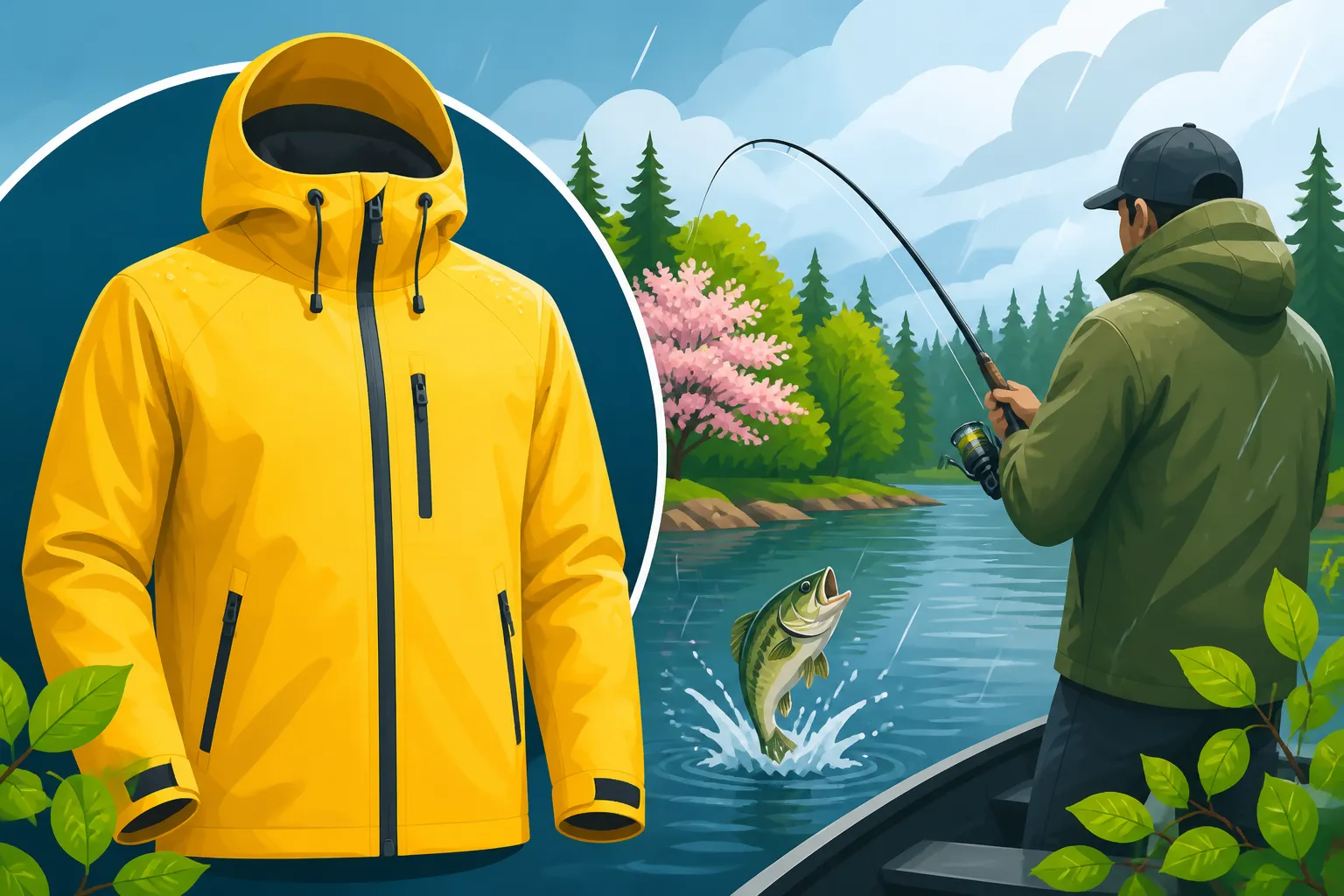
There’s nothing quite like the promise of spring fishing in Ontario, is there? The ice is finally gone (or mostly gone!), the days are getting longer, and our favourite fish species are starting to become more active. But let’s be real, spring weather here is famously, wonderfully, frustratingly unpredictable. One minute it’s glorious sunshine, the next you’re battling a bone-chilling rain shower that can send even the most seasoned angler packing. This guide is all about helping you pick the perfect rain jacket, so you can stay comfortable, dry, and focused on the fish, no matter what Mother Nature throws your way.
Why Spring Fishing in Ontario Demands a Serious Rain Jacket
Anyone who’s spent a spring morning on an Ontario lake, whether it’s the vastness of Lake Erie or a quiet backwater pond, knows the drill. You leave the dock under blue skies, feeling optimistic, only for a cold front to roll in just an hour later, bringing with it a sideways downpour and a biting wind. It’s not just about staying dry; it’s about staying warm, safe, and truly enjoying your time out there. Without proper protection, a sudden change in weather can quickly turn a fantastic outing into a miserable, even dangerous, experience.
Spring here isn't just "wet" — it's often a mix of melting snow, chilly winds whipping across still-cold water, and rain that ranges from a gentle drizzle to an absolute deluge. These conditions demand more than just a flimsy poncho; they require gear designed to stand up to real Canadian weather. Imagine you're out chasing walleye on the Bay of Quinte right after the ice-out, and that cold rain starts to penetrate your layers. Your hands get numb, your focus drifts from your line, and suddenly, the joy of fishing evaporates. That's a feeling we've all known, and it's precisely what a good rain jacket aims to prevent.
This isn't just about comfort; it's about extending your fishing day. When you're dry and warm, you can stay out longer, explore more spots, and ultimately, increase your chances of success. A proper rain jacket acts as your personal shield, allowing you to shrug off the elements and keep doing what you love. It’s an investment in your comfort, your safety, and your overall experience on the water, whether you're fly fishing a trout stream or casting for bass in the Kawartha Lakes.
The Unpredictability of Ontario Spring Weather
Spring in Ontario is a glorious but fickle beast. One day, you might be out in a t-shirt, soaking up the sun, and the very next, you're donning a winter hat because an arctic air mass decided to swing back through. We’re talking about temperatures that can fluctuate wildly, from near freezing mornings to surprisingly warm afternoons, all within the span of a few hours. This makes layering crucial, but the outermost layer – your rain jacket – is the true hero when the precipitation starts.
Consider fishing early spring for pike in Northern Ontario, where the snow might still be clinging to the shoreline even as the main lake thaws. The air temperature might be above freezing, but a cold rain combined with wind will make it feel much colder, increasing your risk of hypothermia if your gear isn’t up to snuff. Even down south, around the Great Lakes, sudden squalls can form over the vast stretches of cold water, bringing intense bursts of rain and strong winds that can quickly drench you. Having a reliable rain jacket means you’re prepared for anything from a gentle spring shower to a full-blown April downpour.
You might be drift fishing for walleye on a river like the Niagara, or trying your luck for early season trout, and suddenly a dark cloud bursts open. Without a truly waterproof and breathable jacket, you'll feel clammy and cold in minutes. This unpredictability is why experienced anglers don't just pack a rain jacket; they wear one or keep it readily accessible, ready to deploy at a moment's notice. It’s not just rain you're guarding against; it’s the combination of rain, wind, and cool temperatures that really saps your body heat.
Beyond Just "Waterproof": Why Breathability Matters
When we talk about rain jackets, most people immediately think "waterproof," and rightly so. But for active fishing, especially when you’re casting, paddling, or walking the banks, breathability is just as critical. A jacket that’s waterproof but doesn’t breathe will trap your body heat and sweat inside, leaving you feeling just as wet from the inside out as you would be from the rain. It’s that uncomfortable, clammy feeling that can really ruin a day.
Imagine hiking along a rugged trail to reach a secluded brook trout stream, only to arrive drenched in your own perspiration because your "waterproof" jacket acted like a plastic bag. Or picture yourself vigorously reeling in a feisty smallmouth bass on Georgian Bay; that exertion will make you sweat. A breathable membrane in your rain jacket allows this moisture vapour to escape, keeping you dry and comfortable from the inside, even as it repels rain from the outside. Brands like Gore-Tex are famous for this technology, but many other manufacturers offer excellent breathable waterproof fabrics too.
The ideal spring fishing rain jacket strikes a perfect balance. It needs to be impenetrable to rain and wind, protecting you from the elements, but also porous enough at a microscopic level to let your body’s moisture escape. This dual functionality is what separates a truly great fishing rain jacket from a basic rain shell. Without it, you’ll find yourself constantly opening and closing zippers, trying to regulate your temperature, or worse, just accepting that you’ll be wet, one way or another. This is especially important during those warmer spring days when a sudden shower cools the air, but you're still working hard.
Key Features to Look for in a Spring Fishing Rain Jacket
Choosing the right rain jacket for spring fishing isn't just about grabbing the first "waterproof" one you see. There are specific features that can make a monumental difference in your comfort and ability to fish effectively. Think about the conditions you’ll face: sudden downpours, chilly winds, and the physical activity involved in casting, reeling, and navigating. Your jacket needs to be built to handle all of that without hindering your movement or leaving you soaked. It's an essential piece of Best Rain Gear for Ontario Anglers.
When you're browsing at a place like Bass Pro Shops or scrolling through options on Amazon, keep these key features in mind. They are the differentiators between a jacket that just keeps you "kind of" dry and one that lets you truly ignore the weather and focus on your passion. Investing in a good jacket means fewer excuses to stay home when the forecast looks a bit grim.
| Feature | Why It Matters for Spring Fishing in Ontario |
|---|---|
| Waterproof Rating | Measured in millimeters (e.g., 10,000mm, 20,000mm). Higher numbers mean more resistance to water pressure. For Ontario spring, aim for at least 10,000mm for light rain, but 15,000mm+ is ideal for heavy downpours or prolonged exposure on open water where wind can drive rain through fabric. |
| Breathability | Measured in grams (g/m²/24h). Indicates how much moisture vapor can pass through. Essential for active fishing to prevent clamminess. Look for 10,000 g/m²/24h or higher. Without good breathability, you'll sweat inside, defeating the purpose of staying dry. |
| Sealed Seams | All seams should be fully taped or sealed. Water loves to find its way through tiny needle holes. If seams aren't sealed, even the most waterproof fabric is useless. This is often overlooked but absolutely critical. |
| Adjustable Hood | A hood that can be cinched down securely, move with your head (for visibility), and fit over a hat is vital. A good hood keeps rain out of your face and neck, and off your glasses, allowing you to see what you’re doing and stay warm. |
| Water-Resistant Zippers & Pockets | Main zippers and pocket zippers should be water-resistant or have storm flaps. This protects your phone, wallet, and tackle. Pockets that drain or are positioned to prevent water pooling are a bonus. |
| Articulated Sleeves & Cuffs | Allows for a full range of motion without the jacket riding up or restricting your cast. Adjustable cuffs (Velcro or elastic) prevent water from running down your arm when reaching or casting, and can be cinched over gloves or for wading. |
| Fit & Layering | Choose a fit that allows for comfortable layering underneath (e.g., a fleece or down vest) without being overly baggy. It should offer freedom of movement for casting and boating. Too tight, and it restricts movement; too loose, and wind can whip through. |
| Durability | Fishing often involves snags on branches, rubbing against boat edges, or handling fish. Look for durable face fabrics that can withstand some abuse without tearing or losing their waterproof properties prematurely. |
Material and Waterproofing Technology
The heart of any rain jacket lies in its material and the waterproofing technology it employs. You'll hear terms like "DWR coating," "Gore-Tex," "HyVent," or "eVent." These aren't just marketing jargon; they represent different approaches to keeping you dry. DWR (Durable Water Repellent) is a coating applied to the outer fabric that causes water to bead up and roll off, preventing the fabric from saturating. This is your first line of defense, but it wears off over time and needs reapplication.
Underneath the DWR, or as part of the fabric itself, is the waterproof membrane. Gore-Tex is perhaps the most famous, known for its microscopic pores that are too small for liquid water molecules to pass through, but large enough for water vapor (sweat) to escape. This is the magic that provides both waterproofing and breathability. Other brands use their own proprietary membranes, often offering similar performance at different price points. When evaluating a jacket, look for its waterproof and breathability ratings, usually expressed in millimeters (mm) and grams (g/m²/24h) respectively. For serious spring fishing, you want numbers that are comfortably in the double digits, like 10,000mm/10,000g or higher. This ensures you’ll stay dry in a persistent downpour and won’t feel like you’re in a sauna while actively fishing.
It’s also worth considering the fabric’s face material. Some jackets use a soft, quiet fabric, which is great for stealthy approaches to trout streams. Others opt for a more rugged, ripstop nylon that can stand up to brush and the general wear and tear of a fishing trip, especially if you’re fishing around docks or in a boat where abrasion is common. A good balance between quietness, durability, and packability is often ideal for the diverse demands of Ontario fishing.
Fit, Mobility, and Layering Capability
A fishing rain jacket isn't a fashion statement; it's a piece of functional gear that needs to allow you to fish comfortably and efficiently. This means the fit is paramount. You need enough room to layer underneath – think a warm fleece or even a lighter insulated jacket on those colder spring days – without feeling bulky or restricted. At the same time, it shouldn't be so baggy that it catches the wind like a sail or gets in the way of your casting motion.
Look for features like articulated sleeves or shoulder gussets. These design elements ensure that when you raise your arms to cast, the jacket doesn’t ride up your back, exposing you to the elements. Adjustable cuffs with Velcro closures are also crucial, allowing you to cinch them down tight to prevent water from running down your arm when you’re landing a fish or reaching into the water, or to loosen them to accommodate gloves. The length of the jacket is another consideration. A slightly longer cut can offer better protection when sitting in a boat or on wet surfaces, preventing your backside from getting soaked.
Mobility is key. You'll be bending, stretching, casting, and perhaps even navigating slippery banks. Your rain jacket should move with you, not against you. Try on jackets with your typical fishing layers underneath if possible. Mimic a casting motion. See if the hood limits your peripheral vision or if the sleeves pull too tightly. A well-fitting jacket will feel like a natural extension of your body, allowing you to focus on the fishing, not on adjusting your gear. It’s a vital component, alongside good waders or Best Waders for Ontario Trout Streams, for full protection.
Pockets, Hood, and Other Crucial Details
It’s the small details that often make the biggest difference in a rain jacket, especially when you’re out on the water. Pockets, for instance, are more than just storage; they’re often where you keep essential items like your phone, a small tackle box, or an extra spool of line. Look for ample, strategically placed pockets that are either zippered with water-resistant zippers or feature storm flaps to keep contents dry. Some jackets even offer hand-warmer pockets, which are a godsend on chilly spring mornings.
The hood is another feature not to be underestimated. A good fishing hood is adjustable, allowing you to cinch it down tightly in high winds, and ideally, designed to move with your head for uninterrupted peripheral vision. A stiff brim on the hood can help keep rain off your face and glasses. Nothing is more frustrating than trying to tie a knot or spot a bobber when rain is streaming onto your face. Some jackets also feature a collar that rises high enough to protect your neck and lower face, which is especially welcome when a cold wind picks up.
Beyond these, consider durable main zippers that are easy to operate with cold or gloved hands. Some jackets have a D-ring or tool attachment points for nippers or other small tools, keeping them handy. Reflective elements are a nice safety feature, especially if you're out near dawn or dusk. All these little details add up to a jacket that isn't just waterproof, but truly functional and angler-friendly.
Types of Rain Jackets for Different Spring Scenarios
Not all rain jackets are created equal, and what works perfectly for a quick spring shower might be woefully inadequate for a full day of heavy rain and wind. Understanding the different types of rain jackets available can help you match your gear to your typical spring fishing scenarios in Ontario. Whether you're a fair-weather angler or someone who thrives in adverse conditions, there's a jacket designed with your needs in mind.
Consider the kind of fishing you do most often. Are you mostly bank fishing on smaller rivers, or do you spend hours in a Best Boats for Ontario Lakes and Rivers or a Best Kayaks for Ontario Fishing on large, exposed bodies of water? The demands on your rain gear will differ greatly. A lightweight, packable shell might be perfect for a hike-in fishing trip, while a heavier-duty jacket with more features would be better suited for extended boat use on bigger lakes like Lake Nipissing or Lake of the Woods.
Lightweight and Packable Shells
For those quick trips, unexpected showers, or when you need minimal bulk, a lightweight and packable rain shell is an excellent choice. These jackets are designed to be extremely light and compress down into a small stuff sack or their own pocket, making them easy to stash in a backpack or boat compartment. They are ideal for situations where rain is possible but not guaranteed, and you want to be prepared without carrying unnecessary weight.
These shells often feature 2.5-layer construction, meaning they have an outer fabric, a waterproof/breathable membrane, and then a protective print or coating on the inside, rather than a full liner. While highly packable, they might not offer the same level of durability or feature set (like multiple large pockets) as their heavier-duty counterparts. However, for a spring morning fly fishing a small creek or a quick afternoon trip to a local pond, they are invaluable. You can easily keep one in your bag, ready for that sudden, fleeting spring shower that often crops up. They're a good backup, especially if you plan to do a lot of walking or expect to encounter varying conditions.
While they may not be built for sustained torrential downpours or abrasive conditions, their convenience is unmatched. Many anglers choose a packable shell as a secondary jacket or for specific situations where weight and space are at a premium, such as when you are venturing deep into Algonquin Park. The trade-off is often in long-term durability or the sheer robust feeling of a heavy-duty jacket, but for versatility and readiness, they are hard to beat.
Heavy-Duty and Feature-Rich Jackets
When the forecast is grim, and you plan to be out on the water all day regardless, a heavy-duty, feature-rich rain jacket is what you need. These jackets are built for maximum protection and often incorporate a 3-layer construction (outer fabric, membrane, and inner lining), making them exceptionally durable and capable of standing up to severe weather. They’re designed for sustained exposure to driving rain, strong winds, and cold temperatures typical of early spring fishing on large lakes.
These jackets often come loaded with angler-specific features: large, waterproof cargo pockets for tackle boxes, tool attachment points, D-rings for gear, and highly adjustable hoods designed to fit over hats or even helmets. The cuffs are typically robust and can be cinched down tightly to prevent water intrusion when you're reaching into the water or handling fish. The fabrics used are generally thicker and more abrasion-resistant, capable of shrugging off contact with boat railings, docks, or rough shoreline vegetation.
Think of these as your ultimate fortress against the elements. If you’re planning an extended trip on Georgian Bay, Lake Erie Fishing Guide, or Lake of the Woods, where weather can change dramatically and quickly, this is the jacket you want. It’s an investment, but the comfort and peace of mind it provides are well worth it when you're facing down an unexpected spring squall. While less packable, their performance in truly nasty conditions is unparalleled, ensuring you can continue Spring Walleye Fishing Techniques for Ontario or chase other species even when others are heading for shore.
Hybrid and Insulated Rain Jackets
Some anglers find themselves battling not just rain, but significant cold throughout the spring. This is where hybrid or lightly insulated rain jackets come into play. A hybrid jacket might combine different materials in different areas, for example, tougher fabric on the shoulders and elbows for durability, and lighter, more breathable fabric elsewhere. An insulated rain jacket, on the other hand, adds a layer of synthetic insulation directly within the waterproof shell.
These insulated options are particularly appealing for those notoriously chilly early spring days when temperatures hover just above freezing, and the water is still icy cold. Imagine ice-out conditions on Lake Simcoe or a remote northern lake; an insulated rain jacket provides not only waterproof protection but also crucial warmth without the need for excessive layering. This means less bulk and more freedom of movement, which is always a bonus when you're casting or maneuvering a boat.
However, the trade-off with insulated jackets is versatility. They might be too warm for those surprisingly mild spring afternoons or for more active fishing styles that generate a lot of body heat. For this reason, many experienced anglers prefer the flexibility of a non-insulated shell paired with a customizable layering system underneath. This allows them to adjust their warmth levels precisely to the conditions, from a single base layer to a heavy fleece, depending on the day's forecast and their activity level. But for those consistently cold and wet spring adventures, an insulated rain jacket can be a real game-changer.
Caring for Your Rain Jacket to Maximize Its Lifespan
You've invested in a quality rain jacket, and now you want it to perform trip after trip, season after season. Proper care isn't just about keeping your jacket clean; it's about maintaining its waterproof and breathable properties, ensuring it continues to protect you from the unpredictable Ontario spring weather. Neglecting your rain gear can lead to premature failure, leaving you wet and frustrated.
Over time, dirt, oils, bug spray, and even sweat can clog the microscopic pores of your jacket's membrane and degrade the DWR coating. When the DWR fails, the outer fabric "wets out," meaning it absorbs water instead of shedding it. This makes the jacket feel heavy, cold, and significantly reduces its breathability, making you feel clammy inside even if the membrane is still technically waterproof. A little effort in maintenance goes a long way in preserving your jacket's performance and extending its life.
Think of it as routine maintenance for any other piece of fishing gear. Just like you clean your reels and sharpen your hooks, your rain jacket needs attention. It's not a set-it-and-forget-it item. A well-cared-for jacket will perform better, last longer, and ultimately keep you more comfortable on the water, allowing you to brave Best Techniques for High Water Spring Conditions or any other challenging weather that comes your way.
Cleaning and Re-Waterproofing Your Jacket
The most crucial aspect of rain jacket care is regular cleaning and, when necessary, re-waterproofing. Don't just toss it in with your regular laundry detergent. Standard detergents can leave residues that strip the DWR coating and clog the membrane. Instead, use a technical wash specifically designed for waterproof breathable fabrics. These products, often found at outdoor retailers or online at places like Amazon, are formulated to clean without damaging the fabric's performance.
Follow the washing instructions on your jacket's tag carefully. Typically, this involves zipping up all zippers, emptying pockets, and washing in cool water on a gentle cycle. After washing, a low-heat tumble dry can often reactivate the DWR coating. If water no longer beads up effectively, even after washing and drying, it's time to reapply a DWR treatment. These come in spray-on or wash-in formulations. Again, follow the product instructions for best results. Re-waterproofing not only restores the jacket’s ability to shed water but also helps maintain its breathability by preventing the outer fabric from getting saturated.
Regular cleaning, perhaps once or twice a season depending on how often you use it and how dirty it gets, will keep your jacket performing at its best. It might seem like an extra step, but a dry and breathable jacket makes all the difference when you're fishing in a steady rain. Skipping this step is like never changing the oil in your car – it might run for a while, but its performance will degrade rapidly.
Proper Storage and Handling
How you store and handle your rain jacket between fishing trips also impacts its longevity. Never store a wet or damp jacket in a stuff sack or folded tightly for extended periods. This can encourage mildew growth, which not only smells awful but can also damage the waterproof membrane and outer fabric. Always let your jacket air dry thoroughly before storing it. Hang it up in a well-ventilated area, away from direct sunlight, until it's completely dry.
When packing your jacket for a trip, avoid stuffing it into tiny, overly compressed spaces if you can help it. While packable shells are designed for this, prolonged, extreme compression can sometimes stress the fabric and membrane over many years. When at home, store it on a hanger in a closet, allowing the fabric to breathe and avoid creases that could potentially wear down the DWR over time.
Finally, be mindful of what your jacket comes into contact with while fishing. Sharp hooks, fish scales, boat parts, or rough rocks can all cause tears or abrasions. While a good jacket is durable, it's not invincible. If you do get a small tear, repair kits are available that use patches and specialized glues to maintain the waterproof integrity. Addressing small damage quickly can prevent it from becoming a larger, unfixable problem, ensuring your jacket remains a reliable companion for many Best Time of Year to Fish in Ontario expeditions.
Disclaimer
This article is for general informational purposes only and does not constitute professional advice. Laws, prices and regulations vary by location and change over time. Consult a qualified professional for guidance on your specific situation.