Best livewell aerator for a small boat
There's nothing quite as disheartening as having a successful day on the water, only to find your hard-earned catch struggling or worse, expiring, in your livewell. For small boat anglers, space and power can be real concerns, making it tricky to ensure your fish stay lively and healthy. This guide is all about cutting through the confusion to help you find the best livewell aerator system for your smaller vessel, ensuring your fish stay in prime condition whether you're heading to the weigh-in or just keeping them fresh for the dinner table.
Why a Livewell Aerator is Essential for Small Boats
Many anglers, especially those new to boats, might think a simple bucket of water is enough to keep fish alive. While that might work for a very short period or for bait, it's far from ideal for holding your prize catches, whether you intend to release them or bring them home. A proper livewell aerator is not just a nice-to-have; it's a critical piece of equipment that serves several vital purposes. Without adequate oxygenation and water circulation, fish quickly become stressed, leading to poor health outcomes and even mortality.
Keeping Your Catch Healthy and Alive
The primary goal of any livewell system is to create an environment that mimics the fish's natural habitat as closely as possible. When you pull a fish from the water and place it in a confined space, several things start to work against its survival. The water temperature can change rapidly, waste products build up, and, most critically, the oxygen levels plummet. Fish need oxygen to breathe, just like us. In a small, stagnant livewell, especially on a warm day or with multiple fish, that oxygen gets used up incredibly fast.
An aerator continuously introduces fresh oxygen into the water, either by circulating new water from the lake or by spraying existing livewell water back into itself, creating bubbles and surface agitation. This constant replenishment of oxygen keeps the fish's gills working efficiently, reduces stress, and helps them recover from the fight. Think of it like taking a deep breath after a sprint – it's crucial for recovery. For anyone practicing Ontario Catch and Release Only Waters principles, or simply wanting to ensure the best possible survival rate for their catch, a functioning aerator is non-negotiable.
Meeting Tournament Regulations
If you're an avid tournament angler, you already know that a reliable livewell system isn't just a suggestion; it's often a strict requirement. Most fishing tournaments, especially those focused on species like bass or walleye, have rules mandating working livewells to ensure the health of the fish. These regulations are in place to promote ethical angling and maintain the integrity of the sport. Failing to have a functioning aerator can lead to penalties, disqualification, or even the tragic loss of fish, which nobody wants.
Tournament officials will often check your livewell system before you launch, and they'll be keeping an eye on the health of your fish at weigh-in. Dead fish often incur significant penalties, sometimes even deducting weight from your total. So, for the competitive angler, investing in a good aerator for your small boat is an investment in your performance and reputation. It's about respecting the resource and the competition.
Maximizing Fish Survival Rates
Beyond the ethical and regulatory aspects, a well-aerated livewell simply maximizes the chances of your fish surviving, whether they're going back into the lake or into your cooler for supper. Stressed fish are more susceptible to disease and injury. The build-up of ammonia from fish waste can quickly become toxic in stagnant water. An aerator helps to dilute these harmful compounds and stabilize the water chemistry.
Consider a scenario where you've had a phenomenal day and you're well within your Ontario Bag and Possession Limits by Species, but you've got several feisty smallmouth bass or a couple of nice walleye in your livewell. If that water isn't continually refreshed and oxygenated, by the time you reach the dock, those fish could be severely weakened. A good aerator, especially one that can also circulate fresh water from outside the boat, can significantly extend the time fish can be held in prime condition. This is especially true on hot summer days when water temperatures in a static livewell can rise to dangerous levels, further stressing your catch.
Types of Livewell Aerators for Small Boats
When you're dealing with a small boat, whether it's a jon boat, a small aluminum utility boat, or even a larger kayak, space and power are always considerations. Thankfully, aerator systems come in various forms, each suited to different needs and boat setups. Choosing the right type depends on your existing livewell, your budget, and how often you plan to use it.
Portable Aerators
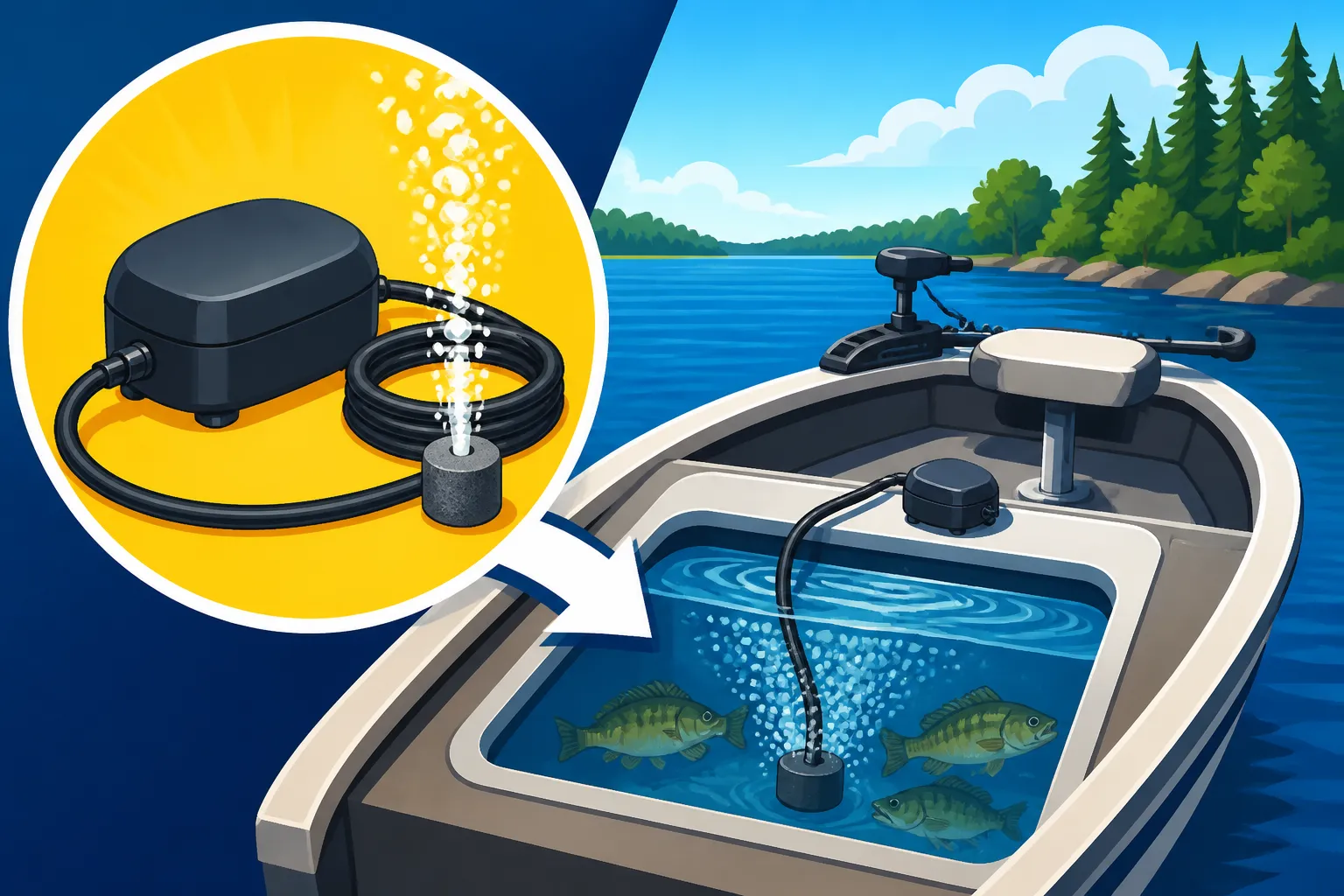
Portable aerators are a fantastic solution for small boat owners who might not have a built-in livewell, or who want a flexible system they can easily move between different boats or use for bait. These systems are typically self-contained, consisting of a small pump, an air stone or spray bar, and a power source, usually D-cell batteries or a 12V plug that can connect to your boat's battery. You can find many reliable options on Amazon or at local retailers like Bass Pro Shops.
Pros:
- Versatility: You can use them in a cooler, a bucket, or even a dedicated soft-sided livewell. This makes them perfect for smaller vessels like canoes or kayaks where permanent installations aren't practical.
- Easy Installation: No complicated wiring or drilling required. Just drop the air stone in the water, connect the power, and you're good to go.
- Affordability: Generally less expensive than permanent systems, making them a great entry point for anglers on a budget.
- Low Power Draw: Battery-operated units are designed to be energy efficient, extending battery life.
Cons:
- Limited Capacity: Best suited for smaller volumes of water and fewer fish.
- Battery Reliance: If using battery-operated units, you'll need to carry spare batteries, and they can run out during a long day.
- Less Robust: Might not be as durable or provide the same level of oxygenation as a dedicated recirculating pump for larger livewells.
- Manual Operation: You typically need to manually turn them on and off.
Ideal Scenario: You have a small aluminum boat with a cooler, or a kayak, and you primarily fish for panfish or a few bass, intending to keep them alive for a shorter period or transport them. A portable unit dropped into a cooler can make a world of difference for keeping minnows or small fish healthy throughout the day.
Permanent/Recirculating Systems
For small boats with a dedicated livewell compartment, a permanent recirculating aerator system is often the most effective solution. These systems involve installing a pump inside the livewell that draws water from the livewell itself, mixes it with air, and then sprays it back into the livewell. This constant circulation and agitation keep the oxygen levels high without needing to continuously pump in new lake water, which is great for preserving water temperature.
Pros:
- Consistent Oxygenation: Provides a steady supply of oxygen, keeping fish healthy for extended periods.
- Temperature Stability: By not constantly introducing new, potentially warmer or colder lake water, the livewell temperature remains more stable, reducing fish stress.
- Filtration Options: Some systems can integrate filters to remove waste, further improving water quality.
- Automated Operation: Often wired into the boat's electrical system with switches, allowing for easy, hands-free operation and even timer functions.
Cons:
- Installation Complexity: Requires drilling holes, running wiring, and sealing connections, which can be daunting for DIYers.
- Higher Cost: Generally more expensive due to the components and installation.
- Power Draw: While efficient, they still draw power from your boat's 12V system, which needs to be managed, especially on a small boat with limited battery capacity.
Ideal Scenario: You have a small fishing boat (e.g., a 14-16 foot aluminum boat) with a built-in livewell, and you regularly fish for species like Walleye Fishing in Ontario or Smallmouth Bass Fishing in Ontario that you want to keep vibrant and healthy for longer periods or for tournament weigh-ins. This type of system works exceptionally well in conjunction with a good Best Cooler for a Fishing Boat to further regulate temperature if your livewell isn't insulated.
Pump-Out Aerators (Intake vs. Recirculation)
While often categorized with permanent systems, it's worth distinguishing between purely recirculating systems and those that can also intake fresh water from the lake or pump out old water. Many advanced small boat livewell pumps offer dual functions: they can recirculate water within the livewell and pump in fresh water from outside the boat.
- Intake Systems: These draw water directly from the lake or river you're fishing in, introducing fresh, oxygen-rich water into your livewell. This is particularly beneficial on hot days when you want to replace warm livewell water with cooler lake water, or when you have a lot of fish producing significant waste.
- Pump-Out Systems: These allow you to drain old, stale water from your livewell. This is useful for cleaning, or for performing partial water changes to further refresh the environment.
Pros:
- Optimal Water Quality: Provides the best of both worlds – fresh water intake for severe conditions and recirculation for stable conditions.
- Temperature Regulation: Excellent for maintaining optimal water temperatures by exchanging water.
- Waste Removal: Helps to flush out ammonia and other waste products.
Cons:
- Most Complex Installation: Involves through-hull fittings for intake and discharge, requiring more expertise.
- Highest Cost: Due to additional components and installation.
- Battery Drain: Pumping large volumes of water can drain a small boat's battery more quickly.
Ideal Scenario: You want the most control over your livewell environment for serious angling, perhaps for species like Muskellunge Fishing in Ontario where catch and release survival is paramount, and you have the ability (or are willing to get professional help) to install a more complex system. Considering the Ontario Boating Laws for Anglers and Ontario required boat safety equipment checklist, a professional installation can ensure all your electrical connections are safe and compliant.
| Aerator Type | Best For | Installation Difficulty | Power Source | Key Benefit |
|---|---|---|---|---|
| Portable Aerator | Small catch, bait, temporary use, kayaks | Very Easy | D-cell batteries, 12V plug | Flexibility, cost-effective |
| Recirculating System | Built-in livewells, consistent oxygen, stability | Moderate | Boat's 12V system | Stable temperature, reliable oxygenation |
| Intake/Pump-Out System | Optimal water quality, temperature control, flushing | Complex | Boat's 12V system | Superior water quality and temperature control |
Key Features to Look for in a Small Boat Livewell Aerator
When you're ready to pick out an aerator for your small boat, it's easy to get overwhelmed by all the options. Focusing on a few key features will help you narrow down the choices and ensure you get a system that truly meets your needs without overspending or underperforming. Remember, the goal is healthy fish, and the right features make all the difference.
Pumping Capacity (GPH)
The pumping capacity, measured in Gallons Per Hour (GPH), is arguably the most crucial specification for any livewell aerator. This number tells you how much water the pump can move or circulate in an hour. For a small boat, you want a pump that can turn over the water in your livewell several times per hour to ensure adequate oxygen levels.
- Rule of Thumb: A general guideline is to have a pump that can circulate the entire volume of your livewell at least 6 to 8 times per hour. So, if your livewell is 10 gallons, you'd look for a pump in the 60-80 GPH range. If it's 20 gallons, aim for 120-160 GPH.
- Consider Load: If you anticipate holding a lot of fish or larger fish, you might want to slightly exceed this guideline to ensure enough oxygen. A few feisty bass will consume more oxygen than a handful of perch.
- Spray Bar vs. Air Stone: Pumps with a spray bar aerate by spraying water back into the livewell, breaking the surface tension and introducing oxygen. Air stones create fine bubbles, which also work effectively. Both are viable, but a spray bar often offers more vigorous surface agitation for a given GPH.
Don't be tempted to go for an excessively powerful pump for a tiny livewell, as it could create too much current, stressing the fish, and drawing unnecessary power. Bass Pro Shops and other retailers often have pump sizing guides to help match GPH to livewell volume.
Power Source & Efficiency
For a small boat, every amp-hour counts, especially if you're running off a single trolling motor battery or a small starting battery.
- 12V DC Systems: Most permanent and many portable aerators run on 12V DC power, directly connecting to your boat's battery. Look for pumps that are rated for low amperage draw. Manufacturers will usually list the amp draw, allowing you to estimate how long your battery will last.
- Battery-Operated: Portable units often use D-cell or C-cell batteries. These are convenient but have a finite lifespan. Check the manufacturer's estimated battery life, and always carry spares!
- Timer Functions: Many permanent systems, particularly those found in more sophisticated fishing boats (even small ones), can be wired to a timer. This allows the pump to run intermittently (e.g., 30 seconds on, 3 minutes off), which conserves battery power while still maintaining good oxygen levels. This is a game-changer for extended trips.
Choosing an energy-efficient pump can mean the difference between having enough juice to run your Best Fish Finders for Ontario Lakes all day or having to cut your trip short.
Durability and Construction
Your aerator pump will be constantly exposed to water, often jostled around, and sometimes even subjected to the elements. Durability is key.
- Corrosion Resistance: Look for pumps with marine-grade components. Stainless steel shafts, sealed motors, and corrosion-resistant plastic housings are essential, especially if you ever fish in brackish water or salty conditions (though most Ontario fishing is freshwater, durability still matters).
- Motor Sealing: A well-sealed motor prevents water intrusion, which is the quickest way to kill an electrical pump.
- Impact Resistance: Small boats can bounce around quite a bit. A pump built with robust materials will withstand the vibrations and occasional knocks without failing.
- Strainers: The intake of your pump should have a good strainer to prevent weeds, debris, or even small baitfish from clogging the impeller. Cleaning a clogged pump mid-fishing trip is not fun.
Investing a little more upfront in a well-constructed aerator can save you the headache and expense of frequent replacements down the line.
Ease of Installation and Maintenance
For small boat owners, especially those who prefer DIY, installation simplicity is a big factor.
- Portable: By far the easiest. Just drop it in and power it up. Minimal maintenance beyond cleaning and battery replacement.
- Recirculating/Intake: Consider how easy it is to mount the pump, route hoses, and connect wiring. Some pumps are designed with snap-in bases for easier removal for cleaning or replacement. Look for clear instructions or online tutorials if you're tackling it yourself.
- Access: Can you easily access the pump for cleaning the strainer or clearing a blockage? A pump buried deep under a deck panel will be a nightmare to service.
- Maintenance: Beyond cleaning strainers, pumps are generally low maintenance. Some might require periodic lubrication of the motor shaft, but many modern marine pumps are sealed for life.
If you're unsure about tackling a permanent installation, consider consulting a marine technician or someone experienced with boat wiring. Safety is paramount when dealing with 12V systems in a wet environment.
Noise Level
While perhaps not the first thing you think of, a noisy aerator can become quite annoying over a long day of fishing. This is particularly true if your livewell is directly under a seat or very close to where you're sitting in a small boat.
- Quiet Operation: Look for pumps that specifically advertise quiet operation. Modern pumps often use brushless motors or improved impeller designs to minimize noise.
- Vibration: A poorly mounted pump can also transmit vibrations through the boat, creating an unpleasant hum. Ensure solid mounting to reduce this.
For anglers who value the peace and quiet of the outdoors, a quiet aerator can significantly enhance the fishing experience. You want to hear the splash of your lure, not the drone of your pump!
Installation and Setup Tips for Your Small Boat Aerator
Once you've chosen the perfect livewell aerator for your small boat, the next step is getting it properly installed and set up. Even for seemingly simple portable units, a little foresight can make a big difference in performance and convenience. For permanent systems, a careful approach is essential to ensure safety and longevity.
Choosing the Right Location
Placement is critical for optimal performance and minimal hassle, especially in a compact small boat.
- Inside the Livewell: For recirculating pumps, mount the pump at the lowest point in the livewell. This ensures it always has water to draw from, even if the water level drops slightly. The spray bar or aerator head should be positioned to create maximum surface agitation and water circulation without directly blasting fish, which can stress them. Some anglers prefer to aim the spray towards the side of the livewell to create a gentle current.
- Intake Pumps: If you have an intake pump, the through-hull fitting should be positioned where it will consistently be submerged, even when the boat is on plane or in choppy water. Avoid placing it too close to the transom where it might suck air from the prop wash.
- Discharge Outlets: For pump-out systems, the discharge should be above the waterline to allow water to drain efficiently. Ensure it's not positioned where it will spray back into the boat or onto passengers.
- Portable Units: With a portable unit, just ensure the air stone or pump is fully submerged and won't be easily knocked out. Keeping the battery pack dry is also paramount. Many anglers will clip their portable aerator to the rim of a cooler or bucket, keeping the pump submerged and the motor unit exposed for access and ventilation.
Careful placement can prevent frustrating issues like the pump sucking air and running dry, or inefficient aeration.
Wiring Considerations
Electrical work on a boat, even a small one, requires attention to detail. Water and electricity are not friends, and faulty wiring can be dangerous.
- Proper Gauge Wire: Use marine-grade wire of the correct gauge for the length of the run and the amperage draw of your pump. Undersized wire can overheat, causing a fire hazard and poor pump performance. Refer to a marine wire gauge chart if unsure.
- Fuse Protection: Every electrical circuit on your boat needs to be protected by a fuse or circuit breaker. Install an appropriately sized fuse (as recommended by the pump manufacturer) close to the battery. This protects your wiring and pump in case of a short circuit or overload.
- Waterproof Connections: Use heat-shrink butt connectors or other marine-grade, waterproof connectors for all splices. This prevents corrosion, which can lead to electrical failures.
- Battery Connection: Connect your aerator directly to your boat's 12V battery, ideally through a fused switch panel if you have one. If you're running multiple accessories, ensure your battery has enough reserve capacity. For small boats, sometimes a dedicated deep cycle battery is used for all accessories, separate from the starting battery. This helps ensure you always have power to start your engine. For more information on electrical systems for smaller boats, check out guides like Ontario Boating Laws for Anglers.
- Switch Placement: For permanent systems, install a waterproof switch in an easily accessible location at the helm or near the livewell. Consider a switch with a "manual/off/timer" function for versatility.
If you're not comfortable with marine electrical work, it's always best to have a qualified marine technician handle the installation.
Maintenance Best Practices
Even the most durable aerator will benefit from some regular care to ensure it runs flawlessly season after season.
- Clean the Strainer: Periodically check and clean the intake strainer on your pump. Weeds, scales, or other debris can easily clog it, reducing the pump's efficiency or causing it to burn out. A simple brush or rinse is usually enough.
- Flush with Fresh Water: After fishing in particularly dirty or brackish water, or at the end of the season, run fresh, clean water through your system for a few minutes. This helps to flush out any sediment or corrosive elements.
- Check Connections: Regularly inspect all electrical connections for signs of corrosion (green or white powdery buildup). Clean any corrosion with a wire brush and apply dielectric grease to help prevent future issues.
- Winterization: If you live in an area with freezing temperatures, ensure your livewell and pump are completely drained and dry before winter storage to prevent ice damage. You can find comprehensive tips on Best Boats for Ontario Lakes and Rivers maintenance.
- Impeller Inspection: If your pump isn't moving water efficiently, it might be an issue with the impeller. In some models, the impeller cartridge can be easily removed and inspected for damage or blockages.
Simple, routine maintenance can significantly extend the life of your aerator and prevent unexpected failures on the water.
Troubleshooting Common Issues
Even with the best planning and maintenance, sometimes things go wrong. Knowing how to quickly troubleshoot common aerator problems can save your catch and your day.
- Pump Not Turning On:
- Check Power: Is the switch on? Is the battery charged? Are the fuses intact? Start by checking the simplest things.
- Wiring: Inspect visible wiring for cuts or loose connections.
- Corrosion: Check electrical terminals for corrosion.
- Pump Running, But No Water Flow:
- Clogged Strainer: This is the most common culprit. Clear any debris from the intake strainer.
- Air Lock: Sometimes, air can get trapped in the pump, preventing it from priming. Try cycling the pump on and off a few times, or gently shake the boat to dislodge the air.
- Kinked Hose: Ensure all hoses are free of kinks or obstructions.
- Damaged Impeller: If the pump is making a whirring noise but not moving water, the impeller might be damaged or stripped.
- Weak Water Flow/Poor Aeration:
- Partial Clog: A partially clogged strainer or hose can reduce flow.
- Low Voltage: A weak battery or undersized wiring can prevent the pump from operating at full capacity.
- Aerator Head Blockage: The spray bar or air stone might have mineral buildup or debris blocking the holes. Clean them thoroughly.
Most issues can be resolved with a quick check and clean. Carrying basic tools, spare fuses, and perhaps a small voltmeter can be a lifesaver on the water. Remember, your primary goal is to ensure the well-being of the fish, so addressing issues promptly is crucial.
Disclaimer
This article is for general informational purposes only and does not constitute professional advice. Laws, prices and regulations vary by location and change over time. Consult a qualified professional for guidance on your specific situation.