Best streamer color for muddy water trout
There’s nothing quite as disheartening as showing up at your favourite trout stream, only to find the water is running high and murky, thick with recent rain or spring melt. That beautiful, clear flow you dreamed of is now a chocolatey mess, and you’re left wondering if it’s even worth casting a line. Many anglers just pack up and go home, convinced the fish won't see anything. But don't throw in the towel just yet! This guide will dive deep into how to choose the best streamer colors to cut through that muddy water and entice those trout, turning a frustrating day into a potentially productive one.
Understanding Trout Behavior in Muddy Water
When a river or stream blows out and the water turns murky, it drastically changes the fishing game. Trout, like most fish, rely heavily on their eyesight to hunt for food. When visibility drops to mere inches, their primary hunting strategy is severely hampered. It's a common misconception that fish simply stop feeding in these conditions, but that's not usually the case. What does happen is they adapt, becoming less reliant on sight and more on other senses.
How Trout Navigate and Feed in Murky Conditions
Think about how you navigate a dark room. You start to use your other senses more acutely, right? You might reach out your hands, listen closely, or pay attention to subtle air movements. Trout do something similar. In muddy water, their lateral line system becomes incredibly important. This sensory organ, running along the sides of their body, detects vibrations and pressure changes in the water. It’s like their own built-in sonar. They can feel the presence and movement of prey, even if they can't see it.
Beyond the lateral line, their sense of smell and taste also play a much larger role. While streamers don't typically emit strong scents like some baits, the vibrations they create can draw a fish's attention from a surprising distance. Trout will often move into slower, shallower water or behind structure to escape the strongest currents and to find areas where they can ambush prey more effectively. They're often holding tight to the bottom or near banks, waiting for food to be washed past them. This means your presentation needs to be in their face, or at least, in their strike zone. How to fish a run and pool trout stream explores some of these holding patterns in clearer water, but the principles of finding structure still apply here.
The Role of Contrast and Silhouette
In clearer water, a streamer's subtle colours, realistic patterns, and intricate details might be the key to triggering a strike. But in muddy water, those details are completely lost. What becomes paramount is contrast and silhouette. A trout might not be able to discern the delicate speckles on your streamer, but it can absolutely perceive a dark shape moving against a lighter sky, or a bright shape contrasting with a dark, murky bottom.
The goal isn't necessarily to perfectly imitate a baitfish (though it doesn't hurt). Instead, you want to create a visual target that stands out, or a strong profile that is easily felt through the lateral line. A streamer that's too light or too "natural" in muddy water will simply blend in with the background, becoming invisible. You need colours that scream "I'm here!" to a fish that's essentially feeling its way through a soup.
Best Streamer Colors for Murky Conditions
Alright, let's get down to the brass tacks: what colours actually work when the water looks like chocolate milk? The key is often about creating contrast or, counterintuitively, blending in effectively to create a strong silhouette. Here are some of my go-to choices for cutting through the crud.
Dark Streamers: Black, Dark Olive, and Purple
When visibility is minimal, dark colours are your best friend. Why? Because they create a strong, discernible silhouette against even the dimmest light filtering through the murky water. Think of it like a shadow puppet show. You don't see the details of the puppet, but you clearly see its dark shape.
-
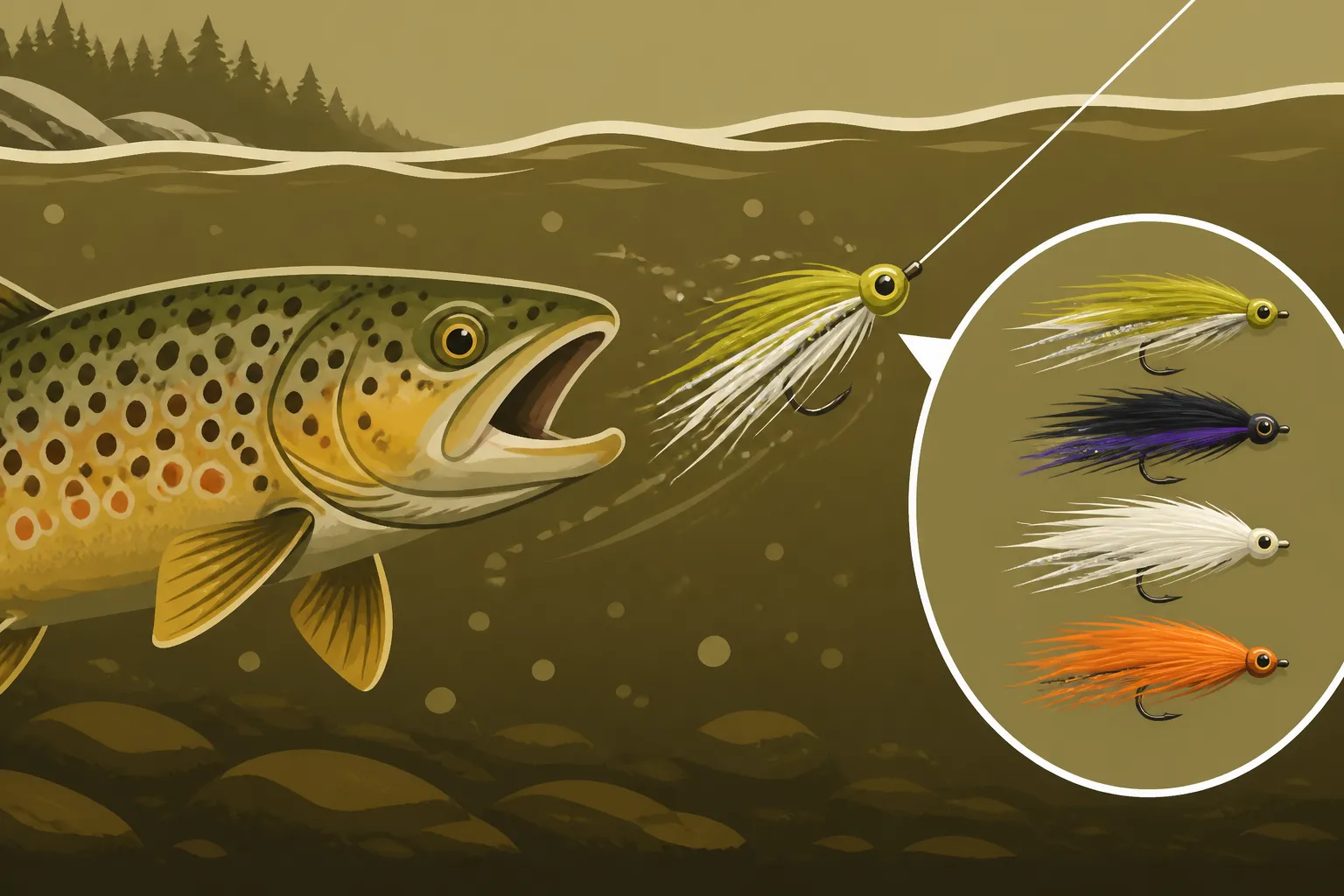
Black: This is arguably the king of muddy water streamer colours. A plain black streamer, whether it's a Woolly Bugger, a sculpin pattern, or a large articulated streamer, creates the most defined silhouette. When a trout is looking up from the bottom through stained water, a black fly appears as a large, opaque mass. It's an easy target for them to key in on, relying purely on shape. I've had incredible success with black streamers, especially after a heavy rain turns a pristine river into a muddy torrent. It's often the first colour I tie on when faced with challenging conditions. A common scenario might be fishing the Grand River after a spring thaw; the water is high, fast, and off-colour, but a chunky black streamer dragged along the bottom can still get aggressive strikes from holdover brown trout.
-
Dark Olive: While not as stark as black, a very dark olive green can also be incredibly effective. It offers a strong silhouette, similar to black, but with a hint of natural colour that can sometimes seal the deal if the water isn't completely opaque. Many baitfish, sculpins, and leeches have dark, muted tones, and a dark olive streamer can mimic these food sources convincingly enough even in low visibility. It’s a good choice for when the water is murky, but perhaps not quite "chocolate milk" status – more like a heavily brewed tea.
-
Purple: This might surprise some, but purple, especially a dark, deep purple, is a fantastic muddy water colour. There’s something about purple that fish just seem to respond to, and it holds up remarkably well in stained water. It creates a solid silhouette and also has some interesting properties in how light penetrates water. Some speculate that purple has good UV reflective qualities that fish can pick up on even in low light. Whatever the scientific reason, many experienced anglers swear by purple for both trout and bass in dirty conditions. Try a purple Woolly Bugger or a deep purple articulated streamer, and you might be pleasantly surprised.
Bright and Contrasting Streamers: Chartreuse, White, and Orange/Yellow
While dark colours excel at creating a silhouette, sometimes you need something that actively stands out through the murk, rather than just contrasting against it. These bright colours use a different approach: they try to be as visible as possible in the limited light spectrum that penetrates dirty water.
-
Chartreuse: This neon green-yellow is a phenomenal attractor colour in dirty water. It simply glows. Chartreuse has excellent visibility in low light and murky conditions because of its strong fluorescent properties. It catches what little light there is and amplifies it. This makes it incredibly easy for a trout to spot, even from a distance, or in water where visibility is only a few inches. If the fish are active and aggressive, a chartreuse streamer can trigger some truly violent strikes. I've often used chartreuse in faster, turbulent water where fish need to make a split-second decision. You can find excellent chartreuse fly tying materials at Bass Pro Shops, or readily available flies through online retailers like Amazon.
-
White: A clean white streamer, particularly one with some flash, can be a surprisingly effective choice. While it doesn't offer the dark silhouette, white is highly reflective. In murky water, it can catch and reflect any available light, making it pop. Think of how reflective road signs work at night – they're white or bright, bouncing back light. White streamers can imitate dying baitfish or those disoriented by current, creating a stark visual that can trigger a predatory response. Sometimes, mixing white with another colour, like white and black or white and olive, can offer the best of both worlds: contrast and visibility.
-
Orange/Yellow: Bright orange and vibrant yellow are also fantastic choices for stained water. Like chartreuse, they are high-visibility colours that can penetrate murky conditions well. They create a "hot spot" that can draw a trout's attention. An orange or yellow streamer can mimic certain types of sculpins, salamanders, or even trout eggs (though that's less likely with a streamer presentation). These colours are often best when you suspect fish are actively looking for a meal that stands out, or when the water is only moderately stained, rather than completely opaque. An example might be the Credit River after a light rain, where the water gains a brownish tint but still has some clarity; an orange or yellow streamer could really shine here.
Considerations for UV and Flash
Beyond just the basic colour, the addition of UV-reactive materials or flash can make a significant difference in muddy water. Many fish, including trout, can perceive light in the ultraviolet spectrum, which humans cannot. Certain synthetic tying materials are designed to be UV-reactive, meaning they glow under UV light. Even if the visible light is dim, UV light can still penetrate water, giving your fly an extra dimension of visibility.
Similarly, a bit of flash – thin strands of Mylar or other reflective material tied into the streamer – can provide subtle glints of light that catch a trout's eye or lateral line, even if they can't see the whole fly clearly. Don't overdo it, as too much flash can sometimes be unnatural, but a few strands woven into the body or tail can make your muddy water streamer that much more enticing.
| Streamer Color | Primary Benefit in Murky Water | Best Conditions | Common Patterns |
|---|---|---|---|
| Black | Strongest silhouette, maximum contrast | Heavily stained, very low visibility | Woolly Bugger, Sculpin Patterns, Articulated Streamers |
| Dark Olive | Strong silhouette, natural appeal | Moderately stained to murky | Woolly Bugger, Zonkers, Leech Patterns |
| Purple | Strong silhouette, good UV properties | Stained, moderately murky | Woolly Bugger, Game Changers, Sculpin Patterns |
| Chartreuse | High visibility, "glows" | Stained to murky, aggressive fish | Woolly Bugger, Flashabou Streamers |
| White | Reflective, stands out | Moderately stained, low light | Clouser Minnow, Baitfish Imitations |
| Orange/Yellow | High visibility, attractor | Moderately stained, when fish are aggressive | Egg Patterns (for different context), Woolly Bugger |
Beyond Color: Other Factors for Success in Muddy Water
Choosing the right streamer colour is a critical first step, but it's only one piece of the puzzle. When the water is muddy, you need to adjust your entire approach to give yourself the best chance of success. These other factors often matter just as much, if not more, than the specific hue of your fly.
Size and Profile Matter
In murky water, a trout's field of vision is severely limited. This means you often need to increase the size of your streamer to make it a more noticeable target. A larger fly presents a bigger profile, making it easier for a fish to spot visually, or more importantly, to detect through its lateral line. Don't be afraid to tie on streamers that are 3-5 inches long, or even longer for bigger fish. Patterns like articulated streamers or multi-jointed flies can offer a large profile while still maintaining good movement.
Beyond sheer size, consider the profile of the fly. Does it push a lot of water? Does it have a lot of material that will create vibrations? Bulky patterns like large Woolly Buggers, marabou-laden streamers, or those tied with rabbit strips will move more water and create a stronger vibration signature, alerting trout to their presence long before they can see them. Think about patterns designed to imitate larger baitfish like sculpins, shiners, or even small suckers, which are common prey items in many Ontario trout waters.
Retrieval Speed and Action
When fish can't see well, they rely on sound and vibration. This means your retrieval speed and the action of your fly are incredibly important. A slow, deliberate retrieve is often best, allowing the fish more time to locate your fly and react. Jerky, erratic strips can also create more vibrations, mimicking a struggling or injured baitfish – an easy meal for a opportunistic trout in low visibility.
Don't be afraid to pause your retrieve, letting the streamer sink or drift momentarily. This can often trigger a strike from a trout that's been following the fly, waiting for an easy opportunity. Experiment with different retrieve speeds and cadences until you find what the fish are responding to. Sometimes a slow, steady pull is best, other times a series of sharp strips followed by a pause. The key is to make the fly "talk" to the fish through the water.
Weight and Depth Control
In muddy water, trout will often hug the bottom, seeking refuge from strong currents and waiting for food to drift by. This means you need to get your streamer down to them. Heavy streamers, or those fished with added weight, are crucial. How deep to troll for lake trout in summer talks about depth for trolling, but the concept of getting your offering down to the fish is universal.
You might need to use streamers tied with lead eyes, coneheads, or weighted bodies. Alternatively, you can add weight to your leader, such as split shot or weighted fly lines (like sinking tips or full sinking lines). The goal is to get your fly ticking along the bottom, or just above it, where the fish are holding. This might mean making shorter casts upstream and allowing the fly to sink and drift down through likely holding lies, or swinging it across slower currents. The weight also helps the fly maintain its action and presence in strong, turbid flows.
Fishing the Right Spots
Muddy water doesn't mean fish disappear; it means they relocate to more favourable lies. Look for areas with slower current, such as eddies, seams behind large rocks or logs, undercut banks, and deeper pools. Fish will often move to the very edges of the river, in slack water, or into smaller tributaries that might be running clearer.
Concentrate your efforts on these prime holding areas. Make repeated casts to the same spot, working your fly through the area thoroughly. In low visibility, a trout might not immediately respond to your first cast, but repeated presentations can eventually draw them out. Don't forget structure – fallen trees, large boulders, and even bridge abutments can provide excellent ambush points in murky water. Location-specific articles can give you ideas on general structure, which then you can apply in muddy conditions.
Gear Considerations for Streamer Fishing
Having the right gear will significantly enhance your muddy water streamer fishing experience. You're often throwing larger, heavier flies, and potentially battling strong currents or larger fish.
- Rod and Reel: A longer, heavier fly rod (typically a 6 or 7-weight, 9-10 feet long) provides the backbone needed to cast bulky streamers and control fish in strong flows. Match it with a reliable reel that has a smooth drag system. Best Fly Rods for Ontario Trout Streams offers more detailed guidance on rod selection.
- Line and Leader: As mentioned, sinking tip or full sinking fly lines are invaluable for getting streamers down quickly. For your leader, a shorter, stout leader (4-6 feet of 0X to 2X fluorocarbon) will help turn over heavy flies and provide abrasion resistance. Fluorocarbon is less visible in water and has good sinking properties. Best tippet size for stocked trout or Best fluorocarbon leader for clear water walleye might seem like they're for different contexts, but the principles of line strength and invisibility still resonate.
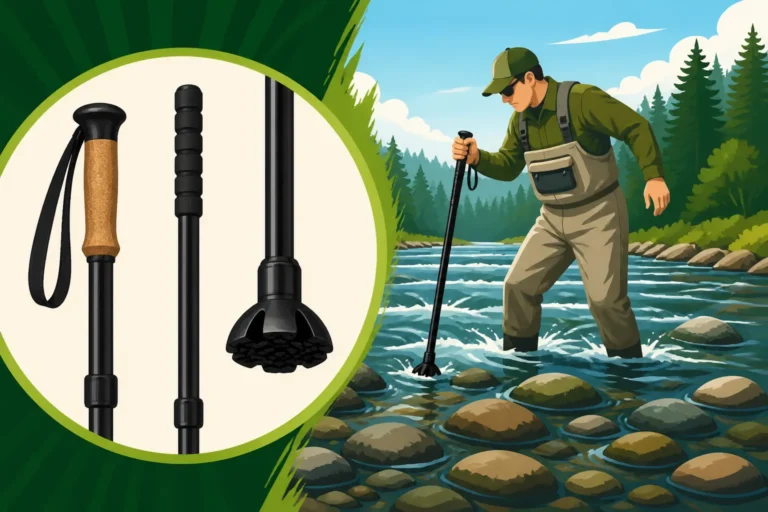
- Waders and Boots: Wading in murky water can be treacherous. Always use a wading staff and wear good wading boots with felt or sticky rubber soles for traction. Best Waders for Ontario Trout Streams and Best Wading Boots for Rocky Streams can provide further insights.
- Net: A good landing net is essential, especially for safely landing larger fish you might hook on heavy streamers. Best Landing Net for Trout is an excellent resource for this.
Fishing in muddy water is a challenge, no doubt, but it's a challenge that can be overcome with the right approach. By understanding how trout react to these conditions and adjusting your streamer selection, presentation, and gear accordingly, you can still have a successful and rewarding day on the water. Don't let a little mud deter you from your next Ontario trout adventure!
Disclaimer
This article is for general informational purposes only and does not constitute professional advice. Laws, prices and regulations vary by location and change over time. Consult a qualified professional for guidance on your specific situation.