Ontario life jacket requirements per passenger
Navigating Ontario's vast and beautiful waterways is an absolute privilege, but figuring out all the rules, especially around safety gear like life jackets, can feel like a real puzzle. It's not just about avoiding a fine; it's about protecting yourself and your loved ones. This guide is here to cut through the confusion and clearly lay out exactly what the life jacket requirements are for every passenger on your boat, so you can focus on the fishing, not the regulations.
Understanding the Basics of Personal Flotation Devices (PFDs) and Lifejackets in Ontario
When we talk about staying safe on the water, the terms "lifejacket" and "PFD" often get used interchangeably, but legally and functionally, there are some important distinctions that every boater and angler in Ontario needs to grasp. It's not just semantics; it's about understanding which device offers what level of protection and when.
The Crucial Difference: Lifejackets vs. PFDs
At its core, the main difference boils down to design intent and inherent buoyancy. A traditional lifejacket is designed with one primary goal: to turn an unconscious person face up in the water, ensuring their airway is clear. They typically have more buoyancy, especially around the head and neck, and are often bright colours like orange or red for maximum visibility. While incredibly effective, they can sometimes feel a bit bulky or restrictive, which is why many anglers and recreational boaters lean towards the alternative.
Personal Flotation Devices (PFDs), on the other hand, are designed for comfort and mobility. They offer good buoyancy to help you float, but they don't have the same guaranteed turn-over capability as a lifejacket. PFDs come in a wider variety of styles, colours, and designs, making them popular for activities like kayaking, canoeing, and fishing, where ease of movement is paramount. They are still Canadian Coast Guard (CCG) approved and meet strict safety standards, providing excellent protection as long as you're conscious and able to assist yourself. For any vessel, both PFDs and lifejackets are legally acceptable as long as they are approved and meet the necessary standards for each person on board.
Who Needs to Wear One? Not Just the Kids!
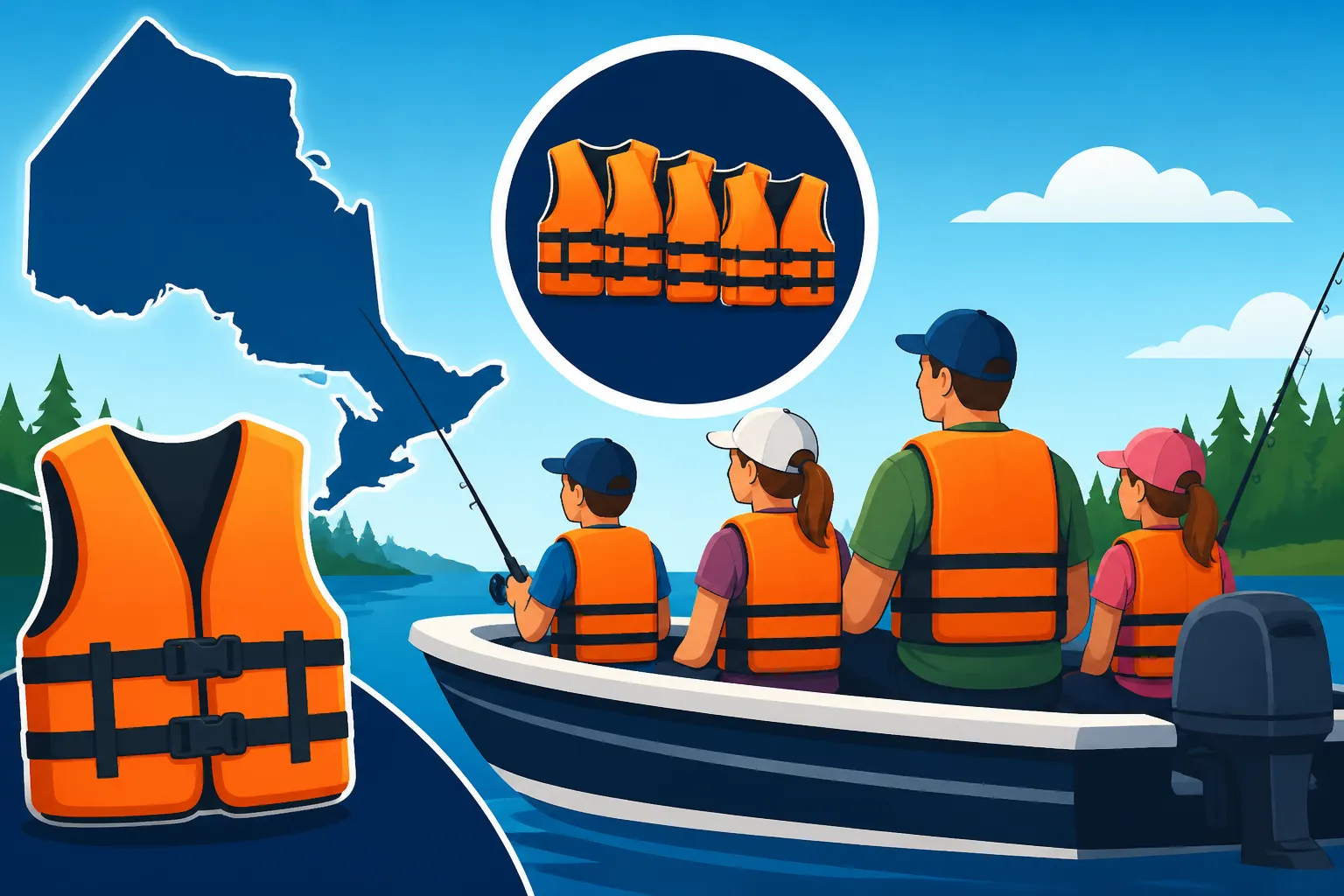
Here's the golden rule, straight from the regulations: every person on board any vessel in Ontario must have an approved PFD or lifejacket readily available. This isn't just for children; it applies to every single individual, from the seasoned captain to the tiniest infant. The idea is that in the event of an emergency, everyone has immediate access to a flotation device.
While having a PFD or lifejacket on board is the minimum legal requirement, there are specific situations where wearing it is either legally mandatory or highly, highly recommended for your safety. For instance, if you're operating a personal watercraft (PWC) like a Sea-Doo or Jet Ski, you must wear an approved PFD or lifejacket. Similarly, anyone being towed behind a boat on skis or a tube must wear one. Beyond the law, consider the inherent risks: cold water, unexpected capsizes, or being thrown overboard. In these scenarios, having a PFD on and properly fitted dramatically increases your chances of survival. Think of it as your most important piece of fishing gear, even more critical than your favourite rod.
Specific Requirements for Different Vessels and Passengers
Ontario's boating regulations are designed to be comprehensive, covering a wide array of vessels and passenger types. While the core "one per person" rule is universal, the nuances of what kind of PFD or lifejacket, and how it should be stored or worn, can vary slightly. It’s vital to understand these details to stay safe and compliant.
Requirements Based on Boat Type and Size
The fundamental principle is straightforward: there must be one appropriately sized, Canadian Coast Guard (CCG) approved PFD or lifejacket for every single person on board. This includes all passengers and crew. Beyond that, the specific requirements for additional safety equipment, which can indirectly influence PFD choice, often depend on the length of your vessel.
For smaller, unmotorized vessels like canoes, kayaks, and stand-up paddleboards, the PFD or lifejacket must be easily accessible. Many paddlers opt for inherently buoyant PFDs that are worn at all times due to the higher likelihood of immersion and the need for immediate flotation. For small motorboats up to 6 metres (about 19.7 feet), in addition to the PFDs, you’ll need a buoyant heaving line, a bailer or pump, a whistle, navigation lights if operating after sunset, and a watertight flashlight. As boats get larger, the list of required safety equipment grows. You can find a comprehensive breakdown of these items in the Ontario required boat safety equipment checklist. Knowing this list can help you assess not just your PFD needs, but your overall readiness for the water, whether you're out for a leisurely paddle on a calm lake or navigating the more unpredictable waters of Georgian Bay.
Sizing, Fit, and Condition for Optimal Safety
Having a PFD or lifejacket on board isn't enough; it must be the correct size for the individual intended to wear it, fit properly, and be in good, serviceable condition. This is where many people inadvertently fall short. A PFD that's too large can ride up around your ears, hindering your ability to keep your head above water, while one that's too small won't provide adequate buoyancy or may be uncomfortable and restricting. Always check the label for weight and chest size recommendations.
To ensure a proper fit, have the person put on the PFD and fasten all zippers and straps. Lift the PFD by the shoulders – if it slides up past their ears or nose, it's too large. For children, this test is especially critical. Beyond fit, the condition of the PFD is paramount. Look for tears, rips, mildew, or faded straps. The flotation material inside should be pliable and not hardened or waterlogged. Any PFD or lifejacket showing significant signs of wear and tear, or which is waterlogged, should be replaced immediately as its buoyancy will be compromised. Finding the right fit and style that people will actually wear can sometimes be a challenge, but platforms like Amazon offer an extensive range of PFDs, making it easier to compare sizes, types, and user reviews to ensure you pick the best and safest option for everyone on your boat. Remember, a comfortable PFD is a PFD that will actually be worn, significantly boosting safety.
Navigating Special Circumstances and Common Misconceptions
While the general rule of "one approved PFD or lifejacket per person" is clear, the real world throws in a few curveballs. There are specific considerations for our littlest passengers, family pets, and understanding when "having it on board" just isn't enough – when wearing it becomes critical. Dispelling these common misconceptions can make all the difference in an emergency situation.
Children, Infants, and Pets: Unique Considerations
When it comes to children, there's absolutely no room for error. Infants and young children have very specific needs for their flotation devices due to their smaller size, developing motor skills, and often different body proportions. Infant lifejackets are specifically designed for babies and toddlers, often featuring larger flotation collars to support their heads and straps that go between the legs to prevent the jacket from riding up. It is not acceptable for a child to wear an adult PFD, or one that is too large, as it simply won't perform its life-saving function effectively. Every child under the age of 16 should be wearing their PFD at all times when on an open boat or near the water. For more information on age-related regulations, you might find details in resources like the Ontario Youth Fishing License Exemption Under 18, which highlights the importance of youth safety on the water.
And what about our furry companions? While the law doesn't explicitly require pets to have a PFD, it is highly recommended. A dog PFD, often available for purchase from retailers like Amazon, can provide buoyancy, thermal insulation, and a handle to help you lift your pet back into the boat. Even the strongest swimmers can tire quickly in choppy water or cold conditions, and having a pet PFD can save their life and prevent a stressful situation for you.
Carrying vs. Wearing: When is Wearing Mandatory?
This is one of the most persistent areas of confusion. The regulation states that an approved PFD or lifejacket must be "readily available" for each person. This means it shouldn't be stowed in a locked compartment, under a pile of gear, or wrapped in a tarp. It needs to be where someone can grab it quickly and easily in an emergency. However, "readily available" doesn't always mean "wearing it."
As previously mentioned, there are clear legal requirements for mandatory wear. If you are operating a personal watercraft (PWC), you must wear a PFD or lifejacket. The same applies if you are being towed by a boat (e.g., waterskiing, tubing). Beyond these mandates, consider when wearing is simply the smart thing to do. If you're fishing alone, especially in cooler weather or on larger bodies of water, wearing your PFD offers immediate protection if you fall overboard or your boat capsizes unexpectedly. If you're exploring Ontario fishing rules on Crown land lakes, which can often involve remote and less-trafficked waters, wearing a PFD is a critical safety measure as help might be hours away. Always remember that even strong swimmers can be incapacitated by cold shock response, a sudden medical event, or an injury. A PFD worn properly gives you precious time and buoyancy. For more overarching details on boating safety, refer to the Ontario Boating Laws for Anglers and familiarize yourself with the requirements for obtaining your Ontario Pleasure Craft Operator Card Requirement, which covers much more than just PFDs.
Consequences of Non-Compliance and Best Practices
Ignoring life jacket requirements isn't just a minor oversight; it carries significant legal penalties and, far more importantly, puts lives at serious risk. Understanding the repercussions and adopting best practices will ensure not only compliance but also genuine safety for everyone enjoying Ontario's waters.
Penalties for Not Meeting Life Jacket Requirements
Transport Canada regulations, enforced by various authorities like the Ontario Provincial Police (OPP) and local conservation officers, are quite clear about the penalties for non-compliance. If an officer finds that you do not have the required number of approved PFDs or lifejackets on board for all passengers, or if they are not readily accessible and in good working order, you could face substantial fines. These fines are not trivial and are designed to act as a serious deterrent. For instance, being found without the proper safety equipment can result in fines upwards of several hundred dollars per infraction. If you're caught fishing without a license, the penalties are also significant, as detailed in Ontario fishing without a license penalty, highlighting that provincial authorities take all safety and regulatory compliance seriously.
Beyond monetary fines, there's the potential for more severe legal consequences, especially if an incident occurs and the lack of proper safety equipment is deemed a contributing factor. This could lead to charges of negligence or even criminal charges in tragic circumstances. It's not just about avoiding a ticket; it's about the very real legal and ethical responsibility you have as a boat operator or even just a passenger who knowingly overlooks safety protocols. Just like knowing the Ontario minimum fine for no Pleasure Craft Operator Card, understanding the potential financial and legal impact of PFD non-compliance should be a strong motivator for adherence.
Beyond the Law: Prioritizing Your Safety on Ontario Waters
While adherence to the law is crucial, savvy anglers and boaters know that legal minimums are truly just that – minimums. Real safety goes above and beyond merely checking boxes. Making the conscious decision to wear your PFD at all times, rather than just having it stowed, is one of the single most impactful choices you can make to ensure your safety and the safety of your loved ones.
Consider the unpredictable nature of Ontario's weather and water conditions. A calm morning can quickly turn into a windy, choppy afternoon. Cold water is a constant threat for much of the year, and even a quick dip can lead to cold shock response, which can render even a strong swimmer helpless in seconds. Wearing a PFD helps combat this immediate danger by keeping you afloat while your body adjusts. It's not just about what might happen if you fall in; it's also about what could happen to you – a sudden health event, a slip, or an unexpected capsize. Choosing a comfortable, well-fitting PFD, perhaps an inflatable one for those who dislike bulk, can make wearing it a no-brainer. Online stores like Amazon offer a wide range of comfortable, less bulky PFD options that you might actually want to wear. Explore your options!
Embracing a culture of safety extends beyond PFDs. Familiarize yourself with all Ontario required boater safety course rules and always be prepared for emergencies. Understanding conditions like How thick ice needs to be to fish safely in Ontario for ice fishing or the nuances of your Ontario Outdoors Card, Explained demonstrates a comprehensive approach to enjoying the outdoors responsibly. Ultimately, a day on the water should be about relaxation and enjoyment, and the peace of mind that comes from knowing everyone is safe, properly equipped, and legally compliant is truly priceless.
Lifejacket and PFD Quick Reference
To help clarify the differences and key considerations, here's a handy table:
| Feature | Lifejacket (e.g., Type I, Solas) | PFD (e.g., Type III, IV, V) |
|---|---|---|
| Primary Purpose | To turn an unconscious person face up; high visibility. | To provide buoyancy and support; comfort and mobility focused. |
| Buoyancy Level | High (often 22 lbs+ for adults). | Moderate (often 15.5 lbs for adults). |
| Comfort/Mobility | Generally bulkier, can restrict movement. | More comfortable, less bulky, designed for active use. |
| Approval | Must be Canadian Coast Guard (CCG) approved. | Must be Canadian Coast Guard (CCG) approved. |
| Legal Req. | One approved, properly sized, and accessible per person on board. | One approved, properly sized, and accessible per person on board. |
| Mandatory Wear | Required for PWCs, towed activities. Recommended always. | Required for PWCs, towed activities. Recommended always. |
| Turning Ability | Designed to turn an unconscious person face-up in water. | Does not guarantee to turn an unconscious person face-up. |
| Visibility | Often bright orange/red, reflective tape. | Wider range of colours, can be less visible. |
Disclaimer
The information provided in this guide is for general informational purposes only and does not constitute legal advice. While we strive to keep the information up-to-date and correct, regulations can change. Always consult the official Transport Canada and Ontario Ministry of Natural Resources and Forestry (MNRF) websites, or speak directly with an enforcement officer, for the most current and authoritative information regarding boating and fishing regulations in Ontario. Your safety is your responsibility.