Jigging for Perch Through the Ice
There's nothing quite like the crisp air, the vast expanse of a frozen lake, and the sudden, exhilarating tug on your line, especially when it's a feisty yellow perch on the other end. However, many anglers find themselves drilling holes for hours, shivering, and wondering why the fish aren't biting, despite knowing perch are abundant. This comprehensive guide will pull back the curtain on the art and science of jigging for perch through the ice in Ontario, providing you with the techniques, gear, and insights to turn those slow days into memorable hauls.
The Allure of Ice Fishing Perch in Ontario
Ice fishing for perch is an experience deeply ingrained in Ontario's winter culture, drawing seasoned anglers and families alike to its frozen lakes and rivers. There's a certain magic to it – the quiet solitude punctuated by lively action beneath your feet. But it's not just the peaceful setting; the pursuit of perch offers a unique blend of challenge and reward that keeps us coming back year after year.
Why Perch are the Ice Angler's Delight
Yellow perch are, without a doubt, one of Ontario's most popular ice fishing targets, and for good reason. They are generally abundant, often school in large numbers, and are renowned for their delicious, flaky white meat – making them a fantastic table fare after a cold day on the ice. Unlike some of the more elusive or territorial species, perch are typically quite aggressive feeders, especially when you hit upon a hot school, leading to fast and furious action. This makes them an excellent target for beginners and seasoned anglers looking for consistent bites. The thrill of dropping a small jig down an ice hole and almost immediately seeing your rod tip dance, signalling a perch strike, is incredibly addictive.
Furthermore, perch fishing through the ice is accessible. You don't necessarily need elaborate gear or remote wilderness access. Many lakes and bays close to urban centers hold thriving perch populations, allowing for quick day trips. This accessibility, combined with their willingness to bite and their culinary appeal, cements the yellow perch's status as an ice fishing favourite across the province.
Prime Perch Waters Across Ontario
Ontario is a true angler's paradise, and when it comes to yellow perch, we are incredibly spoiled for choice. From the massive Great Lakes to countless inland lakes, there are prime locations scattered throughout the province. Each body of water offers its own unique challenges and rewards, but some have consistently proven to be hotspots for healthy perch populations and fantastic ice fishing opportunities.
Lake Simcoe, often hailed as Ontario's ice fishing capital, is arguably the most famous perch destination. Its vastness, diverse structure, and exceptional forage base contribute to some of the largest and most abundant yellow perch catches in the province. Anglers flock to areas like Cook's Bay, Kempenfelt Bay, and the various shoals, often finding themselves on top of massive schools of jumbo perch. Similarly, Lake Erie, particularly its shallower western basin and sheltered bays like Long Point Bay, is renowned for its colossal yellow perch, though it demands more attention to safety due to its sheer size and unpredictable conditions. Check out our guide on Ontario Yellow Perch Limit on Lake Erie and Simcoe for specific regulations.
Beyond these giants, numerous smaller lakes offer incredible perch action. The Kawartha Lakes system, including Lake Scugog, Rice Lake, and Sturgeon Lake, are fantastic options, often with easier access and shallower depths, making them great for families. Lake Nipissing, a northern gem, is also famous for its abundant perch, providing excellent opportunities, especially in its bays and around structure. Even smaller, lesser-known lakes across the province, easily found via the Ontario Fish ON-Line Interactive Zone Map, Explained, can hold hidden perch treasures. The key is to look for lakes with good weed beds, sand flats, and drop-offs, as these are classic perch hangouts.
Essential Gear for Successful Ice Jigging
Having the right equipment can make all the difference between a frustrating day of missed bites and a day of non-stop action. When targeting perch through the ice, precision, sensitivity, and efficiency are paramount. Let's dive into the critical components of your ice fishing arsenal.
Rods, Reels, and Line: Precision Matters
For perch ice fishing, you're not looking for heavy-duty gear designed for monstrous lake trout; finesse is the name of the game. A good perch setup is all about sensitivity and control.
Rods: Opt for an ultralight or light action ice fishing rod, typically 24 to 32 inches long. The shorter length is ideal for fishing in an ice hut or kneeling by the hole, offering better control over your presentation. The crucial element is a very sensitive tip – often called a "spring bobber" or a flexible, brightly coloured tip – that can detect the subtlest of bites. Perch are notorious for their light, almost imperceptible "inhale" bites, especially on slow days, and a sensitive rod tip will translate these tiny movements into a visible signal, giving you a chance to react. Brands like HT Enterprises or Clam offer excellent options for dedicated ice rods.
Reels: A small, lightweight spinning reel (sizes 500 to 1000) is perfect. The key is a smooth drag system and a comfortable retrieve. You won't be fighting huge fish, but a smooth drag ensures that even a larger perch doesn't snap your line if it makes a sudden surge. A good reel will also help manage line twist, which can be a nuisance with light lines and small jigs.
Line: This is where many anglers make a mistake. For perch, light line is non-negotiable. Monofilament or fluorocarbon in 2 to 4-pound test is ideal. Anything heavier reduces sensitivity and can spook wary perch in clear water. Fluorocarbon is an excellent choice as a main line or leader because it's nearly invisible underwater and sinks faster than mono, helping your small jigs get down quickly. Some anglers prefer a very thin braided line with a fluorocarbon leader for ultimate sensitivity and strength, but ensure your braid is a low-diameter option, like 4-pound test. You can find a wide selection of these precision lines on Amazon.
Baits and Lures: Tempting the Nibblers
Perch aren't overly picky, but offering them the right temptation can significantly increase your catch rate. The world of perch ice fishing lures is vast, but a few categories consistently outperform others.
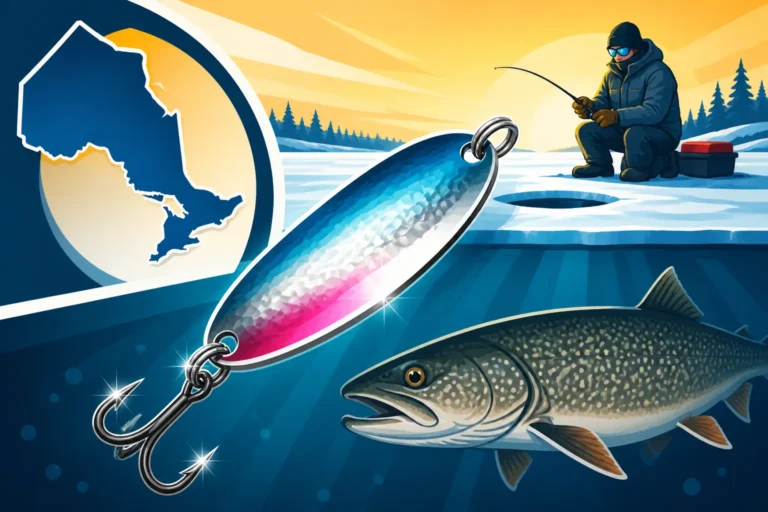
Jigging Spoons: These are a staple for a reason. Jigging spoons mimic small baitfish and can be worked aggressively to attract attention or subtly to entice a strike. Popular choices include small, flashy spoons like the Williams Wabler, Swedish Pimple, or various panfish-specific spoons from Northland Fishing Tackle. Colours like silver, gold, copper, or those with bright accents (fire tiger, chartreuse) are often effective. Tip your spoon with a small minnow head, a wax worm, or a maggot to add scent and extra appeal.
Small Jigs and Plastics: When perch are finicky, tiny jigs tipped with soft plastics can be deadly. Think small tungsten jigs (1/32 to 1/16 ounce) in bright colours (chartreuse, orange, pink) or natural hues (black, brown, green pumpkin). Pair these with micro-plastics that imitate larvae, grubs, or small minnows. Brands like Maki Plastics or Berkley PowerBait Micro Munchies offer excellent options. The tiny profile and subtle action of these baits can be irresistible to perch that are ignoring larger presentations.
Live Bait: There's no denying the effectiveness of live bait for perch. Small minnows (shiners, fatheads), wax worms, and maggots are perennial favourites. You can fish them on a plain hook under a small bobber, or, more effectively for jigging, tip your small jigs or spoons with them. A live minnow hooked through the back just behind the dorsal fin, allowed to swim naturally, can trigger aggressive strikes. Wax worms and maggots add scent and a tantalizing squirm to any artificial presentation. Always check local regulations on baitfish use, as some areas have restrictions to prevent the spread of invasive species.
Sonar and Ice Augers: Modern Tools for Success
While you can ice fish without these tools, modern technology has undeniably revolutionized the sport, making anglers more efficient and successful.
Sonar (Fish Finders): A portable ice fishing flasher or fish finder is arguably the most impactful piece of technology for serious perch anglers. Brands like Vexilar, Marcum, and Humminbird offer excellent models designed specifically for ice fishing. These units allow you to:
- Locate fish: See individual fish or schools of perch below your hole in real-time.
- Monitor your lure: Watch your jig descend and observe how fish react to your presentation.
- Identify structure: See the bottom contour, weed lines, and transitions where perch often hold.
- Determine depth: Know precisely how deep you're fishing.
This instant feedback empowers you to adjust your jigging technique, depth, and even lure choice until you find what triggers a bite. It's a game-changer for understanding the dynamics beneath the ice.
Ice Augers: A good ice auger is essential for drilling holes quickly and efficiently. You have several options:
- Hand Augers: Manual augers are lightweight, quiet, and budget-friendly. They're suitable for thinner ice (under 12-18 inches) or if you plan to drill only a few holes. Mora and Eskimo make reliable hand augers.
- Propane Augers: These offer power and convenience without the fumes of gasoline. They start easily in cold weather and are generally reliable.
- Gas Augers: Powerful and fast, gas augers are excellent for thick ice or drilling many holes quickly. Jiffy and Strikemaster are popular choices. However, they can be noisy and produce exhaust.
- Electric Augers: Battery-powered electric augers have become incredibly popular. They are quiet, emission-free, and incredibly efficient, especially with modern lithium-ion batteries. Brands like ION and Eskimo have developed excellent electric augers that can drill dozens of holes on a single charge, perfect for quickly exploring new areas or following moving perch schools. Many anglers are making the switch due to their convenience and environmental friendliness.
Whichever auger type you choose, ensure it's sharp. Dull blades are a huge frustration on the ice and can even be dangerous. Regular maintenance, like sharpening or replacing blades, is crucial. You can find robust options for both augers and fish finders on Amazon, often with competitive pricing.
Mastering Jigging Techniques for Perch
Ice fishing for perch is far more than just dropping a line down a hole and waiting. It's an active, engaging pursuit that rewards patience, observation, and a nuanced understanding of how perch behave under the ice. Developing a repertoire of jigging techniques will significantly increase your success.
Understanding the Perch Bite
Before you even start jigging, it's vital to grasp the typical behaviour of a perch. Unlike a muskie that might crush a lure with brute force, a perch bite, especially in cold water, can be incredibly subtle. They are often curious, approaching a lure cautiously before "inhaling" it rather than striking aggressively. This means you need to be constantly vigilant and ready to set the hook at the slightest indication.
Perch are schooling fish, which is a huge advantage for ice anglers. If you find one perch, there are almost certainly more nearby. They tend to follow baitfish schools or relate to specific bottom structures like weed edges, rock piles, or subtle drop-offs. Their activity levels can fluctuate dramatically throughout the day and with changes in weather or light conditions. Early morning and late afternoon often see increased feeding activity, but a strong school can bite aggressively at any time. Learning to read your sonar is key here; seeing fish appear on the screen, approach your lure, and then disappear often indicates a bite you didn't feel. This is a common challenge.
The Art of the Jig: Action and Presentation
Jigging is all about creating an illusion – making your lure appear alive and irresistible to a perch. There's no single "right" way to jig, as conditions and fish mood change constantly, but here are some fundamental techniques to build upon:
- The Classic Lift-Drop: This is the bread and butter. Drop your jig to the desired depth (often just above where you see fish on your sonar, or near the bottom). Give your rod tip a sharp, short lift (6-12 inches) to make the lure jump, then let it fall back naturally. The bite often occurs on the fall or just after the lure settles. Vary the height and speed of your lifts. Sometimes a quick snap, sometimes a slow, subtle rise.
- The Flutter: With jigging spoons, a longer, sweeping lift followed by a controlled fall can make the spoon flutter erratically, mimicking a distressed baitfish. This can be very effective for attracting perch from a distance.
- The Dead Stick: Sometimes, the most effective "jigging" is no jigging at all. Drop your bait to the desired depth and hold it perfectly still for 10-20 seconds. This can be deadly for finicky perch that are turned off by aggressive movements. Often, the rod is held in a second hole or placed in a rod holder while you actively jig another line. Tipping your dead stick bait with a minnow or a couple of wax worms enhances its appeal.
- Subtle Wiggles: For tiny jigs and plastics, sometimes a very subtle, quivering motion of the rod tip is all it takes. Just enough to make the plastic quiver and dance without moving the jig far from its position. This is particularly effective when perch are shallow and wary.
- Pounding the Bottom: If you're not seeing fish on sonar, or if they're hugging the bottom, try "pounding" your jig on the lakebed. Let it hit the bottom, then lift it a few inches and let it drop again, stirring up silt. This can imitate a feeding baitfish or insect and attract curious perch.
The key to all these techniques is constant experimentation. Start with a classic lift-drop, then vary the speed, height, and pauses. Pay close attention to what triggers a bite and try to replicate it. Remember that perch often bite as the lure falls, so keep a close eye on your line or sensitive rod tip for any hesitation or unnatural movement.
Reading the Environment: Depth, Structure, and Location
Finding perch through the ice is half the battle, and this requires understanding their preferred habitats and movements. They are creatures of structure and feed, always on the lookout for their next meal.
Depth: Perch can be found anywhere from shallow weed beds in 5-10 feet of water to deeper basin areas of 30-50 feet or more, depending on the lake and time of winter. Early ice often sees them shallower, relating to remaining green weeds. As winter progresses and oxygen levels drop in shallow areas, they tend to move deeper to main lake basins, relating to transitions or subtle contours. Your sonar will be invaluable for finding the depth at which active schools are holding. Don't be afraid to drill holes at varying depths until you locate them.
Structure: Perch are rarely found suspended in open water without a reason. They relate strongly to structure.
- Weed Edges: Green weeds provide oxygen, cover, and a buffet of insects and small baitfish. Perch will cruise these edges.
- Drop-offs and Breaks: Transitions from shallow to deep water are prime ambush points. Perch will often sit on the deeper side, darting up to feed.
- Rock Piles and Humps: These provide cover and attract baitfish, making them magnets for perch.
- Sand Flats: Especially those adjacent to deeper water or weed beds, can be excellent feeding grounds.
- Inflow/Outflow Areas: Rivers or streams entering/exiting a lake can create current and attract bait, drawing perch.
When scouting a new lake, consult a contour map (many are available digitally or on apps) to identify potential structure. Look for points, inside turns, humps, and sudden depth changes. If you find one perch in a particular spot, drill more holes around that specific piece of structure. Often, the biggest fish will be slightly off the main school, so spread out your holes in a "grid" or "fan" pattern to cover more ground. Our guide to Best Ice Fishing Lakes in Ontario might offer some starting points for your next adventure.
Movement: Perch are nomadic, especially in large lakes. A school can move off as quickly as it appeared. This is where mobility becomes crucial. Don't be afraid to move if the bite dies. Drill new holes, explore different depths or structures, and stay active. The angler who drills the most holes often catches the most fish. Using an electric auger really shines in these situations, allowing you to relocate efficiently without tiring yourself out.
Common Challenges and Troubleshooting
Even with the best gear and techniques, ice fishing can present its share of frustrations. From finicky fish to unpredictable weather, overcoming these challenges is part of the learning curve and separates the consistently successful anglers from those who merely hope for a bite.
Dealing with Finicky Biters
We've all been there: your sonar screen is lit up with fish, but they just won't commit. They approach your lure, maybe give it a nudge, but refuse to inhale it. This is a classic finicky perch scenario, and it calls for a tactical adjustment.
First, downsize your presentation. If you're using a 1/8 oz spoon, switch to a 1/16 oz or even a tiny 1/32 oz tungsten jig. Perch can be incredibly sensitive to lure size, especially in clear, heavily fished waters. Try pairing these smaller jigs with micro-plastics or a single wax worm. The smaller, more natural profile can be the key.
Second, slow down your retrieve and lighten your jigging action. Instead of aggressive lifts, try a subtle quiver or a slow, almost imperceptible lift-and-hold. Sometimes, holding the bait completely still for an extended period (a "dead stick" approach) is what it takes. Perch might prefer to just suck in a stationary meal.
Third, change colors. If chartreuse isn't working, try natural hues like black, brown, or green pumpkin. Conversely, if natural isn't producing, a vibrant orange or pink might grab their attention, especially in stained water. Keep a variety of colours and sizes in your tackle box.
Finally, change depths. Even if fish are showing on your sonar at 15 feet, try dropping your lure just a foot above them, or even a foot below them, and slowly raising it. Perch often feed looking slightly upwards, but sometimes they prefer a bait presented at their eye level or even just below. Experimentation is the golden rule when fish are finicky.
Managing Changing Weather and Ice Conditions
Ontario winters are beautiful but can be notoriously unpredictable. Weather and ice conditions are paramount to safety and success on the hard water.
Weather:
- Cold Fronts: A sudden drop in temperature or a high-pressure system moving in often makes fish less active. Bites can become extremely subtle. This is when downsizing and slowing down your presentation is most crucial.
- Warm Fronts/Overcast Days: Often, these conditions are fantastic for ice fishing. Lower pressure and increased light penetration (on overcast days) can make fish more aggressive. Don't be afraid to use slightly more aggressive jigging motions and even larger lures.
- Wind: High winds make it difficult to feel subtle bites, blow snow into your holes, and can make for a miserable day. Using an ice hut or windbreak is essential. If fishing exposed, choose heavier jigs to maintain contact with the bottom.
Ice Conditions: This is a matter of safety above all else. Always prioritize safety over catching fish.
- Thickness: A minimum of 4 inches of clear, new ice is generally considered safe for walking. 5-7 inches for snowmobiles, and 8-12 inches for small cars. These are guidelines; always check local conditions, talk to local bait shops, and use an ice chisel or spud bar to test ice as you go.
- Quality: New, clear ice is strongest. Slushy, honeycombed, or cracked ice is dangerous, regardless of thickness. Stay away from areas with current, pressure cracks, or around inflows/outflows from rivers. Our guide on How thick ice needs to be to fish safely in Ontario provides more detailed information.
- Snow Cover: Snow acts as an insulator, slowing ice growth, and can obscure weak spots. Always be extra cautious on snow-covered ice.
- Sun/Warmth: Even in winter, prolonged sun and warm temperatures can degrade ice, especially late in the season. Always be aware of your surroundings and plan your exit route.
Avoiding Common Ice Fishing Mistakes
New and even experienced anglers can fall into common traps that hinder their success. Being aware of these pitfalls can help you avoid them.
1. Not Moving Enough: This is perhaps the biggest mistake. If you're not getting bites after 15-20 minutes in a spot, move! Perch are schooling fish, and if they're not there, they're not there. Don't be afraid to drill more holes, even if it means packing up your gear and relocating across a bay or to a different piece of structure.
2. Overlooking Subtlety: Many anglers miss bites because they're waiting for a powerful tug. Perch bites are often just a slight hesitation in the line, a tiny tap, or your sensitive rod tip suddenly straightening out or dipping slightly. Pay constant attention.
3. Using Too Heavy Line/Gear: As discussed, finesse is key. Heavy line and stiff rods transmit less sensitivity, making subtle bites harder to detect and potentially spooking fish. Keep it light!
4. Not Varying Presentation: Sticking to one jigging motion or one lure color, even when fish aren't biting, is a recipe for a slow day. Be an experimental angler. Cycle through different techniques, depths, and baits until you find what works.
5. Ignoring the Sonar: Your fish finder is a window into the underwater world. Don't just use it to find fish; use it to observe their behaviour. Are they approaching your lure fast or slow? Are they coming in from the side or below? Are they spooking from your presentation? This information is gold.
6. Forgetting the Bait: Always tip your artificial lures with live bait (minnow head, wax worm, maggot) or scent. The added smell and natural texture can be the crucial difference, especially on tough days.
7. Leaving Holes Unattended Without a Plan: While you might have a "dead stick" in a separate hole, make sure you're still actively monitoring it. A common mistake is to leave a line in an adjacent hole, get distracted by action on your main line, and miss a bite or, worse, have a fish spool your reel and run under the ice. Always keep an eye on all your lines.
By being mindful of these common issues, you'll significantly improve your chances of a successful and enjoyable day jigging for perch through the ice.
Responsible Ice Fishing Practices
As anglers, we have a responsibility to not only enjoy Ontario's incredible natural resources but also to protect them for future generations. This means adhering to safety protocols and practicing ethical conservation.
Safety First on the Ice
Ice fishing is an inherently risky activity if not approached with caution and respect for the environment. While the pursuit of perch is exhilarating, your safety and the safety of those with you must always be the top priority.
1. Check Ice Thickness Regularly: Never assume the ice is safe, even if others are out there. Ice conditions can vary dramatically across a single lake or even within a small area due to currents, springs, or underlying structure. Use an ice chisel or spud bar to test the ice every few steps, especially when moving into a new area. As a general rule for walking, aim for a minimum of 4 inches of clear, solid ice. Thicker ice is needed for snowmobiles (5-7 inches) and vehicles (8-12 inches). Always refer to local guidelines and be extra cautious early and late in the season.
2. Fish with a Buddy: The "buddy system" is not just for summer camping; it's critical for ice fishing. If an accident occurs, having someone else there to help can be life-saving. Even if you're an experienced angler, unforeseen circumstances can arise.
3. Carry Safety Equipment: This isn't optional; it's essential.
* Ice Picks: Wear ice picks around your neck or in an easily accessible pocket. If you fall through, these can help you grip the ice and pull yourself out.
* Rope/Throw Bag: A length of sturdy rope (at least 50 feet) or a dedicated throw bag can be used to rescue someone who has fallen through the ice without putting yourself in danger.
* Whistle: To signal for help.
* First-Aid Kit: For minor injuries.
* Flotation Suit or PFD: While not always worn, a good quality floatation suit or a personal flotation device (PFD) worn under your outerwear can significantly increase your survival time and buoyancy if you go through the ice.
4. Inform Others of Your Plans: Always tell someone responsible where you're going, your planned route, and when you expect to return. This way, if you don't check in, someone knows to initiate a search.
5. Dress Appropriately: Layering is key for staying warm and dry. Hypothermia is a real danger. Wear waterproof and windproof outer layers, insulated boots, and a warm hat and gloves. Bring extra dry clothes in a waterproof bag, just in case.
6. Avoid Alcohol: Alcohol impairs judgment and accelerates heat loss, significantly increasing the risk of accidents and hypothermia. Save the celebratory drinks for after you're safely off the ice.
By integrating these safety practices into every ice fishing trip, you can ensure that your pursuit of perch remains an enjoyable and secure winter activity.
Conservation and Sustainable Harvesting
Ontario boasts incredible fisheries, and responsible angling is crucial to keeping them healthy. When jigging for perch, remember that your actions have an impact.
1. Know Your Regulations: Before hitting the ice, familiarize yourself with the current Ontario Fishing Regulations Explained, specifically for the lake you plan to fish. Pay close attention to perch specific rules, including bag and possession limits, size restrictions (if any), and season dates for the appropriate Ontario Fisheries Management Zones, Explained. Regulations are designed to protect fish stocks and ensure long-term sustainability. Ignorance is not an excuse for non-compliance.
2. Respect Bag and Possession Limits: These limits are not suggestions; they are legal requirements based on scientific assessments of fish populations. Only keep what you need and what is legally allowed. If you've caught enough for a meal, consider releasing the rest, especially larger "jumbo" perch which are often the best breeders. Releasing a few healthy fish back into the water helps maintain strong populations.
3. Practice Proper Catch and Release (if applicable): While perch are often kept for food, there are times you might release them (e.g., small fish, unwanted species, or after reaching your limit). Handle fish gently, minimize their time out of water, and use appropriate tools like needle-nose pliers for hook removal. If a fish is deeply hooked, it's often best to cut the line as close to the hook as possible rather than tearing vital organs.
4. Minimize Waste: If you are keeping fish, make sure to clean them efficiently and dispose of carcasses responsibly, not just leaving them on the ice. Proper disposal prevents attracting scavengers and keeps the environment clean for everyone.
5. Leave No Trace: Pack out everything you pack in. This includes bait containers, discarded fishing line, food wrappers, and any other garbage. Discarded fishing line is a major hazard to wildlife. The goal is to leave the ice as clean, or cleaner, than you found it.
6. Prevent the Spread of Invasive Species: Always clean your gear, including auger blades, sleds, and boots, before moving from one body of water to another. Drain all water from livewells and bait buckets. Even tiny fragments of weeds or unseen organisms can transport invasive species that can devastate native ecosystems.
By embracing these responsible practices, we ensure that the thrill of jigging for perch through the ice remains a cherished part of Ontario's winter tradition for generations to come.
Disclaimer
The information provided in this guide is for general informational purposes only and is not a substitute for official government regulations. Always consult the current Ontario Fishing Regulations Summary, available from the Ministry of Natural Resources and Forestry (MNRF) or on their website, before heading out on the ice. Ice conditions can be unpredictable and dangerous; exercise extreme caution and prioritize safety.