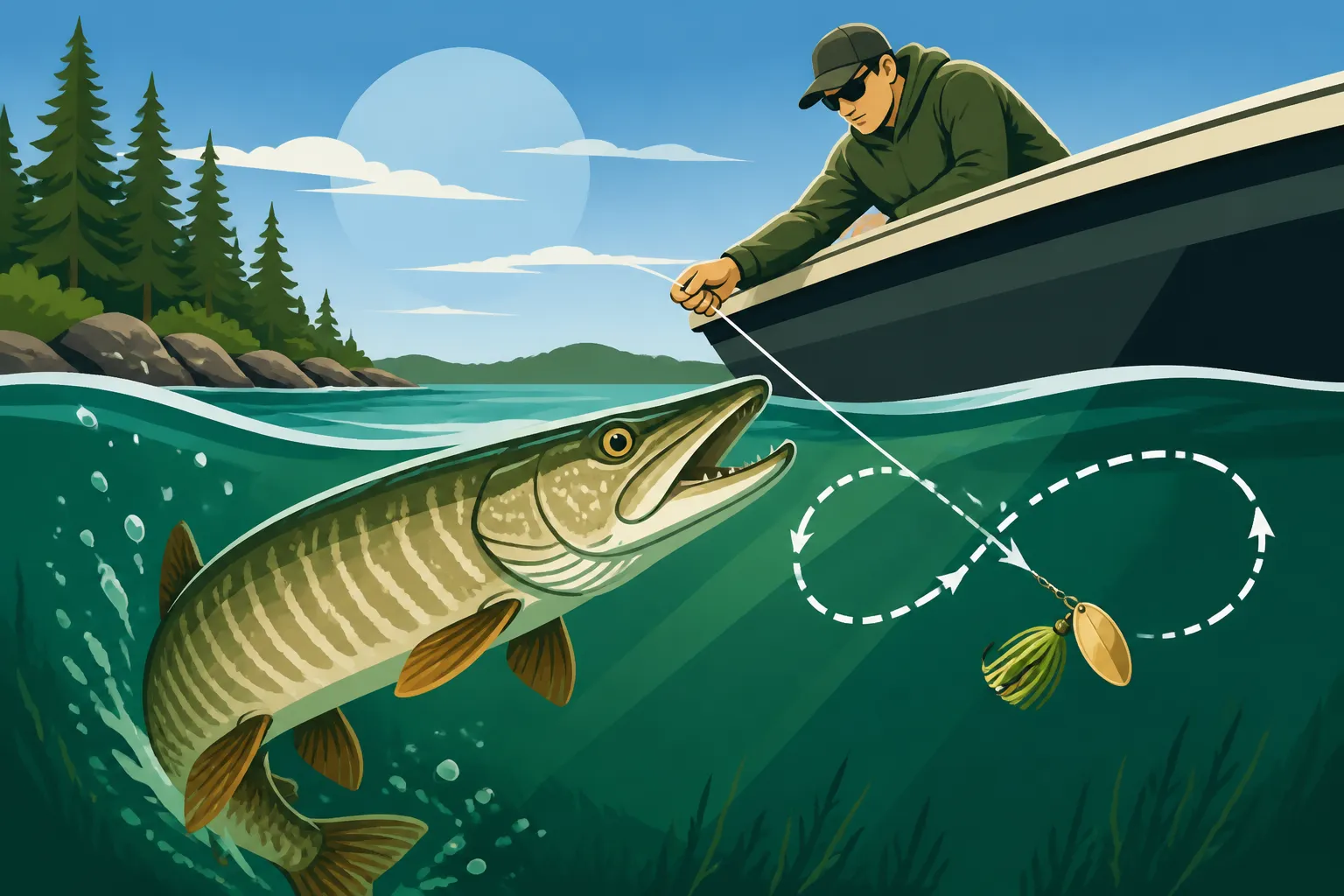
How to catch muskie on a figure-eight boatside
There’s nothing quite like the heart-stopping moment a monstrous muskie follows your lure right to the boat, only to turn away at the last second. It’s a gut punch, a true test of an angler's patience and skill, and it happens more often than most folks care to admit. But what if you could turn those boatside rejections into exhilarating hook-ups? This guide is all about mastering the figure-eight, that critical, last-ditch maneuver that can make all the difference between a crushing disappointment and the fish of a lifetime.
The Boatside Figure-Eight: Your Last Stand for Muskie
That moment when a muskie — sometimes a true leviathan – appears out of the depths, shadowing your lure just feet from your rod tip, is a mix of pure adrenaline and sheer terror. You’ve worked your retrieve, maybe for hours, without a sniff, and now here it is, an absolute beast. It’s easy to get flustered, to rush things, or to simply freeze up, and that’s precisely when most anglers lose their chance. The muskie, being the apex predator it is, often needs that final trigger, that last bit of perceived escape, to commit. That's where the figure-eight comes into play – it's your extended cast, your last chance to convince that fish to strike.
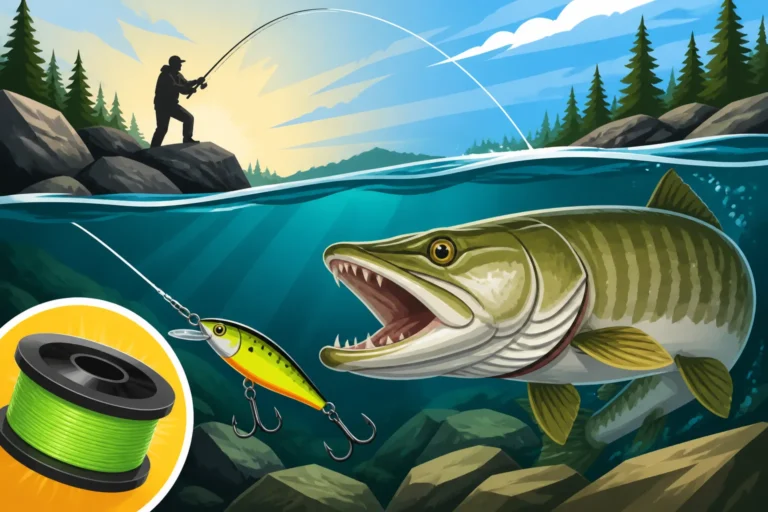
Think about it: a muskie, whether it's an average size or a true trophy from the Best Muskie Waters in Ontario, is built for ambush. They don't just eat; they attack. When they follow your lure, they're assessing it, looking for a weakness, waiting for the perfect moment. If you simply pull your lure out of the water, that moment is gone, and so is the muskie. The figure-eight mimics a panicking baitfish trying to escape its predator, desperately looping and darting at the surface. It provides the visual stimulation and the "do or die" urgency that often pushes a hesitant muskie over the edge. It's not just a fancy trick; it's a fundamental part of How to Catch Muskie in Ontario.
The frustration of watching a massive fish just turn and sink back into the murk is something every muskie angler knows all too well. It sticks with you, replaying in your mind, making you question every retrieve, every decision. The figure-eight isn't a guarantee, nothing ever is with these fickle fish, but it significantly tips the odds in your favour. It's about being prepared, being disciplined, and understanding the muskie's predatory instincts well enough to exploit them right at the boat.
Breaking Down the Technique: Step-by-Step Execution
Mastering the figure-eight isn't about brute force; it's about fluid motion, controlled speed, and a deep understanding of what you're trying to achieve. It needs to look natural, like a wounded baitfish, not a clumsy angler. Here's how to execute it effectively:
The Smooth Transition from Retrieve
As your lure approaches the boat, don't just stop your retrieve. This is the first critical step. Keep the lure moving, maintaining its action and depth. As your leader knot reaches your rod tip, or even slightly before, resist the urge to lift the lure out of the water. Instead, smoothly sweep your rod tip directly into the water, extending your reach. The goal is to keep the lure continuously moving, mimicking its previous path, but now within arm's reach of the boat. This continuous motion is key; any sudden stop can signal danger to the muskie.
Imagine you're pulling a bucktail in from a long cast on a northern Ontario lake. The retrieve has been steady, rhythmic. As it gets close, you see that shadow, then the distinct profile of a muskie. Your heart might be pounding, but your hands need to be steady. Without breaking stride, extend your rod tip down and forward into the water, following the lure's trajectory. You're effectively widening the circle of your retrieve, using the boat as a pivot point for a wider turn.
Executing the "Figure-Eight" Shape
Once your rod tip is submerged and you're maintaining the lure's momentum, you're ready to draw the "eight." The key here is to make wide, sweeping turns. Think about the largest figure-eight you can make without hitting the boat or losing control.
- The First Loop: Start by sweeping your rod out wide to one side of the boat, creating a large, semi-circular path. Your rod tip should remain submerged, guiding the lure through the water. Keep your eyes locked on the muskie. Is it still following? Is it showing interest? Adjust your speed slightly, perhaps a subtle acceleration, to trigger a strike.
- The Transition: As you complete the first half of the "eight," seamlessly transition to the other side of the boat, bringing the lure across the stern or bow (depending on your starting position) and then sweeping it wide again in the opposite direction. The cross-over point in the middle of the "eight" is often a prime strike zone, as it mimics a sudden change in direction from fleeing prey.
- Repeating the Pattern: Continue this large figure-eight pattern. Don't be afraid to make three, four, or even five loops. Each sweep should be deliberate and smooth. The muskie is looking for a pattern, then an interruption. Your job is to keep it engaged, make it believe the lure is trying desperately to get away. This is where patience truly pays off, especially when pursuing a Muskellunge Growth Rate to Trophy Size.
The table below illustrates some common scenarios and how to adjust your figure-eight strategy:
| Aspect | Ideal Figure-Eight Approach | Why It Matters |
|---|---|---|
| Fish Speed | Match the fish's speed, then accelerate slightly. | Mimics fleeing prey, triggers predatory instincts. |
| Lure Depth | Keep the lure just below the surface, or at fish eye level. | Maximizes visibility for the fish, keeps it engaged. |
| Rod Tip | Keep it submerged, deep, and smooth. | Prevents line tangles, creates fluid motion. |
| Boat Position | Maintain a safe distance, allow room for wide sweeps. | Gives you space to work the fish without spooking it. |
| Visual Contact | Eyes on the fish, not just the lure. | Read its body language for the exact moment to strike. |
The Critical Hookset
When the muskie strikes, it’s usually violent and sudden. Resist the urge to yank. Instead, sweep your rod hard and low, driving the hooks home. Muskie have bony mouths, and a weak hookset often results in a lost fish. After the hookset, get ready for a battle – these fish don’t give up easily. Keep the pressure on, and fight the fish with confidence. Remember, many of the Best Lures for Muskie Fishing in Ontario are equipped with multiple treble hooks, so ensure your hands are clear during the fight and landing.
Maximizing Your Chances: Tips, Tricks, and Common Pitfalls
Even with the technique down pat, there are nuances that can greatly increase your success rate with the figure-eight. It’s often the little details that separate a good muskie angler from a truly exceptional one.
Varying Speed and Depth: Don't Be Predictable
Muskies are smart, but they're also opportunistic. If you're doing a perfect, rhythmic figure-eight and the fish just isn't committing, don't be afraid to change things up.
- Sudden Accelerations: A common tactic is to accelerate the lure rapidly for a short burst within a loop, mimicking a baitfish making a desperate dash. This often provokes a reactionary strike.
- Momentary Pauses (Subtle Ones): Sometimes a tiny, almost imperceptible pause, just enough to make the lure flutter or fall slightly, can be the trigger. But be cautious with this; too long a pause and the muskie might lose interest entirely.
- Depth Changes: Most figure-eights are done just below the surface, but if the fish seems lethargic or is following deeper, try to make your loops slightly deeper, or even perform a "sudden drop" where you let the lure sink a foot or two before quickly reeling it back up into the pattern. This works especially well with certain jerkbaits or glide baits.
Watching the Fish, Not (Just) the Lure
This is perhaps one of the most crucial tips. Your eyes should be glued to the muskie. Watch its eyes, its fins, its body language. Is its mouth opening and closing subtly? Are its pectoral fins flared? Is it moving closer or holding its distance? These are all cues. If its head starts to turn towards the lure, or if it suddenly closes the distance, you know a strike is imminent. You're reading its intentions, giving you the best possible chance to time your acceleration or hookset.
Many anglers make the mistake of watching their lure, mesmerized by its action. But the lure isn't going to tell you when the muskie is about to bite. The muskie itself will. This acute observation is a skill developed over countless hours, but it’s a game-changer.
Avoiding Line Wrap-ups and Maintaining Control
A long muskie rod, often between 8 to 9 feet, is essential for a good figure-eight. A shorter rod simply won't give you the reach or the leverage needed for wide, smooth loops. When sweeping your rod through the water, ensure your line isn't rubbing against the boat, the outboard motor, or anything else that could impede its movement or cause a break. A strong Best line for muskie fishing in rocky water and a robust Best wire leader for muskie fishing are critical here, as any abrasion can lead to heartbreak.
Another common pitfall is lifting the rod tip too high. This reduces the size of your figure-eight and can cause your line to tangle around the rod tip, especially if you're using heavy braided line. Keep that rod tip down and submerged for maximum control and fluidity.
Knowing When to Call It
Sometimes, despite your best efforts, a muskie simply won't commit. It might follow for several figure-eight loops, showing interest, but never striking. There comes a point where continuing the maneuver will only spook the fish further without any benefit. Generally, after 5-7 strong, well-executed loops with varied retrieves, if the fish hasn't struck or shown strong intent, it's often best to slowly disengage. Lift the lure cleanly from the water, try not to splash, and let the fish go its way. You can't win them all, but learning when to gracefully exit the dance is as important as knowing how to perform it. Remember that Ontario Muskellunge Season Dates and Limits are designed to protect these incredible fish, so careful handling is always paramount.
The Right Tools for the Job: Gear for the Figure-Eight
You wouldn't try to change a tire with a butter knife, and you shouldn't try to figure-eight a muskie with inadequate gear. The right equipment gives you the control, power, and durability needed for this intense boatside maneuver.
Rod Selection: Length, Power, and Action
When choosing a rod, remember that bigger is often better for muskie fishing, especially when it comes to the figure-eight.
- Length: Aim for a rod between 8' and 9'6". The extra length provides crucial leverage for wide sweeps and allows you to keep the lure further from the boat, giving the muskie more space to commit without feeling threatened. It also helps absorb the shock of a sudden strike at close quarters. You can find excellent options on platforms like Amazon.
- Power: You need a heavy or extra-heavy power rod. This isn't about sensitivity; it's about brute strength. You're casting large, heavy lures, and you need to drive big hooks into a bony mouth. A heavy power rod allows you to put maximum pressure on the fish during the figure-eight and the subsequent fight. This aligns with seeking the Best rod power for muskie fishing.
- Action: A fast or extra-fast action rod is generally preferred. This means the rod bends mostly in the tip section. It provides the backbone needed for power but still allows for precise lure manipulation and quick hooksets.
Reel Choice: Strength and Gear Ratio
Your reel needs to be a workhorse, capable of handling large lures and powerful fish.
- Size and Strength: A baitcasting reel in the 300 to 400 size range is typically appropriate for muskie. Look for a robust frame, strong gears, and a reliable drag system that can withstand the intense runs of a big muskie.
- Gear Ratio: A gear ratio of 6.3:1 to 7.1:1 is a good balance. A higher ratio (faster retrieve) can be beneficial for quickly taking up slack and accelerating the lure during the figure-eight, which is important for muskie. A slightly slower ratio can offer more torque for working heavier bucktails or deep-diving crankbaits. For more detail, check out information on the Best reel gear ratio for muskie. Regardless of your preference, ensure the reel is smooth and reliable.
Line and Leader: Unyielding Connections
Your line and leader are your direct connection to the fish, and failure here means a lost opportunity.
- Braided Line: Heavy braided line, typically 80 to 100 lb test, is the standard for muskie fishing. Its zero-stretch properties provide maximum sensitivity and allow for solid hooksets, even when a muskie takes a lure at the far end of a figure-eight. The strength is also crucial for battling these powerful fish.
- Leader Material: A heavy-duty leader is non-negotiable for muskie. These fish have razor-sharp teeth that will easily slice through monofilament or fluorocarbon main line. Options include heavy fluorocarbon (100-150 lb test) or single-strand wire leaders. Many anglers prefer fluorocarbon for its stealth and abrasion resistance, while others stick with wire for absolute tooth protection. Ensure your leader is long enough (18-36 inches) to prevent a muskie from biting through your main line, even during a frantic figure-eight. When purchasing these crucial components, look for trusted brands on retailers like Amazon.
Lure Considerations for the Figure-Eight
While almost any lure can be figure-eighted, some are more effective due to their action and ability to withstand aggressive maneuvering.
- Bucktails: These are classic muskie lures and are fantastic for figure-eighting. Their blades continue to spin and flash even at slow speeds or during quick changes of direction, making them highly effective at eliciting strikes.
- Jerkbaits and Glide Baits: These lures can be particularly deadly during a figure-eight because their erratic, darting action perfectly imitates a fleeing baitfish. A good retrieve during the figure-eight will make them slash and glide, driving muskies wild.
- Topwater Lures: While less common for the figure-eight, topwater lures can be incredibly exciting if a muskie follows them to the boat. The splash and commotion at the surface can be an irresistible trigger.
Ultimately, the figure-eight is about giving that muskie one last chance to eat. It requires practice, confidence, and the right gear, but the payoff — the explosive, boatside strike of a true goliath – is one of the most thrilling experiences in all of freshwater fishing. The next time you're out on the water, targeting these incredible fish, remember to perfect your figure-eight; it just might be the move that lands you the fish of your dreams. Remember, these fish bite at various times, but understanding the Best months to catch muskie in Ontario can also boost your overall success.
Disclaimer
This article is for general informational purposes only and does not constitute professional advice. Laws, prices and regulations vary by location and change over time. Consult a qualified professional for guidance on your specific situation.