How to wade an Ontario trout stream safely
There’s nothing quite like the allure of an Ontario trout stream – the crystal-clear water, the promise of a wary brook trout or a shimmering rainbow, and the quiet solitude of nature. But let's be honest, those beautiful, wild waters can also be incredibly intimidating, even dangerous, if you're not prepared. Many of us have felt that anxious wobble on a slippery rock or the sudden chill of unexpectedly deep water. This guide is here to cut through the uncertainty, offering practical advice and techniques to help you wade safely and confidently, ensuring your focus stays on the fishing, not on potential hazards.
Understanding the Risks of Wading Ontario Trout Streams
Stepping into an Ontario trout stream is an experience that connects you deeply with nature, but it also comes with inherent risks that are important to acknowledge before you even think about casting a line. These aren't just calm, predictable waters; they can be dynamic and unforgiving, and understanding what you're up against is the first step to staying safe.
Hidden Dangers Beneath the Surface
The biggest challenge when wading is often what you can't see. Ontario’s trout streams, from the renowned Grand River to smaller, more remote tributaries, boast incredibly varied bottom compositions. You might start on a relatively stable gravel bed, only for it to quickly transition to slick, algae-covered boulders or loose, shifty rocks that roll underfoot. One moment you're confidently striding, and the next your foot could slip on a mossy rock, sending you off balance. This is a common frustration, as even seasoned anglers find themselves surprised by the ever-changing stream bed.
Current strength is another major factor. What looks like a gentle flow from the bank can become a powerful force once you're in it, especially after heavy rains or during spring runoff. A seemingly benign riffle can hide a surprisingly strong push that can knock you off your feet. Moreover, many streams have unseen drop-offs – pockets where the bottom suddenly plunges several feet, catching you completely off guard. Imagine feeling solid ground underfoot one second, and the next you’re chest-deep in frigid water, fighting the current to regain your footing. These unexpected changes can happen in an instant, turning a peaceful fishing trip into a precarious situation.
Environmental Factors and Wildlife Encounters
Beyond the immediate aquatic hazards, the wider environment of Ontario’s wilderness presents its own set of challenges. Cold water shock and hypothermia are real dangers, particularly in spring or fall, or even during summer in deeper, spring-fed streams. Even on a warm day, a sudden fall into cold water can quickly reduce your core body temperature, impairing your judgment and motor skills. This is why proper layering and preparation are non-negotiable.
Then there are the less pleasant aspects of nature: insects. Ontario is infamous for its black flies and mosquitoes, particularly in late spring and early summer. While not directly a wading risk, being constantly swarmed can be distracting, leading to errors in judgment or a rushed, less careful approach to wading. Carrying a good bug spray is essential. In more remote areas, especially in Northern Ontario, you also need to be mindful of wildlife. Encounters with bears, moose, or even smaller, venomous snakes (like the Eastern Massasauga Rattlesnake in specific regions) are rare but possible. Being aware of your surroundings, making noise, and knowing how to react are crucial elements of responsible outdoor recreation. Always check the weather forecast and current water levels before heading out; a sudden thunderstorm upstream can turn a trickle into a torrent in a very short time.
Essential Gear for Safe Wading
Being properly outfitted isn't about looking the part; it's about genuine safety and comfort, which are inextricably linked when you’re out on an Ontario trout stream. Investing in the right gear isn't just a suggestion; it's a necessity that can make all the difference between an enjoyable day on the water and a potentially dangerous ordeal.
Waders and Wading Boots: Your Foundation
Your waders and wading boots are arguably the most critical pieces of safety equipment for stream fishing. They protect you from the cold water and provide the necessary grip on slippery surfaces. The fit of your waders is paramount. Too tight, and you'll restrict movement and tear the material; too loose, and they’ll bunch up, creating tripping hazards and making it harder to move against the current. When you’re choosing, consider the type of fishing you’ll be doing and the time of year. Breathable waders, often made from Gore-Tex or similar materials, are fantastic for warmer weather or active fishing, as they allow sweat to escape, preventing you from getting clammy. For colder conditions, or if you plan on extended periods in chilly water, neoprene waders offer superior insulation, though they can be hot and less flexible. You can often find a wide range of options on platforms like Amazon, allowing you to compare features and read reviews before making a choice. For a deep dive into options, consider reading our guide on the Best Waders for Ontario Trout Streams.
Wading boots are where the rubber (or felt) meets the riverbed, quite literally. The sole type is crucial and depends heavily on the kind of substrate you'll be encountering. Felt soles offer excellent grip on smooth, algae-covered rocks, which are common in many Ontario streams. However, felt can pick up invasive species (like rock snot or whirling disease), so they require thorough cleaning and drying between uses. Rubber soles are more environmentally friendly and perform well on mud and gravel but can be dangerously slick on wet rocks. Many anglers opt for studded rubber soles, which combine the traction of rubber with the added bite of metal studs, providing a great all-around solution for varied conditions. For more detailed insights into choosing the right footwear, check out our guide on the Best Wading Boots for Rocky Streams.
Wading Staff and Personal Flotation Devices PFDs
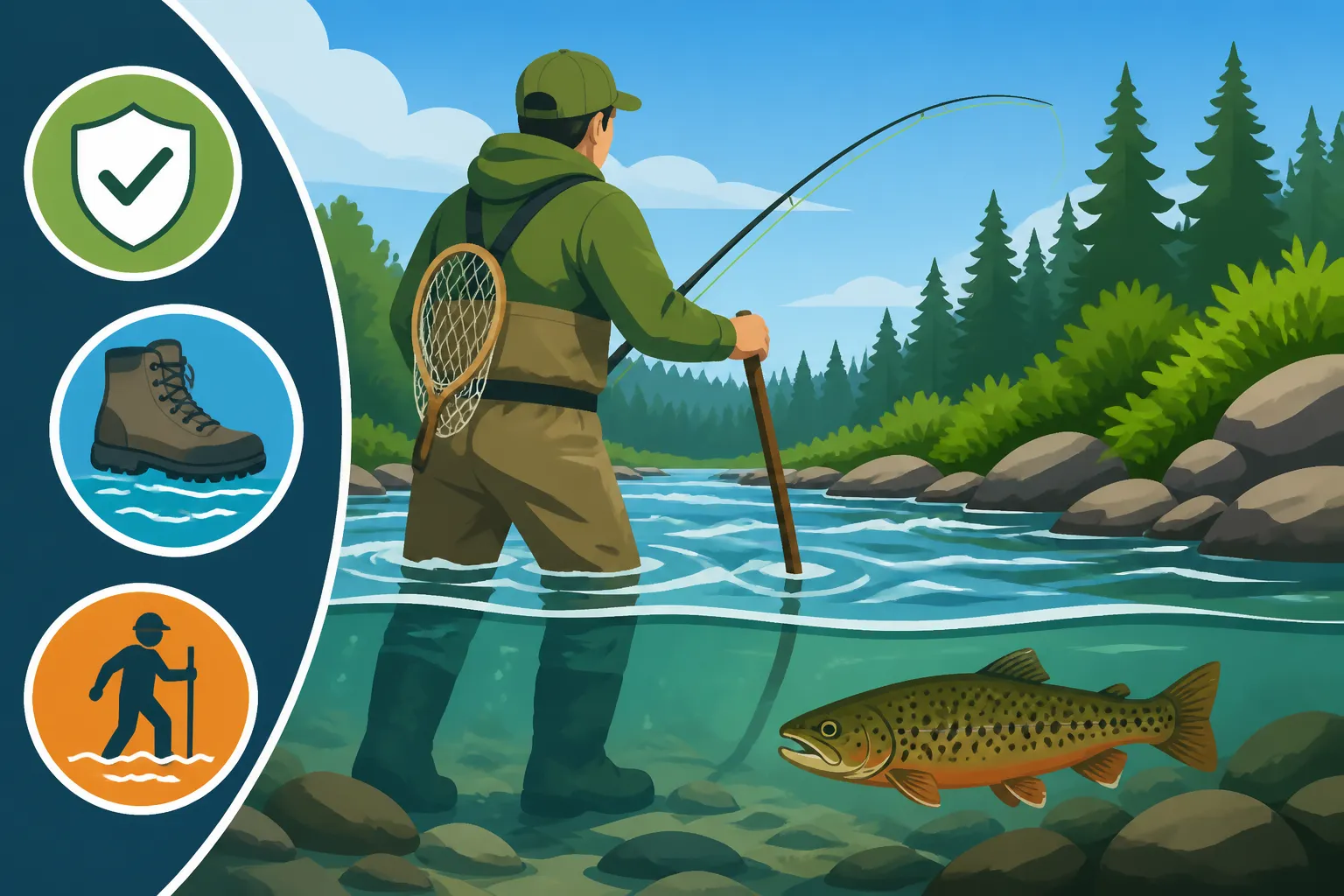
A wading staff is like having an extra leg – a third point of contact that can be a literal lifesaver. It allows you to probe the depth of the water ahead, test the stability of the bottom, and maintain balance, especially when crossing faster currents or navigating tricky terrain. Folding wading staffs are popular for their portability, collapsing neatly when not in use, while fixed staffs offer greater rigidity. Whichever you choose, ensure it's robust and has a secure lanyard to prevent loss. Even a simple, sturdy stick can be invaluable in a pinch. Seriously, don't underestimate the power of a good wading staff; it's a game-changer for confidence and safety. We’ve covered these in more detail in our article on the Best Wading Staff for Fast Current.
While not always a common sight for stream wading, a Personal Flotation Device (PFD) is a wise choice, especially if you're fishing unfamiliar waters, deep rivers, or streams with strong currents. Modern inflatable PFDs are compact and unobtrusive, designed to be worn like a vest or small belt pack, deploying only when needed. They offer an extra layer of protection, particularly if you’re fishing alone or in remote areas where help might be a long way off. When you consider the potential consequences of being swept off your feet in a fast, cold river, a PFD provides peace of mind that’s hard to put a price on.
Essential Accessories for Preparedness
Beyond the big-ticket items, a few essential accessories can significantly enhance your safety and overall experience. Layering your clothing, even on seemingly warm days, is vital due to Ontario’s often unpredictable weather and the constant threat of cold water. Start with moisture-wicking base layers, add insulating mid-layers, and top with a waterproof shell. This allows you to adjust to changing conditions.
A waterproof dry bag is indispensable for keeping your phone, car keys, wallet, and any other essentials completely dry. Even if you're careful, a slip can happen, and having your vital items protected is crucial. Many excellent options are available from brands on Amazon, offering different sizes and durability. For ideas on what kind of bags work well, even if you’re not in a boat, check out our insights on the Best Dry Bag for Kayak Fishing.
Always carry a basic first-aid kit, equipped with essentials for cuts, scrapes, blisters, and insect bites. A communication device, such as a fully charged cell phone (in a waterproof case, of course) or a satellite messenger for truly remote areas, is non-negotiable. Finally, proper hydration cannot be overstated. Carrying a water bottle or hydration pack will prevent fatigue and maintain focus, allowing you to wade safely for longer periods.
Wading Techniques for Different Stream Conditions
Once you have your gear sorted, it's time to talk about technique. Wading isn't just about walking into the water; it's a mindful process that requires patience, observation, and a deliberate approach. Master these techniques, and you'll navigate Ontario's diverse trout streams with confidence.
Reading the Water Before You Step In
Before you even consider placing a boot in the water, take a moment to "read" the stream. This means observing the water from the bank, trying to decipher its secrets. Look for visible entry and exit points – areas where the bank is gentle and the bottom appears stable. Identify slower currents, which are generally safer for wading, and pay attention to how the current moves around obstacles like rocks and fallen trees.
Riffles, runs, and pools each present different wading challenges and opportunities. Riffles (shallow, fast-moving water) can often have a stable, gravelly bottom but a strong current. Runs (deeper, smoother flows) might have a more consistent bottom but can be surprisingly deep. Pools (deep, slow-moving areas) often hide significant drop-offs and can have soft, mucky bottoms. By carefully observing the water color and clarity, you can often infer depth. Clearer, shallower water allows you to see the bottom, while darker, opaque areas usually indicate greater depth or a soft, silty bottom. Taking a few minutes to plan your route, rather than blindly charging in, can prevent a lot of headaches – and cold dunkings. Understanding the different sections of a river, such as those described in How to fish a run and pool trout stream, can also give you valuable insight into potential wading paths.
Mastering the Wading Steps
The most fundamental wading technique is often called the "shuffle" or "three-point contact" method. This means moving slowly and deliberately, always ensuring you have two points of contact (feet and/or wading staff) on the bottom before moving the third. Never lift both feet off the bottom at the same time, especially in current. Each step should be a cautious probe: place your foot down gently, test for stability and depth, then shift your weight.
Always try to face upstream or slightly quartering downstream. Facing upstream allows you to see oncoming current, obstacles, and the general flow, giving you more time to react. When crossing a faster current, angle your body slightly downstream, allowing the current to push against your upstream leg, creating stability. Use your wading staff on your upstream side to brace against the current, much like a ski pole provides balance. Keep your knees slightly bent to act as natural shock absorbers, absorbing the push and pull of the water. Avoid large, sweeping steps; smaller, more controlled movements are key to maintaining balance and preventing slips.
Dealing with Unexpected Falls and Emergencies
Despite all precautions, sometimes a fall is unavoidable. The most important thing is to stay calm. If you do fall, immediately orient yourself so your feet are pointing downstream, keeping them up and slightly bent to absorb impact with rocks or obstacles. This prevents your foot from getting wedged, which can be extremely dangerous. Let the current carry you, using your arms to steer towards shallower, calmer water or the bank. Don't fight the current; conserve your energy for getting to safety.
Self-rescue often involves floating on your back, slowly working your way towards a reachable bank. Once you find stable ground, take a moment to check yourself and your gear. If you’re fishing with a buddy, which is always recommended, signal for help clearly and calmly. A whistle attached to your PFD or waders can be very effective for alerting others to your situation. In more remote areas, having a plan for communication and knowing basic first aid, as well as where your emergency contact information is stored in your dry bag, can be critical.
Seasonal Considerations for Ontario Wading
The beauty of fishing in Ontario is its distinct seasons, each offering unique opportunities and challenges. However, these seasonal shifts drastically impact wading conditions, meaning your approach to safety needs to adapt throughout the year.
Spring Thaw and High Water Challenges
Ah, spring in Ontario – the promise of open water and eager fish. But with that promise comes the significant challenge of spring thaw and often torrential rains, leading to higher, colder, and faster water levels. Many streams swell with snowmelt and runoff, transforming once-gentle flows into powerful torrents. This is when the risks of being swept off your feet or succumbing to cold water shock are at their highest. Wading during these times requires extreme caution.
Always check local water level reports and river gauges before heading out. Avoid wading if the water is exceptionally high or turbid, as hidden obstacles and drop-offs become even more dangerous. Your wading staff becomes an indispensable tool for probing depths and stability. Opt for neoprene waders for maximum insulation against the frigid water. Be wary of unstable banks where erosion might have created undercut sections, and always look out for floating debris that could knock you off balance. For more tactical advice on fishing in these conditions, our guide on Best techniques for high water spring conditions can be a valuable resource.
Summer's Low and Clear Waters
Summer brings generally lower and clearer water levels to many Ontario trout streams, making for easier wading in some respects. The warmer temperatures are certainly more forgiving if you take an accidental dip. However, new challenges emerge. The clearer water often means slicker, algae-covered rocks, turning seemingly stable surfaces into treacherous ice rinks. Rubber-soled boots, especially without studs, can be particularly hazardous here.
The lower water also concentrates fish, making them more visible – but also spookier. This means you need to wade more quietly and carefully, minimizing disturbance. Heat management is also key; while the water might be cool, direct sun exposure can lead to dehydration and heat exhaustion. Breathable waders are a must, and a wide-brimmed hat, sunglasses, and plenty of water are essential. For insights into adapting your fishing approach to these conditions, check out Best techniques for low clear water conditions.
Fall Fishing and Cooler Conditions
Fall fishing in Ontario is breathtaking, with vibrant colours and often aggressive fish as they prepare for winter. Wading conditions typically see a return to cooler water temperatures, which means bringing back those insulating layers. However, falling leaves can accumulate in slower sections of the river, creating hidden traps that conceal slippery rocks or unexpected soft spots on the bottom. These leafy piles can be surprisingly deep and unstable.
Water levels can fluctuate dramatically in the fall due to significant rain events or periods of drought. Always be prepared for changing conditions. Footwear with good grip, such as studded rubber soles, is highly recommended to handle both wet leaves and the inevitable slick rocks. This is a season where the joy of fishing can easily distract from the need for careful wading, so maintain vigilance. Interestingly, as the waters cool, some fish become more active, but it’s a good reminder that When Ontario trout streams get too warm to fish is no longer a concern, replaced by other challenges.
Winter Wading: A Niche Pursuit
Winter wading is a specialized pursuit for the truly dedicated angler in Ontario, offering solitude and a unique challenge. However, it's also the most hazardous season for wading. Extreme cold, ice formation along the banks and stream edges, and the risk of hypothermia are paramount concerns. Wading should only be attempted in open water sections that remain unfrozen, and even then, ice shelves can be unstable and treacherous.
Specialized gear is absolutely essential for winter wading, including insulated waders (often heavy neoprene or specialized breathable models with extra layering), insulated boots, and potentially even ice cleats on your wading boots for walking to the stream. Never wade alone in winter, and always inform someone of your exact plans and expected return time. The consequences of a fall into frigid water are severe, and rapid self-rescue is critical. While not specifically for trout, our guide on Best techniques for winter smallmouth bass may offer some transferable principles for navigating cold water environments, if you're inclined to brave the elements.
Wading Boot Sole Types Comparison Table
Here's a quick comparison to help you decide which wading boot sole might be best for your Ontario adventures:
| Sole Type | Best For | Pros | Cons | Environmental Impact |
|---|---|---|---|---|
| Felt | Smooth, algae-covered rocks; slippery riverbeds | Excellent grip on wet, slick surfaces. | Poor on mud/snow; can pick up invasive species; wears quickly. | High risk of transferring invasive species. |
| Rubber | Mud, gravel, dry land; general purpose | Durable; good traction on varied terrain (except slick rocks); easy to clean. | Can be very slippery on wet, smooth, algae-covered rocks. | Low risk of transferring invasive species (if cleaned). |
| Studded Rubber | Varied terrain; slick rocks; moderate current | Best all-around grip; combines rubber traction with metal bite. | Can damage boat floors; studs can wear down; can be noisy on rocks; more expensive. | Low risk of transferring invasive species (if cleaned). |
Disclaimer
Please remember that fishing and wading in natural environments carry inherent risks. This guide provides general information and recommendations, but it cannot cover every possible scenario. Always exercise caution, use common sense, and prioritize your safety. Local conditions can change rapidly, so always check local regulations, weather forecasts, and water conditions before heading out. The author and publisher are not responsible for any incidents or accidents that may occur while following the advice in this guide. Stay safe and enjoy your time on Ontario's beautiful trout streams!