Best lure retrieve speed for smallmouth in fall
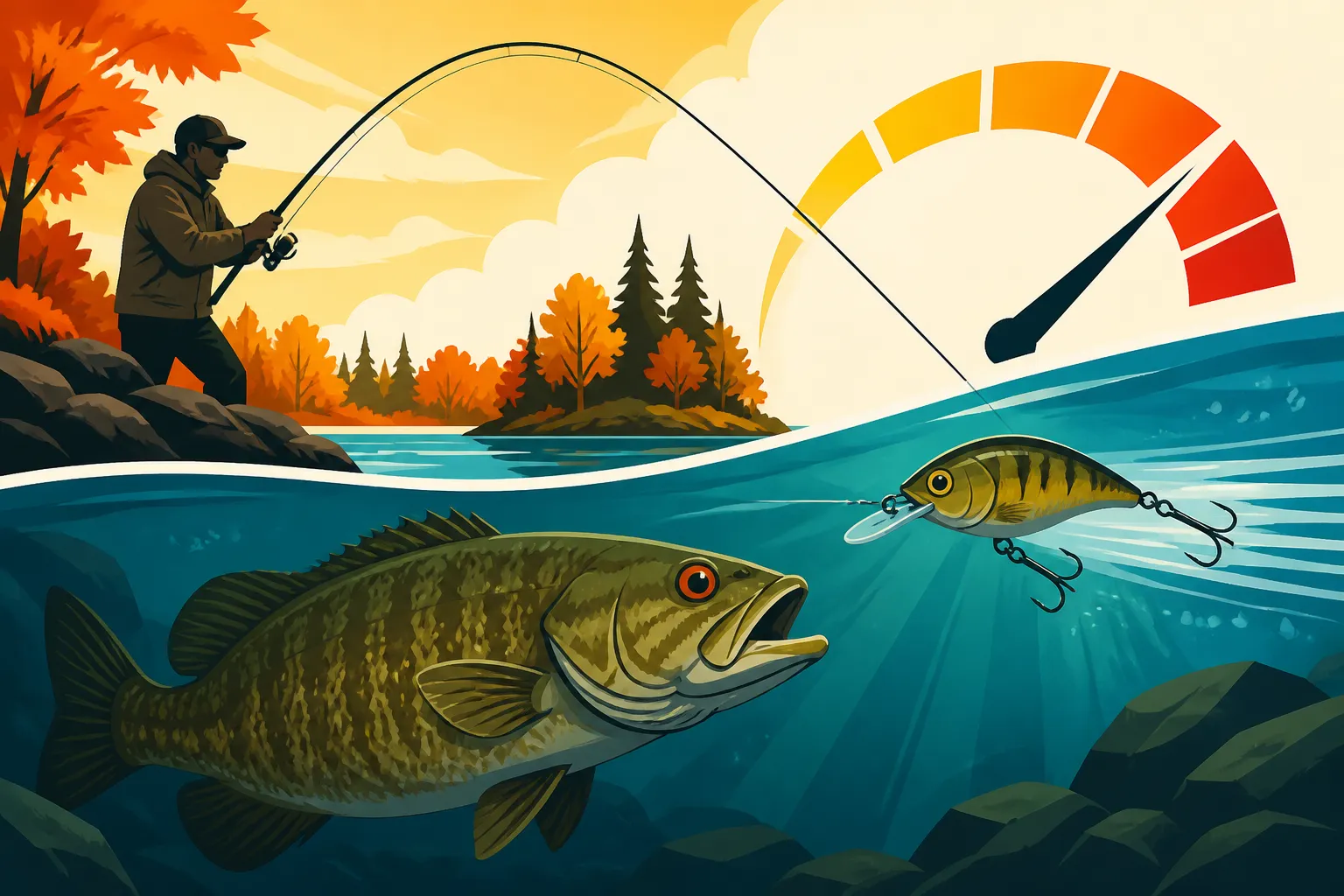
As the crisp air of autumn settles over Ontario, many anglers find themselves facing a familiar challenge: the smallmouth bass, once so eager to smash topwaters, become noticeably more elusive and finicky. That aggressive, fast-paced retrieve that produced explosive bites all summer long suddenly stops working, leaving you wondering if the fish have simply vanished into the deeper abyss. They haven't, but their metabolism has slowed, and truly understanding the best lure retrieve speed for smallmouth in fall is absolutely essential to keep those bronzebacks coming to the boat. This guide is here to walk you through exactly how to adjust your approach for successful fall smallmouth fishing.
Understanding Fall Smallmouth Behavior and Metabolism
Fall is a time of transition for smallmouth bass. As the warm embrace of summer fades, these powerful fish begin to adapt to changing water conditions, and their behavior shifts dramatically. Ignoring these changes is a surefire way to come home empty-handed.
The Impact of Cooling Water Temperatures
This is perhaps the single most important factor. As water temperatures drop, so does the smallmouth's metabolism. Think of it like this: in summer, they're running on high octane, burning energy quickly and needing frequent, aggressive meals. They'll chase a fast-moving bait because they have the energy and the urgency to do so. In fall, however, it's more like they're in energy-saving mode.
When the water dips below, say, 60°F (15°C), their digestive processes slow down. They don't need to eat as often, and they're less willing to expend massive amounts of energy chasing down a meal. A slow, easy target becomes much more appealing. This means that a lure zipping by too quickly might be completely ignored, not because they aren't hungry, but because it's simply too much work. We need to present baits in a way that conserves their energy while still triggering a predatory instinct.
Smallmouth Transition to Deeper Water and Baitfish Migration
As the shallows cool off, smallmouth bass often begin to migrate towards deeper, more stable water. This could mean main lake basins, deeper rock structures, offshore humps, or the deep bends and channels of rivers. They're looking for areas where water temperatures are more consistent and where their primary food sources—baitfish like perch, cisco, shiners, and even some panfish—are also moving.
This seasonal migration means they're no longer scattered across vast shallow flats. Instead, they'll often begin to school up in larger numbers, following these baitfish migrations. This schooling behavior can be a double-edged sword: you might find them in incredible numbers, but if you're not fishing the right depth or presenting the bait correctly, you'll miss them entirely. They become more focused on ambush points along these migration routes or in proximity to concentrated bait schools. Understanding these shifts is foundational to successful Smallmouth Bass Fishing in Ontario during the cooler months.
Key Environmental Factors Dictating Retrieve Speed
While cooling water is the overarching theme, several specific environmental factors work in concert to determine just how fast or slow you should be working your lures.
Water Temperature: The Ultimate Deciding Factor
We've touched on it, but let's dive deeper into how specific temperature ranges impact your retrieve speed. This isn't just about general coolness; every few degrees can make a noticeable difference in smallmouth activity.
- 60°F (15°C) to 50°F (10°C): This is early to mid-fall. Fish are still fairly active but definitely slowing down. You can often get away with a moderate retrieve, especially on sunny days. Jerkbaits with short pauses, slow-rolled swimbaits, and tube jigs hopped with short, sharp movements followed by brief rests are effective. The fish will chase a bit, but they prefer an easy meal.
- 50°F (10°C) to 40°F (4°C): Now we're getting into late fall. Smallmouth become significantly more lethargic. Long pauses become critical, often lasting 5-10 seconds or even longer, especially for suspending jerkbaits. Finesse presentations like dragging tube jigs or slowly creeping hair jigs along the bottom are paramount. Vertical jigging with blade baits or spoons also excels here, mimicking a dying baitfish with minimal effort from the angler. These are the techniques often discussed in Best Techniques for Late Fall Smallmouth Bass.
- Below 40°F (4°C): This is bordering on winter. Smallmouth are almost completely inactive, conserving energy. Bites will be incredibly subtle, feeling like a slight "tick" or just added weight. Presentations must be painstakingly slow, often involving merely shaking a tube jig in place or using a dead-stick retrieve. Vertical presentations, very slow lifts and drops, become the most reliable method.
Here's a quick reference table to help visualize the temperature-to-retrieve connection:
| Water Temperature Range | Smallmouth Activity Level | Suggested Retrieve Speed/Style | Key Lure Types |
|---|---|---|---|
| 60°F – 50°F (15°C – 10°C) | Moderate to Slowing | Moderate, short pauses, subtle hops | Jerkbaits, Swimbaits, Tubes, Crankbaits |
| 50°F – 40°F (10°C – 4°C) | Slow, Lethargic | Slow, long pauses, dragging, subtle lifts | Jerkbaits, Tube Jigs, Hair Jigs, Blade Baits, Spoons |
| Below 40°F (4°C) | Extremely Slow, Inactive | Painstakingly slow, dead-stick, vertical jigging | Hair Jigs, Blade Baits, Spoons, Drop Shots |
Forage Availability and Species-Specific Movements
While water temperature dictates their willingness to move, the presence and behavior of their food source dictate where they'll be and what kind of retrieve might mimic that food. If you've located a school of smallmouth relating to a ball of bait on your fish finder, observe how that bait is moving.
Are the baitfish actively darting and schooling? A slightly faster, more erratic retrieve might imitate a panicked baitfish trying to escape. Are they hunkering down near the bottom, barely moving? Then your retrieve needs to be equally subtle, portraying an injured or dying meal that's easy pickings. Matching the size and general movement of the prevalent baitfish in the area is crucial, regardless of the retrieve speed. Sometimes, fish will even key in on specific species, like when smallmouth are gorging on emerald shiners in Lake Erie, as highlighted in specific articles like Smallmouth Bass Habits on Lake Erie.
Weather Patterns and Their Influence on Activity
Beyond temperature, day-to-day weather patterns play a huge role. Smallmouth are sensitive creatures, and abrupt changes can put them off their feed entirely.
- Cold Fronts: Nothing shuts down smallmouth faster than a sudden cold front. The high-pressure system that follows a front often makes fish extremely tight-lipped. On these days, your retrieve should be agonizingly slow, with extended pauses. This is when finesse tactics really shine, similar to Cold Front Fishing Tactics for Ontario Walleye, the principles often transfer to other species.
- Stable, Sunny Days: Paradoxically, after a few days of stable, sunny weather in the fall, smallmouth might become slightly more active, especially during the warmest part of the day. You might be able to speed up your retrieve just a touch, perhaps shortening your jerkbait pauses or adding a slightly more aggressive hop to your jig.
- Overcast, Drizzly Days: These are often considered prime fall fishing days. The low light conditions can keep smallmouth active for longer periods and even encourage them to move shallower than they might on a bright, sunny day. A moderate, consistent retrieve can often be very effective, allowing the fish to track your lure without being spooked by intense sunlight.
Dialing In Retrieve Speeds for Specific Fall Smallmouth Lures
Now let's get down to the nitty-gritty: how to work your favorite smallmouth lures when the temperatures drop. Each lure type has its own nuances, and understanding them will elevate your autumn angling game.
Jerkbaits: Suspending and Pausing for Success
If there's one lure that truly shines for fall smallmouth, it's the suspending jerkbait. Its ability to hang motionless in the water column is absolutely irresistible to a lethargic smallmouth.
The quintessential fall jerkbait retrieve is a "twitch, twitch, PAUSE." The magic, however, is in the pause. In early fall (60-50°F), a 1-3 second pause might be enough. The fish are still willing to chase a bit. But as the water cools into the low 50s and 40s, you need to extend that pause significantly. We're talking 5-10 seconds, sometimes even 15-20 seconds in extremely cold water. Imagine a baitfish struggling and then simply giving up, hovering lifelessly. That's what you're trying to mimic. The strike often comes on that dead pause, sometimes after the bait has been sitting there so long you're convinced nothing's going to happen.
Vary the intensity of your twitches too. Sometimes sharp, aggressive snaps get their attention, followed by a long pause. Other times, soft, subtle pulls are all it takes. Popular suspending jerkbaits like the Rapala X-Rap, Lucky Craft Pointer, or Megabass Vision 110 are all excellent choices. You can often find a great selection of these on Amazon if your local tackle shop is running low on specific colors or sizes.
Tube Jigs and Hair Jigs: Bottom Contact and Finesse
When smallmouth are tight to the bottom in deeper water, tube jigs and hair jigs become indispensable. These are finesse presentations that demand patience and a slow hand.
For tube jigs, the retrieve is typically a slow drag, a slight hop, and then a long pause. The key is to keep constant contact with the bottom, mimicking a crawfish or a dying baitfish rooting around. Let the tube fall on a slack line after a hop; it will spiral down enticingly, often triggering a strike. A lot of your bites will come as the tube is falling or sitting motionless. Experiment with jig head weights to find one that allows for a slow, controlled fall but still maintains bottom contact.
Hair jigs, especially for colder water, are renowned for their subtle, natural movement. The retrieve is similar to a tube: a slow drag or a short, subtle lift followed by a long pause. The hair pulsates and breathes even when the jig is completely still, making it incredibly lifelike. Many anglers swear by the effectiveness of hair jigs in late fall and even winter conditions, making articles like Best Hair Jig Technique for Winter Smallmouth invaluable reading. Quality hair jigs and appropriate jig heads can be easily sourced from large online retailers like Amazon.
Blade Baits and Underspins: Vertical and Slow Presentations
When smallmouth are suspended in deeper water or hugging tight to structure, vertical presentations can be deadly. Blade baits and underspins offer distinct advantages in these scenarios.
Blade baits, like the Sebile Vibrato or traditional Heddon Sonar, are designed to vibrate intensely on the lift and then flutter enticingly on the fall. The retrieve is a simple lift-and-drop. Lift your rod tip sharply or slowly, causing the bait to vibrate, then let it fall back down on a semi-slack line. The bites almost always happen on the fall. The speed of your lift and the duration of your pause on the bottom will dictate effectiveness. Slower lifts and longer pauses are generally better in colder fall water.
Underspins, essentially a jig head with a small spinner blade attached beneath, combined with a soft plastic swimbait or grub, are fantastic for a slow, seductive presentation. The retrieve is a slow roll, just fast enough to get that blade spinning and the swimbait tail kicking. It's a subtle flash and vibration that can draw strikes from fish that ignore more aggressive presentations. They're excellent for targeting fish on drop-offs or in areas where baitfish are schooling tightly.
Swimbaits and Grubs: Mimicking Migrating Baitfish
Soft plastic swimbaits and grubs, particularly those with a paddle tail, are excellent for imitating the larger baitfish that smallmouth often key on in the fall.
The retrieve for these is usually a slow, steady wind, just enough to get the tail thumping. You want a consistent, lifelike swimming action. Sometimes, a very slow "thump, thump, pause" retrieve can be effective, allowing the bait to settle momentarily before continuing its swim. Match the size of your swimbait to the prevalent forage. If smallmouth are feeding on 4-inch perch, a 4-inch swimbait is a good starting point. You can rig these on standard jig heads, or for added flash and appeal, on an underspin. These versatile lures can often be found in a wide array of sizes and colors on websites like Amazon, ensuring you have options for various baitfish profiles.
Practical Tips for Refining Your Fall Smallmouth Retrieve
Getting the retrieve "just right" isn't an exact science; it's an art refined through observation and experimentation. Here are some pro tips to help you dial it in every time you hit the water.
The Importance of Experimentation and Observation
Never assume you know the perfect retrieve speed for the day. Always start with a moderate retrieve and then actively experiment.
- Vary your speed: Try faster, then slower. Try longer pauses, then shorter.
- Vary your action: More aggressive twitches, subtle shakes, long drags.
- Pay attention to the bite: Did the fish hit on the pause? On the first twitch after a pause? On a steady retrieve? The exact moment of the strike tells you what they were reacting to.
- Monitor water temperature: Keep a thermometer handy or use your electronics to track water temperature changes throughout the day. A 2-degree swing can sometimes be enough to warrant a retrieve adjustment.
- Watch for baitfish: Are you seeing baitfish on your sonar or visually? How are they behaving? Try to match your retrieve to their observed behavior.
Consistency is key once you find what works. If a specific retrieve speed and cadence produce a fish, try to replicate it precisely. But don't be afraid to change it up if the bite dies. Smallmouth can be moody, and what worked an hour ago might not work now. Remember that broader guides on How to Catch Smallmouth Bass in Ontario will provide an excellent foundation, but the fall requires nuanced adjustments.
Gear Selection for Optimal Feel and Control
Having the right gear won't necessarily catch the fish for you, but it will certainly help you detect those incredibly subtle fall bites and impart the right action to your lures.
- Sensitive Rods: A medium-light to medium power rod with a fast or extra-fast action is ideal. This combination allows you to feel even the slightest "tick" of a bite and gives you the backbone to set the hook effectively. Graphite rods are generally more sensitive than fiberglass.
- Fluorocarbon Line: For leader material, and often for your main line, fluorocarbon is your friend in the fall. It's nearly invisible underwater, which is crucial for finicky, clear-water smallmouth. More importantly, it has very low stretch, providing excellent sensitivity. This is especially important when you're making long casts or fishing deep, where subtle bites might otherwise go unnoticed. Learn more about its benefits in Best Fluorocarbon Line for Clear Lake Water. You can find a wide range of quality fluorocarbon lines for sale on platforms like Amazon.
- Reel Gear Ratio: While not as critical as rod sensitivity or line choice, consider your reel's gear ratio. A slower gear ratio (e.g., 6.4:1 or lower) can sometimes help enforce a slower, more deliberate retrieve, preventing you from inadvertently working your lure too fast.
Understanding Current and Structure Interaction
If you're fishing rivers, current adds another layer of complexity to your retrieve speed. In lakes, it's about how your retrieve interacts with the structure.
- River Current: In a river, your retrieve speed isn't just about how fast you reel, but how fast your lure is moving relative to the current. You often need to reel slightly faster than the current to impart action and keep your lure from simply drifting downstream lifelessly. However, you don't want to overdo it. Sometimes, letting a jig or a tube "drift" with the current while maintaining a semi-tight line can be incredibly effective, mimicking a dead or stunned baitfish. Articles like How to Fish a River for Smallmouth Bass can provide more specific insights into river dynamics.
- Lake Structure: On lakes, relate your retrieve to the contours of the bottom. When dragging a tube jig, let it crawl over rocks and fall into crevices naturally. For suspending jerkbaits, cast over a deep break line and let it suspend right where the smallmouth might be ambushing bait. The interaction with structure often dictates the pauses and subtle movements that trigger a strike.
By diligently applying these principles and staying observant, you'll be well on your way to mastering the art of the fall smallmouth retrieve, enjoying some of the most rewarding and challenging fishing Ontario has to offer. Don't forget to consult resources like the Ontario Fishing Seasons by Zone and Month to ensure you're fishing within legal limits and understanding regional regulations.
Disclaimer
Please be aware that fishing regulations, including season dates, catch limits, and licensing requirements, can change. Always consult the most current Ontario Fishing Regulations Summary before heading out on the water. This guide is for informational purposes only and does not replace official government regulations.