Best breathable waders for summer fishing
There’s nothing quite like the warmth of a summer day in Ontario, the sun high, the water inviting… until you realize you’re sweltering in your heavy, winter-appropriate waders. That damp, clammy feeling can quickly turn a beautiful day on the river or lake into an uncomfortable chore, making it hard to focus on the fish. This guide is all about helping you beat that heat, stay dry, and remain comfortable with the best breathable waders designed specifically for those glorious, warmer fishing adventures.
Why Breathable Waders Are a Game-Changer for Summer Fishing in Ontario
Let's face it, nobody wants to feel like they're standing in a sauna while trying to enjoy a peaceful day of fishing. Traditional neoprene waders, while fantastic for insulating against cold water in the spring or fall, quickly become an unbearable sweat-trap once the mercury starts to rise. Imagine standing knee-deep in a cool trout stream in July, but your upper body is dripping with sweat because your waders aren't letting any moisture escape. It's a frustrating reality for many anglers.
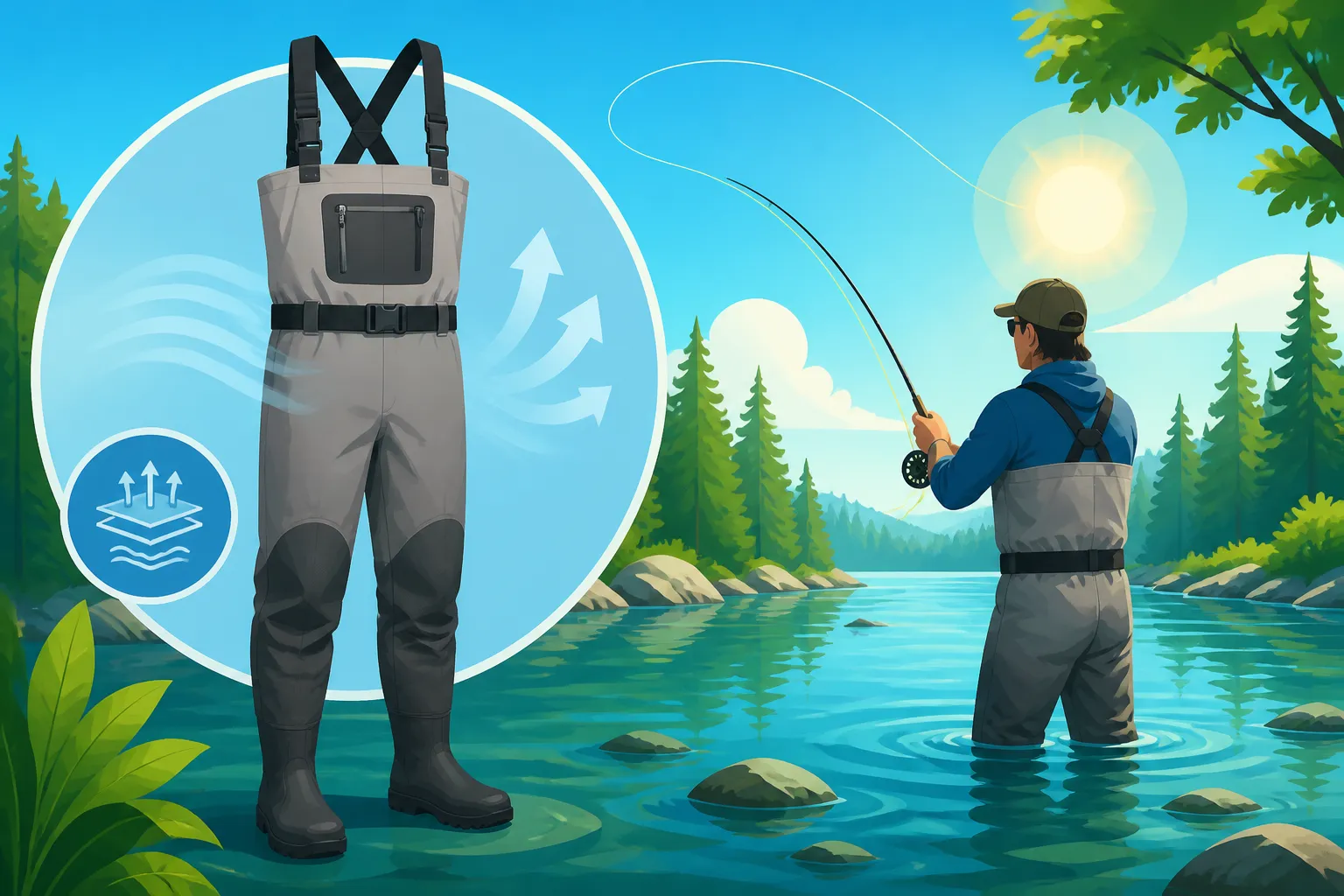
Breathable waders, on the other hand, are engineered with advanced fabrics that allow perspiration to evaporate from the inside out, while still preventing water from seeping in. This is critical for comfort, especially during those long days fly fishing on a sun-drenched river or wading into a shallow lake for smallmouth bass. Ontario summers can be surprisingly humid, and the combination of warm air and even mildly cool water means your body is constantly trying to regulate its temperature. Without breathability, that internal moisture has nowhere to go, leaving you feeling clammy and uncomfortable, which can ultimately cut your fishing trip short. It's not just about staying dry from the outside; it's about staying dry from the inside, too.
The Science Behind Breathability
The magic of breathable waders lies in their multi-layered construction, often involving a microporous membrane, like those used in popular outdoor gear. This membrane has tiny pores, much smaller than a water droplet, but larger than a water vapour molecule. So, while external water can't get in, the sweat your body produces can escape as vapour. It’s a brilliant piece of engineering that transforms your comfort level. Think of it like a one-way street for moisture. The inner layers of the wader material are typically designed to wick moisture away from your skin, transferring it to the breathable membrane where it can then pass through to the outside air.
This technology isn't just about preventing sweat; it also helps maintain a more stable body temperature. When sweat can evaporate, it carries heat away from your body, providing a cooling effect. This is why a well-designed pair of breathable waders can make a significant difference between enduring your summer fishing trip and truly enjoying it. Whether you're targeting brook trout in a cool spring creek or chasing Smallmouth Bass Fishing in Ontario on a warm lake, staying comfortable is key to focusing on the fishing itself.
Essential Features to Look for in Summer Breathable Waders
When you're shopping for breathable waders, especially for the warmer months in Ontario, it's not just about the "breathable" label. There are several key features that can elevate your experience from merely tolerable to genuinely enjoyable. Let's dive into what really matters.
Material and Construction
The type of fabric and how the waders are put together are paramount. For summer, you want lighter, thinner materials than the robust, heavy-duty fabrics found in cold-weather waders. Look for materials like 3-layer or 4-layer nylon or polyester with a DWR (Durable Water Repellent) finish. The more layers don't always mean less breathability; often, it refers to reinforced areas for durability, such as the knees and seat. However, for core sections, a lighter layer count is ideal.
Pay close attention to seam construction. Taped seams are standard, but the quality of the taping can vary. Better waders will feature double-taped or sonic-welded seams, which offer superior waterproofing and longevity, especially when you're moving around a lot, climbing over rocks, or navigating dense brush along the riverbank. A leaky seam on a hot day is just as miserable as a sweaty one. High-quality materials and construction mean your investment will last through many Ontario fishing seasons. Brands like Simms and Orvis, often available through retailers like Bass Pro Shops or found online on Amazon, are renowned for their robust construction and breathable fabrics.
Fit and Comfort
A good fit is crucial for comfort and mobility. Waders that are too tight will restrict movement and accelerate wear in stress points, while waders that are too baggy can sag, chafe, and even pose a tripping hazard. For summer, a more athletic or streamlined fit can be beneficial, reducing excess material that might feel cumbersome. Adjustable suspenders are a must, often featuring quick-release buckles for easy on and off. Some models even have a convertible design, allowing you to roll down the upper section to waist-high on extremely hot days.
Look for a gusseted crotch design, which prevents seam stress and allows for a greater range of motion—vital when you’re clambering over logs or casting aggressively. Neoprene booties for stockingfoot waders should be snug but not tight, and they should be sized to accommodate a thin wading sock suitable for warm weather. Best Wading Boots for Rocky Streams should also be considered to ensure maximum comfort. An ill-fitting pair of waders will quickly become your enemy on a long fishing day, no matter how breathable the material.
Pockets and Features
While summer fishing might involve less gear than a colder outing, convenient storage is still important. External pockets with water-resistant zippers or storm flaps are ideal for keeping small fly boxes, tippet, and tools dry and accessible. A fleece-lined handwarmer pocket, though seemingly counterintuitive for summer, can still be a welcome feature on chilly mornings or evenings, or even just for a quick dry-off if your hands get wet. Internal pockets are great for securing valuables like your car keys, wallet, or phone.
Many breathable waders also include a wading belt. This isn't just for comfort; it's a critical safety feature. In the event of a fall, a properly cinched wading belt can significantly reduce the amount of water that enters your waders, making it much easier to recover and prevent a dangerous situation. Some waders even offer integrated tool docks or attachment points for zingers and nippers, keeping your Best Gear for Ontario Trout Fishing close at hand.
Types of Breathable Waders for Ontario Summers
Not all breathable waders are created equal, and choosing the right style depends heavily on the type of fishing you'll be doing and your personal comfort preferences. In Ontario, with its diverse waterways, having the right type of wader can make all the difference.
Chest Waders
Chest waders are the most common and versatile type of wader, offering the highest level of protection. They extend up to your chest, secured by suspenders over your shoulders. This design provides maximum coverage, allowing you to wade into deeper waters without worrying about getting wet. For many Ontario anglers, whether they're pursuing Walleye Fishing in Ontario in a river or exploring deeper sections of a lake, chest waders are the go-to choice. Even in summer, unexpected deep spots or slippery drop-offs are common, and the extra height of chest waders offers peace of mind.
While you might think full coverage would be too hot for summer, the breathability factor is what makes them suitable. If you find yourself in shallower water on a hot day, many chest wader designs allow you to roll down the upper portion to your waist, effectively converting them into waist-high waders. This versatility is invaluable for mixed conditions or when you're unsure of the water depth you'll encounter. They are a solid choice for most multi-purpose fishing trips where you might be wading in varying depths or spending time on shore or in a boat.
Waist-High Waders
Waist-high waders are a fantastic option for anglers who primarily fish in shallower waters or prefer a less restrictive feel. They extend, as the name suggests, up to your waist, secured by a belt. These are inherently cooler than chest waders because they cover less of your upper body, allowing for greater airflow and reducing the overall material against your skin. If your summer fishing involves mostly wading small streams for trout, working shorelines, or fly fishing from a drift boat where you rarely need to go deeper than your knees, waist-high waders are an excellent choice.
They're also incredibly comfortable for hiking to remote fishing spots, as they offer more freedom of movement than their taller counterparts. Imagine a warm morning spent hiking into an Algonquin Park trout pond; waist-high waders would be far less cumbersome. However, their major drawback is obvious: limited depth. If you accidentally step into a deeper section, you're going to get wet. So, it's crucial to be confident in the water you're fishing when opting for waist-high waders. They're perfect for dedicated shallow-water pursuits but lack the safety net of chest waders.
Wading Pants
Wading pants are the lightest and most minimalist option available. They look and feel much like regular outdoor pants but are fully waterproof and breathable. They typically stop at the waist and often feature an integrated wading belt. These are the absolute coolest option for summer fishing, ideal for those scorching days when you just need a little protection from the water while enjoying maximum ventilation. They are perfect for incredibly shallow streams, easy wading, or simply launching a Best Kayak for River Fishing in Ontario without getting your lower half soaked.
They offer the most freedom of movement and are the easiest to pack, making them great for travel or spontaneous fishing trips. However, their utility is highly specific. You absolutely cannot go into anything deeper than a few inches without risking water coming over the top. Wading pants are best suited for anglers who are confident they will only be in very shallow water, or perhaps for those who primarily fish from a boat and just need occasional splash protection. They’re also a good choice for situations where you might be doing a lot of bank fishing and only occasionally stepping into the edge of the water.
| Wader Type | Coverage Level | Best For | Pros | Cons |
|---|---|---|---|---|
| Chest Waders | Full Upper Body | Deep wading, varied conditions, boat use | Versatile, maximum protection, often convertible to waist-high | Can be warmer than other types, more material |
| Waist-High Waders | Mid-Torso | Shallow wading, light hiking, smaller streams | Cooler, less restrictive, good mobility | Limited depth, less protection if you stumble |
| Wading Pants | Legs/Hips | Very shallow wading, bank fishing, boat launch | Coolest, maximum freedom, lightest to pack | Extremely limited depth, highest risk of getting wet if you err |
Care and Maintenance for Your Summer Breathable Waders
Investing in a good pair of breathable waders for your Ontario fishing adventures is just the first step. Proper care and maintenance are crucial to ensure they remain breathable, waterproof, and last for many seasons to come. Neglecting your waders can lead to premature leaks, loss of breathability, and a significantly shortened lifespan.
Cleaning Your Waders Properly
After each trip, especially if you've been in muddy or silty water, it's important to rinse your waders thoroughly with fresh water. Use a soft brush or sponge to gently remove any dirt, algae, or debris. Pay close attention to the seams and zippers, as these areas can collect grime that might compromise their integrity over time. Avoid harsh detergents or scrubbing brushes, as these can damage the waterproof membrane or the DWR coating. For a more thorough cleaning, if your waders are particularly soiled or start to smell, you can wash them by hand or in a front-loading washing machine (never a top-loader with an agitator, which can damage them). Use a technical fabric wash designed for breathable waterproof gear, or a mild, non-detergent soap. Always follow the manufacturer's specific washing instructions. After washing, ensure they are completely rinsed to remove any soap residue.
It's also a good habit to periodically check the inside of your waders for grit or small stones, particularly in the neoprene booties. These seemingly innocuous items can cause abrasion and eventually lead to tiny holes or wear spots. Taking a few moments to properly clean your waders after each outing will go a long way in preserving their performance. You can find specialized cleaning products at outdoor retailers like Bass Pro Shops or even on Amazon.
Drying and Storage
Proper drying is arguably the most critical step for maintaining your breathable waders. Never store them wet or damp, as this can lead to mildew growth, which not only smells awful but can also degrade the fabric and compromise breathability and waterproofing. After rinsing, hang your waders inside out first in a well-ventilated area, away from direct sunlight or excessive heat. Once the inside is completely dry, turn them right side out and let them finish drying. Ensure they are bone dry before storing them.
When it comes to storage, hang your waders rather than folding or stuffing them into a bag. Hanging them allows the fabric to relax and prevents creasing that can stress the seams and material. A wide-shouldered hanger is ideal. Store them in a cool, dry place, away from direct sunlight and extreme temperatures. Avoid storing them in an unventilated garage or shed where humidity can build up. By drying and storing your waders correctly, you're actively working to maintain their breathable properties and prevent those frustrating mid-season leaks.
Repairing Leaks and Maintaining DWR
Even with the best care, leaks can happen. Minor punctures or small tears are often repairable with specialized repair kits designed for breathable waders, which typically include patches and waterproof glue. It’s a good idea to carry a small repair kit with you on longer trips, or at least have one at home. Identifying leaks can sometimes be the trickiest part; a common method is to turn the waders inside out, spray the suspected area with rubbing alcohol (which evaporates quickly), and look for dark spots, or simply fill them with water in a dry environment and mark any drips.
The DWR (Durable Water Repellent) coating on your waders is what causes water to bead up and roll off the fabric. Over time, this coating will wear down, causing the fabric to "wet out" (absorb water), which significantly reduces breathability even if the waders aren't leaking. You'll notice this when water stops beading up. Fortunately, DWR can be reapplied using spray-on or wash-in treatments specifically designed for technical outerwear. Reapplying DWR revitalizes the outer fabric's ability to shed water, restoring breathability and overall performance. Maintaining your DWR is just as important as fixing a leak for comfortable summer fishing.
Final Thoughts on Staying Cool While You Fish
Embracing breathable waders for your Ontario summer fishing isn't just a luxury; it's a practical necessity for maximizing your enjoyment on the water. The days of suffering in heavy, sweaty gear are long gone, thanks to advancements in fabric technology. By choosing the right type of wader for your specific fishing style and committing to consistent care, you’ll find yourself more comfortable, more focused, and ultimately, more successful. Whether you're chasing Brook Trout in Ontario's Crown Land Lakes or casting streamers on a warm river, feeling cool and dry lets you truly immerse yourself in the moment. Happy fishing, and stay cool out there!
Disclaimer
This article is for general informational purposes only and does not constitute professional advice. Laws, prices and regulations vary by location and change over time. Consult a qualified professional for guidance on your specific situation.