Best rod length for Lake Erie walleye trolling
Navigating the vast world of fishing gear can be genuinely overwhelming, especially when you're trying to dial in your setup for a specific, demanding fishery like Lake Erie walleye trolling. Many anglers, even experienced ones, find themselves staring at a wall of rods, wondering which length, action, and power will truly make a difference in their success. This guide is here to cut through that noise, offering practical insights into selecting the best rod length for Lake Erie walleye trolling, ensuring your gear enhances your time on the water, not complicates it.
Understanding the Unique Demands of Lake Erie Walleye Trolling
Lake Erie is a walleye powerhouse, but it's also a lake that commands respect from its anglers and their gear. It's not just any body of water; it's a dynamic, often challenging environment that puts specific demands on your tackle, especially your trolling rods. Understanding these unique factors is the first step in making an informed decision about rod length and overall setup.
Why Lake Erie is Different: Current, Waves, and Water Depth
When you think of Lake Erie, don't just picture a giant pond. This Great Lake is known for its incredible walleye population, but it's also famous for its unpredictable temperament. You can go from flat calm to three-foot rollers in a heartbeat, and those conditions significantly impact how your boat and your gear perform. Strong currents, particularly near the Detroit River mouth or around specific structures, can play havoc with your lure presentation if your rods aren't up to the task.
Beyond surface conditions, Lake Erie boasts incredible diversity in its depths. You might be working shallow reefs and shoals in 15-20 feet of water one day, and the next you're targeting suspended walleye in 60-80 feet over the central basin. Each of these scenarios puts different stresses on your rod. A rod that excels in shallow, calm conditions might feel completely outmatched when you're battling a beefy walleye in a heavy chop while running multiple planer boards. It's this combination of variable weather, currents, and depth profiles that makes Lake Erie walleye trolling a truly specialized pursuit, demanding robust and well-matched gear. Consider how these variables also influence adherence to Ontario Lake Erie fishing regulations.
The Importance of Presentation in Walleye Trolling
In the world of walleye fishing, presentation is king, and your trolling rod is a crucial player in that equation. The rod isn't just a handle to hold; it's an extension of your line, directly influencing how your lure behaves in the water and how effectively you detect those subtle walleye bites. A properly matched rod will transmit the lure's action right to your hand, letting you know it's running true. It will also act as a shock absorber, cushioning the violent strike of a feeding walleye and preventing hooks from tearing out of their paper-thin mouths.
Think about it: when you're dragging a crankbait or a worm harness behind a boat, you want that lure to have the most natural, enticing action possible. A rod that's too stiff might make a subtle lure look rigid, while one that's too soft could mask its action entirely. Moreover, walleye are notorious for their light bites, often feeling like nothing more than extra weight on the line. The right rod length and action will amplify those faint signals, allowing you to react quickly and set the hook before the fish spits the bait. Ultimately, your rod selection contributes significantly to how many fish make it into the net. For more general walleye insights, check out Walleye Fishing in Ontario.
Ideal Rod Lengths for Lake Erie Walleye Trolling: A Breakdown by Technique
When we talk about "best rod length" for Lake Erie walleye trolling, it's not a one-size-fits-all answer. The ideal length often depends heavily on the specific trolling method you're employing. Different techniques demand different attributes from your rod, from its ability to spread lines to its sensitivity for detecting subtle strikes in deep water. Let's break down the common trolling techniques and the rod lengths that truly shine for each.
Rods for Planer Board Trolling
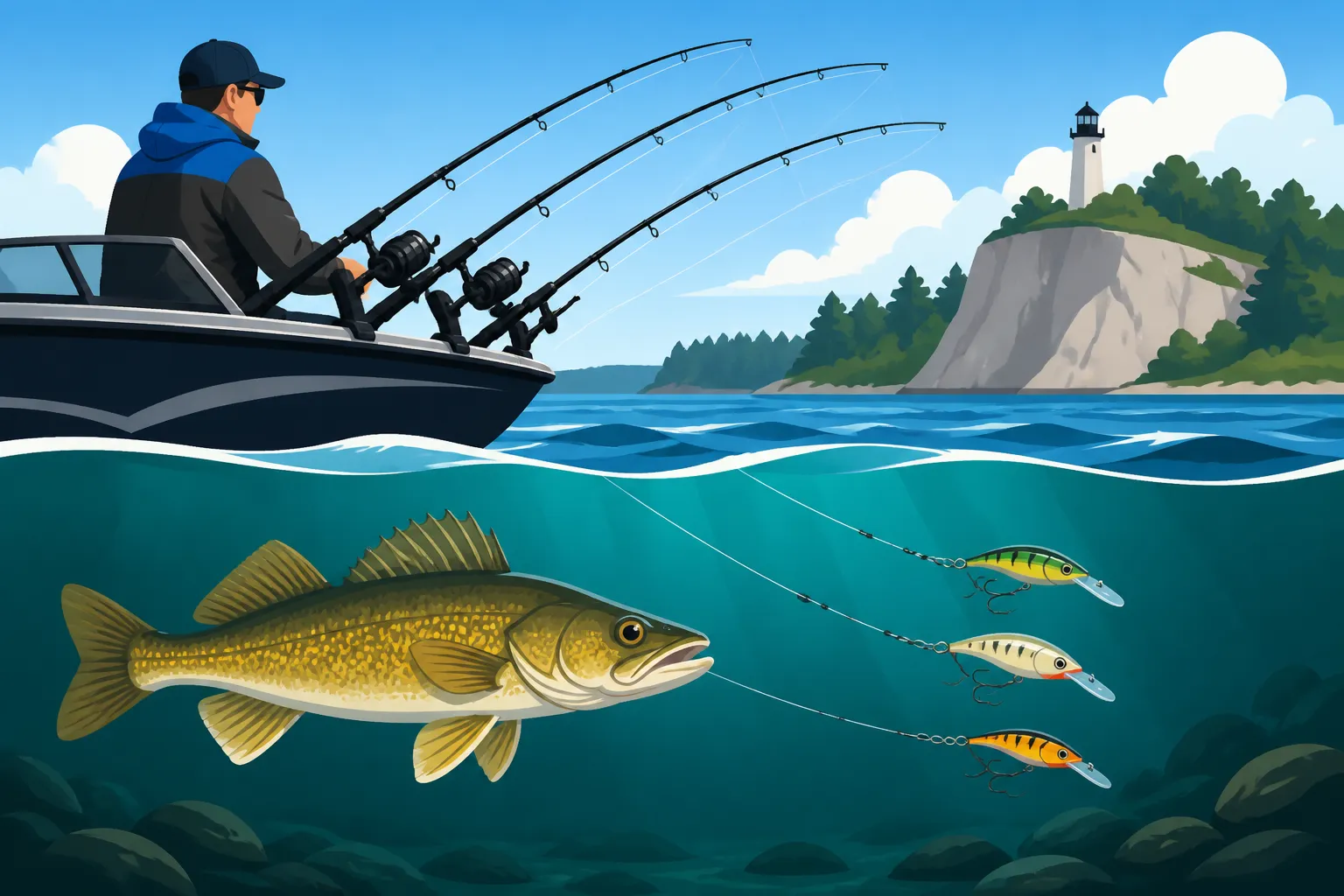
Planer board trolling is a staple on Lake Erie, allowing anglers to spread multiple lines away from the boat, covering a wide swath of water and presenting lures to fish that might be spooked by the boat's presence. For this technique, longer rods, typically ranging from 8 feet to 10 feet 6 inches, and sometimes even up to 12 feet, are generally preferred.
The primary benefit of these longer rods is their ability to spread your lines out wide. When you're running multiple boards, say three per side, a longer rod helps clear the boat's gunwales and keeps your lines from tangling, especially during turns or when battling a fish. The extra length provides a greater angle from the rod tip to the planer board, which translates to a smoother, more consistent ride for the board, even in choppy conditions. Furthermore, when you hook a fish, a longer rod keeps the fish away from the boat and propeller, giving you more leverage and a better angle to fight it, particularly when you're trying to navigate around other active lines. Shorter rods tend to make the boards ride closer to the boat, increasing the risk of tangles and making fish fighting more challenging. However, remember that storing and transporting these longer rods can be a bit more cumbersome in smaller boats or vehicles. If you're just starting, getting used to Trolling Techniques for Ontario Lake Trout can also provide valuable insights, as many principles apply.
Rods for Downrigger and Dipsy Diver Trolling
When walleye are holding deeper in the water column, downriggers and dipsy divers become indispensable tools. These devices allow you to precisely present lures at specific depths, bypassing the need for heavy lead weights directly on your line. For these applications, medium-length rods, typically falling between 7 feet and 8 feet 6 inches, are often the sweet spot.
With downriggers, the rod's primary job is to hold the line in tension and then absorb the shock when the line releases from the clip and you're fighting the fish directly. Shorter rods fit better into standard rod holders mounted directly to your boat, offering a more compact and manageable setup. The moderate length provides sufficient flex to cushion the powerful runs of a walleye while still giving you the leverage needed to steer the fish toward the net. Similarly, dipsy diver rods benefit from this medium length. Dipsy divers pull hard, and a rod in this range has enough backbone to handle the constant tension and detect the subtle "thump" of a walleye strike, which can sometimes be masked by the diver's action. The shorter length also makes it easier to manage the fight directly over the side of the boat, which is often the case when a fish hits a downrigger or dipsy rod. Having a good Best Fish Finders for Ontario Lakes is crucial for locating these deeper walleye.
Rods for Flat-Line or Lead Core Trolling
Flat-lining, which involves letting out a specific amount of line to achieve a desired depth, or lead core trolling, where you use weighted line to reach deeper zones, are also effective walleye tactics on Lake Erie. For these methods, versatile medium-heavy rods generally between 7 feet and 9 feet are highly effective.
For flat-lining, you need a rod that can cast a decent distance if necessary and has enough sensitivity to detect subtle bites, as there's no planer board or diver to help transmit the feel. A 7- to 8-foot rod with a medium-fast action offers a great balance of casting ability, fish-fighting power, and sensitivity. When it comes to lead core trolling, the rod needs to be stout enough to handle the weight of the lead core line itself, which can put a significant bend in lighter rods before you even factor in a fish. A 7'6" to 9' medium-heavy, moderate action rod works wonderfully. It has the backbone to absorb the stretch and weight of the lead core, yet enough tip flexibility to register the distinct pull of a walleye. Line counter reels are almost mandatory for precise depth control with both these methods. These rods are often the workhorses of a walleye spread, versatile enough to run various crankbaits or harnesses at different depths. For those looking for general walleye rods, Best Spinning Rods for Walleye might offer some good initial ideas, though baitcasting setups are more common for heavy trolling.
Beyond Length: Action, Power, and Material Considerations
While rod length is a critical factor for Lake Erie walleye trolling, it's far from the only one. To truly optimize your setup, you need to delve deeper into the rod's characteristics, specifically its action, power, and the materials it's constructed from. These elements work in concert with length to determine how effectively the rod performs, from detecting light bites to bringing big walleye to the net.
Rod Action and Power for Walleye Trolling
Understanding rod action and power is fundamental to selecting the right trolling rod. They are distinct concepts that describe how a rod bends and how much force it can exert.
Rod Action refers to where a rod bends along its blank. For Lake Erie walleye trolling, a Moderate to Moderate-Fast action is typically preferred. Why?
- Moderate Action: These rods bend more towards the middle of the blank. They excel at absorbing the shock of a hard strike, which is crucial for preventing hooks from tearing out of a walleye's relatively soft mouth, especially when trolling with minimal line stretch. This action also allows for a smoother, more forgiving fight, keeping constant pressure on the fish without overpowering it. It also gives lures a more natural, lifelike presentation by imparting a subtle "give" that mimics natural prey movement.
- Moderate-Fast Action: These rods bend mostly in the upper third to quarter of the blank. They offer a good balance of sensitivity and power. You get enough tip sensitivity to detect those light walleye bites, even through the vibrations of a crankbait or the drag of a planer board. At the same time, the faster taper provides a quick, powerful backbone for setting the hook firmly and controlling a fighting fish. Many anglers find this a great all-around action for various trolling techniques.
Rod Power (often called taper or weight) describes the lifting strength of the rod, or how much force is required to bend the rod. For Lake Erie walleye, you'll generally look for Medium-Light to Medium-Heavy power.
- Medium-Light Power: Often suitable for lighter presentations, smaller lures, or when targeting smaller walleye. It offers a more parabolic bend, providing excellent shock absorption.
- Medium Power: This is a versatile choice for many walleye trolling scenarios. It has enough backbone to handle most crankbaits, worm harnesses, and the average Lake Erie walleye, which can range from 2 to 8 pounds, with trophy fish much larger.
- Medium-Heavy Power: Essential when running heavier setups like large dipsy divers, big planer boards in rough water, or targeting trophy-sized walleye with larger baits. This power category provides the muscle needed to manage aggressive fish and heavier terminal tackle without feeling undergunned.
The key is matching the power to the technique and the size of fish you anticipate. A properly balanced rod will allow you to confidently fight fish without fear of snapping your rod or losing leverage.
| Trolling Method | Recommended Length Range | Action | Power | Primary Benefit |
|---|---|---|---|---|
| Planer Boards | 8' to 12' | Moderate to Mod-Fast | Medium to Medium-Heavy | Line spread, shock absorption, fight leverage |
| Downriggers/Dipsy Divers | 7' to 8'6" | Moderate to Mod-Fast | Medium | Rod holder fit, direct fight, cushioning |
| Flat-Line/Lead Core | 7' to 9' | Mod-Fast to Moderate | Medium to Medium-Heavy | Sensitivity, handling line weight, versatile presentation |
Rod Materials and Components: Durability and Sensitivity
The materials used in a rod's construction and the quality of its components directly influence its performance and longevity, especially in the demanding freshwater conditions of Lake Erie.
Rod Blank Material:
- Fiberglass: Traditionally, many trolling rods were (and still are) made from fiberglass. This material is incredibly durable, offers a very forgiving "parabolic" bend, and excels at absorbing shock. It's less sensitive than graphite, but its strength and resilience make it a fantastic choice for techniques where extreme sensitivity isn't the absolute top priority, such as heavy-duty planer board or dipsy diver setups. Many anglers prefer fiberglass or a fiberglass composite for its ability to keep a consistent bend and prevent hooks from pulling free.
- Graphite: Graphite rods are lighter and significantly more sensitive, allowing you to feel every bump, tic, and subtle change in lure action. While highly sensitive, pure graphite can be more brittle than fiberglass, making it less forgiving under extreme load or accidental impact.
- Composites: Many modern trolling rods are a blend of fiberglass and graphite. These composite blanks aim to capture the best of both worlds: the durability and shock absorption of fiberglass with a good measure of the sensitivity and lighter weight of graphite. This often results in a versatile blank that can handle the rigors of Lake Erie while still providing decent feedback. Bass Pro Shops and other major retailers offer excellent composite options specifically designed for trolling.
Rod Components:
- Reel Seat: Look for sturdy, corrosion-resistant reel seats that securely hold your reel in place. A loose reel is not only annoying but can also lead to lost fish. Graphite or aluminum seats with robust locking nuts are common and reliable.
- Guides: The line guides are critical for smooth line flow and durability. Guides with ceramic or hard alloy inserts (like Fuji Alconite or SiC) reduce friction, dissipate heat, and stand up well to braided lines. They prevent grooves from forming, which can fray your line. Corrosion-resistant frames, usually stainless steel, are essential for freshwater durability, especially in damp boat conditions.
- Handle: The handle needs to be comfortable and provide a good grip, even when wet. EVA foam and cork are popular choices. A longer handle, especially on longer rods, provides leverage during the fight and when removing rods from holders. A comfortable handle will make those long days of trolling on Lake Erie much more enjoyable. Considering the often rough conditions, durability in all components is key.
Practical Tips for Choosing and Setting Up Your Trolling Rods
Selecting the perfect trolling rod for Lake Erie walleye isn't just about picking a length; it's about building a cohesive system that works effectively and efficiently on the water. From balancing your rod with its reel to ensuring easy transport, there are several practical considerations that will enhance your overall fishing experience.
Matching Rods to Reels and Line
A fishing rod is only as good as the reel and line it's paired with. For Lake Erie walleye trolling, line counter reels are virtually indispensable. These specialized baitcasting reels allow you to precisely measure how much line you have deployed, which is crucial for replicating successful presentations and understanding depth, especially when using planer boards, dipsy divers, or lead core. When choosing a reel, ensure it has enough line capacity for the depths you'll be fishing and a smooth, reliable drag system to handle powerful walleye runs.
The rod and reel should feel balanced in your hand. A heavy reel on a light rod or vice-versa can make for an awkward, fatiguing setup. For line, braided line is popular as a mainline for its low stretch, providing excellent sensitivity and strong hook sets. However, it’s often paired with a fluorocarbon leader for invisibility and abrasion resistance near the lure. Some anglers still prefer monofilament for its stretch, which can act as an additional shock absorber. Ensure your chosen line strength (e.g., 10-20 lb test) matches the rod's power rating and the typical size of Lake Erie walleye. Best Tackle for Ontario Walleye will offer more insights into selecting appropriate terminal gear, and Best Fluorocarbon Line for Clear Lake Water can help you refine your leader choices.
Storage and Transporting Longer Rods
Let's face it, those longer trolling rods, while fantastic on the water, can be a pain to store and transport. Many anglers fishing Lake Erie run boats that might not have ample storage for multiple 9 or 10-foot rods. If you're short on space in your boat, garage, or vehicle, consider these tips:
Firstly, invest in good quality rod socks or sleeves. These fabric covers protect your rods from scratches and tangles when bundled together, whether in a rod locker or simply laid out in the boat. Secondly, consider multi-piece trolling rods. While traditionally less common for heavy trolling due to concerns about strength at the ferrules, modern advancements have made multi-piece rods much more reliable. A 2-piece or 3-piece rod can break down into shorter sections, making transport and storage much more manageable without sacrificing too much performance. For specialized rod cases or protective gear, check out what retailers like Amazon or Bass Pro Shops have to offer, as they often stock innovative solutions for rod protection. Finally, map out your boat's storage. Dedicated rod lockers are ideal, but if you don't have them, planning how you'll secure your rods during transit to prevent damage is essential.
Start with Versatility, Then Specialize
If you're new to Lake Erie walleye trolling or looking to build out your rod arsenal, it's wise not to jump straight into highly specialized rods for every single technique. Start with a solid, versatile foundation. A couple of good quality rods in the 7'6" to 8'6" range with a medium power and moderate-fast action will serve you well for a variety of methods, including flat-lining, lead core, and even some dipsy diver applications. These rods offer a great blend of backbone, sensitivity, and manageable length.
As you gain experience on Lake Erie and discover which trolling methods you prefer and which are most effective for you, then you can begin to specialize. Perhaps you'll find you love running a full spread of planer boards, in which case investing in dedicated 9- or 10-foot planer board rods makes perfect sense. Or maybe you're consistently hitting deep-water walleye with downriggers, warranting a couple of specific downrigger rods. The key is to learn the water and your own fishing style first. Don't feel pressured to buy every type of rod right away. A few versatile choices will get you on the fish and allow you to refine your approach before committing to a full specialized setup. For broader knowledge on techniques, reviewing How to Catch Walleye in Ontario can certainly help refine your approach to building your gear.
Disclaimer
This article is for general informational purposes only and does not constitute professional advice. Laws, prices and regulations vary by location and change over time. Consult a qualified professional for guidance on your specific situation.