Walleye Fishing in Ontario
Ah, walleye fishing in Ontario! It's a passion, an obsession, and sometimes, a true test of patience. Many of us spend countless hours dreaming of that tell-tale tap, the powerful head shake, and the glistening golden flanks of a beautiful walleye emerging from the depths. If you've ever felt the frustration of a slow day or the elation of a successful catch, you know exactly what I'm talking about. This comprehensive guide is here to demystify walleye fishing, offering practical advice and deep insights to help you connect with more of these incredible fish in Ontario's vast and diverse waters.
Understanding Walleye in Ontario Waters
Walleye are undoubtedly one of Ontario's most sought-after game fish, and for good reason! They're challenging to catch, fight hard, and are absolutely delicious on the dinner plate. But to truly unlock their secrets, you need to understand them from the inside out. It's not just about tossing a lure; it's about knowing who you're fishing for.
Walleye Biology and Characteristics
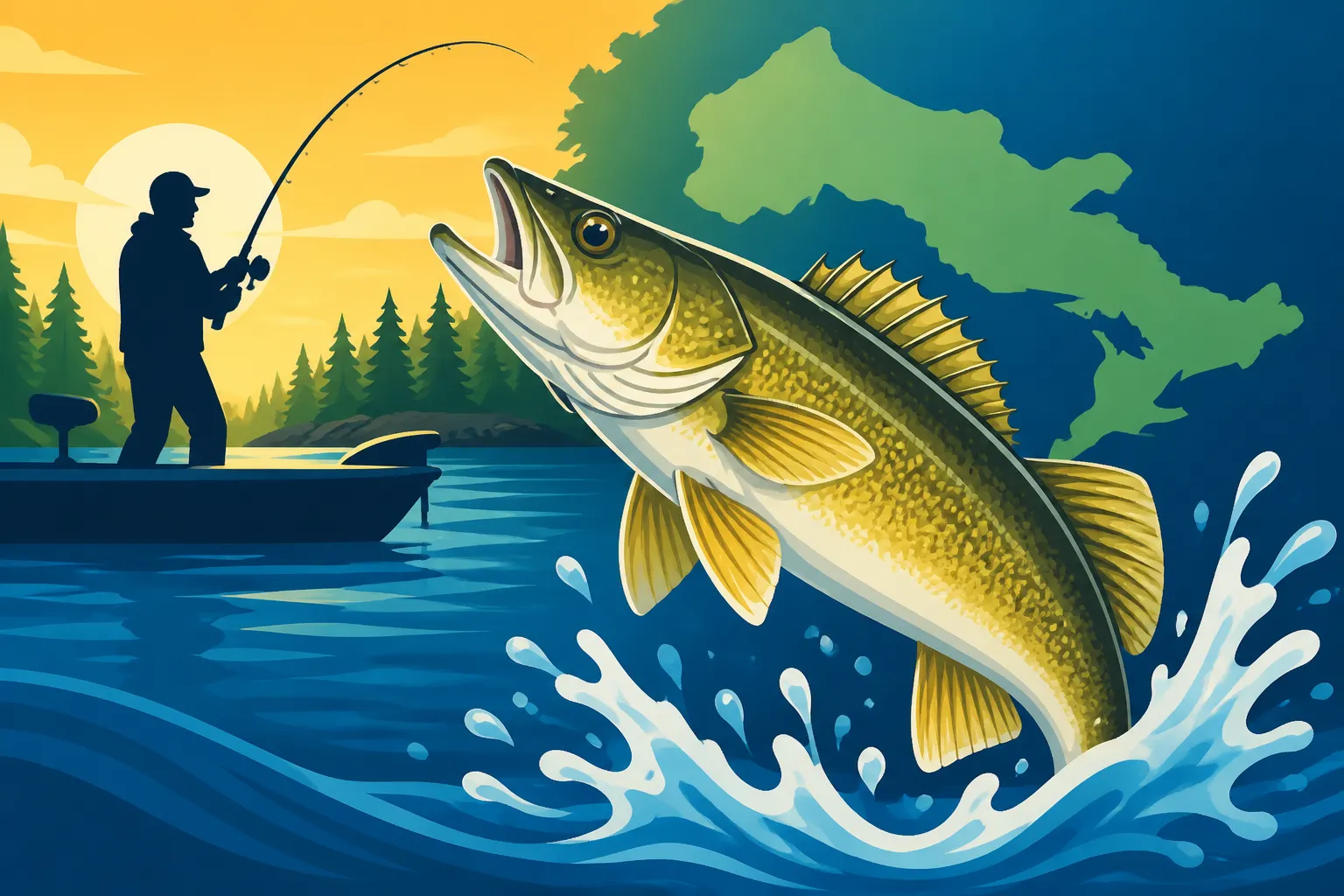
Walleye, often called pickerel by many Canadians, are members of the perch family and are truly built for hunting. Their name comes from their large, marble-like eyes, which have a reflective layer called the tapetum lucidum. This incredible adaptation allows them to see exceptionally well in low-light conditions, giving them a distinct advantage over their prey (and other predators!) during dawn, dusk, and on cloudy days, or in deeper, darker waters.
They typically have a torpedo-shaped body, golden-olive to brown in colour, with a distinctive white tip on their lower tail fin. Their mouths are filled with sharp teeth, perfect for grasping slippery baitfish. In Ontario, walleye can range from pan-sized "snot rockets" (as we affectionately call the smaller ones) to true giants exceeding 10 pounds, with the provincial record pushing beyond the 22-pound mark. While a 5-pound walleye is a respectable catch for most, hitting that double-digit mark is a dream many anglers chase for a lifetime. They're not the fastest growing fish, often taking several years to reach maturity, which is why understanding conservation is so vital.
Preferred Habitat and Behaviour
Walleye are creatures of structure and transition. They love to hang out where cover meets open water, using these areas to ambush prey. Think about rocky reefs, submerged humps, weed lines, sunken islands, drop-offs, and points. These fish aren't usually found cruising aimlessly in open water during the day; they prefer to relate to something tangible. They're also highly sensitive to light, which explains why they often bite best during low-light periods. This isn't just a preference; it's a biological imperative. Their eyes are so efficient in the dark that bright sunlight can actually bother them, driving them deeper or into thick cover.
Throughout the seasons, their behaviour shifts dramatically. In spring, after the ice recedes, they're often found shallower, near spawning grounds. As summer progresses, they'll typically move to deeper, cooler water, following baitfish schools. In the fall, they'll often return to shallower feeding grounds before the ice sets in. Understanding these movements is key to consistently finding them. They are also schooling fish, so if you catch one, there's a good chance there are more nearby! This is where electronic fish finders truly shine, allowing you to locate those elusive schools holding tight to structure.
Walleye Spawning Habits
The walleye spawning season is a critical time for their lifecycle and, consequently, for understanding when and where to find them. Generally, walleye in Ontario will spawn shortly after ice-out, typically when water temperatures range from 6 to 9 degrees Celsius (43-48°F). This usually falls between April and early May, though it can vary significantly by region and specific body of water. For a more detailed breakdown, check out Walleye Spawning Season in Ontario.
They are broadcast spawners, meaning they don't build nests. Instead, they migrate to shallow, rocky areas in rivers, along shorelines, or on shoals, where they release their eggs and milt over clean rock, gravel, or rubble bottoms. These areas provide current and good oxygenation for the developing eggs. It's a mass affair, with multiple males often surrounding a female as she releases her eggs. After spawning, the adult walleye, particularly the females, are often quite lethargic and less interested in feeding for a short period before they begin their post-spawn recovery and move to transitional feeding areas. Knowing these habits helps us respect the fish during this vulnerable time and understand why certain areas are closed to fishing or have specific regulations during the spring.
Top Walleye Fishing Locations in Ontario
Ontario is a walleye angler's paradise, boasting an incredible array of lakes and rivers teeming with these popular game fish. However, not all waters are created equal, and knowing where to focus your efforts can make all the difference. While many smaller, local lakes hold respectable populations, some destinations are legendary. For a broader view, you might want to explore Best Fishing Lakes in Ontario.
Renowned Walleye Lakes and Rivers
When you talk about walleye fishing in Ontario, a few names immediately jump to mind. Lake Erie, particularly its western basin and the areas around Long Point, is world-famous for its incredible walleye fishery. The sheer numbers of fish, combined with the chance for a true trophy, make it a bucket-list destination. Heading north, the Bay of Quinte on Lake Ontario is another legendary spot, especially during the fall run, where massive walleye congregate. If you're looking for an unforgettable experience, definitely research Bay of Quinte Walleye Fishing.
Further into Northern Ontario, vast bodies of water like Lake Nipissing offer incredible opportunities, often producing both numbers and size. Check out Lake Nipissing Fishing Guide for more on this fantastic lake. The French River, which connects Lake Nipissing to Georgian Bay, is another exceptional river system, full of structure and current that walleye adore. Don't forget the massive, wild lakes of Northwestern Ontario, such as Lake of the Woods, Rainy Lake, and Eagle Lake, which are renowned for their pristine wilderness and monster walleye. These lakes often require longer trips but offer unparalleled fishing experiences in truly wild settings.
Finding Local Walleye Hotspots
Even if you can't make it to the "big name" lakes, there are fantastic walleye opportunities closer to home. The key is to do a little homework. Start by checking the Ontario Fisheries Management Zones (FMZs) to understand which zone you're in and what species are prevalent. Ontario Fish ON-Line Interactive Zone Map, Explained is an excellent resource for this. Look for lakes or larger rivers in your area that are known to hold walleye. Online forums, local bait shops, and even casual conversations with other anglers can provide invaluable intel.
Once you've narrowed down a few spots, start studying maps – topographic maps that show depth contours, underwater structures, and drop-offs are your best friend. Look for natural pinch points, rocky points, submerged islands, main lake reefs, and the edges of expansive weed beds. These are classic walleye hangouts. Don't be afraid to explore smaller, lesser-known bodies of water; sometimes the best spots are the ones no one talks about. Getting a detailed map, whether paper or digital, is like having a treasure map for these fish.
Seasonal Movements in Ontario's Top Waters
Walleye are constantly on the move, driven by temperature, light, and the availability of food. Understanding these seasonal shifts is crucial for consistent success. In spring, immediately post-spawn, they often linger in shallower areas near their spawning grounds before migrating to deeper feeding areas. They might be found on flats adjacent to deep water, recovering and feeding on easy prey.
As summer heats up, walleye will generally push deeper to find cooler, more oxygenated water. They'll often relate to the thermocline (the layer where warm surface water meets cold deep water), concentrating on deep points, sunken islands, and main lake basins where baitfish schools are abundant. During the fall, as water temperatures begin to drop, walleye often move shallower again, engaging in a strong feeding binge to bulk up for winter. This is a fantastic time for trophy fish, as they can be found aggressively feeding on baitfish in shallower bays, along weed edges, and on rocky reefs before the lakes freeze over. Even under the ice, they'll continue to move, often holding to structure or cruising flats adjacent to drop-offs. Being aware of these patterns helps you adapt your strategy throughout the year.
Essential Gear for Walleye Fishing in Ontario
You don't need to break the bank to catch walleye, but having the right tools for the job can dramatically improve your success and enjoyment. Fishing isn't just about luck; it's about preparation, and that includes your gear. Many anglers find reliable and affordable options for their walleye fishing gear on platforms like Amazon.
Rods and Reels for Walleye
For walleye fishing in Ontario, versatility is key, but generally, a medium to medium-light action spinning rod between 6'6" and 7'6" is a fantastic all-around choice. This rod length provides good casting distance while still offering the sensitivity needed to detect subtle walleye bites. A fast or extra-fast tip action will give you that instant feedback for setting the hook. For jigging, a shorter, more sensitive rod might be preferred, while for trolling, a slightly longer, more forgiving rod can be beneficial. Consider a quality graphite blank for maximum sensitivity.
Pair your rod with a reliable spinning reel in the 2500-3000 size range. This size offers a good balance of line capacity and smooth drag. Look for a reel with a smooth, consistent drag system, which is crucial when fighting a powerful walleye. A high gear ratio is often preferred for quickly taking up slack line or retrieving lures, but a mid-range ratio (around 5.2:1 to 6.2:1) is usually sufficient for most walleye applications. Baitcasting setups are also popular, especially for trolling or pitching heavier lures, offering greater power and control, but spinning gear is generally more user-friendly for beginners and excels at lighter presentations. If you're looking for a new setup, browsing options like the "Best Spinning Rods for Walleye" or "Best Fishing Rods for Ontario Lakes" can give you some excellent starting points, with many available on platforms like Amazon.
Line Choices and Terminal Tackle
Your fishing line is the crucial connection between you and the fish, so choose wisely. Many walleye anglers opt for a braided main line, typically 10-20 lb test, due to its incredible strength, zero stretch, and high sensitivity. The lack of stretch helps you feel even the lightest bites in deep water or when trolling far behind the boat. However, braid is visible in clear water, so it's almost always paired with a fluorocarbon leader.
A 6-10 lb test fluorocarbon leader, usually 4-8 feet long, is tied to the end of your braided main line. Fluorocarbon is nearly invisible underwater, extremely abrasion resistant (great around rocks and zebra mussels), and provides a bit of stretch to absorb shocks. For connecting lures and jigs, a small, high-quality ball-bearing swivel or a snap swivel is often used, especially when trolling or using lures that can cause line twist. Having a variety of small, sharp hooks (like Octopus or Baitholder hooks for live bait, and jig heads in various weights and colours) is also essential. Don't forget split shot weights or small sliding sinkers for bait rigs.
Must-Have Walleye Accessories
Beyond the rod, reel, and line, a few key accessories will make your walleye fishing trips more productive and enjoyable.
- Landing Net: A good, rubberized landing net is essential. The rubberized mesh protects the fish's slime coat, which is vital for its health if you plan to release it. A net with a long handle is especially useful when fishing from a boat.
- Pliers/Forceps: Walleye have sharp teeth! A good pair of long-nose pliers or forceps is critical for safely removing hooks without injuring yourself or the fish.
- Cooler: Whether you're keeping a few fish for dinner or just need to keep your drinks and snacks cold, a quality cooler is a must. Many anglers rely on durable coolers for their trips.
- Electronics: While not strictly essential for catching walleye, a fish finder with GPS capabilities can transform your fishing experience. It allows you to locate structure, mark baitfish schools, identify walleye, and navigate safely. Modern units offer incredible detail, revealing even subtle depth changes and individual fish arches.
- First Aid Kit: Always have one on board. Hooks, fins, and sharp tools can lead to minor injuries.
- Measuring Tape/Scale: To ensure you comply with Ontario Bag and Possession Limits by Species and release undersized or oversized fish, a measuring tape is crucial. A small digital scale can also be fun for weighing your catches.
Best Walleye Baits and Lures for Ontario
Choosing the right bait or lure is often the most debated topic among walleye anglers. What works one day might not work the next, and conditions play a huge role. But there are some tried-and-true options that consistently produce in Ontario's diverse waters. For specific regional insights, you might look at Best Baits for Walleye on Lake Erie.
Live Bait Supremacy for Walleye
When it comes to tempting a walleye, especially a finicky one, live bait often reigns supreme. Its natural scent, movement, and taste are hard for a walleye to resist.
- Minnows: Hands down, shiners, dace, or suckers are probably the most popular live bait for walleye in Ontario. They can be presented in countless ways: jigged, trolled on a harness, suspended under a float, or still-fished on the bottom. Hook them lightly through the lips or just behind the dorsal fin to keep them lively. For best results, use fresh, lively minnows that are appropriate to the size of walleye you're targeting.
- Worms: Nightcrawlers are a close second. They're readily available and incredibly effective, especially when threaded onto a crawler harness. The spinning blades and undulating worm are irresistible to walleye. They can also be fished on a simple bottom rig or under a float. Worms are particularly effective during warmer months when walleye are actively feeding.
- Leeches: Often overlooked, leeches are a fantastic walleye bait, especially in lakes where they are naturally present. They're incredibly hardy, stay on the hook well, and have a unique, enticing movement. Hook them through the sucker end or just below it. Leeches are particularly good in late spring and early summer.
Top Artificial Lures for Walleye
While live bait is king for some, artificial lures offer versatility, covering water efficiently, and often triggering aggressive reaction strikes. Plus, they're easier to store and don't require an aerated minnow bucket!
- Jigs: Jigs are arguably the most versatile walleye lure. From hair jigs to soft plastic-tipped jigs, they excel in various situations. Weights typically range from 1/8 oz to 1 oz, depending on depth and current. Tip them with a soft plastic grub, minnow imitation, or a piece of live bait for added appeal. Jigging vertically over structure or pitching jigs to shallow cover are classic walleye tactics.
- Crankbaits: These lipped lures are fantastic for trolling or casting, especially when walleye are spread out or suspended. Dive depths vary from shallow runners to deep divers. Popular styles include lipless crankbaits, shallow-running stickbaits, and deep-diving minnow imitations. Colour is important here; natural baitfish patterns often work in clear water, while brighter colours (chartreuse, orange, firetiger) can be deadly in stained or dark conditions. Leading brands offer a wide selection, and you can find many options on Amazon.
- Spinnerbaits/Crawler Harnesses: While not traditional "spinnerbaits" like bass anglers use, the inline spinner-style blade on a crawler harness is incredibly effective. These rigs consist of a weight, a multi-hook harness, and a spinning blade, often tipped with a nightcrawler. They're deadly when trolled slowly, often along contour lines or weed edges.
- Soft Plastics: Grubs, paddle-tail swimbaits, and minnow imitations rigged on a jig head can be incredibly effective. The variety of shapes, sizes, and colours allows for endless experimentation. Finesse techniques using soft plastics can be deadly when walleye are pressured or less aggressive.
Colour Selection and Presentation
Understanding how to choose the right lure colour and how to present it effectively can significantly increase your catch rate.
- Colour: Water clarity, light conditions, and depth are major factors.
- Clear Water/Bright Sun: Natural colours (silver, perch, shiner, black, brown) that mimic local baitfish are often best.
- Stained Water/Low Light: Brighter, more aggressive colours (chartreuse, orange, firetiger, pink) provide better visibility and can trigger reaction strikes. Gold can also be excellent in tannin-stained waters.
- Deep Water: As light penetrates less, colours lose their vibrancy. Reds become browns, blues become grays. Often, high-contrast colours, or those that create a strong silhouette (like black or purple), can be effective, as can lures that glow in the dark.
- Presentation: This is where skill comes in.
- Speed: Walleye are not always aggressive. Sometimes a slow, methodical retrieve is key, other times a faster, erratic retrieve triggers a bite. Experiment.
- Depth: Keep your bait in the strike zone! Whether you're jigging vertically, trolling with planer boards, or casting, ensuring your lure is at the same depth as the fish is paramount. Use your electronics to find the fish, then adjust your presentation.
- Action: Give your lure life. Vary your retrieve, add pauses, twitch your rod tip, or rip the lure to imitate a fleeing baitfish. Walleye are predators, and they respond to a meal that looks injured or easy to catch.
Effective Walleye Fishing Techniques
Walleye fishing isn't a one-size-fits-all endeavour. The vastness of Ontario's waters and the changing seasons demand a variety of techniques. Mastering a few key methods will put you in a much better position to consistently hook up with these revered fish. This section delves into some of the most productive approaches, applicable across many of Ontario's Best Walleye Lakes in Ontario.
Trolling for Walleye: Covering Water
Trolling is a highly effective method for walleye, especially when they are scattered over large areas or suspended in the water column. It allows you to cover vast amounts of water, presenting your lure to numerous fish until you find a concentration. This technique is especially popular on large lakes like Lake Erie and Lake Simcoe.
The basic idea is to drag lures behind a moving boat, usually at slow speeds (1.0-2.5 mph). Key components include:
- Lure Selection: Deep-diving crankbaits, shallow-running stickbaits, and crawler harnesses are all excellent trolling options. The dive curve of your lure, combined with the amount of line out and your speed, determines its depth.
- Depth Control: This is paramount. You can control your lure's depth using different sized diving lips on crankbaits, lead core line, snap weights, or downriggers for precise depth placement. Planer boards are also invaluable for spreading multiple lines out from the boat, covering a wider swath and avoiding boat shy fish.
- Speed and Direction: Experiment with boat speed; subtle changes can often trigger strikes. Trolling in S-curves can also be highly effective, as the lures on the inside turn will slow down and drop, while those on the outside turn speed up and rise, mimicking erratic baitfish behaviour. Always pay attention to your fish finder to see where the fish are holding relative to the bottom or bait schools, then adjust your trolling depth accordingly.
Jigging for Walleye: Vertical and Pitching
Jigging is a more active, hands-on technique that shines when walleye are concentrated on specific structures like humps, reefs, or points, or when fishing rivers with current. It's about presenting a lure in a "hop-and-fall" motion, mimicking an injured baitfish.
- Vertical Jigging: This technique is ideal when you've located a school of walleye directly beneath your boat using your fish finder. Drop your jig straight down to the fish's depth, then use short, sharp lifts of your rod tip to make the jig "hop" off the bottom or suspend in the water column, followed by a controlled fall. The bite often comes on the fall, so pay close attention to your line for any subtle taps or changes in tension. Boat control is vital to stay directly over the fish.
- Pitching Jigs: When walleye are holding in shallower cover, along weed lines, or near shoreline structure, pitching jigs can be incredibly effective. Cast your jig to the target area, let it sink to the desired depth, and then retrieve it with a series of short hops, drags, or sweeps. This is a great method for probing specific areas thoroughly. Tipping your jig with a piece of live bait (minnow, worm, or leech) can significantly increase its appeal and drawing power, especially for less aggressive fish.
Casting and Drifting: Versatile Approaches
Beyond trolling and jigging, casting and drifting offer versatile ways to target walleye, especially when conditions don't favour other methods or when you're fishing from shore or a smaller craft.
- Casting: This is the go-to for shore anglers or those in smaller boats targeting specific features. Cast crankbaits, spinnerbaits, or jigs to prominent structures like rocky points, weed edges, submerged timber, or bridge pilings. Work the lure back with varied retrieves, searching for active fish. This is particularly effective during low-light hours when walleye venture into shallower feeding grounds.
- Drifting: Drifting harnesses the power of wind or current to present your bait naturally. Let your boat drift across known walleye holding areas, deploying live bait rigs (like a bottom bouncer with a crawler harness) or simple jig-and-minnow setups. The slow, natural movement of the bait can be very enticing. This technique is excellent for covering a broader area than vertical jigging but with less effort than trolling. On rivers, drifting jigs or live bait with the current can be incredibly productive, as walleye often face upstream, waiting to ambush prey carried by the flow. Always use your electronics to monitor depth and structure as you drift, adjusting your presentation as needed.
Walleye Seasons and Regulations in Ontario
Navigating the rules and regulations around walleye fishing in Ontario can feel a bit daunting at first. But understanding them is absolutely non-negotiable for a responsible angler. These rules are in place to protect our precious fisheries and ensure future generations can enjoy the thrill of walleye fishing. You'll definitely want to get familiar with the Ontario Fishing Regulations Explained.
Understanding Ontario's Fisheries Management Zones (FMZs)
Ontario is a massive province, and its fisheries are incredibly diverse. To manage these resources effectively, the province is divided into 20 Fisheries Management Zones (FMZs). Each zone has its own specific regulations, including open seasons, catch limits, and size restrictions for different species, including walleye. What's legal in FMZ 13 might be illegal in FMZ 20.
It's absolutely crucial to know which FMZ you're fishing in and to consult the most current Ontario Fishing Regulations Summary for that specific zone before you cast a line. The summary is available online and at most tackle shops and license vendors. Ignoring this can lead to hefty fines and a loss of your fishing privileges. For a deeper dive into this topic, refer to Ontario Fisheries Management Zones, Explained.
Walleye Season Dates and Opening Days
The opening and closing dates for walleye season vary significantly by FMZ. Generally, walleye seasons open in May and extend into the fall or early winter. The spring opening dates are designed to protect walleye during their crucial spawning period, allowing them to reproduce undisturbed.
For example, many southern FMZs might have a walleye opener in mid-May, while more northern zones, where ice-out occurs later, might open in late May or even early June. Always double-check the specific dates for your chosen FMZ. Fishing during a closed season, even by accident, is a serious offense. These regulations are designed to sustain the walleye population, so respecting them is paramount for the long-term health of the fishery. Understanding when the season opens means you can plan your trips to coincide with optimal fishing times, often when walleye are most active post-spawn.
Bag Limits, Size Restrictions, and Conservation
Beyond season dates, each FMZ has specific bag and possession limits, as well as size restrictions (slot limits or minimum/maximum sizes) for walleye. These rules are tailored to the health and productivity of the walleye population in that particular zone. Ontario Bag and Possession Limits by Species details these specifics.
- Bag Limit: This is the number of fish you can legally keep in one day.
- Possession Limit: This is the total number of fish you can have in your possession at any time, including those at home, in your cooler, or at your camp. This is often the same as the daily bag limit or slightly higher for multi-day trips.
- Size Restrictions (Slot Limits): Many zones have slot limits, meaning you can only keep fish within a certain size range (e.g., 18-22 inches). Fish smaller or larger than the slot must be immediately released. These limits are designed to protect the breeding stock (often the larger females) and allow smaller fish to grow.
You'll also need to understand the difference between a Sport Fishing Licence and a Conservation Fishing Licence, which impacts your bag and possession limits. A Ontario Sport vs Conservation Fishing License provides all the details on this. Generally, a Conservation licence has reduced limits, encouraging more catch-and-release, which is excellent for maintaining healthy fish populations. Always carry your valid Ontario Fishing License Guide for 2026 and Outdoors Card while fishing. Ignorance of the rules is never an excuse!
Tips for Catching Trophy Walleye and Maximizing Your Catch
Every angler dreams of that truly massive walleye, the one that bends the rod deeply and feels like a log coming out of the water. While luck plays a role, there are definite strategies and nuanced approaches that can significantly increase your chances of not just catching more walleye, but specifically targeting those true giants.
Reading the Water and Interpreting Fish Behaviour
The most successful walleye anglers aren't just good at casting; they're expert interpreters of the aquatic environment. It's about combining technology with intuition.
- Electronics are Your Eyes: Your fish finder is an invaluable tool. Learn to distinguish between baitfish schools, individual arches (which could be walleye), and different types of bottom structure. Look for suspended fish, fish hugging the bottom near transitions, or fish tucked into cover. GPS is essential for marking waypoints where you find fish or key structures. Don't just motor over a spot; truly study what your screen is telling you.
- Weather and Pressure: Walleye are sensitive to changes in barometric pressure. Stable, high-pressure systems often mean finicky fish, pushing them deeper or making them less aggressive. Falling pressure before a storm can often trigger a feeding frenzy. Overcast days or choppy water (a "walleye chop") are generally preferred, as the low light and disturbed surface break up light penetration, making walleye more comfortable feeding shallower.
- Water Temperature: Walleye are cold-blooded, so their metabolism and activity levels are directly tied to water temperature. Find the ideal temperature range (often in the mid-50s to low 60s Fahrenheit), and you'll find active fish. A good thermometer is a small investment that pays huge dividends. For instance, knowing the water temps during the Walleye Spawning Season in Ontario can tell you when they're most vulnerable.
- Baitfish Presence: Walleye follow their food. If you find large schools of baitfish on your electronics, particularly near structure, walleye are almost certainly nearby. Focus your efforts on the edges of these bait concentrations.
Targeting Bigger Walleye
Big walleye are often more solitary and require different tactics than chasing numbers of smaller fish. They're also often older and wiser.
- Go Bigger, Go Slower: Larger walleye often prefer larger meals. Don't be afraid to throw bigger crankbaits, larger swimbaits, or present bigger live bait (like a large shiner or sucker) than you would for average-sized fish. Also, trophy walleye can be notoriously lazy; sometimes a slower, more deliberate presentation is what it takes to coax a bite. They're less likely to chase a fast-moving bait unless they're in a truly aggressive mood.
- Fish After Dark: This is a secret weapon for trophy walleye, especially in pressured lakes. Under the cover of darkness, big walleye often move into shallow feeding flats and rocky shoals where they wouldn't dare venture during daylight hours. Night fishing with glow-in-the-dark jigs, shallow-running stickbaits, or live bait under a float can produce incredible results. Just be sure to have all your safety gear, including lights, in order for night boating.
- Target Key Times: Dawn and dusk are often referred to as the "golden hours" for walleye. These low-light periods give walleye their visual advantage, making them more aggressive and willing to move into shallower feeding areas. Overcast days can extend these windows, allowing for excellent daytime fishing. Always consider your time on the water wisely to maximize your chances during these prime windows.
Adapting to Changing Conditions
Ontario's weather can be notoriously unpredictable, and walleye are highly responsive to these changes. Being able to adapt is crucial.
- Cold Fronts: A sudden cold front can shut walleye down fast. They'll often move deeper, become lethargic, and hug tight to structure. When this happens, switch to slower, more subtle presentations. Downsize your bait, slow your retrieve, and use natural colours. Vertical jigging or dead-sticking live bait can be very effective during post-front conditions.
- Post-Spawn Recovery: Immediately after spawning, female walleye, in particular, need to recover. They might be found in slightly deeper, transitional areas adjacent to their spawning grounds, focusing on easy meals. Don't expect aggressive strikes; subtle presentations with live bait often work best during this period.
- Summer Deep Water: As summer progresses and surface temperatures rise, walleye will often retreat to deeper, cooler water, often near the thermocline. This is when trolling deep-diving crankbaits or using downriggers becomes critical to get your baits to the right depth. Look for them on deep points, sunken islands, and main lake basins where cold water and baitfish intersect.
- Fall Feeding Frenzy: As water temperatures drop in autumn, walleye enter a pre-winter feeding binge. This can be one of the best times for both numbers and size. They'll often move shallower again, aggressively chasing baitfish. Large crankbaits, swimbaits, and even jigging spoons can be highly effective during this active period. Don't be afraid to try faster retrieves and more erratic actions.
Walleye Conservation and Responsible Angling
Catching walleye is a thrill, but ensuring their populations remain healthy for future generations is paramount. As anglers, we have a responsibility to practice good conservation ethics. The vibrant walleye fisheries we enjoy today are a result of careful management and the collective efforts of responsible anglers.
Practicing Catch and Release Effectively
If you're not planning to keep a fish for the table, or if it's outside the legal slot limit, practicing proper catch and release is essential for its survival.
- Minimize Fight Time: Bring the fish in as quickly as possible without over-stressing it. Prolonged fights can exhaust a fish and reduce its chances of survival.
- Use Barbless Hooks: Crushing the barb on your hooks (or buying barbless hooks) makes hook removal much easier and less damaging to the fish.
- Handle With Care: Avoid touching the fish with dry hands, as this can remove its protective slime coat. If possible, keep the fish in the water while removing the hook. If you must remove it from the water, support its body horizontally, especially larger fish, to avoid damaging internal organs or its jaw.
- Proper Hook Removal: Use long-nose pliers or forceps to quickly and gently remove the hook. If the fish is deeply hooked and removal would cause excessive damage, it's sometimes better to cut the line as close to the hook as possible.
- Revive the Fish: If the walleye seems sluggish, gently hold it upright in the water, facing into any current, and slowly move it back and forth to help water flow over its gills. Release it only when it can swim away strongly on its own.
Understanding Fish Consumption Advisories
While walleye are delicious, it's important to be aware of local fish consumption advisories. These advisories are issued by government agencies and provide guidelines on how much fish of certain species and sizes can be safely eaten from specific bodies of water. These guidelines are primarily due to contaminants like mercury, which can accumulate in fish flesh.
Always consult the most current "Guide to Eating Ontario Fish" or check online resources from the Ministry of Natural Resources and Forestry (MNRF) for advisories in the water you're fishing. Larger, older fish tend to accumulate more contaminants, so advisories often recommend limiting consumption of bigger walleye. This is another reason why keeping smaller, slot-sized fish and releasing the big breeders is often a good practice. It's about enjoying your catch responsibly and protecting your health.
Contributing to Walleye Sustainability
Responsible angling goes beyond simply following the rules; it's about being an active participant in conservation.
- Report Poaching: If you witness illegal fishing activity, such as exceeding limits, fishing during a closed season, or using illegal gear, report it to the Ministry of Natural Resources and Forestry (MNRF) or your local conservation authority. Their tip lines are crucial for protecting our resources.
- Respect Habitat: Be mindful of the aquatic environment. Avoid disturbing spawning beds, don't litter, and practice "leave no trace" ethics. Our actions on the water have consequences.
- Educate Others: Share your knowledge of regulations and conservation practices with fellow anglers, especially those who might be new to the sport. A community that values conservation is a strong community.
- Support Conservation Efforts: Consider joining local fishing clubs or conservation organizations that actively work to improve fish habitat, conduct stocking programs, and advocate for sustainable fishing policies. Every little bit helps ensure that walleye fishing in Ontario remains a fantastic experience for generations to come.
By understanding walleye, mastering various techniques, respecting regulations, and embracing conservation, we can all play a part in preserving this incredible fishery for years to come. Tight lines, fellow anglers!
Disclaimer
This article is for general informational purposes only and does not constitute professional advice. Laws, prices and regulations vary by location and change over time. Consult a qualified professional for guidance on your specific situation.