Best technique for fishing pocket water
There’s nothing quite like the rush of discovering a hidden gem in an Ontario stream – a frothing patch of turbulent water, broken up by rocks and fallen timber, that just screams "fish!" We call this "pocket water," and while it can look intimidating, it's often where the biggest, smartest fish are holding, waiting for an easy meal. Many anglers get frustrated trying to cast into these chaotic areas, but with the right approach, you can unlock some truly spectacular fishing. This guide will help you understand pocket water and master the techniques to fish it effectively, transforming those challenging spots into your favourite honey holes.
Understanding What "Pocket Water" Really Means in Ontario
When we talk about pocket water in the Ontario fishing scene, we’re not just talking about any old stretch of river. We’re pinpointing those specific, often smaller, sections where the current is anything but uniform. Think about a typical stream or river flowing through our beautiful province: you have your wide, open runs, your slow, deep pools, and then you have these highly textured areas. These are the pockets.
Defining the Features of Pocket Water
Pocket water is essentially a dynamic mosaic of fast and slow currents, created by natural obstructions in the streambed. Imagine a freestone river like parts of the Credit River or the Grand River, carving its way through rock and gravel. You'll see large boulders, submerged logs, rocky ledges, and even root balls from trees that have fallen into the water. Each of these obstructions, regardless of size, disrupts the main current flow.
Downstream of these obstacles, the water slows down, forming small, often turbulent eddies or calm seams. Upstream, the water piles up, creating a cushion of slower water right in front of the obstruction. These are your "pockets." They might be no larger than a bathtub, or they could be a series of interconnected seams spanning several metres. The key is their diverse nature – you've got white water, green water, slow water, fast water, all packed into a relatively small area. This turbulent, broken surface often hides the angler from the fish, making stealthy approaches possible. It's a challenging environment to read and fish, but immensely rewarding when you crack the code.
Why Fish Love Pocket Water
So, why do fish, particularly our beloved trout species like brook trout, and feisty smallmouth bass, gravitate to these seemingly chaotic pockets? It boils down to two primary needs: energy conservation and food.
Firstly, battling a constant, strong current is exhausting. Just like you wouldn't want to run on a treadmill all day, fish seek out places where they can rest without expending too much energy. The slower water in a pocket provides that crucial refuge. They can sit comfortably in the calm "cushion" behind a rock or log, expending minimal energy while still being right next to the express lane of the main current. This allows them to stay out of the strongest flow, avoiding fatigue, but remain perfectly positioned to ambush passing food.
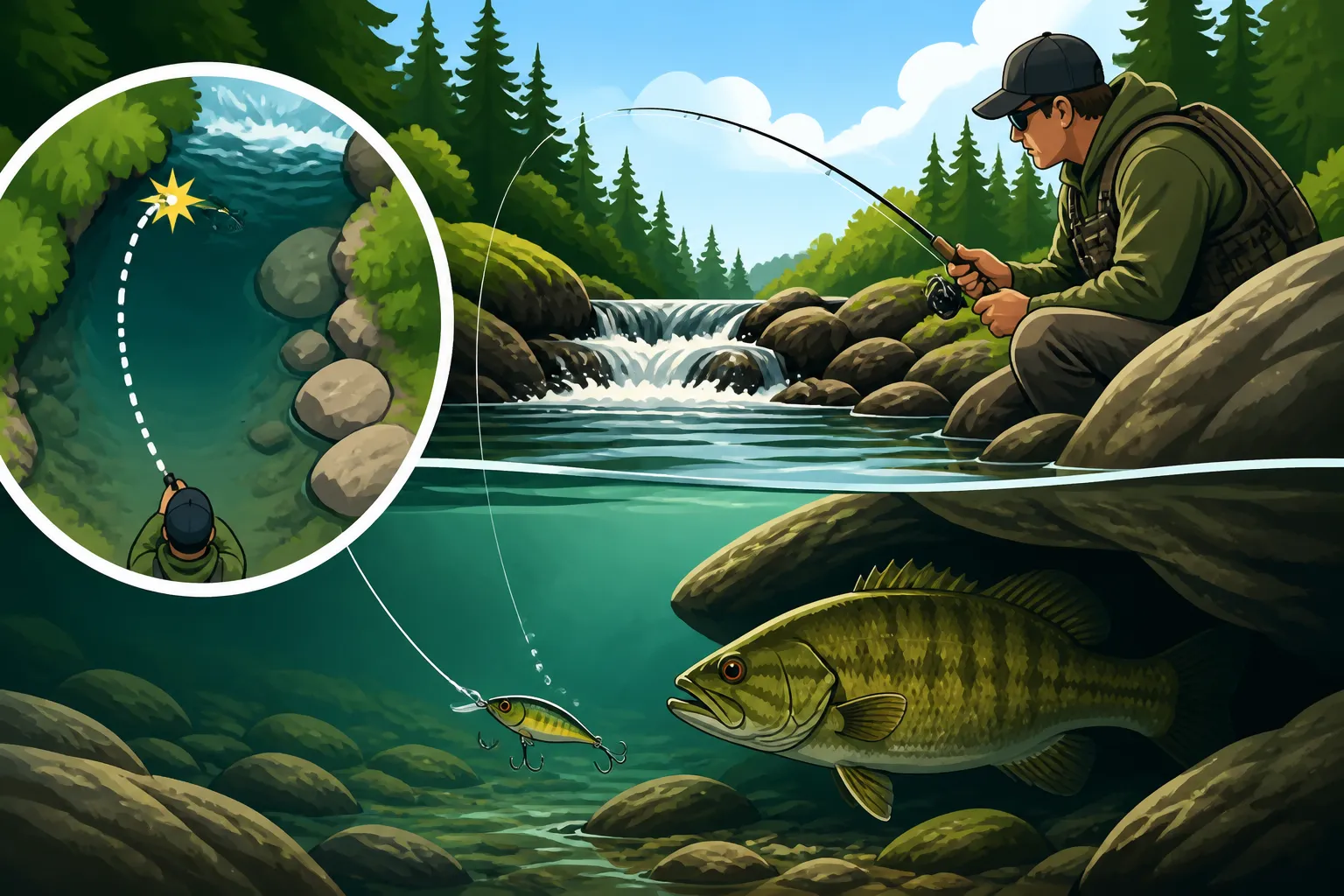
Secondly, these pockets act like natural conveyor belts for food. The fast water upstream dislodges insects, small baitfish, and other edibles, pushing them downriver. When these food items hit the obstruction that creates a pocket, they are often slowed down, tumbled, or momentarily held in the eddy. This makes them easy targets for a waiting fish. It's like having a drive-thru window right outside your comfy lounge chair. Fish don't need to chase their meals far; they simply dart out from their resting spot, grab the passing morsel, and retreat back into the safety of the pocket. This combination of shelter and abundant, easily accessible food makes pocket water an irresistible habitat for many species. If you're looking for Brook Trout in Ontario's Crown Land Lakes or wanting to know How to Catch Smallmouth Bass in Ontario, these pockets are often the first place to check.
Essential Gear for Tackling Ontario's Pocket Water
Fishing pocket water effectively means having the right tools for the job. You’re not typically making long, sweeping casts, nor are you usually battling fish in wide-open spaces. Instead, it’s all about precision, quick reactions, and the ability to control your line in varied currents.
Rod, Reel, and Line Selection
For pocket water, your gear choices are paramount. You need equipment that allows for accuracy, control, and the ability to quickly subdue a fish before it dives deeper into snags.
When it comes to rods, whether you're a fly angler or prefer spinning gear, shorter is often better. For spinning setups, a 6 to 7-foot rod with a fast to extra-fast action is ideal. This length gives you enough reach and leverage, but isn't so long that it becomes unwieldy when casting in tight quarters or maneuvering around streamside brush. The fast action means the tip bends quickly, providing excellent sensitivity for detecting subtle takes, while the backbone of the rod helps you set the hook firmly and steer fish away from obstructions. Many anglers find quality medium-light or medium power rods from brands widely available on Amazon work perfectly for this application. For fly anglers, a 7.5 to 9-foot rod in a 3 to 5-weight range is typically sufficient. Shorter rods, around 7.5 to 8 feet, can be a real asset for close-range nymphing or when fishing tight, overgrown creeks.
Reels should be lightweight and well-balanced with your rod. A smooth, reliable drag system is crucial, as fish hooked in current often make powerful, short runs. You want a reel that can handle these surges without binding. For spinning, a 1000 or 2000 series reel is usually perfect. For fly fishing, a simple click-and-pawl or a basic disc-drag reel that matches your rod weight will do the trick. The reel's primary job here is to hold your line and provide drag, not to haul in massive amounts of line quickly.
Line selection is where stealth meets strength. For spinning gear, a good quality 6-8 lb monofilament or fluorocarbon main line is a solid choice. Many prefer fluorocarbon for its low visibility and excellent abrasion resistance, which is a huge advantage when fishing around sharp rocks and logs. Alternatively, a thin braided line (10-15 lb test) with a fluorocarbon leader (6-8 lb test) gives you exceptional sensitivity and casting distance, while the leader maintains stealth. Always check the specific regulations for leader material or length in special regulation waters. For fly fishing, a weight-forward floating line that matches your rod weight is standard. However, the real game-changer in pocket water, especially for nymphing, is often a specialized leader setup. A long, thin fluorocarbon leader with an indicator system (like a bi-colour Euro nymphing leader) allows for direct contact and superior bite detection. This setup, often found on Amazon, helps you detect the slightest tap in turbulent water. For more specialized fly fishing setups, you might find useful information in a guide like Best Fly Rods for Ontario Trout Streams.
Lure, Bait, and Fly Choices for Pockets
The compact and turbulent nature of pocket water calls for specific presentations. You need offerings that get down quickly, hold their position in the current, and are attractive enough for a fish to commit to in a split second.
For spinning anglers, smaller, compact lures are usually best. Think inline spinners like those from Mepps or Panther Martin, in sizes #0 to #2. Their blades start spinning immediately, even in slower currents, and their compact profile minimizes snagging. Small crankbaits, especially those with a tight wobble and a diving lip that helps them get to depth quickly, can also be effective. Micro-jigs tipped with small soft plastics, like tiny grubs or worms, are absolute pocket water killers. The jig's weight gets it down fast, and the soft plastic provides natural action. You can find a vast array of these smaller lures, often in multi-packs, on Amazon, which is handy for stocking up. Remember that lighter jig heads (1/32 to 1/8 ounce) are often sufficient, especially with a fluorocarbon leader for sensitivity. While these may not be explicitly covered, the principles of Best Baits for Walleye on Lake Erie can sometimes be adapted for presentation concepts.
If you’re a fly fishing enthusiast, nymphs are your bread and butter in pocket water. Patterns like Prince Nymphs, Hare's Ears, Pheasant Tails, and various stonefly imitations in sizes 12-18 are often deadly. These bugs are naturally dislodged and tumbled in the current, making them a prime food source. Euro nymphing techniques (which we’ll dive into more later) truly shine here, allowing for deep, drag-free drifts. Small streamers, particularly those mimicking sculpins or baitfish, can also entice aggressive fish. Patterns like a Wooly Bugger in olive or black, in sizes 8-12, swung through the deeper pockets or stripped quickly can trigger a strike. And, of course, if you see fish rising or observe an active insect hatch, small dry flies matching the naturals can be incredibly exciting. For more specific fly patterns tailored to our local waters, check out Fly Patterns for Ontario Trout Streams.
For those who prefer bait, worms (like a small piece of worm or a whole garden worm) or small minnows (where legal) can be highly effective. The key is to present them naturally, often with just enough weight to get them down to the fish without hindering their natural drift. A small split shot or two, placed a foot or so above the hook, is usually all you need. Always verify local regulations regarding bait use, as many trout streams have artificial-lures-only or even catch-and-release only rules.
Wading Gear and Safety Considerations
Navigating the broken, uneven terrain of pocket water demands appropriate wading gear, and safety should always be your top priority.
First and foremost, waders are a must for staying dry and comfortable in colder Ontario waters. Chest waders are generally preferred over hip waders because they offer more protection when you wade into deeper pockets or if you happen to slip. Look for breathable waders, especially if you're hiking into your fishing spots, as they help manage sweat and prevent you from overheating. Many reputable brands offer excellent options that you can find easily on Amazon.
Equally, if not more, critical are your wading boots. The bottom of Ontario’s pocket water can be incredibly treacherous – slippery, algae-covered rocks, loose gravel, and uneven surfaces are common. Boots with felt soles offer superior grip on wet, slimy rocks, but they can be prohibited in some areas due to concerns about transferring invasive species. Rubber-soled boots with aggressive tread or added studs are a fantastic alternative and are often preferred for their versatility and ease of cleaning. Whichever you choose, ensure they fit well and provide excellent ankle support. A detailed guide like Best Wading Boots for Rocky Streams can help you make an informed decision.
Finally, a wading staff is not an accessory; it's an essential piece of safety equipment for pocket water. This often-overlooked tool provides a crucial third point of contact, helping you maintain balance when crossing uneven bottoms, probing depths, or navigating swift currents. Even experienced anglers can misjudge a slippery rock or a sudden drop-off. A sturdy, collapsible wading staff, easily found on Amazon, can prevent a nasty fall, protect your gear, and potentially save you from a more serious situation. Always use it to test the bottom ahead of you before taking a step. Remember, the safest approach to pocket water is often to fish from the bank or carefully wade along the edges, only venturing into the main current when you’re confident in your footing and skill. For more general advice on moving through water, exploring Wading Techniques for Ontario Trout Streams could be beneficial.
Top Techniques for Effectively Fishing Pocket Water
Fishing pocket water isn't just about casting; it's about a strategic, calculated approach that maximizes your chances of presenting your offering naturally and detecting those subtle strikes.
Reading the Water Like a Pro
Before you even make your first cast, the most crucial step in pocket water fishing is learning to "read the water." This means understanding how the current interacts with the streambed and identifying the most likely holding lies for fish. It's a skill that develops with practice, but there are clear visual cues to look for.
Start by looking for anything that breaks the main current flow. These could be large boulders, submerged logs, rock ledges, or even deep depressions in the bottom. Downstream of these obstructions, you'll almost always find a pocket of calmer water – this is the primary resting and feeding zone. Look for seams where fast water meets slow water; these are fish highways and feeding lanes. Fish will often sit just inside the slower water, ready to dart into the faster current to intercept food. The turbulent, broken surface of the water also offers a clue: beneath that frothy exterior often lies a calm, protected zone where a fish can comfortably hold.
Imagine you're standing on the bank of a small Ontario trout stream. You see a large boulder in the middle, creating a distinct V-shaped current break downstream. The calm, dark water directly behind that boulder is a prime pocket. Upstream of another smaller rock, you might notice a slight ripple, indicating a cushion of slower water where a fish could be sitting, facing upstream, waiting for food to drift by. Pay attention to the subtle colour variations in the water – deeper, darker patches often indicate deeper water, which can provide more cover for larger fish. By slowing down and observing these features, you'll start to anticipate where fish are likely to be, giving you a significant advantage before you even make a cast. This keen observation is key to understanding the nuances described in guides like How to Fish a Run and Pool Trout Stream.
The Art of the Short Cast and Presentation
Once you've identified your target pockets, the challenge shifts to getting your lure or fly into that tiny strike zone with accuracy and finesse. This is where the short cast and precise presentation come into play.
Accuracy is paramount in pocket water. You're often aiming for a small window between rocks, under an overhang, or right into a tight seam. Forget the long bomb casts; instead, focus on short, controlled pitches or flips. For spinning anglers, a pendulum cast or a roll cast can be incredibly effective, allowing you to deliver your lure softly without a lot of backswing or splashing. Fly anglers will rely heavily on roll casts, sidearm casts, and bow-and-arrow casts to get their flies into tight spots. The goal is to land your offering gently, just upstream of the suspected fish, allowing it to drift naturally into the pocket.
Stealth is your second best friend. Fish in small, clear streams are incredibly wary. Approach pockets slowly and quietly, keeping a low profile. Often, it's best to approach from downstream, casting upstream into the pockets. This way, any disturbance you create washes away behind you, and your line isn't floating over the fish's head before your lure or fly arrives. If you can, try to stay out of the fish's direct line of sight – use bankside vegetation or the broken surface of the water as cover.
Controlling your drift or retrieve is critical for making your offering look natural. For bait and fly anglers, this means eliminating drag. As your line enters the varying currents of pocket water, different parts of your line will be pulled at different speeds, causing your fly or bait to move unnaturally fast or slow. This is called "drag." To combat this, learn to mend your line – an upstream or downstream flick of the rod tip that repositions your line, allowing your offering to drift at the same speed as the current where the fish is holding. For spinning anglers, this means adjusting your retrieve speed to match the current, or allowing your jig to tumble naturally through a seam, using just enough tension to feel for a strike. A controlled, natural presentation often outperforms a flashy but unnatural one every time. The principles of a good cast apply across species, as you might learn from How to Fish a Spinnerbait for Ontario Lake Bass when adapting it to pocket water scenarios.
Euro Nymphing and Other Specialized Approaches
When it comes to specialized techniques for pocket water, especially for trout, Euro nymphing often rises to the top for its incredible effectiveness. But it's not the only trick in the book.
Euro nymphing, or European nymphing, is a contact nymphing technique that has revolutionized river fishing. Instead of relying on a traditional floating strike indicator, Euro nymphing uses a long, specialized leader, often with coloured sections called a sighter, to maintain direct contact with your flies. You use a longer, lighter fly rod and hold most of your fly line off the water, allowing your weighted nymphs to sink quickly and drift naturally with the current. This method is incredibly sensitive, allowing you to detect even the most subtle takes that a traditional indicator might miss, especially in turbulent pocket water where an indicator would bounce around erratically. The direct connection helps you feel the slightest hesitation or bump from a fish. It’s perfect for getting right into those small pockets and bouncing flies along the bottom where trout feed. You can dive deeper into this specialized technique with a guide like Euro Nymphing Ontario Trout Streams.
Beyond Euro nymphing, other approaches are also valuable. High-sticking, whether with a fly rod or a spinning rod, involves keeping your rod tip high to minimize line on the water, thus reducing drag. This is particularly useful when fishing very close to you, or when you need to guide your offering through a complex series of micro-currents in a pocket. By "high-sticking," you maintain a straighter line path to your lure or fly, allowing for a more natural drift and better bite detection.
For spinning anglers, jigging and controlled drifting are powerful tools. Pitch a small jig (1/32 to 1/8 oz) into the upstream edge of a pocket, let it sink, and then use your rod tip to guide its descent, imparting subtle twitches. You’re essentially mimicking a distressed baitfish or insect getting washed through the pocket. When drifting bait or a jig, keep just enough tension in your line to feel what's happening at the business end, but not so much that you pull your offering unnaturally. It’s a fine balance between control and a natural presentation. Remember, in these turbulent zones, strikes can be aggressive and sudden, so always be ready to set the hook!
Strategies for Different Pocket Water Scenarios
Not all pockets are created equal, and adapting your strategy to the specific features you encounter is key to consistent success. The beauty of Ontario's diverse waterways means you'll encounter a variety of pocket water situations.
Fishing Around Boulders and Log Jams
Boulders and log jams are perhaps the most iconic features creating pocket water, and they are absolute magnets for fish. These structures offer fish exactly what they need: cover, a current break, and a funnel for food.
When you encounter a large boulder, focus your attention on the downstream side. The calm water directly behind the boulder is a primary lie. Fish will sit here, facing upstream, darting out to snatch food as it drifts by. Cast your lure, fly, or bait a few feet upstream of the boulder, allowing the current to carry it naturally into the calm pocket. If you're fly fishing, try to land your nymph rig directly on the current seam to get an immediate sink. For spinning, a small inline spinner or jig cast upstream and retrieved just fast enough to keep it in the strike zone can be deadly. Don't forget the "cushion" of slower water directly in front of the boulder on the upstream side; fish will sometimes hold here too, especially in lower flows.
Log jams and fallen trees present similar opportunities but often with added complexity and risk of snagging. These structures create extensive current breaks and incredible cover. Fish can hold deep within the branches, making them harder to reach but also less pressured. Approach log jams cautiously. Often, the best strategy is to fish the edges of the jam first, where the current is still broken, but you have less risk of getting hung up. Pitch a weedless jig or a heavily weighted nymph rig right along the outside edge where the main current flows into the slack water. Sometimes, a perfectly placed lure or fly that bounces off a submerged branch and falls into a small opening can trigger an immediate strike. Remember to use heavier tippet or leader material than you might usually, as you'll need the strength to pull fish out of these snags quickly.
Here's a quick guide to common pocket water scenarios:
| Scenario | Primary Technique | Recommended Lure/Fly/Bait | Key Tip |
|---|---|---|---|
| Large Boulder Pocket | Short, accurate cast/drift | Nymphs, small jigs, worms | Focus on the calm water directly behind the boulder |
| Current Seams | Drift fishing, precise casts | Small crankbaits, streamers | Position yourself to drift along the seam |
| Log Jam/Brush Pile | Pitching jigs/soft plastics | Jig & plastic, worm | Approach quietly, expect a quick strike, use heavier line |
| Riffles (shallow) | Upstream nymphing/dry fly | Dry flies (match hatch), nymphs | Keep low, minimize disturbance, use lighter line |
| Deep Cut/Plunge Pool | Weighted nymphs, jigs | Heavy nymphs, jig with soft plastic | Let it sink, work the bottom thoroughly |
Targeting Seams and Current Breaks
The point where fast water meets slow water, known as a current seam, is arguably the most productive type of pocket water. These seams are like superhighways for food delivery and act as perfect ambush points for waiting fish.
Imagine a distinct line in the water where the bubbly, fast-moving main current rubs against a calmer, slower eddy. Fish will often position themselves just on the slower side of this seam, facing upstream. This allows them to stay out of the strongest current, conserve energy, and yet be perfectly situated to intercept any food that gets swept down the fast lane and into their slower water.
To fish seams effectively, your goal is to drift your lure or fly along that seam, maintaining a natural presentation. For fly anglers, this often involves an upstream cast that lands your flies a few feet above where you expect the fish to be, allowing them to sink and drift down the seam. You'll need to constantly mend your line to prevent drag, ensuring your flies move at the same speed as the natural food items. For spinning anglers, a small jig or a compact crankbait can be cast upstream and retrieved along the seam, or allowed to drift with the current while keeping just enough tension to feel a bite. The key is to keep your offering in that "sweet spot" where the fast and slow water meet, as fish will rarely move far out of their preferred holding lie to chase a meal. Think of it as presenting a buffet right on their doorstep.
Dealing with Varying Water Levels and Clarity
Ontario's weather can be fickle, and river conditions can change dramatically based on recent rainfall or seasonal melt. Adapting your pocket water techniques to these varying water levels and clarity is crucial for success.
When faced with high, fast water, many anglers shy away, but pocket water can actually become more productive. The increased flow means more food is being washed downstream, and fish will seek out the most extreme current breaks for refuge. Pockets that were once small and insignificant might now be prime holding water, offering the only real relief from the torrent. You'll need heavier flies, jigs, or additional split shot to get your offerings down quickly in the stronger currents. Sinking lines (for fly anglers) or heavier lures (for spin anglers) will help. Focus on the largest, most defined pockets, and don't be afraid to fish closer to the bank, as fish will often move into shallower, calmer water along the edges to escape the main flow. Stronger currents also mean faster reaction times from fish, so be ready for aggressive strikes. For more tactics in these conditions, consider reading Best Techniques for High Water Spring Conditions.
Conversely, low, clear water presents a different set of challenges. Fish become incredibly spooky in these conditions, and your stealth needs to be at an all-time high. Smaller, more subtle presentations are key. Use lighter leaders (thin fluorocarbon is a must!), smaller flies, and more natural-coloured lures. Longer, more accurate casts from a distance will help you avoid spooking fish. In low water, pockets might shrink, and fish could be concentrated in the deepest, most oxygenated parts of those pockets. Approach from far downstream, keep a low profile, and try to land your presentations with minimal splash. Dry flies can be highly effective in low, clear water if there's a hatch, as fish have more time to inspect your offering. Remember, in these conditions, fish often have a wider field of vision, so your silhouette or shadow can send them scattering. Learning Best Techniques for Low Clear Water Conditions is vital here.
The best technique for fishing pocket water truly comes down to patience, observation, and adaptability. Every pocket is a unique puzzle, but with the right gear and a keen eye for reading the water, you'll be well on your way to discovering some of Ontario's most exciting fishing.
Disclaimer
This article is for general informational purposes only and does not constitute professional advice. Laws, prices and regulations vary by location and change over time. Consult a qualified professional for guidance on your specific situation.