Bluegill Habits in Ontario Ponds
It's incredibly frustrating when you head out to a promising-looking pond in Ontario, expecting to find some eager panfish, only to come up empty-handed or just catch the smallest ones. You know bluegill are out there, but pinpointing their location and understanding what makes them tick in these smaller, often overlooked bodies of water can feel like solving a mystery. This comprehensive guide is here to unravel those mysteries, helping you understand the fascinating habits of bluegill in Ontario ponds so you can consistently find and catch these feisty sunfish, making your pond fishing adventures much more rewarding.
Understanding Ontario Bluegill: More Than Just a "Panfish"
Often underestimated, bluegill are far more than just "beginner fish." They're a vital part of Ontario's pond ecosystems, providing endless hours of fun for anglers of all ages. To truly appreciate them, and more importantly, to catch them consistently, we first need to get to know them a little better.
The Basics: Identification and Size
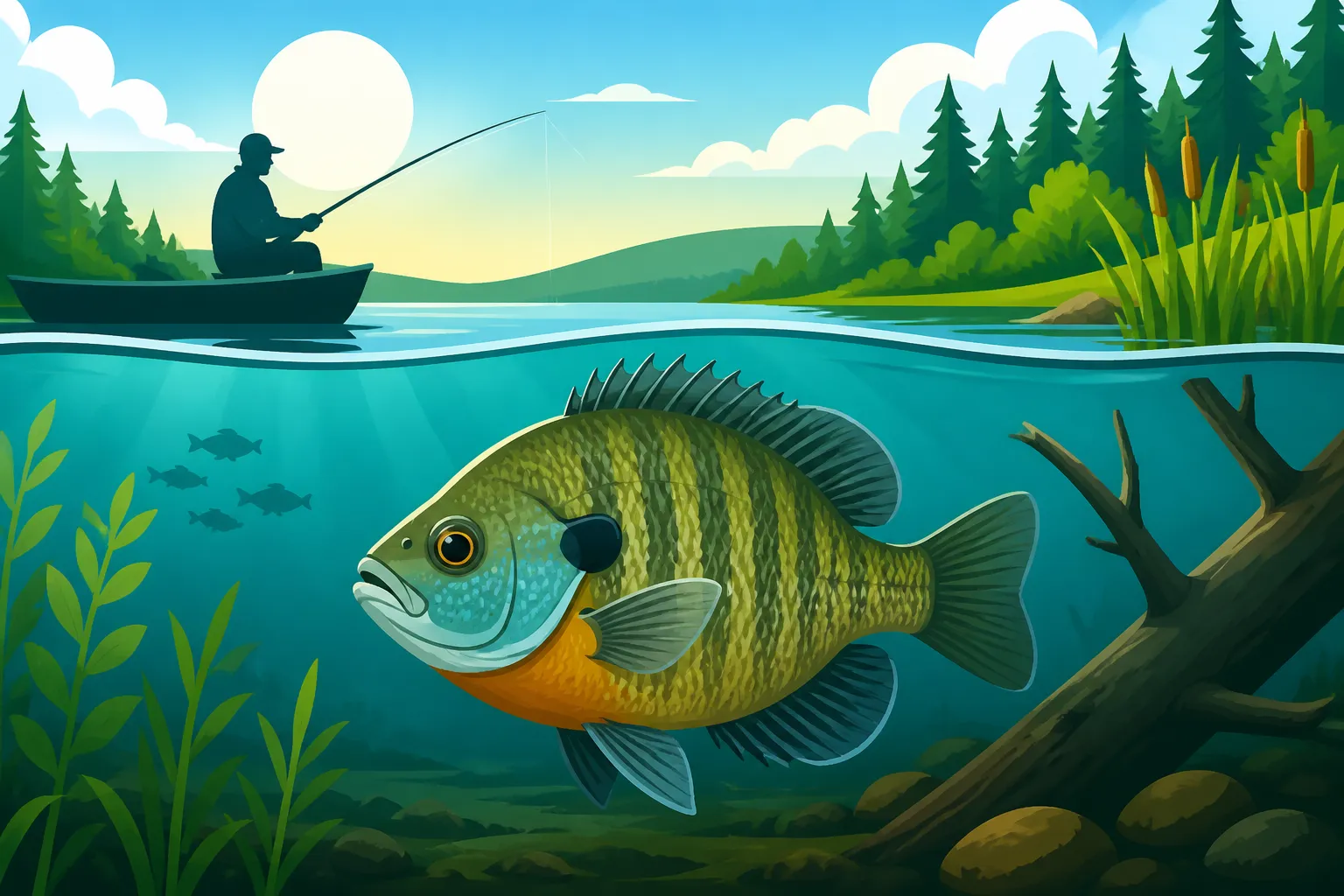
Bluegill, Lepomis macrochirus, are easily recognizable once you know what to look for. They typically have a deep, laterally compressed body, giving them that classic "panfish" shape. Their colouring can vary quite a bit depending on the water clarity, diet, and even the time of year, but generally, you'll see olive-green backs fading to lighter sides, often with vertical bars, and a yellowish or orange belly, especially on males during spawning. The most distinctive feature is that small, dark spot on the posterior edge of their gill cover, often with a blue-black "ear flap." They have a small mouth compared to many other sunfish, which is a key clue to selecting the right baits and lures.
While many anglers associate bluegill with small sizes, don't be fooled. In nutrient-rich Ontario ponds with ample food and less competition, bluegill can grow surprisingly large. We're talking about individuals that stretch a full hand-length or more, sporting a noticeable hump on their back. These larger fish are often referred to as "dinner plate" bluegill, and they put up a fantastic fight on light tackle. Knowing how to differentiate them from other sunfish, like pumpkinseed or rock bass, is part of the fun. For a deeper dive into identifying these different species, you might find Panfish Species Identification Guide for Ontario really helpful.
Preferred Habitats: Where Ponds Become Home
Bluegill aren't picky when it comes to living arrangements, but they do have definite preferences, especially in the somewhat confined world of a pond. They thrive in clear, warm waters with plenty of aquatic vegetation. Think lily pads, cattails, submerged weeds, and even fallen timber. These areas provide vital cover from predators like northern pike and largemouth bass, and they also act as foraging grounds for the insects and small invertebrates that make up the bulk of a bluegill's diet.
In an Ontario pond, bluegill will gravitate towards the edges where vegetation meets open water, or around any kind of structure. This could be a submerged tree, a dock, a culvert, or even just a change in bottom contour. They particularly love areas that offer a combination of cover and access to deeper, cooler water for when temperatures rise. Understanding these preferences means you're not just casting randomly; you're actively seeking out the prime real estate where these fish are most likely to be holding. Small, quiet ponds tucked away in rural areas or within conservation areas often hold fantastic populations of bluegill, especially those with good water quality and diverse aquatic plants.
The Seasonal Dance: Bluegill Movements Throughout the Year
Just like us, bluegill's routines change with the seasons. Their behaviour, where they hold, and how aggressively they feed are all heavily influenced by water temperature and their biological drive to spawn and survive. Understanding this "seasonal dance" is paramount to consistent success on the water.
Springtime Aggression: Pre-Spawn and Spawning Beds
As spring turns to early summer in Ontario, the water temperatures in ponds begin to rise, signalling the start of the bluegill's most active and exciting period: the pre-spawn and spawn. Once water temperatures consistently hit the high teens (around 18-20°C or 65-68°F), male bluegill start looking for suitable nesting sites. They'll fan out circular depressions on firm bottoms, usually in shallower areas (1-5 feet deep) that receive plenty of sunlight, near emergent vegetation or other forms of cover. These nests are often clustered together in colonies, sometimes numbering dozens of beds in a single area. It's a truly amazing sight to behold!
During this time, male bluegill are incredibly aggressive. They guard their nests fiercely, attacking anything that dares to approach, which makes them highly susceptible to anglers. Females will visit these nests to lay their eggs, and then the males will protect them until they hatch. This pre-spawn and spawning period offers some of the fastest action of the year, as the fish are concentrated and willing to strike almost anything that enters their territory. Fishing during this peak activity requires stealth and careful presentation to avoid spooking the entire colony.
Summer Foraging: Deep Water and Weed Edges
Once the spawn is over and the heat of summer truly sets in across Ontario, bluegill tend to disperse a bit more and move to slightly deeper, cooler waters during the hottest parts of the day. You'll often find them congregating along the deeper edges of weed lines, around submerged brush piles, or in shaded areas created by overhanging trees or docks. They're still actively feeding, but their movements are less about aggression and more about comfort and efficient foraging.
Early mornings and late evenings, when the sun is less intense, will often see bluegill venturing back into shallower zones to feed. During the bright midday hours, however, targeting them requires looking for those subtle depth changes, shaded pockets, or areas where springs might be entering the pond, offering a slight drop in temperature. This is when a small kayak or canoe can be incredibly useful for silently exploring these hard-to-reach spots. Many suitable options are available on platforms like Amazon, offering a convenient way to get out on the water. Understanding these summer patterns is key to avoiding frustration during those sunny, hot days when shallow-water action might slow down.
Autumn Ambush: Feeding Before Winter
As the air begins to crisp in autumn and water temperatures in Ontario's ponds start to cool, bluegill enter a critical phase of feeding. They know winter is coming, and they need to pack on fat reserves to survive the lean months ahead. This makes them quite active and often concentrated. They'll often school up in larger groups, moving along weed lines, drop-offs, and around submerged structures, actively searching for insects, small minnows, and other food sources.
This can be a fantastic time for anglers, as the fish are less pressured than during the busy summer months and are very willing to bite. Look for them in areas where baitfish might be congregating, or where vegetation is starting to die back, creating open pockets for foraging. The cooler water also means they are often found a bit shallower than in the peak of summer, making them more accessible. It's a beautiful time of year to be out on the pond, enjoying the fall colours while experiencing some excellent bluegill action.
Winter's Lull: Ice Fishing for Bluegill
Yes, even in the dead of winter, bluegill can be caught through the ice in Ontario ponds! Once a safe layer of ice forms, bluegill will retreat to deeper basins or areas with some persistent green vegetation that still provides oxygen and cover. Their metabolism slows down significantly, making them less active than in warmer months, but they still need to feed.
Successful ice fishing for bluegill requires a more subtle approach. They often suspend at various depths, sometimes just a few feet under the ice, sometimes right near the bottom, depending on oxygen levels and where their food sources are holding. Using small jigs tipped with maggots, wax worms, or a tiny piece of plastic is incredibly effective. A sensitive rod and a light line are essential to detect those incredibly subtle winter bites. It's a peaceful way to enjoy the winter landscape, and catching a mess of bluegill on a cold day is a true reward. If you're looking to gear up for this, make sure to check out Ice Fishing in Ontario for more in-depth advice. For small, specialized jigs and baits, online retailers like Amazon can be a great resource.
What's on the Menu? Bluegill Feeding Habits and Diet
Bluegill are not particularly picky eaters, which is one of the reasons they are so accessible to anglers. However, understanding their primary diet gives you a huge advantage in selecting the right baits and lures.
Insect Eaters: Surface to Subsurface Prey
The cornerstone of a bluegill's diet is insects and other small invertebrates. This includes aquatic insect larvae like mayflies, caddisflies, and midges that live on the bottom or in the weed beds. They will also readily slurp up terrestrial insects that fall into the water, such as ants, grasshoppers, and beetles. Their small, upward-tilting mouth is perfectly adapted for picking off these tiny morsels.
This means that fishing with small baits that mimic these natural food sources is often incredibly effective. Think tiny worms, grubs, or small pieces of corn or bread. For artificials, micro jigs, small spoons, and tiny spinnerbaits work wonders. Fly anglers will find success with small nymphs, wet flies, and even dry flies when there's a hatch. Observing the surface of the pond can give you clues; if you see bluegill dimpling the water, they're likely feeding on emerging insects.
Opportunistic Foragers: Beyond Just Bugs
While insects are a staple, bluegill are quite opportunistic and will eat whatever is available and easy to catch. This includes small crustaceans, snails, fish eggs (sometimes even their own or those of other species), and very small minnows. Larger bluegill, especially, will not hesitate to chase down a tiny baitfish if the opportunity arises.
This broader diet means that beyond insects, other offerings can be successful. Bits of hot dog, small pieces of shrimp, or even small plastic grubs and tubes can entice a bite. They're also known to pick at algae and plant matter, especially when other food sources are scarce, though this isn't their primary forage. The key is presenting something small enough for their mouth, yet appealing enough to trigger a strike. Experimentation with different natural and artificial baits is often rewarded, and having a diverse selection in your tackle box is always a good idea. You can find many multi-compartment tackle boxes on Amazon to keep your assortment organized.
Bluegill Spawning: A Closer Look at Their Reproduction
The spawning cycle of the bluegill is one of the most fascinating aspects of their life in an Ontario pond. It's a crucial time for the species and provides some of the most consistent fishing opportunities.
Nest Building and Protection: The Role of the Male
As discussed, male bluegill are the architects and guardians of the bluegill community. When the water warms sufficiently in late spring or early summer, they select shallow, firm-bottomed areas—often gravelly or sandy spots near cover—and begin to fan out circular nests using their tails. These nests typically range from 6 to 12 inches in diameter, and watching a male diligently clear his territory is quite a sight. They are remarkably territorial during this phase, and a strong, healthy male will defend his nest from any perceived threat, including other fish and even lures.
Once the nest is ready, the male will try to attract a female to lay her eggs. After the eggs are laid and fertilized, his job isn't done. He remains on the nest, fanning the eggs to keep them oxygenated and free of silt, and fiercely protecting them from predators until they hatch. This dedication to their offspring is what makes them so aggressive and catchable during the spawn.
Colony Spawning: Community Effort
One of the most characteristic behaviours of bluegill is their tendency to spawn in colonies. You won't just find one nest; you'll often find dozens, sometimes hundreds, clustered together in a "spawning bed" that can cover a significant area of a pond's shallow water. This communal spawning offers some advantages, such as overwhelming predators with sheer numbers and potentially increasing the chances of survival for individual eggs and fry.
When you locate a bluegill spawning bed, you've hit the jackpot for action. The fish are concentrated, visible, and highly active. However, it's also a time to practice responsible angling. Catch and release is often a good practice during the spawn to ensure future generations, though keeping a few for the pan is certainly part of the bluegill tradition. Remember, these are vital breeding grounds, so tread lightly and observe from a distance before approaching. Polarized sunglasses, often available on Amazon or at local tackle shops, can be incredibly useful for spotting these subtle depressions from a distance.
Cohabitation in Ponds: Bluegill and Other Species
Ponds are miniature ecosystems, and bluegill rarely exist in isolation. Their habits are often shaped by their interactions with other fish species, both as prey and as competitors.
Prey and Predator: The Food Chain Dynamic
In many Ontario ponds, bluegill sit squarely in the middle of the food chain. They are a primary food source for larger predatory fish such as largemouth bass, northern pike, and even larger lake trout in some deeper, cooler ponds. This constant threat of predation influences where bluegill choose to live and how they behave. They seek out dense cover – thick weed beds, submerged brush, fallen trees – to hide from these larger hunters. This is why targeting structure is so critical when fishing for bluegill; it's where they feel safest.
Conversely, very young bluegill, or "fry," serve as a food source for almost every other fish in the pond, including adult bluegill themselves. This dynamic ensures that bluegill populations rarely explode unchecked, helping maintain a healthy balance in the pond's ecosystem. Understanding this predator-prey relationship can also help you locate bluegill; often, where there are hungry bass or pike, there will be schools of bluegill nearby, either hiding or making a dash for safety.
Competition for Resources: Sharing the Pond
Bluegill also compete with other panfish species for food and habitat. In Ontario ponds, it's very common to find them cohabiting with pumpkinseed sunfish, rock bass, and sometimes even crappie. While bluegill have distinct preferences, there's certainly an overlap in their diet and preferred structure. This competition can sometimes lead to stunted growth in overcrowded ponds, where too many fish are vying for limited food resources.
When you're fishing a pond and consistently catching very small bluegill, it might be an indicator of an overcrowded population, or a pond dominated by another panfish species. Conversely, a pond with fewer, but larger, bluegill often suggests a healthier balance of competition and predation. Learning to identify these other panfish species, and understanding their slightly different habits, can further refine your approach. For example, Panfish Fishing in Ontario offers broader strategies for these mixed-species environments.
Targeting Bluegill: Tips for Successful Pond Fishing
Now that we've delved into their habits, let's talk about putting that knowledge into action. Catching bluegill in Ontario ponds is incredibly rewarding, and with the right approach, you can have a banner day.
Light Tackle and Presentation: Keeping it Finesse
Bluegill, with their small mouths and often subtle bites, respond best to light tackle and a finesse presentation. You don't need heavy gear; in fact, it will often hinder your success. A light or ultralight spinning rod (4-6 feet long) paired with a small spinning reel spooled with 2-4 pound test monofilament or fluorocarbon line is absolutely ideal. This setup allows for precise casting of small baits, sensitivity to detect light bites, and makes even a modest bluegill feel like a trophy.
The key to presentation is subtlety. Cast your bait or lure gently near structure or weed edges, letting it sink slowly. Bluegill are curious but can be spooked by heavy splashes or unnatural movements. Work your bait slowly, with small twitches and pauses. Sometimes just letting the bait sit still is enough to entice a strike. For beginners, a simple rod and reel combo can be a great starting point, and many affordable options can be found online or at local sporting goods stores. To truly maximize your light tackle potential, consider exploring Best Tackle for Panfish and Best Rod and Reel Combo for Beginners.
Bait and Lure Choices: What Works Best
Given their varied diet, bluegill respond to a wide array of baits and lures, but always remember their small mouth size.
| Bait/Lure Type | Description | Bluegill Appeal |
|---|---|---|
| Live Bait | Worms (red wigglers, pieces of nightcrawlers), grubs, maggots, wax worms | Irresistible natural scent and movement, consistently effective. |
| Small Jigs | 1/32 to 1/16 oz jigs, often tipped with plastic or live bait | Mimics small insects or fry, highly versatile. |
| Tiny Spinners | Small inline spinners (e.g., Rooster Tails, Mepps) | Flash and vibration attract curious bluegill. |
| Flies (Nymphs/Dries) | Wet flies, nymphs, small dry flies (e.g., poppers, ants) | Perfect for mimicking insects, especially during hatches. |
| Soft Plastics | Tiny tubes, grubs, crappie magnets (1-2 inches) | Subtle movement, often scented, can be very effective. |
| Panfish Poppers | Small topwater lures that create a "pop" on the surface | Exciting topwater action, especially in low light. |
For live bait, a simple float (bobber) rig is classic and effective. Adjust the depth so your bait is suspended just above any submerged vegetation or structure. When using lures, retrieve them slowly, mimicking a struggling insect or minnow. Don't be afraid to experiment with colours; sometimes a bright chartreuse or pink jig will outperform a more natural colour, especially in stained water.
Essential Gear for Pond Hopping
Beyond your rod and reel, a few other items will make your bluegill pond adventures much more enjoyable and successful.
- Small Tackle Box or Bag: Keep your small baits, hooks (size 8-12), sinkers, and floats organized. A compact bag is easy to carry while moving between spots.
- Pliers/Forceps: Essential for safely removing hooks, especially from smaller fish.
- Clippers: For trimming line.
- Sun Protection: Hat, sunscreen, and polarized sunglasses are crucial for long days on the water. The sunglasses, as mentioned, are also fantastic for spotting spawning beds or submerged cover.
- Small Cooler: If you plan on keeping a few fish for a delicious meal, a small cooler with ice is a must. These are often readily available at various price points from retailers like Amazon or any outdoor goods store. You might want to refer to Best Cooler for a Fishing Boat for options that could also work for pond fishing.
- Bug Spray: Ontario ponds in spring and summer can be buggy!
- Water Bottle/Snacks: Stay hydrated and energized.
Exploring different ponds and finding your favourite spots is part of the charm of bluegill fishing. With a good understanding of their habits and the right gear, you're well on your way to becoming a bluegill master in Ontario's many fantastic ponds!
Disclaimer
This article is for general informational purposes only and does not constitute professional advice. Laws, prices and regulations vary by location and change over time. Consult a qualified professional for guidance on your specific situation.