Panfish Fishing in Ontario
There's a special joy in panfish fishing in Ontario, a kind of accessible magic that often gets overshadowed by the pursuit of trophy walleye or monstrous muskie. But let's be real, sometimes you just want to bend a rod, feel a tug, and know that a delicious meal could be on the menu. For many of us, the quest for panfish isn't just about catching fish; it's about connecting with nature, sharing a simple pleasure with family, or finding a peaceful escape where the action is consistent and the pressure is low. This comprehensive guide will help you understand the wonderful world of panfish in Ontario, from identifying different species to finding their hotspots, and mastering the techniques to fill your livewell or camera roll.
What Exactly Are Panfish, Anyway? (And Why We Love Them!)
When we talk about "panfish" in Ontario, we're not referring to a single species but rather a delightful collection of smaller, often schooling fish that are incredibly fun to catch and, as the name suggests, fit perfectly in a frying pan. They're typically found in abundance, providing consistent action that can be incredibly rewarding, especially for those just starting their angling journey or families looking for a relaxing day on the water. These little fighters might not be headline-grabbers like a giant pike, but they offer endless enjoyment and often, a fantastic meal.
The Common Suspects: Crappie, Perch, Bluegill & Sunfish
Ontario is blessed with a vibrant array of panfish species, each with its unique charm and fighting style. Getting to know them helps you understand their habits and, ultimately, how to catch more of them!
Let's start with Black Crappie. These are perhaps the most sought-after panfish for many anglers, often nicknamed "slabs" for their impressive size and pancake-flat bodies. They have a dark, mottled pattern over a silver-green background, and their large dorsal fins are distinctive. Crappie are known for their schooling behaviour and often hang around submerged timber, brush piles, or weed edges, especially in the spring during their spawn. Catching a school of crappie can lead to some truly epic fishing days, making them a top target for many.
Next up, we have Yellow Perch. Instantly recognizable by their olive-green bodies adorned with distinct vertical dark stripes and bright orange-red fins, perch are incredibly popular, both for their fighting spirit and their delicious, flaky white meat. They are widely distributed across Ontario, thriving in many lakes and rivers. Perch are schooling fish, often found in deeper waters during summer, but moving shallower during spring and fall, and are a prime target for ice anglers. They are an absolute staple of the Ontario fishing scene, providing consistent bites throughout the year.
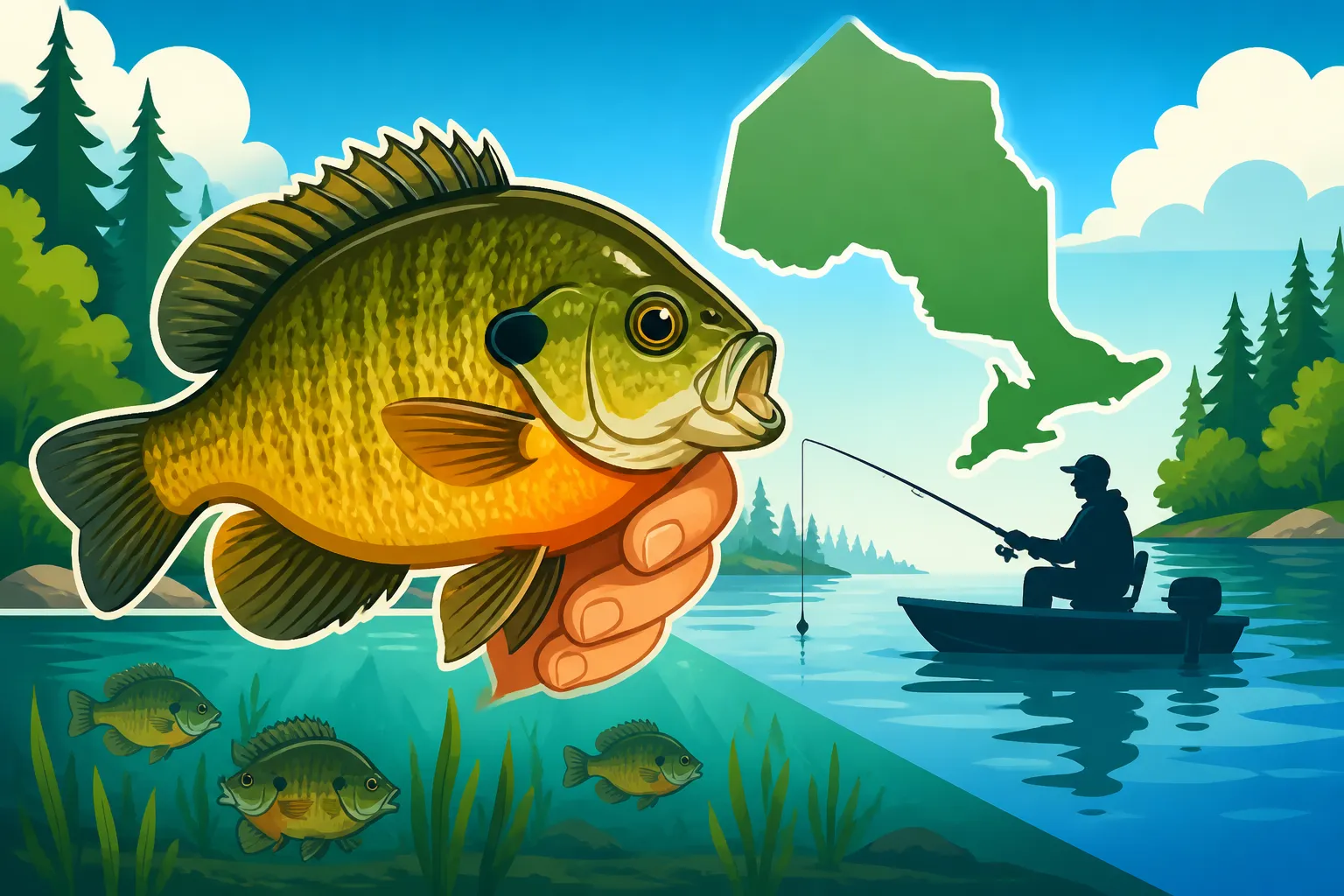
Then there are the Sunfish, a broad category that includes several species like Bluegill, Pumpkinseed, and Rock Bass. Bluegill are typically deep-bodied, olive-green to bluish-grey with a distinctive dark spot on their gill cover and often a vibrant orange-yellow belly, especially the males during spawning season. Pumpkinseeds are similar but often more vibrantly coloured with wavy blue lines on their gill plates and a bright red or orange spot on the opercular flap. Rock Bass are chunkier, brownish, with large red eyes and often a dark spot on each scale, making them look somewhat speckled. These sunfish are the quintessential "kid-friendly" fish; they're abundant, eager biters, and can be found almost everywhere, from small ponds to large lakes, usually hanging around docks, lily pads, and shallow cover. They might be smaller, but their feisty tug on light tackle is always a thrill. For a deeper dive into identifying these fish, check out Panfish Species Identification Guide for Ontario.
Why Panfish are Perfect for Everyone (Especially Beginners & Families)
Let's be honest, we've all been there: dragging the kids out fishing, promising them a monster, only for hours to pass with not even a nibble. That's where panfish shine! They offer a much higher chance of success, which is absolutely crucial for keeping young anglers engaged and fostering a lifelong love for the sport. Their eager nature means less waiting and more reeling, transforming a potentially frustrating outing into a joyful memory.
Beyond the kids, panfish are incredibly accessible for new anglers. You don't need expensive, specialized gear or a massive boat to get into them. A simple spinning rod, a handful of basic tackle, and a willingness to explore local ponds or lake edges are often all it takes. This low barrier to entry makes panfish fishing a fantastic way to learn the basics of casting, bait presentation, and fish handling without the added pressure of chasing elusive, highly sensitive species. It's a forgiving fishery that allows you to make mistakes and still catch fish.
And for the seasoned angler? Don't scoff at panfish! There's a profound satisfaction in mastering the art of catching these smaller species, especially when you start targeting the bigger "slabs" or "jumbos" that can put up a surprisingly good fight on ultralight gear. Plus, they make for some of the finest table fare out there. There's nothing quite like a fresh panfish fry after a successful day on the water, a simple pleasure that connects us directly to the bounty of Ontario's lakes and rivers.
Where to Find Ontario's Panfish Hotspots
One of the beautiful things about panfish is their widespread availability. You don't always need to travel far to find them; often, they're right in your backyard, or at least a short drive away. However, knowing where to look within a body of water can drastically improve your success. Panfish are creatures of habit, often relating to specific types of structure and cover that offer them food, protection, and comfortable water conditions.
Lake Structure: Weeds, Docks, and Submerged Wood
When you're out on an Ontario lake, whether it's a vast expanse like Lake Simcoe or a smaller, more intimate setting in the Kawartha Lakes, panfish will almost always be found associated with structure. Think of it like their apartment building, offering everything they need to survive.
Weed lines are absolute goldmines. Lush green vegetation provides shelter from predators, acts as an ambush point for feeding, and hosts a myriad of insects and smaller organisms that panfish love to munch on. Look for the edges where dense weeds meet open water, or investigate pockets and lanes within the weed beds themselves. Crappie often suspend just outside the denser weeds, while sunfish and smaller perch might be right in them. These areas warm up faster in the spring and hold oxygen well in the summer, making them year-round magnets.
Docks and Piles are another prime location. Public and private docks, old pilings from bygone logging operations, or even boat lifts provide instant overhead cover and vertical structure that panfish adore. They offer shade from the sun, protection from aerial predators like ospreys, and are often surrounded by deeper water, giving fish an easy escape route. Pitching a small jig or bait under and around docks can often yield impressive results, especially on sunny days when fish are seeking refuge. These structures are particularly productive in popular cottage country lakes like those in Muskoka and the Kawarthas.
And then there's submerged wood. This includes everything from fallen trees and sunken logs to brush piles deliberately placed by anglers (though check local regulations before doing so yourself). This "woody cover" creates complex habitats with nooks and crannies where panfish feel safe. These spots are fantastic for crappie and larger perch. If you're on a boat, use your fish finder to locate these hidden treasures. For shore anglers, look for trees overhanging the water; often, their submerged branches extend far beneath the surface, creating excellent cover.
River Backwaters and Ponds: Hidden Gems
While big lakes offer plenty of opportunities, don't overlook the quieter, often less-pressured waters like river backwaters and smaller ponds. These can be absolute honey holes for panfish, especially if you're seeking a more tranquil fishing experience away from the bustling boat traffic.
River backwaters are essentially calmer sections of a river, often cut off from the main current flow, like oxbows, small bays, or slow-moving channels. The reduced current allows vegetation to grow and sediment to settle, creating ideal habitat for panfish. These areas are typically warmer than the main river, attracting fish during colder months and providing nursery grounds for young panfish. In larger river systems like the French River or Ottawa River, exploring these quieter side channels can uncover incredible populations of crappie and perch that rarely see a hook. They often hold a rich food source and offer refuge from predators.
Small ponds, whether natural kettle ponds, man-made farm ponds, or those found in conservation areas and municipal parks, can be absolute panfish factories. These smaller bodies of water often warm up quickly, leading to prolific insect life and dense aquatic vegetation, which are perfect for sunfish, crappie, and perch. Many community ponds are regularly stocked or simply hold self-sustaining populations. The key to fishing ponds is often stealth; approach quietly, especially in clear water, and fan-cast to cover different depths and structures like lily pads, cattails, or fallen trees. These spots are fantastic for a quick fishing trip after work or a low-stress outing with the kids.
Seasonal Movements: Follow the Forage and Spawn
Understanding the seasonal movements of panfish is crucial for consistent success. Just like any other fish, their behaviour is heavily dictated by water temperature, spawning cycles, and the availability of food. Thinking like a panfish will help you anticipate where they'll be.
In spring, as ice melts and water temperatures begin to rise, panfish move into shallower waters. This is prespawn and spawning time. Crappie will often stage in slightly deeper channels or basins adjacent to shallow bays before moving into brush, submerged wood, or thick weeds to spawn. Sunfish will bed in very shallow, often gravelly or sandy areas, making them visible and aggressive. Perch might be found schooling in transitional zones, moving between deeper wintering holes and shallower feeding flats. This is a prime time for sight fishing and targeting active, hungry fish in accessible areas.
As summer progresses and water temperatures peak, panfish generally seek deeper, cooler water, or dense cover. You'll find them retreating to the comfort of weed lines, under docks, in the shade of overhanging trees, or relating to submerged humps and drop-offs. Early mornings and late evenings often offer the best bites in shallower water, while during the bright midday sun, they'll be tucked away deeper. Following the thermocline (the layer of water where temperature changes rapidly) can be key for deeper lakes.
Fall brings a renewed feeding frenzy. As water temperatures start to cool, panfish become incredibly active, gorging themselves to build up fat reserves for winter. They'll often school up tightly and can be found in transitional areas between shallow and deep, actively chasing baitfish. This can be one of the best times to catch larger specimens, as they are often more aggressive and less wary. Look for them concentrated around major points, deep weed edges, and creek mouths.
And then, of course, there's winter, a time when many anglers turn their attention to panfish through the ice. Ice Fishing in Ontario is a highly popular pursuit, and panfish are a prime target. During winter, panfish will often school up in deeper basins, along subtle drop-offs, or around main lake points. The key is to find the schools, and once you do, the action can be non-stop. They might suspend at various depths, so vertical jigging different parts of the water column is essential. Look for established ice huts or popular fishing areas, as panfish often return to the same spots year after year. For specific locations, a guide to Best Ice Fishing Lakes in Ontario can be very helpful.
| Season | Typical Location | Panfish Behavior | Best Techniques |
|---|---|---|---|
| Spring (Ice Out to Mid-May) | Shallow bays, weed edges, submerged brush, docks, rocky shorelines | Spawning, highly active, guarding nests | Bobber fishing with live bait, small jigs, sight fishing |
| Summer (June to August) | Deeper weed lines, under docks, shade of trees, submerged humps, thermocline | Seeking cooler water & cover, less active midday | Light jigs, drop shots, small crankbaits, early morning/late evening |
| Fall (September to November) | Transitional areas, deep weed edges, creek mouths, main lake points | Aggressive feeding, schooling up, building fat reserves | Aggressive jigging, small crankbaits, slow trolling |
| Winter (December to March) | Deeper basins, subtle drop-offs, main lake points, suspended over structure | Schooling, more lethargic, can be finicky | Vertical jigging with tiny jigs/spoons, deadsticking |
Gear Up for Panfish: Simple, Effective, and Affordable
One of the greatest appeals of panfish fishing is that it doesn't require a massive investment in gear. In fact, keeping it simple and light is often the most effective approach. You don't need a boatload of specialized tackle, just a few key items that are well-suited to these smaller, often finicky eaters. This makes it an ideal entry point for new anglers or a budget-friendly option for seasoned pros.
Rods and Reels: Light Tackle is Key
For panfish, the mantra is "go light or go home!" Using ultralight or light action spinning gear is paramount. This isn't just about sporting fun; it's about detecting subtle bites and preventing smaller fish from swallowing hooks too deeply, making for easier, safer release if you're not keeping them.
An ultralight spinning rod, typically 5 to 6.5 feet long with a fast or moderate action, is your best friend. The sensitive tip allows you to feel even the lightest "tap" from a curious bluegill or a crappie gently mouthing your bait. Paired with a small spinning reel (like a 500 or 1000 size), you'll have a balanced setup that's a joy to cast all day. The reel should have a smooth drag, as even a feisty perch can test light line.
For line, a 4-pound test monofilament or fluorocarbon is generally ideal. Monofilament offers a bit of stretch, which can be forgiving on light hooks and small mouths, while fluorocarbon is nearly invisible underwater and has less stretch, offering more sensitivity. Many anglers prefer to spool with a light braided line (e.g., 6-10 lb test) for its incredible sensitivity and casting distance, then tie a 2-4 foot leader of 2-4 pound fluorocarbon to the end. This gives you the best of both worlds. Finding a good, affordable ultralight combo is easy these days; you can often find great deals on platforms like Amazon, offering a wide selection to suit any budget. For more specific recommendations, check out Best Tackle for Panfish.
Lures and Baits: Tiny Treats for Tiny Mouths
Panfish have relatively small mouths, so your presentation needs to match their size. Think small, subtle, and appetizing. This is where a little creativity and a lot of patience pay off.
Jigs are arguably the most versatile panfish lure. We're talking about micro jigs here – typically 1/32 to 1/8 ounce. These can be tiny plastic jigs (often called "crappie jigs") with grub, tube, or minnow-shaped bodies, or hair jigs made from chenille and marabou. White, chartreuse, pink, and black are classic colours that always seem to produce. Tip them with a small piece of live bait, and you've got an irresistible offering. Vertical jigging these small presentations is incredibly effective, especially when fishing deeper structure or through the ice. You can find a huge variety of panfish jigs and soft plastics in multi-packs on Amazon, which is a great way to experiment with different colours and shapes without breaking the bank.
Small spoons are another excellent choice, particularly for perch and crappie, especially when they're schooling or feeding aggressively. Think tiny casting spoons or vertical jigging spoons, typically 1/16 to 1/8 ounce. Their flash and flutter imitate small baitfish, triggering strikes.
Don't overlook tiny crankbaits either, especially for larger crappie and perch. Micro crankbaits that dive only a few feet can be deadly when slowly trolled or retrieved along weed edges or over submerged cover. Their erratic action and vibration can draw fish from a distance.
But let's be honest, nothing beats live bait for consistent panfish action. Worms (nightcrawlers cut into smaller pieces or red wigglers) are universal panfish magnets. Thread them onto a small hook (size 8 or 10) under a bobber, and you're almost guaranteed a bite. Minnows, especially small emerald shiners or fatheads, are irresistible to crappie and larger perch. Hook them lightly through the lip or back and suspend them under a float. And for ice fishing, maggots or wax worms are incredibly popular, providing a subtle, protein-rich snack that panfish can't resist.
Essential Accessories: Pliers, Nets, and Buckets
While the core gear is simple, a few essential accessories will make your panfish fishing experience much smoother and more enjoyable. These aren't just conveniences; they contribute to fish care, safety, and overall efficiency.
A good pair of long-nosed pliers or hemostats is absolutely critical. Panfish, especially sunfish, are notorious for swallowing hooks deeply. Trying to remove a tiny hook from a tiny mouth with your fingers is frustrating for you and harmful to the fish. Long-nosed pliers allow for precise, gentle hook removal, minimizing stress on the fish for release. You can find durable, rust-resistant fishing pliers on Amazon, often with extra features like line cutters.
A small landing net might seem excessive for panfish, but it's invaluable, especially if you're targeting bigger crappie or perch. It helps to quickly and safely land a fish, preventing it from flopping on the ground and injuring itself. Look for nets with a fine, knotless mesh to protect the fish's delicate fins and slime coat. This is particularly important for catch-and-release efforts.
Finally, if you plan on keeping some of your catch for a meal, a bait bucket or a small cooler is a must-have. A traditional bait bucket can be used to hold your live bait (worms, minnows) and also serves as a temporary livewell for a few panfish if you don't have a boat with a built-in one. For longer outings or warmer weather, a small cooler filled with ice is the best way to keep your panfish fresh until you get home. Remember, quickly cooling down your catch improves its taste and preserves its quality. For advice on organizing all your small panfish tackle, consider a dedicated Best Tackle Box Setup for Ontario Anglers.
Top Techniques for Consistent Panfish Action
Panfish might be eager biters, but that doesn't mean there isn't an art to consistently catching them. Employing the right techniques for the conditions can elevate your success from occasional catches to filling stringers. Whether you're a seasoned angler or a beginner, mastering these methods will serve you well.
Bobber Fishing: The Classic and Most Relaxing Method
Ah, bobber fishing. There’s something so timeless and relaxing about watching that little float dance on the water, waiting for the tell-tale dip or disappearance that signals a bite. This is arguably the most accessible and popular method for panfish, perfect for shore anglers, kids, and anyone seeking a low-stress outing.
The setup is straightforward: a light spinning rod, a small hook (size 8-12, depending on bait), a few split shot weights to get your bait down, and a bobber. The bobber’s purpose is twofold: it keeps your bait suspended at a specific depth, and it acts as a visual strike indicator. Choose your bobber size based on your bait and weight; you want it to sit just right, not too buoyant, not too submerged, so it reacts to even the lightest bite. A small slip bobber system is fantastic because it allows you to adjust your depth easily and cast further without a fixed bobber getting in the way.
Baiting up is simple. A small piece of nightcrawler, a few maggots, a wax worm, or a small minnow (for crappie or bigger perch) are all highly effective. Cast your rig near promising cover – a dock, a weed line, or a fallen tree – and let it sit. The key here is patience, but also observation. Panfish bites can be incredibly subtle; sometimes it's just a slight twitch or a slow drag of the bobber. When it goes down, count to one or two, then a gentle sweep of the rod tip is usually all it takes to set the hook. This technique is fantastic for covering a specific area thoroughly, and it’s especially effective when fish are shallow and active, or suspended over structure.
Jigging: Vertical Presentation for Deeper Fish
When panfish move deeper, or during the colder months, jigging becomes an incredibly effective technique. This method involves presenting a lure or bait vertically in the water column, often with subtle lifts and drops, to entice strikes from fish that might not be actively chasing horizontal retrieves.
For open water, whether from a boat or kayak, jigging is all about finding fish with your fish finder (if you have one) and then dropping your offering right to their depth. Small soft plastic jigs (like 1-2 inch grubs or tubes) on a lightweight jig head (1/32 to 1/8 ounce) are excellent. Drop it down, let it hit the bottom, then lift it a few inches and let it flutter back down. Experiment with different jigging motions – short, sharp snaps; long, slow lifts; or just barely shaking the rod tip. Often, the strike comes on the fall, so watch your line intently for any unnatural twitch or pause. Tipping your jig with a live minnow or a couple of maggots can significantly increase your success.
When it comes to ice fishing, jigging is the primary technique. Anglers use short, sensitive ice rods and tiny jigs, spoons, or small "horizontal" jigs (like a tear drop or small plastic fly) tipped with live bait. You drill a hole, drop your line, and watch your sonar (if you have one) for fish below. The subtle action of jigging, often just barely moving the bait, mimics insects or small baitfish in a lethargic state, which is perfect for cold-water panfish. Detecting bites can be challenging, as they might be just a slight resistance or a tiny tic on your sensitive rod tip. This is where a spring bobber attached to your rod tip can be a game-changer, indicating the slightest take. For more on this, consider exploring Jigging for Perch Through the Ice.
Trolling and Drifting: Covering Water (for Bigger Panfish)
While often associated with larger species, trolling and drifting can be surprisingly effective for covering water and locating schools of larger panfish, especially crappie and perch that are suspended or spread out over flats. This is a particularly useful technique when you're on a boat or kayak and trying to find where the fish are holding in a new body of water or during seasonal transitions.
Trolling for panfish involves slowly moving your boat (or pedaling your kayak) while dragging small lures or bait rigs behind you. Use very light tackle – an ultralight rod and reel with 4-6 lb test line. Small crankbaits that dive only a few feet are excellent choices, as are small jigs or tiny spoons. You can also use simple split shot rigs with a small hook and live bait (like a minnow or piece of worm). The key is to go slowly. Often, a speed just fast enough to give your lure action is perfect. Pay attention to your depth and try to keep your lure running just above any structure or at the depth where you're marking fish on your sonar. This technique allows you to cover large areas and pinpoint where active schools are located.
Drifting is similar but relies on wind or current to move your boat. This is a fantastic passive technique, especially on larger lakes like Lake Erie (for yellow perch) or Lake Simcoe, where schools can be vast. Deploy your rigs (often a spreader rig with two hooks, or a simple drop shot with live bait) and let the wind push you across a flat or along a deep weed edge. Maintain constant contact with your line to feel bites, as the slack from drifting can make them harder to detect. Adjust your weight as needed to keep your bait near the bottom or at the desired depth. Drifting can be particularly effective when panfish are spread out over subtle bottom contours or when they are finicky and prefer a natural, unforced presentation.
Panfish Through the Seasons in Ontario
Ontario's distinct four seasons each offer unique opportunities and challenges for panfish anglers. Understanding how panfish behavior changes with the temperature and available forage is key to consistent success year-round. It's not just about what bait you use, but when and where you present it. For a general overview of when different species are active, check out Ontario Fishing Seasons by Zone and Month.
Spring: Spawning Frenzy and Shallow Water Fun
Spring is a time of renewed life, and for panfish, it means one thing: the spawn! As the ice melts and water temperatures slowly creep up, these fish awaken from their winter lethargy and begin their migration into the shallows. This is arguably one of the most exciting times to target them.
Crappie often initiate the spring bite, moving from deeper wintering holes into bays and channels where they stage before moving onto their spawning beds. Look for them holding around submerged brush piles, fallen trees, or the edges of developing weed growth in waters ranging from 4 to 10 feet deep. Their spawning usually occurs when water temperatures hit the low to mid-50s Fahrenheit (around 10-15°C). During this time, they become incredibly aggressive and will readily hit small jigs tipped with minnows or soft plastic baits. Targeting them often means slowing down your presentation, perhaps suspending a minnow under a slip bobber near cover.
Sunfish (like bluegill and pumpkinseed) are later spawners, typically waiting until water temperatures reach the upper 60s to low 70s Fahrenheit (around 20-23°C). They create distinct "beds" or circular nests in very shallow, often gravelly or sandy areas, sometimes less than two feet deep. These nests can be found in colonies, and the males become fiercely protective, aggressively striking at anything that approaches. This makes them incredibly fun to sight fish – you can literally see the fish on its bed! A small worm or grub under a bobber cast gently onto a bed will almost always result in a hookup.
Yellow perch also move shallower in the spring, often schooling up in large numbers around weed edges or shallow humps. They spawn a bit earlier than crappie and sunfish, typically in late April or early May, in deeper weed beds or flooded timber. After spawning, they remain active, feeding heavily to regain their energy. They are often targeted with small jigs, spoons, or live minnows fished near the bottom in transition areas.
Summer: Seeking Shade and Deeper Comfort
As Ontario's summer days grow long and hot, panfish adapt by seeking refuge from the intense sun and warmer surface temperatures. This doesn't mean the bite dies; it just means you need to adjust your approach and look for them in different places.
During the peak heat of summer, panfish will often move to deeper water or seek out dense overhead cover. For species like crappie and larger perch, this means finding them suspended over deeper basins, relating to offshore humps and points, or hanging out along the deep edges of weed lines and submerged timber. They might use the thermocline as a preferred depth, where the water is cooler and oxygen levels are optimal. This is where a good fish finder becomes your best friend, helping you locate schools that might be 15, 20, or even 30 feet down. Vertical jigging or slow trolling with small crankbaits or live bait rigs are effective techniques for these deeper-holding fish.
Sunfish will often stick closer to shallower cover like docks, lily pad fields, and thick emergent weeds. However, they'll primarily be found in the shadier spots, tucked under the densest vegetation or hugging the bottom in slightly deeper pockets. Early mornings and late evenings are prime times to target them in these shallower areas, as they become more active when the sun isn't directly overhead. During midday, focus on pitching small baits into the deepest, darkest pockets of cover. Patience and precise presentations are key when fishing these tight, covered areas.
Fall: Feeding Up Before Winter
Fall is a glorious time to be on the water in Ontario, and panfish often offer some of the most consistent and aggressive bites of the year. As water temperatures begin to cool, these fish enter a period of intense feeding, driven by the instinct to pack on weight before the lean winter months.
You'll often find panfish, especially crappie and perch, schooling up in large numbers. They'll transition from their summer haunts, often moving to deeper main lake points, channel edges, and drop-offs that lead into deeper basins. They are actively chasing baitfish like minnows and emerald shiners, making them highly susceptible to artificial lures that mimic these forage species. Small crankbaits, spoons, and soft plastic swimbaits retrieved with a bit more speed than in summer can be incredibly effective. Look for areas where schools of baitfish are present, as the panfish won't be far behind.
Sunfish also become more active in the fall, though they might not school as tightly or venture as deep as crappie and perch. They'll often remain associated with weed lines and docks, but will be more willing to move out and feed more aggressively. Worms, grubs, and tiny jigs are still highly effective. The cooler water also means they are less sluggish than in the summer heat, providing a strong fight on light tackle. This fall bite is a fantastic opportunity to stock up on delicious perch and crappie for the freezer, or simply enjoy some fast-paced action before the ice sets in.
Winter: Ice Fishing for Panfish
When Ontario's lakes freeze over, the angling fun doesn't stop; it simply shifts to the ice. Ice Fishing in Ontario is a beloved tradition, and panfish are central to this frosty pursuit. The unique conditions of winter require specific tactics, but the rewards can be immense.
Once safe ice forms, panfish often congregate in predictable locations. Yellow perch and crappie are prime targets, often schooling in deeper basins, along subtle drop-offs, or near submerged humps and deep weed edges. They tend to relate to similar structures they used in summer, just in deeper water, providing stable, well-oxygenated environments. The key to ice fishing for panfish is drilling multiple holes and moving until you locate a school. Once found, the action can be non-stop.
The tactics revolve around vertical jigging tiny baits. Specialized ice fishing jigs, often called "teardrops" or "horizontal jigs," in sizes as small as 1/64 to 1/16 ounce, are tipped with a single maggot, wax worm, or a small piece of minnow. The presentation is subtle: a gentle lift and fall, with pauses in between. Bites can be incredibly light, sometimes just a slight "mush" or an almost imperceptible stop in the line. This is where a highly sensitive ice rod with a spring bobber really shines, indicating the most minute takes.
Many ice anglers also use a deadstick setup – a second rod (where regulations allow) with a simple bobber and a live minnow or worm, set up in a hole adjacent to their jigging hole. This provides a stationary, natural presentation that can entice less active fish. Investing in a portable ice hut or a basic shelter can make winter panfish excursions much more comfortable, allowing you to focus on the fishing without battling the elements.
Regulations and Conservation: Be a Responsible Panfish Angler
As much as we love catching panfish, it's our responsibility as anglers to ensure these populations remain healthy and abundant for future generations. Understanding and adhering to Ontario's fishing regulations, practicing ethical harvesting, and conserving habitats are not just good ideas—they're essential. Ontario has a robust set of rules designed to manage its diverse fisheries, and it’s up to each of us to do our part. You can always check the latest summary of rules for full details.
Understanding Ontario's Panfish Limits
Ontario's fishing regulations are designed to protect fish populations while allowing for sustainable recreational fishing. This means there are specific rules regarding how many fish of a certain species you can keep, often referred to as "bag limits" and "possession limits." For a full breakdown, consult Ontario Bag and Possession Limits by Species.
For panfish, these limits can vary significantly depending on the Fisheries Management Zone (FMZ) you are fishing in. Ontario is divided into 20 different FMZs, each with its own specific regulations tailored to the ecological conditions and fish populations within that area. What's legal in one zone, say FMZ 20 (Lake Erie), might be different in FMZ 15 (parts of Northern Ontario). This is why it's absolutely crucial to identify which zone you are fishing in and carry the current regulations summary with you. Ontario Fisheries Management Zones, Explained can help you understand these boundaries.
Furthermore, your fishing license type impacts your limits. In Ontario, you typically purchase either a Sport Fishing License or a Conservation Fishing License. A Sport Fishing License generally allows for higher daily bag and possession limits, while a Conservation Fishing License has reduced limits, promoting a more conservative approach to harvesting. For panfish, this often means the difference between keeping a full limit of, say, 25 perch, versus a reduced limit of 10 or 15. Make sure you understand the difference and fish according to the license you hold. Ontario Sport vs Conservation Fishing License provides a detailed comparison. Always remember to check the specific regulations for the body of water you intend to fish, as some lakes or rivers may have special regulations that supersede general zone rules.
Catch and Release vs. Keeping for the Frying Pan
Panfish are fantastic table fare, and there's immense satisfaction in enjoying a meal of fish you've caught yourself. However, deciding when to keep and when to release is an important aspect of responsible angling.
If you plan to keep fish, only take what you will genuinely eat. Don't simply fill your limit if you won't consume it all. Many anglers practice selective harvesting, meaning they might keep smaller panfish for the frying pan, as these tend to be more numerous and grow faster, while releasing the larger "slab" crappie or "jumbo" perch. This helps to maintain a healthy population structure, ensuring that the larger, potentially breeding fish remain in the system.
For fish you intend to release, handling them properly is crucial for their survival. Wet your hands before touching the fish to protect its slime coat, which is its primary defense against disease. Handle the fish gently and quickly, minimizing its time out of water. Use long-nosed pliers or hemostats to remove hooks, especially if they are deeply set. If a fish is bleeding heavily or appears severely injured, it's often more humane to keep it if within legal limits, rather than releasing it to die slowly. Learning proper fish handling techniques ensures that those released fish have the best chance of thriving and being caught again.
Protecting Panfish Habitats
Beyond individual fish, protecting the habitats where panfish live is fundamental to their long-term health. Panfish rely heavily on aquatic vegetation, submerged wood, and clean water.
Keeping fishing areas clean is perhaps the easiest and most impactful thing we can all do. This means packing out everything you pack in – all your garbage, discarded fishing line, and bait containers. Monofilament fishing line can take hundreds of years to break down and is incredibly harmful to wildlife, entangling birds, mammals, and other fish. Consider carrying a small trash bag with you to collect not only your own waste but also any litter you find.
Avoiding spawning beds is another important conservation practice. In the spring, when sunfish and some crappie are on their beds in shallow water, disturbing them can lead to unsuccessful spawns. These fish are vulnerable during this time, so avoid wading or boating directly through shallow nesting areas. Give them space to do their vital work.
Finally, always respect private property and be mindful of your impact on the shoreline and surrounding environment. This helps maintain access for all anglers and ensures that these beautiful Ontario waters remain pristine. Using resources like How to use the Fish ON-Line interactive zone map can help you identify public access points and understand different water body classifications, helping you fish responsibly.
Species Deep Dive: More About Ontario's Panfish
While we've touched on the main panfish species, a closer look at each one can really elevate your angling game. Understanding their specific preferences, habits, and nuances will make you a more targeted and successful panfish angler, helping you zero in on your desired catch.
Black Crappie: The Slabs of the Panfish World
Black Crappie (scientific name: Pomoxis nigromaculatus) are often considered the connoisseur's panfish. Known for their delicious white meat and their tendency to grow into respectable "slabs," they are a top target for many anglers across Ontario. They are easily identified by their deep, compressed bodies, a silvery-green colour with irregular dark blotches, and distinctively large dorsal and anal fins, each with 7-8 dorsal spines (more than their white crappie cousins, though white crappie are less common in Ontario).
Crappie thrive in clear to moderately turbid waters with abundant submerged vegetation, brush piles, and standing timber. They are particularly fond of quiet, vegetated bays and backwaters of lakes and large rivers, preferring areas with soft bottoms. You'll rarely find them in fast-moving current. During the warmer months, they often suspend in the water column, sometimes over deep structure like sunken brush or humps, following schools of baitfish. In the spring, they push into shallower, protected bays for spawning, often around dense cover. For a comprehensive look, see Black Crappie in Ontario Lakes.
The best times to catch crappie are often during the spring spawn, when they are concentrated and aggressive in shallow water. Early morning and late evening are also prime feeding windows, especially in summer. They are also a highly popular ice fishing target, where they can be found schooling over deeper holes or along drop-offs. Their bite can be incredibly light, often just a subtle "tap" or a feeling of added weight on your line, so sensitive gear is a must. Tiny jigs, small minnows, and soft plastic tubes or grubs are consistently effective.
Yellow Perch: Delicious and Abundant
Yellow Perch (Perca flavescens) are a quintessential Ontario panfish, celebrated for their vibrant colours and, perhaps most importantly, their sweet, flaky meat. They are instantly recognizable by their golden-yellow sides, 6-8 distinct dark vertical bands, and bright orange-red lower fins. They have a more elongated, torpedo-shaped body compared to the crappie or sunfish.
Perch are incredibly adaptable and are found in a wide variety of habitats across Ontario, from large, shallow productive lakes like Lake Erie and Lake Simcoe to smaller inland lakes and slower sections of rivers. They prefer clear to moderately turbid waters and are often associated with sandy or gravelly bottoms, as well as weed beds, particularly those with sparse to moderate vegetation. They are schooling fish, often forming large aggregations, which makes finding one often lead to finding many. They are a significant part of the ecosystem in large water bodies like the Great Lakes, with Yellow Perch in Lake Erie and Lake Simcoe being a prime example of a celebrated fishery.
Perch are active year-round, making them a fantastic target in every season. Spring sees them moving shallower for spawning and feeding, while summer often finds them in deeper, cooler water. Fall brings an aggressive feeding period, and winter makes them a top target for ice anglers. They readily bite small minnows, worms, maggots, and a variety of small jigs and spoons. Because they school, if you catch one, it's worth dropping your bait right back down in the same spot, as there are likely many more. Their bite is usually more aggressive than a crappie's, often a solid thump, but can also be a subtle nibble, especially when they are lethargic in cold water.
Sunfish (Bluegill, Pumpkinseed, Rock Bass): Colourful Fighters
The collective "sunfish" category includes some of Ontario's most common and accessible panfish, making them perfect for beginners and families. While they share some similarities, each species has its own distinctive features and preferences.
Bluegill (Lepomis macrochirus) are deep-bodied, olive-green to bluish-grey with a distinctive black "ear flap" on their gill cover. Males often have vibrant orange-yellow bellies during the spawning season. They prefer warm, shallow, vegetated waters of lakes, ponds, and slow-moving rivers. Bluegill are notorious for their aggression and willingness to bite almost any small offering, making them incredibly fun on ultralight tackle. They primarily feed on insects, insect larvae, and small crustaceans.
Pumpkinseed (Lepomis gibbosus) are perhaps the most colourful of the sunfish, often adorned with wavy iridescent blue lines on their gill plates and a prominent scarlet or orange spot on the rear of their opercular flap. Their bodies are typically olive to golden brown with speckled patterns. They share similar habitats with bluegill, preferring shallow, vegetated areas, but often lean towards slightly cooler, clearer waters. Like bluegill, they are aggressive feeders, primarily on insects, snails, and small crustaceans. Their vibrant colours make them a joy to catch and admire.
Rock Bass (Ambloplites rupestris) are a bit different. They have a chunkier, more bass-like body shape, typically brownish or olive with dark spots on their scales, giving them a mottled appearance. Their most striking feature is their large, often ruby-red eyes. As their name suggests, Rock Bass prefer rocky habitats – rip-rap, rocky shorelines, boulder fields, and submerged rock piles in lakes and rivers. They are less associated with dense weeds than bluegill or pumpkinseed. They are opportunistic feeders, eating insects, crayfish, and smaller fish. Rock bass are incredibly feisty for their size and provide a strong fight on light tackle. For a broader overview of panfish types, check out Panfish Species Identification Guide for Ontario.
All sunfish are fantastic for teaching new anglers, as their eagerness to bite and widespread distribution make success highly probable. Small worms, crickets, tiny jigs, and even small flies are all effective baits for these colourful fighters.
Cooking Your Catch: Panfish on the Plate
After a successful day on the water, there’s nothing quite like the prospect of enjoying your freshly caught panfish. The term "panfish" itself comes from their ideal size for fitting into a frying pan! While the thrill of the catch is paramount, preparing and savouring your harvest is often the perfect cap to a great fishing trip. Panfish are renowned for their delicate, white, and often sweet-tasting flesh, making them a favourite for many anglers.
Cleaning and Filleting Panfish
Cleaning panfish might seem a bit daunting at first, especially with their smaller size, but with a few simple tools and a little practice, you'll be filleting like a pro in no time. The goal is to get as much clean, boneless meat as possible.
First things first, you'll need a sharp fillet knife, a sturdy cutting board, and a bowl of ice water to keep your fillets fresh. Many anglers also use a scaling tool or the back of their knife to remove scales, or simply skin the fish.
Here's a basic approach to filleting a panfish:
- Scaling (Optional): If you plan to leave the skin on, use a scaler or the back of your fillet knife to scrape off the scales, working from tail to head. Rinse thoroughly.
- Head Cut: Lay the fish on its side. Make a diagonal cut behind the gill plate, from the top of the fish down to just behind the pectoral fin, but do not cut all the way through the backbone.
- Backbone Cut: Rotate your knife 90 degrees and slide it along the backbone towards the tail. Keep the blade pressed against the bone to get as much meat as possible.
- Skinning: Once you reach the tail, don't cut the fillet off completely. Flip the fillet over so the skin side is down, with the tail still attached to your cutting board. Hold the tail end firmly and slide your knife between the skin and the meat, working from tail to head, separating the fillet from the skin.
- Rib Cage Removal: Most panfish have small rib cages. You can either make a small V-cut to remove the ribs, or simply trim them off. For very small fish, some anglers just make a single cut down the middle, removing the backbone and leaving two half-fillets with ribs.
- Repeat: Flip the fish over and repeat the process for the second side.
You'll quickly find that practice makes perfect. Keep your knife sharp and take your time. If you're struggling, there are countless online videos that can show you the technique step-by-step. The small size means it goes quickly once you get the hang of it, and you'll soon have a pile of fresh, boneless fillets ready for the pan.
Simple and Delicious Panfish Recipes
Once you have your beautiful panfish fillets, the culinary possibilities are endless! Their mild flavour means they adapt well to a variety of seasonings and cooking methods. Here are a couple of classic, easy-to-make recipes that highlight the natural deliciousness of your catch.
Classic Pan-Fried Panfish: This is the quintessential way to enjoy panfish, and for good reason—it’s simple, quick, and absolutely delicious.
- Ingredients: Panfish fillets, all-purpose flour or cornmeal (or a mix), salt, black pepper, garlic powder, paprika (optional), cooking oil (vegetable, canola, or peanut).
- Instructions:
- Pat your fillets completely dry with paper towels. This is key for a crispy crust.
- In a shallow dish, combine flour/cornmeal with salt, pepper, and other seasonings to taste.
- Lightly dredge each fillet in the seasoned mix, ensuring it's evenly coated. Shake off any excess.
- Heat about 1/2 inch of oil in a large skillet or cast-iron pan over medium-high heat until shimmering.
- Carefully place fillets in the hot oil, ensuring not to overcrowd the pan. Cook for 2-4 minutes per side, depending on thickness, until golden brown and cooked through. The fish should flake easily with a fork.
- Remove from pan and place on a wire rack lined with paper towels to drain excess oil. Serve immediately with lemon wedges, tartar sauce, and your favourite side dishes like coleslaw or fries.
Easy Fish Tacos: A more modern, vibrant way to enjoy your panfish, especially great for a casual meal.
- Ingredients: Panfish fillets, taco seasoning, olive oil, small corn or flour tortillas, shredded cabbage or coleslaw mix, pico de gallo or salsa, avocado crema (sour cream mixed with lime juice and mashed avocado), fresh cilantro and lime wedges for garnish.
- Instructions:
- Pat fillets dry. Lightly coat with olive oil, then sprinkle generously with taco seasoning.
- Heat a tablespoon of olive oil in a non-stick skillet over medium-high heat.
- Cook fillets for 2-3 minutes per side until cooked through and lightly browned. Flake into bite-sized pieces with a fork.
- Warm tortillas according to package directions.
- Assemble tacos: Place flaked fish in a warm tortilla, top with shredded cabbage, pico de gallo, and a drizzle of avocado crema. Garnish with fresh cilantro and a squeeze of lime juice.
Enjoying your panfish catch at the dinner table is a rewarding experience that completes the cycle of fishing. It's a testament to the bounty of Ontario's waters and the simple, fulfilling pleasure of harvesting your own food.
Disclaimer
This article is for general informational purposes only and does not constitute professional advice. Laws, prices and regulations vary by location and change over time. Consult a qualified professional for guidance on your specific situation.