What baitfish Ontario walleye key on
It can be incredibly frustrating to hit your favorite walleye spot in Ontario, cast your line repeatedly, and come up empty-handed while watching others pull in fish after fish. A lot of the time, the secret isn't just where you're fishing, but what the walleye are actually eating at that particular moment. This comprehensive guide will help you understand the primary baitfish species that Ontario walleye key on, giving you a serious edge in your next fishing adventure.
The Walleye's Predatory Nature and Diet Flexibility
Walleye are opportunistic predators, which means they're not always picky eaters, but they are certainly efficient ones. Their large, light-sensitive eyes are perfectly adapted for low-light conditions, giving them a distinct advantage over many baitfish species at dawn, dusk, and even under cloudy skies or at night. This visual prowess, combined with their incredible sense of smell, means they're constantly on the hunt for easy meals. Understanding their predatory habits is the first step in figuring out their diet. They'll expend as little energy as possible for the biggest caloric payoff.
Adapting to Available Food Sources
One of the fascinating aspects of walleye is their remarkable ability to adapt their diet based on what's readily available in their environment. A walleye living in a shallow, weed-choked lake might primarily feed on different baitfish than one residing in a deep, clear oligotrophic lake. This adaptability means that what works on Lake Erie might not be the go-to on a smaller, secluded northern lake. It's a constant puzzle for anglers, which is why observing local conditions and asking around at bait shops can be so valuable. Sometimes, the walleye will even shift their preferences within the same body of water, perhaps switching from minnows to young perch fry as the season progresses and different species hatch.
The Role of Water Conditions and Seasonality
Water temperature, clarity, and even the current can significantly influence what baitfish are active and, consequently, what walleye are targeting. In colder waters, baitfish might be slower and more lethargic, making them an easier meal for a walleye that might also be conserving its energy. As waters warm, baitfish become more active, and walleye might pursue faster, more elusive prey. Similarly, after a heavy rain, rivers might become turbid, forcing walleye to rely more on their sense of smell or to ambush baitfish in shallower, clearer pockets. Ontario Fishing Seasons by Zone and Month offers more insights into these seasonal shifts.
Primary Baitfish Species Walleye Hunt in Ontario
Ontario's diverse aquatic ecosystems support a wide array of baitfish, and walleye take advantage of almost all of them. Knowing the most common ones and their characteristics can help you "match the hatch" effectively. These aren't just names to know; they're blueprints for your lure selection.
Smelt: A Northern Delicacy
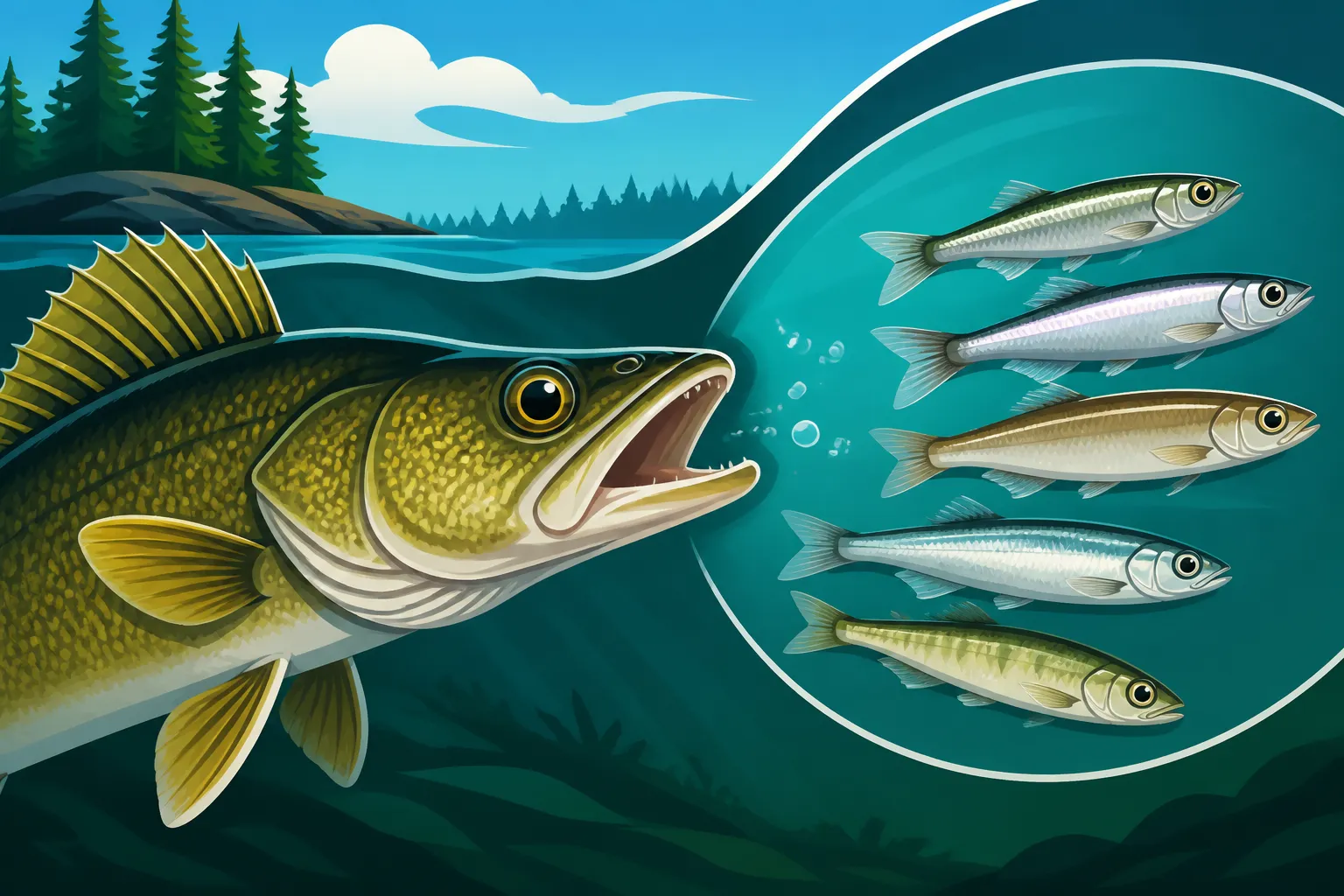
Smelt are perhaps one of the most recognizable and important baitfish for walleye, especially in the Great Lakes and many of Ontario's larger, colder inland lakes. These slender, silvery fish are rich in fat, making them a high-energy meal. Walleye often gorge on smelt, particularly during and after their spring spawning runs when they congregate in vast numbers in shallower areas and tributary mouths.
Imagine fishing a cold, deep lake like Lake Superior or Lake Huron. If you find a school of smelt, you're almost guaranteed to find walleye nearby, especially if you're fishing during the right Best Time of Day to Catch Walleye. They are incredibly abundant and often move in large schools, providing a buffet for hungry walleye. Understanding their movements can be a game-changer for anglers.
Cisco (Lake Herring): The Deepwater Staple
Cisco, also known as lake herring, are another crucial forage species, especially in deep, clear, cold-water lakes. These silvery, deep-bodied fish inhabit deeper waters for much of the year, often suspended in the water column. Walleye in these environments learn to hunt cisco in open water, often suspending right alongside them.
Think of it like this: if you're fishing a deep basin on a large lake and your sonar is marking schools of baitfish suspended 30 to 50 feet down, there's a good chance those are cisco, and the larger arcs you see are walleye following the banquet. Mimicking their size and erratic movements with lures can be highly effective. Finding walleye in these scenarios often means looking for depth changes, underwater points, or suspended schools of these valuable baitfish.
Yellow Perch: An Ubiquitous Treat
Yellow perch are arguably one of the most significant and widespread forage fish for walleye across all of Ontario. They're found in nearly every lake and river system where walleye thrive. Perch have a distinct look – vertical stripes and a spiny dorsal fin – and walleye absolutely love them.
It's a simple case of "eat what you see." Perch are often found in similar habitats to walleye, associating with weeds, rocks, and various forms of structure. Young-of-the-year perch, in particular, become an easy target. Many popular walleye lures are designed specifically to imitate the shape, color, and swimming action of perch. If you're fishing a lake with a healthy perch population, you can bet walleye are keyed into them. Ontario Yellow Perch Limit on Lake Erie and Simcoe provides more detail on these prolific fish.
Shiners: The Flashy Snack
Various species of shiners, such as emerald shiners, golden shiners, and spottail shiners, are common baitfish in many Ontario waters. These small, silvery fish often school in open water or along shorelines, especially near sandy or weedy flats. Their flash and frantic movements make them irresistible to walleye.
Anglers often catch shiners in minnow traps for live bait, which speaks to their effectiveness. Walleye will often push schools of shiners against structure or into shallow bays to ambush them. When walleye are actively chasing shiners, fast-moving baits that mimic a fleeing baitfish can be incredibly productive.
Round Gobies: An Invasive, Yet Abundant Meal
Round gobies are an invasive species, particularly prevalent in the Great Lakes and interconnected waterways like the Trent-Severn Waterway. While they pose ecological challenges, they have unfortunately become a significant food source for walleye, especially in areas where they are abundant. These bottom-dwelling fish are easy targets for walleye, which often feed close to the bottom.
If you're fishing in a Great Lakes bay or a connecting river where gobies are present, it's highly likely that walleye are keying on them. Lures that imitate the dark coloration and bottom-hugging behavior of gobies can be exceptionally effective. It's a tricky situation, as they are invasive, but their presence undeniably affects walleye diets.
Other Important Forage
While the above are the heavy hitters, walleye will also feed on other species depending on local availability. These include:
- Suckers: Common in rivers and larger lakes, especially during spawning runs.
- Darters: Small, bottom-dwelling fish, often found in rocky areas.
- Alewives: Another invasive species in the Great Lakes that walleye consume.
- Sculpins: Coldwater bottom dwellers in many lakes.
The table below summarizes some common baitfish and their characteristics that walleye key on:
| Baitfish Species | Typical Habitat | Key Characteristics Walleye Notice | Ideal Lure Imitations |
|---|---|---|---|
| Smelt | Deep, cold lakes; move shallow to spawn | Silvery, slender, high-fat content, schooling | Jerkbaits, spoons, soft plastics (fluke-style), trolling plugs |
| Cisco (Lake Herring) | Deep, clear lakes; suspended in open water | Silvery, deep-bodied, schooling, suspended | Deep-diving crankbaits, jigging spoons, blade baits |
| Yellow Perch | Diverse, structure-oriented (weeds, rocks) | Striped pattern, spiny fins, bottom-oriented | Crankbaits (perch patterns), swimbaits, jigs with soft plastics |
| Shiners | Open water, shorelines, sandy/weedy flats | Silvery, flashy, schooling, erratic movements | Small spoons, spinnerbaits, shiner-pattern crankbaits |
| Round Goby | Great Lakes, associated waterways; bottom-dwelling | Dark, broad head, bottom-hugging, easy prey | Drop shot rigs, jigging plastics, small crankbaits (dark colors) |
Matching the Hatch: Lures and Techniques
Once you know what baitfish walleye are targeting, the next step is to choose lures and techniques that effectively imitate them. This isn't just about color; it's about size, profile, depth, and action.
Mimicking Smelt and Cisco
When walleye are on smelt or cisco, you're often dealing with fish that are either suspended or moving through open water. Trolling is a highly effective technique here, using deep-diving crankbaits or spoons that mimic the size and flash of these baitfish. Look for lures in chrome, blue, silver, or black back patterns. Consider Rapala or Berkley trolling plugs that can reach the depths where these baitfish reside.
For suspended fish, vertical jigging with a heavy jigging spoon or a blade bait can also be deadly. Drop it down to the depth where you're marking bait and walleye, then rip it up and let it flutter down. The flash and vibration can trigger aggressive strikes. Many anglers find these specialized lures easily accessible through online retailers like Amazon, ensuring they have the right tools for deepwater walleye.
Imitating Yellow Perch
Perch are often found near structure, so fishing techniques that cover these areas are key. Crankbaits with realistic perch patterns are incredibly popular. Both shallow-diving models for weed edges and deeper-diving options for rocky drop-offs can be effective. Consider baits with a strong wobble and rattle to grab attention.
Jigging with soft plastics in perch colors or using a crawler harness with a live worm or minnow can also be excellent. The slow, natural presentation of a live bait rig often perfectly mimics a vulnerable perch. For ice fishing, perch-patterned spoons and small jigs are staples for Jigging for Perch Through the Ice, and walleye often cruise these same areas looking for an easy meal.
Copying Shiner Movements
When shiners are the main course, walleye are typically more active and willing to chase. This is where fast-moving baits shine. Small spinnerbaits with silver or gold blades, inline spinners, and twitch baits (jerkbaits) that imitate a fleeing shiner are fantastic choices. Look for lures that have a lot of flash and can be retrieved at varying speeds to imitate an injured or panicked baitfish.
Crankbaits in silver, gold, or iridescent patterns can also be very effective. Try to retrieve them erratically, incorporating pauses and jerks to mimic a shiner that's trying to escape. These fast-paced presentations can trigger a reaction strike from a hungry walleye.
Replicating Round Goby Behavior
For walleye feeding on round gobies, you need to think "bottom." Drop shot rigs are exceptionally good because they allow you to present a soft plastic goby imitation right on the bottom, where gobies live. Small, dark-colored jigs tipped with soft plastics that mimic a goby's profile (broad head, tapered body) are also highly effective.
Fishing these baits slowly, with subtle twitches and pauses, is crucial. Walleye will often pick up these slow-moving targets directly off the bottom. Blade baits hopped along the bottom can also mimic a fleeing goby. Many anglers will stock up on a variety of soft plastic shapes and colors, often finding a wide selection available on platforms like Amazon.
Seasonal Shifts in Walleye Diet
Understanding how walleye diets change throughout the year is perhaps one of the most important elements of "matching the hatch." Their preferences aren't static; they evolve with water temperature, baitfish spawning cycles, and their own metabolic needs. For a broader overview of seasonal strategies, check out Best Time of Year to Fish in Ontario.
Spring: Post-Spawn Hunger and Shallow Baits
After the arduous spawning period in early spring, walleye are often recuperating and intensely hungry. They'll typically remain in shallower waters or move to nearby feeding grounds, ambushing whatever baitfish are most accessible. This often includes small minnows, shiners, and young perch that are also becoming active in the warming shallows.
During this time, walleye can be found near river mouths, tributary junctions, and shallow rocky or sandy flats. Light jigs tipped with minnows or shiner-imitating crankbaits are highly effective. As the water warms, their metabolism picks up, and they become more aggressive feeders, willing to chase down a meal. Spring Walleye Fishing Techniques for Ontario delves deeper into these early season tactics.
Summer: Deepwater Forage and Open Water Tactics
As summer progresses and water temperatures rise, many walleye, especially in larger, deeper lakes, will move to cooler, deeper waters. This is when species like cisco and smelt become incredibly important. Walleye will often suspend in the water column, following these pelagic baitfish schools.
Anglers targeting summer walleye often rely on trolling deep-diving crankbaits, jigging spoons, or using bottom bouncers with crawler harnesses to present bait near the thermocline or over deep structure. How to Catch Walleye in Ontario provides a solid foundation for these techniques. In shallower, warmer lakes, walleye may still relate to weeds and structure, feeding on perch and shiners, especially during low-light periods.
Fall: The Pre-Winter Feast
Fall is a prime time for trophy walleye, as they pack on weight for the upcoming winter. This means they are aggressively feeding, often on the largest available baitfish. Smelt and cisco become incredibly important again as they move closer to shore or into shallower depths before their own spawning cycles.
Walleye will often move back into shallower areas, congregating on main lake points, reefs, and humps where baitfish are abundant. Larger crankbaits, substantial soft plastics, and even large jigging raps or spoons can be deadly. They're looking for a substantial meal, so don't be afraid to size up your presentation. The fish are often schooled up, so once you find them, the action can be fast and furious.
Winter: Ice Fishing and Slow Presentations
During the ice fishing season, walleye metabolism slows down, but they still need to feed. They'll often key on bottom-dwelling baitfish like gobies (where present), or slower-moving perch and minnows. Fishing through the ice requires a more subtle approach.
Small jigging spoons, lipless crankbaits, and soft plastics fished slowly near the bottom are typically most effective. Live minnows presented under a bobber can also be incredibly productive. Walleye will often use points, humps, and drop-offs as ambush points, especially where baitfish are concentrated. Ice Fishing in Ontario offers a wealth of information for winter anglers.
Disclaimer
This article is for general informational purposes only and does not constitute professional advice. Laws, prices and regulations vary by location and change over time. Consult a qualified professional for guidance on your specific situation.