Where Coho salmon are stocked in Ontario
It's incredibly exciting to think about targeting Coho salmon in Ontario, but let's be honest, trying to figure out where these silvery beauties are actually stocked can feel like a bit of a scavenger hunt. Many anglers know Coho are present in our waters, often confusing them with their larger Chinook cousins, but pinpointing the specific locations where they're introduced, and how that impacts your fishing success, can be a real head-scratcher. This guide is here to shed some light on exactly where Coho salmon are stocked in Ontario, what that means for your angling adventures, and how you can best prepare to meet them on their terms.
The Coho Salmon Story in Ontario: A History of Introduction
Before we dive into the "where," let's quickly touch on the "why." Coho salmon aren't native to Ontario's waters; they're an introduced species, primarily brought in to enhance the sport fishery in the Great Lakes. This introduction was a huge deal, back in the day, providing an exciting new challenge for anglers and adding another layer of biodiversity (albeit non-native) to these vast freshwater seas. The idea was to create a vibrant pelagic fishery, meaning fish that live in the open water, which Coho are perfectly suited for. They grow quickly, fight hard, and are, frankly, delicious.
Early Days and Grand Plans
The initial stocking efforts for Coho salmon in the Great Lakes began in the mid-1960s, a time when many of these massive bodies of water were struggling with ecological imbalances, including an overabundance of alewife, a small forage fish. Coho, along with Chinook salmon, were seen as biological controls, predators that could help manage the alewife population while simultaneously providing an incredible sport fishing opportunity. It was a grand experiment, really, and one that, for the most part, has proven successful in establishing a thriving fishery. The vision was to create a Pacific salmon fishing experience right here in the heart of North America, and for many years, it certainly delivered.
Evolution of Stocking Programs
Over the decades, the stocking programs for Coho salmon have evolved considerably. What started as widespread introductions has become more refined, focusing on specific areas and quantities to maintain a balanced ecosystem and a sustainable fishery. This isn't just about dumping fish into the water; it's a science, carefully managed by fisheries biologists. They consider everything from forage base availability to predator-prey dynamics, trying to ensure that the stocked fish have the best chance to survive, grow, and contribute to the fishery. It’s a delicate dance, trying to bolster angling opportunities without disrupting the native species that call these waters home. Understanding this history helps us appreciate why certain areas are targeted for stocking today and why some years might see more Coho than others.
Key Stocking Locations: Where Ontario's Coho Salmon Reside
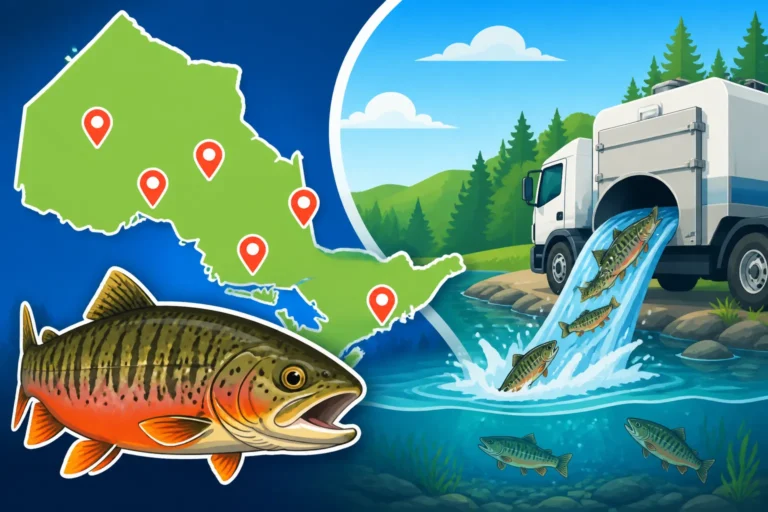
When we talk about Coho salmon stocking in Ontario, we're primarily looking at the Great Lakes. These vast freshwater inland oceans are the main stage for Coho, offering the deep, cold, and expansive habitat they thrive in, along with an abundant food source. While they'll spend most of their adult lives in the open waters of the lakes, their lifecycle dictates that they return to rivers to spawn, even if those rivers are where they were originally stocked as young smolts. This migratory behaviour is what makes them so accessible to shore anglers and boaters alike, at different times of the year.
Lake Ontario: A Primary Coho Hotbed
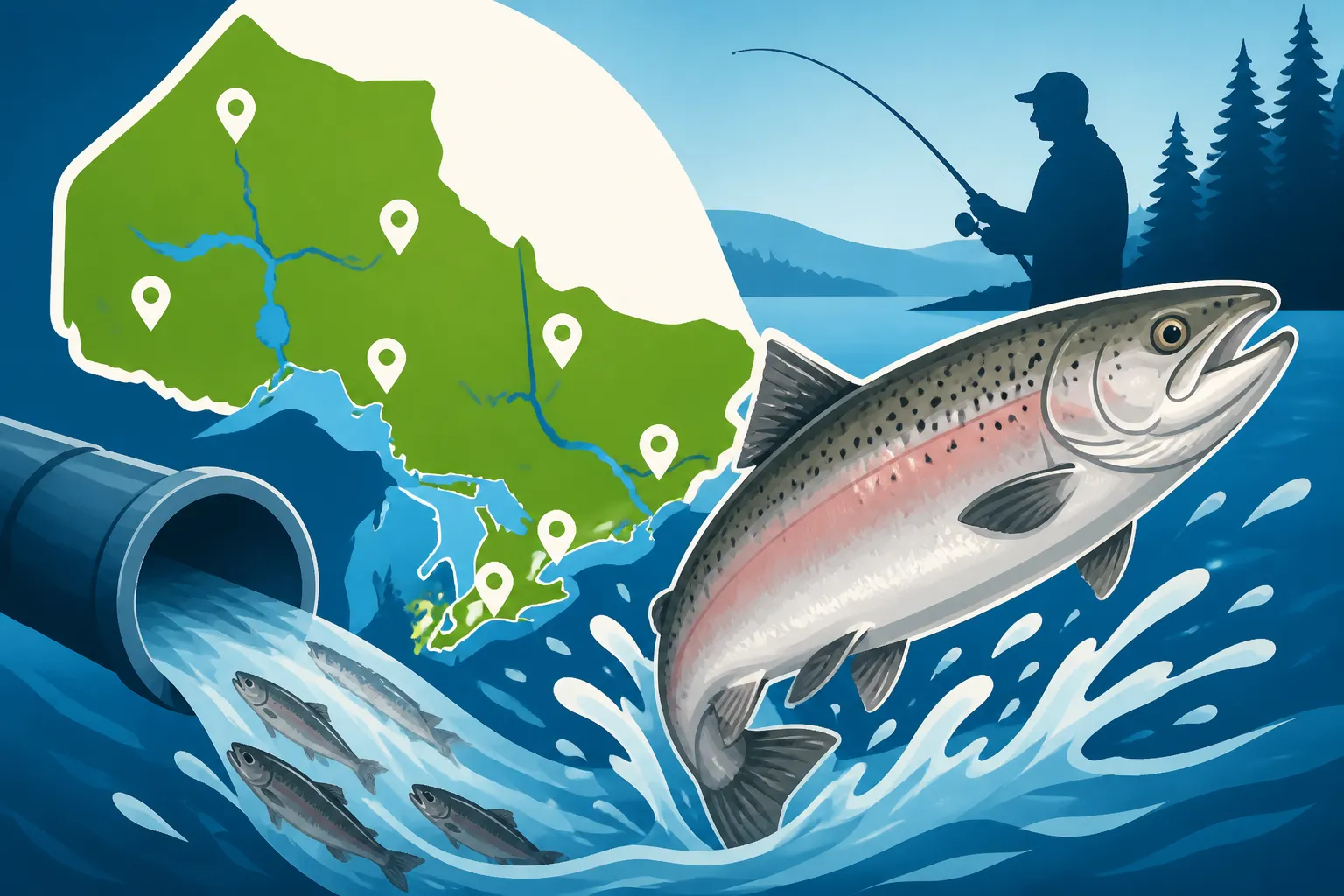
Lake Ontario is undoubtedly one of the premier destinations for Coho salmon in Ontario, largely due to consistent stocking efforts and a fantastic forage base. The tributaries flowing into Lake Ontario, particularly on the northern shore, are crucial stocking points. Young Coho smolts are released into these rivers, where they imprint on the water's unique chemical signature before heading out into the vastness of the lake. After spending a couple of years growing rapidly in the main lake, they begin their incredible journey back to these same rivers to spawn.
You'll find significant stocking activity in rivers like the Credit River, Ganaraska River, and the various creeks and rivers around Port Credit, Oakville, and even further east towards Kingston. These areas become magnets for anglers, especially in the late summer and fall, when the Coho start staging offshore and then pushing into the rivers. The fishing can be absolutely phenomenal during these periods, drawing crowds of passionate anglers. Knowing that Chinook Salmon in Lake Ontario are also present, it's a diverse fishery, but Coho have their own distinct patterns and preferences.
Lake Huron and Georgian Bay: More Coho Opportunities
While Lake Ontario often gets a lot of the spotlight, Lake Huron and its immense Georgian Bay also offer fantastic Coho salmon fishing, again thanks to stocking programs. The dynamics here can be a bit different, given the sheer size and varied geography of these waters. Stocking efforts have focused on various bays and tributaries that feed into Lake Huron and Georgian Bay. Places like the French River and rivers around the Bruce Peninsula or the North Channel can see returns of Coho.
The stocking in Lake Huron contributes to a robust open-water fishery, particularly for those trolling in boats. The Coho here are often targeted alongside Lake Trout Fishing in Ontario and Chinook salmon, making for a diverse multi-species outing. The vastness of these waters means that finding the fish can be more challenging, often requiring good sonar and understanding of baitfish movements. However, when you hit a school of active Coho, the action can be non-stop. Fishing from shore, especially at river mouths during migration, is also a popular way to target these fish.
Great Lakes Summary of Coho Stocking
To give you a clearer picture, here's a general overview of Coho salmon stocking across the main Great Lakes in Ontario where they are actively managed:
| Great Lake | Primary Stocking Locations | Key Angling Seasons | Common Forage |
|---|---|---|---|
| Lake Ontario | Credit River, Ganaraska River, various smaller tributaries on northern shore | Late Summer (pre-spawn staging), Fall (river runs), Spring (smolt releases) | Alewife, Rainbow Smelt |
| Lake Huron | Various tributaries and bays feeding Georgian Bay and the main lake | Summer (open water trolling), Fall (river runs) | Alewife, Cisco, Smelt |
| Lake Erie | Limited or no active Coho stocking; occasional strays from US waters | Rare | Gizzard Shad, Emerald Shiner |
| Lake Superior | Historically stocked, now mostly naturalized wild populations | Summer (nearshore), Fall (tributaries) | Rainbow Smelt, Cisco |
Note: While Lake Superior has a population of Coho, much of it is now sustained by natural reproduction from historical stocking efforts, rather than extensive ongoing stocking programs. Lake Erie generally sees very few Coho due to its warmer temperatures and different ecological dynamics compared to the other Great Lakes.
Understanding Coho Stocking Strategies and Their Impact
Stocking Coho salmon isn't just about adding more fish; it's a strategic process designed to achieve specific ecological and recreational outcomes. The locations, timing, and even the size of the fish released are all carefully considered. This strategy directly impacts where you, as an angler, will have the best chance of encountering these magnificent fish.
Timing is Everything: Smolts and Migrations
Coho salmon are typically stocked as smolts, which are young salmon that have undergone physiological changes to adapt from freshwater to saltwater (or in this case, large lake) environments. These smolts are usually released in the spring, often into specific river systems. The timing is critical; it allows them to adjust to the river before migrating out into the larger lake. This is why you rarely "fish for" newly stocked Coho smolts – they're too small and their primary goal is to get to the lake to grow.
Their incredible homing instinct means that after spending a year or two (or sometimes three) in the Great Lake, they return to the very rivers where they were released. This return migration, often peaking in late summer and fall, is when the rivers and their mouths truly come alive with Coho salmon, providing incredible opportunities for shore-based anglers and boaters alike. These are the fish you want to target, as they've grown substantially in the lakes. Understanding this lifecycle is key to planning your Ontario Fishing Seasons by Zone and Month.
The Role of Hatcheries and Conservation
The Coho salmon stocking program relies heavily on fish hatcheries, which play a vital role in raising healthy smolts for release. These facilities are dedicated to ensuring the fish are robust enough to survive their journey into the Great Lakes and contribute to the fishery. It's a testament to ongoing conservation efforts, even for introduced species, to maintain a thriving environment for both fish and anglers. Without these controlled breeding and rearing programs, the Coho fishery as we know it in Ontario simply wouldn't exist.
Moreover, the success of these programs isn't just measured by the number of fish, but also by their health and ability to integrate into the ecosystem without undue negative impacts. This careful balancing act is part of what makes fisheries management in Ontario so complex and important. Every time you cast a line for Coho, you're experiencing the results of years of scientific study and dedicated effort.
What to Expect from Stocked Coho Populations
When you fish for stocked Coho, you'll often find that they exhibit specific behaviours driven by their lifecycle. In the open waters of the Great Lakes, they are pelagic predators, constantly on the move, chasing baitfish schools. This is where trolling with downriggers and planer boards can be incredibly effective. For those looking for the right gear, consider what you can find on Amazon, whether it's specific lures or fishing line for trolling. Companies like Scotty or Cannon offer fantastic downriggers that can really help you get your baits to the right depth when targeting these deepwater dwellers.
As they approach the rivers for their spawning run, they'll congregate near river mouths and eventually push upstream. This is when they become more accessible to shore anglers using spoons, spinners, or roe bags. Their aggressive nature and powerful fights make them a thrilling catch. You'll often find them mixed in with other salmon species, so being able to identify Coho Salmon in the Great Lakes versus a Chinook is a good skill to have.
Gear and Tactics for Ontario Coho Salmon
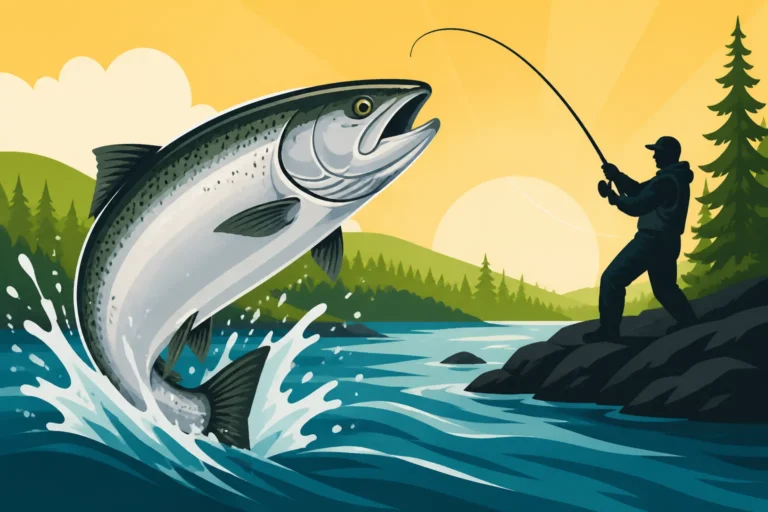
Now that you know where to find them, let's talk about how to catch these feisty fighters. Coho salmon are renowned for their acrobatic jumps and strong runs, making them a favourite target for many anglers. Having the right gear and understanding their typical behaviour will significantly increase your chances of success.
Essential Gear for Coho Angling
Coho salmon can be caught using a variety of methods, depending on whether you're fishing the open lake or a river. For open water trolling, you'll want a medium-heavy action rod, around 8 to 10 feet long, paired with a reliable baitcasting reel spooled with strong braided line, typically 20-30 lb test, with a fluorocarbon leader. Downriggers are practically essential for getting your lures into the strike zone, which can be anywhere from 20 to 80 feet deep depending on water temperature and baitfish location. Lures like spoons (e.g., Northern King, Dreamweaver) or crankbaits that imitate alewife or smelt are very effective. You can find a huge selection of these on Amazon, making it easy to experiment with different colours and sizes.
When river fishing during the salmon run, a medium-action spinning rod, about 9 to 11 feet in length, is ideal. This longer rod helps with casting distance and mending line in the current. Pair it with a 3000-4000 series spinning reel spooled with 10-15 lb monofilament or fluorocarbon. Popular river baits include roe bags, weighted spinners, small spoons, or even fly patterns that imitate eggs or baitfish. Always carry a good landing net; Coho are strong and can be tough to land at the bank. Make sure it's a decent size, suitable for species like Ontario Muskellunge Season Dates and Limits or at least a big salmon, as you never know what you'll hook!
Effective Coho Fishing Techniques
- Trolling in the Great Lakes: This is the most common and often most effective method for targeting Coho in the main lakes. Use downriggers to present your spoons or plugs at various depths. Pay close attention to your fish finder to locate bait balls and schools of salmon. Vary your speed and direction to entice strikes. Early morning and late evening often yield the best results. The lake environment, especially somewhere like Lake Ontario Salmon Fishing, demands specific approaches.
- Drift Fishing in Rivers: During the spawning runs, drifting natural baits like roe bags or artificial egg imitations under a float is incredibly productive. You want your bait to drift naturally with the current, mimicking dislodged salmon eggs. Focus on deeper pools, current seams, and areas with submerged structure where Coho might be holding.
- Casting Spoons and Spinners: In both the lake and rivers, casting and retrieving spoons or spinners can be very effective, especially for aggressive Coho. Choose brighter colours on overcast days or in stained water, and more natural colours in clear conditions. A fast, erratic retrieve can often trigger a strike.
- Fly Fishing: For the more adventurous, fly fishing for Coho in rivers can be an exhilarating experience. Use aggressive streamer patterns that mimic baitfish or egg patterns. A strong 8-10 weight fly rod is recommended to handle these powerful fish. Finding the right Fly Patterns for Ontario Trout Streams might give you some ideas, though salmon patterns are often larger and flashier.
Remember, respecting the regulations, including Ontario Bag and Possession Limits by Species and specific season dates for the zone you're fishing, is paramount. Coho salmon are a fantastic addition to Ontario's fishing landscape, offering exciting battles and rewarding catches. Knowing where they are stocked is your first step to unlocking some incredible angling memories!
Disclaimer
This article is for general informational purposes only and does not constitute professional advice. Laws, prices and regulations vary by location and change over time. Consult a qualified professional for guidance on your specific situation.