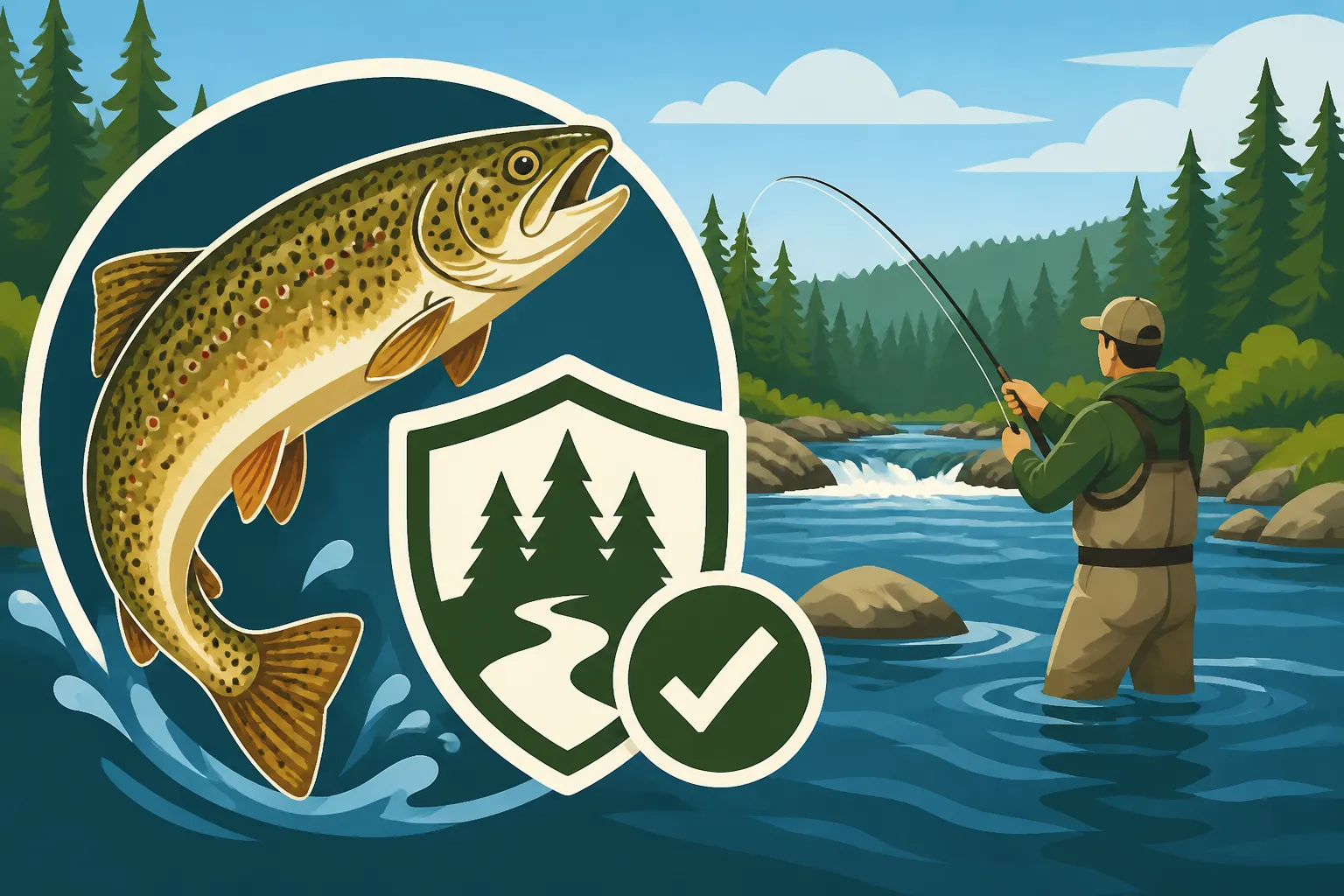
Ontario wild trout waters regulations
Navigating the specific rules for wild trout waters in Ontario can feel like trying to untangle a leader after a big cast – complex, frustrating, and prone to snags. Many anglers are passionate about targeting these native, self-sustaining populations, but the regulations surrounding them are often more stringent and nuanced than general fishing rules. This comprehensive guide aims to demystify Ontario's wild trout waters regulations, helping you understand where to find these precious fish, how to legally and ethically pursue them, and what specific rules you need to follow to protect these vital resources for generations to come.
Understanding Wild Trout and Their Habitats in Ontario
When we talk about wild trout in Ontario, we're discussing a truly special and often fragile resource. These aren't just any trout; they are fish that complete their entire life cycle in the natural environment, without human intervention like stocking. Their presence is a strong indicator of a healthy, clean ecosystem, and understanding them is the first step in responsible angling.
Defining "Wild Trout" in the Ontario Context
In Ontario, the term "wild trout" generally refers to populations that naturally reproduce and sustain themselves in streams, rivers, and lakes. This is a crucial distinction from "stocked trout," which are raised in hatcheries and released into water bodies, or "holdover trout," which are stocked fish that have managed to survive for a year or more. Wild trout are often smaller, more colourful, and exhibit far greater caution, making them a prized catch for dedicated anglers. Their genetics are finely tuned to their specific environment, making them particularly vulnerable to habitat degradation or overfishing. The province recognizes the ecological significance of these populations and implements specific regulations to ensure their survival and proliferation. Knowing the difference is paramount for any angler venturing into trout country.
Key Wild Trout Species and Their Preferred Environments
While Ontario is home to various trout species, the poster child for wild trout is undoubtedly the Brook Trout, often considered Ontario's provincial fish. These stunning fish, with their vibrant red spots and worm-like markings (vermiculations), thrive in cold, clean, highly oxygenated water. You'll find them predominantly in the headwater streams, small creeks, and cold-water lakes of the Canadian Shield, especially in remote areas of Northern Ontario and the Algonquin Highlands. They are incredibly sensitive to changes in water temperature and quality, making their presence a true ecological benchmark.
While less common as self-sustaining wild populations, some streams and rivers in Southern Ontario, particularly those with consistent cold groundwater input, may support wild Brown Trout. These European imports have adapted well in certain pockets. Wild Rainbow Trout, though originally from the Pacific, also exist in naturally reproducing populations in specific Great Lakes tributaries where they can spawn successfully. Each of these species has slightly different habitat requirements, but the common thread for all wild trout is a need for pristine, undisturbed environments with ample cover, suitable spawning gravel, and a reliable supply of cold, clean water. Exploring the Ontario Brook Trout Native Range in Ontario can give you a better idea of where these special fish are most likely to be found.
Identifying Critical Wild Trout Waters
Pinpointing critical wild trout waters involves understanding the ecological signs and referring to official resources. These waters are often characterized by dense riparian vegetation providing shade, stable banks preventing erosion, gravel beds for spawning, and plenty of fallen timber or undercut banks for cover. They generally have a low nutrient load, resulting in crystal-clear water.
The Ministry of Natural Resources and Forestry (MNRF) plays a vital role in identifying and protecting these areas. They conduct surveys, monitor populations, and designate specific "Special Regulation Waters" to ensure the long-term health of these ecosystems. Often, these designations are found within specific Ontario Fisheries Management Zones, Explained. Always consult the official Ontario Fishing Regulations Summary for the most up-to-date information on where these waters are located and their unique rules. Ignoring these designated areas or their specific rules can severely impact these fragile populations, which take generations to recover.
Navigating Ontario's Fishing Regulations for Wild Trout Waters
Ontario's fishing regulations can feel like a labyrinth at times, and wild trout waters often come with their own set of intricate rules. It’s not enough to just buy a license; you need to understand the nuances that protect these vulnerable fish. Being prepared means doing your homework before you even leave home.
General Regulations Applicable to All Trout Waters
Before you even consider targeting wild trout, you need to ensure you're compliant with the basic province-wide rules. Every angler aged 18 to 64, resident or non-resident, must possess a valid fishing license and an Outdoors Card. The Ontario Fishing License Guide for 2026 is an excellent resource to clarify these fundamental requirements. Your license dictates whether you're allowed to keep fish (Sport license) or if you're restricted to reduced limits (Conservation license). For wild trout, especially in sensitive areas, a Conservation license or even a catch-and-release philosophy is often the more responsible choice.
Remember that an Ontario Outdoors Card, Explained is your essential identification document that all licenses are affixed to. You'll also need to be familiar with the Ontario Fishing Regulations Explained broadly, covering things like legal fishing methods, bait restrictions, and general possession limits for various species. While wild trout waters have additional rules, these foundational regulations still apply. Always carry your license, whether a physical copy or by Printing or Carrying a Digital Fishing License in Ontario.
Special Regulation Waters and Their Unique Rules
This is where wild trout regulations become highly specific. Ontario has designated numerous "Special Regulation Waters" specifically to protect vulnerable fish populations, and wild trout streams and lakes frequently fall into this category. These waters often have unique rules that override the general zone-specific regulations. You might encounter requirements such as:
- Catch and Release Only: Many wild trout streams are designated as Ontario Catch and Release Only Waters. This means any trout caught must be immediately and carefully released back into the water unharmed.
- Artificial Lures/Flies Only: To reduce incidental mortality from bait fishing, some waters restrict anglers to using only artificial lures or flies. This also helps prevent the introduction of invasive species often carried with live bait.
- Single, Barbless Hooks: This is a common requirement in wild trout waters to minimize damage to the fish's mouth, making unhooking easier and improving survival rates. Even if not explicitly stated, using barbless hooks is considered best practice when targeting wild trout.
- Specific Slot Limits or Size Restrictions: While less common for pure catch-and-release wild trout, some waters might have very specific size windows where fish can be kept, or prohibit keeping fish outside a certain length to protect breeding stock.
It's absolutely critical to consult the most current Ontario Fishing Regulations Summary for the specific FMZ and water body you intend to fish. These special regulations are often listed in dedicated sections for each Fisheries Management Zone, or sometimes under a provincial "Special Waters" list. Ignorance of these rules is not an excuse, and penalties can be significant, including hefty fines and loss of fishing privileges.
Zone-Specific Rules and Exceptions for Wild Trout Areas
Ontario is divided into 20 Fisheries Management Zones (FMZs), and each zone has its own set of general regulations regarding seasons, limits, and bait restrictions for various species. While wild trout waters often have special regulations that override the general FMZ rules, you still need to understand the overarching zone context. For example, even if a particular stream is catch-and-release only for Brook Trout, the general opening and closing dates for trout in that FMZ might still apply, or specific bait prohibitions within the zone might remain in effect for other species you could encounter.
It's a hierarchical system: the most specific rule for a particular water body (e.g., "XYZ Creek: Brook Trout, Catch & Release Only, Artificial Flies, Barbless Hooks") always takes precedence over the general FMZ rule for trout. However, if no special regulation is listed, then the general FMZ rules for the species apply. Always double-check the relevant FMZ section in the regulations summary, along with any "Exceptions to the Zone Regulations" or "Special Regulation Waters" sections, to ensure you're fully compliant. The best practice is to know your FMZ and then check for specific rules on the exact body of water you plan to fish.
Conservation Practices and Ethical Angling in Wild Trout Waters
Fishing for wild trout isn't just about catching fish; it's about connecting with nature and upholding a strong conservation ethic. These fragile populations rely on responsible angling practices to thrive, and every angler plays a role in their preservation.
Practicing Catch and Release Effectively
For most wild trout scenarios, especially in designated special regulation waters, practicing effective catch and release is not just a rule, but a moral imperative. The goal is to minimize stress and injury to the fish, ensuring it swims away strong and healthy to spawn another day. Here's how to do it right:
- Minimize Fight Time: Use appropriate tackle that can land the fish quickly without exhausting it. A prolonged fight can build up lactic acid and stress, reducing survival rates.
- Keep the Fish in the Water: Whenever possible, unhook the fish while it's still in the water. This is especially important for delicate wild trout. If you must bring it out, do so for the absolute minimum time required for a quick photo, ensuring your hands are wet to protect its slime coat.
- Use Wet Hands: Always wet your hands before touching the fish. Dry hands can remove the fish's protective slime coat, making it vulnerable to disease and infection.
- Barbless Hooks are Best: As mentioned, barbless hooks make unhooking incredibly fast and easy, causing minimal damage. You can easily pinch down the barb on most hooks with a pair of pliers.
- Appropriate Tools: Carry a pair of long-nosed pliers or forceps to quickly remove hooks. Avoid tearing or ripping the hook out. If the fish is deeply hooked, it's often best to cut the line as close to the hook as possible, as the hook may rust out.
- Revive the Fish: Hold the fish gently facing into a slow current until it regains its strength and can swim away on its own. Never vigorously push it back and forth; this can damage its gills.
By following these steps, you significantly increase the chances of the fish surviving the encounter. This commitment to catch and release is a cornerstone of Fly Fishing for Trout in Ontario and other respectful angling methods.
Protecting Sensitive Habitats
Wild trout habitats are incredibly delicate and easily disturbed. As anglers, we have a responsibility to leave these places better than we found them. Our actions, even seemingly small ones, can have a cumulative impact.
- Stay on Designated Paths: Avoid trampling sensitive stream banks and riparian vegetation, which prevent erosion and provide critical shade and insect habitat.
- Wade Carefully: When wading, move slowly and deliberately to avoid disturbing the streambed, where trout eggs and aquatic insects (their food source) reside. Avoid kicking up silt. The type of wading boots you choose, whether felt or rubber soled, can also impact stream beds. Learn more about Best Wading Boots for Rocky Streams.
- Pack It In, Pack It Out: Leave no trace. This means taking all your trash, including discarded fishing line and bait containers, with you. Better yet, pick up any litter you find.
- Prevent Invasive Species: Clean your boots, waders, and fishing gear thoroughly between different water bodies to prevent the spread of aquatic invasive species. Even a tiny piece of plant matter or a microscopic organism can wreak havoc on a pristine ecosystem.
- Respect Private Property: Always be aware of property boundaries and obtain permission before accessing private land. Many wild trout streams flow through private holdings.
- Avoid Spawning Areas: Be mindful of trout spawning seasons (often fall for Brook and Brown Trout, and spring for Rainbows). Avoid disturbing gravel beds during these critical times.
Our presence in these wild spaces should be as low-impact as possible. The health of these fish populations is directly linked to the health of their environment.
Understanding Limits and Seasons for Wild Trout
Even in catch-and-release-only waters, it's crucial to understand the broader limits and seasons outlined in the Ontario Fishing Regulations Summary. While you won't be retaining fish, knowing the general open season for trout in a particular FMZ still applies to when you can legally fish for them. For example, you wouldn't fish a designated catch-and-release stream during a closed season for trout in that zone, even if you intend to release everything.
In wild trout waters where retention is permitted (though often with extremely restrictive limits), you must adhere strictly to the daily catch and possession limits. A "daily catch limit" is the number of fish you can catch and keep in one day, while a "possession limit" is the total number of fish you can have in your possession, including those at your camp or home. These limits are designed to prevent overfishing and maintain healthy populations. For species like Lake Trout, understanding these numbers is vital, as outlined in the Ontario Lake Trout Limit and Possession Rules. Always double-check the specific regulations for the water body and species you are targeting to avoid any misunderstandings or penalties.
Essential Gear and Tools for Respectful Wild Trout Angling
Having the right gear isn't just about catching fish; it's about approaching wild trout waters with respect, minimizing your impact, and ensuring both your safety and the fish's well-being. Investing in quality, appropriate equipment makes a huge difference.
Rods, Reels, and Line for Sensitive Waters
When pursuing wild trout, especially in smaller streams, a delicate approach is often key. You'll want tackle that allows for precise casting and protects the fish once hooked.
- Rods: For most Ontario wild trout streams, a lightweight fly rod (2-4 weight, 6-8 feet) is ideal. This allows for soft presentations of flies and provides an exhilarating fight with even smaller trout. If spin fishing, an ultralight spinning rod (4-6 foot, light action) paired with a small reel is perfect. Look for models from brands like Orvis, Redington, or Fenwick.
- Reels: A simple, lightweight click-and-pawl fly reel or a small, smooth-drag spinning reel is all you need. The reel's primary function is to hold line, as you'll be doing most of the fighting with your rod.
- Line: For fly fishing, a weight-forward floating line matched to your rod weight is standard. For spinning, opt for a light monofilament or fluorocarbon line (2-4 lb test). This fine line is less visible to spooky wild trout and allows for better lure action. Many anglers find great selections for these specialized items on sites like Amazon, which often carries a wide range of fly fishing and ultralight spinning gear suitable for delicate trout presentations.
- Leader and Tippet: In fly fishing, a long, tapered leader (7.5-9 feet) ending in a fine tippet (4x-6x) is crucial for stealth. For spin fishing, a short fluorocarbon leader tied to your main line can provide invisibility and abrasion resistance.
Selecting the Best Fly Rods for Ontario Trout Streams can significantly enhance your experience and your success rate in these sensitive environments.
Flies, Lures, and Baits for Wild Trout
The choice of what you tie to the end of your line is critical, especially in waters with "artificial lures/flies only" restrictions. Always verify regulations before choosing your offerings.
- Flies: If fly fishing, your fly box should contain a variety of patterns that imitate local aquatic insects. This includes dry flies (e.g., Caddis, Mayfly, Terrestrial imitations for summer), nymphs (e.g., Pheasant Tail, Hare's Ear, Prince Nymph for subsurface), and small streamers (e.g., Woolly Bugger in olive or black). For a deeper dive into appropriate patterns, explore Fly Patterns for Ontario Trout Streams.
- Lures: For spin fishing in artificial-only waters, small inline spinners (e.g., Mepps, Panther Martin), tiny spoons (e.g., Little Cleo), and micro jigs (1/32 to 1/16 oz) are effective. Focus on natural colours like silver, gold, black, or olive. Remember, barbless hooks are highly recommended, or even required. You can purchase many of these specialized trout lures and fly tying materials conveniently through online retailers like Amazon.
- Baits (where permitted): In waters where bait is allowed, popular choices include worms, minnows (verify bait fish regulations and source carefully to avoid invasive species), and synthetic baits like PowerBait. However, in sensitive wild trout waters, bait is often prohibited, or retention is not allowed, so always check the specific rules.
Wading Gear and Safety
Exploring wild trout streams often means getting into the water. Proper wading gear is essential for comfort, safety, and protecting the environment.
- Waders: Chest waders are generally preferred as they allow you to safely navigate deeper sections and provide insulation in cold water. Look for breathable waders for warmer months.
- Wading Boots: Traction is paramount. Choose wading boots with good ankle support and reliable soles. Options include felt soles (excellent grip on slippery rocks but can spread invasives if not cleaned) or rubber soles (more durable and easier to clean, often with stud compatibility). Remember to thoroughly clean and dry your wading boots between fishing trips to prevent the spread of invasive species, a crucial step in protecting these delicate ecosystems. Many experienced anglers purchase their Best Wading Boots for Rocky Streams from reputable outdoor outfitters or even Amazon for convenience.
- Wading Staff: A collapsible wading staff is an invaluable safety tool, especially in swift currents or on unfamiliar, rocky streambeds. It provides stability and helps you gauge water depth.
- Personal Flotation Device (PFD): If you plan to wade in larger rivers with strong currents or use a kayak or canoe to access fishing spots, a PFD is a non-negotiable safety item.
- Other Essentials: A small backpack or vest to carry water, snacks, a first-aid kit, and your fishing essentials (pliers, nippers, extra leader). Always consider the weather and dress in layers.
Having the Best Gear for Ontario Trout Fishing means you're prepared for the elements and equipped to handle fish gently, contributing to the overall health and enjoyment of Ontario's wild trout resources.
| Regulation Aspect | General Trout Waters (e.g., Stocked Lakes) | Special Regulation Wild Trout Waters | Key Conservation Principle |
|---|---|---|---|
| License Required | Yes (Outdoors Card + Fishing License) | Yes (Outdoors Card + Fishing License) | Universal compliance for resource management |
| Bait Permitted | Often Yes | Often No (Artificial Only) | Minimize harm, prevent invasive species, challenge angling |
| Hook Type | Barbed hooks generally allowed | Single, Barbless Hooks often required | Reduce injury, ease of release |
| Catch & Release | Optional, based on limits | Often Mandatory | Protect vulnerable populations, ensure reproduction |
| Season Dates | Zone-specific open/close | Can have unique, extended, or shorter seasons | Protect spawning periods, allow recovery |
| Daily/Possession Limits | Zone-specific numbers (Sport/Conservation) | Often 0, or highly restrictive | Prevent overfishing, maintain genetic integrity |
| Habitat Impact | General awareness | Extreme caution (no trampling, clean gear) | Preserve pristine ecosystems, prevent erosion |
Disclaimer
The information provided in this guide is intended for general informational purposes only and is not a substitute for the official Ontario Fishing Regulations Summary. Regulations are subject to change, and it is the angler's responsibility to consult the most current official summary published by the Ontario Ministry of Natural Resources and Forestry (MNRF) before heading out to fish. Failure to comply with regulations can result in fines and penalties. Always prioritize safety and responsible angling practices.