Cold Front Fishing Tactics for Ontario Walleye
There’s nothing quite like the crushing disappointment of waking up to a gorgeous, clear morning after a cold front has swept through, only to find the walleye bite has completely shut down. We've all been there – one day they're biting, the next they've vanished into thin air, leaving you scratching your head. This guide is all about tackling that frustrating reality, arming you with the knowledge and tactics to still put walleye in the boat, even when Mother Nature throws a curveball.
Understanding Cold Fronts and Walleye Behavior
A cold front isn't just a drop in temperature; it's a significant shift in atmospheric conditions that sends a ripple effect through the entire ecosystem, especially impacting fish behavior. Understanding these changes is the first step in adapting your approach and turning a tough day into a successful one.
What is a Cold Front and How Does it Form?
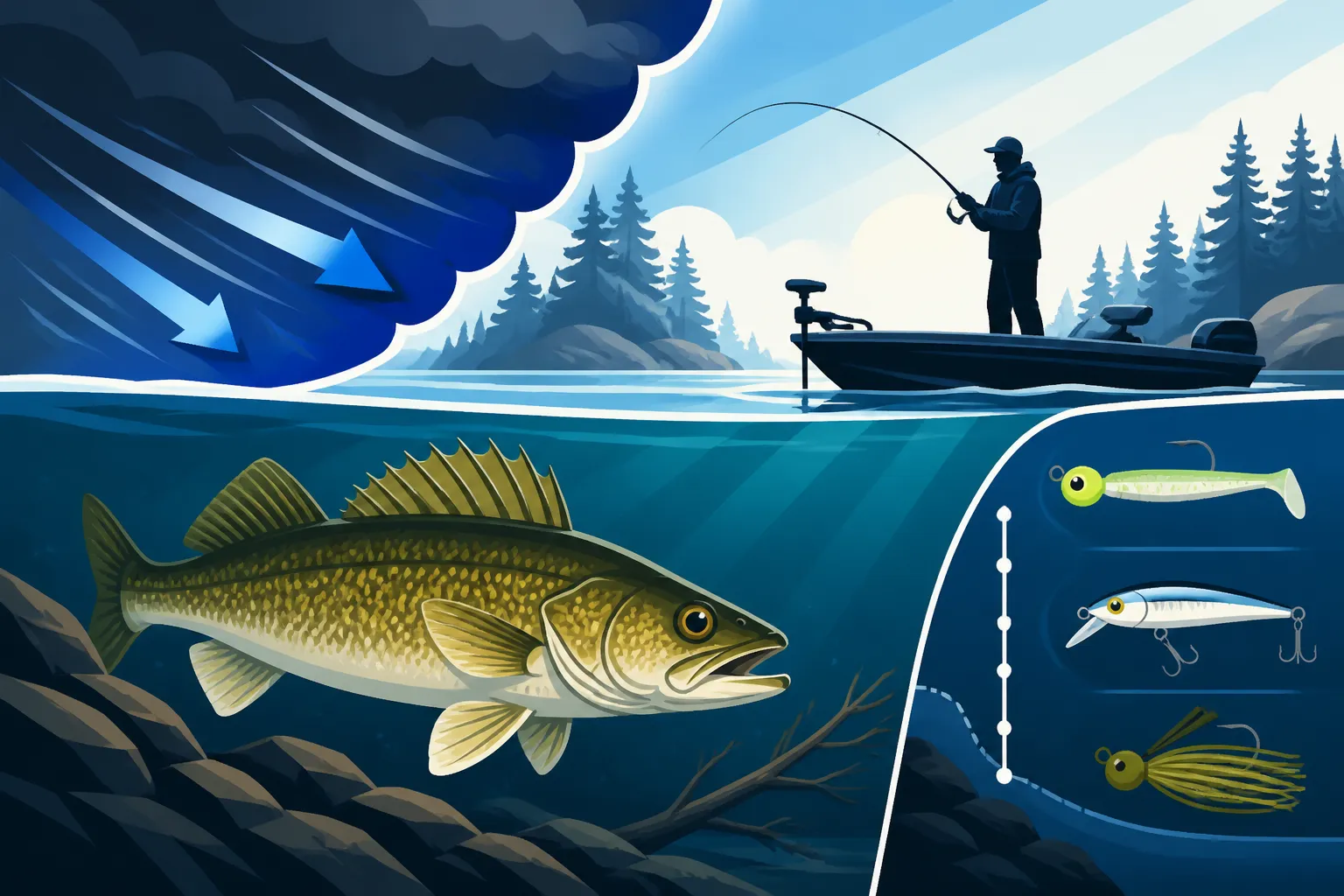
Think of a cold front as a boundary where a colder air mass is displacing a warmer air mass. As this colder, denser air pushes in, it typically brings with it a period of instability: strong winds, heavy precipitation like rain or even snow, and a sudden drop in air temperature. Once the front passes, the skies usually clear, the winds might persist or shift, and the air temperature stabilizes at a lower point. This isn't just about what you feel on the surface; it's about what’s happening beneath the water.
These fronts are often part of larger weather systems, moving across Ontario from west to east or northwest to southeast. You'll often see them forecasted days in advance, giving you a crucial window to prepare. The key is that the change itself is what spooks the fish, more so than the cold temperature once it stabilizes. The rapid shift in conditions causes a shock to their system, making them less active and much harder to entice.
The Physiological Impact on Walleye
Walleye are cold-blooded creatures, meaning their body temperature mirrors their surroundings. A sudden drop in water temperature, even a few degrees, can drastically slow down their metabolism. When their metabolism slows, their need to feed decreases significantly. They become sluggish, less aggressive, and often seek out areas where they can expend minimal energy. This is why the aggressive jigging or fast trolling techniques that worked yesterday might be completely ignored today.
Beyond metabolism, the sudden change in light penetration due to clearer skies post-front can also put walleye off. They are naturally sensitive to light, preferring dim conditions. When the bright sun pierces through a freshly cleared sky, they'll often retreat to deeper, darker water or seek dense cover to escape the intensity. This physiological response is a crucial piece of the puzzle when trying to locate them and present a lure they might actually consider eating.
Barometric Pressure Swings and Their Effect
Perhaps the most significant, yet often overlooked, factor during a cold front is the dramatic swing in barometric pressure. Before a front arrives, the pressure typically drops, creating a low-pressure system. This is often when fish are most active, experiencing a "feeding frenzy" as their swim bladders feel less pressure, making them more comfortable and energetic. Then, as the cold front passes, the barometric pressure rises sharply and stabilizes at a higher point.
This rapid increase in pressure can cause discomfort in a walleye's swim bladder, making them feel "heavy" or uneasy. It can also affect their hearing and lateral line system, making them less inclined to chase prey. They tend to seek out deeper water where the pressure changes are less extreme, or they hug tight to structure, attempting to equalize the pressure on their bodies. Understanding this pressure phenomenon is absolutely vital for How barometric pressure affects Ontario walleye fishing and adjusting your tactics to match their mood.
Reading the Conditions: Before, During, and After a Cold Front
Success in cold front fishing isn't just about what you do when the bite gets tough; it's about anticipating and reacting to the various stages of the front's passage. Each phase presents unique opportunities and challenges.
Pre-Frontal Feeding Frenzy
This is the golden window, the time when you want to be on the water! As a low-pressure system moves in just before the cold front hits, walleye often go on a massive feeding spree. They sense the impending change and instinctively gorge themselves, knowing that active feeding might be difficult for the next few days. The skies might be cloudy, winds increasing, and there might even be some light rain. This is when aggressive tactics like fast trolling with crankbaits, ripping lipless crankbaits, or casting large jerkbaits can be incredibly effective.
If you can track weather patterns and get out during this pre-frontal period, you'll often find walleye in their usual haunts, actively chasing down bait. They'll be shallower, more spread out, and much more willing to strike. This is the time to really capitalize, perhaps even catching a trophy fish before the conditions turn sour. Don't waste this opportunity; it's often the best bite you'll get all week!
During the Cold Front: The Tough Bite
Once the cold front actually passes and the high-pressure system settles in, the bite often shuts down almost completely. The air temperature drops, skies clear, and the wind might be howling. Walleye become lethargic and seek refuge. They might move deeper, tuck tight into heavy cover, or suspend in open water, seemingly disappearing from your sonar screen. This is when frustration can really set in, and many anglers simply pack up and go home.
During this period, aggressive presentations are usually met with indifference. Walleye are no longer actively hunting; they're conserving energy. You'll need to drastically slow down, downsize, and focus on finesse. Think of it less as "fishing for bites" and more as "coaxing a reluctant meal." Patience becomes your greatest virtue, and persistence is key to picking off those few, harder-to-catch fish.
Post-Frontal Recovery and Stability
The good news is that cold fronts eventually pass, and conditions stabilize. While the immediate post-front period can be brutal, as the high-pressure system settles in for a few days, walleye will slowly begin to adjust. The water temperature might remain cooler, but the absence of rapid change allows them to regain some comfort. This is often referred to as the "post-front stabilization" period.
During this recovery phase, walleye might remain deeper or in cover but will gradually become more receptive to subtle presentations. The bite won't typically be as hot as the pre-frontal frenzy, but it will be better than the immediate post-frontal lull. This is when slow, methodical approaches can start to pay off, and you can begin to predict their movements more reliably. Keep an eye on the long-term forecast; a sustained period of stable weather, even if it's cool, can bring the walleye back to a more predictable pattern. Understanding Ontario Fishing Seasons by Zone and Month can also help contextualize how these changes fit into the broader seasonal patterns.
Adjusting Your Approach: Lure, Bait, and Presentation Changes
When a cold front hits, throwing the same lures the same way simply won't cut it. You need to make deliberate adjustments to lure choice, bait, and most importantly, your presentation. This is where the experienced angler shines, knowing exactly how to adapt to the fish's mood.
Downsizing Lures and Slowing Down Presentation
This is probably the most critical adjustment. When walleye are sluggish and inactive, they aren't going to chase a fast-moving, oversized meal. Instead, they're looking for something easy, something that barely moves and requires minimal effort to eat. This means downsizing your lures considerably. If you were throwing a 4-inch crankbait, switch to a 2-3 inch model. If you were jigging a 1/2 oz jig, drop down to a 1/8 or 1/4 oz jig. Smaller profiles are less intimidating and easier to inhale for a reluctant fish.
Equally important is slowing everything down. Your retrieve speed, your jigging cadence, your trolling speed – everything needs to crawl. Imagine a half-dead minnow barely twitching in the water; that’s the kind of action you’re trying to imitate. For jigging, this might mean a subtle lift-drop, barely moving the jig off the bottom, or even dead-sticking it. For trolling, reduce your speed to a bare minimum, sometimes even less than 1 mph. The key is to keep the lure in the strike zone for as long as possible, giving the walleye ample time to decide if it's worth the effort.
Live Bait: The Cold Front King
When all else fails, live bait is often the ace up your sleeve during a cold front. Nothing beats the natural scent, taste, and subtle movements of a real shiner, minnow, leech, or nightcrawler. Artificial lures can be convincing, but they lack that undeniable biological appeal that can trigger a strike from even the most lethargic walleye. A lively minnow struggling on a hook is often too much for a walleye to resist, even if they're not actively feeding.
Presenting live bait correctly is crucial. Use light tackle, small hooks, and minimal weight to allow the bait to move as naturally as possible. A slip-bobber rig is excellent for suspending a minnow or leech just above cover or structure. A simple Walleye rig or Carolina rig, slowly dragged along the bottom, can be deadly with a juicy nightcrawler. You can find a wide array of specialized live bait rigs and accessories on Amazon that can make all the difference. Remember, the goal is to make it as effortless as possible for the walleye to grab it. This is a tactic many employ when trying to figure out How to Catch Walleye in Ontario under tough conditions.
Color and Profile Adjustments
While slowing down and downsizing are paramount, subtle changes in color and lure profile can also play a role. In clear, post-frontal waters, natural colors that mimic common baitfish (like silver, perch, or shiner patterns) often outperform brighter, more aggressive colors. Walleye's keen eyesight allows them to discern subtle differences, and a natural presentation is less likely to spook them. Sometimes, however, a very dull, almost translucent color can work if they're particularly finicky.
When it comes to profile, slim and subtle is often better. Think slender minnow imitations for crankbaits, or a simple finesse worm on a jig head. Avoid anything with excessive vibration or a bulky profile unless you're specifically trying to generate a reaction strike, which is less likely during a severe cold front. Experiment a little, but generally, lean towards natural colors and streamlined profiles that present an easy meal.
| Condition Stage | Walleye Behavior | Recommended Lure/Bait | Presentation Tactic | Key Locations |
|---|---|---|---|---|
| Pre-Frontal | Aggressive, actively feeding, shallow | Large crankbaits, jerkbaits, lipless cranks, swimbaits | Fast retrieves, aggressive trolling, ripping, casting | Shallow flats, weed lines, points, structure |
| During Cold Front | Lethargic, deep, tight to cover, reluctant | Small jigs, soft plastics, live minnows, worms, leeches | Slow retrieve, dead-sticking, subtle jigging, slow trolling | Deep breaks, heavy cover, bottom transition zones, tight to structure |
| Post-Frontal | Slowly recovering, deeper, still cautious | Finesse jigs, small crankbaits, live bait, blade baits | Medium-slow retrieve, bouncing bottom, slip-bobber fishing | Deep edges, main lake points, gradual slopes, current breaks |
Finding Relocated Walleye After a Cold Front
One of the biggest challenges after a cold front is that walleye don't just stop biting; they often move to entirely different areas. They seek comfort and stability, which usually means retreating from their shallow, active feeding grounds. Knowing where to look for these relocated fish is critical.
Targeting Deeper Water and Structure
When a cold front clears the skies and raises the barometric pressure, walleye will often retreat to deeper water. The increased light penetration from clear skies makes them uncomfortable in the shallows, and the higher pressure can be less noticeable in deeper columns. Look for main lake basins, deep humps, extensive drop-offs, and deep points. These areas provide both depth and structure to relate to.
Your sonar unit becomes your best friend in these situations. Look for schools of baitfish, which walleye will be loosely associated with, or individual fish hugging tightly to the bottom or suspended just above it. Don't be afraid to fish depths you wouldn't normally consider, perhaps even 30-50 feet or more, depending on the lake's profile. You might find them stacked up in a small area, making it a "honey hole" once you pinpoint them. This is especially true for How to fish deep structure for summer walleye, a tactic that often applies after a cold front too.
Focusing on Transition Zones
Walleye are masters of transition zones, and this becomes even more pronounced after a cold front. These are areas where one type of habitat or depth abruptly changes to another. Examples include a shallow flat that quickly drops into a deep channel, a weed line meeting a rocky bottom, or a sand bar transitioning into mud. Walleye will often sit right on these edges, using the deeper water or cover for security while having quick access to potential shallower feeding grounds if conditions improve.
These transition areas offer them the best of both worlds: comfort in deeper, stable water, and a staging point for when their metabolism kicks back in. Pay close attention to subtle changes on your chart plotter or maps, and use your electronics to scan these areas meticulously. Fan casting jigs or slowly dragging live bait along these transition lines can often yield results when other areas are barren.
Identifying Key Forage Areas
Even when inactive, walleye need food. After a cold front, they'll often position themselves near concentrations of baitfish, even if they aren't actively chasing them. Look for schools of ciscoes, smelt, or shiners in deeper water, typically suspended or near significant underwater structure. If you find the bait, you're likely to find the walleye, even if they're in a negative mood.
Using your fish finder to mark schools of bait is a crucial first step. If you locate the bait, try to present your lure or bait right within or just below the school. A jig-and-minnow presentation or a small, subtle swimbait slowly retrieved through a bait ball can trigger a reactive strike. They might not be aggressively hunting, but if an easy meal presents itself without much effort, they often can't resist. You can often find great deals on the specialized lures and weights needed for deep-water presentations on Amazon.
Essential Gear for Cold Front Walleye Fishing
Having the right gear won't guarantee a bite, but it will certainly maximize your chances when the walleye are playing hard to get. Sensitivity, stealth, and precision become paramount.
Sensitive Rods and Reels
When walleye are barely biting, their take can be incredibly subtle – sometimes just a slight "mush" or an added weight on your line. A highly sensitive rod is absolutely critical for detecting these faint bites. Look for rods with a fast action tip and a lightweight, high-modulus graphite blank. This construction allows you to feel everything that's happening at the end of your line, from the lightest tap to the texture of the bottom. A medium-light or medium power rod, typically 6'6" to 7'6" in length, is often ideal for cold front finesse techniques.
Pair these sensitive rods with smooth, lightweight spinning reels. A 2000 or 2500 series reel offers a good balance of line capacity and retrieve power for these lighter applications. The smooth drag system is important for fighting fish on lighter lines, and a good gear ratio (around 5.2:1 to 6.2:1) allows for precise control over your retrieve speed, which is key when you're trying to crawl a lure. For specific recommendations, check out our guide on Best Spinning Rods for Walleye.
Line Choices for Finesse Fishing
Your choice of fishing line is just as important as your rod and reel. For cold front walleye, you need line that offers maximum sensitivity and minimal visibility. Braided line, with its zero stretch, excels at transmitting even the faintest bites directly to your rod tip. However, its visibility can be an issue in clear, post-frontal waters. The solution is often a combination: run 6-10 lb braided main line for sensitivity, then tie on an 8-15 foot leader of 6-8 lb fluorocarbon.
Fluorocarbon is nearly invisible underwater and has excellent abrasion resistance, making it ideal for clear water and fishing around structure. The low stretch of fluorocarbon (though more than braid) also contributes to sensitivity. Alternatively, a high-quality monofilament line, like a clear or low-vis green 6-8 lb test, can also work well if you prefer a bit more stretch for fighting fish on lighter gear. The key is to choose the lightest line you can get away with for the situation, maximizing your feel and minimizing the chance of spooking fish.
Electronics for Locating Fish
In the aftermath of a cold front, walleye can scatter or move to unfamiliar depths and structures. Your boat's electronics become invaluable tools for finding these relocated fish. A modern fish finder with good down-imaging and side-imaging capabilities can quickly help you scan vast areas for depth changes, submerged structure, and, most importantly, schools of bait and actual walleye.
Utilize your GPS and mapping features to mark productive areas, transition zones, and specific pieces of structure that might hold fish. If you locate fish on your sonar, pay close attention to their depth, how they're relating to the bottom or cover, and if they're suspended. This information directly informs your presentation. Understanding How to use the Fish ON-Line interactive zone map before you even launch can give you a significant advantage in identifying potential holding areas based on historical data and bottom contours. You can find excellent portable and fixed-mount units for various budgets on Amazon, which are essential for navigating and locating fish in expansive waters like those found in Best Walleye Lakes in Ontario.
Safety Considerations During Cold Fronts
While focusing on fishing tactics, it's easy to overlook the very real safety concerns that come with a cold front. These weather events can be unpredictable and dangerous, especially on large bodies of water. Prioritizing safety ensures you can come back and fish another day.
Monitoring Weather and Water Temperatures
Always, always keep a close eye on the weather forecast before and during your trip. Modern weather apps provide excellent real-time radar and hourly forecasts, which are crucial for tracking the movement of fronts and sudden squalls. Beyond air temperature, pay particular attention to water temperature. A sudden drop, especially in spring or fall, can lead to hypothermia risks, even if the air feels relatively mild.
Be aware of wind direction and strength. Cold fronts often bring strong winds that can quickly whip up dangerous waves on large lakes. If the forecast calls for sustained high winds or gusts, it might be safer to reschedule or fish a smaller, more sheltered body of water. Never take chances with the weather; your life, and the lives of anyone with you, depends on sound judgment.
Proper Clothing and Emergency Preparedness
Dressing in layers is non-negotiable when fishing during or after a cold front. Start with a moisture-wicking base layer, add insulating layers (fleece or down), and top with a waterproof and windproof outer shell. Bring extra hats, gloves, and warm socks, even if you think you won't need them. Cold, wet hands and feet can quickly lead to dangerous exposure.
Always have a fully charged cell phone (in a waterproof bag), a first-aid kit, and emergency supplies like blankets, extra food, and water. Make sure someone knows your float plan: where you're going, when you expect to be back, and who is with you. If you're on a boat, ensure all required safety equipment, including life jackets for every passenger, is onboard and easily accessible. The Ontario Boating Laws for Anglers outlines all the essentials you must have.
Navigation in Adverse Conditions
Reduced visibility due to fog, heavy rain, or even snow squalls can accompany a cold front. Strong winds can also make navigation difficult and dangerous, especially on large or unfamiliar bodies of water. Your GPS unit is vital, but always keep a keen eye on your surroundings. Slow down significantly when visibility is poor or waves are large.
If you find yourself caught in rapidly deteriorating conditions, head for the nearest safe harbor or sheltered bay. Don't try to "power through" dangerous waves, as this can lead to swamping or capsizing. Ensure your boat's lights are functioning correctly if you're out near dawn or dusk, as visibility can be extremely low during these times, especially with inclement weather. Safety is always paramount when enjoying the beautiful, but sometimes unforgiving, waters of Ontario.
Disclaimer
The information provided in this guide is for general informational purposes only and is not intended as professional advice. Fishing regulations, weather conditions, and personal safety requirements can change rapidly. Always consult the most current Ontario fishing regulations, check local weather forecasts, and ensure you have the necessary safety equipment and knowledge before heading out on the water. Fishing inherently involves risks, and adherence to safety protocols is the responsibility of each individual.