Best technique for vertical jigging walleye
There’s nothing quite like the thrill of feeling that distinct thump as a walleye inhales your bait, especially when you’re vertically jigging directly over them. Many anglers struggle to consistently connect with these elusive fish, finding them finicky and hard to pin down. This guide is all about demystifying vertical jigging for walleye in Ontario, helping you understand their habits, choose the right gear, and master the techniques to put more of these tasty fish in your boat.
Understanding Walleye Behavior for Vertical Jigging Success
Before you even think about dropping a jig, you've got to get inside the head of a walleye. They aren't mindless biters; they're ambush predators with distinct preferences that, once understood, can drastically improve your success. Vertical jigging is so effective precisely because it allows you to present a bait directly in their strike zone, appealing to their opportunistic nature.
Why Walleye Love Structure and Current
Walleye are masters of efficiency. They don't want to expend more energy than necessary to catch their next meal. This means they gravitate towards areas where food is delivered right to them, or where they can easily hide and ambush unsuspecting prey. Think about it: a submerged rock pile, a sharp breakline, a transition from soft bottom to hard bottom, or even a deep weed edge – these are all prime real estate for walleye. They're looking for cover, but also strategic vantage points.
Current is another huge factor, especially in rivers or areas of large lakes where water movement is pronounced. Walleye will position themselves in current breaks, just out of the main flow, where they can dart out and grab baitfish being swept past. Picture a large boulder on the river bottom; walleye will often sit on the downstream side, in the calmer water, waiting for an easy meal. Vertical jigging in these scenarios allows you to hold your bait precisely in that ambush zone, right where they’re looking for food, without it being swept away by the strong flow. Understanding these preferences is key to finding them consistently.
Seasonal and Time-of-Day Considerations
Walleye behavior isn't static; it changes dramatically throughout the year and even throughout the day. In the early spring, right after the ice-out and post-spawn, walleye are often shallower, hungry, and relatively easy to find near spawning grounds or river mouths. As summer progresses, they typically move deeper, seeking cooler, oxygenated water and congregating around main lake structures, deep humps, or thermoclines. Fall sees them transitioning again, often moving shallower as baitfish migrate and they gorge themselves in preparation for winter.
Beyond the seasons, the time of day is crucial. Walleye are known for their light-sensitive eyes, which is why they're often most active during low-light periods. Dawn, dusk, and overcast days are prime times. On bright, sunny days, they'll retreat to deeper water or seek out heavy cover like thick weeds or shadowy rock ledges. When you're vertically jigging, this means adjusting your depth and location based on the conditions. Don't be afraid to fish well into the evening or start before the sun rises; those are often the most productive hours, and you'll find more fish willing to hit a jig. For more on when to target these fish, check out our guide on Ontario Fishing Seasons by Zone and Month.
Essential Gear for Effective Vertical Jigging
Having the right tools for the job can make a world of difference when you're trying to fool a wary walleye. Vertical jigging demands a certain sensitivity and control that generic setups just can't provide. Investing in specialized gear will reduce frustration and increase your hook-up ratio significantly.
Rod, Reel, and Line Selection
For vertical jigging, sensitivity is paramount. You need to feel those subtle taps and thumps that indicate a walleye bite, which can sometimes feel like nothing more than extra weight on your line. A medium-light to medium power spinning rod, typically 6'3" to 6'9" in length, with a fast or extra-fast action, is ideal. The fast tip allows you to impart quick, precise jigging motions and detect light bites, while the backbone provides the power to set the hook firmly. Look for rods with sensitive graphite blanks. When shopping online, many anglers find a great selection of high-quality jigging rods on Amazon, often at competitive prices.
Pair your sensitive rod with a lightweight spinning reel in the 1000 to 2500 size range. A smooth drag system is essential for fighting larger walleye, and a good gear ratio (around 5.2:1 to 6.2:1) offers a balance of retrieval speed and power. For line, braided line is the way to go for its zero-stretch properties, which dramatically improves sensitivity and hook sets. A 6-10 lb test braid is usually sufficient. Since walleye can be line-shy in clear Ontario waters, always tie on a fluorocarbon leader, typically 6-10 lb test and about 3-6 feet long. The low visibility of fluorocarbon is a huge advantage. Understanding these nuances can significantly improve your experience, as detailed in our Best Fishing Rods for Ontario Lakes guide.
The Right Jigs and Baits
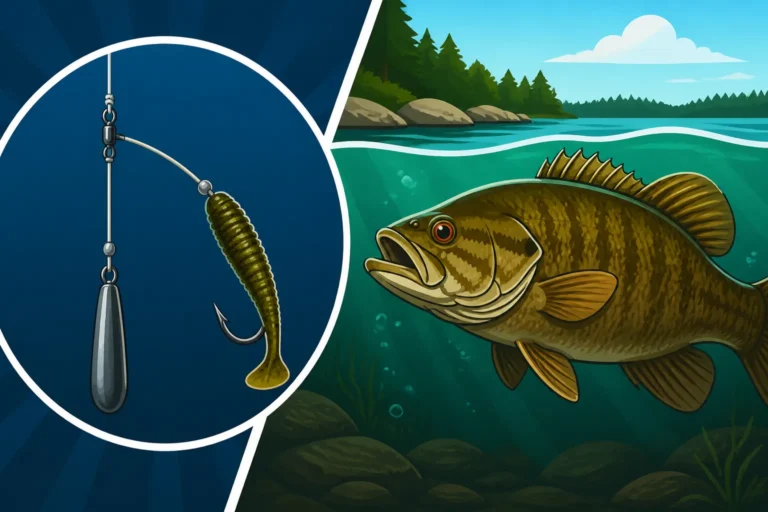
The world of walleye jigs is vast, but for vertical jigging, you can narrow it down to a few key styles. Lead-head jigs (often called "round ball" or "stand-up" jigs) paired with soft plastic minnow or grub bodies are a staple. The weight of the jig should be just enough to maintain bottom contact and feel the bite, typically 1/8 oz to 3/8 oz, depending on depth and current. Blade baits like the Silver Buddy or Rapala Rippin' Rap are excellent for a more aggressive presentation, especially when walleye are actively feeding. Jigging spoons, such as those from the Nils Master or Northland Tackle lineup, also work wonders, especially in deeper water or during ice fishing season.
When it comes to bait, live bait can be a game-changer. A lively minnow, hooked lightly through the lips or dorsal fin, is often irresistible to walleye. Leeches are another fantastic option, particularly in summer, and a piece of nightcrawler can entice hesitant biters. For soft plastics, consider paddle-tail swimbaits, grubs, or stick baits in natural colors like pearl, chartreuse, or motor oil. However, don't be afraid to experiment with brighter colors like orange or hot pink, especially in stained water. Many anglers build up their jig and soft plastic collection by regularly checking Amazon for new options and bulk deals.
Electronics and Boat Control
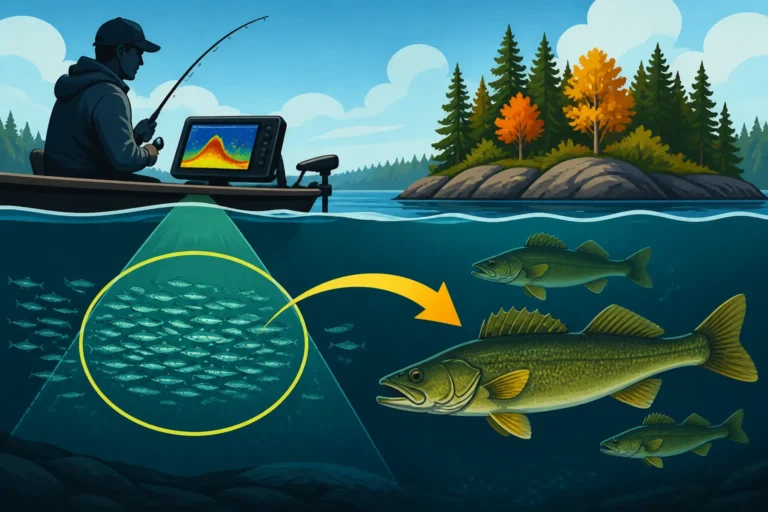
In the realm of modern walleye fishing, electronics are no longer a luxury—they’re a necessity, especially for effective vertical jigging. A quality fish finder with GPS and mapping capabilities will be your best friend. Side imaging and down imaging technologies allow you to literally "see" the structure you're fishing and even spot individual fish relating to it. Mark waypoints on promising humps, drop-offs, and rock piles, then use your sonar to identify suspended walleye or those hugging the bottom. If you're looking for more information on these essential tools, our Best Fish Finders for Ontario Lakes article has you covered.
Once you’ve found the fish, boat control is absolutely critical for vertical jigging. You need to be able to stay directly over them, or at least control your drift with precision. This is where a bow-mount electric trolling motor with GPS-controlled "spot-lock" or "anchor mode" comes into its own. This technology allows you to hold your boat precisely in position with the press of a button, even in wind or current, freeing you up to focus entirely on your jig presentation. Without it, you’ll spend more time battling the elements than fishing. For those without spot-lock, careful use of your main engine or a kicker motor, combined with an understanding of wind and current, will be essential to maintain a vertical presentation.
Mastering the Vertical Jigging Technique
Finding the fish is only half the battle; the other half is presenting your jig in a way that triggers a strike. Vertical jigging isn't just about dropping a lure down; it's a nuanced art form that requires patience, feel, and the ability to adapt.
Locating Fish and Setting Up Your Drift/Position
The first step in effective vertical jigging is, of course, locating where those walleye are hiding. Start by thoroughly scanning likely areas with your electronics: breaklines, humps, points, and old river channels. Pay close attention to your sonar screen for arches or blobs indicating fish, especially those tight to the bottom or suspended just above structure. Once you identify a promising area or individual fish, mark a waypoint. This is your target.
Now for boat positioning. If you have a spot-lock trolling motor, fantastic! Position your boat directly over your marked waypoint or slightly upwind/upcurrent if you want to let your jig swing back into the zone. If you’re drifting, you’ll need to anticipate the wind and current, making passes over the area. The goal is always to keep your line as vertical as possible, dropping your jig straight down to the fish. This minimizes line bow, maximizes sensitivity, and ensures your jig stays in the strike zone longer. Don't be afraid to make several passes over a productive area; sometimes it takes a few tries to find the perfect angle or speed.
The Art of the Jigging Motion
Once your jig is at the desired depth—typically just off the bottom or directly at the level of suspended fish—the real fun begins. There are several jigging motions, and walleye often show a preference for one over another on any given day.
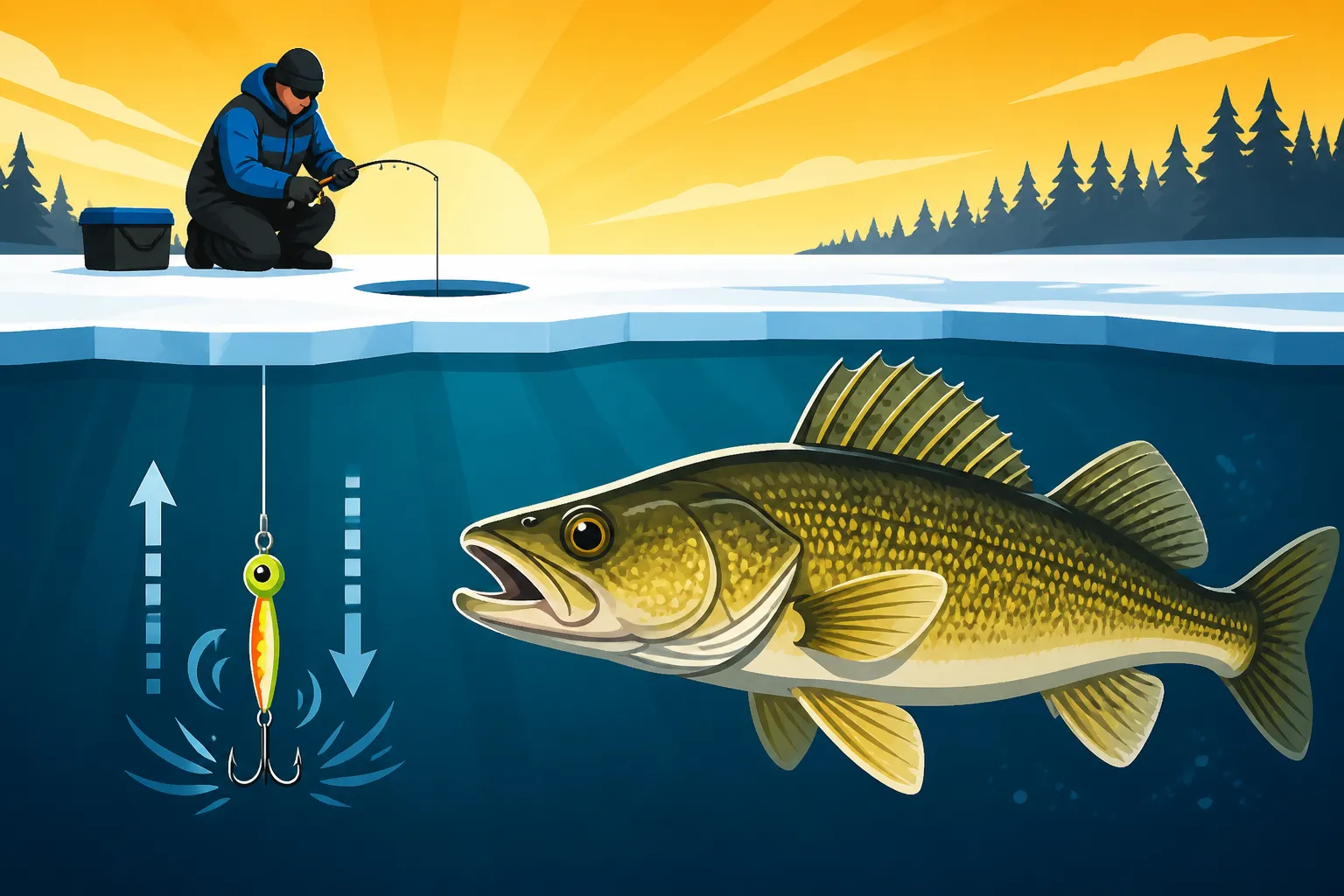
- Subtle Lift and Drop: This is often the most productive. Lift your rod tip 6-12 inches, then slowly drop it back down, letting the jig flutter. The key is to control the fall, not letting the line go slack. Most bites happen on the fall or just as the jig settles.
- Snap Jigging: For more aggressive fish, especially in colder water or when trying to cover ground, a sharp, quick snap of the rod tip (1-2 feet) followed by an immediate controlled fall can elicit reaction strikes. This mimics a fleeing baitfish.
- Dead Sticking: Sometimes, walleye want virtually no action. After lifting and dropping, let the jig sit motionless on the bottom or suspended for several seconds. This can be deadly for lethargic fish.
- Pounding the Bottom: For muddy or silty bottoms, occasionally letting your jig hit the bottom and kicking up a small puff of sediment can attract curious walleye from a distance.
Experiment with these techniques. Start subtle, and if you're not getting bites, try something more aggressive. The right presentation can often be the difference between a slow day and a banner day.
Recognizing the Bite and Setting the Hook
Walleye bites can be incredibly subtle, especially when they’re in a neutral or negative mood. You might not feel a violent strike. Instead, it could be a slight tick, a feeling of added weight, or simply your line going slack when it should still be falling. Sometimes, your rod tip might just load up a little, almost imperceptibly. This is why having sensitive gear and maintaining constant contact with your jig is so important. Watch your line where it enters the water for any twitch or pause.
When you feel anything out of the ordinary, set the hook immediately! Don't delay, as walleye can spit a jig quickly. A good hook set for vertical jigging is a swift, upward sweep of the rod. Avoid violent, theatrical hook sets; a firm, smooth motion is usually more effective and prevents tearing the hook out of the fish's mouth. Keep tension on the line as you reel, and be ready for those characteristic head shakes and powerful runs. Remember, consistency in your technique, combined with a quick reaction, will lead to more fish landed.
Advanced Tips for Ontario Walleye Jigging
Once you've got the basics down, there are always ways to refine your approach and adapt to the ever-changing conditions on Ontario's diverse waters. Being a versatile angler is key to consistent success.
Dealing with Different Water Conditions
Ontario offers a huge variety of fishing environments, from clear, deep lakes to stained, current-rich rivers. Your vertical jigging strategy needs to change accordingly. In clear water, line visibility is a major factor, reinforcing the need for that fluorocarbon leader. Natural jig colors like greens, browns, and silvers tend to be more effective. Stealth is also important; try to keep noise to a minimum in the boat and make smooth, controlled presentations.
Conversely, in stained or murky water, walleye rely more on lateral lines and vibration. Louder jigs, like blade baits, or jigs with rattles can be highly effective. Brighter, contrasting colors such as chartreuse, orange, or firetiger often stand out better and draw strikes. If there's heavy current, you'll need heavier jigs to maintain bottom contact, and your boat control becomes even more critical to stay vertical. Don't be afraid to increase your jig weight from 1/4 oz to 3/8 oz or even 1/2 oz to combat strong flows or deeper water.
When to Switch It Up
Sometimes, no matter how perfectly you present your jig, the walleye just aren't biting. This is when patience and adaptability truly come into play. If you've been presenting a subtle lift-and-drop with a minnow-tipped jig for a while without success, it might be time for a change. Try switching to a more aggressive snap jigging technique with a bright soft plastic. If that doesn't work, maybe downsize your jig, or even switch to a different bait entirely, such as a leech or a piece of crawler.
Also, consider changing your location. If the walleye aren't on that one hump you've been working, maybe they've moved to a nearby breakline, or perhaps they've gone shallower or deeper due to changing light conditions or boat pressure. The ability to quickly analyze the situation, make a change, and continue searching is a hallmark of successful walleye anglers. Remember, walleye can be found in a variety of places, and sometimes just a slight move can put you onto an active school. Our How to Catch Walleye in Ontario guide offers more excellent tips for varying your approach.
Conservation and Best Practices
As responsible anglers, we all share a commitment to preserving Ontario's incredible walleye fisheries for future generations. When practicing vertical jigging, especially in catch-and-release scenarios, handle fish with care. Minimize their time out of the water, use a knotless rubber landing net to protect their slime coat, and support their body horizontally if taking a picture. Barbless hooks can also make hook removal much easier and reduce injury to the fish.
Knowing Ontario's specific regulations, including Ontario Bag and Possession Limits by Species and Ontario Fishing Regulations Explained, is crucial. Always consult the current regulations summary for the specific Fisheries Management Zone you are in, as limits and seasons can vary. Releasing larger walleye, particularly the mature females who are vital to the spawning population, helps ensure the long-term health of the fishery. Catch and release often refers to voluntarily letting fish go, but some special regulation waters in Ontario are designated "catch and release only," and it’s important to respect those rules too.
Jigging Options for Ontario Walleye
| Jig Type | Ideal Conditions | Best Action/Retrieve | Pros | Cons |
|---|---|---|---|---|
| Lead Head Jig | All-around, versatile. Best with live bait/plastics | Subtle lift-drop, dead sticking, light bounces | Highly sensitive, natural presentation | Less flash/vibration, can snag easily |
| Blade Bait | Aggressive fish, current, deep water | Sharp snaps, vertical jigging, yo-yo retrieve | High vibration, attracts from a distance | Less natural profile, can be finicky |
| Jigging Spoon | Deep water, ice fishing, schooled fish | Medium snaps, flutter-fall, ripping | Mimics dying baitfish, good for reaction strikes | Can be heavy, less subtle |
| Stand-Up Jig | Bottom presentation, clearer water | Slow drags, hops, dead sticking | Keeps bait upright, less snagging on flat bottom | Less effective in heavy cover, can fall over |
Disclaimer
This article is for general informational purposes only and does not constitute professional advice. Laws, prices and regulations vary by location and change over time. Consult a qualified professional for guidance on your specific situation.