Brook Trout in Ontario’s Crown Land Lakes
There’s a special kind of magic that calls to anglers in Ontario, a deep-seated desire to venture beyond the beaten path and find truly wild fish. For many, that quest leads directly to the vibrant, speckled beauty of brook trout thriving in the remote, pristine waters of Crown land lakes. If you've ever dreamed of casting into an untouched wilderness lake, far from the crowds, this guide is your compass to understanding, finding, and responsibly enjoying brook trout fishing in Ontario's vast Crown land.
The Allure of Brook Trout on Crown Land
There’s nothing quite like the feeling of paddling across a remote, shimmering lake, knowing that the only sounds you’ll hear are the dip of your paddle, the cry of a loon, and maybe, just maybe, the splash of a rising brook trout. This isn't just fishing; it’s an immersive wilderness experience, a true escape from the hustle and bustle of everyday life that Ontario's Crown land provides in spades.
Why Brook Trout are So Special to Ontario Anglers
Brook trout, or "brookies" as many of us affectionately call them, hold a legendary status in the hearts of Ontario anglers. They are perhaps the quintessential Canadian trout species, renowned for their stunning colours – deep greens, oranges, and reds, often adorned with vibrant blue halos around crimson spots. These colours truly come alive when a brook trout is pulled from the cold, clear water of a northern lake, making them one of the most aesthetically pleasing fish to catch. Beyond their beauty, their tenacious fight, especially on light tackle, provides an exhilarating challenge. It’s not just about the size of the fish, but the pure, unadulterated thrill of hooking into one of these feisty, wild creatures.
The allure deepens when you consider their preference for pristine, cold-water environments. Catching a brook trout is often a sign of a healthy, unspoiled ecosystem, and on Crown land, you’re often fishing in waters that have seen minimal human impact. This connection to untouched nature, combined with the brook trout’s inherent wildness, creates a truly unforgettable angling experience. They represent the untamed spirit of Ontario’s northern wilderness, a connection to a time when angling was truly an exploration.
The Unique Appeal of Crown Land Fishing
Crown land in Ontario offers an unparalleled opportunity for wilderness fishing that you simply won't find in more accessible areas. Unlike provincial parks, which often have designated campsites and amenities, Crown land is largely undeveloped, offering a raw, unmanicured outdoor experience. This means fewer people, more solitude, and a greater chance to connect with nature on your own terms. For the brook trout angler, this translates to accessing waters that might see only a handful of visitors each year, if any. Imagine being the only one on a lake, casting to eager brook trout that rarely see a lure or fly. That's the promise of Crown land.
The sheer vastness of Ontario's Crown land is staggering, providing endless possibilities for exploration. It's not uncommon to spend days portaging between lakes, discovering hidden gems known only to a few hardy adventurers. This sense of discovery is a huge part of the appeal. You’re not just going to a known fishing spot; you’re embarking on an adventure, charting your own course, and reaping the rewards of your effort with every speckled beauty you encounter. It fosters a deep appreciation for self-reliance and the raw beauty of the natural world.
Navigating the Challenges of Remote Angling
While the rewards are immense, it’s crucial to acknowledge that fishing for brook trout on Crown land isn't without its challenges. Remote angling demands a different level of preparation and self-sufficiency. You won’t find bait shops, convenience stores, or even cell service in many of these areas. This means you need to be entirely self-contained, bringing everything you’ll need for the duration of your trip, including food, water purification, first-aid, and emergency communication devices.
The terrain can be rugged, with challenging portages, dense bush, and unpredictable weather. It's not uncommon to encounter wildlife, from black bears to moose, and knowing how to react responsibly is paramount. Navigation can also be tricky without modern markers, requiring good map-reading skills and a reliable GPS. However, these very challenges are what make the experience so profoundly rewarding. Overcoming them builds confidence, enhances your outdoor skills, and deepens your appreciation for the fish and the environment. It’s a test of skill, endurance, and planning, and when you finally hold that brilliant brook trout in your hand, every challenge faced feels utterly worth it.
Understanding Brook Trout Biology and Behavior
To successfully pursue brook trout in Ontario's Crown land lakes, you need to think like a brook trout. Understanding their biology, preferred habitats, and seasonal movements is key to increasing your chances of finding and catching these elusive fish. They're not just beautiful; they're fascinating creatures perfectly adapted to their cold-water homes.
Identifying Ontario's Native Brook Trout
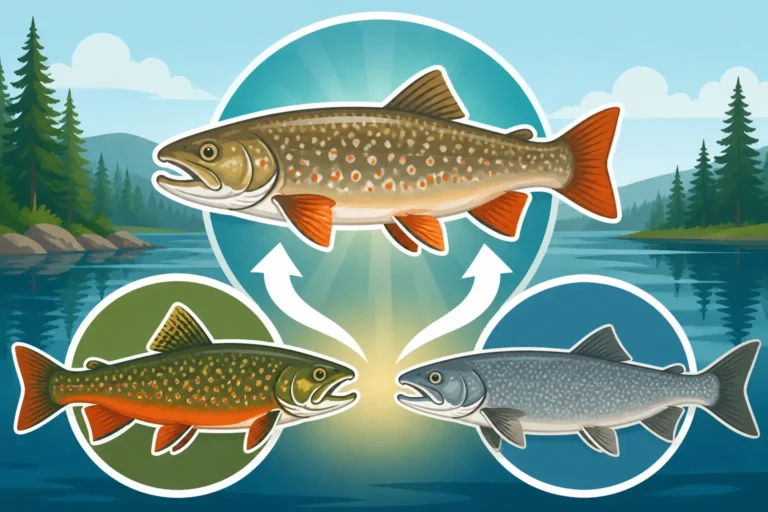
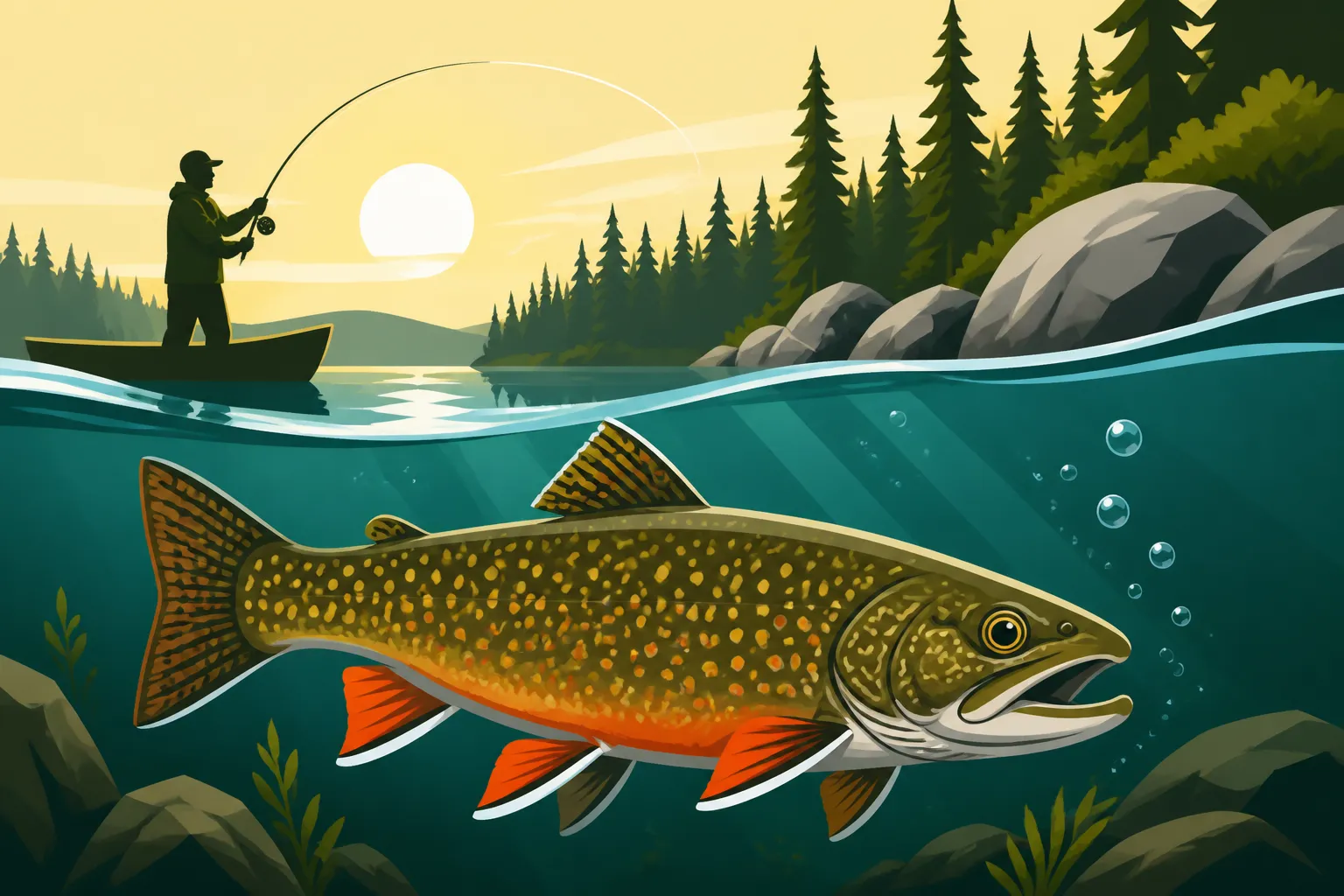
Brook trout (Salvelinus fontinalis) are often called "speckled trout" in Ontario, a nod to their distinctive markings. While they are a type of char, they are commonly referred to as trout due to their similar appearance and habits to true trout species. Key identification features include their worm-like (vermiculated) patterns on their backs and dorsal fin, which are typically green or olive, sometimes almost black. Along their sides, you’ll see scattered red spots surrounded by blue halos, interspersed with lighter, yellowish spots. Their lower fins often have a white leading edge, followed by a black stripe, and then a reddish-orange hue, making them incredibly vibrant, especially during spawning season.
It’s important to distinguish them from other trout species you might encounter, though in remote Crown land lakes, brook trout are often the dominant or sole salmonid species present. They generally don’t grow as large as lake trout or rainbow trout, with most wild brookies in remote ponds being in the 8-14 inch range, though larger specimens are certainly caught. The colouration and spot patterns are usually the clearest indicators, differentiating them from other species that might be introduced or naturally occurring in different parts of the province. Understanding their appearance is not just for identification, but also for appreciating the unique aesthetics of these truly native fish.
Brook Trout Habitat Preferences on Crown Land
Brook trout are creatures of cold, clear, well-oxygenated water. This is why Crown land lakes and connecting streams, often spring-fed and lacking significant human development, provide ideal habitats. They thrive in waters with temperatures typically below 20°C (68°F), with optimal feeding temperatures usually much cooler. In shallow lakes, this means they often seek out areas where cold groundwater seeps in, or where there’s consistent shade from overhead canopy. Deeper lakes offer thermal refuge in the cooler depths during warmer months.
Look for structure: fallen logs, submerged boulders, weed beds, and undercut banks all provide crucial cover from predators and ambush points for prey. In streams, they'll hold in pools, riffles, and behind current breaks. The presence of gravel bottoms is also critical, as brook trout are "redd" builders, excavating depressions in the gravel to lay their eggs, typically in the fall. Therefore, identifying areas with consistent cool temperatures, good oxygen levels, and ample structure, particularly areas where tributaries flow in or springs bubble up, will greatly increase your chances of locating these fish. Many remote Crown land lakes are often relatively shallow, tea-stained, and boggy, but if they have those critical cold-water inputs and sufficient depth in summer, brookies can thrive.
Seasonal Movements and Feeding Patterns
Brook trout behavior is highly influenced by water temperature and the availability of food, both of which change significantly with the seasons.
- Spring (Ice-out to early June): As the ice melts, surface waters are cold and oxygenated throughout the water column. Brook trout are often active and can be found cruising shorelines, around stream inlets, and in relatively shallow areas where insect hatches are beginning. They're recovering from winter and aggressively feeding on whatever is available, from minnows to aquatic insects. This is often a fantastic time for aggressive strikes.
- Summer (June to August): As water temperatures rise, brook trout retreat to cooler, deeper parts of lakes, or seek refuge in spring-fed areas, shaded pockets, and creek mouths. They become more lethargic in warm water and may only feed during cooler parts of the day (dawn, dusk, or even night). Oxygen levels can also become a factor, concentrating fish in specific areas. Look for drop-offs, deep structure, and areas with underwater springs.
- Fall (September to November): This is the spawning season for brook trout, and their colours become incredibly vibrant. They move into shallower areas, especially rocky or gravelly sections of lakes and streams where they construct their redds. They are still feeding aggressively, but their primary focus shifts to reproduction. Fishing during this time, especially targeting spawning fish, requires careful attention to regulations and a commitment to catch and release to protect future generations.
- Winter (Ice-over): Under the ice, brook trout activity slows, but they remain catchable. They can be found near structure or in slightly deeper basins, often suspending mid-water or near the bottom, continuing to feed on insect larvae, minnows, and other aquatic life. Ice Fishing in Ontario can be a rewarding experience for brook trout if you know where to find them.
Understanding these seasonal shifts helps you adapt your approach, from where you cast to the types of lures or flies you choose.
Finding Brook Trout on Ontario's Crown Land
The thrill of Crown land fishing is often the journey of discovery itself. You're not just driving to a pre-marked spot; you're actively seeking out unknown waters. This requires research, interpretation, and a willingness to explore.
Researching Potential Brook Trout Lakes and Rivers
The first step in any successful Crown land brook trout expedition is thorough research. Start with online resources from the Ontario government, which often provide mapping tools and information on Ontario Fisheries Management Zones, Explained and even some lake data. While specific "hotspots" are rarely listed, you can often find information on what species are present in certain watersheds or general areas. Look for historical stocking records, if available, though truly wild brook trout are the prize on Crown land. The Ontario Ministry of Natural Resources and Forestry (MNRF) website or "Fish ON-Line" interactive map can be invaluable tools, showing lake depths, access points, and fish species historically reported.
Don't underestimate the power of topographic maps, both digital and paper. They reveal elevation changes, indicating potential spring-fed areas or deeper pockets, and highlight portage routes or old logging roads that might provide access. Satellite imagery, available through various mapping services, can give you a bird's-eye view of lakes, showing shorelines, potential weed beds, and surrounding forest density. Look for clusters of smaller, connected lakes, especially those with minimal road access. These are often prime candidates for healthy brook trout populations. Local knowledge, if you can tap into it (e.g., through fishing forums or conservation groups), can also provide general direction, though specific "secret spots" are, by nature, closely guarded.
Interpreting Maps and Topography for Trout Hotspots
Once you have your maps, it's time to become a detective. Look for blue lines indicating streams and rivers that flow into or out of a lake – these are often natural pathways for brook trout and can be excellent fishing locations themselves, especially at their mouths. Areas where multiple small streams converge into a lake are also promising. Topographic lines that are closely spaced indicate steep drop-offs, which can be critical thermal refuges in warmer months. On the flip side, large areas of uniformly shallow water might not hold trout year-round unless there's a strong, consistent cold-water source.
Identify choke points, narrows, and islands, which often concentrate fish and their food sources. Boggy or swampy shorelines can indicate cooler water, but also make for challenging access. Pay attention to contour lines on bathymetric (depth) maps if you can find them for specific lakes. These reveal underwater structures, humps, and channels where trout will hold. For example, a sharp break from shallow water to a deep basin with some submerged timber is a classic brook trout hangout. Using a good GPS unit, such as those from Garmin, paired with detailed digital maps, can help you navigate these complex terrains. Even a simple compass and paper map are indispensable for navigation, especially if your electronics fail.
Scouting and Accessing Remote Locations
Accessing Crown land brook trout lakes often means a combination of driving on gravel roads, hiking, and portaging by canoe or kayak. Some lakes may be accessible by ATV trails, but always check regulations regarding motorized vehicle use on Crown land. For true wilderness experiences, a canoe is often your best bet, allowing you to paddle and portage deep into chains of lakes. The preparation for this aspect of the trip is as crucial as the fishing itself. Pack light, but pack smart.
Before you even launch, do a physical reconnaissance if possible, or at least use satellite imagery to assess the difficulty of portages. Are they overgrown? Are there significant elevation changes? Will you need to bushwhack? These are critical questions for planning your load and timeline. Remember, a 1km portage with a heavy canoe and gear can feel like 5km. Many Crown land lakes require a Ontario Crown land camping and fishing access permit rules if you're not an Ontario resident, so make sure all your paperwork is in order before you head out. Having a reliable method for purifying water, like a Sawyer filter or SteriPen, is also non-negotiable, reducing the amount of heavy water you need to carry in.
Essential Gear for Crown Land Brook Trout
Embarking on a Crown land brook trout adventure means you're largely on your own, far from the conveniences of civilization. Your gear selection, therefore, becomes paramount. Every item needs to be considered for its weight, durability, and multi-functionality.
Lightweight Tackle for Backcountry Adventures
When you're portaging through dense bush, every ounce counts. This means choosing fishing tackle that is effective but also lightweight and compact.
For spin fishing, a light to ultra-light spinning rod, typically 5 to 6.5 feet long, paired with a small, lightweight reel (1000 or 2000 series) spooled with 4-6 lb test monofilament or braided line is ideal. Monofilament offers a bit more stretch for fighting brookies on light line and is less prone to tangles than braid for beginners, though braid offers greater sensitivity. Small spoons (like Little Cleos, Williams Wobblers, or Kastmasters in 1/8 to 1/4 oz), spinners (Mepps Aglias, Blue Fox Vibrax in sizes 0-2), and tiny crankbaits (Rapala Countdown or UL Shad Rap) are all highly effective. Don't forget a small assortment of jig heads (1/32 to 1/8 oz) and soft plastic grubs or micro tubes for finesse presentations, especially when fish are less aggressive. A small tackle box that fits in your vest or backpack is perfect. You can find excellent lightweight tackle options easily on platforms like Amazon.
For fly fishing, a 3 or 4-weight fly rod, 7 to 8 feet long, is often perfect for the smaller streams and tighter casting conditions of many Crown land waters. Pair this with a matching lightweight reel and a floating weight-forward fly line. Your fly selection should include dry flies (Elk Hair Caddis, Adams, Parachute Adams, Royal Wulff in sizes 12-18), nymphs (Hare's Ear, Pheasant Tail, Prince Nymph in sizes 12-18), and small streamers (Woolly Bugger, Mickey Finn in sizes 8-12). A small, waterproof fly box is essential. Best Fly Rods for Ontario Trout Streams often discusses options that fit this lightweight, packable criteria.
Fly Fishing vs. Spin Fishing for Brookies
The choice between fly fishing and spin fishing often comes down to personal preference, the type of water you’re fishing, and your skill level.
Fly fishing for brook trout, especially in small, pristine streams or rising fish in remote ponds, offers an incredibly rewarding and often more challenging experience. The delicate presentation of a fly can be irresistible to wary brook trout, particularly during insect hatches. It allows for precise placement and a natural drift that mimics their natural food sources. Fly Fishing for Trout in Ontario delves into this in detail. It does require more technique and often more open casting room, which can be limited in dense bush country. However, the feeling of catching a wild brook trout on a dry fly on a remote lake is truly unparalleled.
Spin fishing is generally more versatile and often more effective for beginners or when fishing larger, deeper Crown land lakes. With spinning gear, you can cover more water, cast further, and fish at various depths more easily. It's also less affected by wind and tight casting conditions. Spin fishing can also be highly effective when brook trout are feeding aggressively on minnows or are holding deeper. Ultimately, both methods can be incredibly successful, and some anglers even bring a compact version of both, allowing them to adapt to different conditions and fish behaviors. If you're unsure, a lightweight spinning setup is often the more practical choice for a first-time Crown land adventure.
Essential Camping and Safety Equipment
Beyond your fishing gear, your camping and safety equipment is literally life-saving on Crown land.
Shelter and Sleep System: A lightweight, durable tent is a must. Consider a three-season tent that can handle unexpected weather. Pair this with a compact sleeping bag appropriate for the expected night temperatures (even summer nights can be chilly in northern Ontario) and a comfortable sleeping pad. A good dry bag, easily found on Amazon, for your sleeping bag is crucial.
Cooking and Food: A compact, efficient backpacking stove (like a MSR PocketRocket or Jetboil) with enough fuel is essential. Pack dehydrated meals, instant oatmeal, and non-perishable snacks. Plan for extra food in case of unexpected delays. Don't forget a pot, cup, and spoon.
Water Purification: Never rely solely on bottled water. A reliable water filter or chemical purification tablets are non-negotiable. Many remote lakes have incredibly clean water, but treating it is always the safest bet.
Navigation: A reliable GPS unit with pre-loaded maps and spare batteries is critical. Always carry a physical map and compass as a backup and know how to use them.
First Aid and Safety: A comprehensive first-aid kit, bear spray (and knowledge of how to use it), a whistle, headlamp with extra batteries, fire starter, and a multi-tool are essential. Consider a satellite messenger device (like a Garmin inReach or Zoleo) for emergency communication where cell service is non-existent.
Clothing: Pack layers. Quick-drying, synthetic fabrics are best. Include rain gear (jacket and pants), warm layers (fleece or down), and insect repellent. Long sleeves and pants are advisable to protect against bugs and sun.
Other Essentials: A sturdy knife, rope, small shovel, garbage bags (pack out everything you pack in!), and a repair kit for your tent or canoe are also important. Every item should earn its place in your pack.
Effective Techniques for Catching Brook Trout
Once you've done your research, packed your gear, and navigated to a promising Crown land lake, it's time to put your angling skills to the test. Brook trout can be eager biters, but their wild nature often means they're wary of unnatural presentations.
Fly Fishing Tactics for Small Streams and Ponds
Fly fishing for brook trout on small streams and ponds in Crown land is an art form. The key is often stealth and precise presentation.
- Approach: Brook trout in smaller waters are highly sensitive to vibrations and shadows. Approach the water slowly, keeping a low profile, and avoid stomping along the bank. Often, the best approach is from downstream, casting upstream, so your fly drifts naturally towards the fish without you being seen.
- Reading the Water: Look for classic trout lies: the head of a pool where a current brings food, behind large rocks or logs that break the current, under undercut banks, and in deeper pockets. In ponds, focus on areas with submerged structure, areas where springs enter, or around lily pads if there's sufficient depth underneath.
- Dry Fly Fishing: When you see trout rising, it's time for dry flies. Match the hatch if possible, or use a general attractor pattern like an Elk Hair Caddis or Parachute Adams. The key is a delicate landing and a drag-free drift. Mend your line as needed to keep the fly floating naturally down the current or across the still water. Cast just above where you saw the rise.
- Nymphing: If fish aren't rising, or if you're fishing deeper pockets, nymphing is highly effective. Use a small indicator and a weighted nymph (or add a small split shot a foot or so above an unweighted one) to get your fly down to where the fish are feeding. The strike can be subtle, so watch your indicator carefully for any hesitation or movement.
- Streamers: Small streamers like a Woolly Bugger or Grey Ghost can imitate minnows or leeches. Cast them across or slightly upstream, letting them sink, then retrieve them with short, erratic strips. This can be particularly effective in larger pools or in ponds where brook trout are hunting larger prey. Wading Techniques for Ontario Trout Streams provides useful advice that can be adapted to smaller Crown land streams.
Spin Fishing Strategies for Deeper Lakes
Spin fishing offers a different set of advantages, particularly for covering water and reaching deeper-holding fish in larger Crown land lakes.
- Casting and Retrieving: Small spoons and spinners are highly effective. Cast them out, let them sink to your desired depth (count down to gauge depth), then retrieve with a steady pace. Vary your retrieve speed and add occasional twitches or pauses to mimic injured baitfish. Experiment with different colours – gold, silver, or patterns with orange and red are often brook trout favourites.
- Jigging: In deeper lakes, especially during summer or winter, vertical jigging can be incredibly effective. Use small jigging spoons or a jig head with a soft plastic grub. Drop your lure to the bottom, then lift and drop it with varying intensity. Brook trout often strike on the fall or just after the lure hits the bottom. This is a great technique for fishing structure that you've identified on a fish finder or map.
- Trolling: If you're in a canoe or small boat, slow trolling can be a great way to locate active fish, especially in larger lakes. Use a small spinner, spoon, or crankbait and paddle slowly, allowing your lure to trail behind. Adjust your speed and depth until you find the fish. This covers a lot of water and is a good way to scout new lakes.
- Bait Fishing: While many anglers prefer artificials, live bait (where permitted by Ontario Fishing Regulations Explained) can be deadly for brook trout. Small worms, minnows, or leeches presented under a bobber or on a bottom rig can be irresistible. Just be sure to check local regulations carefully, as bait use might be restricted in some sensitive trout waters. Always use bait sourced locally or from reputable bait shops to prevent the spread of invasive species.
Ethical Catch and Release Practices
Catching wild brook trout on Crown land is a privilege, and it comes with the responsibility of ensuring these populations remain healthy for future generations. Ethical catch and release practices are paramount.
- Minimize Fight Time: Use appropriate tackle that allows you to land the fish quickly without exhausting it excessively.
- Handle with Care: Wet your hands before handling the fish to protect its delicate slime coat, which acts as a barrier against disease. Avoid squeezing the fish, especially around the gills or belly. Keep it in the water as much as possible.
- Barbless Hooks: Crimp down the barbs on your hooks or use barbless hooks. This makes hook removal quicker and causes less damage to the fish.
- Quick Release: Remove the hook gently and quickly. If the hook is deeply embedded, cut the line as close to the hook as possible rather than tearing the fish's tissues.
- Revive the Fish: If the fish seems sluggish, hold it gently in the water, facing into a gentle current (if applicable), until it regains its strength and can swim away on its own. Do not toss it back prematurely.
- Consider Consumption: While many Crown land brookies are small, if you choose to keep a few for a meal (within Ontario Bag and Possession Limits by Species), only keep what you will eat and dispatch them quickly and humanely. The key is moderation, especially for slow-growing wild populations.
Practicing these methods ensures that the brook trout you catch today will be there for your next adventure, and for those who follow in your footsteps.
Conservation and Responsible Angling on Crown Land
The pristine nature of Ontario’s Crown land and the health of its brook trout populations are a direct result of responsible stewardship. As anglers, we have a critical role to play in protecting these fragile ecosystems.
Understanding Ontario's Brook Trout Regulations
Before you even pack your first lure, it is your responsibility to fully understand and adhere to Ontario’s fishing regulations. These regulations are designed to protect fish populations and ensure sustainable angling for everyone.
- Fishing License: You absolutely need an Ontario fishing license and an Outdoors Card. Ensure you have the correct type (Sport or Conservation) and that it's valid for your residency status. You can learn more about this in Ontario Outdoors Card, Explained.
- Zone Regulations: Ontario is divided into numerous Fisheries Management Zones (FMZs). Each zone has specific rules regarding seasons, catch limits, and size restrictions for different species, including brook trout. Make sure you know which FMZ your Crown land lake falls into and check the regulations summary for that specific zone. A lake just a few kilometres away might be in a different zone with different rules!
- Species-Specific Limits: Pay close attention to the daily catch and possession limits for brook trout. The limit can vary significantly depending on the zone and whether you hold a Sport or Conservation license. For example, a small, remote lake might have a "catch and release only" rule, or a reduced daily limit to protect sensitive populations.
- Bait Restrictions: Some designated trout waters, particularly those supporting wild populations, may have restrictions on bait use (e.g., "artificial lures only" or "no live bait fish"). Always verify this before heading out.
- Special Regulations: Be aware of any "Special Regulation Waters" which might have unique rules regarding specific lakes or rivers. These are usually outlined in the annual regulations summary.
Ignorance of the law is not an excuse, and penalties for violations can be steep, including fines and license suspension. Always carry a copy of the current Reading the Ontario Fishing Regulations Summary (or have it accessible digitally) and refer to it frequently.
Minimizing Your Impact on Fragile Ecosystems
The beauty of Crown land fishing is its untouched nature, and it's our duty to keep it that way. Every action we take, or don't take, leaves an impact.
- Leave No Trace Principles: This is the golden rule of wilderness travel. Pack out everything you pack in, including all garbage, food scraps, and even fish entrails (unless deep in the bush where wildlife can safely consume them). Leave campsites cleaner than you found them.
- Waste Disposal: Use designated privies if available, or dig a "cat hole" at least 200 feet (60 meters) from water sources, trails, and campsites for human waste. Bury it completely. Pack out all toilet paper.
- Campfire Safety: Be extremely careful with campfires. Use existing fire rings if present, keep fires small, and always have water nearby to extinguish them completely. Check for fire bans before your trip. Never leave a fire unattended.
- Protect Vegetation: Avoid cutting live trees for firewood or shelter. Stick to established trails and campsites to minimize trampling vegetation and soil erosion. Avoid disturbing fish spawning areas, especially during the fall.
- Prevent Invasive Species: Clean your boat, canoe, kayak, and fishing gear thoroughly before moving between different water bodies. Remove all plant matter, mud, and drain all water. This prevents the spread of invasive species that can devastate native brook trout populations. Best Fishing Boats for Georgian Bay and Best Kayaks for Ontario Fishing highlight different vessel types, and the need for cleaning applies to all.
Our goal should always be to leave the wilderness exactly as we found it, or even better.
The Role of Anglers in Brook Trout Conservation
Anglers are often the first line of defense for conservation. By actively participating in responsible practices and contributing to the body of knowledge, we become stewards of the resource.
- Reporting Violations: If you witness fishing violations or environmental damage, report it to the Ministry of Natural Resources and Forestry (MNRF). It’s crucial to protect these resources from those who disregard the rules.
- Citizen Science: Some regions or organizations might have programs where anglers can report their catches (e.g., length, weight, location) or observations of habitat. This citizen science data can be invaluable for fisheries managers in monitoring populations and making informed decisions.
- Advocacy: Support conservation organizations dedicated to protecting cold-water fisheries and wilderness areas. Your voice and financial contributions can help fund habitat restoration, research, and advocacy efforts.
- Education: Share your knowledge and passion for responsible angling with others, especially new or younger anglers. Teach them the importance of regulations, catch and release, and Leave No Trace principles.
- Respect for Wildlife: Remember you are in their home. Give wildlife ample space, never feed animals, and secure your food properly to avoid attracting bears and other critters. A bear-resistant food barrel or proper bear hang is essential for camping in brook trout country.
By embracing these roles, anglers can ensure that the magic of brook trout fishing on Ontario's Crown land endures for generations to come.
Planning Your Ultimate Crown Land Brook Trout Trip
A successful Crown land brook trout adventure isn't just about showing up with a fishing rod. It requires meticulous planning, a flexible mindset, and a deep respect for the wilderness.
Logistics: Permits, Portaging, and Preparation
The logistical hurdles might seem daunting at first, but with a systematic approach, they become part of the adventure.
- Permits and Licensing: Double-check that you have your valid Ontario Fishing License Guide for 2026 and Outdoors Card. If you're camping on Crown land and are not an Ontario resident, you'll need to acquire a Crown Land camping permit. These are available online or from some ServiceOntario centres. Always carry physical copies of your permits and license.
- Route Planning: Spend ample time studying your maps (topographic, bathymetric, and satellite imagery). Plan your canoe routes, identifying all portages and estimating their length and difficulty. Have contingency plans for bad weather or unforeseen obstacles. Mark potential campsites and fishing spots.
- Food Planning: This is critical. Calculate your caloric needs per day and plan meals that are lightweight, nutritious, and require minimal cooking fuss. Dehydrated meals are excellent, complemented by items like instant coffee, oatmeal, energy bars, and hard cheeses. Pack snacks that provide quick energy on the portages. Don't forget condiments!
- Gear Checklist: Create a comprehensive checklist for all your fishing, camping, safety, and personal gear. Go over it meticulously before you leave. Lay everything out before packing to ensure nothing is forgotten. Pack essential repair kits for your tent, stove, and canoe.
- Weight Distribution: If you're portaging, distribute weight evenly in your packs and canoe. Practice packing your canoe or kayak at home. A well-balanced load makes portaging significantly easier and safer. Consider a portage yoke for your canoe, which can be a lifesaver on longer carries.
- Emergency Contacts: Leave a detailed itinerary with a trusted friend or family member, including your planned route, expected return date, and emergency contact information. Do not deviate from this plan without notifying your contact if possible (e.g., via satellite messenger).
| Category | Essential Item | Considerations for Crown Land |
|---|---|---|
| Fishing | Rod & Reel (light/ultralight) | Compact, durable |
| Lures/Flies (small spoons, spinners, drys) | Varied, specific to brook trout | |
| Line/Leaders/Tippet | Fresh line, spare spools | |
| Pliers/Nippers/Scissors | Multi-tool often works well | |
| Small Net (for catch & release) | Rubber mesh, compact | |
| Tackle/Fly Boxes | Waterproof, organized | |
| Navigation | GPS with extra batteries | Pre-loaded maps, routes marked |
| Paper Map & Compass | Waterproof bag for maps, know how to use | |
| Shelter | Lightweight Tent | Three-season, footprint |
| Sleeping Bag & Pad | Appropriate for night temps, dry bag | |
| Food/Water | Backpacking Stove & Fuel | Reliable, compact |
| Dehydrated Meals/Snacks | High calorie, non-perishable | |
| Water Filter/Purifier | Primary method, backup tablets | |
| Cook Pot, Mug, Utensils | Lightweight, multi-use | |
| Safety | First-Aid Kit | Comprehensive, wilderness-specific |
| Bear Spray & Whistle | Accessible, know how to use | |
| Satellite Messenger (e.g., Garmin inReach) | Essential for emergencies | |
| Headlamp & Spare Batteries | Hands-free lighting | |
| Fire Starter (waterproof matches/lighter) | Multiple methods | |
| Clothing | Layers (base, mid, outer) | Quick-drying, synthetic |
| Rain Gear (jacket & pants) | Breathable, waterproof | |
| Warm Hat & Gloves | Even in summer, nights can be cool | |
| Sturdy Hiking/Wading Boots | Good ankle support, quick-drying | |
| Other | Dry Bags/Barrel (for food/gear) | Essential for portages & rain, critter proof |
| Sunscreen & Insect Repellent | High SPF, high DEET for blackflies | |
| Knife/Multi-tool | Indispensable | |
| Rope/Cordage | Many uses | |
| Repair Kits (tent, stove, canoe) | Duct tape can fix almost anything! |
Dealing with Wildlife and Unexpected Situations
Crown land is wilderness, and encountering wildlife is part of the experience. Being prepared for unexpected situations is crucial for safety.
- Bear Awareness: Ontario is black bear country. Store all food and scented items (toothpaste, bug spray) in bear-resistant containers or hung from a tree well away from your camp. Never cook or eat in your tent. Make noise while hiking to avoid surprising a bear. Carry bear spray and know how to use it.
- Other Wildlife: Be aware of moose, wolves, and other animals. Observe them from a distance. Respect their space.
- Weather Changes: Weather in Ontario, especially in remote areas, can change rapidly. A sunny morning can turn into a torrential downpour or strong winds by afternoon. Pack appropriate rain gear and always keep an eye on the sky. If high winds kick up on a large lake, pull over to shore and wait it out.
- Injuries and Illnesses: Even a minor cut can become a serious problem in the backcountry without proper care. Know basic first aid. Be aware of signs of hypothermia, heatstroke, and dehydration. If an injury is serious, your satellite messenger device becomes your lifeline.
- Getting Lost: This is a real possibility. Always know your location on your map and GPS. If you get disoriented, stay calm, stay put, and try to retrace your steps. If truly lost, use your emergency communication device.
- Pest Control: Blackflies, mosquitoes, and deer flies can be relentless at certain times of the year. Pack a head net, strong insect repellent, and wear light-coloured long sleeves and pants. Embrace the power of a good campfire if regulations permit!
Embrace the mindset that things will go wrong, and your ability to adapt and problem-solve is key.
Embracing the True Wilderness Experience
Ultimately, fishing for brook trout on Ontario's Crown land is about more than just catching fish. It's about disconnecting from the modern world and reconnecting with nature in its purest form.
- Patience and Persistence: Wilderness angling often requires immense patience. The fish might not always be biting, the portages might be harder than expected, and the bugs might be out in full force. Embrace these challenges as part of the adventure.
- Observation: Take the time to observe your surroundings. Watch the loons, listen to the wind in the pines, identify wildflowers, and marvel at the endless starry skies. These moments of quiet observation are often as memorable as catching a trophy fish.
- Self-Reliance: There's a profound satisfaction in navigating, camping, and fishing entirely on your own terms. Every problem solved and every challenge overcome builds confidence and deepens your appreciation for your own capabilities.
- Respect for Nature: The Crown land is a shared resource and a fragile ecosystem. Leave it as you found it for others to enjoy. Pack out all garbage, minimize your impact, and treat the fish and wildlife with the utmost respect.
- Flexibility: While planning is crucial, be prepared to adapt. Weather can change, fish might not be where you expect them, or a portage might be impassable. A flexible attitude will ensure your trip remains enjoyable, even when things don't go exactly as planned.
Catching a vibrant brook trout from a remote, wild Ontario lake is a truly magical experience, a testament to the enduring beauty of our natural world and the spirit of adventure within us all. It's a journey that will challenge you, reward you, and leave you with memories to last a lifetime.
Disclaimer
This article is for general informational purposes only and does not constitute professional advice. Laws, prices and regulations vary by location and change over time. Consult a qualified professional for guidance on your specific situation.