Best Spoons for Ice Fishing Panfish
The frozen lakes and rivers of Ontario call to us every winter, but sometimes finding those finicky panfish beneath the ice can feel like a guessing game. It's frustrating when you drill a hole, drop a line, and just don't get the bites you're expecting, especially when the fish are there but just not committing. This guide is dedicated to exploring the absolute best spoons for ice fishing panfish, delving into their nuances and how to use them effectively to turn those slow days into memorable ones.
Why Spoons Are Essential for Ice Fishing Panfish
When the temperatures plummet and the ice thickens, the underwater world slows down. Fish become less active, their metabolism drops, and their feeding windows can be shorter and more subtle. This is precisely where ice fishing spoons shine, offering a versatile and highly effective presentation for panfish like crappie, perch, and bluegill that might otherwise ignore your offerings. They're not just a piece of metal; they're an invitation, a glimmer of hope in the dark depths.
Mimicking Forage: How Spoons Mimic Small Baitfish or Insects
The primary reason spoons are so deadly for panfish through the ice is their ability to accurately imitate natural forage. Think about what a panfish eats: tiny minnows, insect larvae, aquatic invertebrates, even smaller crustaceans. Many ice fishing spoons are designed with a slender profile and a specific curvature that, when jigged, causes them to dart, flutter, or fall erratically. This action perfectly mimics a dying or injured baitfish, or an insect larva struggling in the water column.
Imagine you're a hungry crappie hovering near a weed line. A small spoon, shimmering and falling in a slow, enticing wobble, looks exactly like an easy meal. The flash and vibration can trigger a predatory instinct, even when the fish isn't actively hunting. The light reflecting off the spoon's metallic finish, especially in low-light conditions under the ice or in stained water, can catch a panfish's eye from a surprising distance. It's that subtle glint, that dying quiver, that makes all the difference when fish are lethargic. You’ll find many anglers swear by them in various scenarios for Panfish Fishing in Ontario.
Versatility in Depth and Presentation: Adapting to Panfish Moods
One of the greatest strengths of spoons is their incredible versatility. You're not just limited to one type of retrieve or one specific depth. A heavier spoon will plummet quickly, reaching deep-dwelling perch or crappie in an instant, while a lighter spoon might be better suited for suspending fish in the mid-water column or slowly working shallower areas. This adaptability allows you to present your lure exactly where the fish are holding and adjust to their mood.
On a day when panfish are aggressive, you can use a more active jigging motion, causing the spoon to dart wildly and attract attention. But when they're finicky, a slower, more subtle quiver, allowing the spoon to just barely flutter on the fall, can be the key to triggering a bite. This ability to change the "personality" of your lure with a simple adjustment of your rod tip is invaluable. You can work the entire water column, experimenting until you find the sweet spot. It's why a small selection of spoons is an absolute must-have in any ice angler's kit when out on Ice Fishing in Ontario excursions.
Key Characteristics of Effective Panfish Ice Fishing Spoons
Choosing the right spoon isn't just about grabbing the first shiny thing you see. There's a science and an art to it, especially when targeting delicate panfish through the ice. Understanding the characteristics that make a spoon effective can drastically improve your success rate. It's about matching the hatch, not just in terms of what fish are eating, but how they prefer it presented.
Size and Weight Considerations: The Drop Rate Equation
The size and weight of your spoon are perhaps the most critical factors. Panfish have smaller mouths than their predatory cousins like pike or walleye, so a spoon that's too large will be ignored or simply too big for them to inhale. Generally, you're looking at spoons ranging from about 1/16 oz to 1/8 oz for most panfish scenarios. For truly tiny bluegill or finicky crappie, you might even drop down to 1/32 oz.
The weight also dictates the drop rate. A heavier spoon sinks faster, which is great for quickly getting down to active fish or when you're fishing deeper water (say, 20+ feet). However, a lighter spoon provides a slower, more tantalizing fall, often crucial for hesitant fish. This slow descent allows the spoon's action—be it a flutter or a wobble—to truly shine, giving the fish more time to react and commit. It’s a delicate balance; too light and it takes ages to get down, too heavy and it might fall past the strike zone too quickly or spook the fish with its aggressive descent. Think about the Best Jig Weight for Perch Through the Ice; similar principles apply to spoons.
Colour and Finish: Attracting Attention Under the Ice
Colour and finish play a huge role in attracting panfish, especially under the ice where light penetration can be limited. There are a few schools of thought here:
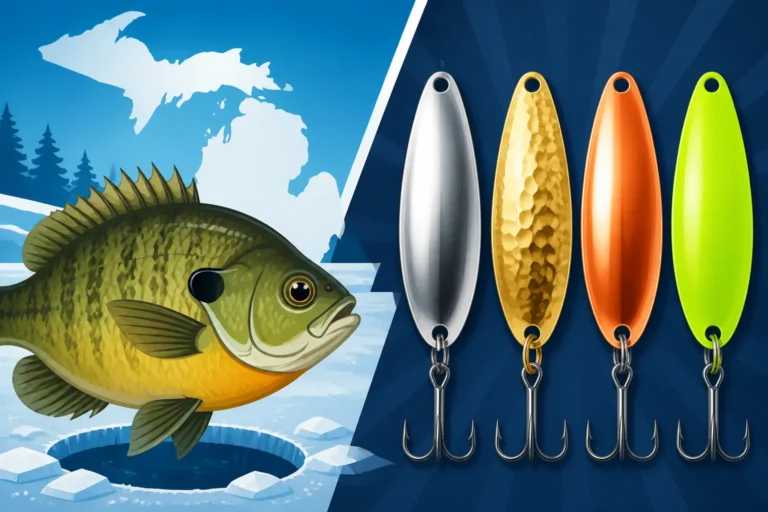
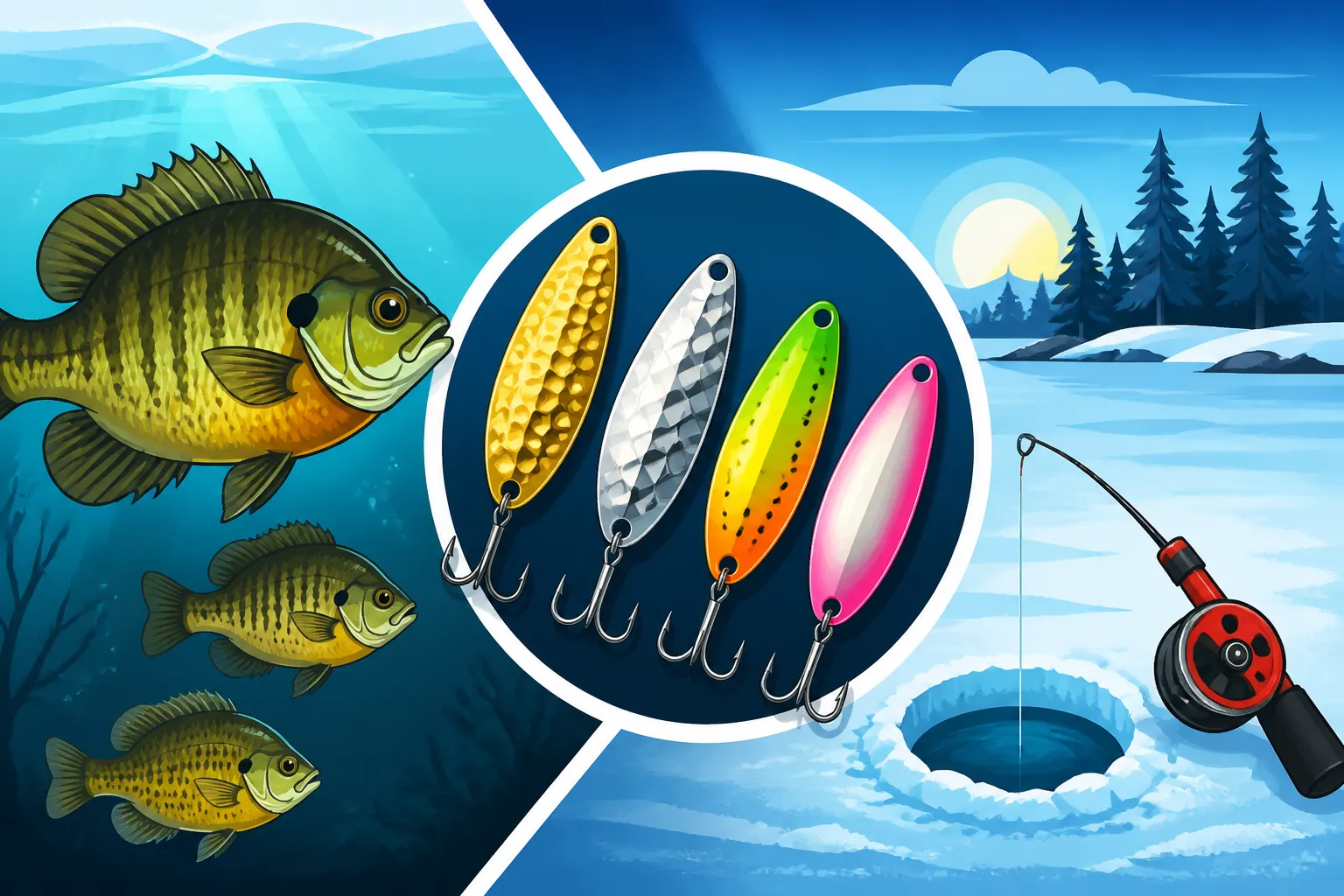
- Natural Finishes: Silver, gold, copper, or brass spoons mimic natural baitfish. These are often excellent choices in clear water or on bright, sunny days when the light can really make them flash. They provide a subtle, realistic appeal.
- Bright Colours: Chartreuse, orange, pink, and vibrant greens are fantastic for stained or murky water, or on overcast days when fish need a little extra visual cue. These colours create a strong contrast and can often trigger aggressive bites.
- Glow-in-the-Dark: A game-changer, especially in deep water, low light, or during dawn/dusk periods. Glow spoons, once charged with a flashlight, emit light that can be seen from a distance. Many panfish feed using lateral lines and sight, and that glow can be irresistible. Consider a spoon that has both a bright painted side and a glow side for maximum versatility.
The finish also matters. Highly polished spoons offer maximum flash, while matte or textured finishes can provide a more subdued look, which might be preferred by spooked fish. Having a variety of colors and finishes in your tackle box, perhaps from a well-stocked Bass Pro Shops or found easily on Amazon, allows you to experiment and adapt to the fish's preference on any given day.
Action and Profile: The Dance of the Lure
The action and profile refer to how the spoon behaves in the water and its physical shape. A spoon's curvature, thickness, and overall design determine its unique dance.
- Slim Profile: Generally, slender spoons tend to dart and wobble more aggressively on the fall. They often cut through the water faster, appealing to more active fish.
- Wider Profile: Broader spoons tend to have a slower, more pronounced flutter or swing. They might fall slower and cover a wider area horizontally as they descend, often preferred for hesitant fish or when trying to maximize hang time in the strike zone.
- Cup or Bend: The amount of cup or bend in a spoon heavily influences its action. A deeper cup might give it more resistance in the water, resulting in a wider flutter, while a flatter spoon might have a more erratic, unpredictable dart.
Ultimately, you want a spoon that offers an enticing, lifelike movement with minimal effort from your rod tip. The goal is to mimic something alive and vulnerable, enticing a strike without overdoing it.
Popular Types of Spoons for Ontario Panfish
Ontario's diverse lakes and conditions mean that no single spoon will be the "best" for every situation. Successful ice anglers often carry a range of spoon types, each with a unique action and purpose. Understanding these differences is key to choosing the right tool for the job.
Darting Spoons: Erratic Action for Aggressive Bites
Darting spoons are characterized by their more aggressive, erratic action. When you lift your rod, they shoot up, and on the fall, they tend to "dart" or "glide" horizontally away from the hole before settling back down. This unpredictable movement is fantastic for triggering a reaction strike from aggressive panfish.
Often, these spoons have a slightly elongated or curved profile that allows them to cut through the water and create that distinctive side-to-side motion. They displace more water and create a stronger vibration, which can call fish in from a distance, particularly if they're schooled up and actively feeding. They're excellent for Yellow Perch Fishing in Ontario when the bite is on. If you're marking fish on your flasher and they're coming in hot, a darting spoon can be just what you need to capitalize on their eagerness. Don't be afraid to give them a good, sharp snap of the wrist to really make them dance.
Flutter Spoons: Subtle Enticement for Finicky Fish
On the opposite end of the spectrum are flutter spoons. These spoons are designed for a slower, more subtle fall, often characterized by a gentle "flutter" or "shimmy" as they descend. They typically have a thinner, broader profile with a slight curve, which creates more resistance in the water and slows their drop.
Flutter spoons are absolute magic when panfish are finicky, suspended, or just not interested in an aggressive presentation. That slow, dying leaf-like descent gives the fish ample time to approach, inspect, and ultimately commit. They don't generate as much flash or vibration as darting spoons, making them perfect for clear water conditions or when fish are easily spooked. When you're fishing for hesitant crappie in clear water, a flutter spoon can often out-fish more aggressive offerings. Think of it as a delicate ballet rather than a jarring rock concert.
Jigging Spoons: Vertical Presentation and Precision
Jigging spoons are perhaps the most straightforward of the bunch, designed primarily for a vertical presentation directly beneath your hole. They tend to be heavier for their size and have a more compact, often pear-shaped or teardrop profile. Their action is less about darting horizontally and more about a direct up-and-down motion with a subtle wobble or shimmer on the fall.
These spoons excel when you've pinpointed fish directly below you, or when you need to punch through deep water quickly to reach a school. They're great for Jigging for Perch Through the Ice where you might be targeting tight schools near the bottom. The heavier weight means you maintain better contact with the lure, allowing you to feel even the most subtle taps. While their horizontal movement is less pronounced, the flash and vibration they create on the drop and retrieve are often enough to pique a panfish's interest. Many jigging spoons also come with a small treble hook, sometimes adorned with a piece of glow material or a small plastic trailer, to further entice bites.
Spoon-Jig Hybrids: The Best of Both Worlds
In the world of ice fishing, innovation is constant, and sometimes the best lures combine elements of different styles. Spoon-jig hybrids are exactly that: lures that blend the flash and action of a spoon with the compact, precise presentation of a small jig.
These often feature a spoon-like body, providing flash and some flutter, but are equipped with a single, often larger, fixed hook, similar to a traditional jig. Sometimes, they'll have a small plastic or feather tail for added attraction. The idea is to offer the visual appeal and vibration of a spoon while maintaining a more focused, compact profile that's easier for panfish to engulf. They can be particularly effective when fish are somewhat active but still want a smaller, more manageable meal. Experimenting with these hybrids can sometimes unlock a bite when traditional spoons or jigs fall short.
| Spoon Type | Primary Action | Best Use Case | Ideal Panfish Species |
|---|---|---|---|
| Darting Spoon | Erratic, side-to-side glide | Aggressive fish, calling fish in, active presentations | Perch, Crappie |
| Flutter Spoon | Slow, dying-leaf flutter | Finicky fish, clear water, subtle bites | Crappie, Bluegill |
| Jigging Spoon | Vertical drop with wobble | Deep water, direct presentation, pinpointing fish | Perch, Lake Trout |
| Spoon-Jig Hybrid | Flashy, compact jig action | Mixed moods, subtle bites with visual appeal | All Panfish |
Tying On and Tipping Your Panfish Spoons
Once you've selected the perfect spoon, the next crucial steps involve ensuring it's properly presented and enhanced to maximize its appeal. A great spoon can be rendered useless by a poor knot or a missed opportunity to add that extra bit of enticement. These details make a significant difference in your catch rates.
Proper Knot Selection: Strength and Action
For small ice fishing spoons and light lines, knot selection isn't just about strength; it's also about preserving the lure's intended action. A bulky knot can impede the spoon's movement, making it less enticing.
The Improved Clinch Knot is a fantastic all-around choice. It’s strong, relatively easy to tie, and reliable. However, for maximum action, many anglers prefer a Loop Knot (like a Rapala Knot or Non-Slip Mono Loop). A loop knot creates a small loop at the eye of the spoon, allowing it to swing freely. This freedom of movement is especially critical for flutter spoons, which rely on their uninhibited wobble and sway to attract fish. If the spoon is tied too tightly, its natural action can be stifled. Always moisten your knots before tightening to prevent friction from weakening the line, and double-check them regularly for any nicks or fraying. Remember, a lost trophy panfish due to a weak knot is a truly deflating experience!
The Art of Tipping: Adding Scent and Attraction
Even the most well-designed spoon can benefit from a little extra something, and that "something" is often called tipping. Tipping refers to adding a small piece of natural bait or a scented artificial to your spoon's hook. This serves two primary purposes: adding natural scent and providing a visual target that fish can hone in on, especially when they're inspecting the lure closely.
- Live Bait: The most common and often most effective tipping material.
- Maggots (Worms): Small, wiggly, and full of natural scent, maggots are a panfish magnet. A couple of maggots threaded onto the hook, leaving the ends free to wiggle, can significantly increase your strike rate.
- Minnow Heads/Tails: A small piece of a minnow, especially the head or tail, provides both scent and a realistic visual. The oils from the minnow can disperse in the water, drawing fish in.
- Worms (Waxworms, Mealworms): Similar to maggots, these offer natural appeal and scent.
- Artificial Tipping:
- Small Plastic Tails: Tiny soft plastic grubs, tubes, or larvae imitations can be added to the hook. Many are scented, providing that extra attractant without the mess of live bait. They're also durable.
- Scented Baits: Even if you're not using a plastic tail, adding a dab of commercial fish attractant gel or spray to your spoon can make a difference, particularly on slow days.
The key is to use a small enough piece of tipping that it doesn't overpower the spoon's action or make it difficult for panfish to get the hook in their mouth. Often, less is more. The added scent and visual appeal can make a world of difference, turning curious glances into committed bites.
Mastering the Presentation: Techniques for Spooning Panfish
Having the right spoon is only half the battle; knowing how to work it effectively through the ice is the other. Panfish can be incredibly finicky, and adjusting your presentation can mean the difference between a full bucket and an empty one. These techniques focus on getting the most out of your chosen spoon.
The Classic Lift and Drop: Basic Jigging Motion and Variations
The lift and drop is the bread and butter of ice fishing with spoons, but there's more to it than just raising and lowering your rod. This basic motion is about creating action and drawing attention, then allowing the spoon to flutter enticingly.
- The Standard Lift: Start by lowering your spoon to the desired depth. Then, with a gentle wrist flick or a short pull of the rod, lift the spoon anywhere from 6 inches to 2 feet. This lift makes the spoon shoot upwards, flashing and creating vibrations.
- The Pause and Drop: Immediately after the lift, let the rod drop back to its original position, allowing the spoon to fall freely. This is where most bites occur, as the spoon flutters or darts downward, mimicking an injured baitfish. The length of your pause after the drop is critical. Sometimes fish want an immediate re-lift; other times, a pause of 5-10 seconds, or even longer, is needed for them to commit.
- Variations:
- Aggressive Snaps: For active fish, use sharper, quicker lifts to make the spoon dart more violently.
- Subtle Quivers: For lethargic fish, use tiny, almost imperceptible shakes of the rod tip after the drop, making the spoon just barely tremble.
- Bottom Pounding: For perch, sometimes lifting the spoon and letting it hit the bottom, kicking up a puff of sediment, can simulate feeding fish and attract attention. This can be especially effective when you're focusing on Ontario Yellow Perch Limit on Lake Erie and Simcoe.
Experiment with the height of your lift, the speed of your drop, and the duration of your pause until you find what the fish prefer on that specific day. No two days, or even two holes, are exactly alike.
Deadsticking and Subtle Tremors: Advanced Techniques for Cautious Fish
When the bite is tough, and fish are just staring at your spoon on the flasher, it's time to get subtle. Deadsticking and subtle tremors are advanced techniques designed to tempt the most cautious panfish.
- Deadsticking: This involves leaving your spoon almost completely still in the water column, often just above the fish you're marking. Sometimes, the slightest current or a barely perceptible movement of the ice will give the spoon enough action to attract a bite. You can also "deadstick" by resting your rod on a bucket, leaving the spoon suspended at a fixed depth, occasionally giving it a tiny twitch. The key here is patience. It provides a non-threatening, easy meal for a fish that might be spooked by aggressive jigging.
- Subtle Tremors: After a lift and drop, instead of a full pause, impart tiny, almost microscopic vibrations to your spoon. This can be done by lightly tapping your rod handle, holding your rod tip incredibly still but allowing your hand to tremble slightly, or by using a spring bobber that amplifies tiny movements. These tremors make the spoon shimmer and subtly move without a dramatic dart, imitating a barely alive insect or baitfish. It's often the difference-maker for those extremely wary Black Crappie in Ontario Lakes that follow your lure but refuse to strike. This is where a highly sensitive rod and a good feel for your line truly come into play.
Reading Your Electronics: How a Fish Finder Helps Optimize Spoon Presentation
In ice fishing, your fish finder (flasher or LCD unit) isn't just a tool to locate fish; it's a window into how they're reacting to your presentation. Learning to "read" your electronics is paramount to optimizing your spoon technique.
- Locating Fish: First and foremost, your flasher will show you where the fish are in the water column. Are they hugging the bottom? Suspended mid-depth? Knowing this helps you drop your spoon to the right zone immediately.
- Tracking Your Lure: You should be able to clearly see your spoon on the screen. This allows you to confirm it's at the desired depth and, crucially, to observe its action. Does your darting spoon truly dart? Is your flutter spoon fluttering slowly enough?
- Gauging Fish Reaction: This is the magic part. When you jig your spoon, watch how the fish on the screen react.
- Rising Fish: If fish shoot up aggressively towards your spoon, it means your presentation is likely too active, or they're highly engaged. Keep it up!
- Following Fish: If fish slowly follow your spoon but don't commit, they're interested but cautious. This is the time to slow down, try deadsticking, or impart those subtle tremors. A change in spoon color or size might also be warranted.
- Dropping Fish: If fish descend rapidly when you jig, your presentation is probably too aggressive and spooking them. Drastically slow down, use smaller movements, or switch to a more subtle flutter spoon.
- Finding the "Sweet Spot": By watching the interaction, you can fine-tune your lifts, drops, and pauses. Sometimes a certain cadence will trigger an immediate strike. Being able to see this in real-time is an incredible advantage for Best Ice Fishing Gear for Ontario.
Using your electronics effectively transforms ice fishing from guesswork to an informed, strategic approach, allowing you to react instantly to what the fish are telling you.
Matching Spoons to Specific Panfish Species
While many spoons will catch a variety of panfish, understanding the nuances of each species can help you fine-tune your selection and presentation for maximum success. Different panfish have different feeding habits, preferred habitats, and overall personalities that influence how they react to your offerings.
Crappie Considerations: Spoons for Delicate Biters
Crappie are often called "paper mouths" for a reason – they have delicate mouths, and their bite can be incredibly subtle, especially through the ice. They also tend to suspend in the water column, often relating to structure like submerged trees, weed lines, or even open water humps.
For crappie, smaller is usually better. Spoons in the 1/32 oz to 1/16 oz range are ideal. Flutter spoons and small jigging spoons that offer a slow, tantalizing fall are often preferred. Crappie are visual feeders, so glow-in-the-dark spoons, especially those with pink, chartreuse, or white accents, can be deadly in low light or stained water. When jigging, think subtle: a gentle lift of 6-12 inches, followed by a long pause where the spoon flutters slowly. Many anglers find success by letting the spoon hang perfectly still, perhaps with a tiny maggot or a micro-plastic on the hook. The goal is to present a non-threatening, easy meal that drifts into their strike zone almost imperceptibly. Their strike might feel like nothing more than a slight increase in line weight or a subtle tap on your spring bobber. Black Crappie in Ontario Lakes can be tricky, but matching your spoon and technique to their delicate nature will pay off.
Perch Preferences: Spoons for Aggressive Schoolers
Yellow perch, especially the jumbo ones, are often more aggressive and competitive feeders than crappie. They tend to school tightly and relate to bottom structure like sand flats, gravel, or transitions between mud and rock. When you find a school, the action can be fast and furious!
For perch, you can often go a little larger and heavier with your spoons, moving into the 1/16 oz to 1/8 oz range. Both darting spoons and jigging spoons work exceptionally well. Colours like silver, gold, copper, or those with orange and chartreuse accents are very popular. Perch are often drawn in by flash and vibration, so an active jigging motion – sharper lifts and drops – can be very effective for calling them in. Once they're under your hole, try varying your jigging style. Sometimes a series of quick, short snaps, followed by a pause, will trigger a strike. Other times, letting the spoon hit the bottom and kick up a small cloud of sediment can mimic feeding activity and get them interested. Tipping with a minnow head or multiple maggots is often a deadly combination for Yellow Perch in Lake Erie and Lake Simcoe.
Bluegill and Sunfish Strategies: Tiny Baits, Slower Presentations
Bluegill and other sunfish species are generally the smallest of the panfish commonly targeted through the ice, and they have incredibly small mouths. They often school in shallower water, near weed beds or brush piles.
For bluegill, think absolutely tiny. Spoons in the 1/32 oz range, or even smaller, are usually best. The key is a small profile that they can easily inhale. Flutter spoons or tiny jigging spoons with a very slow, enticing fall are ideal. Colours can be bright – chartreuse, pink, orange – or natural silver/gold, depending on the water clarity and light conditions. The presentation for bluegill should be extremely subtle. Very gentle lifts of only a few inches, followed by extended pauses, are often most effective. They are known for light bites, so watching a sensitive spring bobber is crucial. Tipping with a single maggot or a tiny piece of waxworm is usually all you need. You're trying to mimic a tiny aquatic insect or larva, and anything too large or aggressive will likely be ignored. Patience is a virtue when targeting these little gems.
Ultimately, the most successful ice anglers carry a variety of spoons, allowing them to adapt to the specific conditions and the mood of the fish. Don't be afraid to experiment, paying close attention to how the fish on your flasher react to each change you make. With a solid understanding of these spoon types and techniques, you'll be well-equipped to tackle whatever challenges Ontario's frozen waters throw your way.
Disclaimer
This article is for general informational purposes only and does not constitute professional advice. Laws, prices and regulations vary by location and change over time. Consult a qualified professional for guidance on your specific situation.