Best circle hook size for bait fishing
One of the most common headaches for bait anglers in Ontario is picking the right hook size. You spend all that time rigging up, cast out your perfectly presented worm or minnow, only to reel in a chewed-up bait with no fish. Or worse, you hook a fish deep, making catch and release a real challenge. This guide is all about simplifying that choice, focusing specifically on circle hooks, so you can land more fish cleanly and ethically on your next Ontario adventure.
Understanding Circle Hooks: Why They're a Game Changer for Bait Fishing
Let's be honest, traditional J-hooks have their place, but when you're bait fishing, especially with live bait, fish often swallow the hook deep before you even feel a bite. This can lead to gut-hooked fish, which is heartbreaking if you're practicing catch and release, or even if you're keeping them for dinner, as it can damage the meat. This is where circle hooks truly shine, and why they've become such a beloved tool for responsible anglers across Ontario.
The Mechanics of a Circle Hook
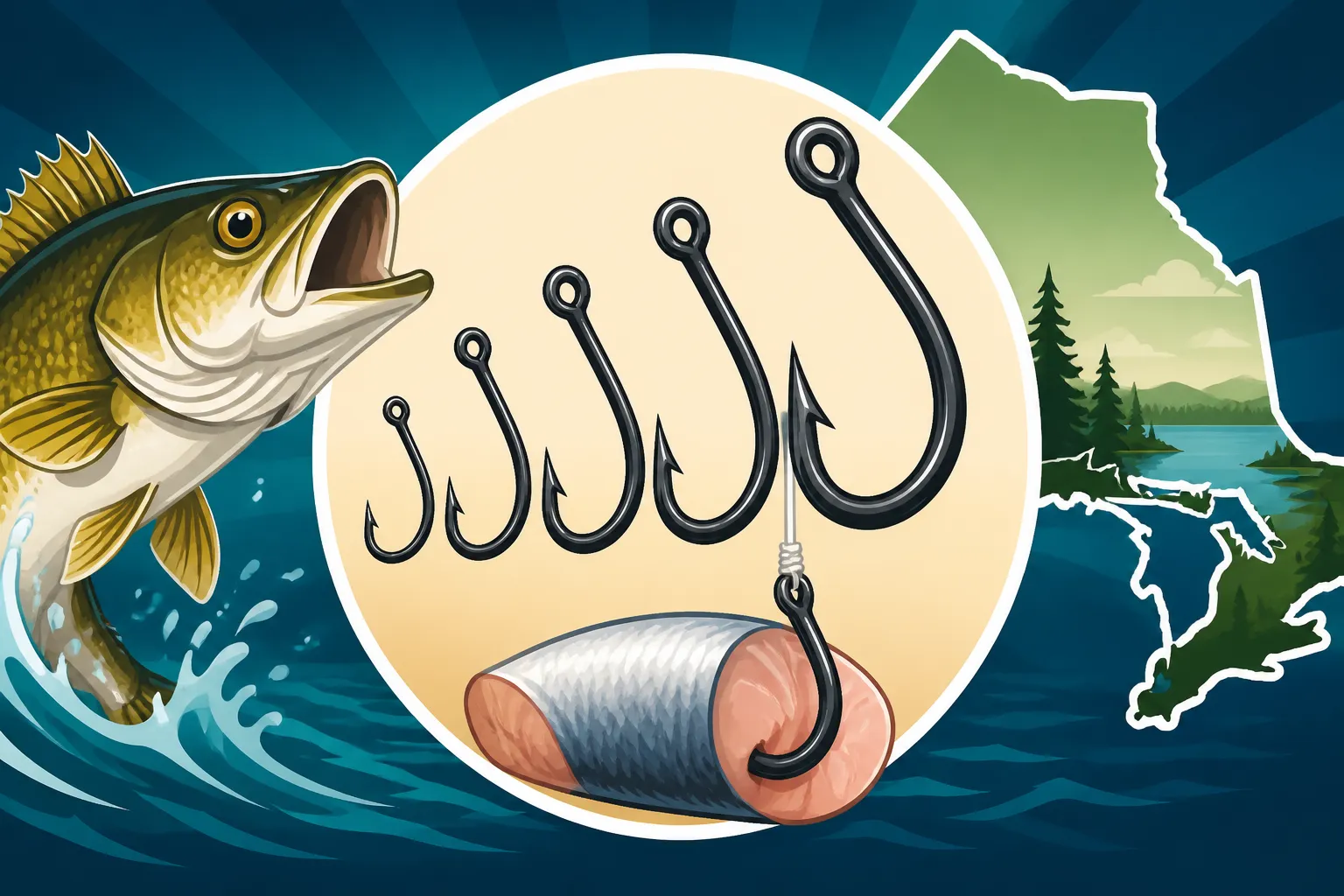
A circle hook is distinctly different from a J-hook in its shape. Instead of a straight shank and a barb that points straight up, a circle hook has a point that turns inward, pointing towards the shank, forming a "circle" or "C" shape. This unique design is what makes them so effective at hooking fish in the corner of the mouth, rather than deep in their throat or stomach. It's a marvel of simple engineering, really.
When a fish takes a bait with a circle hook, it typically swallows the bait and the hook along with it. As the fish swims away and the line tightens, the hook doesn't set immediately. Instead, it slides out of the gullet until it catches on the corner of the jaw. The inward-pointing point then rotates and embeds itself firmly in the tougher, cartilaginous part of the fish's mouth. The angler doesn't need to set the hook with a strong upward jerk – in fact, doing so can actually pull the hook right out of the fish's mouth. A slow, steady retrieve or simply reeling into the fish is all it takes. This self-setting mechanism is not only more efficient but also significantly reduces fish mortality, making them ideal for waters where catch-and-release is encouraged or mandated. You might also want to read up on Ontario Catch and Release Only Waters to ensure you're always following the rules.
Benefits for Anglers and Fish Alike
The advantages of using circle hooks are really twofold: they benefit the fish, and they ultimately benefit the angler too. From a conservation perspective, the reduced incidence of gut-hooking is paramount. It means that fish released back into the water have a much higher chance of survival, contributing to healthier fish populations in our cherished Ontario lakes and rivers. This is especially crucial for species like lake trout or muskellunge, where large, mature fish are often released to ensure future breeding success. For more on specific species, check out Lake Trout Fishing in Ontario or Muskellunge Fishing in Ontario.
For the angler, while it might feel counterintuitive at first to not aggressively set the hook, once you get used to the technique, you'll find your hook-up ratio improves dramatically, and your fights are cleaner. You spend less time trying to extract deeply swallowed hooks and more time fishing. Plus, there's a certain satisfaction in knowing you're doing your part for the fishery. It means less stress on the fish and on you, creating a more enjoyable and sustainable fishing experience. Imagine a busy day on Lake Simcoe; using circle hooks means less downtime dealing with deeply hooked perch and more time jigging for Lake Simcoe Jumbo Perch Fishing.
Matching Circle Hook Size to Ontario Fish Species and Bait
Choosing the right circle hook size isn't a one-size-fits-all affair. It largely depends on the size of the fish you're targeting and the type of bait you're using. A common mistake is using a hook that's too small for your bait, leading to missed bites or improper hook sets. Conversely, a hook that's too large can deter smaller fish or make your bait look unnatural. It's all about balance and understanding the mouth size and feeding habits of your target species.
Hook Size for Panfish and Smaller Species
When you're chasing panfish like bluegill, crappie, or even smaller yellow perch, you'll want to opt for smaller circle hooks. These fish have relatively small mouths, and they often nibble at bait before committing to a full bite. Hooks in the size #8 to #4 range are generally excellent choices. For example, if you're using a small piece of worm or a maggot for bluegill in a quiet pond, a #8 or #6 hook will fit perfectly in their mouth and allow the hook to rotate and catch the jaw corner without being swallowed too deep. If you're targeting Black Crappie in Ontario Lakes with a minnow, a #4 circle hook might be more appropriate.
The key here is to match the hook to the bait and the fish's mouth. A tiny piece of worm on a large hook will just look unnatural, and the fish might just pluck off the bait without ever getting the hook in its mouth. Conversely, a large minnow on a tiny hook won't allow the hook to set properly.
Hook Size for Medium to Large Game Fish
For larger and more popular game fish in Ontario like walleye, smallmouth bass, northern pike, or even modest lake trout, you'll need to step up your hook size. Here, you're generally looking at sizes from #2 to 2/0, and sometimes even larger depending on the specific species and bait.
| Species Targeted | Common Bait Types | Recommended Circle Hook Sizes (Approx.) |
|---|---|---|
| Panfish (Bluegill, Crappie) | Small worms, maggots, corn, tiny minnows | #8 to #4 |
| Yellow Perch | Minnows, worms, grubs | #6 to #2 |
| Smallmouth Bass | Live minnows, crawfish, worms, leeches | #2 to 1/0 |
| Walleye | Live minnows, nightcrawlers, leeches | #1 to 2/0 |
| Northern Pike | Large live minnows, cut bait | 1/0 to 4/0 |
| Lake Trout | Large live minnows, cut bait, dead bait | 2/0 to 5/0 |
| Muskellunge | Very large live bait (suckers, ciscoes), cut bait | 5/0 to 8/0 |
- Walleye: If you're drifting live minnows or nightcrawlers for walleye on the Bay of Quinte, a #1 or 1/0 circle hook is often ideal. It's small enough to be swallowed easily with the bait but large enough to catch the corner of their relatively tough mouths. For techniques like slip bobber fishing, where the walleye might take the bait more aggressively, these sizes work wonders. You can learn more about specific walleye fishing strategies in How to Catch Walleye in Ontario.
- Smallmouth Bass: When targeting feisty smallmouth with crawfish or minnows on Georgian Bay, a #2 or #1 circle hook is a solid bet. These hooks allow the bait to move naturally and ensure a good hookup on their bony jaws. Check out Smallmouth Bass Fishing in Ontario for more species-specific tips.
- Northern Pike & Lake Trout: For these predatory species, you'll likely be using larger live baits or chunks of cut bait. Here, circle hooks ranging from 1/0 up to 4/0 or 5/0 are common. A 3/0 circle hook on a large chub for pike through the ice, or a 4/0 with a dead smelt for lake trout, will typically ensure a perfect corner-of-the-mouth set. Remember to always check Ontario Bag and Possession Limits by Species for the waters you're fishing.
The goal is to select a hook that can be mostly covered by your bait but still leaves the gap open enough for the hook to pivot and grab. Don't be afraid to experiment a little, as fish feeding habits and bait presentation can vary.
Tips for Rigging and Fishing with Circle Hooks in Ontario
Mastering circle hooks isn't just about picking the right size; it's also about understanding how to rig them and, crucially, how to fish them. It's a slightly different approach than with traditional J-hooks, but once you get the hang of it, you'll appreciate the benefits.
Proper Baiting Techniques
One of the most important aspects of using circle hooks effectively is proper baiting. Unlike J-hooks where you might thread a worm entirely up the shank, with a circle hook, you want to leave the "bite" or "gap" of the hook relatively clear. This allows the hook to do its job and rotate properly.
- Live Minnows: When using live minnows, try to hook them lightly through the lips, or just behind the dorsal fin, making sure the hook's point and barb are completely exposed and clear. The minnow needs to stay alive and active, but also, the hook needs to be free to pivot. Avoid burying the hook deep into the minnow's body, as this can impede its action and prevent the hook from turning correctly. For targeting walleye with live minnows, a lip-hooked minnow on a #1 or 1/0 circle hook can be incredibly effective when drift fishing or under a slip float.
- Worms/Nightcrawlers: If you're using worms or nightcrawlers, hook them once or twice through the body, leaving a good portion of the worm to wiggle freely. Again, don't try to "hide" the hook. The exposed circle is essential for its function. A big, juicy nightcrawler for walleye or bass should be hooked so that the hook is still mostly visible, allowing that crucial rotation.
- Cut Bait: For species like northern pike or lake trout, when using cut bait, ensure the piece of bait isn't so large that it completely obstructs the hook's gap. A chunk of smelt or sucker should be impaled once, leaving the point clear.
The general rule is: less is more when it comes to baiting a circle hook. Let the hook's design do the work.
The "No Hook Set" Rule
This is perhaps the biggest mental shift for anglers accustomed to traditional J-hooks. With a circle hook, you do not need to rear back and violently set the hook. In fact, a hard hook set can pull the hook right out of the fish's mouth before it has a chance to rotate and embed properly.
Instead, when you feel a bite, resist the urge to immediately strike. Let the fish take the bait. When you feel the line tighten and the rod tip start to load up, simply begin to reel steadily. The tension created by the fish swimming away and you reeling will cause the hook to slide, rotate, and settle firmly in the corner of the fish's jaw. It's a subtle but incredibly effective process. This smooth, continuous pressure is what sets the hook. This technique is particularly important when you're fishing with dead sticks or rods in a holder, where the fish often hooks itself. It's a fantastic system for more relaxed fishing, perhaps while enjoying the scenery of Best Fishing Lakes in Ontario.
Using the Right Gear
While circle hooks are versatile, having the right supporting gear can make a difference. A medium-action rod with some flex is often preferred, as it allows the fish to take the bait and swim away, creating the necessary slow, steady tension without instantly ripping the hook out. Heavy, stiff rods can be too unforgiving.
Your line choice is also important. Monofilament line has some stretch, which can act as a shock absorber, helping to prevent the hook from pulling free during the initial take. Fluorocarbon leaders are excellent for their invisibility and abrasion resistance, especially in clear Ontario waters. For more on line choices, consider Best Fluorocarbon Line for Clear Lake Water. Bass Pro Shops and Amazon are great places to browse different types of line and leaders suitable for circle hook fishing.
Where to Find the Right Circle Hooks for Your Ontario Adventures
Now that you're armed with the knowledge of how to use circle hooks, the next step is finding them. Thankfully, they're widely available and come in a vast array of sizes and styles to suit every Ontario angler's needs.
Local Tackle Shops and Big Box Stores
Supporting your local tackle shop is always a great idea. They often have knowledgeable staff who can give you specific recommendations for the species in your area and the local fishing conditions. You'll find a good selection of popular brands and sizes, perfect for everyday fishing. Additionally, larger outdoor retailers like Bass Pro Shops typically carry an extensive inventory of circle hooks, from small panfish sizes to heavy-duty hooks for big game fish. Browsing their aisles allows you to physically compare different hooks and get a feel for their quality and design.
These stores are also excellent for picking up other essential items like Best Tackle Box Setup for Ontario Anglers or even a Best Landing Net for Muskie, ensuring you have all the necessary gear for a successful and ethical fishing trip.
Online Retailers for Variety and Convenience
For those who prefer the convenience of online shopping or are looking for a wider variety of specialized circle hooks, online retailers are an excellent resource. Websites like Amazon offer an incredible selection of brands, sizes, and hook styles, often with customer reviews that can help guide your purchase. You can find everything from small, fine-wire circle hooks for delicate presentations to stout, heavy-gauge hooks designed for powerful fish like lake trout or muskellunge.
Shopping online allows you to compare prices and stock up on specific sizes you might need for upcoming trips to different parts of the province, perhaps planning for Best Walleye Lakes in Ontario or specific species like Ontario Sturgeon Catch and Release Rules. Just remember to always double-check the hook size and quantity before placing your order. While convenient, it's essential to understand the specific sizing conventions, as there can be slight variations between manufacturers. Don't be shy about buying a few different sizes to experiment and see what works best for your target species and preferred bait. It's an investment in better fishing and healthier fish.
Disclaimer
This article is for general informational purposes only and does not constitute professional advice. Laws, prices and regulations vary by location and change over time. Consult a qualified professional for guidance on your specific situation.