Ontario Georgian Bay muskie regulations
There's nothing quite like the thrill of chasing a trophy muskie, especially in the legendary waters of Georgian Bay. But before you cast your line, it's crucial to understand the specific regulations that govern muskie fishing in this iconic part of Ontario. Many anglers find themselves scratching their heads over Fisheries Management Zones and nuanced rules, so this guide aims to clarify everything you need to know to fish for muskie in Georgian Bay confidently and legally.
Pinpointing Georgian Bay's Fisheries Management Zone
Understanding where Georgian Bay fits into Ontario's Fisheries Management Zone (FMZ) system is the first and most critical step in navigating muskie regulations. Ontario is a huge province, and its fishing rules are meticulously tailored to different regions and their unique fish populations. For a body of water as vast and complex as Georgian Bay, knowing your zone is non-negotiable.
Identifying FMZ 14: The Heart of Georgian Bay
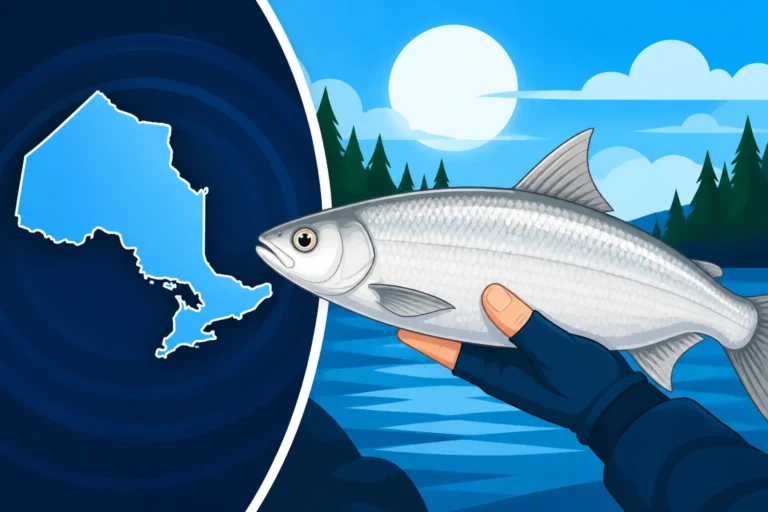
Georgian Bay, in all its majestic glory, falls predominantly under Fisheries Management Zone 14. This particular zone encompasses the main body of Georgian Bay itself, along with many of its interconnected bays, inlets, and the lower sections of rivers that flow into it. Knowing you're in FMZ 14 is absolutely foundational because it dictates the general framework for muskie season dates, size limits, and possession rules. These zones are designed to manage fish stocks effectively across the province, taking into account local ecological conditions, spawning patterns, and angling pressure.
The sheer size of Georgian Bay means it offers a diverse range of muskie habitats. From the rocky shoals and islands of the 30,000 Islands region to the deeper, more open waters and the extensive weed beds found in various sheltered bays, FMZ 14 presents a formidable challenge and reward for muskie anglers. Each habitat type might hold muskie, but the overarching regulations for the zone apply universally. It's a system put in place to ensure sustainability, meaning that while you're focused on the hunt for a big fish, the province is focused on protecting the species for future generations of anglers.
To truly master the nuances of the region, it’s highly recommended to consult resources like the Ontario Fish ON-Line Interactive Zone Map, Explained. This tool allows you to visually confirm your exact location within FMZ 14, helping you understand where specific lines are drawn. This isn't just a casual suggestion; it's a vital part of responsible angling, especially when you're exploring new areas of the bay or if you're venturing into waters where a river might serve as a boundary between zones, which can sometimes have different rules.
Navigating Local Zone Variances Within Georgian Bay
While FMZ 14 provides the general framework for Georgian Bay, it's a common misconception that one set of rules applies to every single drop of water within it. The reality is a little more complex. Even within such a large management zone, the Ministry of Natural Resources and Forestry (MNRF) can designate "special regulation waters" or local variances for specific bodies of water, river sections, or even distinct bays that connect to Georgian Bay. These localized rules are typically put in place to address very specific conservation needs for particular fish populations that might behave differently or be under different pressures than the general stock.
Imagine you're fishing a popular river mouth that flows directly into Georgian Bay. While the main bay might follow the standard FMZ 14 muskie regulations, that specific river, or even a section of it, could have slightly altered season dates or even different size and possession limits for muskie or other species. This is why a thorough understanding of the Ontario Fishing Regulations Explained is so crucial. Ignoring these nuances could lead to an unintentional violation, which is definitely not the memory you want from a fishing trip.
The frustration of discovering these seemingly hidden rules can be real, but it's important to remember their purpose. These specific regulations are often born out of detailed scientific assessments and local conservation efforts aimed at protecting vulnerable fish populations or enhancing specific fisheries. Taking the time to pore over the details, cross-referencing your intended fishing spot with the official summary, ensures you're not just compliant but also contributing to the long-term health of these incredible muskie fisheries, preserving the Muskellunge Habits in Georgian Bay for years to come.
Georgian Bay Muskie Season Dates and Crucial Limits
Once you've wrapped your head around the geographical zones, the next crucial step is to understand the specific timeline for muskie fishing and the limits imposed on your catch. These aren't arbitrary rules; they're designed to protect muskie during vulnerable periods, like spawning, and to promote the growth of these magnificent fish to trophy size.
Understanding the Muskie Season Opener and Closer
For muskie in FMZ 14, which covers the vast majority of Georgian Bay, the season officially opens on the third Saturday in June and closes on December 15. This timing is deliberately chosen to protect muskellunge during their critical spawning period in the spring. Muskie are known to spawn in shallow, weedy areas shortly after ice-out, and allowing them to complete this vital reproductive process undisturbed is paramount to ensuring healthy future populations. Jumping the gun, no matter how tempting, would directly undermine these conservation efforts.
Picture this scenario: you're eager to get out on Georgian Bay in early June, maybe chasing smallmouth bass that have already opened. You've got your muskie gear ready, just in case. But if that muskie strikes, you must remember the season isn't open yet. Even if you're not targeting them, any muskie caught before the third Saturday in June must be immediately and carefully released. Knowing the exact date for the Ontario Walleye Opener Dates by Zone or Ontario Bass Opener Dates by Zone is often top of mind, but the muskie opener, in particular, requires patience.
The season then extends through the summer, fall, and into early winter, closing on December 15th. This long open period provides ample opportunity for anglers to pursue these elusive fish, especially during the legendary fall bite when muskie are aggressively feeding before the long winter. However, with winter approaching, ice formation can make fishing challenging, and the December 15th closure typically precedes the establishment of safe ice on many parts of Georgian Bay, further ensuring fish are left undisturbed during the harshest months.
Deciphering Muskie Size and Possession Limits
The general rule for muskellunge in FMZ 14 is straightforward: One (1) muskie, not less than 91 cm (36 in.). This means two very important things. First, your daily catch limit and your possession limit are both one muskie. You can only keep one muskie total from FMZ 14, and you cannot have more than one in your possession, whether it's in your livewell, cooler, or freezer. Second, that single fish you choose to keep must be at least 91 centimeters long. There are no exceptions for smaller fish; they must all be released.
The "not less than 91 cm" rule is a perfect example of a slot limit in action, though it's technically a minimum size limit. The primary goal here is to allow muskie to reach sexual maturity and contribute to spawning multiple times before they are harvested. Muskie are slow-growing fish, and it takes them many years to reach a size of 91 cm, making this regulation crucial for the longevity of the species and for supporting the aspiration of anglers seeking to catch Muskellunge Growth Rate to Trophy Size. It's a commitment to ensuring that the next generation of muskie are strong and plentiful.
Measuring a feisty muskie, especially a large one that's thrashing next to your boat, can be a challenge. It's not uncommon for anglers to overestimate or underestimate a fish's length in the excitement of the moment. Always aim for a quick and accurate measurement, using a reliable bump board or measuring tape. Many dedicated muskie anglers find a good quality bump board, often available on Amazon, invaluable for quickly and accurately measuring their catch boatside, allowing for minimal handling time and quick release of fish that don't meet the legal length. Remember, minimizing the fish's time out of the water is key to its survival, regardless of whether it meets the legal size.
The Importance of Catch-and-Release for Muskie
While the regulations for muskie in Georgian Bay do allow for the harvest of one fish over 91 cm, the prevailing ethos among muskie anglers, and indeed a practice strongly encouraged by conservation bodies, is almost always catch-and-release. Muskie are not only slow-growing but also highly prized as apex predators and trophy fish. The excitement of catching one, regardless of whether it's a keeper, is often the ultimate reward. Releasing these magnificent fish ensures they can continue to grow, spawn, and provide thrilling experiences for other anglers down the line.
Practicing proper catch-and-release techniques is vital for the survival of these fish. This means having the right tools on hand before you even hook a muskie. Large, rubberized landing nets are essential for safely subduing the fish without damaging its slime coat or fins. Long-nose pliers and sturdy hook removers, easily found at any reputable tackle shop or online, are crucial for quickly extracting hooks, especially from toothy jaws. Minimize the time the fish spends out of the water, and always support its body horizontally, avoiding vertical hangs that can damage internal organs. For more in-depth guidance, refer to Is It Legal to Release a Muskie You Catch in Ontario?.
By committing to responsible catch-and-release, you're doing more than just following the spirit of the law; you're actively participating in the conservation of a truly special fishery. Every released muskie represents a future opportunity, a future spawn, and a contribution to the Ontario Provincial Fish Records by Species that might one day be broken. It's a testament to the angling community's dedication to ensuring that Georgian Bay remains one of the Best Muskie Waters in Ontario for generations to come.
Essential Gear and Responsible Angling Practices
Chasing muskie on Georgian Bay isn't just about knowing the rules; it's also about having the right tools for the job and adopting practices that ensure both your success and the well-being of these incredible fish. The vastness and sometimes unforgiving nature of Georgian Bay demand respect and preparation.
Choosing the Right Tackle for Muskie Regulations
Muskie are often called "the fish of 10,000 casts" for a reason – they're notoriously hard to catch, and when they do bite, they're incredibly powerful. This means your tackle needs to be up to the task. Using undersized gear not only risks losing the fish but can also prolong the fight, leading to increased stress and a lower survival rate for released fish. A heavy-duty muskie setup typically involves stout rods (often 8-10 feet in length), baitcasting reels capable of handling heavy lines (50-100 lb braided line is common), and strong leaders (fluorocarbon or wire) to prevent bite-offs from their razor-sharp teeth.
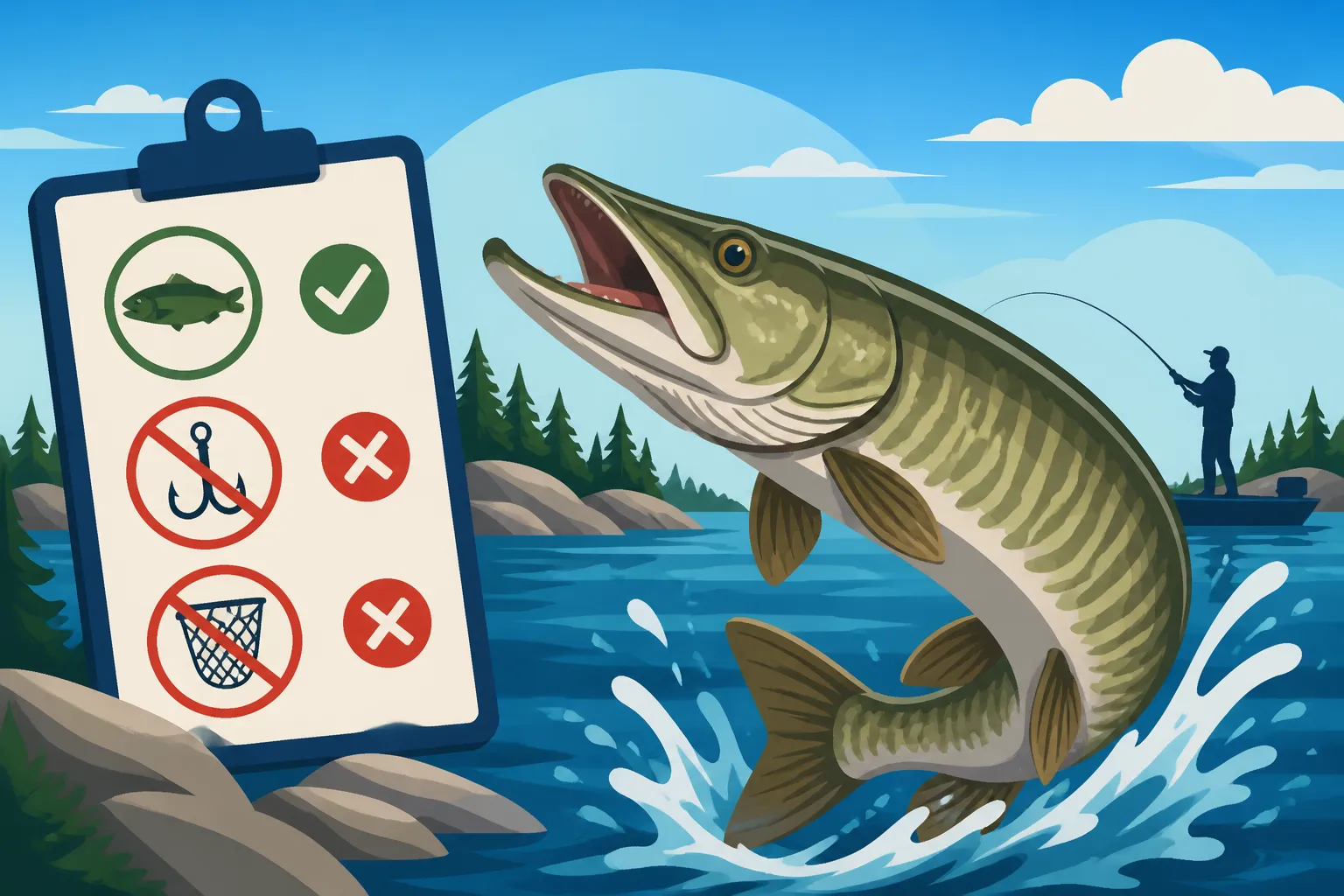
While not always explicitly mandated by regulation, many muskie anglers choose to use single, barbless hooks on their lures instead of trebles. This practice significantly aids in a quicker and safer release, minimizing damage to the fish. When you're dealing with a large muskie, those extra points on a treble hook can make hook removal much more difficult and dangerous for both the fish and the angler. It's a simple modification that aligns perfectly with the catch-and-release ethos prevalent in muskie fishing.
Finding specialized muskie tackle can sometimes be a quest in itself, especially for specific lure brands or rod actions. While local tackle shops often stock popular items, online retailers like Amazon frequently offer a wider selection of heavy-duty bucktails, giant rubber baits, and specialized muskie rods from various manufacturers. It pays to invest in quality gear that can stand up to the rigors of muskie fishing and handle these powerful fish efficiently, ensuring a quick and clean release every time. Having the Best Muskie Gear for Ontario Waters isn't just about catching fish; it's about catching them responsibly.
Safe Boating and Equipment for Georgian Bay
Georgian Bay is not just a renowned fishing destination; it's also a large, open body of water that can become incredibly dangerous, incredibly fast. Weather conditions can change in an instant, and what starts as a calm morning can turn into a white-capping, boat-rocking afternoon. Therefore, having your boat and safety equipment in order is just as critical as your fishing tackle. Adhering to Ontario Boating Laws for Anglers and having all the required safety gear isn't just about avoiding a fine; it's about saving lives – potentially yours and your crew's.
Every vessel must carry specific safety equipment, including personal flotation devices (PFDs) for everyone on board. It’s not enough to just have them; they must be easily accessible and worn, especially in smaller boats or when conditions are questionable. This also includes things like a sound-signalling device, bailer, spare prop, and a navigation light. Being prepared means you can focus on fishing without unnecessary stress, knowing you're ready for any eventuality. For detailed requirements, be sure to check the Life Jacket Requirements for Ontario Boaters.
Furthermore, all boat operators in Ontario are legally required to carry their Ontario Pleasure Craft Operator Card Requirement. This card signifies that you've passed a boating safety course and understand the rules of the water. On a vast and popular waterway like Georgian Bay, where you might encounter everything from large commercial vessels to kayakers, understanding navigation rules and safety protocols is paramount. Equipping your boat with reliable electronics, like a good fish finder with GPS capabilities, not only helps you locate those elusive muskie but also provides essential navigation and safety information, helping you avoid hazardous shoals and ensuring you stay within recognized fishing areas.
Staying Informed and Ensuring Compliance
The world of fishing regulations isn't static; rules can change, boundaries can shift, and specific regional advisories might be issued. As a responsible angler, it's your duty to stay on top of the latest information, especially when targeting a species as revered as the muskie in an area as significant as Georgian Bay.
The Indispensable Ontario Fishing Regulations Summary
The absolute, undisputed bible for all Ontario fishing rules is the official Ontario Fishing Regulations Summary. There’s no substitute for it. You can access it online through the provincial government website, which is typically updated annually, or pick up a physical copy from any ServiceOntario centre or most licensed fishing tackle vendors. Relying on old memories, hearsay from the bait shop, or even last year's summary can lead to costly mistakes.
When you crack open that summary, or navigate the online version, your first port of call should be the section pertaining to FMZ 14. Here, you'll find the general muskie season dates and limits that we've discussed. However, it’s imperative to also scour the "Exceptions to General Regulations" section. This is where you might find those localized rules that could apply to a specific bay, river mouth, or tributary within the broader Georgian Bay area. These exceptions are crucial and can sometimes change from year to year. For a deep dive into how to effectively navigate this critical document, check out Reading the Ontario Fishing Regulations Summary.
Make it a habit to review the summary before your first trip of the season to Georgian Bay, and certainly before any trip where you plan to explore a new area. Even if you've been fishing Georgian Bay for decades, a quick check of the online summary, or grabbing a physical copy from a local vendor, is always a good idea. Regulations are dynamic, influenced by conservation needs and fish stock assessments, so staying updated is part of being a true steward of the environment.
Utilizing Digital Tools for Real-Time Information
In today’s connected world, anglers have more tools than ever at their disposal to stay informed while out on the water. The Ontario government's Fish ON-Line interactive mapping tool is an incredible resource that brings the regulations summary to life. This online map allows you to zoom in on specific lakes and rivers, identifying their FMZ boundaries and often highlighting special regulations pertinent to that precise body of water. It's a fantastic visual aid for confirming you're in FMZ 14 and understanding any local nuances. For a detailed guide on how to leverage this tool, read How to use the Fish ON-Line interactive zone map.
Having access to this kind of digital information on your smartphone or tablet while you're out on Georgian Bay can be a real game-changer. Imagine being uncertain about a specific bay's rules; a quick check of the map can provide clarity instantly. However, always remember that technology can fail – batteries die, signals drop. It's prudent to still carry a physical copy of the regulations summary or a screenshot of the relevant sections as a backup.
To protect your valuable electronics from the elements, many anglers invest in rugged, waterproof cases for their phones and tablets, readily available on platforms like Amazon. These cases ensure that even in the spray of Georgian Bay or during an unexpected downpour, your device remains functional, allowing you to access vital information like the Fish ON-Line map, weather updates, or marine charts without fear of damage. Modern tools, combined with traditional wisdom, make for the safest and most compliant fishing experience.
Georgian Bay Muskie Regulations Summary
To help consolidate the primary information regarding muskie fishing in Georgian Bay (FMZ 14), here's a quick reference table. Always remember to consult the full official regulations for any localized exceptions or updates.
| Regulation Category | Detail for FMZ 14 (Georgian Bay) | Important Notes |
|---|---|---|
| Species | Muskellunge (Muskie) | Focus of these regulations. |
| Fisheries Management Zone | FMZ 14 | Predominant zone for Georgian Bay. |
| Season Open Date | Third Saturday in June | Protects muskie during their spring spawn. |
| Season Close Date | December 15 | Marks the end of the open water season. |
| Minimum Size Limit | Not less than 91 cm (36 in.) | Promotes growth to sexual maturity and trophy size. |
| Possession Limit | 1 | You can only keep one muskie; catch-and-release is highly encouraged. |
| Licence Type Impact | Sport or Conservation | The muskie limits are the same regardless of license type in FMZ 14. |
| Local Exceptions | Always check specific areas | Be aware of potential specific rules for certain bays or rivers within FMZ 14. |
Disclaimer
The information provided in this guide is for general informational purposes only and is not a substitute for the official Ontario Fishing Regulations Summary. Regulations can change, and it is the angler's responsibility to consult the most current official summary before fishing.