Best Techniques for Winter Lake Trout
The frozen expanse of an Ontario winter might seem daunting, but beneath that icy blanket, active lake trout are just waiting to be caught. Many anglers find the transition from open-water techniques to ice fishing for these deep-water predators a real head-scratcher. If you've spent hours drilling holes, staring at your sonar, and still coming up empty, you're not alone. This guide will meticulously break down the most effective strategies and gear choices to help you successfully target and land lake trout through the ice, turning those frustrating outings into triumphant tales.
Understanding Lake Trout Behavior in Winter
Lake trout are fascinating creatures, and cracking their code in the winter months is all about understanding their fundamental needs: cold water, ample oxygen, and a consistent food source. Unlike some other species that might become sluggish, lake trout often remain quite active, making them a prime target for dedicated ice anglers.
Deep Water Dwellers and Oxygen Levels
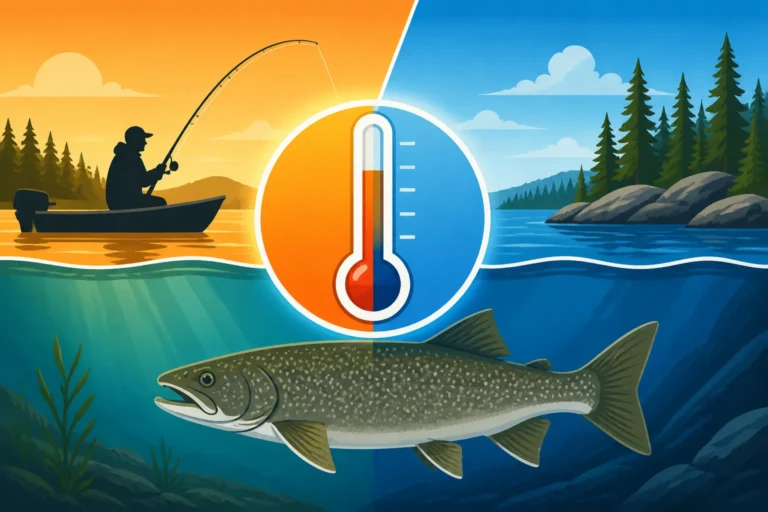
When the lakes freeze over, the entire ecosystem shifts. Surface waters, which typically warm up in summer, become the coldest in winter. But as you go deeper, the water temperature stabilizes around 4°C (39°F) – the temperature at which water is most dense. This is where lake trout thrive. They are salmonids, built for cold, highly oxygenated environments. In winter, oxygen levels are generally uniform from top to bottom in many lakes, but lake trout still prefer the colder, deeper zones.
You'll often find them suspended over deep basins or relating to deep structure where the coolest water persists. Think about a massive lake like Lake Superior or even larger inland lakes like Lake Simcoe; the sheer volume of cold, oxygen-rich water provides a perfect habitat. Your job as an angler is to find these specific zones. It's not just about depth; it's about the entire water column they are using. They might cruise at 60 feet over a 120-foot basin, or they might hug the bottom at 80 feet near a deep underwater point. Understanding How to Catch Lake Trout in Ontario throughout the year means adapting to these thermal preferences.
Forage and Feeding Patterns
Lake trout are apex predators, and their diet heavily influences where they'll be. In many Ontario lakes, their primary food sources include cisco (also known as lake herring), smelt, and sometimes whitefish or even smaller lake trout. These baitfish schools are constantly on the move, and the lake trout follow suit.
In winter, lake trout tend to exhibit two main feeding patterns. First, there are the "cruisers" – fish that roam vast areas, often suspended, actively hunting schools of bait. These fish are typically found in open basins and require anglers to cover a lot of ground or focus on active presentation. Second, you have the "ambush predators" that relate more tightly to underwater structure like points, humps, or deep transition zones. They might wait for baitfish to swim by, or they might make short forays from their holding spots to feed. Identifying the dominant baitfish in your target lake is crucial. For example, if a lake is known for a strong cisco population, your sonar might pick up large bait balls, indicating where the lakers will be lurking. Sometimes, they'll even feed on crayfish in shallower (but still cold) areas, particularly during low light.
Essential Ice Fishing Gear for Lake Trout
Successfully targeting lake trout through the ice isn't just about technique; it's heavily reliant on having the right tools for the job. These are powerful, deep-water fish, and your gear needs to be up to the task. If you're looking for a general overview, take a peek at our comprehensive guide on Best Ice Fishing Gear for Ontario.
Rods, Reels, and Line Selection
For lake trout, you're not going to want your ultralight panfish setup. These fish hit hard and fight dirty, often trying to peel line and dive back into the depths. A heavy-action ice rod, typically ranging from 36 to 42 inches in length, is your best friend. Look for rods with a strong backbone but a relatively sensitive tip to detect those subtle bites in deep water. Brands like St. Croix, Fenwick, or Clam offer excellent ice rods designed for heavier species. A longer rod also helps absorb the lunges of a big fish, keeping tension on the line and preventing break-offs.
When it comes to reels, you have a couple of options. Many anglers prefer a good quality spinning reel (size 3000-4000) spooled with braided line for its ease of use and ability to cast light jigs. However, some experienced laker anglers swear by baitcasting reels, especially for vertical jigging heavy spoons or tube jigs. The baitcaster allows for better control during the drop, preventing line twist and letting you get back down to a biting fish quickly. Regardless of your reel choice, line selection is paramount. Spool up with 15-30 lb braided mainline – its zero stretch is invaluable for feeling bites in deep water and delivering powerful hook sets. To this, tie a 6-10 foot leader of 10-20 lb fluorocarbon line. Fluorocarbon is nearly invisible underwater, providing a crucial advantage for wary lake trout, and its abrasion resistance is a huge plus when fishing over rocky structure. Many anglers find their favorite lines and reels on Amazon for competitive prices and quick delivery.
Sonar and Underwater Cameras – Your Eyes Below the Ice
This is arguably the most critical piece of equipment for winter lake trout fishing. Without a good sonar unit, you're essentially fishing blind in a vast, dark abyss. Flasher units from brands like Vexilar, Marcum, or Humminbird Ice Series are phenomenal for real-time feedback. They show you your lure, the bottom, and any fish that come into your cone angle, allowing you to react instantly to a fish approaching your bait. You can see how fish react to your presentation, whether they're following, nipping, or ignoring your lure. This real-time interaction is addictive and incredibly effective.
For those who want an even clearer picture, modern fish finders with GPS and mapping capabilities (like Humminbird Helix or Garmin Striker series) can be mounted on ice fishing transducers. These units offer detailed contour maps, side imaging, and down imaging, which are invaluable for finding subtle structure that lake trout relate to. Imagine pinpointing a small hump or a sharp breakline far from your hole without ever seeing it on the surface. These technologies let you do just that. An underwater camera is another fantastic tool, especially when you're trying to identify what's on the bottom or observe how lake trout react to your bait. Seeing a laker inspect your lure before deciding to strike can be a game-changer for refining your technique. You can often find a wide array of options for both flashers and cameras on Amazon, with detailed reviews to help you make the best choice.
Top Winter Lake Trout Techniques
Once you've got your gear sorted, it's time to dive into the actual fishing techniques. Lake trout are aggressive, but they can also be finicky. Employing a mix of active and passive methods is often the key to consistent success. For a broader look at hitting the hard water, check out our guide on Ice Fishing in Ontario.
Aggressive Jigging with Heavy Spoons and Jigs
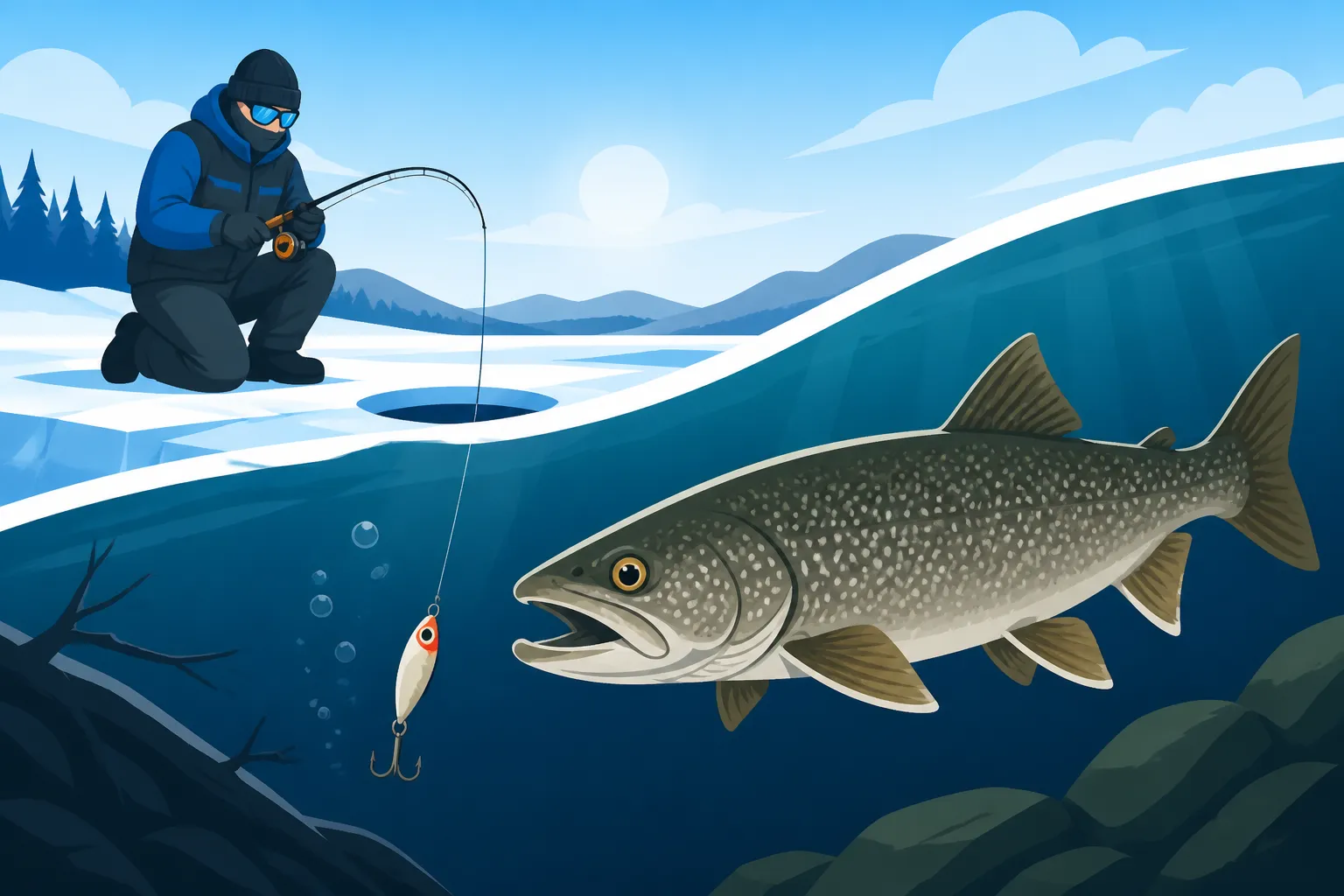
Aggressive jigging is probably the most popular and effective way to entice winter lake trout. These fish are drawn to movement and flash, and a properly worked spoon or jig can mimic a fleeing or injured baitfish perfectly. The technique involves a vigorous lift-and-drop motion, often followed by a short pause.
Start by dropping your lure all the way to the bottom, then reel up a few feet. Then, give your rod a sharp, quick lift of 2-5 feet, letting the lure flutter back down on a semi-slack line. The key is to watch your sonar! You'll see your lure rise and fall, and you'll often see fish streak in to investigate. Many bites occur on the fall or during the short pause after the drop. Don't be afraid to experiment with the intensity and duration of your jigging. Some days they want it wild and erratic; other days, a subtle flutter is all it takes. Recommended lures include heavy jigging spoons like the Swedish Pimple, Hopkins Shorty, or Williams Wabler, often tipped with a piece of minnow or a scented soft plastic trailer. Large tube jigs (4-6 inches) in white, pearl, or smoke colors are also deadly, mimicking baitfish perfectly. For truly aggressive fish, or when targeting larger specimens, Bondy Bait Company's ice jigs or other large profile soft plastics can be incredibly effective. Consider trying different weights and sizes, as what works one day might not work the next.
Deadsticking or Set-Lines
While aggressive jigging is your search-and-destroy method, a deadstick rod or a set-line acts as your passive attractor, often sealing the deal for wary fish or those that are less active. This technique is often used in conjunction with active jigging. You'll typically set up one hole with your active jigging rod and another nearby with a deadstick.
The deadstick setup usually involves a medium-heavy ice rod with a spinning reel, rigged with a simple hook (size 1/0 to 3/0) and a small weight or split shot, just enough to get your bait down. The trick is to suspend a live minnow, dead smelt, or even a large Gulp! Minnow (like the Berkley Gulp! Minnow available on Amazon) at a specific depth, usually a few feet off the bottom or just above a known fish-holding depth. The natural movements of a live minnow are often irresistible to lake trout. For those using dead bait, ensure it's fresh and presented naturally. Tip-ups or rattle reels are also excellent set-line options, allowing you to cover more holes while staying warm in your shelter. When a flag goes up or a rattle reel starts spinning, it's an exhilarating moment. Remember to check local Ontario Fishing Regulations Explained regarding the number of lines you're allowed to use.
Trolling (Power Drifting) from Portable Shelters
This technique is a bit more specialized but can be incredibly effective on vast lakes where lake trout are cruising open water. Power drifting involves moving slowly across the ice, often with a snowmobile or ATV towing a portable ice fishing shelter. It allows you to cover a significant amount of water, essentially "trolling" your lures beneath the ice.
This isn't for every lake or every angler, but on large, relatively flat basins, it can be a game-changer. Anglers will typically drill a series of holes or use one wide hole, dropping down large swimbaits, stickbaits (like Rapala Husky Jerks), or even smaller trolling spoons designed for open water. The key is to move slowly, keeping your lures just above the depths where lake trout are suspending. Your sonar is crucial here to monitor depth and identify fish. You'll need a well-equipped portable shelter that can be easily moved, allowing you to stay warm while prospecting new water. This method is particularly useful for locating those actively feeding, roaming lake trout that aren't necessarily holding to specific structure.
Locating Lake Trout Hotspots
Finding lake trout under the ice is half the battle. They aren't evenly distributed throughout a lake; they concentrate in specific areas that meet their needs. Understanding how to read the underwater landscape is crucial. Our guide on Best Ice Fishing Lakes in Ontario will give you some excellent starting points.
Structure Fishing – Points, Humps, and Drop-offs
Just like in open water, lake trout love structure. Underwater points that extend into deep water, isolated humps rising from a deep basin, and dramatic drop-offs are all prime locations. These features often act as highways or ambush points for lake trout, as baitfish schools will navigate around or over them.
Before you even drill a hole, consult a good bathymetric map (contour map) of the lake. Apps like Navionics or features on your Humminbird or Garmin unit can show you the underwater topography in incredible detail. Look for areas where depth changes rapidly, where a long point tapers into a basin, or where an offshore hump creates a high spot. Once you've identified potential spots, drill a series of holes in a grid pattern across and around the structure. For example, on a deep point on a lake like Lake Simcoe, you might drill holes starting in 40 feet of water and extending out to 80-100 feet, fishing each one systematically. Lake Simcoe Ice Fishing is a fantastic destination, but it requires diligent searching to find those active lakers. The objective is to find the precise depth and location where the fish are holding or moving.
Open Water and Suspension Fishing
While structure fishing is often effective, sometimes lake trout simply aren't relating to specific bottom features. Instead, they might be suspended in the open water of a deep basin, actively chasing schools of baitfish. This can be a more challenging scenario but incredibly rewarding when you crack the code.
For suspension fishing, your sonar is your absolute best friend. You're looking for signs of baitfish (often appearing as a cloud or scattered marks) and the larger, distinct arcs or lines of lake trout lurking nearby. These fish can be anywhere from 30 feet down to 100+ feet, often well off the bottom. The strategy here is patience and covering a wide area. Some anglers will set up multiple deadstick lines at varying depths to determine the fish's preferred feeding zone. Others might use the "power drifting" technique described earlier to actively search these open water expanses. When you locate suspended fish, note their depth and try to present your lure just above them, as lake trout typically feed upwards. If you're struggling to find fish, don't be afraid to pull stakes and move to a new area. Lake Nipigon is another classic example of a lake where lakers often suspend, making Lake Nipigon Fishing Guide knowledge essential.
Safety and Conservation on the Ice
Ice fishing for lake trout is an amazing experience, but it comes with responsibilities, primarily concerning safety and the long-term health of the fishery. Always prioritize safety first.
Ice Safety Protocols
The cardinal rule of ice fishing is: no fish is worth your life. Always check ice conditions before venturing out, and be aware that ice thickness can vary greatly, even on the same lake. A general guideline for safe ice thickness is:
- 4 inches (10 cm) for single person on foot
- 5-7 inches (12-18 cm) for snowmobile or ATV
- 8-12 inches (20-30 cm) for small car or light pickup
- 12-15 inches (30-38 cm) for medium truck
These are minimums, and caution is always advised. Carry essential safety equipment:
- Ice picks: Worn around your neck, these can be life-savers if you fall through.
- Rope: A buoyant throw rope can help pull someone out of the water.
- Spud bar: Use it to test ice thickness as you walk.
- Floatation suit: Offers warmth and buoyancy, drastically increasing survival time in cold water.
- First aid kit: Always a good idea to have on hand.
Be especially wary of areas with currents (like river mouths or narrows), pressure cracks, and areas where springs might keep the water from fully freezing. Fishing with a buddy is always safer than going alone.
Responsible Angling for Lake Trout
Lake trout are slow-growing, long-lived fish, especially the larger specimens. This makes them particularly vulnerable to overfishing. Practicing responsible angling ensures that future generations can enjoy the same incredible fishing experiences we do. Always be aware of the Ontario Lake Trout Limit and Possession Rules for the specific Fisheries Management Zone (Ontario Fisheries Management Zones, Explained) you are fishing in. These regulations can vary significantly.
If you plan to release fish, handle them with care:
- Minimize out-of-water time: Get a quick photo if you want, but get them back in the water immediately.
- Use appropriate landing gear: A large, rubberized net can protect a fish's slime coat and fins.
- Support the fish horizontally: Especially larger fish, as their internal organs can be damaged by holding them vertically.
- Consider barotrauma: Lake trout caught from very deep water (60+ feet) can suffer from barotrauma (swim bladder expansion). If a fish cannot swim down on its own, consider using a descending device to get it back to depth, or be prepared to harvest it if regulations allow.
Obtain your Ontario Outdoors Card, Explained and associated fishing license, and always adhere to Ontario Bag and Possession Limits by Species. These rules are in place to protect our precious fisheries.
Localized Insights and Tips for Ontario Anglers
Ontario is a vast province, and what works on one lake might need slight adjustments for another. Tailoring your approach to specific regions and conditions will greatly enhance your success.
Northern Ontario's Vast Wilderness
Northern Ontario is synonymous with wilderness, and many of its lakes offer unparalleled lake trout fishing opportunities, often with less pressure than their southern counterparts. Think of the sprawling lakes in FMZ 2, 3, or 4. These often require more planning, as access can be remote.
Anglers venturing into these areas will rely heavily on detailed maps (both topographic and bathymetric), GPS units, and a strong understanding of their equipment. There's often less existing fishing pressure to indicate hotspots, so your ability to read contour maps and identify potential structure becomes paramount. Lakes like Eagle Lake, Lake of the Woods, and particularly Lake Nipigon Fishing Guide territory are legendary for their lake trout. In these remote settings, having reliable gear is non-negotiable. It's often worth the effort to explore off-the-beaten-path locations, as they can hold true giants that rarely see a hook. Pack for colder temperatures and be prepared for potential emergencies, as help can be a long way off. A good sled and ice auger are essential companions in this country.
Popular Southern Ontario Destinations
Southern Ontario lakes, while often more accessible, present their own set of challenges, mainly due to higher fishing pressure. Lakes like Lake Simcoe, Lake Couchiching, and parts of Georgian Bay are popular hubs for ice fishing, meaning the lake trout in these areas can be warier.
On these busier lakes, finding success often means targeting less-fished areas or employing subtle techniques. Instead of drilling your hole directly on top of the most obvious point, try fishing the adjacent breaklines, shoulders, or slightly deeper flats where fish might retreat from pressure. Early morning and late afternoon often provide the best bite windows. Downsizing your baits or switching to more natural colors can also make a difference. Using a very subtle deadstick presentation with a small live minnow can sometimes outperform aggressive jigging when fish are finicky. Furthermore, understanding the specific baitfish dynamics of each lake is crucial; on Lake Simcoe, for example, cisco and smelt are key forage, while Georgian Bay might offer a more diverse diet including sculpins. Networking with local bait shops or fishing forums can also provide invaluable, up-to-date insights into current conditions and successful presentations.
Here's a quick look at some popular ice jigging options for lake trout:
| Lure Type | Recommended Sizes | Ideal Depths | Retrieve Style | Notes |
|---|---|---|---|---|
| Heavy Spoon | 1/2 oz – 2 oz | 40-100+ ft | Aggressive lift-drop, flutter on the fall | Great flash, often tipped with minnow head/tail |
| Tube Jig | 3 – 6 inches | 30-80 ft | Long rips, subtle shakes, deadstick | Mimics cisco/smelt, can be very subtle, often scented |
| Blade Bait | 1/2 oz – 1 oz | 20-70 ft | Short, sharp lifts; vibrates on retrieve | Excellent vibration, good for active fish, often mistaken for injured bait |
| Bondy Bait | 4 – 8 inches | 50-100+ ft | Heavy jigging, sweeping lifts, long pauses | Large profile for big fish, often needs significant jigging action |
| Swimbait (Ice) | 3 – 6 inches | 30-90 ft | Slow sweep, jigging, subtle twitches | Realistic profile, good for suspended fish, often used with jig head |
Disclaimer
The information provided in this guide is for general knowledge and informational purposes only, and does not constitute professional advice. Fishing conditions, regulations, and ice safety can change rapidly. Always consult the official Ontario fishing regulations summary, check local ice conditions, and prioritize safety before heading out onto the ice.