Best streamer patterns for Ontario brown trout
It’s a feeling every serious angler in Ontario knows: the deep desire to hook into one of those elusive, wily brown trout. These fish are notorious for their caution and intelligence, often refusing anything but the most perfect presentation. While many anglers chase them with dry flies or nymphs, sometimes, especially when you’re after those truly massive, predatory specimens, nothing beats the raw, aggressive appeal of a streamer. But with so many patterns out there, knowing which one to tie on can feel like trying to find a needle in a haystack. This guide is all about cutting through the noise to help you understand the best streamer patterns for Ontario brown trout and how to use them effectively.
Understanding Ontario Brown Trout Habits and Predatory Instincts
Before we even talk about specific flies, it’s crucial to get inside the head of an Ontario brown trout. Unlike their brook trout cousins, which are often found in smaller, pristine headwater streams, brown trout thrive in a wider range of habitats, including larger, slower rivers and even some bigger lakes and reservoirs. They’re incredibly adaptable and, crucially, highly predatory. As they grow, their diet shifts significantly from insects to larger prey.
Why Larger Browns Key into Baitfish and Larger Prey
The bigger a brown trout gets, the more energy it needs to sustain itself. A few tiny nymphs simply won't cut it. This is why those truly impressive, double-digit brown trout become efficient, opportunistic predators, keying in on whatever substantial protein source is available. This usually means smaller fish – minnows, sculpins, darters, and even other juvenile trout – but also includes crayfish, leeches, and large aquatic insects. They are masters of ambush, lurking in deep pools, under cut banks, or behind large rocks, waiting for an unsuspecting meal to drift or swim by. Understanding this predatory shift is the absolute bedrock of successful streamer fishing.
Prime Hunting Grounds for Streamer-Loving Browns
When you're thinking about throwing streamers, you need to think like a big brown trout. Where would it hide? Where would it ambush? In Ontario’s many diverse rivers and streams, this often means deeper sections of water. Look for significant structure: large boulders, submerged logs, overhanging vegetation, and especially undercut banks. These spots provide both cover from predators (like eagles or ospreys) and a perfect ambush point for prey. Current seams, where faster water meets slower water, are also prime locations, as they act as a natural conveyor belt for disoriented baitfish. Targeting these areas effectively is part of mastering Wading Techniques for Ontario Trout Streams. Larger rivers like the Grand River or Credit River, known for their healthy brown trout populations, offer abundant structure that screams "big fish lies."
Key Characteristics of Effective Streamer Patterns
Not all streamers are created equal when it comes to enticing a hungry Ontario brown trout. The most effective patterns share certain critical characteristics that mimic their natural prey and appeal to their aggressive instincts. It’s not just about throwing something big; it’s about throwing something that looks, moves, and even feels like a meal.
Profile, Movement, and Action in the Water
The silhouette a streamer creates in the water is paramount. A brown trout is assessing its potential meal based on size, shape, and how it moves. Patterns that have a realistic baitfish profile – typically slender or slightly bulky, depending on the prey you're imitating – will draw more attention. Crucially, movement is everything. A good streamer should have a lifelike action, pulsing and undulating as it's stripped through the water. Materials like rabbit strips, marabou, and synthetic fibers are fantastic for this, as they breathe and move even with minimal current or retrieve. Think about mimicking an injured or fleeing baitfish; erratic, darting movements can trigger a predatory chase response.
Color, Flash, and Weighting Considerations
Color is often debated, but it’s definitely important. Natural baitfish colors like olive, brown, black, white, and grey are always a safe bet. However, don't be afraid to experiment with brighter "attractor" colors like chartreuse, especially in off-colored or turbid water. A little bit of flash, incorporated with materials like Krystal Flash or Flashabou, can simulate the shimmer of baitfish scales, making your offering more noticeable. But a little goes a long way – too much flash can look unnatural.
Weighting is another critical factor. Streamers need to get down to where the fish are holding, which is often near the bottom in deeper pockets or runs. This can be achieved through lead eyes, coneheads, or weighted fly lines. Having a variety of patterns with different amounts of weight allows you to adapt to varying water depths and current speeds. You might find a good selection of weighted patterns, or the materials to tie them yourself, on Amazon.
Top Streamer Patterns for Ontario Brown Trout
Now, let's get down to the brass tacks: the specific streamer patterns that have proven their worth time and again for enticing big brown trout in Ontario waters. These aren't just pretty flies; they're fish-catching machines when presented correctly.
The Ever-Reliable Woolly Bugger
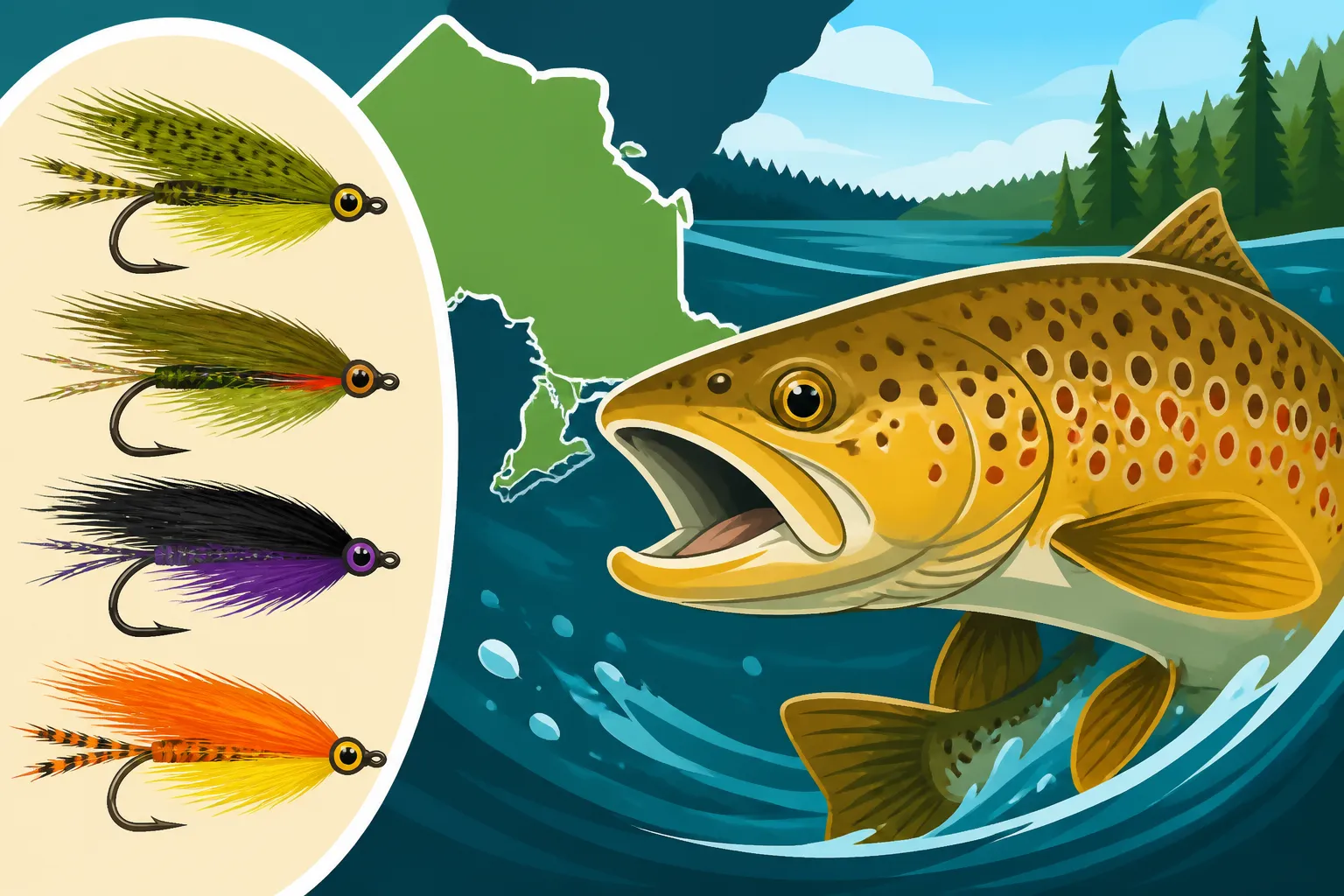
Ah, the Woolly Bugger. If there's one streamer every angler should have in their box, it's this versatile classic. Its effectiveness lies in its simplicity and uncanny ability to imitate a wide range of prey items – from leeches and aquatic worms to small baitfish and crayfish.
- Why it works: The marabou tail and hackled body give it an incredible pulsing, lifelike movement in the water, even with a slow retrieve. It’s an opportunistic pattern that appeals to a brown trout’s natural foraging instincts.
- Key variations for brown trout: For Ontario brown trout, focus on larger sizes (hook sizes #4-#8) in darker colors like black, olive, and brown. Don’t shy away from patterns with rubber legs for added movement or a bead/cone head for extra weight to get it down deep. A black Woolly Bugger can imitate a leech, while an olive or brown one can pass for a small sculpin or minnow. You can find excellent multi-pack selections of these on Amazon.
- Presentation tips: The Woolly Bugger can be fished in countless ways. Strip it slowly along the bottom, swing it through current seams, or even dead-drift it under an indicator in deeper pools. The key is to impart subtle movement that suggests a living, vulnerable creature. This versatility is why it's a staple for Fly Fishing for Trout in Ontario.
The Darting Clouser Minnow
When you need to accurately mimic a baitfish, especially one that's darting and flashing, the Clouser Minnow is your go-to. Developed by Bob Clouser, this pattern is famous for its jigging action and ability to catch virtually any predatory fish.
- Why it works: The dumbbell eyes not only add weight but also cause the fly to ride hook point up, reducing snags. More importantly, they create a jigging motion as the fly is stripped, making it look like a wounded baitfish trying to escape. Its sparse profile and flash perfectly imitate slender minnows.
- Key variations for brown trout: Colors like chartreuse and white, blue and white, or olive and white are highly effective for mimicking common baitfish in Ontario lakes and rivers. Sizes #2-#6 are good for brown trout. The amount of flash can be varied based on water clarity and sunlight.
- Presentation tips: The Clouser Minnow shines with an aggressive strip-pause retrieve. Cast it upstream or across the current, let it sink, and then use sharp, short strips to make it dart and dive. Focus on retrieving it through current breaks, drop-offs, and over submerged structure where baitfish might be hiding.
The Bottom-Hugging Sculpzilla
Sculpins are a staple food source for large brown trout, and the Sculpzilla is designed to imitate these flattened, bottom-dwelling fish with remarkable accuracy.
- Why it works: This pattern features a large, flat head (often spun deer hair or a composite material) that pushes water and gives it a distinctly sculpin-like profile. The rabbit strip tail provides excellent movement, and its weighted design ensures it sinks quickly and stays near the bottom, right where real sculpins live.
- Key variations for brown trout: Natural colors like olive, brown, and black are most effective, often with some barring or mottling to break up the silhouette. Sizes #2-#6 are ideal. Some variations include rubber legs for added appeal.
- Presentation tips: Sculpzillas are best fished "on the bottom." Cast upstream and allow it to sink, then use short, jerky strips and pauses to make it hop and crawl along the riverbed. This is a pattern that requires you to be comfortable with potential snags, but the payoff can be a monstrous brown trout. When fishing waters like the Saugeen River, known for its healthy sculpin populations, this pattern can be deadly.
Articulated Streamers for Big Profile and Movement
For truly large, aggressive brown trout, especially in bigger waters or during colder periods when they're less likely to chase smaller prey, articulated streamers are the answer. These flies are tied on two or more shanks, joined by a small wire or braided material, giving them an incredibly lifelike swimming action and a larger profile.
- Why they work: The segmented body creates a serpentine, undulating movement that is almost irresistible to big predators. They mimic larger baitfish like smelt, chubs, or even juvenile trout, which are high-value meals for a trophy brown.
- Key variations for brown trout: Patterns like the "Drunken Disorderly" (with its massive profile and intense movement) or the "Sex Dungeon" (known for its rubber legs and bushy head) are prime examples. Colors can range from natural baitfish patterns (olive/white, grey/white) to more aggressive attractor schemes (black/purple, all black). Sizes can be as large as 4-6 inches (#1/0-#4).
- Presentation tips: Articulated streamers often require heavier fly rods (6-8 weight) to cast effectively, especially when wet. These are typically fished with aggressive strips and pauses, mimicking a large baitfish fleeing for its life. Target deep pools, heavy current, and large ambush points. Remember, with Best Streamer Rod Setup for Big Brown Trout, you'll need the right tools to launch these larger offerings.
Ontario Brown Trout Streamer Comparison
To help you visualize the differences and choose the right tool for the job, here’s a quick comparison of these top patterns:
| Streamer Pattern | Primary Prey Mimicked | Key Features | Best Conditions / Target |
|---|---|---|---|
| Woolly Bugger | Leeches, small baitfish, crayfish | Marabou tail, hackled body, versatile profile | All-around, slow to moderate current, varied depths |
| Clouser Minnow | Minnows, baitfish | Dumbbell eyes, sparse profile, jigging action | Clear to stained water, moderate current, darting retrieve |
| Sculpzilla | Sculpins | Flat head, rabbit strip, heavily weighted | Bottom-dwelling fish, deep pockets, crawling retrieve |
| Articulated Patterns | Larger baitfish (chubs, smelt) | Multi-segmented body, large profile, fluid movement | Big fish, larger rivers/lakes, aggressive retrieve |
Streamer Fishing Techniques and Tactics for Success
Having the right streamer patterns is only half the battle; knowing how to present them effectively to those cunning Ontario brown trout is the other, equally critical piece of the puzzle. It's often the nuance in your retrieve, the angle of your cast, or your chosen depth that makes all the difference.
Master the Retrieve: Stripping and Swinging
The way you move your streamer through the water directly communicates what kind of prey it is. There’s no single "best" retrieve, as brown trout can be unpredictable, but understanding the options is key.
- Stripping: This is the most common retrieve for streamers. Short, sharp strips make the fly dart like a fleeing baitfish. Longer, slower strips can imitate a cruising or wounded fish. Vary your retrieve speed and length until you find what triggers a response. Often, brown trout will hit on the pause, so incorporate short breaks in your stripping. Try to strip in a way that allows the current to add to the fly's natural movement, making it look even more alive.
- Swinging: This technique involves casting your streamer across or slightly upstream, letting it sink, and then allowing the current to swing it downstream in an arc. As the fly swings, it cuts across the current, presenting a broadside profile to waiting trout. Strikes often come at the very end of the swing, as the fly slows and "hangs" in the current. This method is particularly effective in rivers with good current.
- Dead-Drifting (with a twist): While streamers are usually actively retrieved, sometimes a dead drift, especially with a weighted Woolly Bugger, can be deadly. Cast upstream, let it sink and tumble naturally with the current, but add an occasional subtle twitch or strip to suggest life. This works well in deeper, slower pools where a brown trout might be less inclined to chase and more inclined to pick up an easy meal. When you're fishing these depths, consider your Best Tippet Size for Stocked Trout and other species to ensure your leader setup is robust enough.
Targeting the Right Lies: Where to Cast
You can have the best streamer in the world, but if you’re not putting it in front of fish, you won't catch anything. Brown trout are ambush predators, so you need to identify their likely hiding spots, or "lies."
- Undercut Banks and Overhangs: These are classic brown trout sanctuaries. Cast your streamer tight to the bank, allowing it to sink and then strip it out, mimicking a baitfish darting from cover.
- Deep Pools and Runs: Bigger browns often hold in the deepest parts of a river. Use weighted streamers and adjust your cast to allow ample time for the fly to sink to the desired depth before beginning your retrieve.
- Structure: Submerged logs, large boulders, and rock gardens all provide current breaks and ambush points. Cast upstream of these structures and allow your streamer to drift or swing past them, hitting the "seam" where the current changes.
- Current Seams: The line where fast water meets slow water is a highway for disoriented baitfish. Position yourself to cast your streamer along these seams, letting it drift or strip through the feeding zone. Knowing your Ontario Fishing Regulations Explained for specific zones can also help identify productive areas.
The Importance of Gear and Patience
Successful streamer fishing often means carrying the right gear. A dedicated streamer rod, typically a 6 or 7-weight, will make casting weighted flies much easier. A good floating or intermediate fly line with a stout leader is also essential. Check out recommendations for Best Fly Rods for Ontario Trout Streams and Best Gear for Ontario Trout Fishing to ensure you're equipped. Don't forget a solid pair of wading boots for navigating slippery river bottoms – comfort and safety are paramount when you're spending hours on the water. Many excellent options for these, along with fly boxes and essential tools, can be found on Amazon.
Finally, patience is paramount. You might make dozens of casts with no immediate reward, but that one perfect presentation can suddenly trigger an aggressive strike from a trophy brown. Keep experimenting with patterns, retrieves, and casting angles. Remember that Brown Trout Habits in Ontario Streams vary by season and water conditions, so stay adaptable. And when that big fish finally hits, make sure you have a reliable net, like those recommended in Best Landing Net for Trout, ready for a quick and safe release.
Disclaimer
Please note that fishing regulations, including season dates, catch limits, and specific rules for certain water bodies, can change. Always consult the most current Ontario Fishing Regulations Summary before heading out on the water. This guide is for informational purposes only and does not replace official government resources.